In Which I Decline to Let an AI Company Experiment on My Kid at School
Living in San Francisco means being a guinea pig for the tech industry — but I draw the line at my second-grader.


Living in San Francisco means being a guinea pig for the tech industry — but I draw the line at my second-grader.

Another startup moves into an office building in downtown San Francisco??

Protect yourself and others this fall.

Living in San Francisco means being a guinea pig for the tech industry — but I draw the line at my second-grader.
Parenting in the digital age means keeping your head on a swivel. Unless you want your child to grow up to be a flat earther or an ivermectin influencer, you have to monitor their media intake earlier and more rigorously than you might expect.
For example, after seeing how quickly even the YouTube Kids algorithm took my son from “how to draw” videos to content creators with child exploitation undertones, we no longer allow him on that platform — but now YouTube has a deal with Disney+ and Netflix to put the creepy shit on those platforms. In the seven years since my kid was born I have learned to vaguely worry, at all times, about the consequences of putting pictures of him on my own Instagram (which is private) and what happens when he wants to play Roblox (which he does not yet know exists).
Here’s something I wasn’t worried about, up until last month: the San Francisco Unified School District using taxpayer dollars to do business with an AI company that records and uses my child’s voice to train largely untested technology, scale their business, and make millions for shareholders off unsuspecting parents and kids. Until last month, I did not lie awake at night thinking about big tech infiltrating my child’s second-grade classroom with no meaningful guardrails while his cousins’ school district in New York City bans AI.
Then, a little over three weeks ago, I learned about Amira.
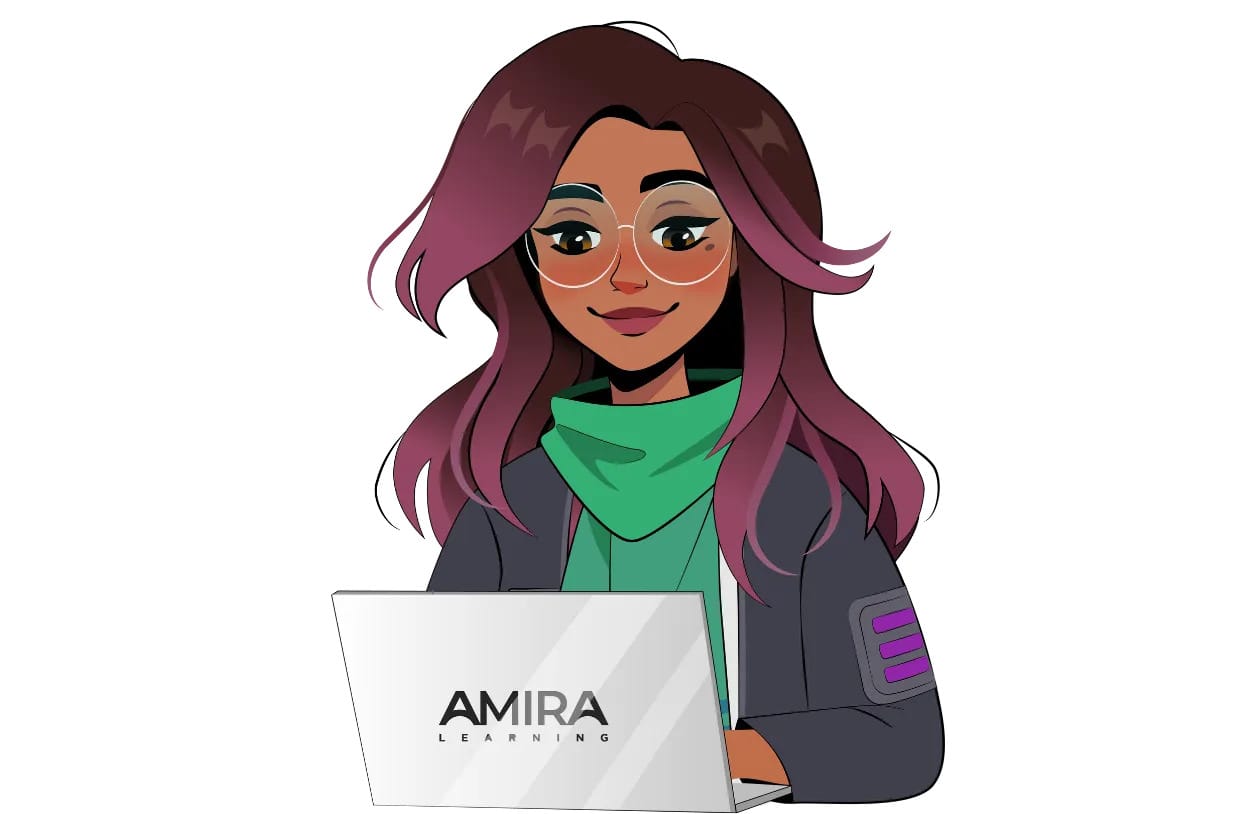
As an AI boom reshapes San Francisco and a chorus of experts simultaneously sounds the alarm on the harms of AI in classrooms, the city’s public school children find themselves at the center of a volatile Venn diagram. A growing number SFUSD parents are alarmed by the lack of a district-wide policy governing tech use in schools. The grassroots group Tech in Check — more on them in a bit — formed in the summer of 2025 to pressure San Francisco’s Board of Education to create one.
The Board has said they will get around to that in March 2027. But last month, one ethnically ambiguous, purple-haired cartoon supercharged the fight.
Founded in 2018, Amira Learning is a San Francisco company that uses an AI-powered “interactive tutor” to teach elementary school kids to read. Amira claims to “accelerate literacy” through a suite of gamified programs in which kids read aloud to said cartoon, as “she” corrects, guides, and records them.
What it does with these recordings is a matter of some dispute. Up until early July, the company’s privacy policy acknowledged that it used recordings to improve its AI models — a red flag for anyone following news about rampant data breaches and voice-cloning scams, or those who simply don’t want their children doing unpaid labor for a tech company. But Amira Learning has modified this policy over the last three months following scrutiny in Portland and Santa Fe, softening it to the current claim that “student voice recording and analysis are used strictly for instructional purposes and to aid the teacher.” My request for comment from Amira Learning about why the language changed went unanswered.
What’s not in dispute: The company has grown rapidly, in large part thanks to venture capital from Amazon and Google. Amira contracts with school districts in all 50 states as well as in Mexico, Canada, India, Northern Ireland, South Africa, and the Philippines.
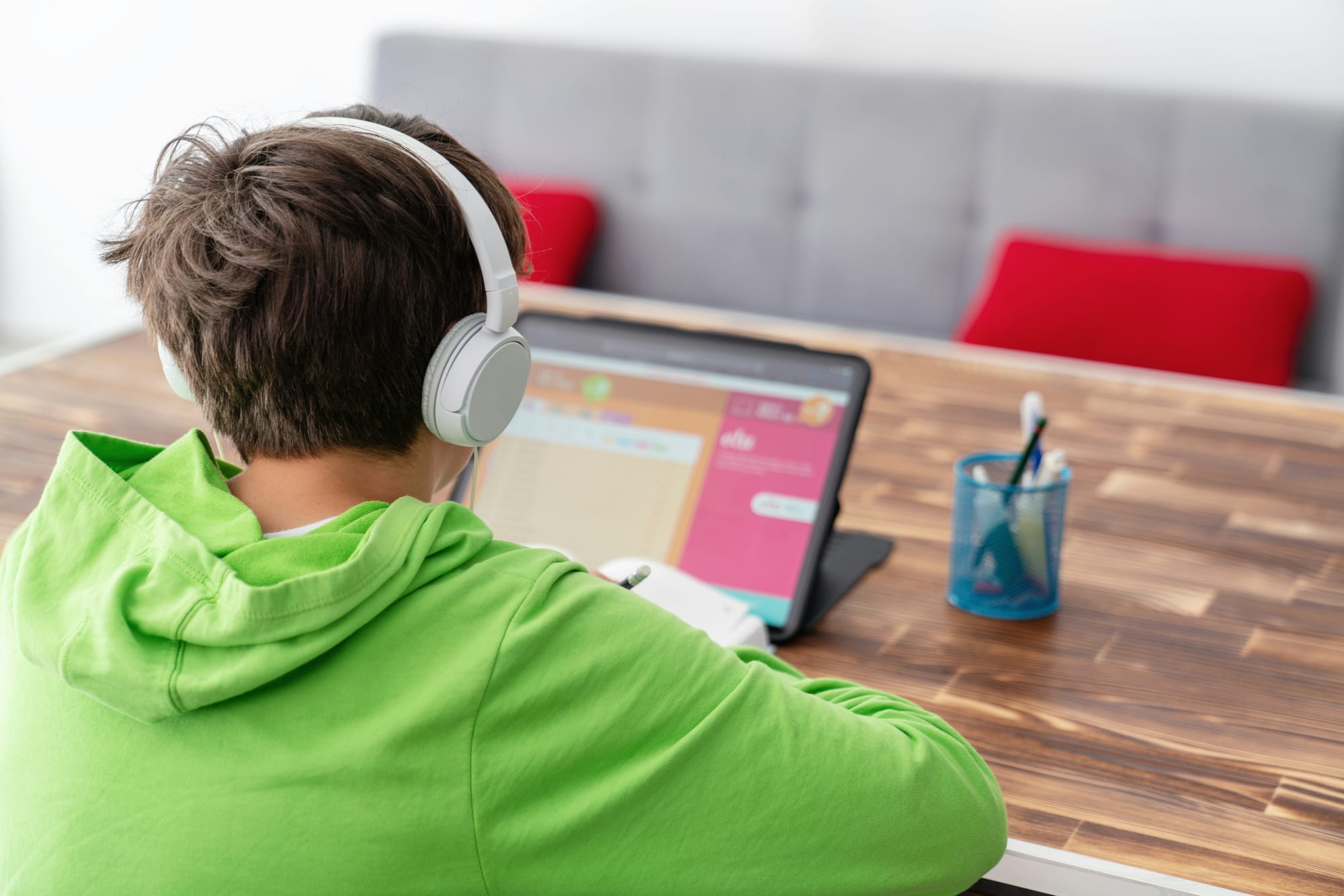
SFUSD’s contract, quietly inked in 2024 for just under $400,000 per year, is designed for K-5 students to engage in 30 weekly minutes of Amira “tutoring,” using headphones and school-issued Chromebooks, though actual usage seems to vary widely by teacher.
Per a state law that went into effect in 2025, California now requires an annual reading screening for its youngest learners in order to catch issues like dyslexia. Last summer, SFUSD decided to go with Amira for that too, having first- and second-graders take its “Reading Difficulties Risk Screening” each fall.
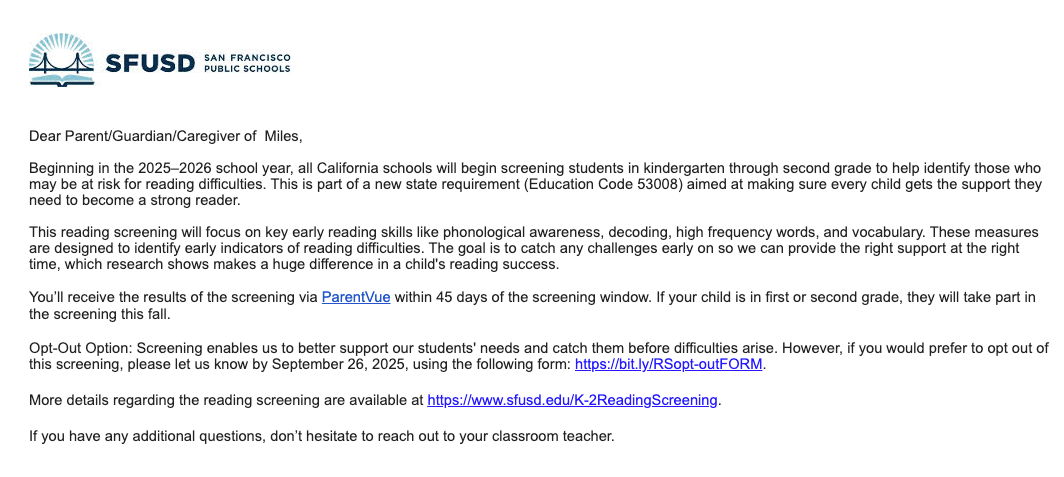
Which brings us to last month: A Sept. 11, 2026 email to SFUSD parents informed us of an Amira screening and our right to opt out — but did not mention AI or recording. It was followed by what appeared to be printed marketing materials from the company, which came home in my son’s backpack.
That email was the first time I heard of Amira, despite the fact that my child is in second grade, which means he ostensibly took its annual screening last fall. Digging through old emails to make sure I hadn’t missed communications in 2025, I found that last year’s screening notification made no mention of the company’s name, let alone the fact that it used AI or recorded students. The language was nearly identical to communications we receive about STAR and other non-AI tests.
As questions flew between parents in WhatsApp groups, I learned I wasn’t alone: The vast majority of us had never heard of this company before September 2026.
“It kind of came out of nowhere,” one dad at my child’s school told me. His first impression came from paperwork sent home with his second-grader: “an opt-out form attached to an upsell form.” He uses AI daily in his tech job, and none of the forms’ vague, defensive language promising unimpeachable data security inspired trust. Like me, he was frustrated that he had to do his own research on the company to make a choice. Like me, he ultimately opted his child out of the screening.
And yet, even in the midst of these conversations, I assumed the lack of clear communication from the district was an oversight. That was before I talked to Ifeoma Ozoma.

A longtime tech policy advocate who’s worked at Google and Facebook, Ozoma is best known for being a whistleblower at Pinterest. Her activism there led to California’s Silenced No More Act, designed to prevent companies from using NDAs to retaliate against workers who speak up about discrimination. She calls bullshit when she sees it.
This summer, Ozoma’s bullshit detector blared when she learned her Santa Fe school district planned to use Amira programs on young students come fall. Ozoma says the company presents a laundry list of ethical issues, including privacy concerns, given the lack of clarity about where recordings go; unfounded claims of efficacy, given the white papers commissioned by Amira that reek of conflict of interest; and evidence that shows the program may have a hard time understanding, and thus give lower scores to, English language learners and students with accents.
Then there’s the lack of transparency, which she characterizes as intentional.
“The whole model depends on parents not finding out,” says Ozoma. “Because as soon as parents are aware, they don’t want anything to do with it.”
After speaking with hundreds of outraged parents, Ozoma concluded that there would be no market for Amira if the company needed to seek consent from each individual family.
“Most of the parents I’ve spoken to are not experts in data privacy, but they immediately understand how fucking creepy it is that their kid has been talking to an AI character all year in school, and the first time they’re learning about it is from… an interview I’ve done,” says Ozoma, who built a website to help parents organize and speak out about the company.
Instead, she says, Amira has skipped the public market entirely by focusing on a population they can target without individuals opting in. Exploiting vagaries in federal law, like the Family Educational Rights and Privacy Act (FERPA) and the Children’s Online Privacy Protection Act (COPPA), Amira argues that the district can consent to data collection on behalf of caregivers — apparently without even informing them.
And that’s how we arrived here: I have to sign forms for any childcare program to take a photo of my kid that they might use on their website, but an AI company recording his voice in class is OK.

“No teacher, no principal, no superintendent is the parent or legal guardian of the kids in their class,” says Ozoma. Her pressure, alongside other parent-activists, has so far prompted some 18 school districts in New Mexico to opt out of using Amira.
“How is it that they can provide consent on behalf of parents to these private companies that are using data for commercial purposes? It just doesn't make any sense.”
Here in San Francisco, I would venture, people are accustomed to tech companies getting away with shit that does not make any sense. Living here means being a guinea pig for self-driving cars one day and chatbot therapists the next. The industry is so enmeshed with civic life that it can be difficult to even have clear conversations about who’s exploiting whom, let alone establish firewalls that would protect citizens from these companies’ growth-driven schemes. And it is worth repeating: Tech barons are always driven by growth, no matter how much money they put towards marketing their empires as capable of altruism.
To review, Sam Altman did not co-chair Mayor Daniel Lurie’s transition team out of the goodness of his heart. Mark Zuckerberg cannot mitigate the damage his company has wrought on the global social fabric by donating money to a hospital. Salesforce has given some $156 million to San Francisco and Oakland’s school districts since 2013 — with more recent grants focused explicitly on getting AI into classrooms — but the company’s mission is still to return value to its shareholders, not to solve the literacy crisis. (Superintendent Maria Su’s recent hair-raising comments at Dreamforce about SFUSD’s “commitment” to Salesforce, in return for its investment, landed a bit like a hostage video.)
We’ve been asked not to think about any of this too hard. Bay Area residents have been primed for years to see these ethically fraught public-private entanglements, which position citizens and city agencies as beholden to tech CEOs, as normal.
But I’d wager that most San Franciscans still don’t want their tax dollars straight-up lining the pockets of AI executives — no matter what social services they claim to be supporting. We’ve seen time and again that infrastructure cannot depend on the whims of individual businessmen, especially not these ones, who trip over each other to bend the knee to Donald Trump at the first whiff of financial gain. They will sell us out over and over, in the White House and in golf-course handshake deals and in ketamine-fueled interviews on their private jets.
And, apparently, in the classroom. If you think Amira Learning is trying to get its tech into as many school districts as possible with as little transparency as possible because its executives have young students’ best interests at heart — and not because kids are a market with very few rights, a population ripe for unregulated experimentation — well then, right this way. I have a super cool bridge to sell you.
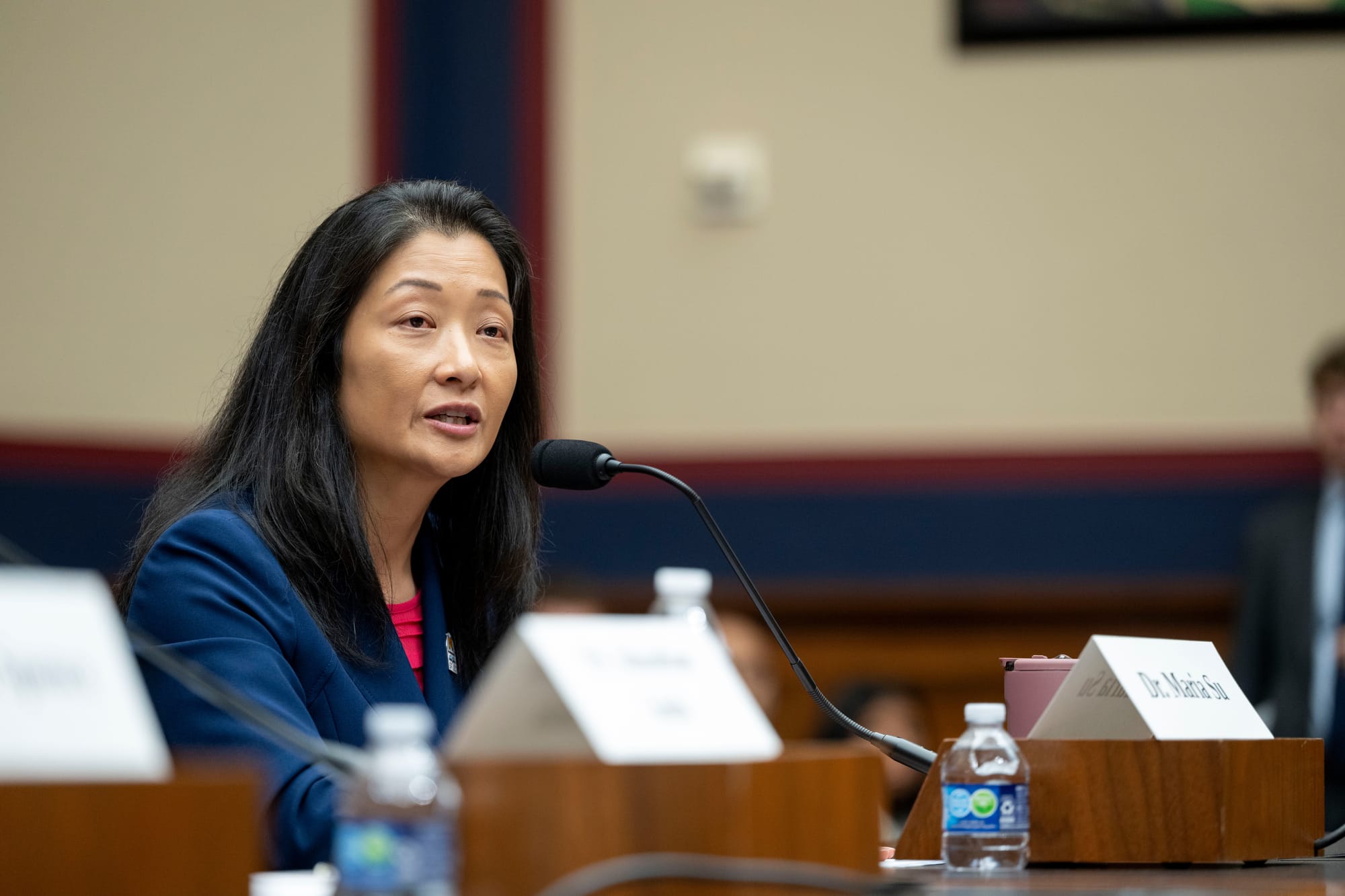
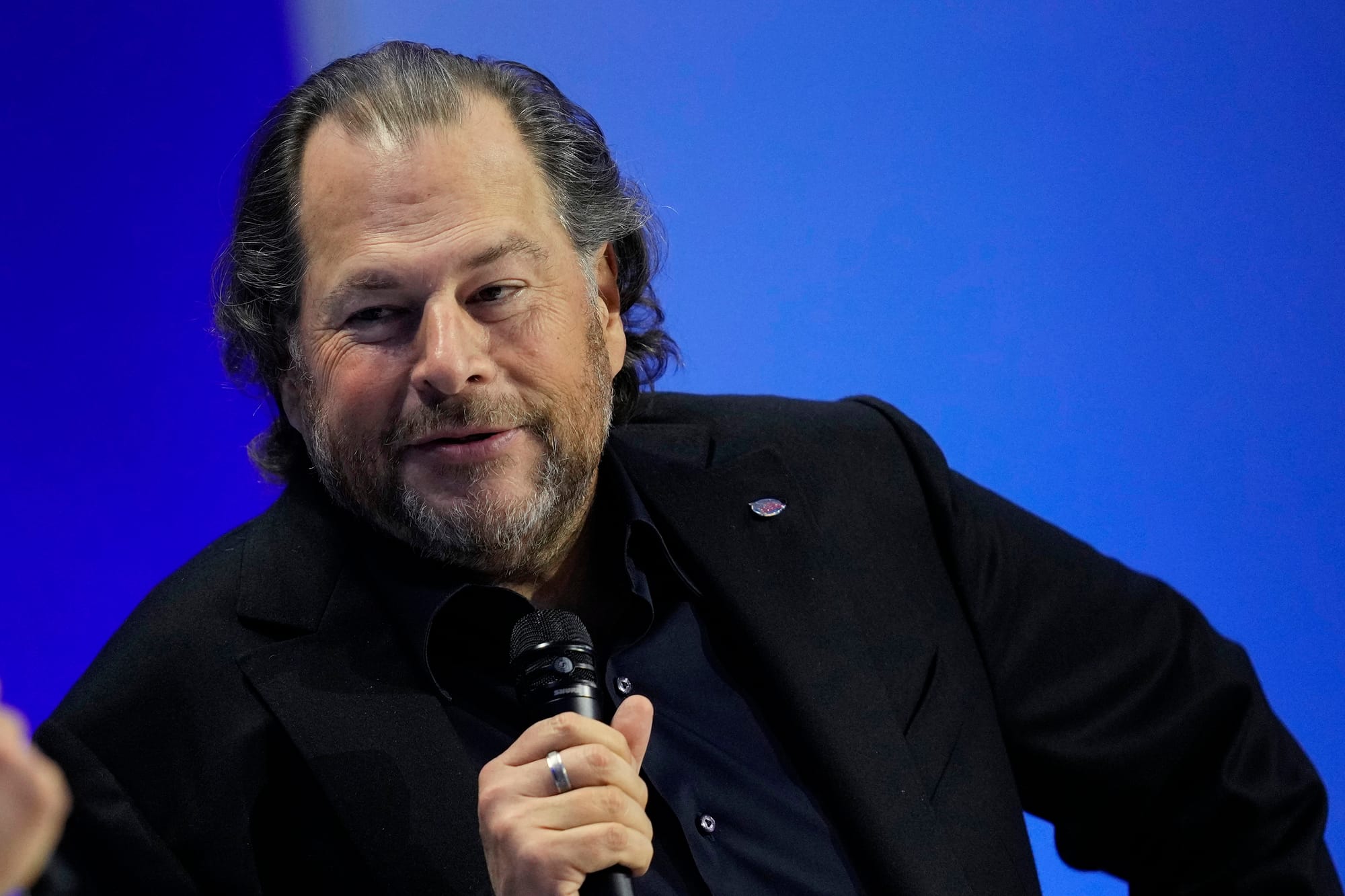
Left: SFUSD Superintendent Maria Su testifies during a House Education and Workforce Committee hearing on parental rights and school content policies on June 10, 2026 in Washington. (AP Photo/Kevin Wolf) Right: Salesforce CEO Marc Benioff at the APEC CEO Summit in 2023 in San Francisco. (AP Photo/Eric Risberg)
Of course, the ed tech explosion isn’t unique to San Francisco. The sector has seen astronomical growth worldwide since 2020, when COVID meant school districts had to figure out how to move learning online, and quickly. Current estimates place the industry’s value around $213 billion.
But regulation has not kept pace with growth. And experts say “educational” branding has papered over ed tech’s propensity to engage in the same shady business practices, such as data harvesting, as any other tech sector. Emily Cherkin, author of The Screentime Solution, likes to say that “ed tech is big tech in a sweater vest.” Meanwhile Mikel Rodriguez, a former Google research scientist, recently told the Wall Street Journal that internally, engineers worried about AI’s effect on young people’s brains: “We’re doing this experiment on an entire generation on cognitive development, with no control group,” he said. “It’s really uncertain what that’s going to lead to in terms of learning.”
Ozoma, who was at Google when the company began contracting with schools to place Chromebooks in the hands of small children, says schools are great business, full stop.
“I don’t think that you could look at ed tech as ever being truly about education,” she says. “It’s about creating consumers [out of] a captive market, because the consumers who are actually using the technology are not part of the decision-making about which platforms are presented to them.”
Benefits to companies include brand loyalty (a child who’s handed a Chromebook at age 5 will likely gravitate toward Google products as they get older) and security (the process of switching vendors is so clunky for schools and government agencies that they tend to stick with whatever they’ve got).
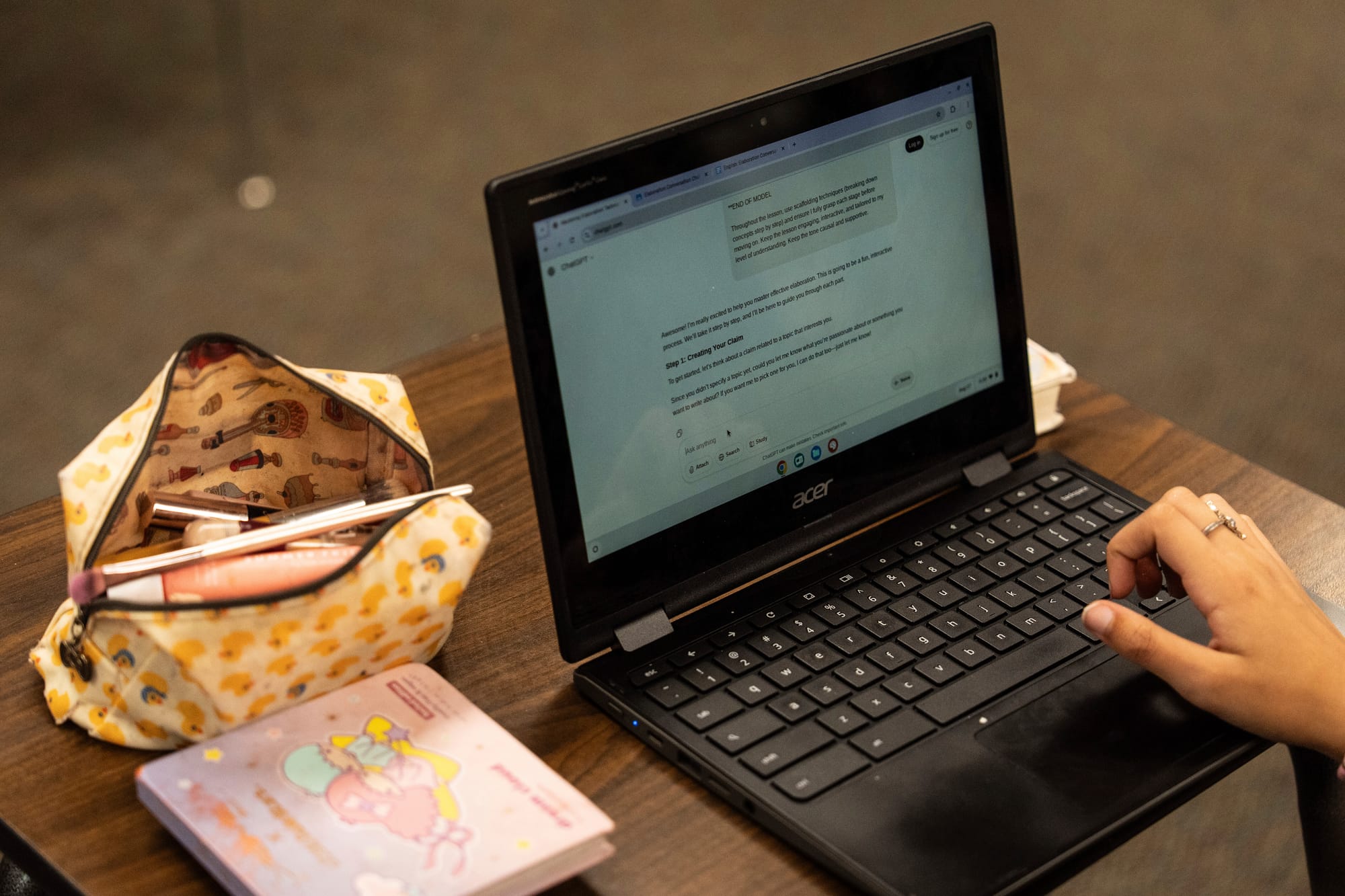
In the absence of meaningful regulation, parents are organizing across the U.S., and many are seeing results. In September, New York City Mayor Zohran Mamdani announced a city-wide moratorium on the use of generative AI in elementary and middle schools. In Los Angeles, public school parents are suing the makers of a program called i-Ready because they had no idea it was harvesting their children’s data.
Both districts hustled to get basic policies governing tech use in classrooms in place for the 2026-2027 school year — things like bans on so-called “companion” chatbots, as well as limits on 1:1 screen time for K-2 students.
San Francisco, by contrast, still has no policy. That’s one of the reasons it was so easy for SFUSD to sign a contract with OpenAI this past winter — with no public input — and quickly deploy ChatGPT Edu to school sites. (The district says the software is used for administrative work by 12,000 teachers and staff. That has not squelched concerns about student data privacy.)
Everyone I spoke with seemed to have a different theory about why San Francisco is so far behind on tech guardrails. But you needn’t be a conspiracy theorist to suspect some connection between the district’s hesitance to implement prohibitions on tech products and the fact that said district, which is in financial dire straits, regularly receives millions of dollars from the makers of those tech products.

Still, parent backlash is building steadily — and the disastrous Amira rollout may prove to be a turning point.
In a September statement, SFUSD told the San Francisco Standard that the district “values student privacy and takes families’ questions and concerns about student information and privacy seriously” and emphasized that teachers should communicate with parents about “instructional tools being used in the classroom when there is an opportunity for families to opt out.”
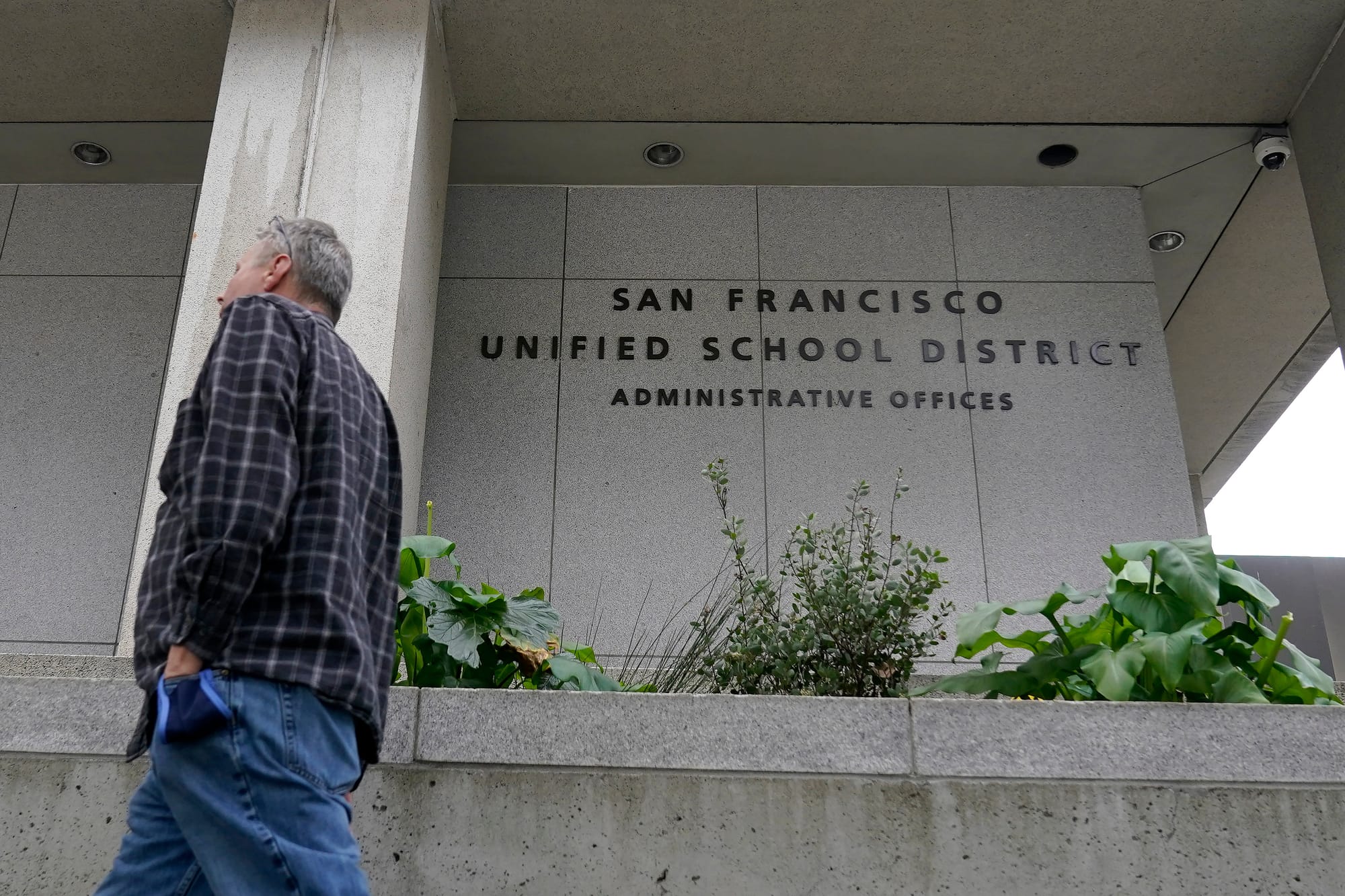
Shockingly, that did not pacify parents. “Our recent efforts to understand Amira, the district’s literacy screening tool, illustrate the need for clearer governance and transparency,” reads an Oct. 2 letter to Su signed by PTA presidents and community leaders at 17 different school sites. The missive includes a question that should have been a public discussion years ago: “What principles and evidence will determine whether, when, and how AI belongs in our children’s education?”
On a recent Tuesday evening, I fixed my kid a plate, then let him watch an inordinate amount of TV in the living room so I could tune into the school board meeting on my laptop in the kitchen. There, during public comment, between horrifying remarks from community members about allegedly botched lead remediation at the Chinese Immersion School (CIS) and racism at Lincoln High School, the group Tech in Check was well-represented by around a dozen speakers. The most memorable was a 6-year-old, who told the board how frustrating it is when Amira can’t understand her. To make the program work, she said, she sometimes has to sit in a classroom closet.
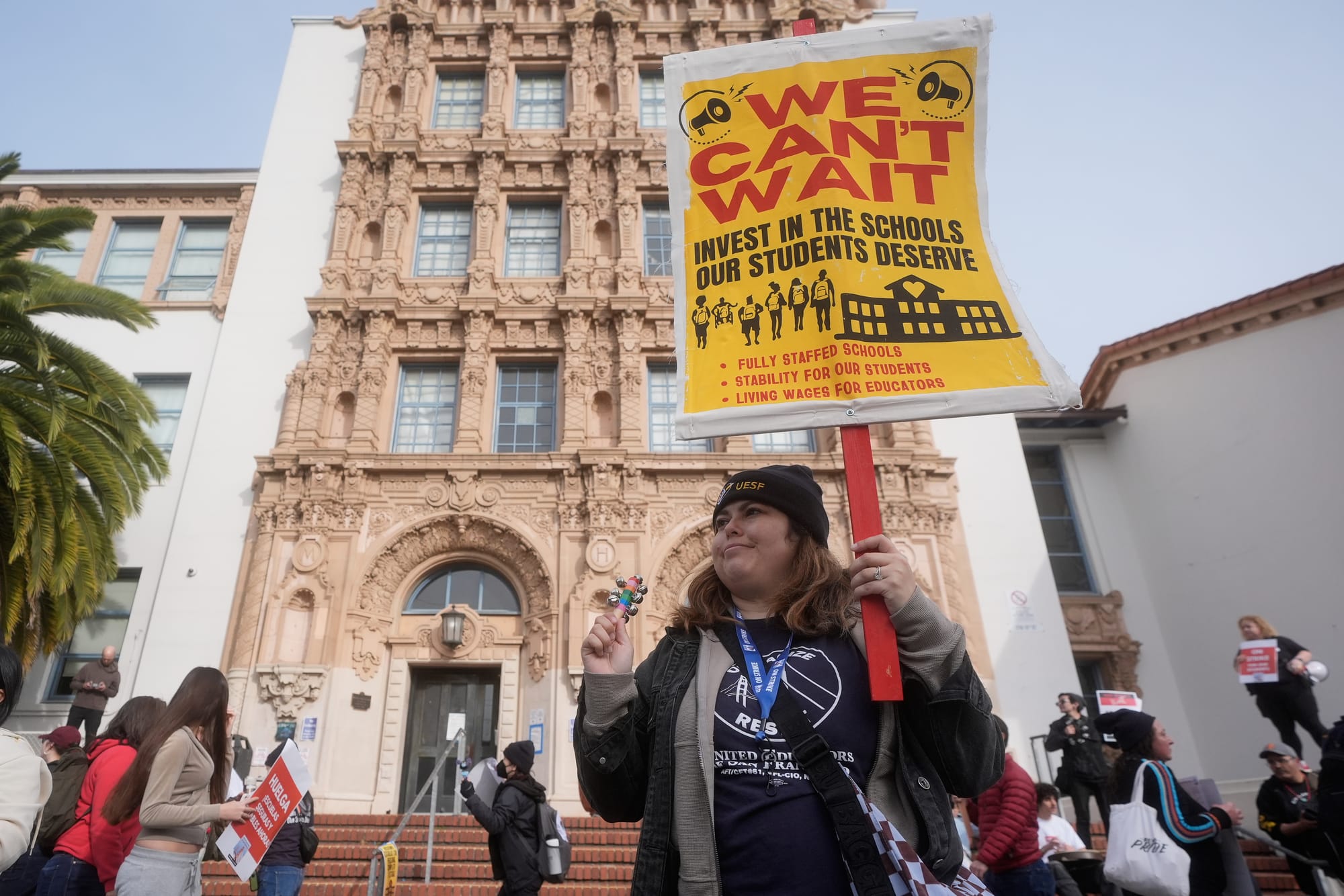
Founded in June 2025 by parents and SFUSD educators Sarah Conde-Sulzbach and Kiersten Reta Snavely, Tech in Check’s goal is a reset towards “intentional” use of technology, including the adoption of a district-wide screen time policy. Nearly 1,100 people have signed a petition launched by the group in September requesting a moratorium on generative AI; informed consent for use of ed tech products that collect data; the discontinuation of 1:1 screen time in TK-2 classrooms; and more.
Tech in Check’s founders want to recenter the conversation around supporting teachers, whose demands in the historic February strike included protections from AI tools that might threaten their jobs. The group’s leaders also maintain that Tech in Check is not anti-tech. In fact, it’s full of parents who work in tech and are upset not because they don’t understand the possible risks of screens in classrooms, but because they understand them all too well.
It was in a group chat with one of these parents that I first heard the following point: Many parents who work in tech have already opted out — not just of Amira, but of the public school system entirely. Around 30% of K-12 students in San Francisco attend private schools, compared with 10% in Los Angeles, 8% in Sacramento, and 12% in San Diego.
And you know who’s overwhelmingly adopted low-tech policies? Private schools. My friend’s second-grader at Synergy is not being recorded by an AI cartoon. Neither are Daniel Lurie’s kids at the San Francisco Friends School, a Quaker-inspired institution where tuition will set you back more than $50,000 a year. Nor are any of the students the mayor appointed to the Youth Commission last month.
“The old digital divide used to be wanting to make sure everyone had access to tech,” says Conde-Sulzbach. “But the new digital divide is, who are the families who have the privilege to protect their children from tech? Who are the ones who don't have that privilege? … so this very much is an equity issue.”
I thought about that as the Board of Education called the meeting to a close. Then I shut my laptop, told my son it was time to stop watching TV, and asked him to go pick out a book to read before bed, feeling acutely aware of my own privilege: that I have the time to pay attention to this, to research it all and ask questions. To protect my child, to the best of my abilities, from creepy YouTubers — as long as he’s at home. And then anger: that I can’t simply trust his public school to do the same.
“I think this narrative that [without tech] our children are going to fall behind rings false,” says Snavely, pointing out that most tech products’ own terms of service specify they’re not for kids under 13. “This idea that we have to feel like — oh, I have to do this or my child is going to be behind the curve.
“We have to think about, well, who is telling us that story? And what’s the benefit for them in telling it?”
