Model or Cautionary Tale? What the South Bay Tells Us About Data Centers
After years of welcoming data centers, San José’s leaders are deciding how to mitigate their harm — while residents increasingly call for a moratorium on new developments.


After years of welcoming data centers, San José’s leaders are deciding how to mitigate their harm — while residents increasingly call for a moratorium on new developments.

Can Democrats actually make a difference in national immigration policy? It'll take more than political will.

Contemplating ‘Godzilla,’ bombs, and memory on the 10-year anniversary of a particular election.

After years of welcoming data centers, San José’s leaders are deciding how to mitigate their harm — while residents increasingly call for a moratorium on new developments.

By now, the thought of data centers may upset you.
They show up unannounced, guzzling an astounding amount of water to keep servers cool. Their power-hungry operations mean you could pay more for electricity as energy costs skyrocket. The backup diesel generators send exhaust into the air we breathe. Their low-frequency noise sends peaceful bird songs away and brings sleepless nights.
They also represent a future stripped of human labor that’s celebrated by duplicitous artificial intelligence billionaires and dreaded by you, the human who is not a billionaire.
Over the last year, national public opinion has shifted drastically, as seen in the successful passage of all but one of 41 ballot measures restricting data centers in the recent midterms. In California, just 24% of registered California voters support building new data centers in the state, and 59% are pessimistic about AI, finding it a threat to jobs and the environment, according to a recent POLITICO poll.
But since the 1990s, Silicon Valley has largely welcomed data centers. Today, it has a higher concentration of data centers than most places in the country — and tension around the issue has been building.
It all came to a head this summer: After significant community pushback, as residents raise concerns about environmental and labor risks, local politicians are promising accountability and a shift toward community buy-in. Historically, people haven’t had a say; in San José, this effort to seek residents’ input on data center development standards is the first of its kind in the state.
But for many community members, it’s too little, too late. “It’s a very after-the-fact afterthought,” says Ellina Yin, whose I Love San José website has provided a hub for those interested in pressuring their elected representatives to regulate data centers. She and others in the community have now called for a full moratorium on new data center development.
As the debate rages locally (including, most likely, at the upcoming Planning Commission meeting on Nov. 18), some advocates now say San José can help show the rest of California what not to do: namely, build a staggering amount of data centers without community input.
Advocates say the situation also underscores the need for statewide regulation. Dashiell Leeds, a conservation coordinator for the Sierra Club’s Loma Prieta Chapter, puts it bluntly: “San José is a cautionary tale.”
When it comes to sheer numbers, Santa Clara County comes in second nationwide for most data centers, according to a September survey by the National Association of Realtors. (First is Loudoun County, Va., with a whopping 233 data centers, both active and in-progress.)
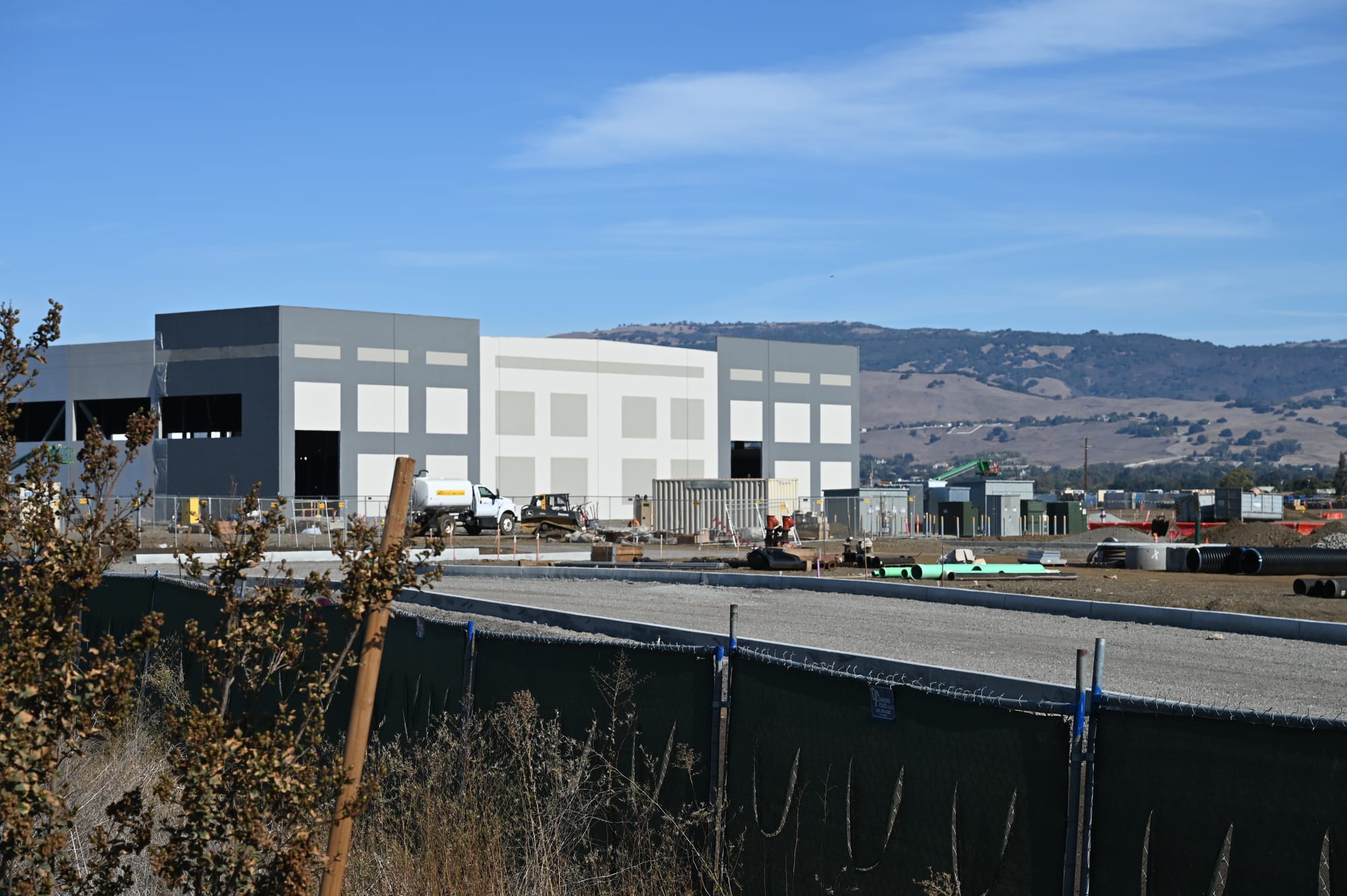
Of the 91 estimated data centers in Santa Clara County, the city of Santa Clara itself takes the cake with 58 active or approved and eight on the way. San José estimates it has 20 in operation — though, in an email to San Jose Inside, the city admitted that it straight-up doesn’t know the actual number because it does not keep track of them all. There are 10 project applications in the planning pipeline in San Jose, and four already approved as of early November.
Negative environmental and health impacts, say residents, are clearly looming. Community members have begun demanding increased regulation and transparency — and they’re seeing some results. After weeks of stakeholder listening sessions, San José city staff unveiled standards for data centers at a packed Oct. 15 community meeting at City Hall. The standards set restrictions on water and energy use, require more frequent and transparent impact reports, and propose fees that boost city revenue. Within the same week, the neighboring Santa Clara City Council also directed its staff to pursue tighter guardrails for data center development.
But to Yin, it feels like a paltry offering, especially after so much development has proceeded without community input. “If you were really genuine about this, you would have done it before any of those applications hit the ground,” she says.
If anything, politicians’ demonstrated tendency to shift with the winds has only cemented advocates’ lack of trust. Just a year ago, data center cheerleaders like San José Mayor Matt Mahan were saying California needed to be more welcoming to data center investment. He struck a strained tone in August, declaring that the city will be “holding corporations accountable for making a positive impact in the lives of our residents.”
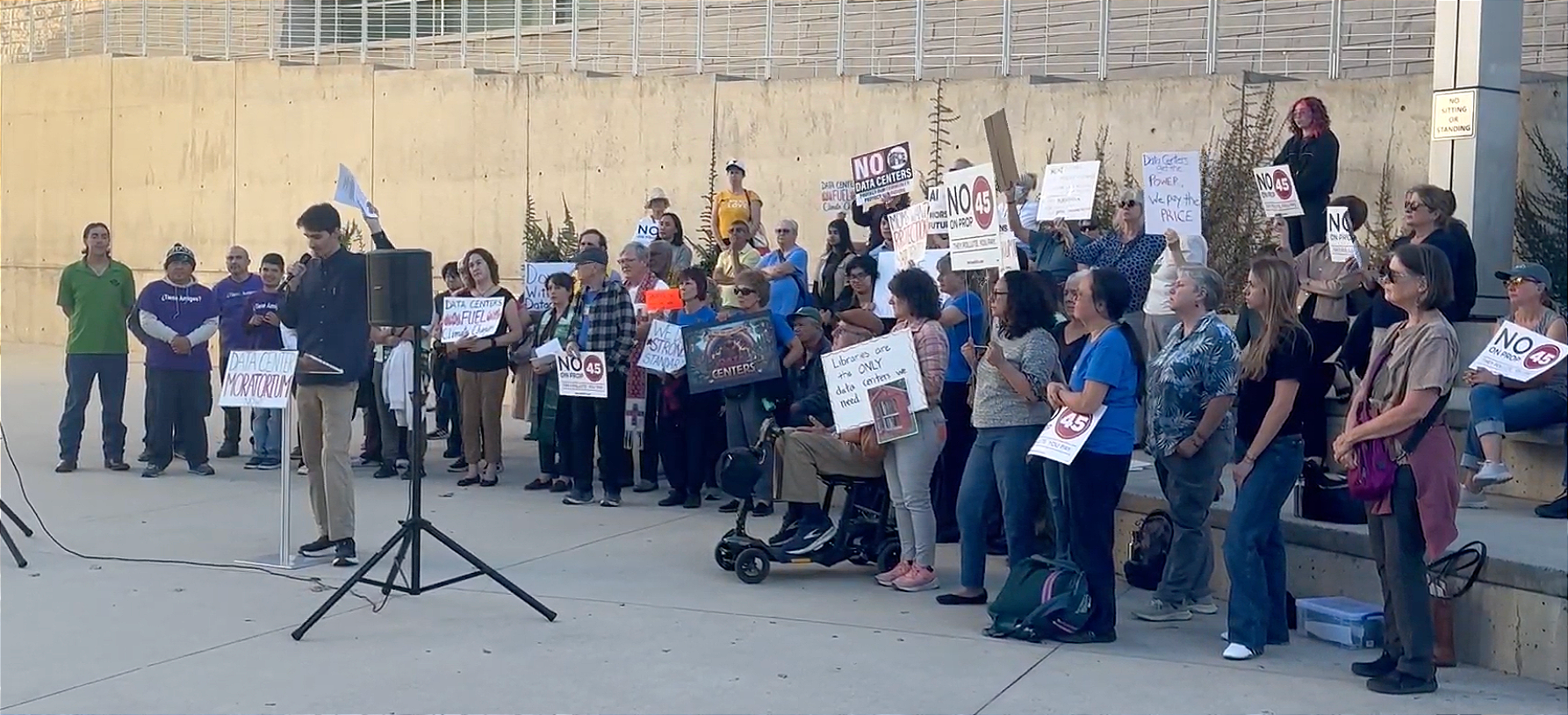
Polls, meanwhile, continue to reflect widespread disapproval nationwide, and across the political spectrum: Less than half of MAGA supporters want AI data centers built in their area. Purple states, like New Hampshire, Wisconsin, and Ohio, have led the nation in ballot measures limiting data center development.
“It's the only bipartisan environmental issue nationwide,” says Iris Stewart-Frey, an environmental studies professor at Santa Clara University.
Since June alone, California cities like Gilroy, San Francisco, and Oakland passed short-term moratoriums; in Monterey Park, voters outright banned them forever. But when one city declares no clankers allowed, developers head to an area more likely to receive them — or ignore constituent resistance.
“Generally, the state would benefit from adopting these regulations on a larger scale,” says Stewart-Frey, who co-authored a May report that found most California data centers lacked publicly accessible environmental documentation, yet increasingly proposed facilities in water-scarce areas. “Because then, the industry would not be tempted to go to places that are more water vulnerable, socioeconomically vulnerable.”
Some quick housekeeping: The words “data centers” can also refer to the “traditional” type that serve basic internet needs. The effects of hyperscale data centers built for AI, however, are much larger and run on hardware known as graphic processing units (GPUs) that become obsolete faster.
Without access to detailed impact reports, advocates like Yin and Marcos Espinoza, the president of the North San José community group Alviso in Action, gauge the potential harms of a given development by the megawatt: more megawatts, more problems. Developments larger than 50 mw must get a small power plant exemption from the California Energy Commission. The average power capacities of hyperscale data centers generally hit 40 mw or more.

Not only do these larger data centers introduce more room for error on electrical grids, but they rely on diesel generators for the slightest power disruptions, often triggering hours-long use. Diesel engine exhaust is classified as carcinogenic and known for links to asthma, cardiovascular disease and other terrible health conditions. So advocates have long called for a cumulative impact assessment — how much harm are the centers in a given region causing, altogether? — rather than the current system of assessing individual projects. But San José’s draft standards don’t mention assessments outside of the usual CEQA review.
The diesel element is hardly a parenthetical, since supply may have a hard time keeping up with demand, says McKenna Beck, a policy analyst at the Natural Resources Defense Council. The density of power makes it trickier to keep the grid humming.
“There’s new reliability risks of this amount of load being concentrated in one area,” Beck told COYOTE. “As we see more data centers come online and supply becomes more constrained, they could be relying more on these [diesel] generators than they anticipated. There are so many drawbacks.”
Santa Clara County has data centers operating with 500 mw capacity now, and an additional 950 mw planned, according to a San Francisco Chronicle tally.
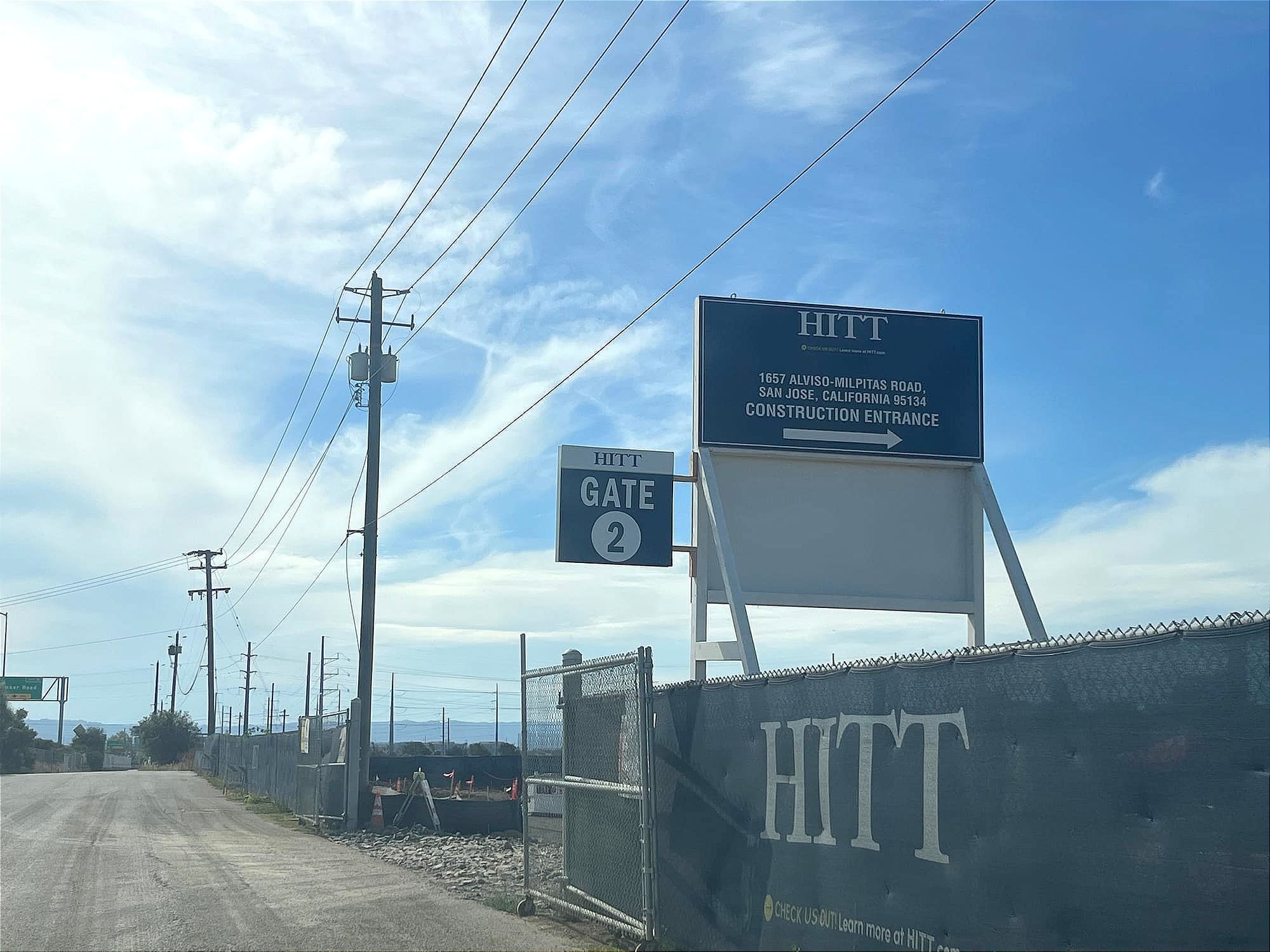
Alviso, a majority Latinx neighborhood butting up along the Bay, is looking at one project for Microsoft that is 99 megawatts with its own substation — PG&E has 31 to transmit electricity for all of San Francisco and northern San Mateo County, for comparison — plus a sewage pump station, and 224 backup generators on standby. A Google project for research and development could require another 250 mw in the neighborhood.
But many in the community say none of these projects has been vetted sufficiently. “People wanna stay in Alviso for generations. How is this data center going to affect kids living there in the next 20 years?” Espinoza said. “We should put more priority on the community than these big developers. The community is the one who has to live with it.”
A San José-born resident who lives near a proposed center in south San José (and asked to be unnamed for privacy concerns) has similar sentiments. The 72 mw development at 5601 Great Oaks Parkway, which includes an on-site substation and 44 backup generators, was just publicized in August and, according to the resident, already looks far enough along that the new standards wouldn’t affect it. They say few of their neighbors know it’s happening. They are bracing for noise that disrupts sleep, and ends the soothing sound of birds, who would have 146 fewer trees to live in, planning documents estimated.
“I think they’re crafting [the standards] in a way that’s not really going to hurt these projects,” the resident said. “I just don’t think they’re thinking about the long-term effects. Would any of these people want their kids raised across from these? If the answer is no, they shouldn’t be building it.”
A San José spokesperson told COYOTE that the standards do, in fact, apply to new development in the pipeline, and will address noise by requiring sound barrier installations and annual reports to prove that decibel levels are within city limits.
The draft standards also include technology restrictions designed to prevent water waste if a development is not using 100% recycled water. If projects opt to use PG&E instead of San José Clean Energy, they must submit an annual report proving 100% carbon neutrality. Large energy projects would now need third-party verification of water and energy use every five years.
At first glance, they might sound like great promises. But longtime residents say the draft standards lack teeth to properly address noise, cumulative impacts of diesel emissions, water quality impacts, and more.
“I’ve been looking at these standards for hours and hours, and I need to say that they are unacceptably weak as they stand right now,” said Mani Bekele, a high school senior with the Silicon Valley Youth Climate Action and People Over Data Centers SJ Coalition, at the packed Oct. 15 meeting. “They are missing more critical things than I can list right now. I understand that you have not yet gotten direction from city council to pursue a moratorium, but you have gotten direction from the community to pursue a moratorium.”
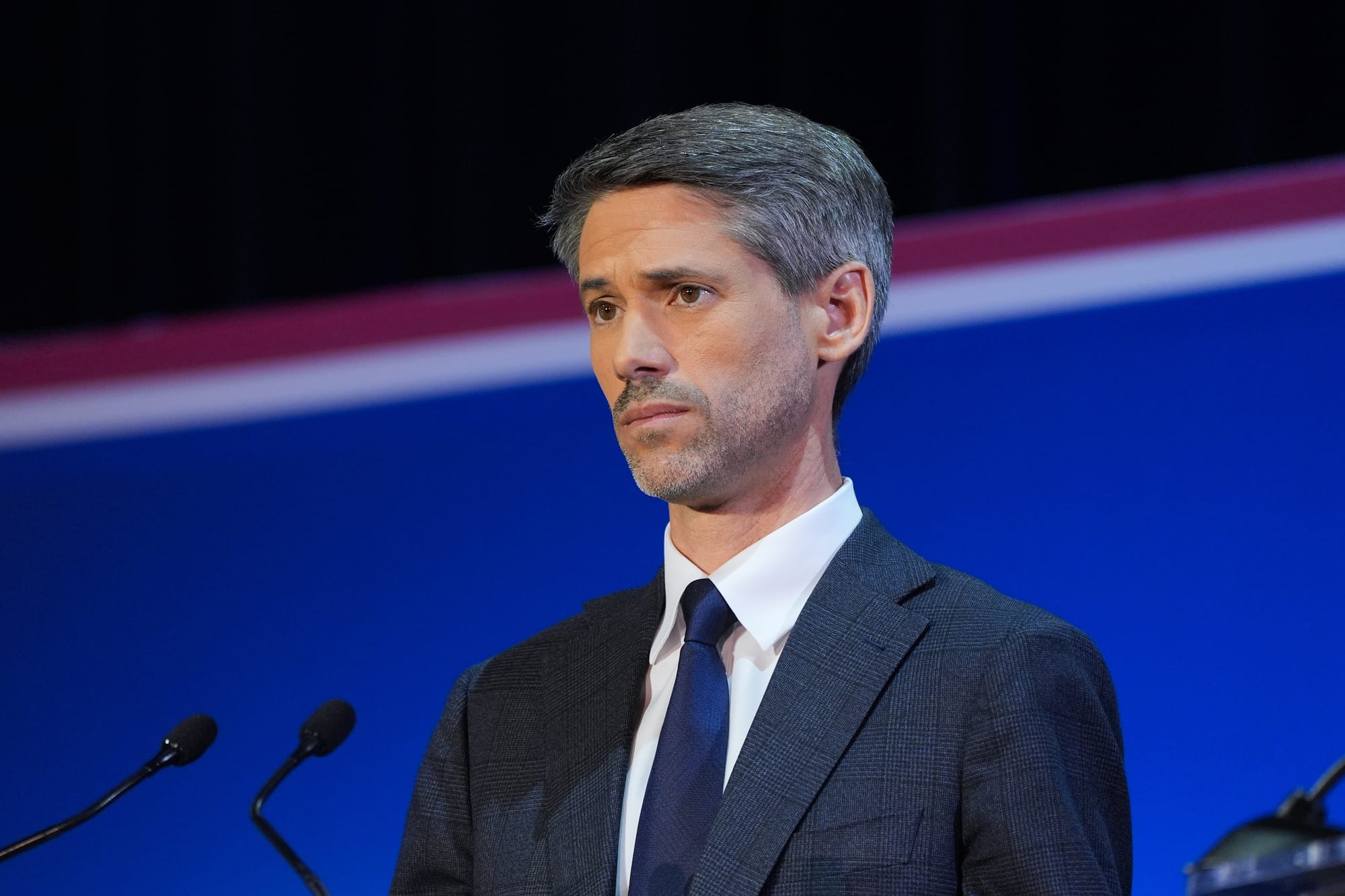
Some local politicians are increasingly aligned with community concerns. Santa Clara City Councilmember Kevin Park, a tech worker who ran for mayor this year, says it’s a mistake to go full-speed ahead on development without considering the collateral damage — not just the immediate environmental impact of data centers, but the job-destabilizing effects of the technology they power. From an energy standpoint, he points out that the constraints are already clear: Despite a build-baby-build approach, the local utility had to stop offering new connection requests for data centers in 2023 because it simply had no more electricity to give. Yet the city is still approving developments.
Another council member and the likely next mayor of Santa Clara, Karen Hardy, also called for a break last month until there are more guardrails. Other council members are in agreement around tighter regulations on air and water, but did not go so far as to bring a moratorium to a vote, San José Spotlight reported.
To justify the welcome mat thus far, local governments have pointed to the revenue they say these developments generate. San José estimates one 99 megawatt data center would bring $17 million from one-time proposed fees in addition to $7 million annually in property and utility taxes. Santa Clara estimates data center taxes brought $35 million in fiscal year 2025-2026, almost the same as its budget for the library and parks combined.
For representatives like Park, that doesn’t justify the potential harm. “That is money we should be leaving on the table,” he says.
At the Oct. 15 meeting, one notable contingent came out in force: labor. Worker after worker spoke proudly about building infrastructure, and providing opportunities in their own neighborhoods.
“I would love for [my children] to be able to have the opportunity to provide just like I did for them, for their families and my future grandchildren,” said Will Smith, business agent to International Brotherhood of Electrical Workers Local 332, and a father of five. “The concerns of the community are valid and it has to be legislated.” Referring to the package of data center regulation bills that Gov. Gavin Newsom signed in September, Smith added, “that is the floor.”
Far from opposing data centers’ existence, the labor contingent spoke mostly to concerns over hiring and standards. Local hiring and hiring of union labor should be mandatory and not just “encouraged,” Jean Cohen, South Bay Labor Council’s executive officer, told COYOTE in October. (New planning documents released in November indicate this is now the case.)
“The city has done a good job of including the voice of the building trades in shaping the policies, and that I think is a good template and standard for other communities to follow,” says Cohen. “We expect City staff to bring forward, and the Council to approve, clear, enforceable [workforce] requirements that apply to every new data center project in San José.”
Cohen indicated that the Council would likely not join calls for a moratorium. ”It seems like the political reality is that these projects are going to be considered for [approval], so our perspective is that we should be spending our time and advocacy focused on the policies and standards we want to achieve, not in stopping the discussion.”
Beck, the policy analyst, acknowledged there’s “100%” tension between the approaches, but that leaders should offer their residents a meaningful voice.
However, the risk of data centers that do get built elsewhere leaking negative impacts in their regions is high. That’s why a city-by-city approach doesn’t cut it, says Bekele, the San José high school senior.
“There needs to be some kind of stronger effort statewide to create a higher floor for standards to protect all communities and not have a collective action problem,” Bekele told COYOTE before the meeting. “Cities could instead come together either unofficially or through state legislation to have all or basic state requirements that data centers need to meet.”
At a tentative meeting scheduled for Dec. 8, residents will have the chance to directly address the City Council before a vote. Coalition members have since organized town halls in districts with some council members in attendance, as well as turnout at other public meetings like the upcoming Planning Commission on Nov. 18.
As it stands, San José’s draft standards are the best in the state — because they are the only ones. But that’s of little comfort to residents, who view the city’s slow response with a profound sense of skepticism, and with no restoration of trust in sight.
The only way for leaders to prove they’re actually listening to their constituents, say some, would be to meaningfully pause development of new data centers until they can prove effective plans are in place to mitigate their harms.
“If you have to worry about injuring people, you will drive much slower,” says councilmember Park. “The problem is you’re in Silicon Valley. The primary focus is money.”
