After Manny Yekutiel’s Campaign Implodes, Who Holds S.F. Leaders Accountable?
After fumbling accusations of sexual assault, S.F. politicians deserve a reckoning.


After fumbling accusations of sexual assault, S.F. politicians deserve a reckoning.

This week we've got polyamorous condors, cardboard costumes, sapphic vampires, and more.

Living in San Francisco means being a guinea pig for the tech industry — but I draw the line at my second-grader.

One frustrated parent’s journey into the heart of darkness that is municipal web design.

It’s Monday at 9:53am, and my husband and I are at our command center: his desktop computer, my laptop, the same spreadsheet open on both. I’ve had three cups of black coffee; my hands tremble above my keyboard. This must be what it felt like at NASA Mission Control when they were directing the Apollo moon landing, I think.
This morning has been flagged on my calendar for months. It is March 16, 2026, priority registration day for city-run summer day camps in San Francisco. For the uninitiated, these programs run about half the price of private camps. But spots are limited (roughly 1,200 kids were able to attend last summer) and competition has always been fierce. Pre-internet, parents would line up outside San Francisco Recreation and Parks Department headquarters clutching their paper forms, ready to duel at dawn. But in March 2006, the department joined the world wide web. Now, we battle online.
Theoretically, we have a golden ticket — a need-based scholarship from SFRPD, which both cuts the price of programs in half and grants us early registration. The savings are no small thing for a family in which one parent is a musician and the other is a journalist. We’re talking day camp for around $150 to $250/week. And the early registration means we’re less likely to see the word “full” next to every camp we want (an experience that has led many parents I know to give up on even attempting city camps and go the private route, forking over $8,000 to $10,000 per child each summer so they can work).
But thanks to the Kafkaesque nature of the Rec and Park website, registration is still a gauntlet. In 2025, the first year I tried to sign our son up for camps, it turned out that the scholarship was attached only to my husband’s email address. When I logged in with my email, even though our accounts reflected that we were one scholarship household, the site wouldn’t let me register on the priority date. In the 10 minutes it took to figure this out, our first-choice camp, an art and science program at the Randall Museum, was full.
We will not be making that mistake this year. Just in case, we are both home (the privilege!) with our passwords ready. We open the tabs for the camps we want at 9:55, ready to type at lightning speed when registration opens at 10am.
And then it is 10am, and the website won’t load.
We try different browsers. We try our phones. Throwing caution to the wind, I try logging in with my email address. At 10:07, I call the number on the website and reach a woman who cheerfully informs me that the site has crashed. Registration is postponed until 10am the next day.
I consider chucking my laptop out the window onto 16th Street.
I do not.
I will need it to sign up for camps, god or the devil willing, tomorrow.

There’s an oft-repeated refrain that it’s somehow crazy to raise kids in San Francisco. This is not true. The cost of living is crazy, sure. But the weather is awesome, and there are countless free cultural activities. San Francisco kids grow up taking Muni, eating garlic noodles, and — maybe best of all — running wild in the city’s plentiful parks. A 2017 report from the Trust for Public Land found that 100% of San Franciscans live within a 10-minute walk of green space. When you are a parent in an apartment without a backyard, this is like saying you live near a goldmine.
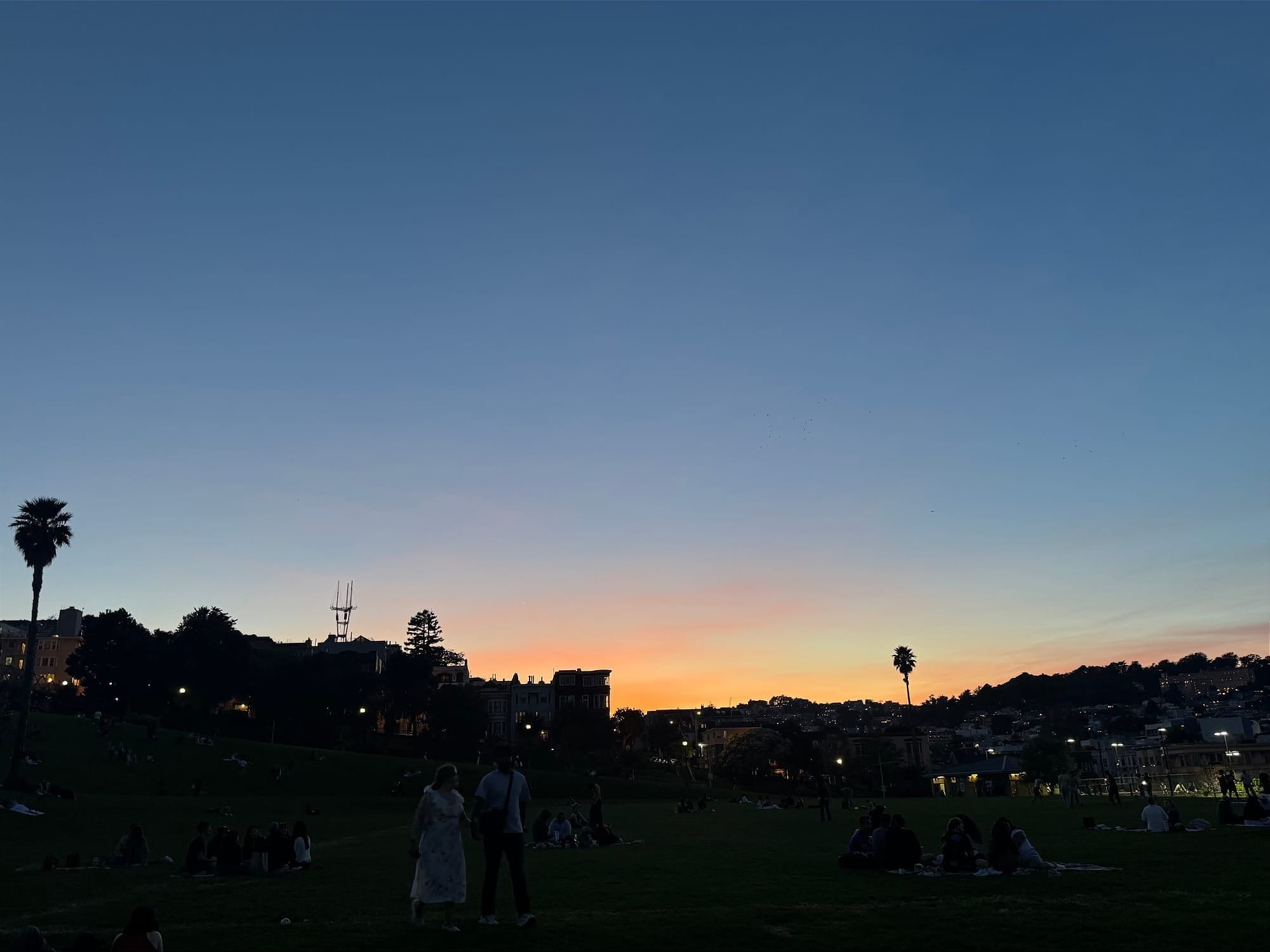
One recent Sunday, we spent the afternoon in Golden Gate Park, then went to meet friends in Dolores Park for the evening. I lay in the cool grass, the calls of paleta and psychedelics salesmen all around me, as my kid tired himself out at the playground and the sun set behind the palm trees. We returned home, dirty and happy, eight hours after we’d left the house.
No, in my experience, what makes life with kids hard in San Francisco is infrastructure: the poorly designed systems with which you must constantly interact to access the city’s services for said kids — the public programs you rely on if you’re at the lower end of the income spectrum.
To wit: The San Francisco Unified School District lottery system is so convoluted that I’m one of some 9,300 members of the “SFUSD Lottery Support Group” on Facebook, which should really employ a full-time mental health professional. Once your child is enrolled in school, you use a system called ParentVue, which appears to have been designed and then frozen in 1998.
But there is no better example, here in a city ostensibly at the forefront of technological revolution, than the baffling online purgatory one must enter to do business with the San Francisco Recreation and Parks Department.
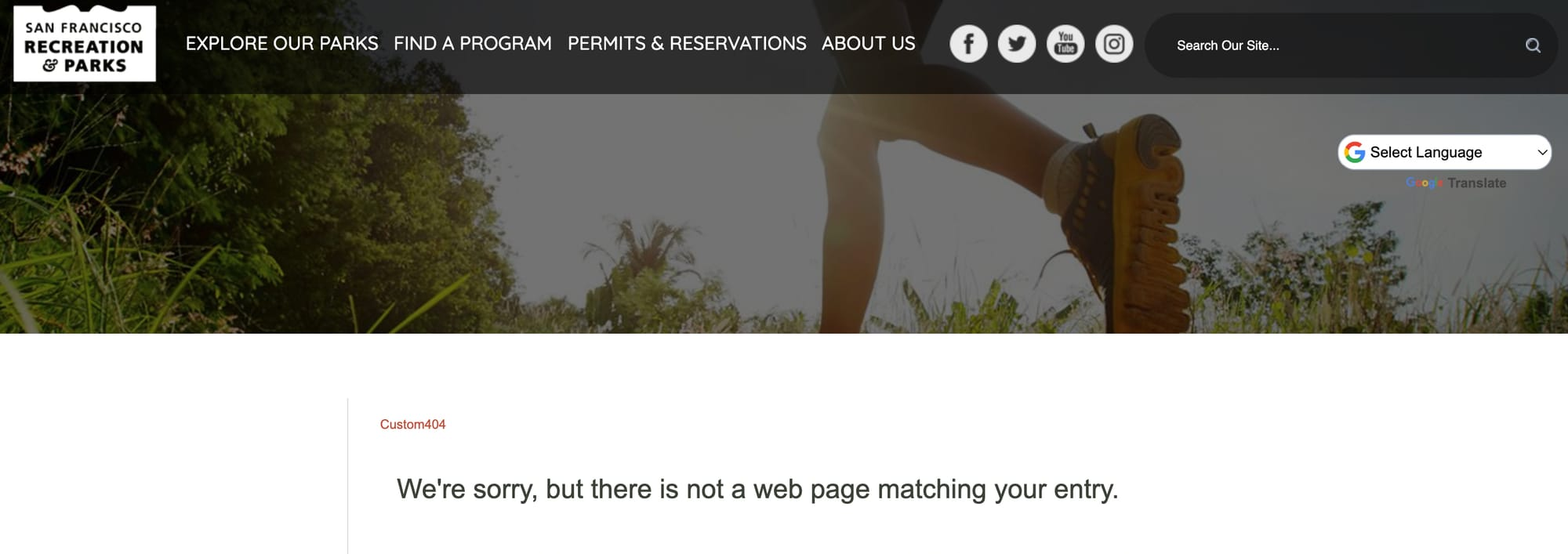
“It’s just so bad,” says Michael Howley, a San Francisco resident who has all but given up on navigating the hedge maze that is sfrecpark.org. Like me, Howley has become preoccupied with why the site is such a goddamn mess.
“The overwhelming impression I get is that it’s been built like geologic strata over the years,” he says. “Every time someone at the department has an idea to put something on the website, they build a new process for it, and never touch the existing stuff.”
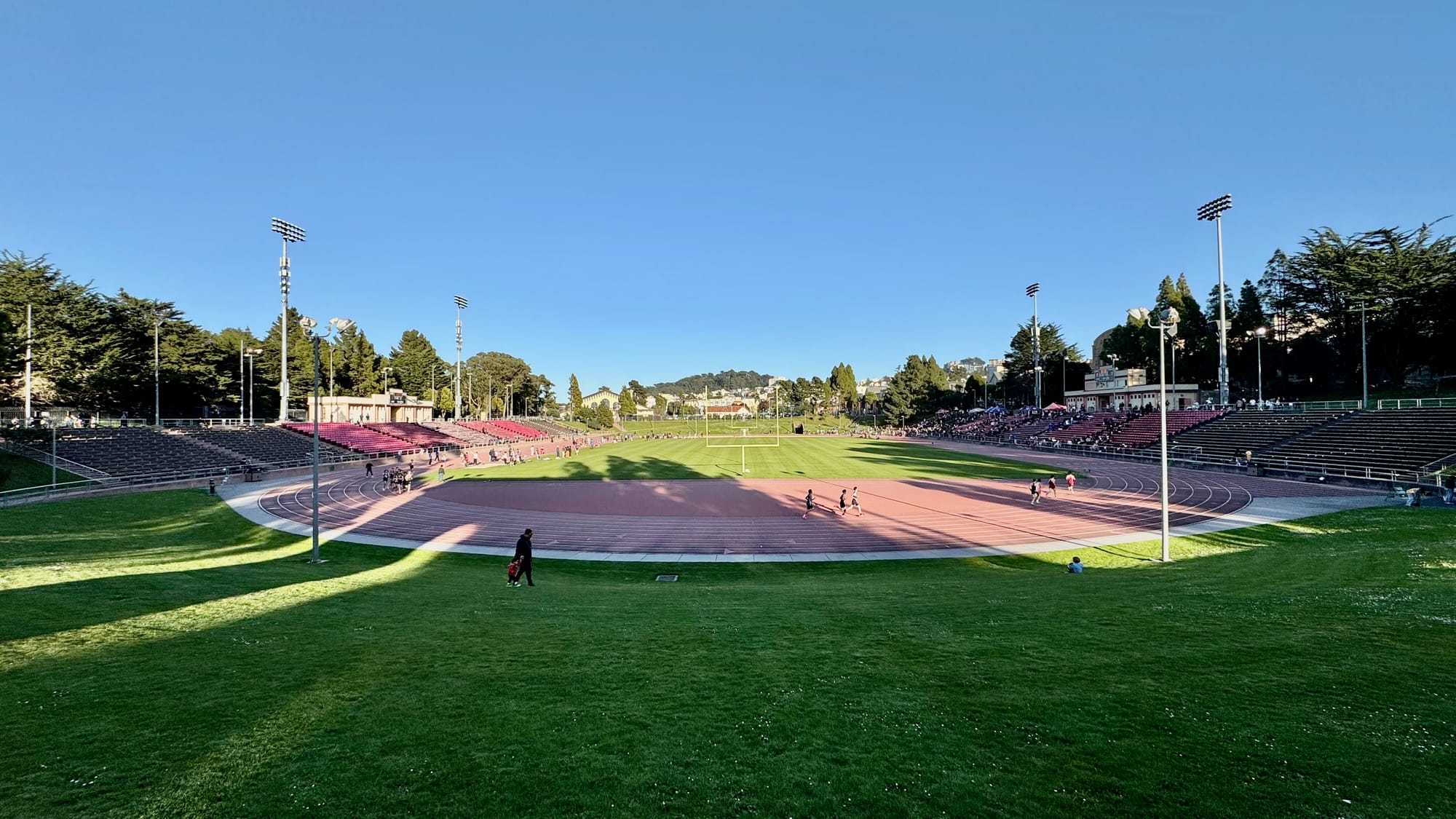
Howley and his wife live across the street from Kezar Stadium, and have tried to use the Rec and Park site to find out what’s happening there. “Graduation season is my favorite time of year here, because you hear all the families cheering for the kids,” he says. “Every once in a while, I want to know what’s going on. If there’s a high school football game, I’d love to know: Is there a schedule? Could we go to a game? Do we have to buy tickets? And there’s just nothing.”
The most information he’s ever gotten, he says, is from a poster board that’s sometimes zip-tied to the stadium fence with a QR code, which opens a PDF that shows when the gates will be closed. Searching for info about music at the Golden Gate Park bandshell has yielded similar results: “After three or four clicks around, I found a page saying ‘There are concerts in the bandshell,’ and ‘There’s a Golden Gate Park band,’” he says. “Is there a schedule? No. Programming? No.”
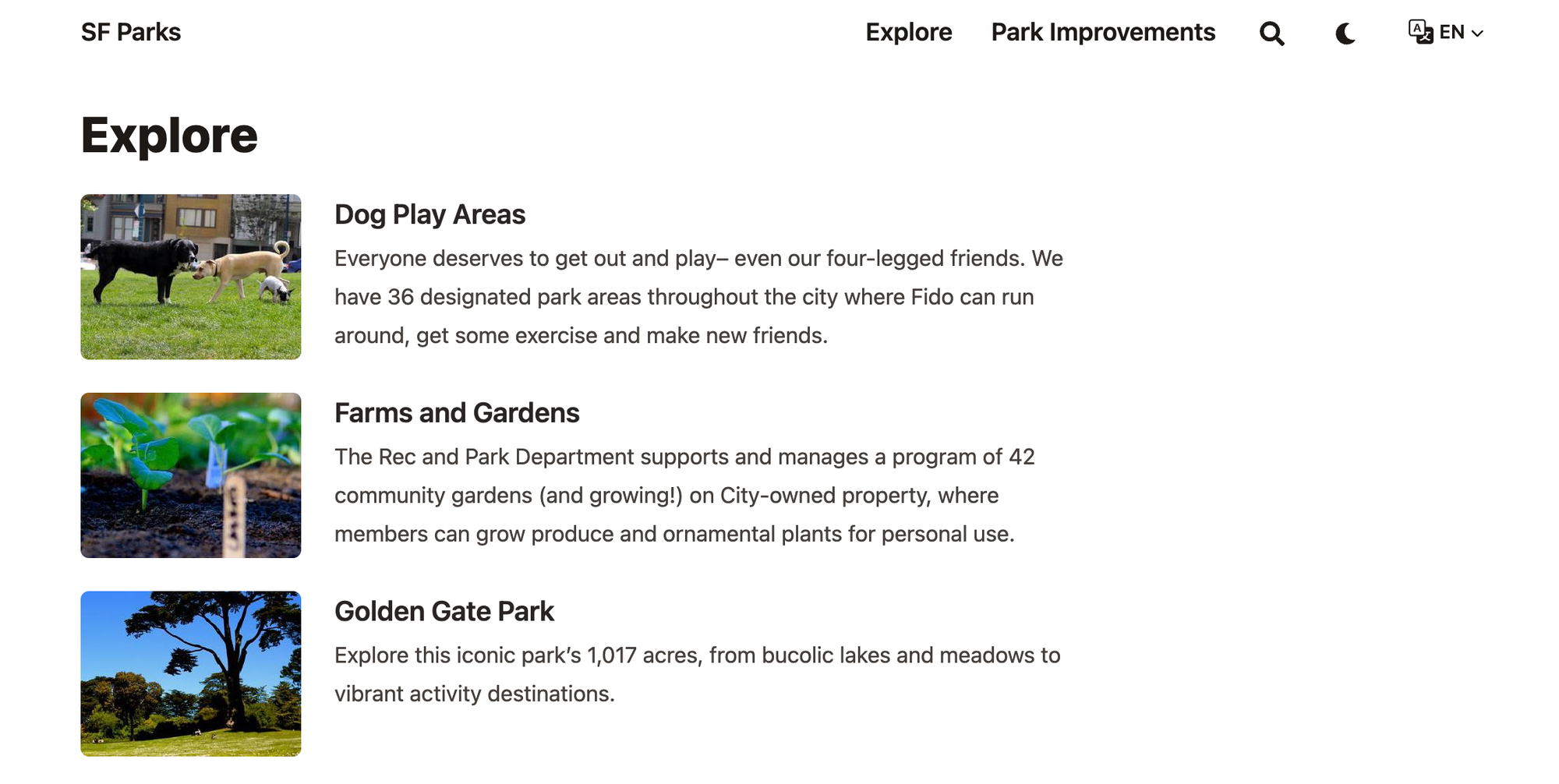
Software engineer Eyob Woldeghebriel found the user experience so frustrating that he took matters into his own hands: The Mission District resident used open-source tools to build a cleaner, leaner, unofficial parks site last year at sf-parks.com.
The catalyst? In December 2024, he was on a walk with a friend and decided to check out two new trails that had opened near Twin Peaks. Googling took him to sfrecpark.org, where he clicked a link to trail information.
“I remember opening it on my phone and trying to scroll down, and the page went blank. So you wait 10 seconds, reload, but any time you tried to scroll, the entire page would disappear,” he says. “It was so befuddling. I was like, I have no idea how they could possibly be messing up what is just a static page that has text on it. I don’t know why disappearing would even be an option.”
So over his days off around Christmas, Woldeghebriel built a tool to scrape the main website, turn the text into HTML, and then regenerate it in a user-friendly blog format. He’s been updating the site roughly weekly ever since.
One catch: Users can’t reserve picnic tables or sign up for rec programs, tasks that normally happen through the site’s registration portal, on a platform called ActiveNet. (More on the websites-within-the-website in a moment.)
Still, for info about park hours, trails, and more, the site is a breath of fresh air. Woldeghebriel fixed accessibility issues, ensuring his site’s drop-down language menu listed languages in their native form (e.g., “Español”), considered a basic best practice in web design. He then translated the site into San Francisco’s five official languages other than English. (On sfrecpark.org, users are offered a list of languages all in English, and selecting the one you want simply runs the website through Google Translate.)
Tamara Barak Aparton, communications director for San Francisco Rec and Park, says the department is always open to feedback.
“Our website and registration process has actually improved over the years, last year’s glitch notwithstanding,” says Aparton. “And of course we are always looking for additional ways to improve and welcome ideas.”
They might want to take some cues from Woldeghebriel. The engineer says he sees about 2,000 hits a month, with a large number from non-English users. It turns out Google has the real Rec and Park site indexed only as an English language site, which makes it difficult for non-English speakers to even find it by searching.
“Of course, this is a temporary solution until we can get the SF Rec and Parks department enough funding to refresh their site,” writes Woldeghebriel at the bottom of his landing page, “at which point I’ll be more than happy to take this site down.”
Alas, if it was simply a matter of holding a bake sale, I’d be the first to make brownies. Yes, the city’s financial woes are part of the equation: A little over a third of the department’s roughly $263 million annual budget comes from the city’s general fund, which has faced deficits to the tune of hundreds of millions of dollars over the past three years. The rest is composed of money from the Open Space Fund, a property tax set-aside for parks, as well as revenue generated by the department itself via permits and reservation fees.
But Adrianna Tan, who was director of product management for San Francisco’s digital services team from 2019 to 2024, says it’s not just a budget issue. In her tenure, part of Tan’s mandate was to unify some 200 different websites for city departments that had been operating in their own silos, with their own software, for decades.
Not every department wanted to play ball.
“The way you can tell if a [city site] is something that we’ve done, versus a department that doesn’t want anything to do with us, is ‘Is the website janky or not?’” says Tan with a laugh. On sites that Tan’s team was able to overhaul, the copy is accessible, clean, and available in multiple languages. You can guess if sfrecpark.org was among them.
“When I started, there were multiple sfgov.org sites, there were Blogspots, there were random WordPress sites,” says Tan. “San Francisco, apparently unlike many other cities, is extremely fragmented. Like, why did we even have 200 or more different city websites? Because every department was just doing their own stuff, and they were very used to it.”
Tan can’t speak specifically to the Rec and Park website, however, because “they were just not that interested in getting any services from us,” she says.
“The few times I did speak to [SFRPD], what stood out for me was that they had their own thing.”

Confession time, dear reader: I began reporting this story in March. I made calls and record requests, then compulsively combed the findings for a narrative. Eventually, I thought, I would stumble upon a smoking gun that would transform this essay into a piece of cohesive accountability journalism.
What I found, instead, was that the Rec and Park website sucks for several boring reasons. Unlike some recent high-profile cases of corruption and conflict of interest involving city software contracts, most of what I discovered would amount to a headline like “Bureaucracy Unwieldy, Annoying.”
Essentially, the site is bad because it has to perform many different functions, so the city has contracted with a host of specialized third-party Software as a Service (SaaS) companies, then stuck their products together with chewing gum.
The city arrives at these contracts via a notoriously complex procurement process that rewards the lowest bidder — say, CivicPlus out of Kansas, or Active Network, out of Dallas — then seemingly disincentivizes switching vendors in favor of just extending whatever contract made sense a decade ago. It doesn’t help that the department’s purview covers more than 230 parks and facilities: content has been added one bit at a time, by different teams, over 20 years.
The resulting interface is actually at least six different interfaces in a trench coat — a nesting-doll approach to web design that feels a bit like wandering, sans map, through a wildly disjointed theme park. It’s Disneyland inspired by Dante’s Inferno, and also you’re required to traverse the grounds in a blindfold, hands tied behind your back, to reserve a picnic table for a birthday party.

The current cost for software used to run the site comes to roughly $215,000 a year, according to Aparton. I am told this is not an outrageous figure when you consider what’s needed to serve a city of San Francisco’s size.
Could the site be streamlined, if the department invested in a new custom build for which the burden of maintenance would fall to in-house IT staff? Probably. Could any of the Bay Area’s tech titans code a more user-friendly rec program database in a matter of weeks? Probably. Is another public-private partnership that further weds the city to craven billionaires a good idea? I’m gonna say no.
Anyway, gun: not smoking.
You might think this would make me stop caring. You would be wrong.
That’s partly because, as I was doing all this tepid discovery, my family had a summer full of wonderful offline experiences provided by the San Francisco Recreation and Parks Department.
Which is to say, I got angrier that the site is bad because the programming it’s gatekeeping is so good.
For example, we got into Camp Mather, an idyllic city-owned family camp on the outskirts of Yosemite, where we played ping-pong and swam in a lake every day while our city kid went fully feral in the woods.
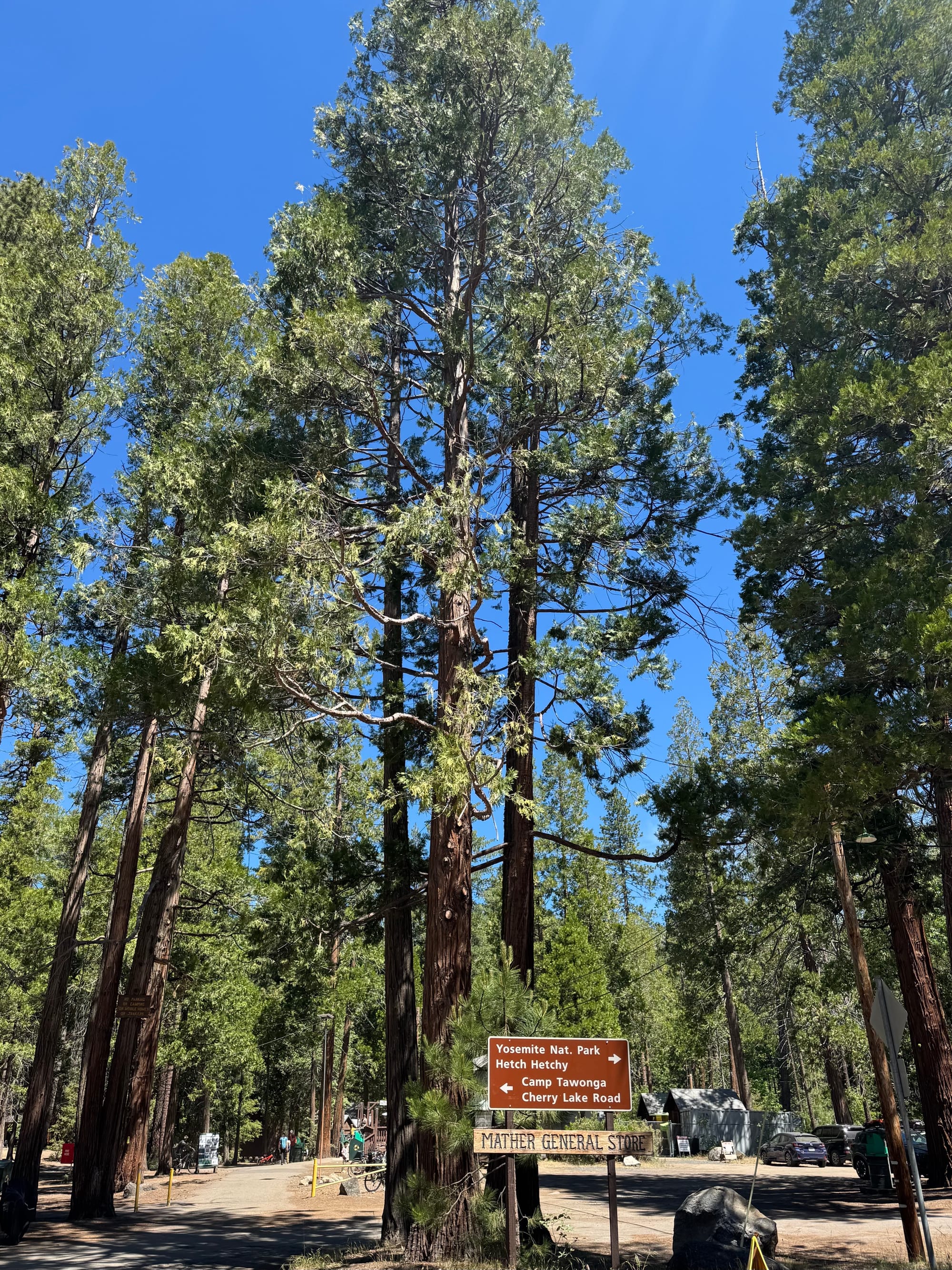
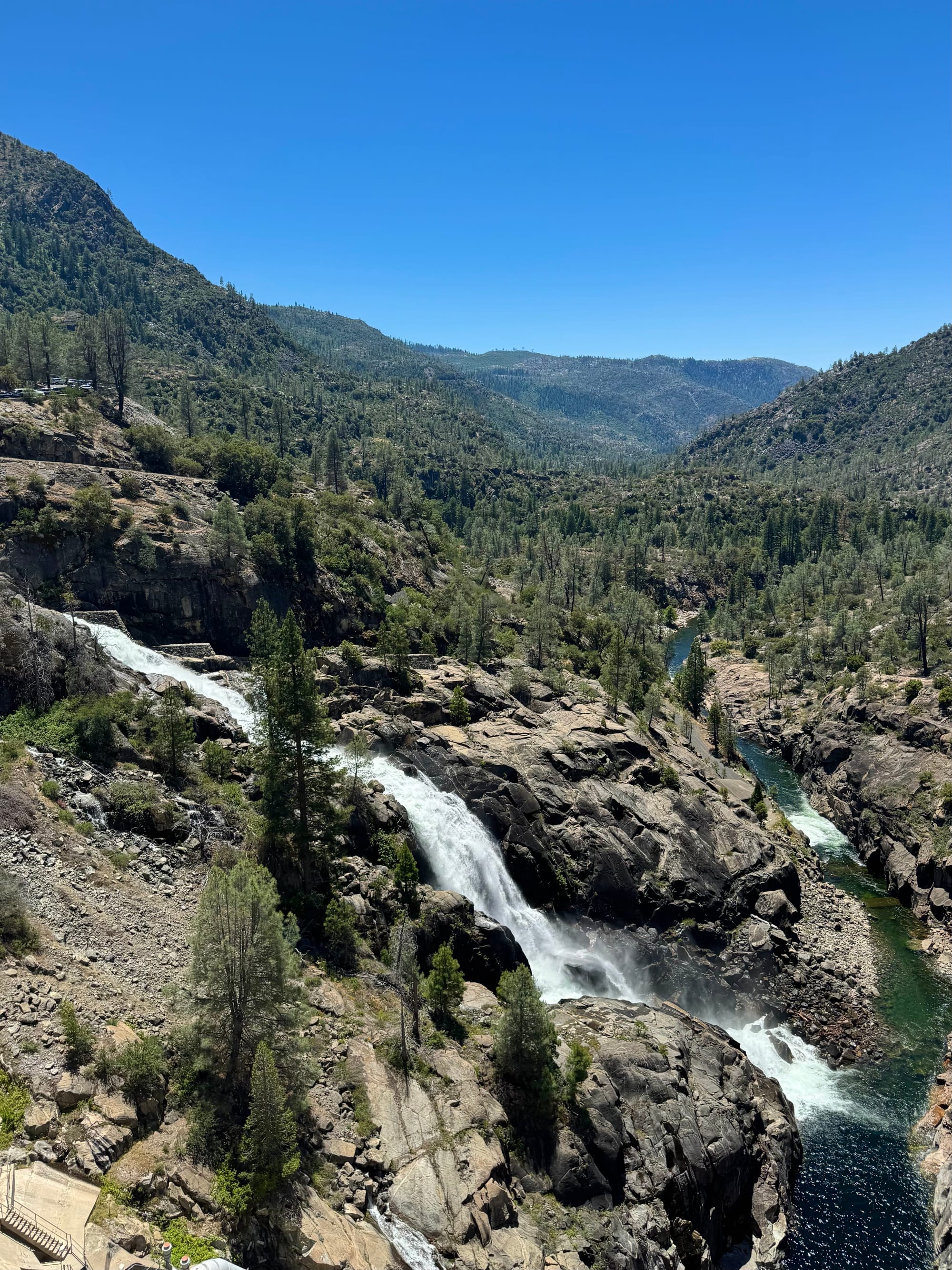
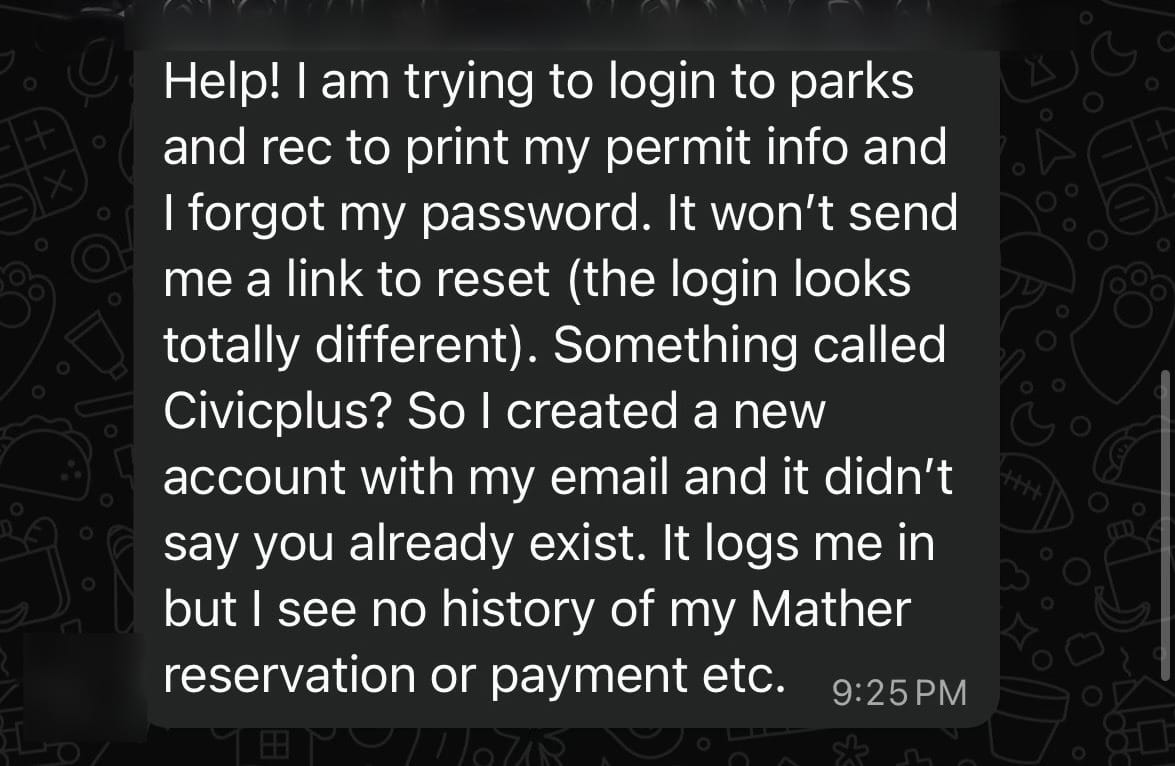

Clockwise from top left: The entrance to Camp Mather, in Groveland, California; Hetch Hetchy; a wristband I had to wear all week while trying not to think about the fact that I hadn't finished this story yet; an attendee cry for help in the Camp Mather WhatsApp group. (Emma Silvers/COYOTE Media Collective)
Of course, the required interactions with the website were less than ideal. Leading up to our week there in June, I joined a massive WhatsApp group where attendees traded tips about how to navigate the Rec and Park site to figure out if you got in (Mather is lottery-based). Frustrated by the lack of official info online about accommodations, one woman built mathergather.com, a community resource for sharing photos and packing tips.
Later in the summer, we reaped the rewards of the panicked call I made to the Rec and Park office on March 17, 2026, when the registration portal was back up and running but wouldn’t let me sign up for camps for some mysterious new reason.
“Oh, weird,” a nice woman said on the phone. “Your scholarship is active but there was a step missing on our end.” Perhaps sensing I was about to commit violence, this angel then registered our kid for camps through the site backend while I waited on the line.
Thus, via a workflow I cannot recommend, the boy lived it up at fantastic city rec programs all summer. He went to sports camp, art and science camp, and Junior Giants, a free baseball team whose registration process revealed yet another portal we’d never seen, a sort of seasonal CMS Brigadoon. The finale was San Francisco institution Camp Silver Tree, where he had wonderful counselors and discovered the Glen Canyon Rec Center’s climbing wall. (You can reserve a same-day slot at said wall for $15/hour every morning starting at 10am, once you find the place to do so in the bowels of sfrecpark.org.)
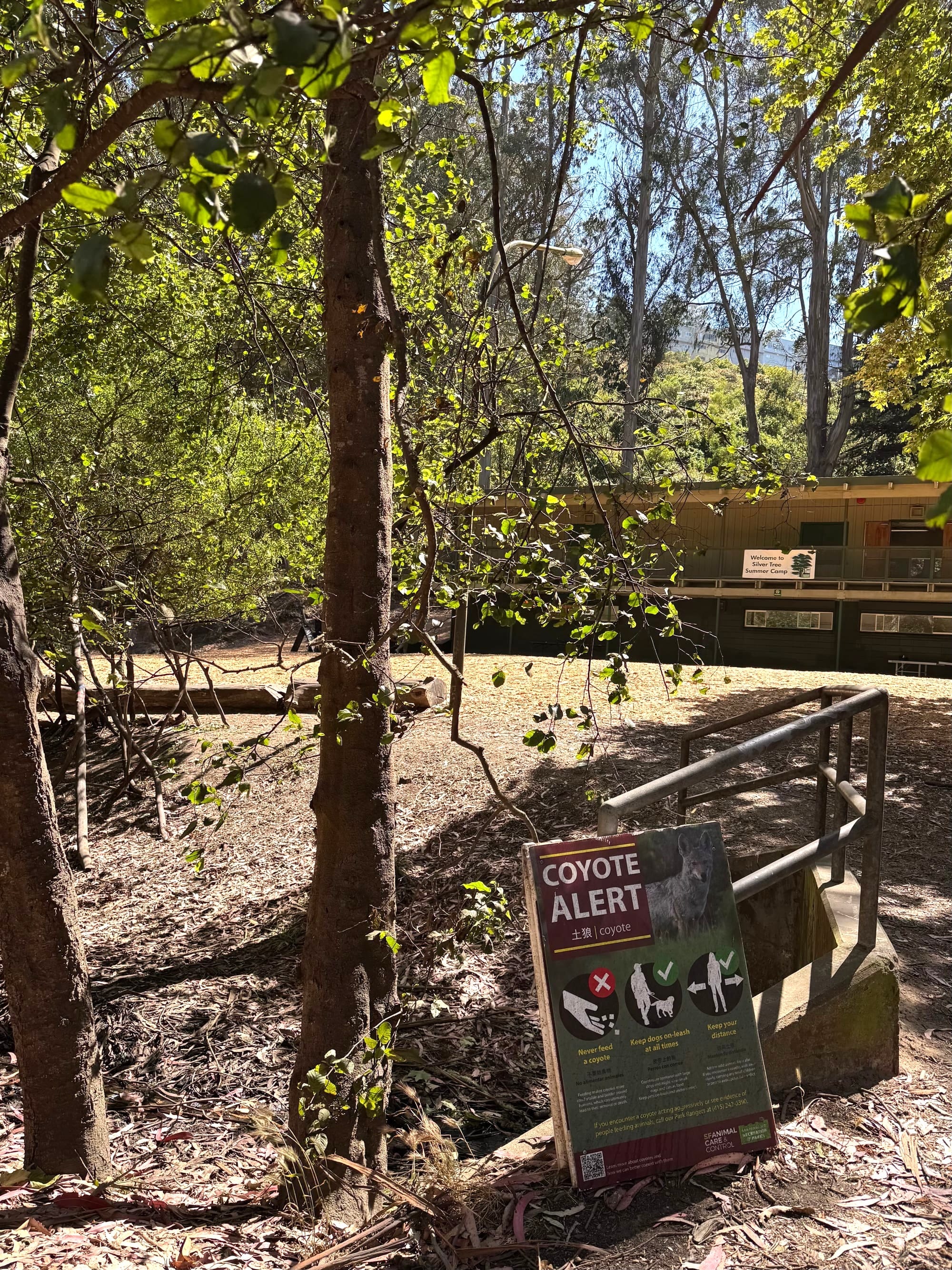
Every afternoon as I walked through the canyon to pick him up, I found myself glancing nervously at the “San Francisco Recreation and Parks Department” signs. Locked in a weird, one-sided mental standoff with the department, I felt guilty about complaining after the summer we had, but infuriated all the same.
The question was no longer Why is this website like this?
Why, I found myself asking instead, does this website make me so fucking ANGRY?
I don’t have a therapist right now, so to answer this question, I called Chris Colin.
Colin is a San Francisco writer and the creator of Admin Night, a growing phenomenon in which friends get together to tackle administrative tasks with food, drinks, and camaraderie. The word I’m looking for, Colin tells me, may be “sludge.”
The term, first coined by legal scholar Cass R. Sunstein and economist Richard H. Thaler, is “basically needless friction that gets between you and whatever you’re trying to do,” says Colin. Often, “there is an agenda buried in the friction.” Think web design that makes it difficult to cancel a subscription, automated phone trees so circuitous you give up on getting a refund.
“I don’t think there’s a villain twirling his mustache most of the time,” says Colin, who documented his descent into car insurance-based madness in this excellent Atlantic piece. “But I do think design reflects the priorities of whoever’s doing the designing.”
The Rec and Park site, he posits, is more likely a reflection of bureaucratic disorganization than ill will. Still, the feeling produced is the same: Sludge “makes people feel that their time does not matter,” wrote Sunstein in his 2021 book on the topic. “In extreme cases, it makes people feel that their lives do not matter.”
That line had the painful ring of truth for me.
“I think there are real, deep implications for that phenomenon, [what happens] once we feel like we don’t matter,” says Colin. “That’s the whole reason I wanted to write about this stuff. It’s not just that it’s annoying and stealing our time … it’s also, why aren’t we doing anything about what’s happening in the world as a people? Why does everyone seem so beaten down, myself included? That’s not good for community or democracy.”
Colin is quick to clarify that he doesn’t believe the San Francisco Rec and Park website is standing between humanity and a populist revolution.
I would also argue: It is not helping.
It’s exhausting and demoralizing to live through a tech boom whose purported goal is convenience while basic needs like buses and camp signups stay broken — and exhausted, demoralized people rarely change the status quo. All across America, when lower-income residents jump through endless, time-consuming, 10am-on-a-Tuesday hoops to access necessary services — that’s not not a hurdle to effective social movements.
“You can’t have a healthy society,” says Colin, simply, “when people feel like they have no agency.”

I have been thinking about that this week as my kid heads back to school, where he is learning (as we all do) that growing up means interacting with systems over which you have no control.
That said, we aren’t signed up for any fall rec programs, so my feelings about the site have almost shrunk down to a normal size. When I finish this essay, which will feel like being released from a very boring witch’s curse, I will walk to pick my son up from school, then head to the neighboring park and rec center, which is staffed by lovely people who know children by name and provide ice for playground injuries. I will check out flyers for September events while my kid plays outside with friends on a beautiful afternoon in my favorite city in the world.
We live walking distance from goldmines, I will remind myself in these months of respite, and I am grateful.
I’ll feel this way, at least, until I have no choice but to interact with that website again. Spring baseball signups start in November.
