Grounded Together: Why Cooperative Organizing Works When Systems Fail

When the FAA groundstop stranded worker-owned media leaders — including COYOTE’s Cecilia Lei — in Denver, their support for one another became a real-time playbook for navigating crisis.

A crowded cluster of airport travelers sit at the airport surrounded by their luggage talking to one another and looking at their phones.
Travelers wait at Dallas Fort Worth International Airport in Texas on Friday, Nov. 13, 2026, after the Federal Aviation Administration grounded flights nationwide. (AP Photo/Tony Gutierrez)

It was shortly before 2pm, about 30 minutes before I was due to head to the Denver International Airport, when the back pocket of my jeans buzzed. A WhatsApp group of over 30 journalists — the same cohort that had just wrapped a week-long conference in Boulder for news media co-ops — was starting to pop off. 

“Just told there was an all stop.”

“Nationwide ground stop.” 

“Seems like an issue with FAA radio systems at certain airports.” 

I quickly walked the few blocks towards my hotel lobby, unsipped latte in hand, refreshing major news sites to see if there were any official announcements. But the only updates I could see were messages from my peers. “The gate agents said they had no idea why and that it was ‘government action.’”

Some journalists were already at their airport gates, ready to board flights home to their respective cities. Others were relaying announcements from their pilots as they sat on the tarmac. Some were forced to deboard their planes.

I had about 40 minutes to figure out my next move: I was supposed to hop into a shuttle to head to the airport for my flight to Oakland, and I was very eager to get back.

I hadn’t been home since the night of the midterms, when I had stayed up late listening to talking heads pontificate as votes rolled in, turning traditionally red states bright blue. The next morning, I left for an almost two-week trip split between two different agendas: a girls’ trip to New Orleans for play, and a worker-owned journalism conference in Boulder for business. 

The entire trip had been incredible. It was my first time in NOLA, a city that felt like a warm hug; I happily ate and danced my way through it. And I had felt so lucky to mind-meld with similarly passionate journalists in beautiful, fall-colored Boulder. But now, I was looking forward to sleeping in my own bed. 

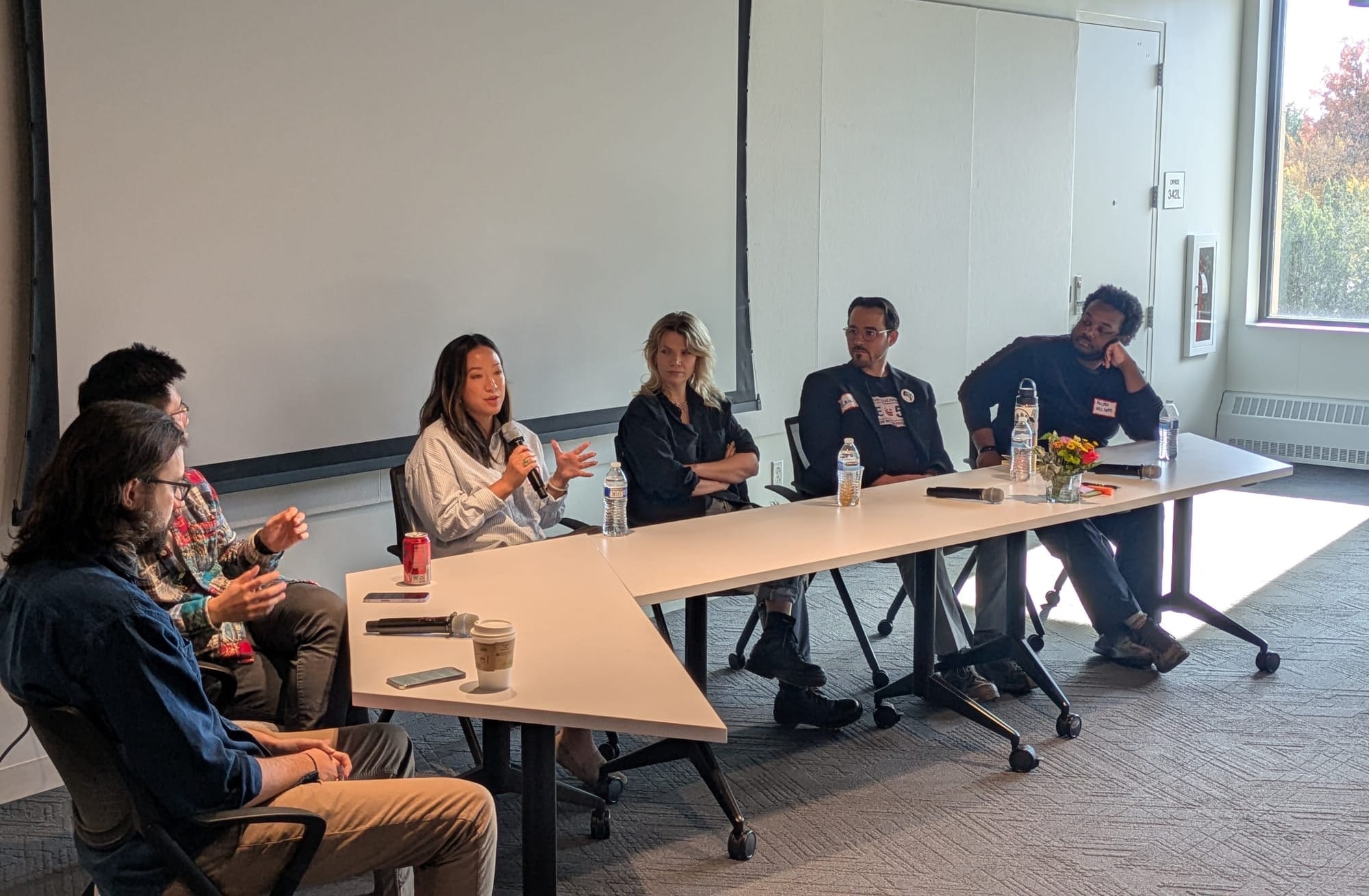
A panel of six journalists seated at table speaking at a conference.
Along with newsroom leaders from Defector, 404 Media, The 51st and Hell Gate, COYOTE's Cecilia Lei spoke on a panel at Start.coop's conference for journalist-led media companies in Boulder, Colorado. (Courtesy Mike Houston)

Absent any useful information from national media, the WhatsApp group morphed into a pseudo war room for worker-owners of different cooperative newsrooms, including Hellgate, The 51st, The Pittsburg Progress, and The Vallejo Sun. Along with members of Start.coop — our conference host — everyone began sharing what they were learning on the ground at airports, painting the most accurate picture of what was playing out in real life. While we had updates from breaking news reporter Flavor Flav, it was clear that waiting on guidance or clarity from the federal government would take too long. 

After debating whether to stay in Boulder (in case the ground stop turned into a multi-day logistical nightmare), I decided to hop into my scheduled shuttle and face the incoming aviation disaster head-on. 

The ride was provided by Drivers Cooperative Colorado, a rideshare platform that functions like Lyft or Uber, but is community-owned and operated by local drivers themselves. I climbed into the front seat and began weighing my options. Another passenger, fellow Bay Area journalist Kate Maxwell, was scheduled for the same Oakland flight, and we discussed the choose-your-own-adventure paths in front of us: This might be a coordinated cybersecurity attack and it’ll be a while until planes are back in the air; maybe we should find lodging for several nights in Denver. This might just be a blip; let’s get to our gate so we can troubleshoot from there. 

During the 45-minute drive, I got to know our driver, Ahmed, one of the rideshare company’s cofounders. He’s originally from Morocco, which he was happy to learn I had visited when I studied abroad in college. He told me he’s also a local guide for tourists in Colorado, and that sometimes he encounters rude and thankless clients. He’s been taking on extra side gigs to make up for the money he spent traveling to World Cup Games this past summer. He’s passionate about being a part of a cooperative, and we traded war stories about the challenges of starting a worker-owned business.

Sensing our anxiety, Ahmed shared a slice of his wisdom, sharpened by years of navigating travel logistics and helping others do the same: Don’t try to figure out what to do next by scrolling on your phone. Go straight to the check-in counter, get a realistic sense of what’s going on from a human agent, and make a decision from there. 

And then he gave me his number and offered to wait nearby after dropping us off, telling us to let him know if we decided to rebook our flights so that he could quickly take us to an airport hotel.

Once curbside, Kate and I braced ourselves for what was waiting inside. A television news station was already set up by the Southwest Airlines counter. But to our surprise, we realized we were a few steps ahead of the inevitable rush: Lines were only starting to form, and the air wasn’t yet thick with anxiety.

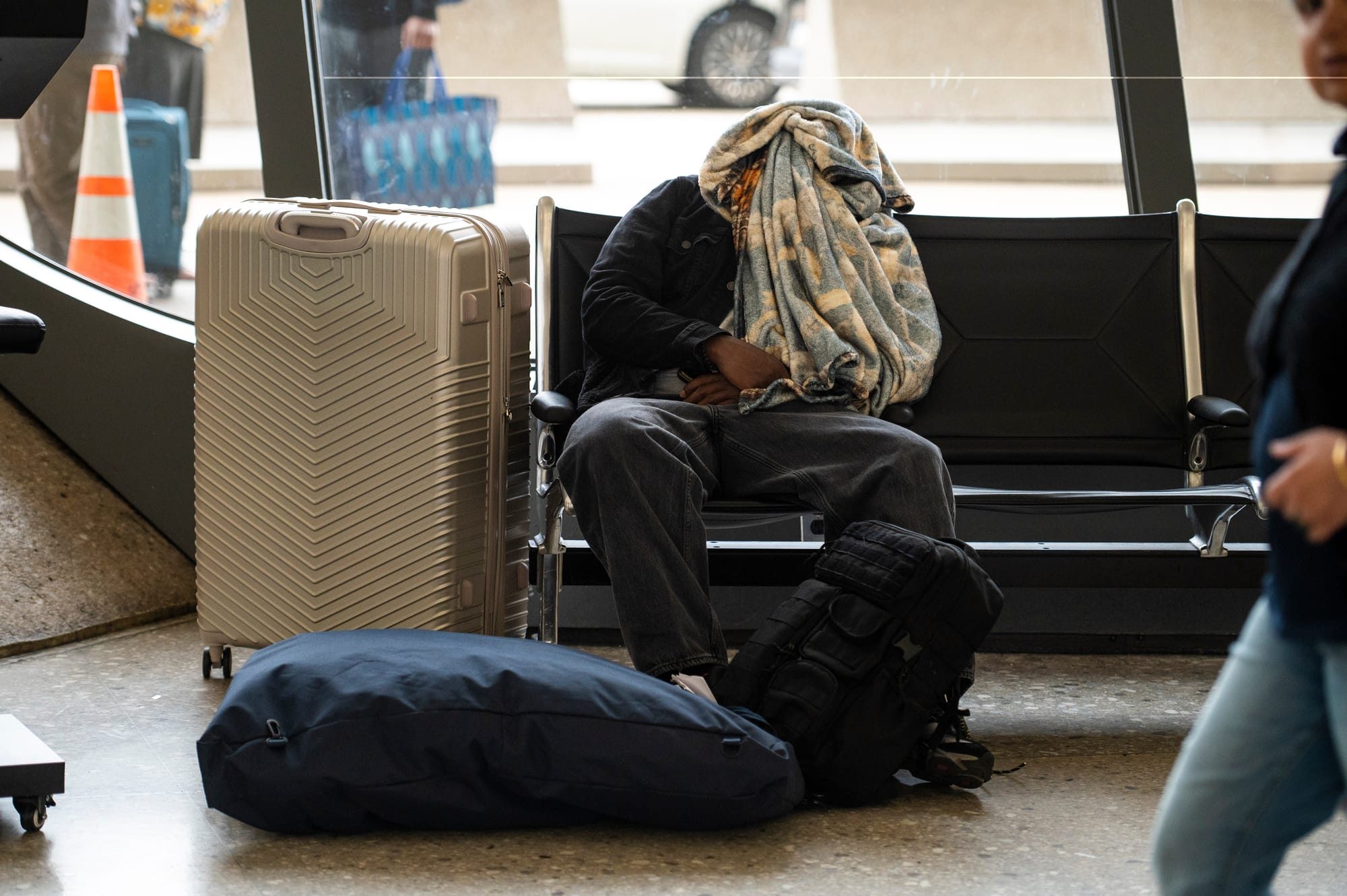
A person surrounded by their luggage is asleep while seated at the airport with a blanket wrapped around their head.
Travel tip: if you can manage it, don't gamble with your time and rebook your flight as quickly as possible! It's worth being delayed if it means you get to sleep in a hotel bed instead of an uncomfortable airport seat. (AP Photo/Cliff Owen)

By the time I reached the counter, I had decided not to gamble with my time nor my nervous system. The Southwest Airlines agent nodded in approval when I told her to rebook the flight, and she placed Kate and I on the earliest flight out to Oakland the next morning. I then called Ahmed who pulled up to the curb in a matter of minutes. As he drove toward the cluster of nearby airport hotels, we scrolled the WhatsApp group — which had been pinging continuously — to see how the other journalists were faring. 

“Which hotels are people staying at?” I asked. People chimed in with names of hotels, the rates they were securing, room availability, and cancellation windows. Some people offered to facilitate booking rooms. One journalist texted me to say he knew of a spare room in Boulder if things got really bad.

Kate and I decided to split a room together, which we booked online while Ahmed drove towards the hotel. “It’s a good choice, it’s close to the airport, and there are lots of restaurants nearby,” he reassured us.

When Ahmed helped pull our suitcases out of the trunk, I asked if we could pay him for the extra ride. He waved us off and told us to forget it.

“I don’t chase money like that. I do what feels right,” he said. “Just leave me a good review on Google.” He then gestured at the marijuana dispensary next to the hotel and pointed at the streets where our dinner options were: “You’ll be alright, enjoy your night.”

When we finally checked into the hotel room — Kate and I had somehow, once again, managed to be at the very front of a snaking line of frustrated travelers — I could feel my shoulder muscles start to relax. I snapped out of hyperfocus mode and marveled that my usual indecisive self had been so confident and speedy in making choices. I knew it was, in part, because I had never felt alone, despite how grossly opaque this systemic failure was: I had my fellow savvy co-op journalists. I had kind and generous Ahmed.

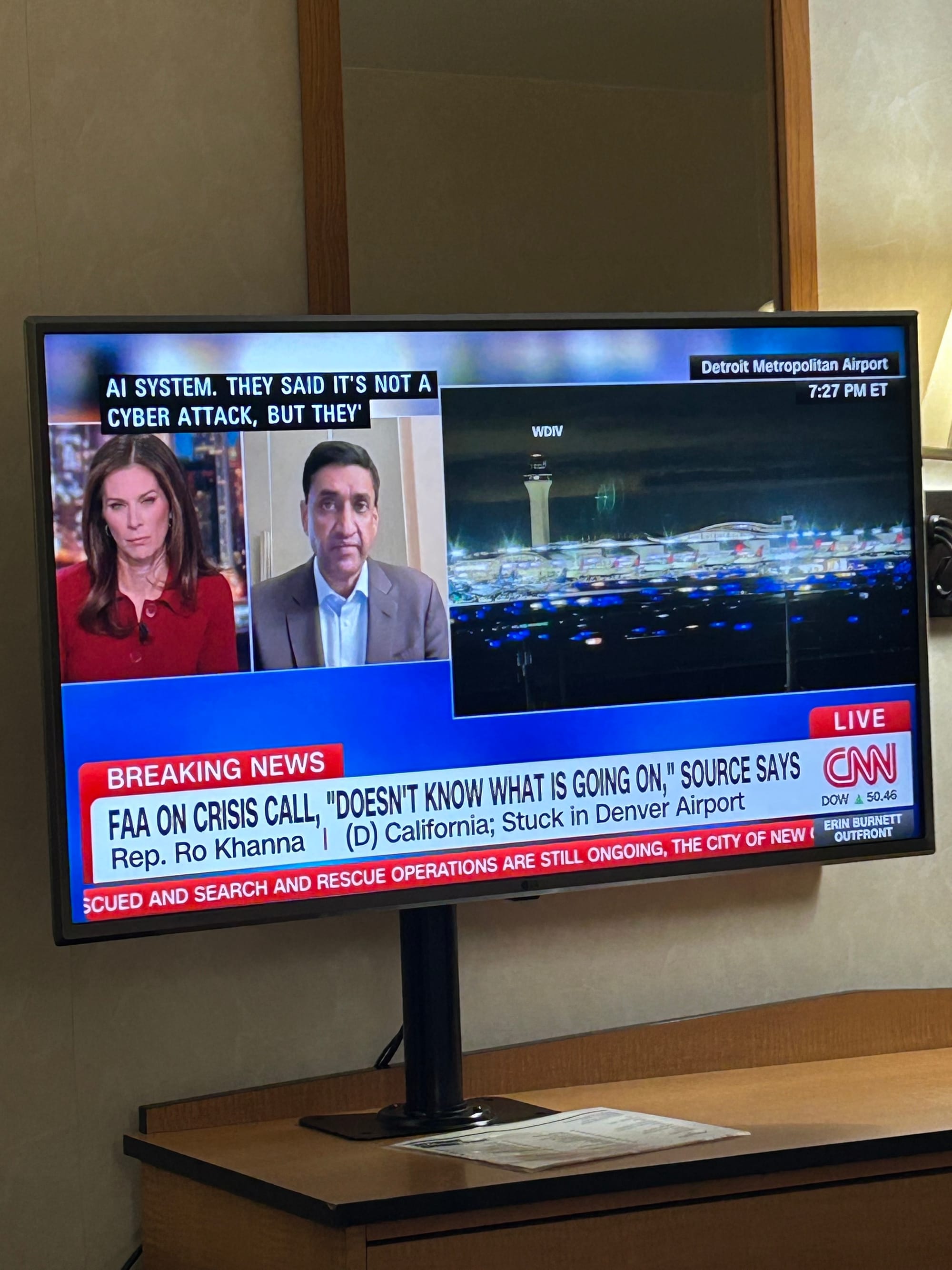
I flipped the TV to CNN as I stretched across my hotel bed and listened to national security and aviation system experts offer their takes. I watched as broadcast journalists collected scene reports from bewildered, deer-in-the-headlights travelers, and chuckled when I saw California Rep. Ro Khanna appear on-screen with the headline “Stuck in Denver Airport.” (Politicians, they’re just like us, amirite?) 

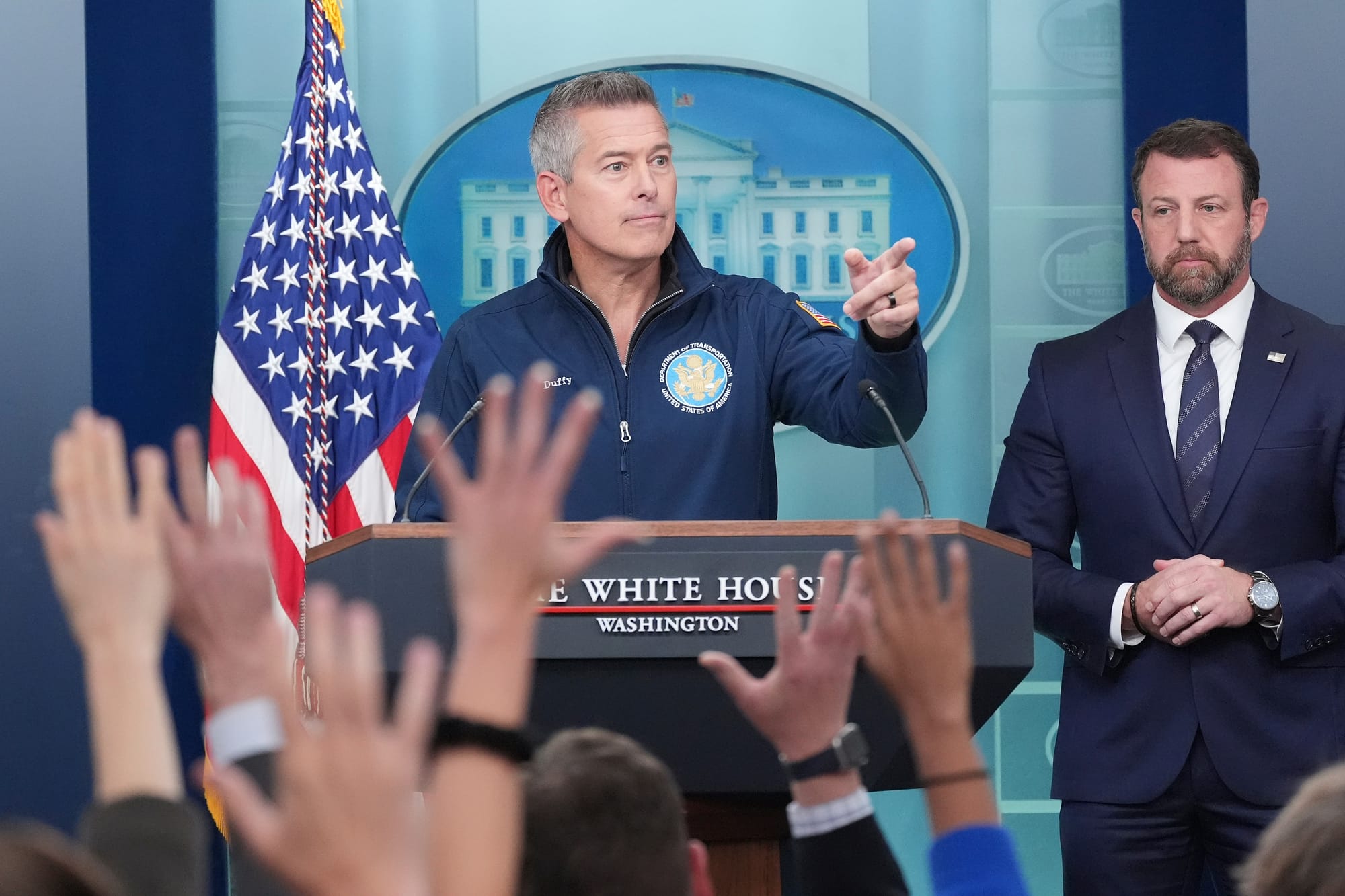
White man with gray hair at a podium, pointing his finger at crowd of raised hands. Bearded man in suit is to his left.
Reality TV star turned U.S. Secretary of Transportation Sean Duffy wants to overhaul the country's aviation infrastructure at breakneck speed and is demanding a $50B budget to do it. But will doing things like installing an A.I. system actually make us safer? (AP Photo/Alex Brandon)

But when MTV Real World/Road Rules television star Sean Duffy took to the press conference podium to exalt the virtues of the Trump administration and admonish Congress for not handing over $50 billion for air traffic control upgrades, the nausea of disgust set in. It was yet another blatant display of blame and saving ego over any sense of competent command. Not a single reassuring word was uttered. No clarity gained, except for the same truths that have been revealed to us, over and over again, with the same sobering familiarity: Trustworthy leadership does not exist at our nation’s highest levels. Not even during a time of instability that lays bare the vulnerabilities created by the greed permeating every facet of American life. Blue wave be damned.

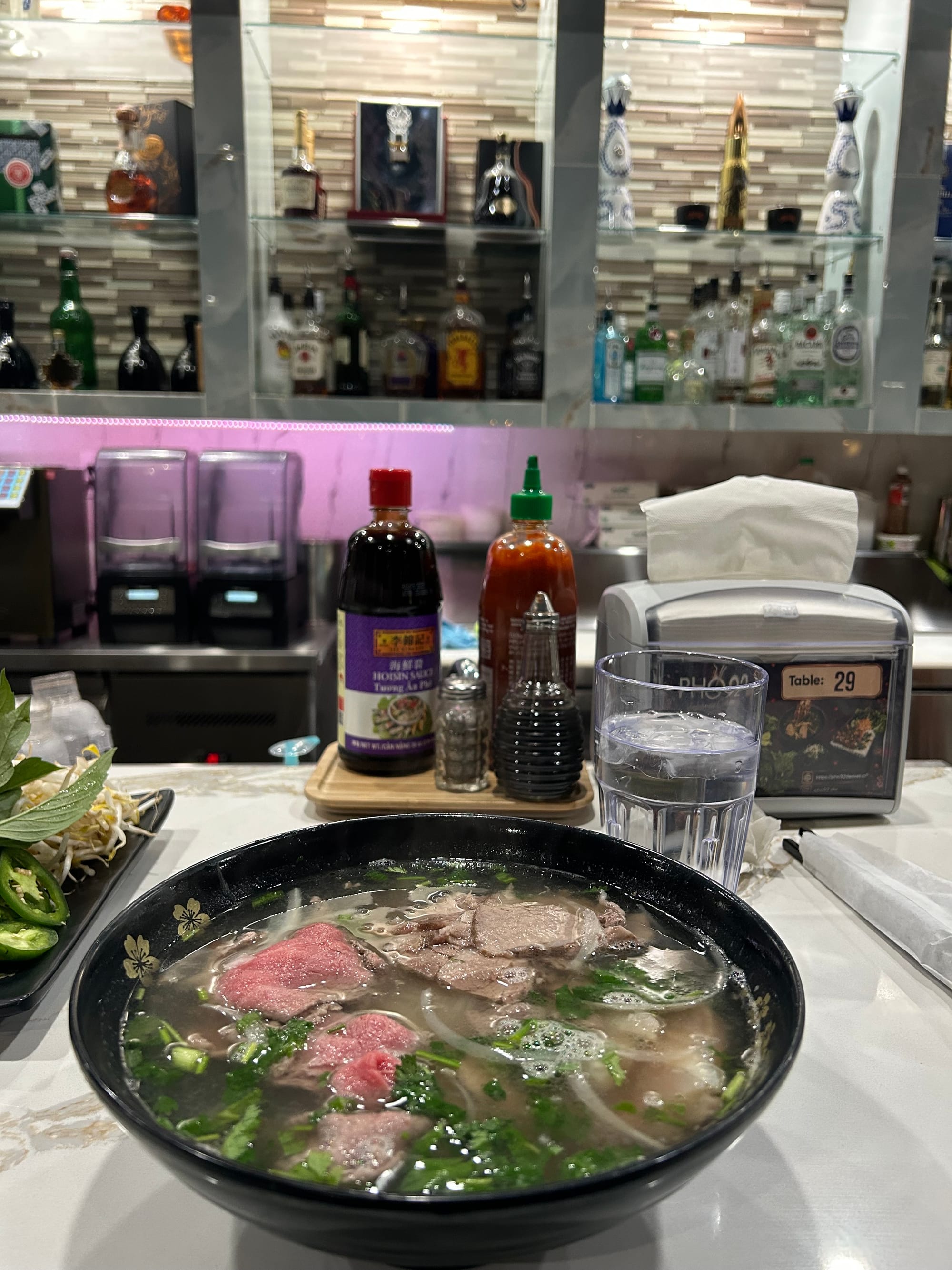
For the rest of that Friday the 13th evening, members of the WhatsApp group posted what they were eating and drinking to cope (I had pho and sake), traded funny memes, and shared photos of the airport’s emotional support animals. Then, in the days that followed, the cadence of the group chat slowed as the last “I’m finally home” updates trickled in, met with piles of heart and applause emojis.

Now that I’ve been back home for several days (and had a few deep slumbers), I’ve been thinking about the warmth of that collective chatter and the comfort I found in the encounters I had throughout my entire trip, states away from my Bay Area bubble. Yes, I had desperately wanted to get home, but that “extraordinary” detour was also a reminder of why I’m a part of COYOTE and invested in a cooperative model: It’s an opportunity to help redesign a small section of our crumbling social infrastructure in the hopes of making it more resilient and equitable. It’s a chance to shift decision-making power toward people actually doing the work. And it’s become a model for my own personal life: for recalibrating power and rebuilding ideas around how I define community. 

The FAA ground stop was an inconvenient yet successful test case: When systems fall apart, we rely on each other. We build connections to learn to trust one another. We don’t become greedy or possessive with knowledge or resources. We listen, and then we strategize. We back each other up. We’re all we’ve got. 

Great! You’ve successfully signed up.

Welcome back! You've successfully signed in.

You've successfully subscribed to COYOTE.

Success! Check your email for magic link to sign-in.

Success! Your billing info has been updated.

Your billing was not updated.