My Life in Food: Tanaya Joshi of Sfoglia Club
A San Francisco chef who brings Bombay, Bologna, and the Bay together via pasta pop-ups talks about her influences.


A San Francisco chef who brings Bombay, Bologna, and the Bay together via pasta pop-ups talks about her influences.

When the FAA groundstop stranded worker-owned media leaders — including COYOTE’s Cecilia Lei — in Denver, their support for one another became a real-time playbook for navigating crisis.

This week we've got Shrek burlesque, sexy Thanksgiving, muscle mommy makeovers, self-portrait zines and more.

A San Francisco chef who brings Bombay, Bologna, and the Bay together via pasta pop-ups talks about her influences.

Today we have Tanaya Joshi, a graphic artist, line cook, and the proprietor of the hit pasta pop-up Sfoglia Club. The Italian-trained chef’s three-pronged approach to cuisine is embodied in Sfoglia’s tagline: “Bombay, the Bay, and Bologna.” It’s a marriage — a throuple, even — of her upbringing in a Marathi family, the traditional egg-based pasta-making techniques she picked up in Bologna, and the seasonal produce that comes to her, care of California farms.
Joshi resists the label of “Indian pasta”: Her heritage is important to her, but it isn’t something she aims to shoehorn into her dishes. Instead, she tells me, she sees her approach as simply acknowledging that she’ll instinctively view some ingredients via a Marathi lens first. But for other dishes, like her corn sacchetti pasta, sometimes it’s just because she wants to make something bangin’.
“I don't mind the association with Indian cuisine,” Joshi says, “but associations can become dangerous when it comes down to the dollar value of your work, because ‘ethnic food’ is valued less. It's a scary thing to me because of this ecosystem that I live within, which is that Indian food should be cheaper, and that is the opinion of a lot of people.”
The cookbook writer Andrea Nguyen recently wrote about the phenomenon of third culture food and fusion in her Substack, Pass the Fish Sauce. Like Joshi, Nguyen wonders if the celebratory label might actually be limiting. In response to an Asian American chef who called their food “third culture,” she recounts putting on her sage auntie hat and saying, “Your talent and creativity go beyond third culture. Using the label helps to frame your cuisine, but I hope it goes away in the future. You should freely create with minimal justification.”
Sfoglia Club is currently on a break, but you can find more information on its Hotplate page.
For now, we have Joshi’s picks for her life-defining dishes, described in her own words.
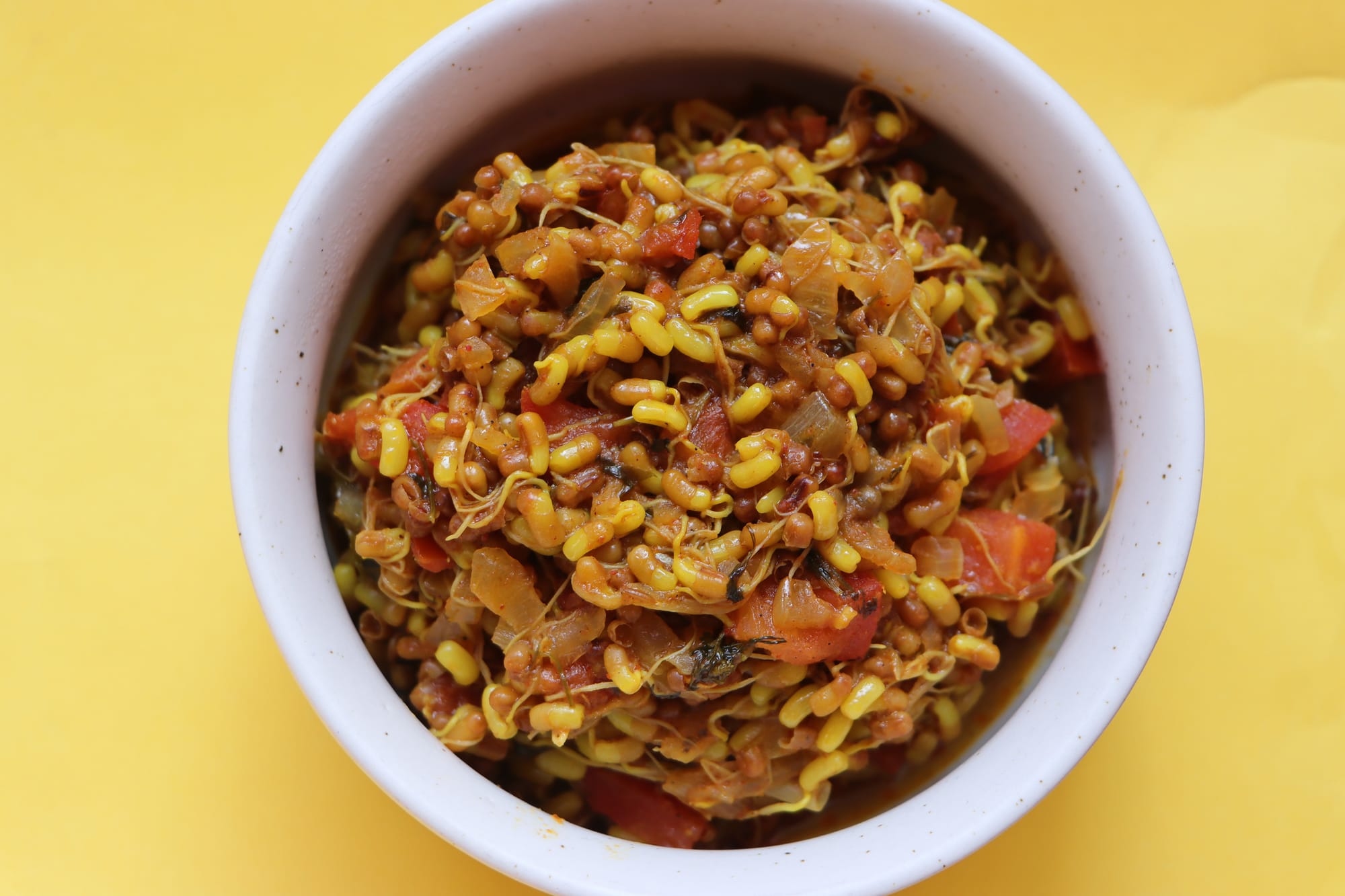
Matki chi usal is the dish I grew up eating in Mumbai, and I’m still obsessed with it. It’s niche, subcultural cuisine. You won’t find it in an American restaurant, and if you do, call me! You sprout moth beans, which takes the same caretaking as proofing a dough. My mom does it the way she’d make yogurt in winter, in the oven with the light on. Then the beans are cooked down with onion, tomato, and goda masala, the Marathi masala I reach for whenever I bring an Indian angle to my cooking. They stay a little taut, with a pleasant resistance, then give way when you bite in. I eat it with rotis swimming in ghee, sometimes with koshimbir — a salad of cucumber, peanuts, and lemon.
It has also carried me through hard seasons. I spent my twenties in an eating disorder, and this was a dish that always felt good. When my parents were struggling to accept my sexuality, my mom sent me off with a container of it; it wasn’t enough, and I won’t pretend it was, but it was what she could do then. It means even more now that she’s come full circle.
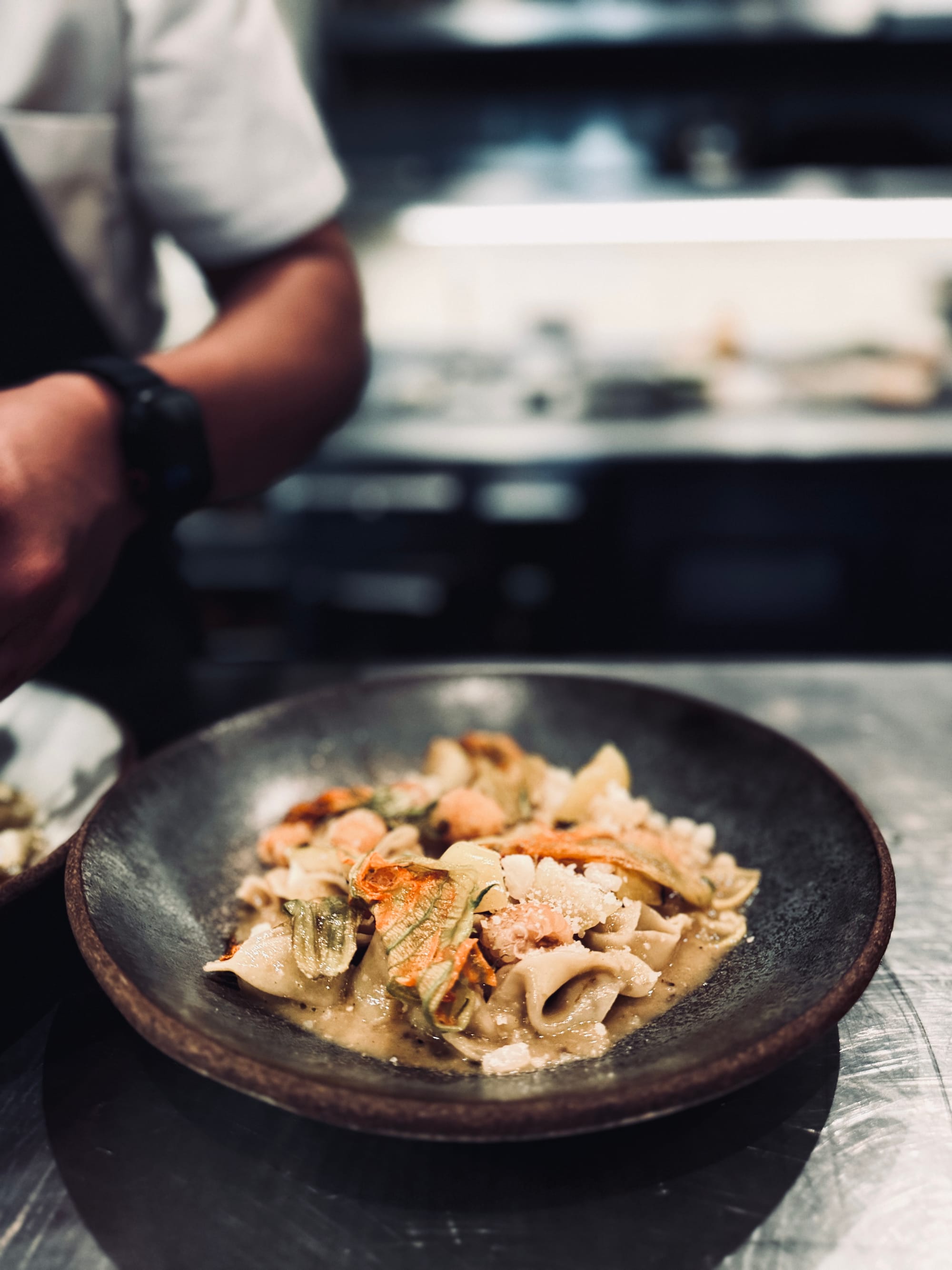
At The Progress [in San Francisco], where I’ve been staging on Sundays, this pasta says California to me. Squash blossoms are washed, stripped of their inedible centers, sliced, and roasted. Yellow tomatillos are charred on the grill. It’s finished with ricotta and golden raspberries, which are a little tart in late summer, so they bring the acid. It’s seasonal, fresh, and approachable, not swimming in butter.
The shape is a small square folded at two ends, flipped, then folded at the other two. It looks filled, but it’s empty. The story goes that women in modest homes, pressed to feed visiting priests, came up with a shape that held nothing inside, a “surprise.” It takes a tremendous amount of time and nimble fingers.
What I love most is the care. I prepped the blossoms, my coworker Carly charred the tomatillos on the grill, someone washed the raspberries, someone made the pasta upstairs, and it all came together.
I went to Italy to learn pasta, but I also planned to eat everything. In Florence, my favorite restaurant is Vini e Vecchi Sapori, run by this guy named Tommaso, who’s one of our LGBTQ brethren. (That detail is important because when my wife, Arati and I went to Italy for the first time for our honeymoon, I found it to be a very buttoned-up, not very LGBTQ-friendly place.) I loitered outside before it opened until someone took pity and fit me in for lunch. There’s no reservation system, and people call days ahead. It’s incredible food.
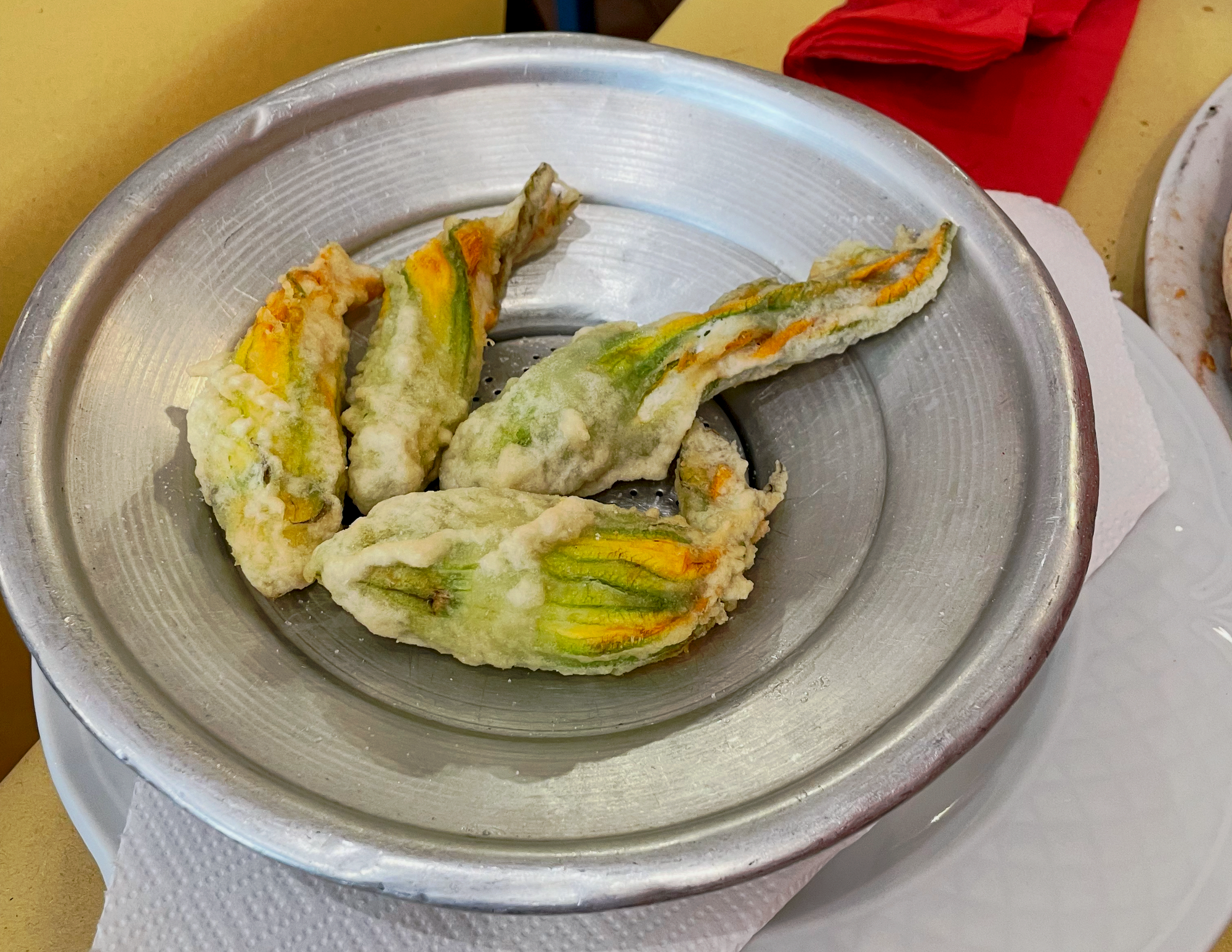
We ordered the squash blossoms. I’d seen them at farmers markets but never eaten them stuffed and battered. The batter was delightfully light, not seeping oil like some versions I’ve had. The ricotta was soft, with a faint floral note. I now add a touch of rose water to the ricotta in my own pastas. It lifts it, makes it airier. People assume the rose water came from India, but it actually came from tasting ricotta in Italy.
It wasn’t even a pasta, and it was the most delightful thing I ate there. It was so evocative of summer and freshness. It’s almost a little Californian… to eat something so completely in the moment.
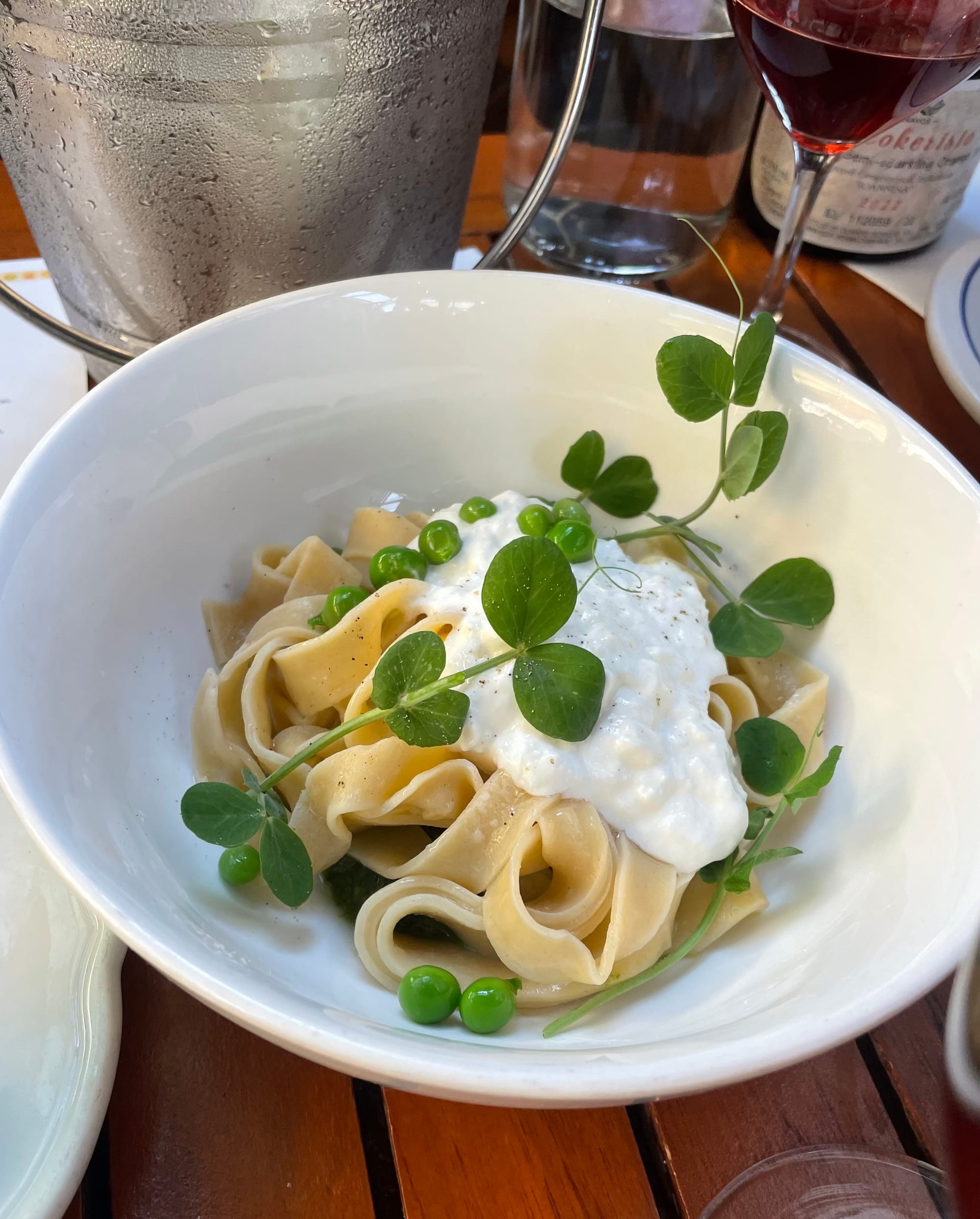
Sfoglia Club's Tagliatelle al Vatana Usal pairs fresh pasta with green pea curry. (Courtesy Tanaya Joshi)
When Sneha Vachhaney and I planned our April pop-up, peas were abundant and sweet. The Italian answer is pasta piselli, but I kept thinking of vatana usal, my mom’s pea curry with coconut, goda masala, curry leaves, mustard seeds, and extra cashews because she knows I love them. So I made it my spring pea ragu. I blanched the peas and shoots, blended them coarsely, and mixed in a tempering of oil, mustard seeds, curry leaves, and goda masala. I cut the noodles by hand, because noodles mean ragu, and I wanted people to see the effort behind the dish.
It was spice-forward, and I’m a baby about spice, so I wanted to use dairy to cut it without muting it. I’d have loved a cheese like squacquerone, but it wouldn’t survive the trip. Gordon Edgar at Rainbow, my cheesemonger for all of my pop-up menus, sourced this beautiful Italian stracciatelle for me, which was a bit more loose, and I dolloped it on top so it seeped into the ragu. With Sneha working as expediter, she made sure every plate looked amazing. I love that the last hands that touched each one were hers. When you stick your fork in all the way from up top to the bottom, and twirl it, you get a little bit of everything. It’s all three places coming together in one dish.