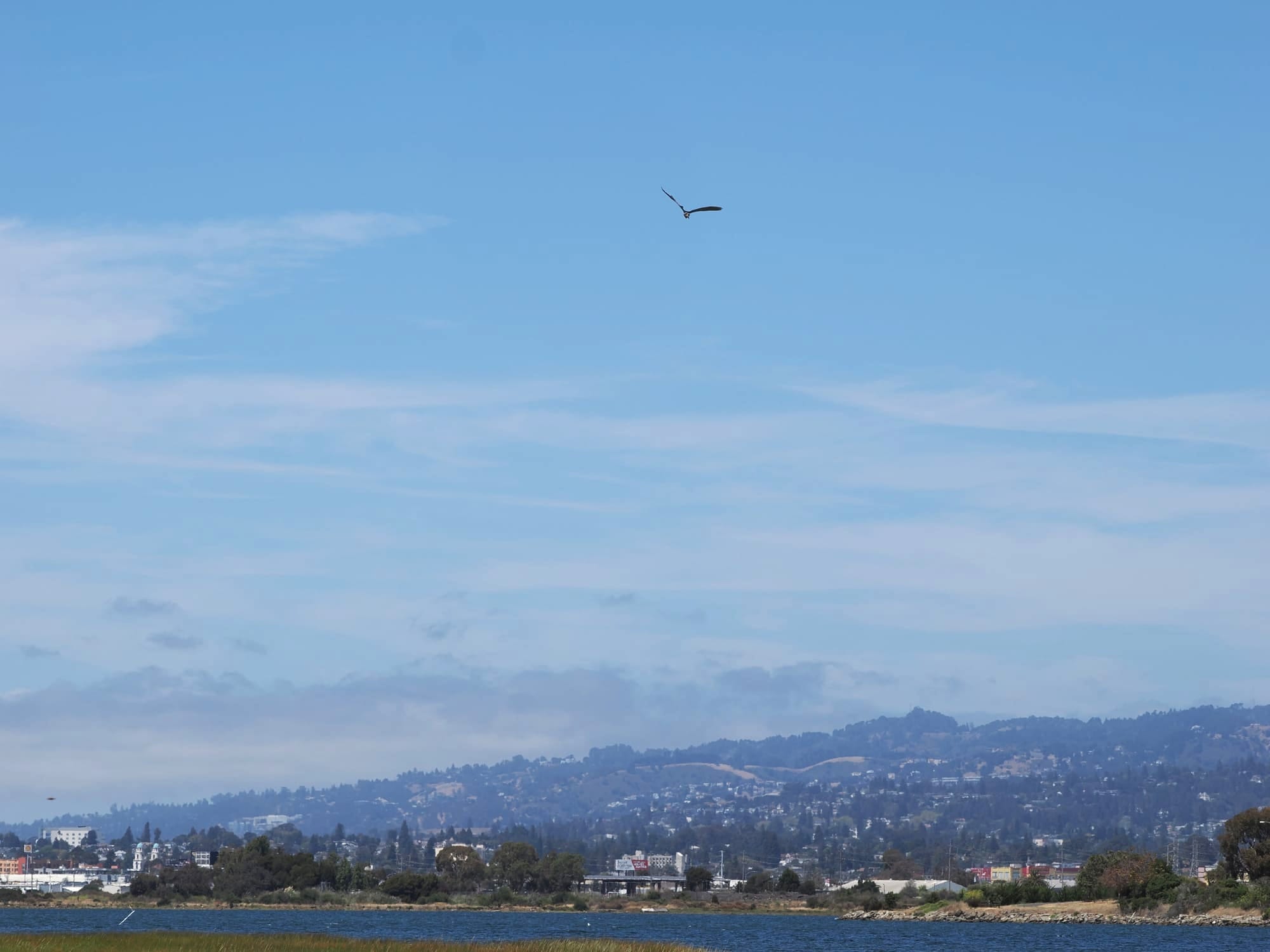
Free as a Bird: Rehabilitated Night Herons Released in Oakland
The black-crowned night herons arrived at a rescue with broken toes, injured wings, or damaged legs. After weeks of rehab, they were released into the wild.

The young black-crowned night heron had been found on the street in a pet carrier, with its leg tethered to the cage. It wasn’t doing well. The Oakland Zoo’s Heron Rescue Team was called in, and they dropped the bird off at the International Bird Rescue in Fairfield, where it could receive medical care. The leg, they discovered, had at some point broken, and hadn’t healed well. They did surgery to try to save it, shaving the leg bone down as it had calcified so much.
Last week I met this bird, and four others, in the parking lot of Arrowhead Marsh, just a few miles from the Oakland Airport. It was in a carrier, again, but circumstances had changed. The surgery had gone well, the healing was complete, and, possibly for the first time in its short life, the bird was about to be released into the wild.
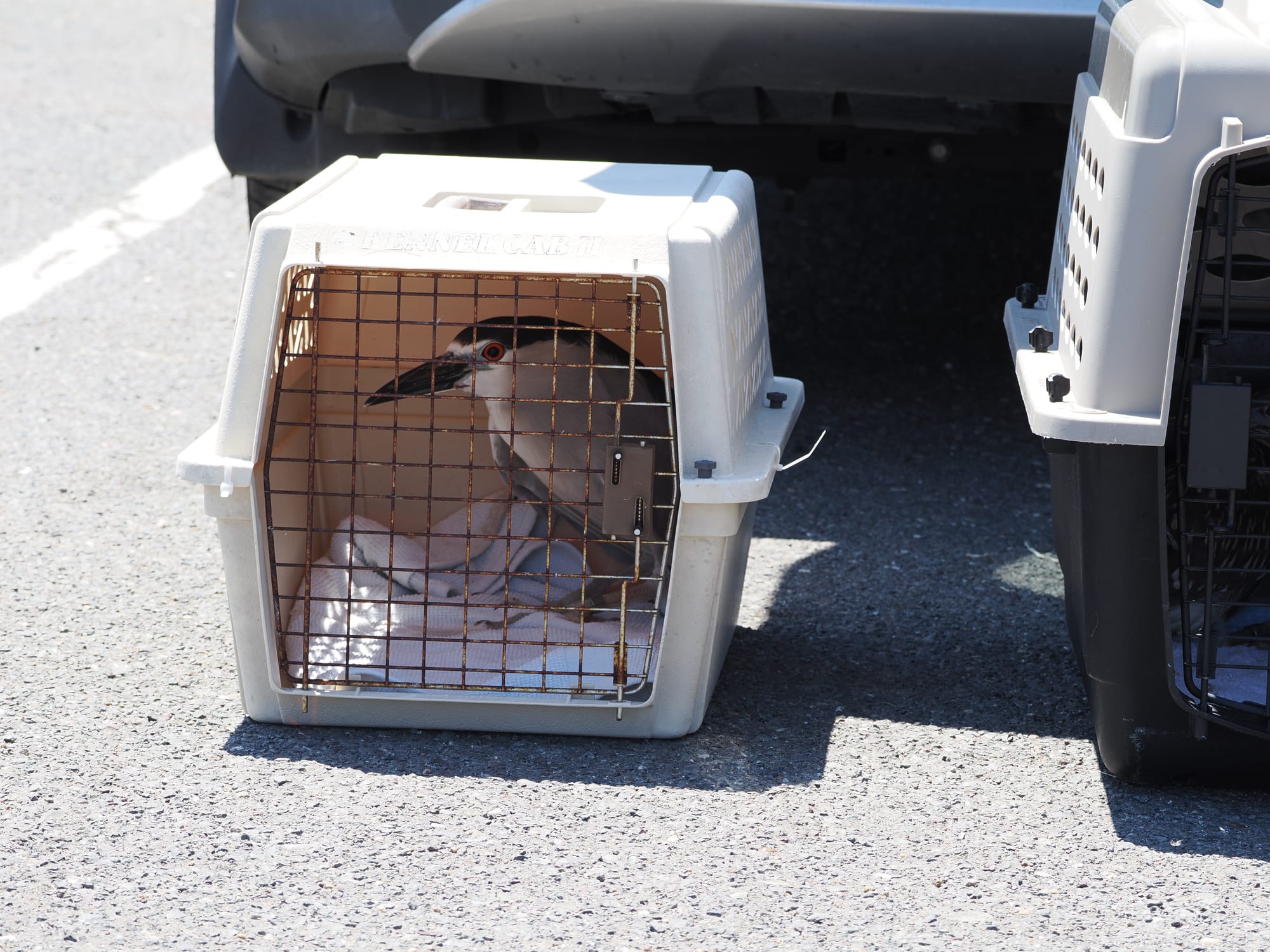
“These guys are super tough and resilient,” said Daniel Flynn, the program manager for conservation and education at the International Bird Rescue, as he hoisted two crates of birds out of the back of his SUV. “They’re a good symbol of Oakland.”
Black-crowned night herons are the city’s official bird. They’re loud, beautiful, and adept scavengers, with a passionate fan base. The Instagram account @nightheronsofoakland, which documents the birds’ comedic and charming behavior, has more than 11,000 followers.
But their choice of home — nesting in the branches of ficus trees in downtown Oakland — isn’t good for their long-term survival. The construction of a new affordable housing development may lead to the demolition of their largest rookery. The hard, urban environment can have deadly consequences; fledgelings often fall or are pushed from crowded nests onto the streets or sidewalk below. They break legs, or toes, or wings — and if they’re lucky, end up at the International Bird Rescue.
Four scraggly adolescent herons, still wearing their signature baby brown feathers, filled the other carrier in the back of Flynn’s car. Their origins are unknown; they could have come from downtown Oakland, or Santa Rosa, or Concord. All of them had sustained injuries, but had healed well. It was time for them to fly free.
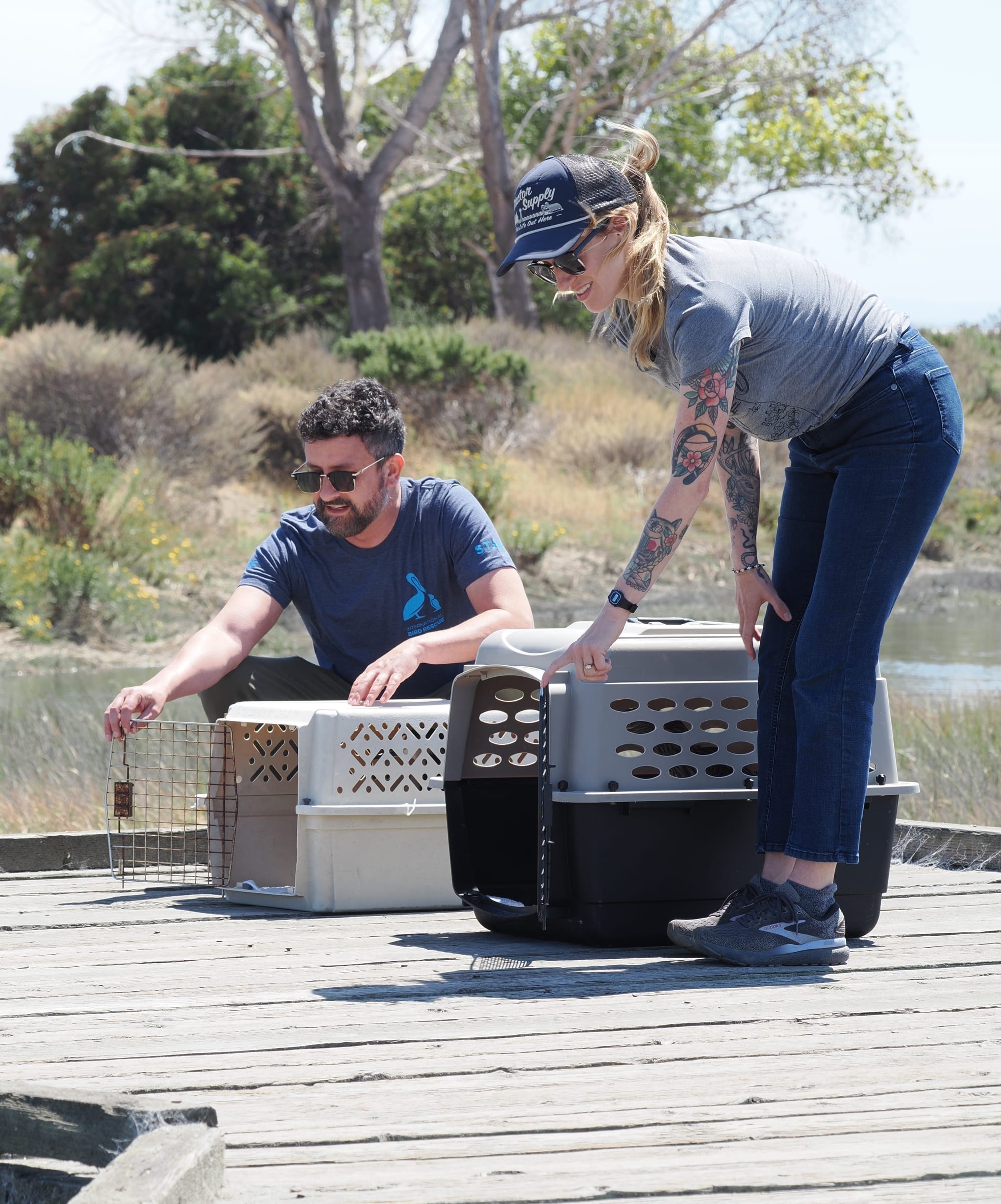
“Before a bird can be released, our team makes sure the birds are fully flighted, healed from their original injuries, and at a healthy weight, often higher than the weight they arrived at,” Flynn tells me. “We also look at their behavior and ability to perform the skills they'll need to survive, such as feeding on their own. Ultimately, the goal is to make sure each bird has the best possible chance of surviving once it's back in the wild.”
It was a beautiful day for a heron release. The sun was out, a light breeze was blowing, the skies were clear. Flynn set the two carriers on a long wooden dock that juts out in the middle of the wetlands. Very carefully, he opened one door, and I opened the other.
For a little while, nothing happened. I could see the four young herons squished in the back of the carrier, their yellow eyes wide. It took a few minutes, but very slowly the birds emerged.
They scuttered to the edge of the dock, facing the wind. There, they bobbed their heads. Stretched out their wings, then closed them again. They looked like little kids, working up the bravery to leap off a diving board.
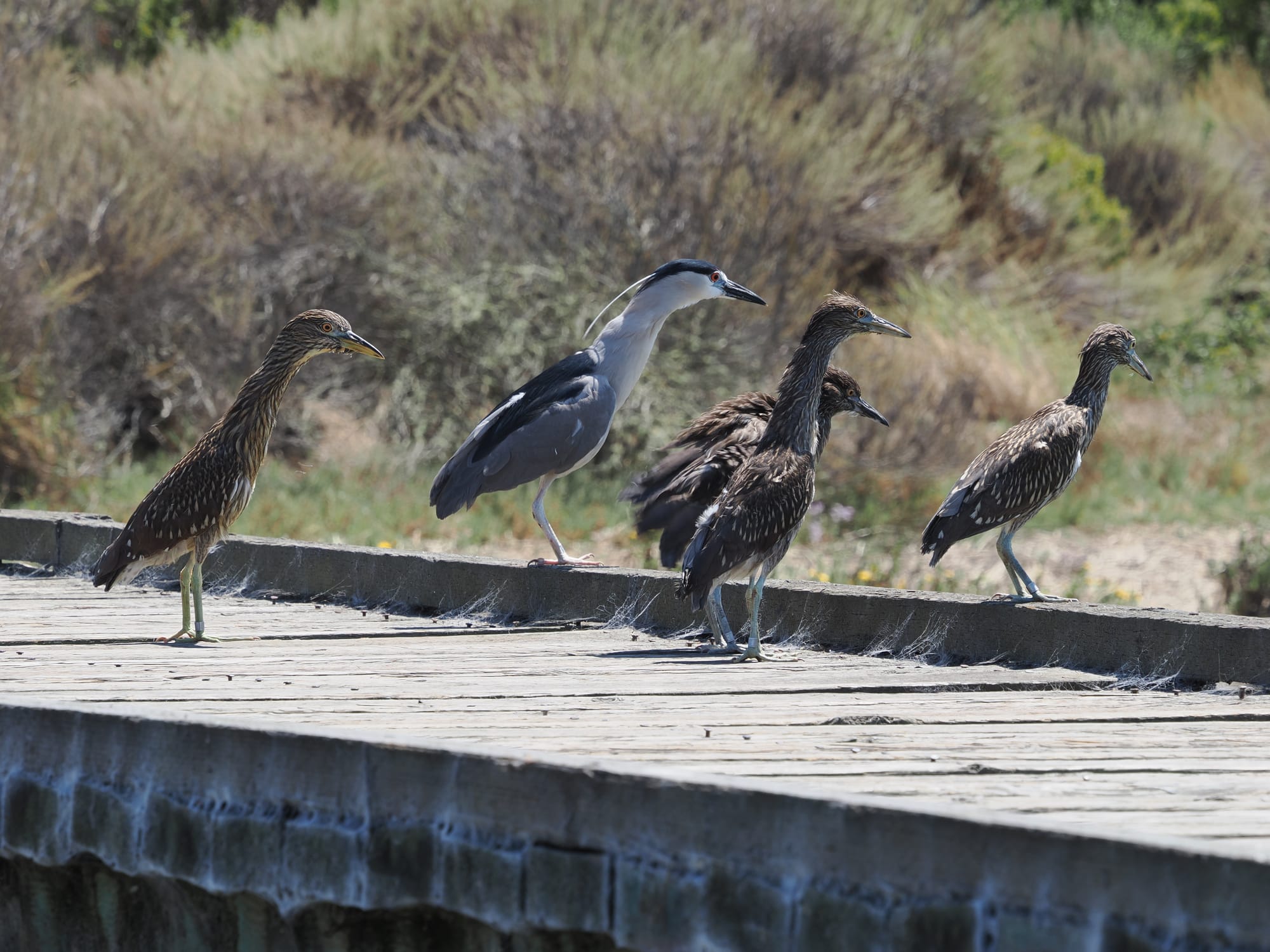
One by one they took a big leap, and landed in the marshy grasses below. Suddenly, my whole perspective of them shifted. They weren’t birds nesting in a hostile environment, or rehabilitated birds who’d suffered a trauma, or scared babies in a carrier, but black-crowned night herons in a marsh, exactly where they should be.
As I sat on the edge of the shoreline, watching these beautiful birds, I marveled at the goodness of the people who cared for them. There are teams of humans who spend their whole days in service to these night herons: finding them in doorways, driving them to care, operating on their tiny legs, supporting their broken wings, healing their injured toes. They’ve placed value on these birds’ lives, and therefore deemed the labor of caring for them necessary and important. As we do with thousands of other species, we could have chosen to turn our heads and look away. What an incredible choice it is not to.
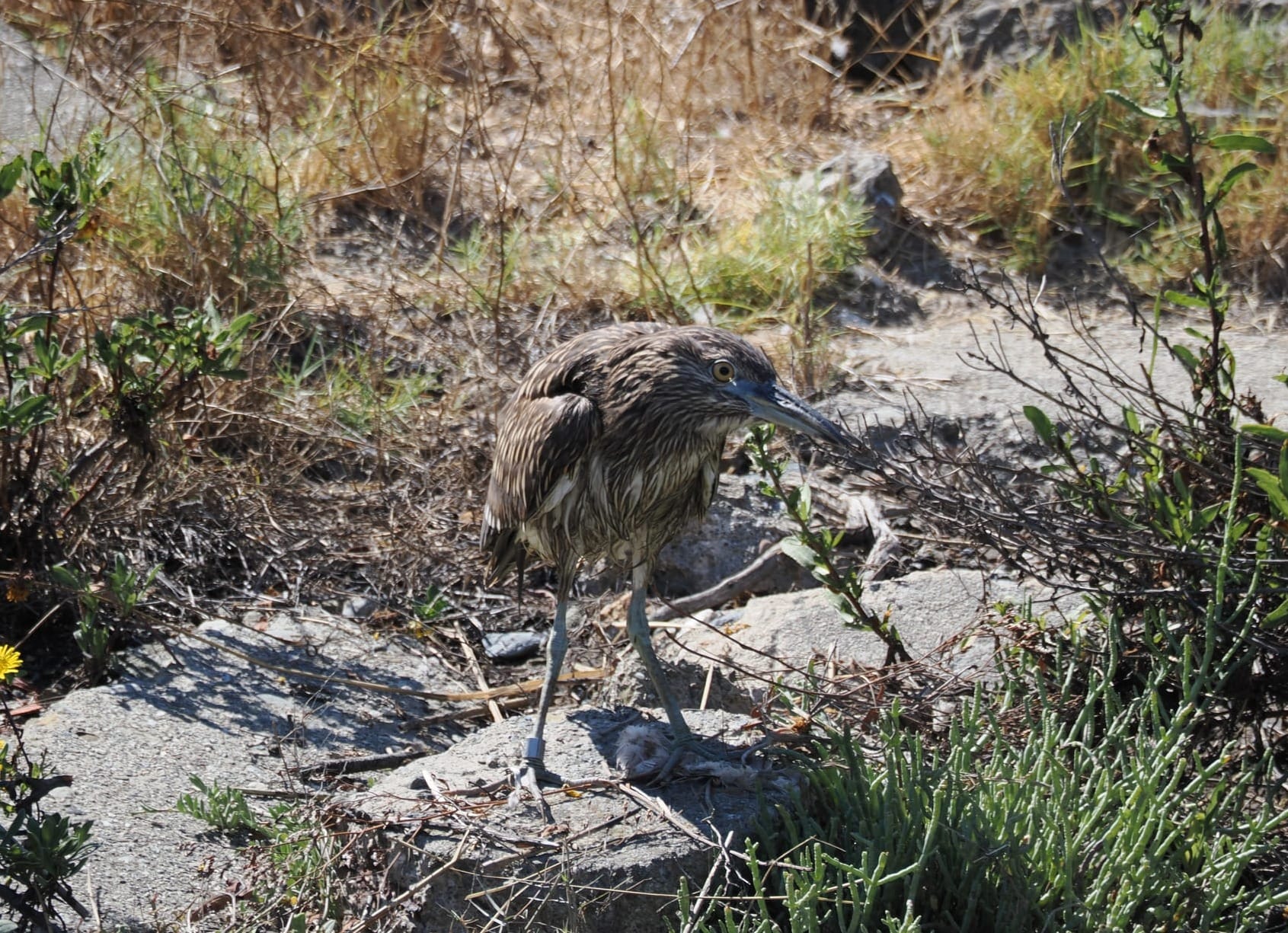
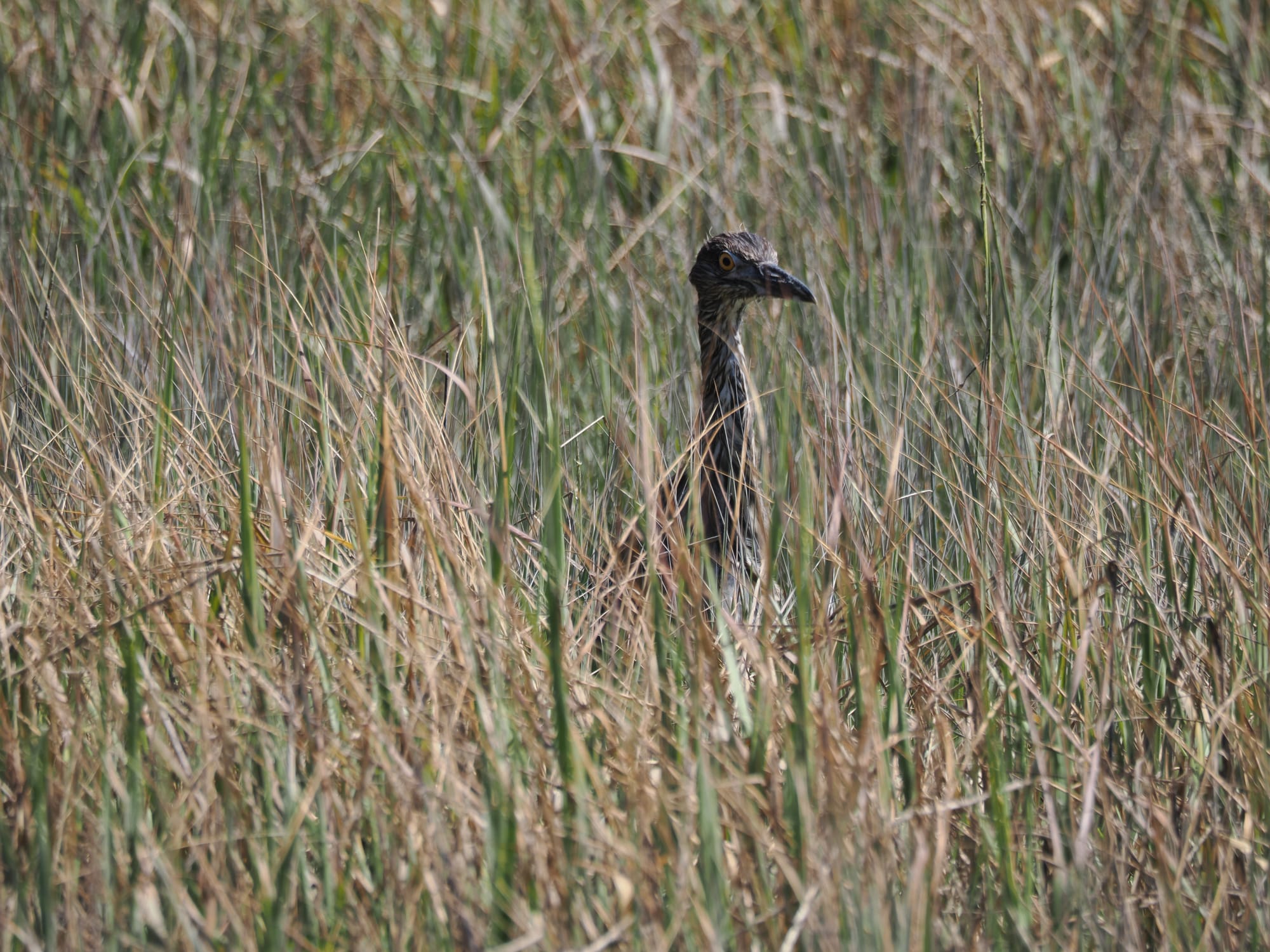
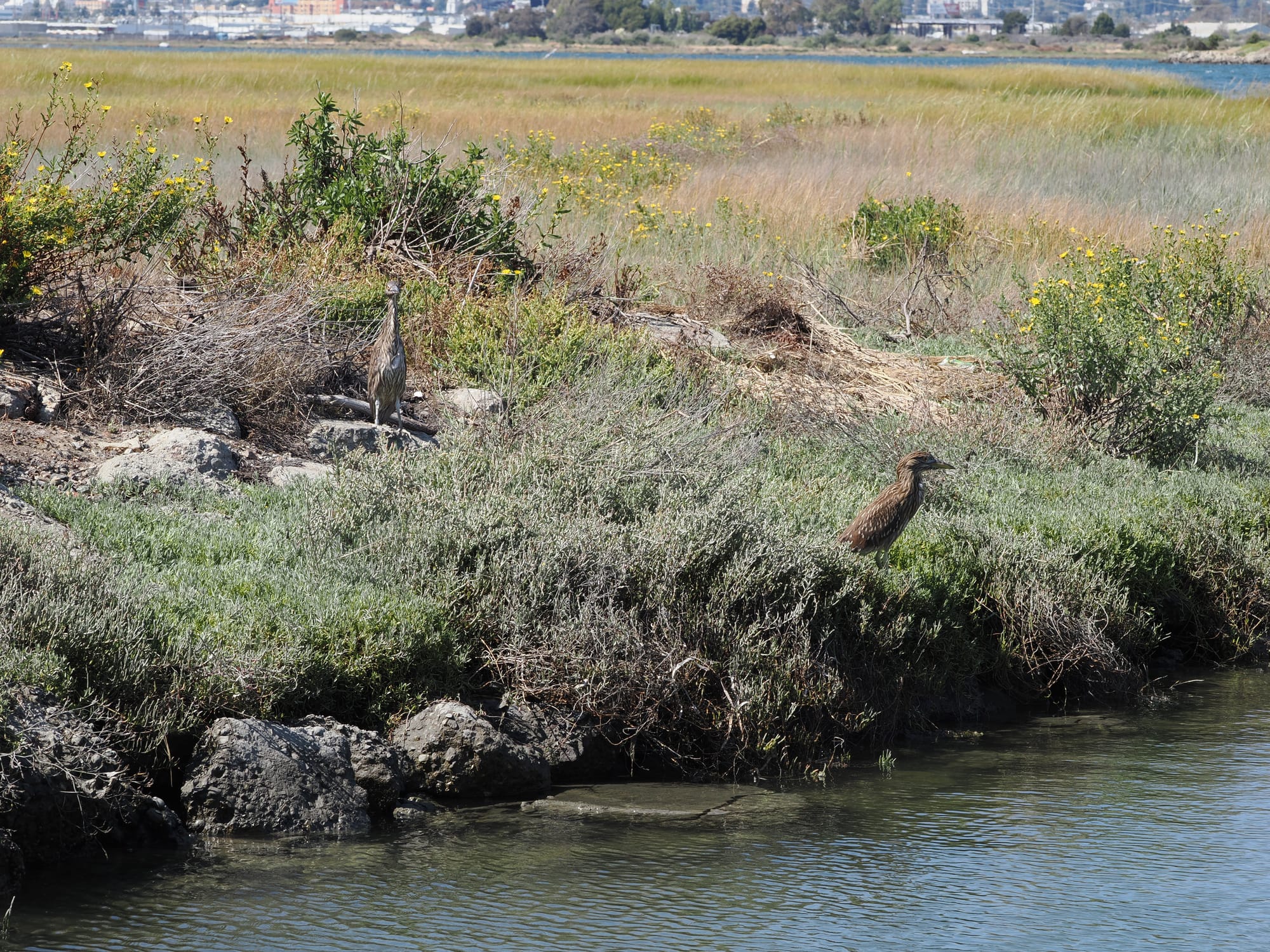
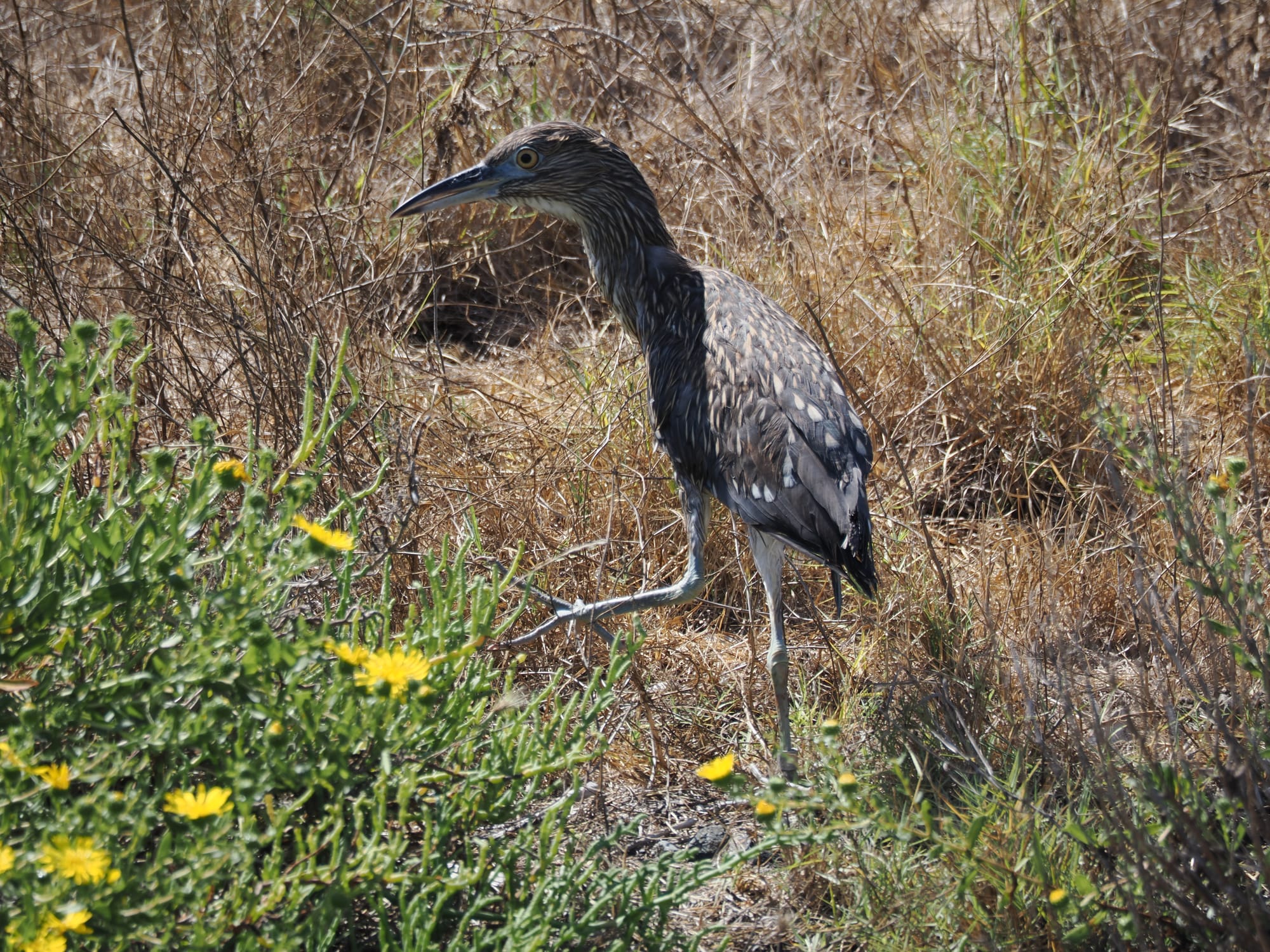
The herons exploring their new habitat. (Courtesy Wade Brahim)
We’ve reached the end of the night heron rescue season; most of this year’s fledglings have left the nest. Since January, the International Bird Rescue released 138 herons and egrets that were rehabilitated in the Fairfield center. But the work doesn’t end there. Up next? Seagull season. Then Common Mures, which look a bit like penguins. After that, it’s all hands on deck for the Brown Pelicans.
For an hour after we released the birds, my friends Meghan (the photographer behind @nightheronsofoakland) and Wade (the bird rescuer from my last heron story) and I kept an eye on them as their natural instincts kicked in. They hid in bushes. Stomped around a little island. Squawked their crazy monkey-like calls. Considered snacking on tiny fish in the water.
And then, when they were ready, they flew.