Yap Zone: The September 11 Artifacts Playlist
What were you listening to after the September 11 attacks?


What were you listening to after the September 11 attacks?

For Soleil Ho, September 11 was their political origin story.
This week we've got pruning, taxidermy, corn, cardboard, making U2 mad, and more.

A large affordable housing development is slated for downtown Oakland. It could displace hundreds of black-crowned night herons, the city’s official bird.


It was foggy and quiet early Sunday morning, when I visited the corner of 12th and Harrison streets in Downtown Oakland. I was there to snap some photos for this very story, and to observe the city’s largest nesting population of black-crowned night herons. Four ficus trees that line that corner, along with three others across the street, are home to 81 of the heron’s nests — 66% of those counted in Oakland in 2026.
It’s a lot of birds. With my binoculars glued to the branches, I didn’t see the heron on the ground at first. It was young, all brown, and clearly injured. It lay on its tummy in the middle of the sidewalk with its legs stretched straight out behind it, its sharp yellow eyes watching me as I crouched down. There was no grassy area to help it reach, no bush to hide it under until it recovered; just pavement and asphalt and the empty doorways of buildings.
And herein lies one of the biggest problems with this rookery: It’s smack in the middle of an urban city. The birds are wild, and hell-bent on survival, but the environment is hostile. And soon, their home may disappear altogether.
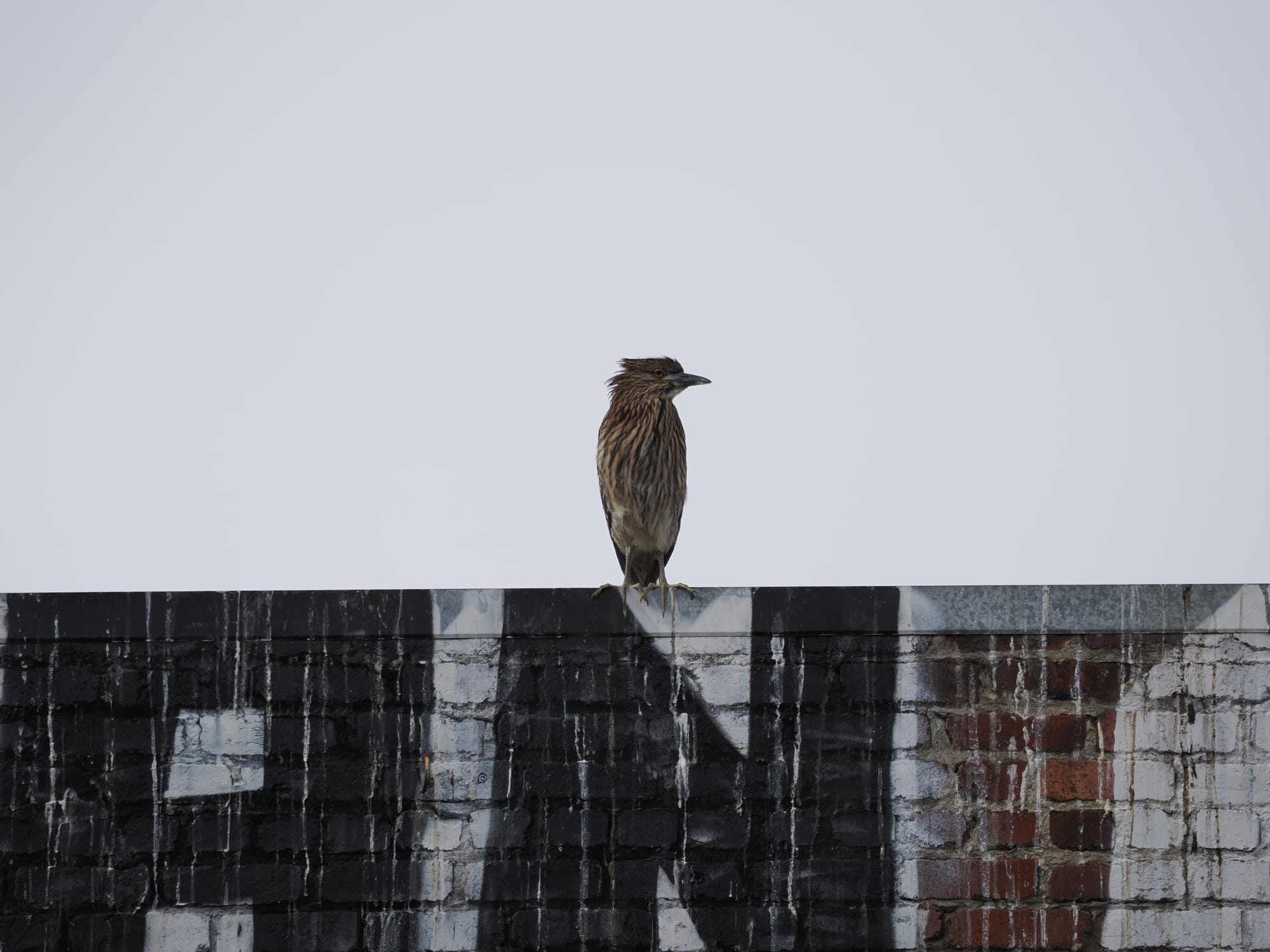
If there was ever a “perfect” housing development, 285 12th St. in Oakland might be it. The planned 65-unit building will contain a mix of studios, one-bedroom and two-bedroom apartments, reserved for low-income individuals making 30-60% of the Area Median Income — as little as $35,650 a year. A family of three pulling in just $45,850 annually could find a home here. So could folks exiting homelessness; several units are reserved just for them. It’s a five-minute walk to 12th Street BART Station, ten from Lake Merritt, and the developers are local: the nonprofit East Bay Asian Local Development Corporation (EBALDC).
But when ground breaks on the empty lot at 12th and Harrison later this year, it’s likely the four ficus trees on that corner will have to come down — and the hundreds of birds that live there will have to find a new home.
The new-development-versus-nature argument has been weaponized in binary YIMBY/NIMBY fights for years. In Silicon Valley’s Woodside, the development of duplexes was stalled by claims the land was a mountain lion sanctuary. Later, when the city wanted to build 200 units of affordable housing, Caltrans blocked it so as to not disturb a delicate wildflower (also over concerns of asbestos, but that didn’t make headlines). YIMBYs were incensed.
But unlike a small wildflower, black-crowned night herons are a very loud, very obvious part of The Town. The friction being caused by the situation on 12th and Harrison is because two good scenarios are bumping against each other, and only one can win: Either Oakland gets dozens of genuinely affordable housing units, or the largest site of beloved black-crowned night herons in the city gets to stay put.
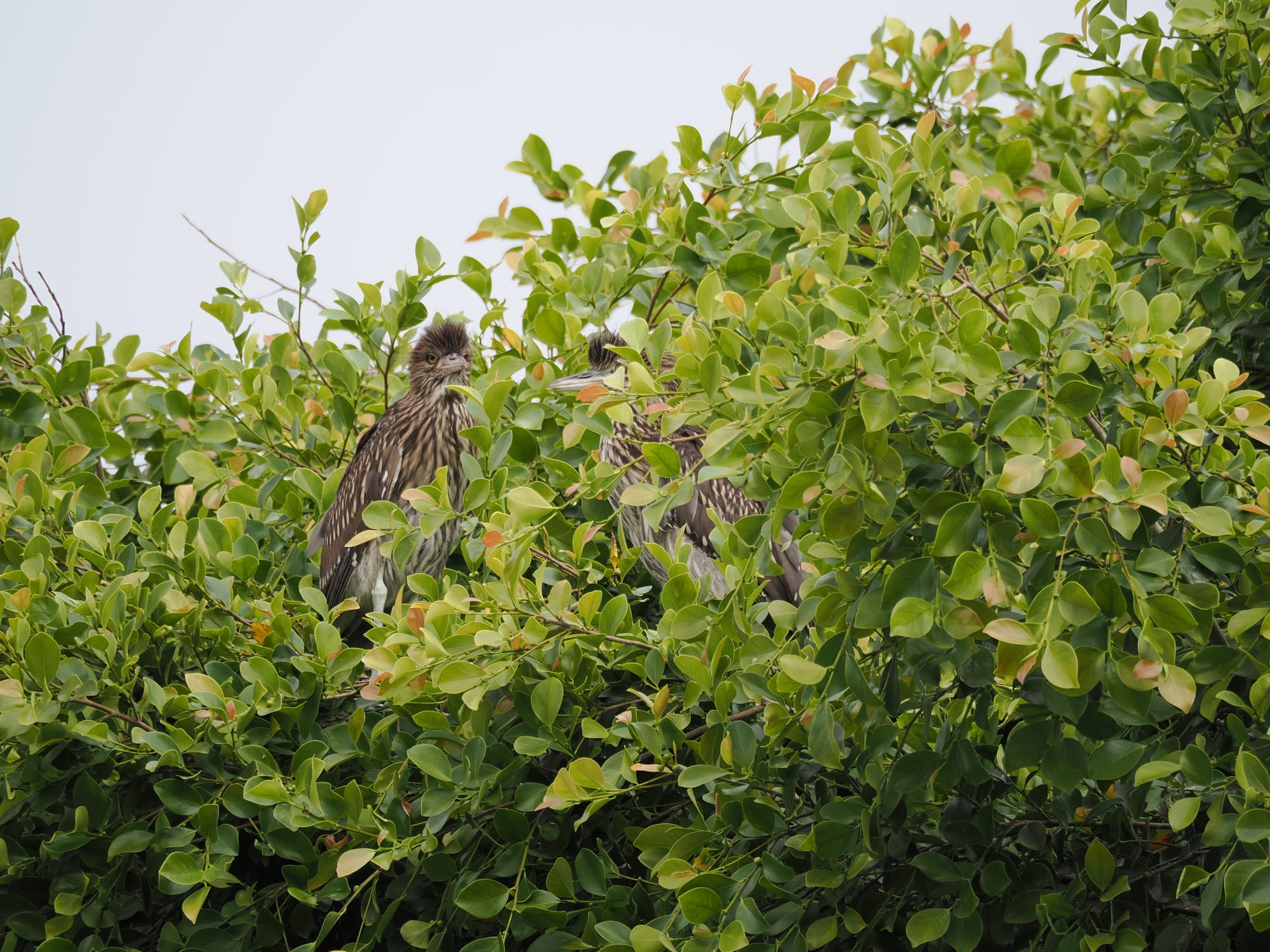
Herons are not new to Downtown Oakland. The hunched, chicken-sized birds love scavenging, and the neighborhood provides ample dumpsters for doing so within proximity to the lake. But their choice of home hasn’t always gone well for them. They love large, dense, leafy ficus trees, known to be a complete headache to maintain. Roots flip up sidewalks, and boughs often collapse onto streets, cars, and power lines.
In 2014, tree trimmers working on trees outside the post office downtown inadvertently injured several nesting birds, outraging local bird advocates. In 2017, a large ficus tree near the post office collapsed. Three herons were killed, and there was a complicated operation to rescue the remaining birds before the rest of the tree was taken down. But the most dramatic post office ficus tree vs. night heron event occurred in 2019, when a collapsed ficus killed 20 birds. The International Bird Rescue collected 70 baby herons and egrets and 20 eggs from the street (many of the birds were later released along Martin Luther King Shoreline).
Night herons have yet to learn the lesson that their tree of choice is deadly, and they continue to reside in a neighborhood that is dangerous for their survival. Each morning, the Oakland Zoo’s Heron Response Team makes daily trips to Downtown Oakland to look for injured birds.
“We retrieve birds who have fallen from their nest and into the middle of a busy road or who have been hit by a car,” Isabella Linares, communications director of the zoo, says. “Young birds, such as nestlings, may fall out of the nest prematurely and are sometimes stranded in the alcove of a business gate or on a sidewalk. Birds sometimes run into buildings and get trapped, or hide under cars. It takes a keen eye to search for birds who often want to stay hidden, and to safely catch them with a net or a towel and get them safely into a box.”
The zoo's Heron Response Team is who I called Sunday morning about the young heron on the sidewalk. They couldn't send someone out, but said the International Bird Rescue would take it. I got a cardboard box out of my trunk, my two birder friends had towels, and in a matter of minutes, the heron (christened "Fred") was on its way to the rescue in Fairfield.
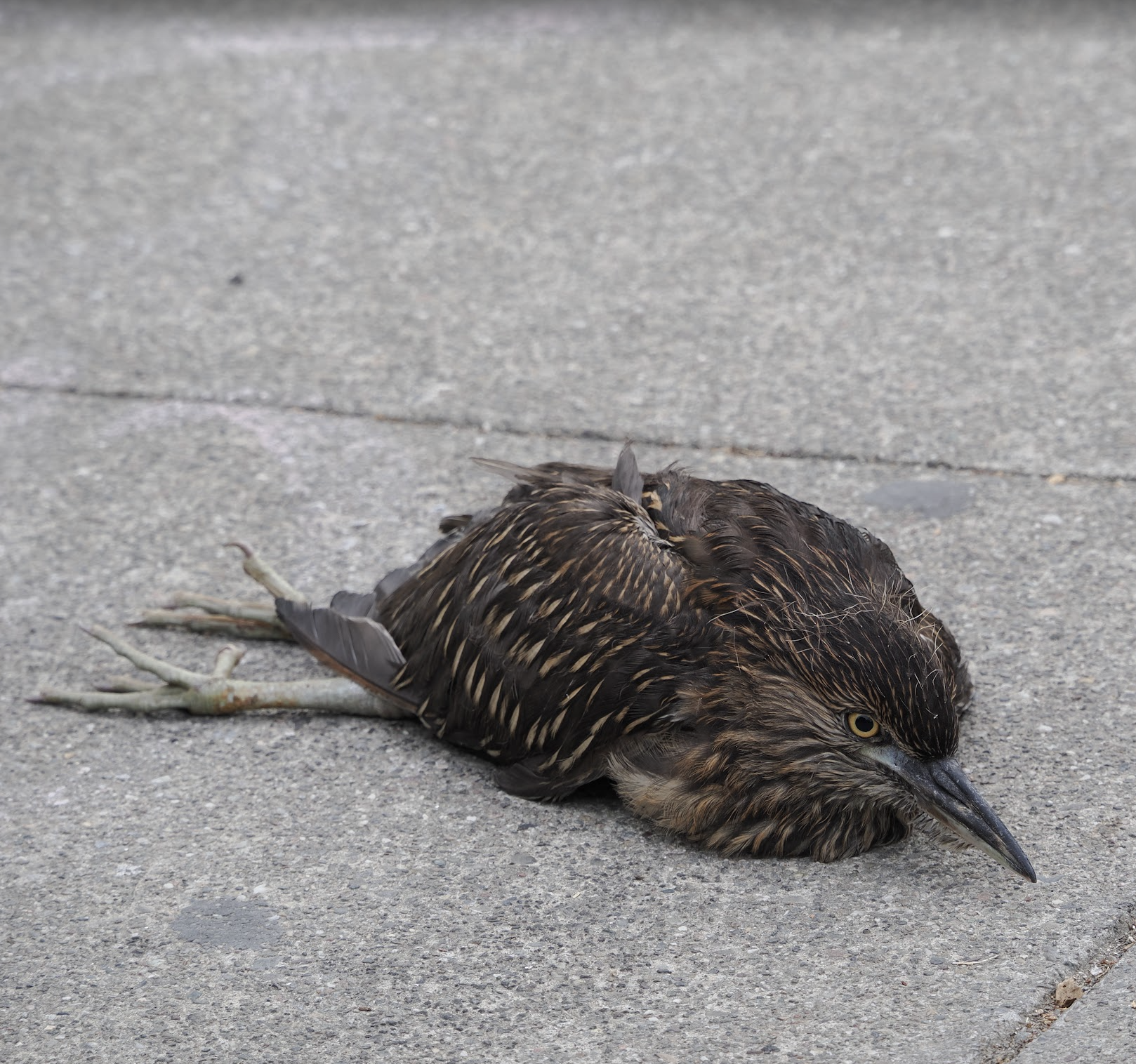
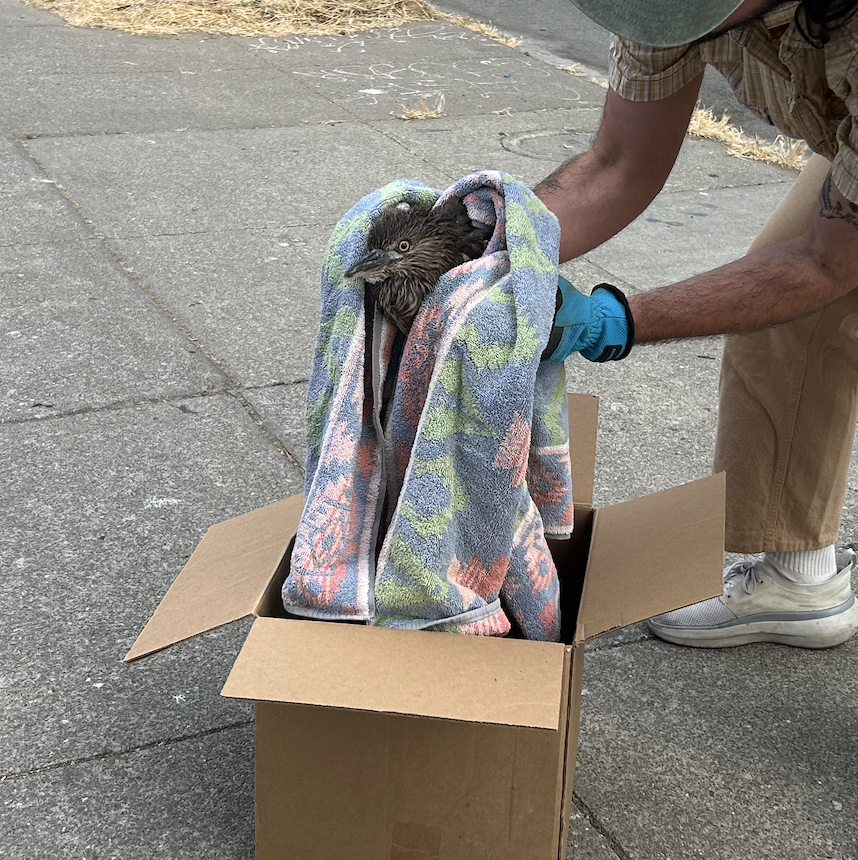
Left: Fred the injured night heron lies on a sidewalk (Courtesy Wade Brahim) Right: Fred is loaded into a makeshift ambulance for transport to a rescue facility (Nuala Bishari/COYOTE Media Collective)
Since the nesting season started in March, the zoo has rescued 87 egrets and night herons, a 28% increase over last year. They, along with other local organizations, are looking into ways to support the 12th and Harrison rookery during the impending construction.
It’s going to be an uphill battle. While a beloved home for herons and egrets, the popular trees that line the corner of 12th and Harrison are, simply put, disgusting. The branches and leaves are coated in layers of heron and egret poop, which also splatters onto the sidewalk, parking meters, and any car unlucky enough to be parked nearby. The pungent, sour fish smell of it is overpowering. It’s not the kind of thing you want outside your bedroom window. But without the trees coming down, it’s unlikely the birds will move on.

Prior efforts at relocation have been futile. A few years ago, the city of Oakland and local developers worked with biologists to shift the herons out of trees downtown and to the shores of Lake Merritt. They moved nests, played heron mating noises along the lake, and trimmed trees.
None of it worked. The birds poo-pooed the efforts, and happily continued making stinky, messy nests downtown. Eventually, Oakland quietly killed the relocation plan.
The developer EBALDC has been supportive of heron preservation in the past. They partially funded that effort to relocate the birds and spoke in favor of the city designating the herons as the official state bird at a City Hall hearing (an effort led by a group of kids). Now, however, they’re deferring to the city to make a decision around the trees.
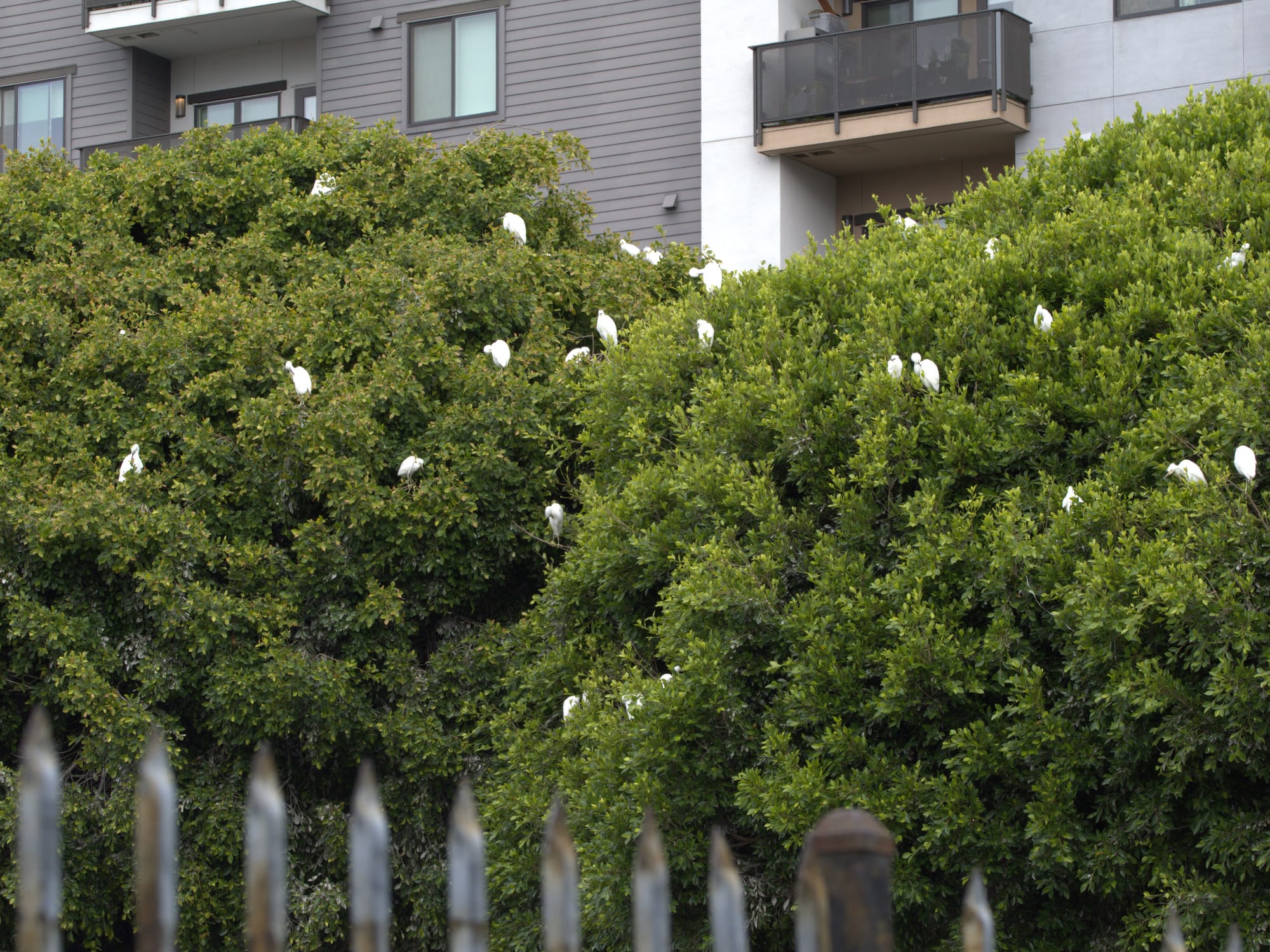
So what happens next? There isn’t an easy answer. There’s no funding for further relocation efforts, and it appears the city of Oakland has thrown up its hands in defeat. The decision will have to come fast though, as there’s a limited window to cut down the trees. It’ll have to happen (if it happens) outside of the birds’ nesting season, which runs from March to September; the Migratory Bird Treaty Act of 1918 forbids the removal of nests without express permission from the Department of Interior U.S. Fish and Wildlife Service.
With the loss of habitat, the herons could relocate to nearby trees — which sounds like a good solution — but the situation could also become worse. Take Santa Rosa, for example. After losing the trees where they previously nested, herons and egrets set up shop in eucalyptus trees on a median in the middle of a busy road, where they built 300 nests. It’s a terrible location, and despite volunteer efforts, many of the nestlings that fall out of nests end up under the wheels of passing cars.
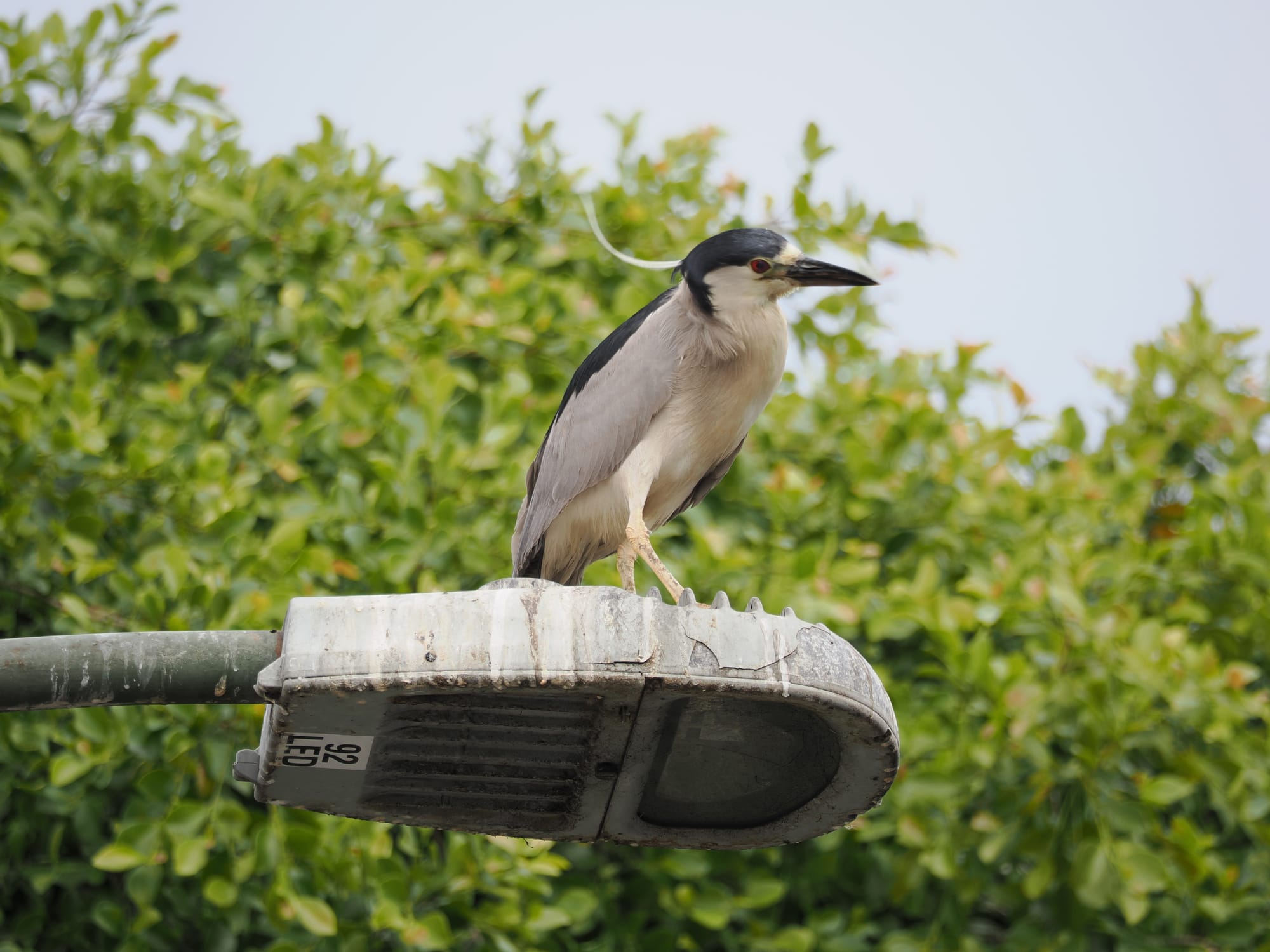
There will always be tension when cohabitating with wild species in urban spaces. And with these kinds of situations, where an animal is under threat, there’s an assumption that nobody cares, that nobody is trying to mitigate environmental impact when there’s potential to make money. That’s not the case here, but that doesn’t mean there’s an obvious or easy solution to this standoff. Oakland needs more affordable housing. The herons are determined to stay put. Here we are.
Stepping back from this specific development, the question arises about the substance of declaring black-crowned night herons as the official bird of Oakland. What does this mean, in practice? Rebranding them as a symbol does not free the city from addressing their needs in these critical moments. Will there be future efforts to keep these birds around? To create safe spaces for them to live where they aren’t at risk of relocation as the city grows denser?
If so, it’s an investment in protecting Oakland’s ecological diversity, and that benefits everyone. The kids who asked the city to make the herons the official bird should be able to grow up seeing them in the wilds of Oakland, not just on their library cards.
Update, July 28: Fred the baby black-crowned night heron sadly did not survive a severe injury to one of his wings. It's hard to know exactly what happened, but the injuries were likely due to a fall from the rookery to the concrete sidewalk, possibly in combination with getting hit by a car. You can find his obituary here.