COYOTE Calendar: October 29-November 4
This week we've got events to offend ghosts, shark facts, mysterious chicken bones, a whole haunted hoard of Halloween parties, and more.


This week we've got events to offend ghosts, shark facts, mysterious chicken bones, a whole haunted hoard of Halloween parties, and more.

For people who depend on the hormone, 2026 has been a grotesque nightmare.

Find burritos, cocktails, and fast wifi to go with your morning Valkyries watch party.

For people who depend on the hormone, 2026 has been a grotesque nightmare.

Miriam had not slept well. Drowning in malaise, struggling to get out of bed, and feeling acutely that she was losing her mind, she clung to vats of caffeine to get through the increasingly agonizing days. The brain fog had been on her for weeks now, since first being denied the antidote. Yesterday, as her condition deteriorated, she left a pot cooking on the stove for seven hours and almost burned her apartment down.
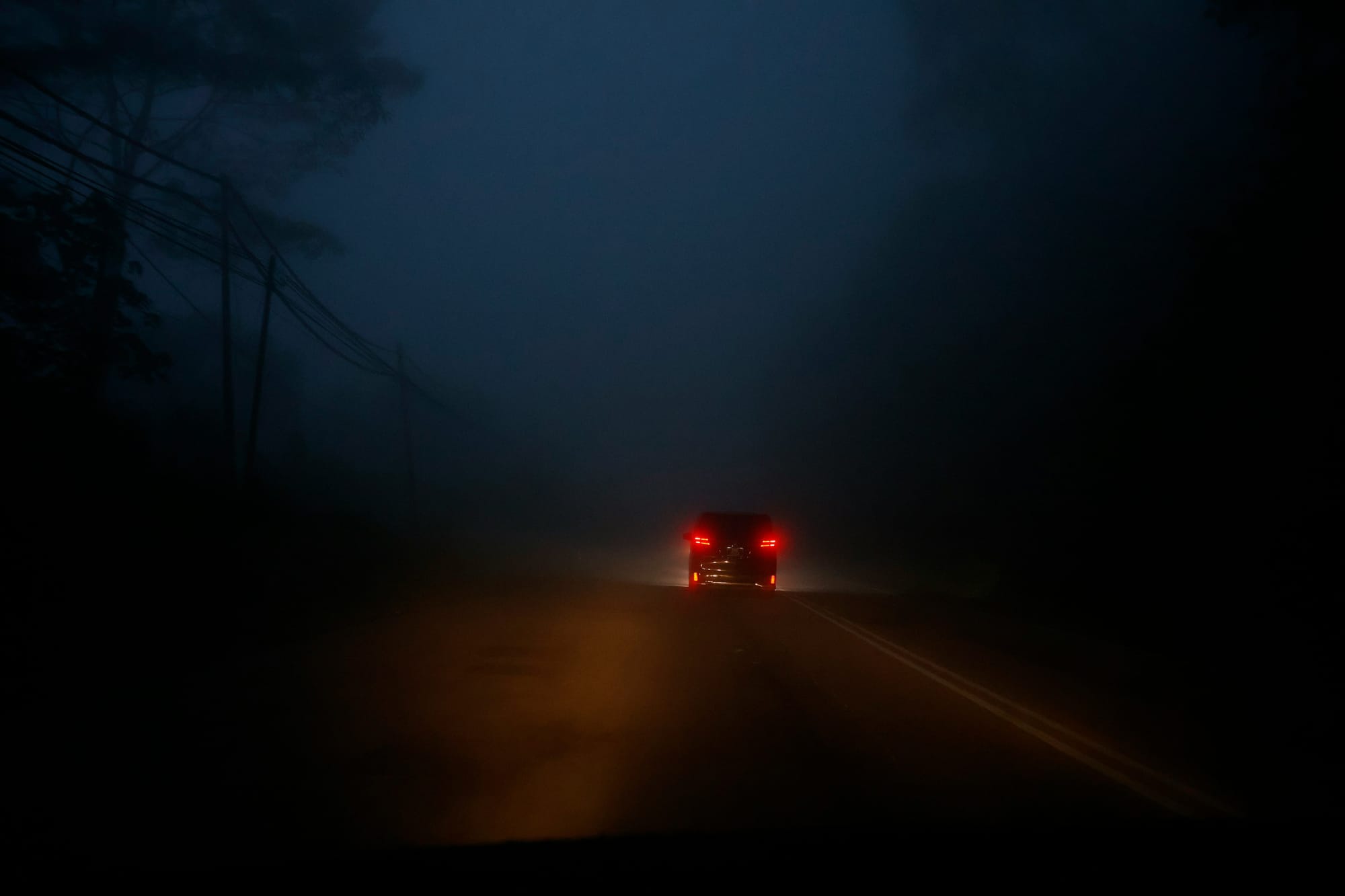
I was in a similar state, having also been denied the antidote repeatedly. I spent my days traveling across the fog-strewn Bay and along the Delta in a desperate search for whatever was left. I rationed what I had as best as I could, but using less meant the symptoms creeping in: brain fog, exhaustion, depression, rage, insomnia, confusing skin ailments, waking up in a pool of sweat.
We weren’t alone: People everywhere were slowly slipping into zombiehood, stumbling from pharmacy to pharmacy, crying out for assistance and being denied.
The antidote we all need is estrogen patches. And the reason I’m framing the ongoing estrogen patch shortage as a horror story is because for those of us trapped here, it is.
Some backstory: I’m a middle-aged woman living with endometriosis, which is a nightmare all its own. I had a hysterectomy in 2025 because I also had fibroids and a cyst that caused constant, debilitating pain. It took me an entire year of living in agony to get approval for that surgery. That’s because the main way to diagnose the one in 10 women with endometriosis is to knock them out, slice them open, and have a gander at their guts.
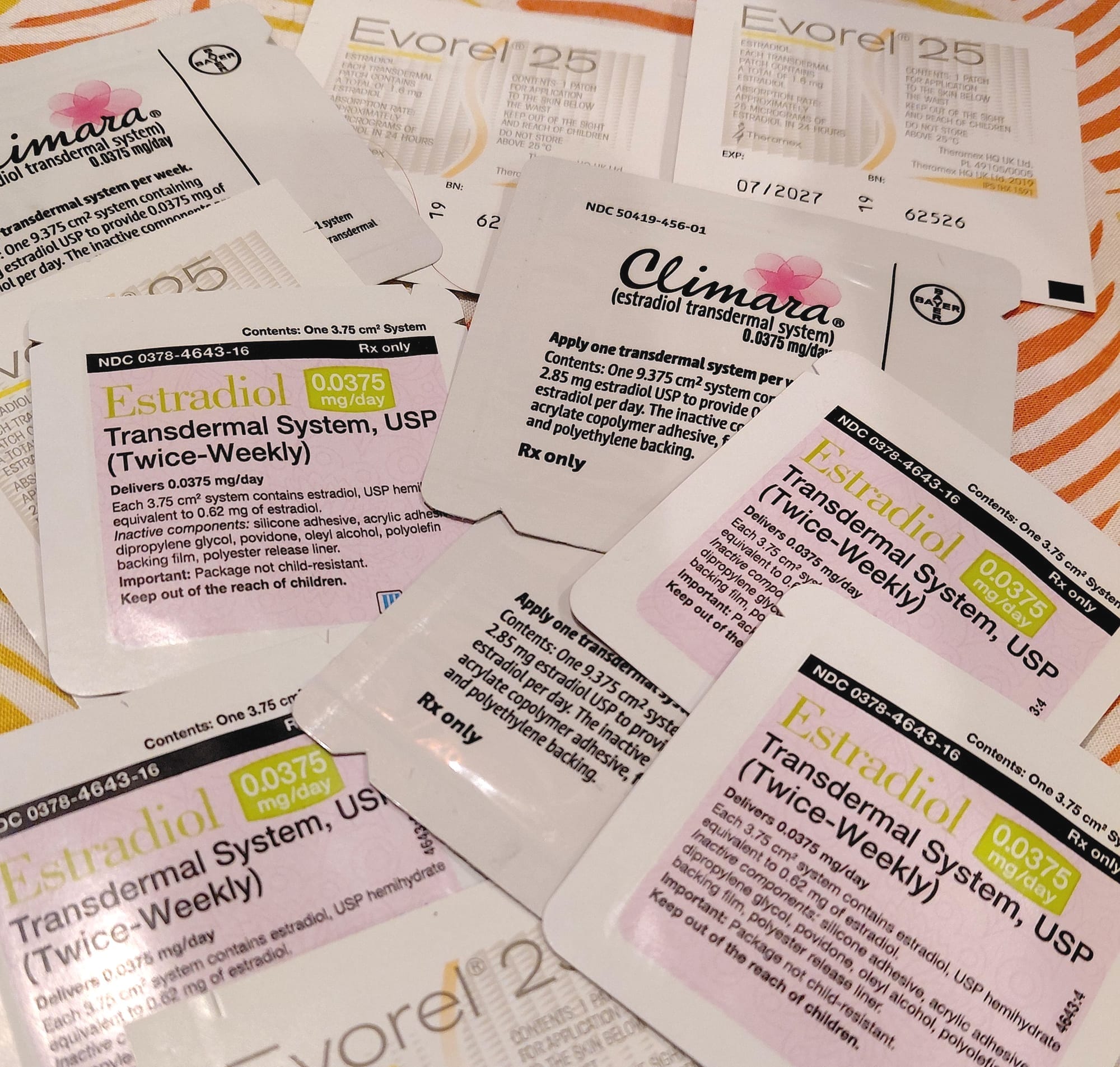
After they cut up my uterus and dragged it out through my belly button, my pain dissipated. But then my brain stopped working. I couldn’t find words or objects around the house. Utter discombobulation. Before my surgery, I was told that because I was keeping my ovaries, I should have few hormonal side effects. Only after my memory was shot did my OB/GYN tell me that yeeting your uterus can cause a drop in estrogen that, in turn, can impact cognitive function. I was prescribed twice-weekly generic estradiol patches that arrived in the mail, three-months at a time and — hallelujah — my brain worked again.
Then, earlier this year, the patch that was sustaining me suddenly disappeared, replaced by a series of imposters that did not work. One would not stick to my body; another made my ovaries hurt and my vagina feel like the Sahara Desert. When I reached out to my insurance provider, Kaiser Permanente (insert Frankenstein’s monster groan here), I was informed that my preferred brand of patches are no longer available via mail order. Turns out they’re also hard to find in person — and when you do track them down, many pharmacies will only dole out one month’s supply at a time. Kaiser declined to comment for this story.
Now, in order to access the medicine I need, I have to call multiple numbers per month, sit on hold for interminable periods, find a pharmacy that has my patches, then journey there, no matter how inconvenient the location. (They’re usually over an hour away.)
To be clear, this shortage is not just a Kaiser problem. A friend in the North Bay who has different insurance (plus Midi Health) was also doing this kind of laborious driving for a while, until she finally gave up and switched to using an estrogen gel that she says is less effective. The other day, she confessed that she occasionally has the overwhelming urge to rub it on her gums like it’s cocaine.
Miriam — the one who almost burned her apartment down — is on yet another type of insurance, Medi-Cal. She gets regular texts from the Market Street Safeway pharmacy informing her that her patches are finally in stock. But after she rushes over there, she’s told they’re still on backorder. She leaves empty-handed, in tears, before getting home and destroying something. (Last week, she Hulk-smashed a whole side table with her bare hands. She weighs 105lbs.)
When I tell you we are all losing our minds, I am in no way exaggerating.
Despite this situation dragging on for most of 2026, the FDA has refused to add estrogen patches to their official shortage list — a move that would trigger a variety of actions to fix the backlog, including getting alternative manufacturers involved.
I called the FDA (240-202-7770, btw) to ask why. After not receiving a call back, I emailed them (drugshortages@fda.hhs.gov). The reply I received stated that women “may be experiencing issues obtaining a specific product or brand preference in your area, but product is available.”
To be clear, this is a wretched thing to say when women can’t just show up to a pharmacy and request whatever brand is in stock. Even if we give up on finding our preferred patches and say “I’ll take whatever you’ve got,” we are denied access to anything that is not specified on our prescriptions. Friends have attempted to obtain different brands at their local pharmacies by getting their doctors to change their prescriptions, but by the time the doctor does this, the pharmacy is usually out of whatever they had.
For many women my age, the estrogen patch shortage is infuriating, but not surprising: We have decades of experience with women’s health being treated as an afterthought.
The facts bear this out. The inclusion of women and non-white people as subjects in clinical research wasn’t even federally mandated until 1993. In 2006, a study found that of 95 schools teaching med-school courses in the U.S., only nine offered a women’s health course. In 2022, endometriosis research was so grossly underfunded that if the money was allocated to each individual patient, we’d all get two bucks each. The World Economic Forum reports that women spend 25% more of their lives in poor health than men do.
And yet, these stats don’t tell the full story of what it feels like to be a woman at the mercy of a misogynistic medical system. Years of cold metal speculums. Having a chunk hacked out of my cervix with zero pain relief. The birth control pills that drove me into a disabling depression. A failed IUD insertion that continues to haunt me. The mammogram that left my breasts so bruised, I was black and blue for a week. The fact that, in 2026, it’s still called a hysterectomy (not a uterectomy) because the medical industry can’t stop reminding women what it really thinks of us.
Then there’s the slew of new and increasingly inhumane ways to torture fertile women that have been on full display across the country since the Dobbs decision.

While the U.S. has moved steadily backwards in terms of women’s rights over the last few years, more women are educating themselves about their own health issues — and many are seeking out estrogen as a result. Of course, the medical industry has managed to spin this, too, into hysteria and blame: The FDA email I got said that “the agency is aware there is an increased demand for these products.” I have been informed by multiple pharmacists that “too many women want estrogen now.”
Meanwhile, older folks are fond of pointing out that they suffered through menopause without any medical assistance at all. And yes, they did. Just like I suffered through measles, mumps, chicken pox and rubella when I was a small child, because vaccines for those weren’t standard practice yet. Should we bring those back? And if we’re doing medicine like the olden times, why don’t we scrap anesthesia altogether and just bite down on some leather!
If I squint, there’s one silver lining to the shortage: It has led to the formation of some surprising mutual aid networks. The collective desperation for patches is now so acute, I have begun requesting shipments of unwanted stashes from sympathetic friends in the U.K. (whose public National Health Service is experiencing no such issues) and then distributing them to my friends here.
A pal of mine who recently got wind of this texted me: “Are you really doing a free Dallas Buyer’s Club, but for estrogen?” “Yes,” I replied, “only with way less Jared Leto.” (It is important to throw some comedy into the horror occasionally.)

As Halloween approaches, I would love an ending to this horror story that so many of us have been trapped in this year. I want the fog to lift, the rage to subside, the interminable drives to end.
But so far, the only final act I can think of is to turn this into a triumphant, crowd-pleasing underdog drama. One in which we women start organizing protests outside of health conferences and Sacramento’s FDA offices until the industry is shamed into helping us. Please contact me if you, too, would like to band together in public places and scream like a racket of banshees.
Unlike the perpetually solo final girl in so many horror movies, there are many of us. As long as the medical ghouls continue to ignore our pleas, all we have is each other.