What Is the Point of Gavin Newsom?
You can’t build a movement around a person whose only commitment is staying uncommitted.


You can’t build a movement around a person whose only commitment is staying uncommitted.

How to make fruit into ferments, jam, kimchi, and lots more.
This week we've got COVID-safe kink, making art with maíz, haunted dolls, and more.

The creator of the Night Herons of Oakland Instagram account shares how she became obsessed with her avian neighbors.


Late one night in 2013, as Meghan Long sat in her apartment in downtown Oakland, she heard a loud squawk.
“I was like, ‘What the fuck was that?’” she recalls, having recently moved to town. “It sounded like a monkey.”
She heard it a few more times in those first few days. Perplexed, and wondering what kind of animal it was, she pulled up a website on Lake Merritt, which featured descriptions of local birds. The noisy tree dwellers, she learned, were black-crowned night herons. “I finally made the connection,” she says. “Ever since, I've just been obsessed.”
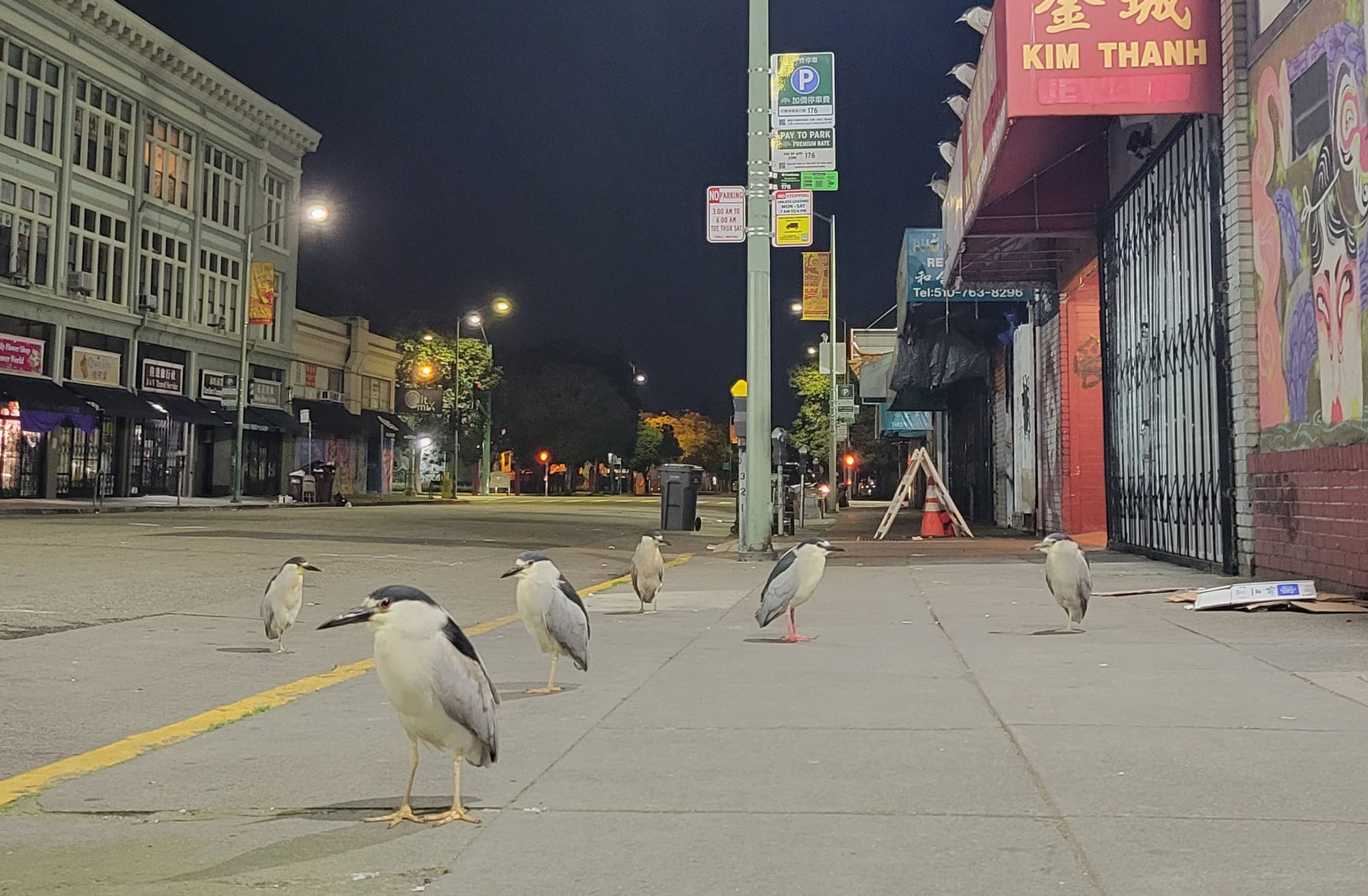
Long is the photographer behind the increasingly popular Instagram account @nightheronsofoakland, which she started two years ago as a fun side project. It’s also become a surprisingly poignant way back to photography for Long, who studied photography in college, but has spent the last few years working in fundraising and development, and studying library and information science.
When she and her husband run errands in their neighborhood, she chooses a very specific route through Chinatown, an area where she knows she'll see the birds perched on street signs and the edges of buildings.
After one such detour — in which her husband got pooped on while walking under a tree filled with birds — he asked what she was even going to do with all these photos she’d been collecting of the herons. “I said, ‘Well, maybe I'll start a dumb Instagram account.’ I thought it'd be funny; maybe five people would see it,” she says.
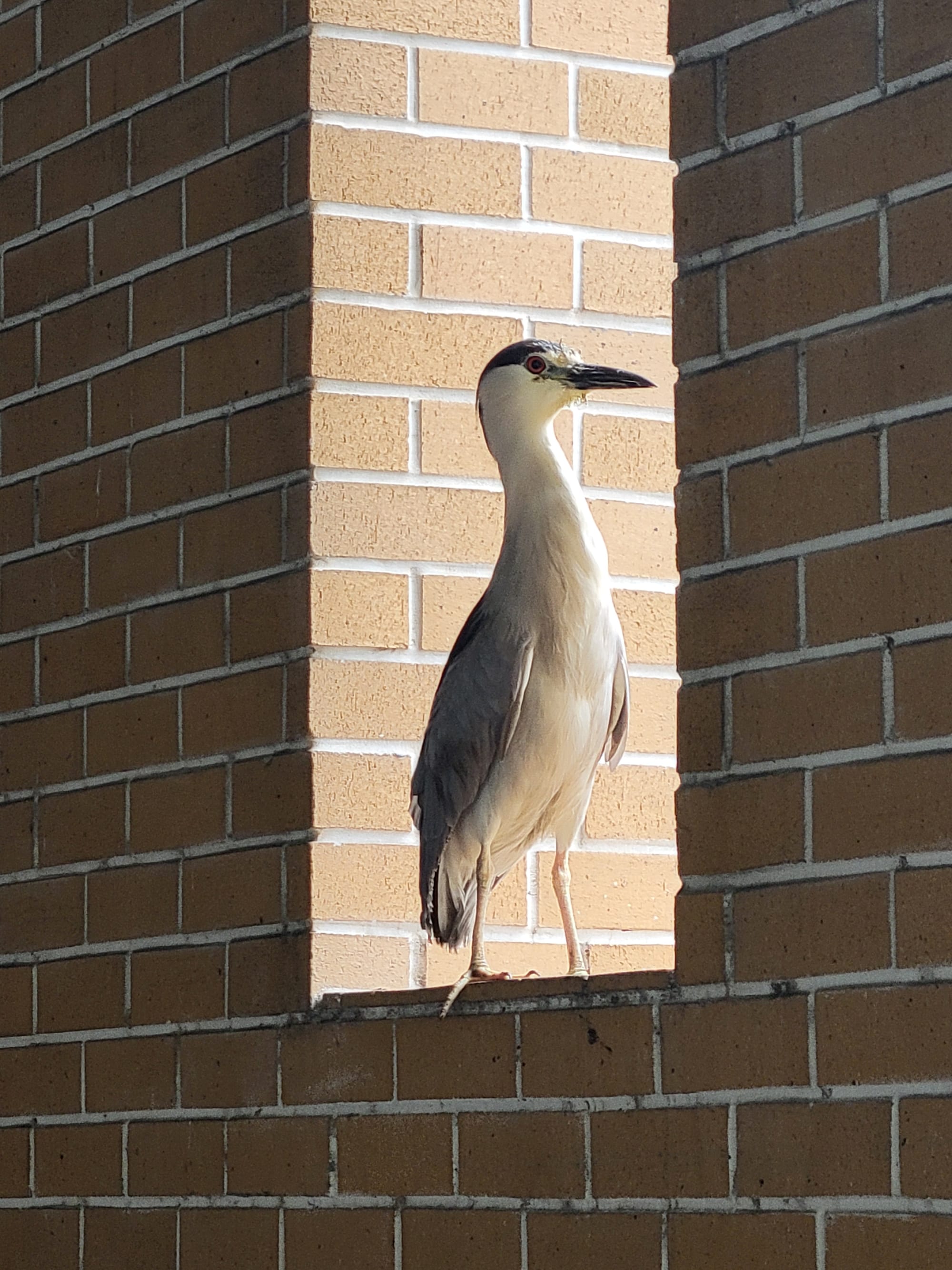
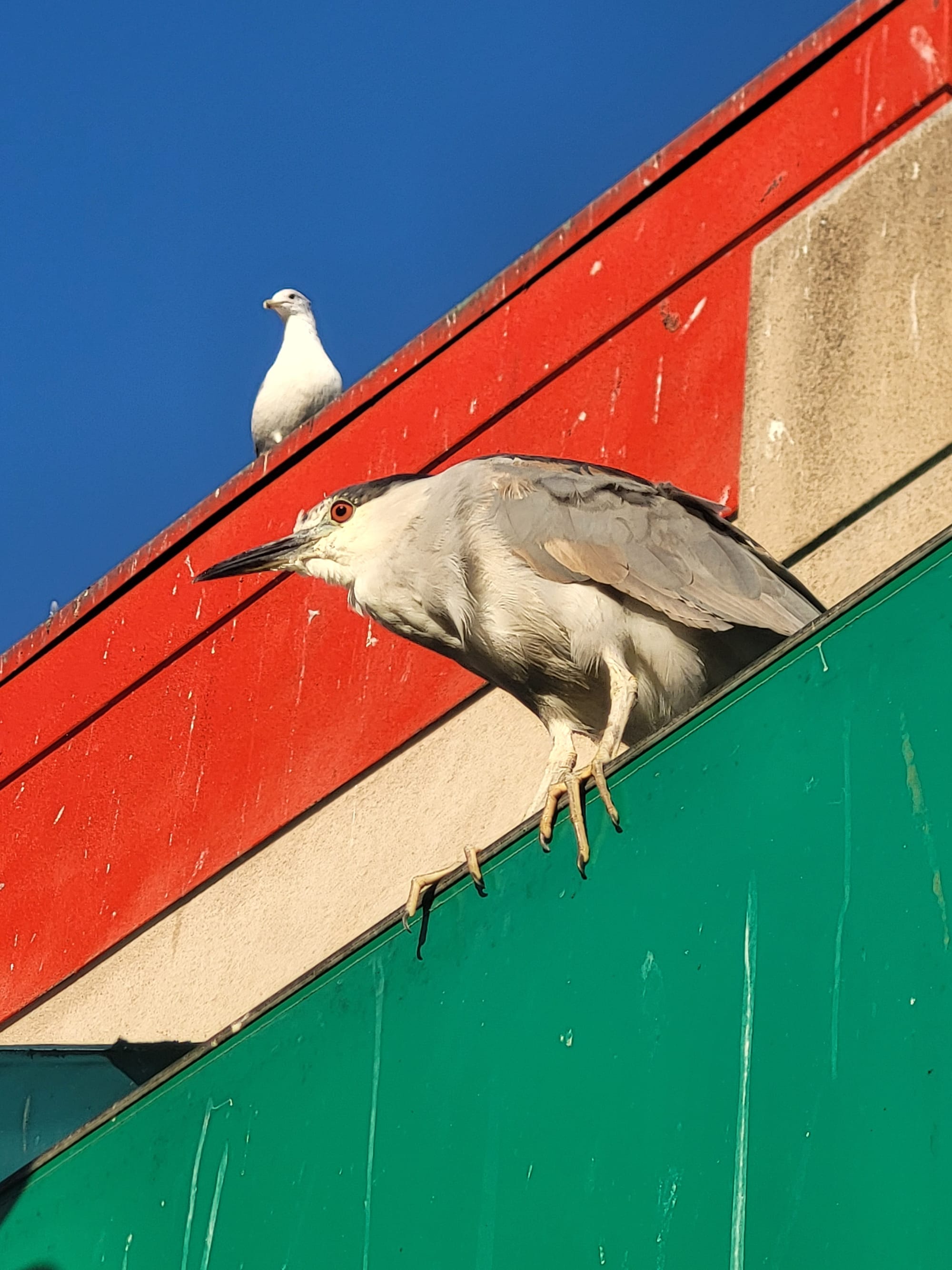
A black-crowned night heron hangs out at a retirement community in Downtown Oakland (L), Night herons and seagulls can often be seen scavenging together (R) (Courtesy Meghan Long)
Instead, in a little over two years, the account has amassed more than 9,600 followers (she saw a big jump in January, after a video she posted of the birds set to Gang Starr’s “Code of the Streets” went viral). The account has been tagged in posts by BART and the Oakland Museum of California.
Now, followers are submitting their own photos of the birds, which she’s sharing on her page. Some are from locations Long didn’t know about — such as a heron hot spot at Eighth and Adeline in West Oakland.
“People genuinely love night herons,” Long says. “They're so funny-looking, and they make such a funny noise. They squat, but then you see them stand up, and their necks will stretch really far. Sometimes I'll look at them and think, are you posing intentionally right now?”
Aside from being a fan favorite, black-crowned night herons are Oakland’s official bird, thanks to a group of third graders who petitioned the city. “The heron’s bold personality and industrious lifestyle represent our strong-willed, tenacious, and dynamic community,” read the Oakland City Council resolution in 2019. They’re on our library cards and featured on local murals.
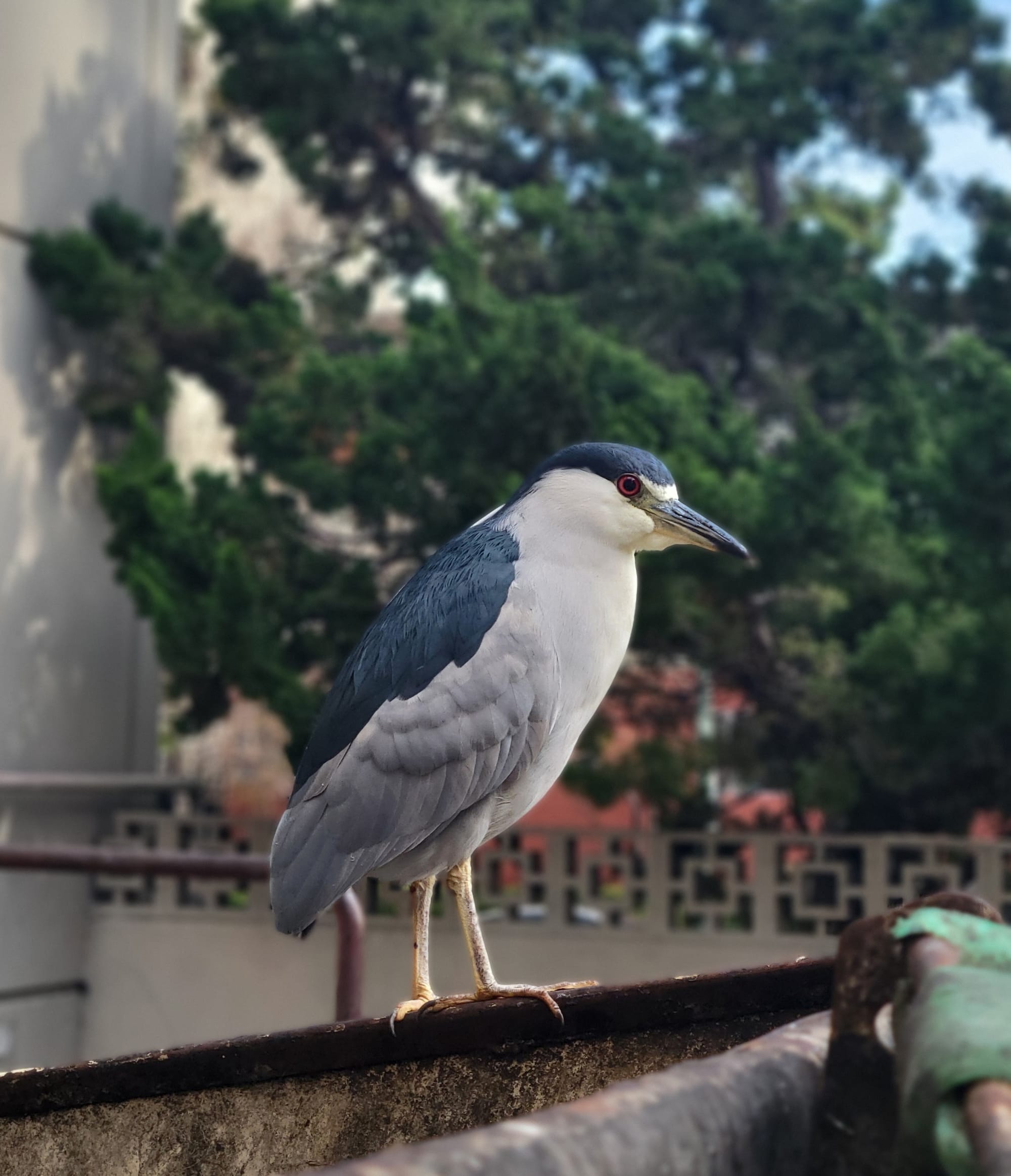
They’re elegant — but they’re also scavengers who love trash. Many of the birds in Long’s photos hang around dumpsters at a senior home near her apartment, where the birds wait for staff to bring out bags.
Seven trees make up their rookery near the fortune cookie factory at 12th and Harrison streets, where they produce an absolutely disgusting amount of poop; it covers the sidewalk, and a Lime scooter left there on Tuesday night was splattered. The parking meters are so coated in excrement they are unusable, and there’s a conspicuous lack of cars parked along the corner. “The smell is rough, and it's a good reminder of why I take off my shoes in the foyer,” Long says.
Unable to use disinfectants as they could harm the birds, the city of Oakland blasts 154-degree water, pressurized to 3,500 pounds per square inch, to remove the stinky bird feces from the sidewalks.
The birds also produce a cacophony of noises. Long says she’s tried to count the herons in the trees, which share their branches with egrets, but she’s lost count. “It’s got to be near 100,” she guesses. “There are seven trees, and I’d be surprised if there are less than 20 birds in each.”
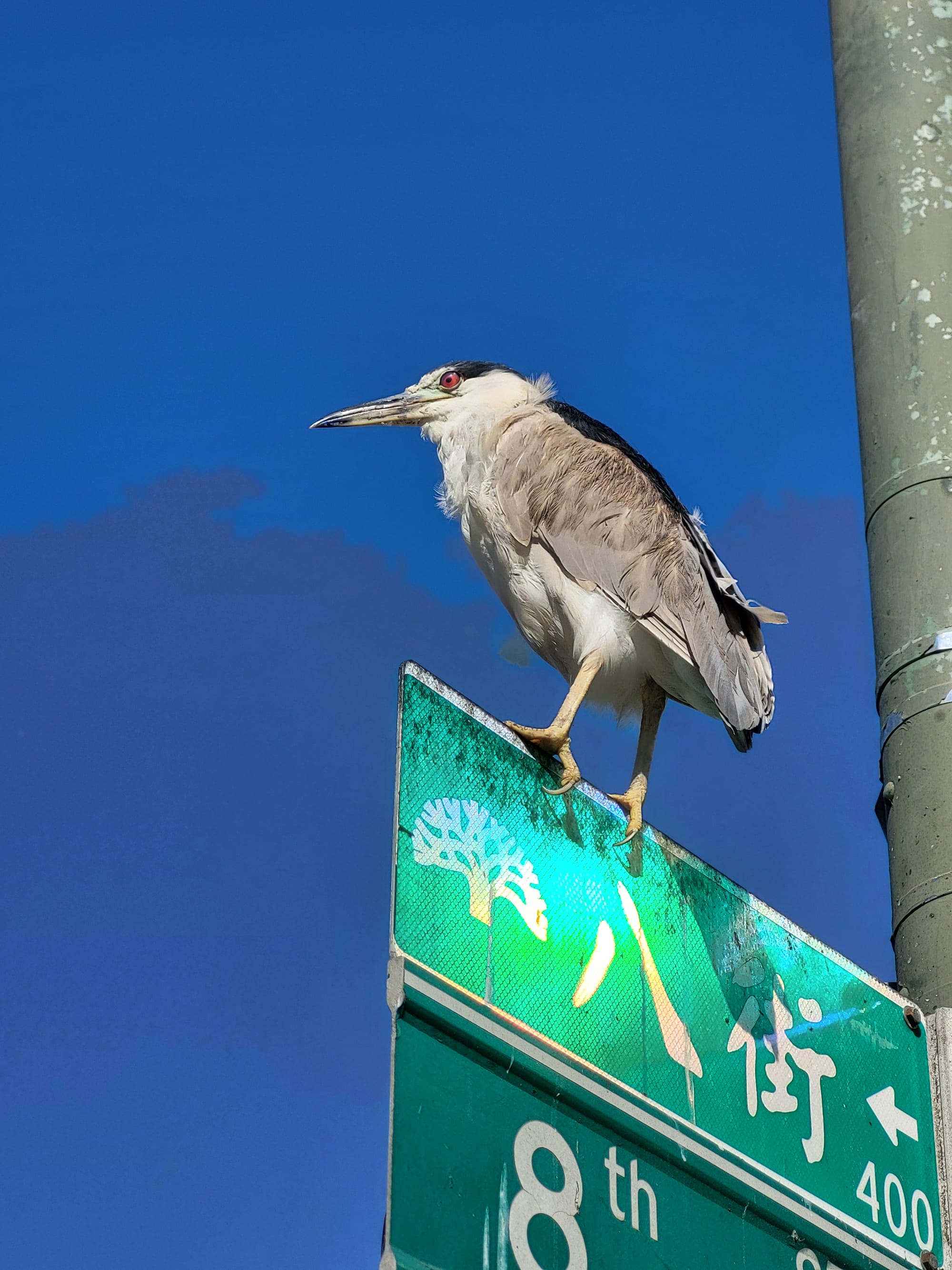
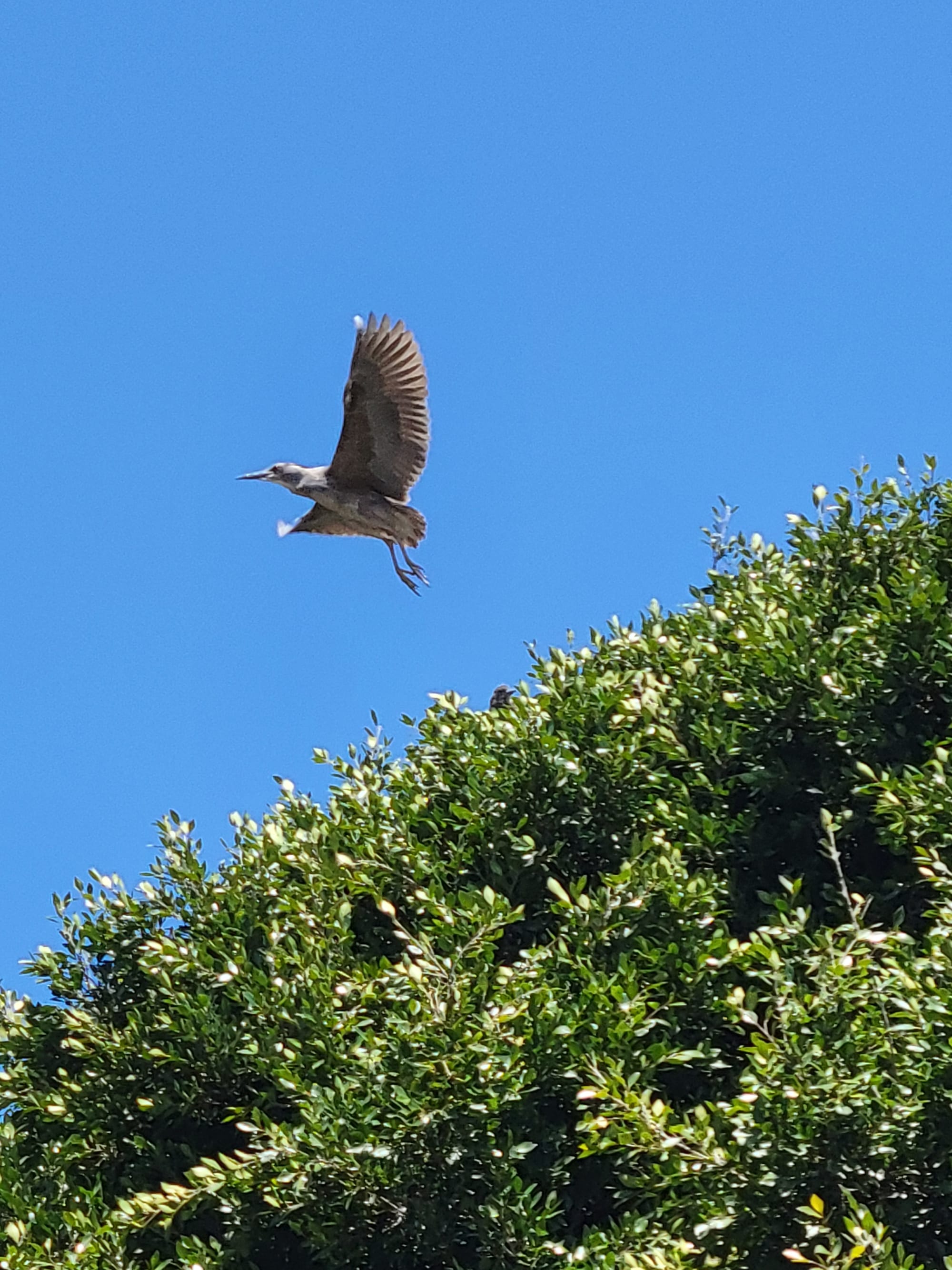
Night herons perch on the corner of 8th and Franklin streets (L) and fly over their rookery (R) (Courtesy Meghan Long)
Long has always photographed birds. She grew up in rural Maryland, where her grandfather, an avid photographer, got her into the art. “I have a very vivid memory of the summer before middle school, when he gave me access to his camera and a bunch of rolls of film and taught me how to focus the lens and read light meters,” she says. “He said, ‘Go out and shoot what you love.’ I would sit outside my grandmother's hummingbird feeder and wait for them to fly up, and try to capture them in both flight and being still. I'd go out to the swamp and photograph the wood ducks and mallards.”
She went on to study photography at Hampshire College (along with this reporter). But when the recession hit after graduation, and a multiple sclerosis diagnosis led to Long losing sight in one eye, she stopped taking photos. “I just gave up on my photography career, and outside of just random cell phone photos or the occasional vacation photos, I wasn't really thinking about photography from an artistic lens.”
Oakland’s night herons changed that. “Part of the motivation to start this night heron account was to reconnect to the joy that photography brought me,” she says. “I have a million mediocre night heron photos, but I have also started to think about the shots as art, and it makes me so happy to spend a few minutes every morning picking out a photo that I think is interesting, spending some time editing it, and thinking about a song that goes along with the image.”
The practice has been soothing during this tumultuous time. “There is so much terrible stuff happening in the world, and having these little moments of joy is so important to remain sane during a time of rising authoritarianism, white supremacy, and Christian nationalism,” she says. “Initially, this project was really for me, but I have loved getting messages from random Oaklanders who express how much they love this page.”
As for what Long hopes people think about when they see night herons? “I want people to recognize that even though we live in a dense urban place, we're still surrounded by nature,” she says. “Growing up in a really rural area, I had such a naive idea of what cities were. It wasn’t until I moved to New York that I fully appreciated it. The first weekend we lived there, I saw a hawk come down and eat a squirrel.”
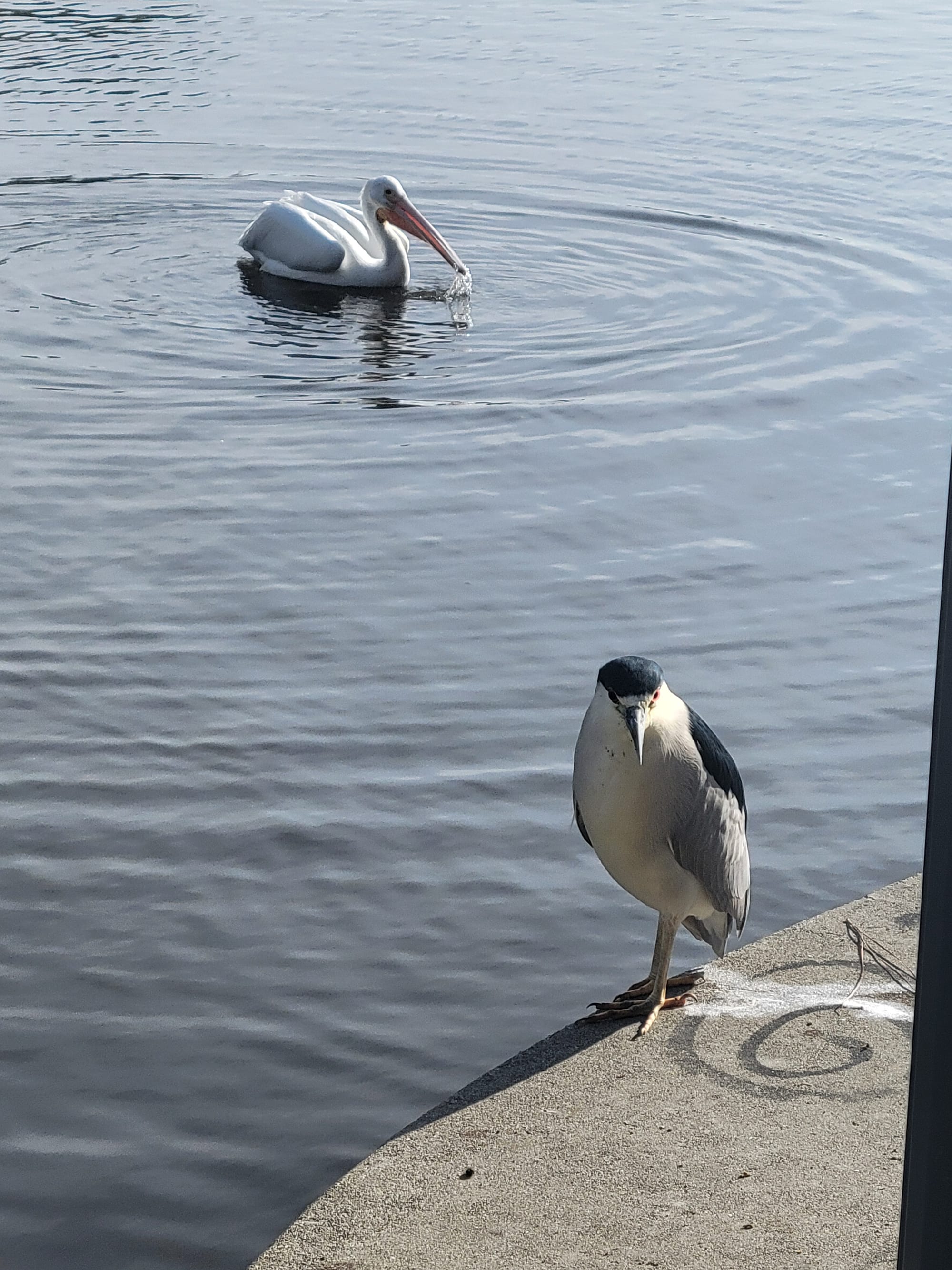
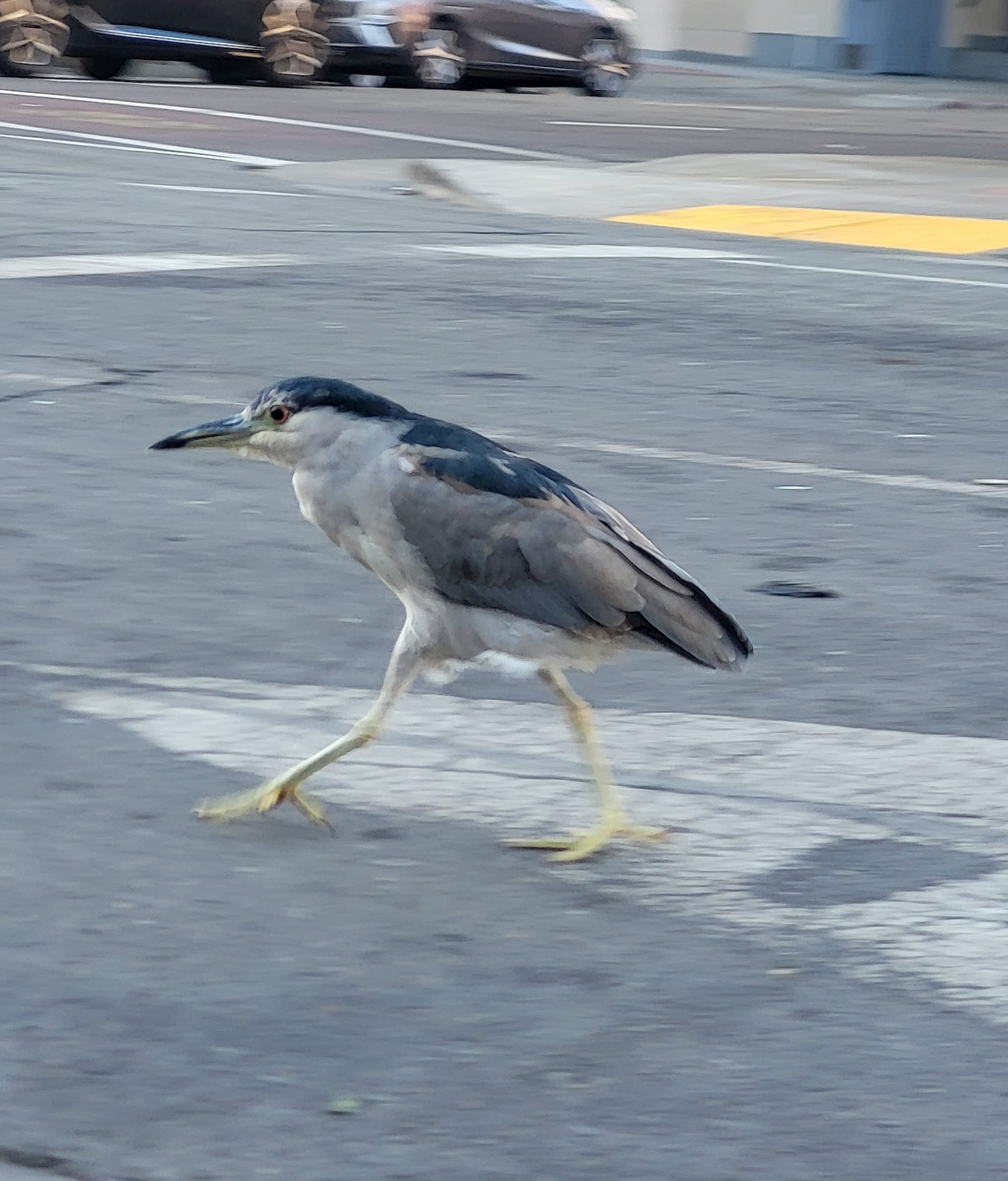
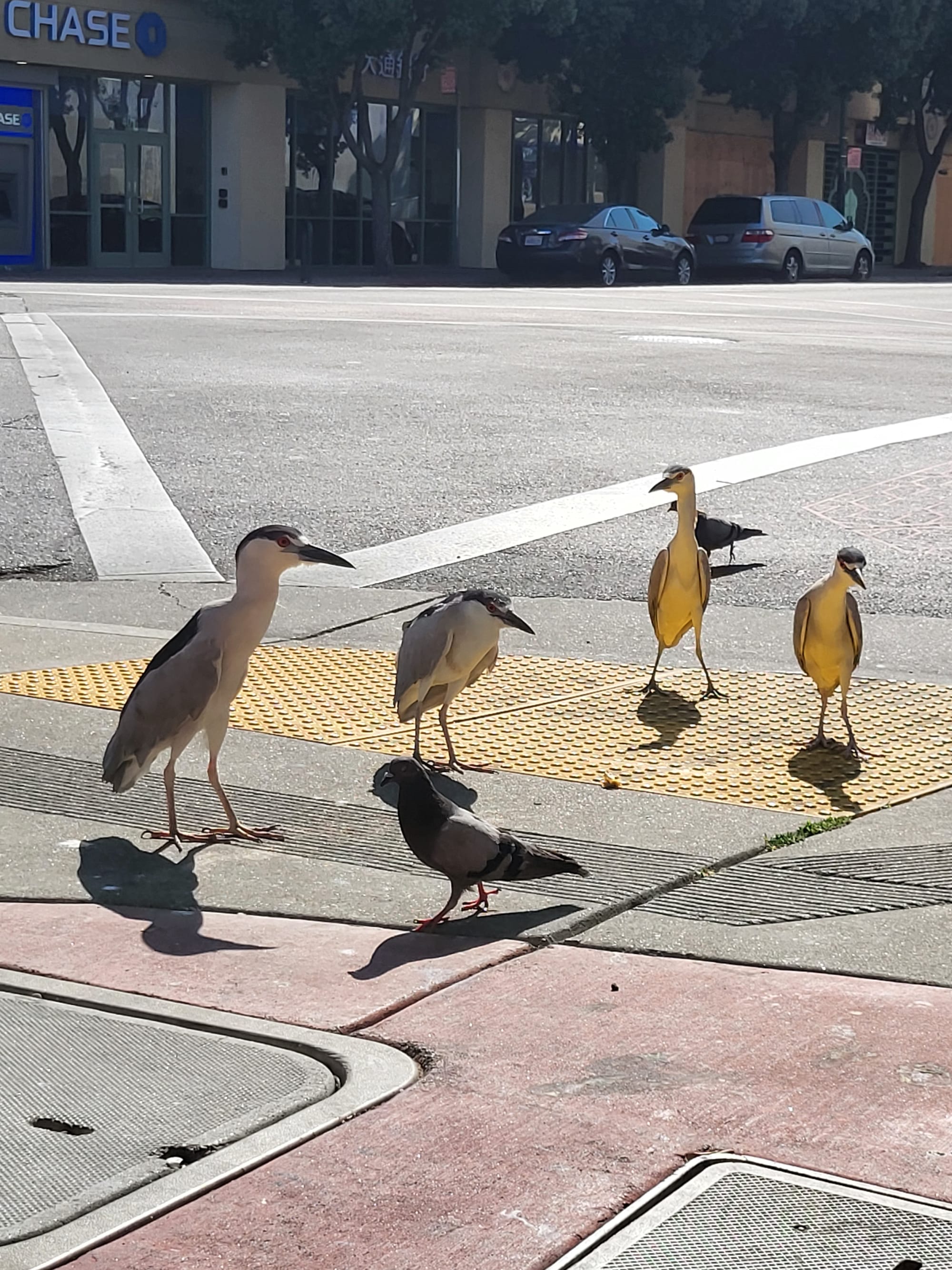
Night herons can often be found near Lake Merritt, but also in the nearby neighborhoods of Downtown Oakland and Chinatown (Courtesy Meghan Long)
Long loves the herons, but worries about them, too. She has the International Bird Rescue’s number saved on her phone, and will call them and leave a message if she comes across a fallen nestling. An empty lot near the 12th Street rookery is slated to become housing, which may mean the trees will have to come down. Their habitat is shrinking, and without ongoing investment, the birds’ presence in the city that honors them is under threat.
“In my fantasy, if we lived in a city with money that didn't all go to the police department, the city would eminent domain that little lot and just turn it into a little bird sanctuary,” she says. Someday, maybe the city will secure enough state and federal funding to rewild parts of Lake Merritt and return them to wetlands, expanding their habitat.
In the meantime, Long will continue making detours around her neighborhood in pursuit of night herons. On Tuesday evening, on a walk around Chinatown, she marveled at the birds perched on the edges of buildings, noting their feathers, and pointing out which ones were juveniles. “This was their home, long before this was ours,” she says. “I hope people remember that.”