Radical Collectivism and Nudes Collide at a Berkeley Art School
A group of students inherited a classical painting atelier from their legendary teacher. Its three worker-owners preserve old-school technique while rethinking the rest of the model.


A group of students inherited a classical painting atelier from their legendary teacher. Its three worker-owners preserve old-school technique while rethinking the rest of the model.

Who’s supposed to take down campaign signs? We investigated — and ended up with plans to turn them into vivarium insulation, soap molds, and goose decoys.

For artists who planned to sell at the Oakland arts hub’s Gifty market next month, the abrupt closure represents a major revenue loss — and for most, it’s too late to regroup.
A group of students inherited a classical painting atelier from their legendary teacher. Its three worker-owners preserve old-school technique while rethinking the rest of the model.

In the old-world style of classical realist art — the atelier — students learning from the masters spend two years drawing before touching a drop of paint. Instead, an enormous amount of time is spent developing an eye for detail, whether the pupil is trained on landscapes or the abundant curves and folds of the human body. It’s as hierarchical as the world of sushi, where aspiring chefs must spend years perfecting the art of cooking rice before they’re allowed to even look at a fish. The atelier seems like an unlikely realm for collectivism and cooperation; at least, a less stereotypical one than, say, performance art.
But here in the East Bay, we have one such art school that combines the rigor of classical realism with radical, anticapitalist politics: the Underpainting Collective. It was founded in 2024 by a group of art students who learned together under the painter David Hardy, whose Oakland Atelier of Classical Realism, founded in 1969, taught generations of painters.
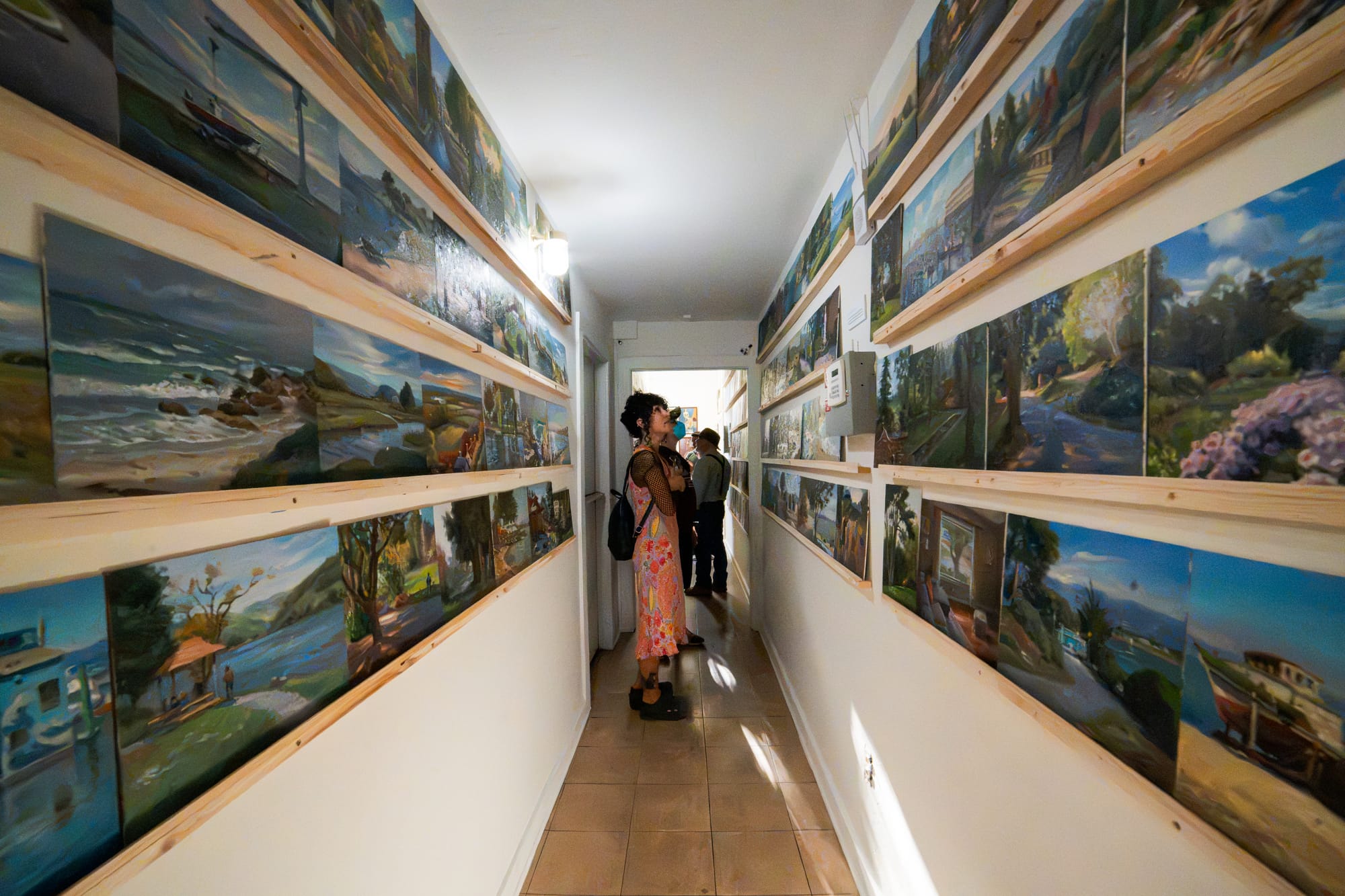
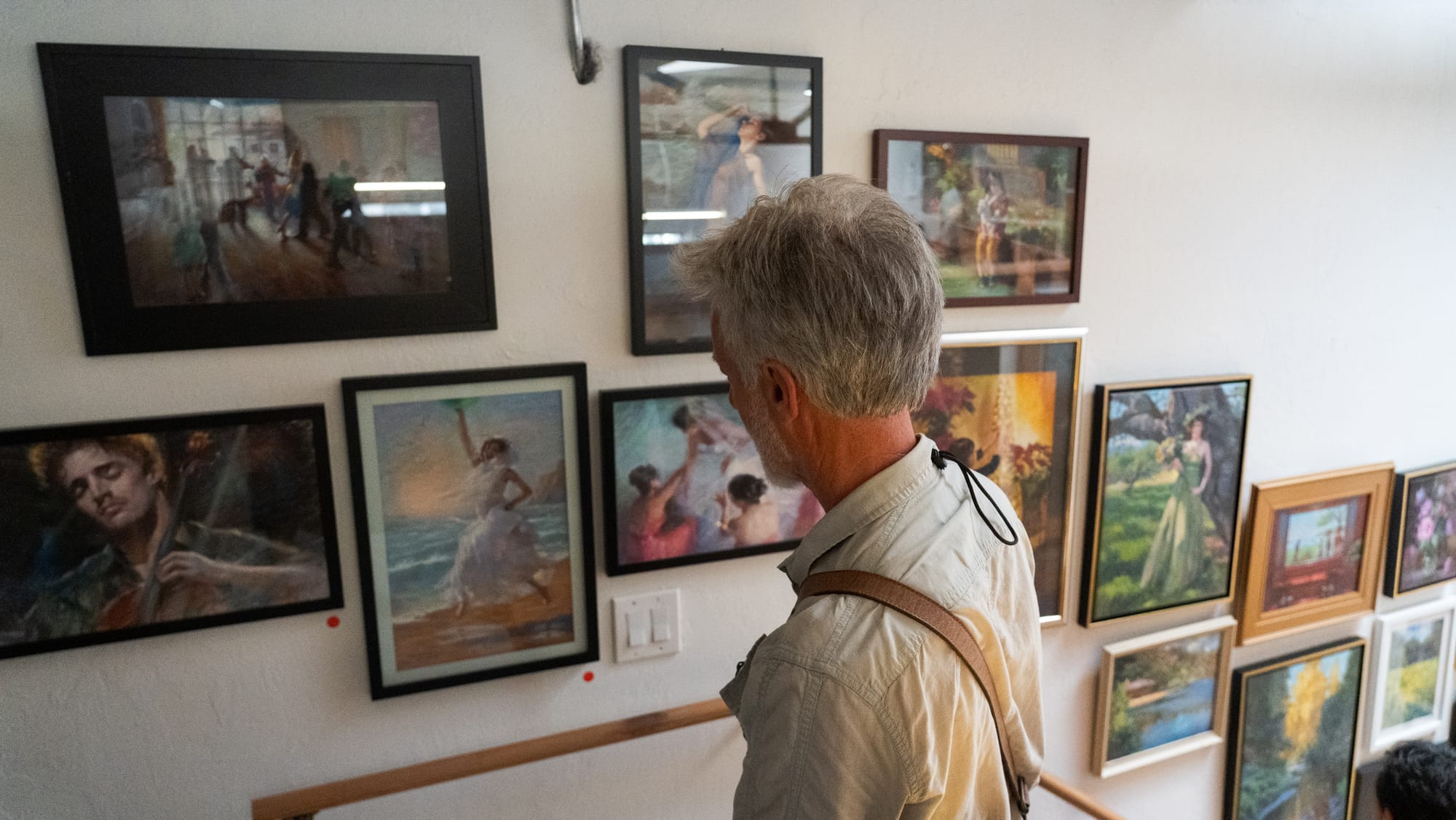
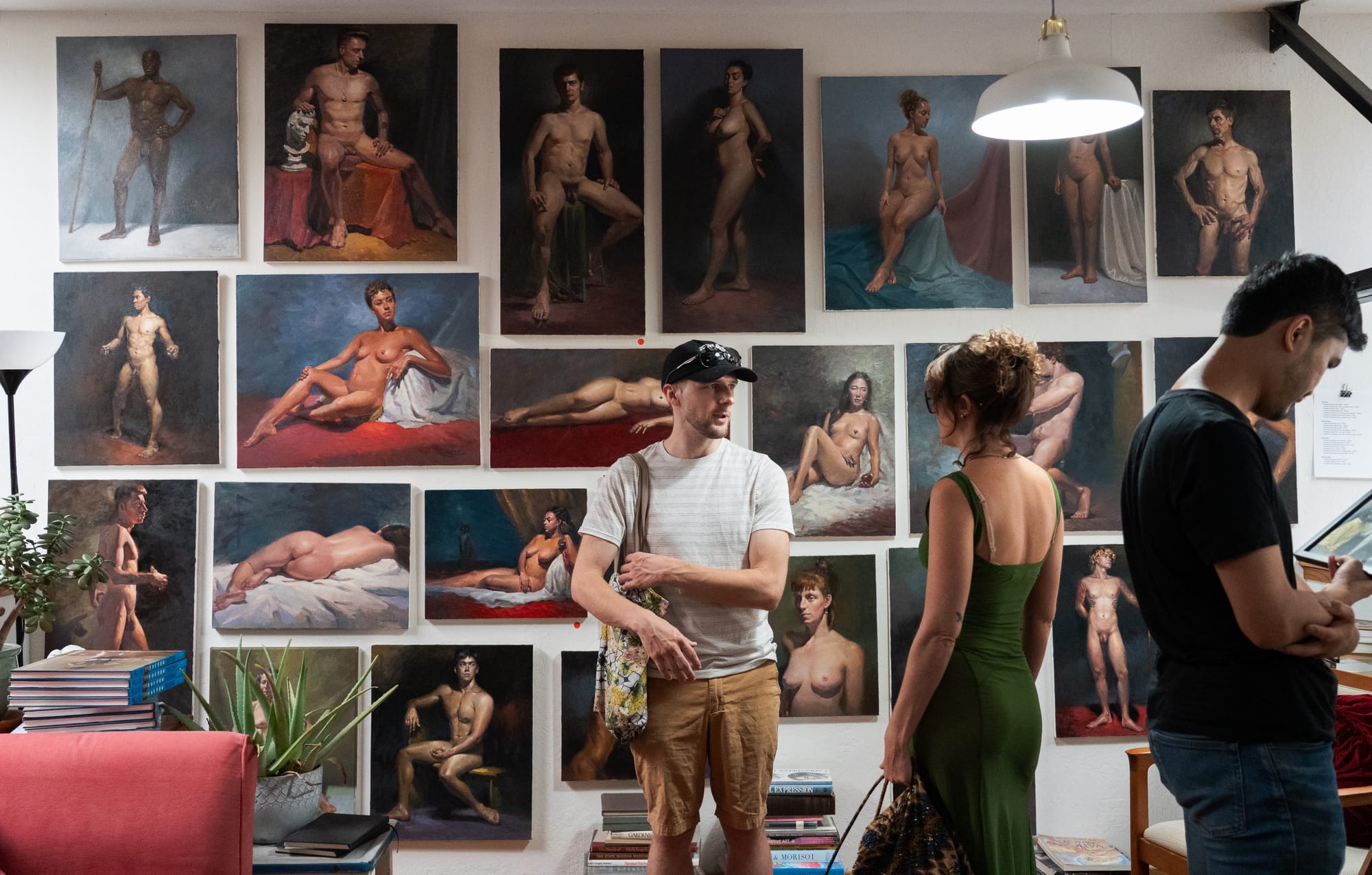
The Underpainting Collective now runs the school as a cooperative with the motto, “A political space for artists and an art space for political folks.” I sat with worker-owners Charlie Antolin, Jean Pham, and Alizarin Menninga-Fong in the school’s upstairs lounge while they were in the midst of setting up the space for its first-ever exhibition — a display of works by Bay Area painter Sandra Lo. Nearly every inch of the school’s walls was covered in Lo’s paintings: plein air depictions of local parks, portraits of fellow artists, and stunning, fleshy renderings of the many models that have come through her studio. In these exceptionally poignant surroundings, the trio spoke to me about grief, trust, political art, and why they think the right wing shouldn't get to own classical realism.
Soleil Ho: How did the school end up in your hands?
Alizarin Menninga-Fong: David gave us the school in 2024. A group of us were already in a loose art collective, mostly students of the school, and we came together to decide to shepherd it after his retirement.
Charlie Antolin: I've been coming on and off since 2012. I went to art school in Southern California, then came back and resumed classes right when things reopened around 2020. Toward the end, David and I would meet Monday afternoons before figure drawing and just paint together. At 93, navigating the studio alone was hard. There were stairs to the bathroom at the old location, and I got nervous when he was left alone even for half an hour. We'd also talk with his daughter, Anne, about what would happen to the school. I think he grew to trust all three of us over time.
Jean Pham: Some of it is just showing up. When we started class in 2021, we were a strong cohort. We were in Temescal, next to a lot of bars, and after three hours of painting and being critiqued we'd go hang out and talk about art. So when the call came, we already had trust and shared values. And we're protective of the school. It's important that spaces like this exist. People think painting is solitary, but in this tradition it's very collaborative. Constant feedback from people you respect is how you get better.
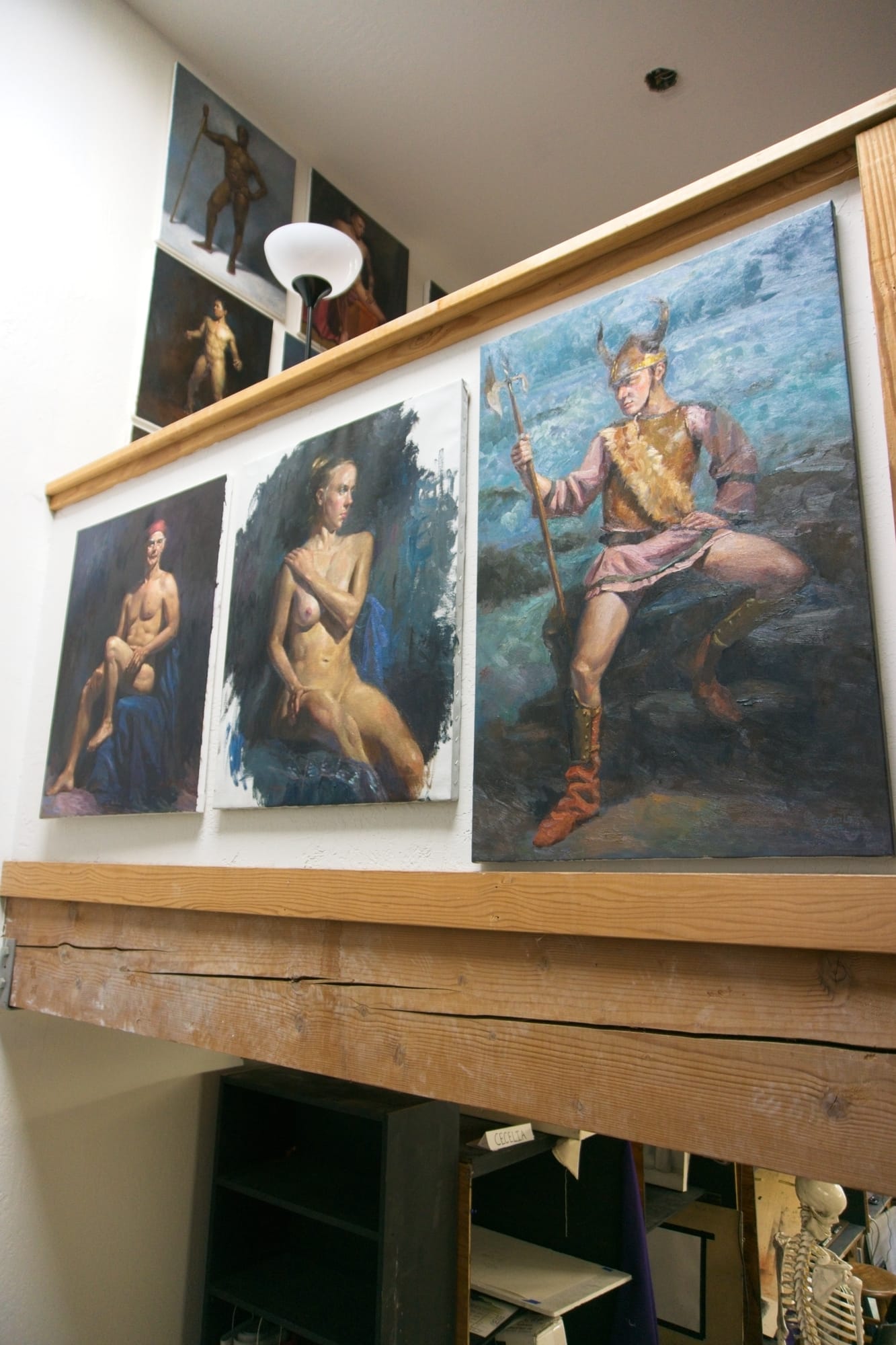
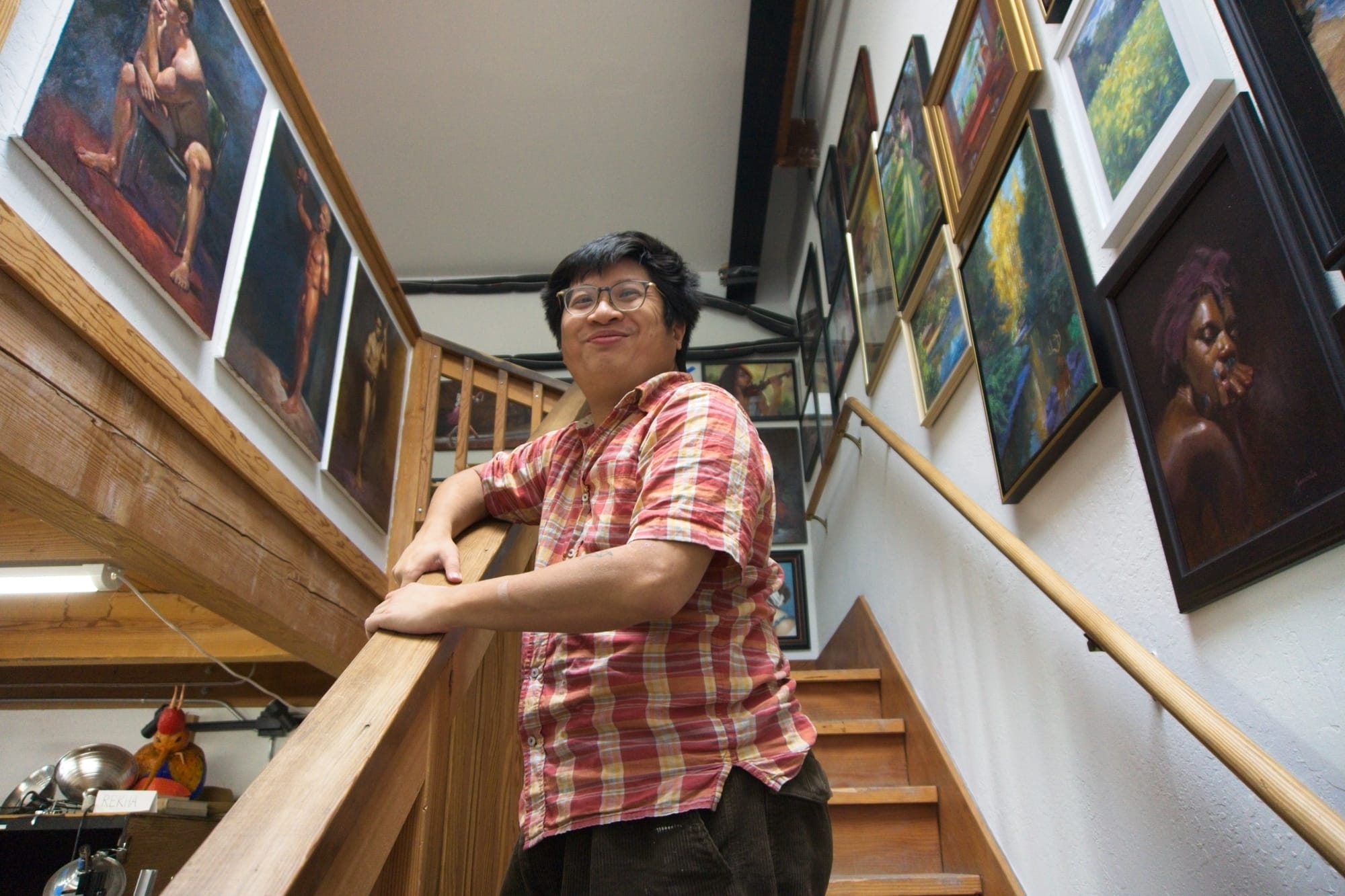
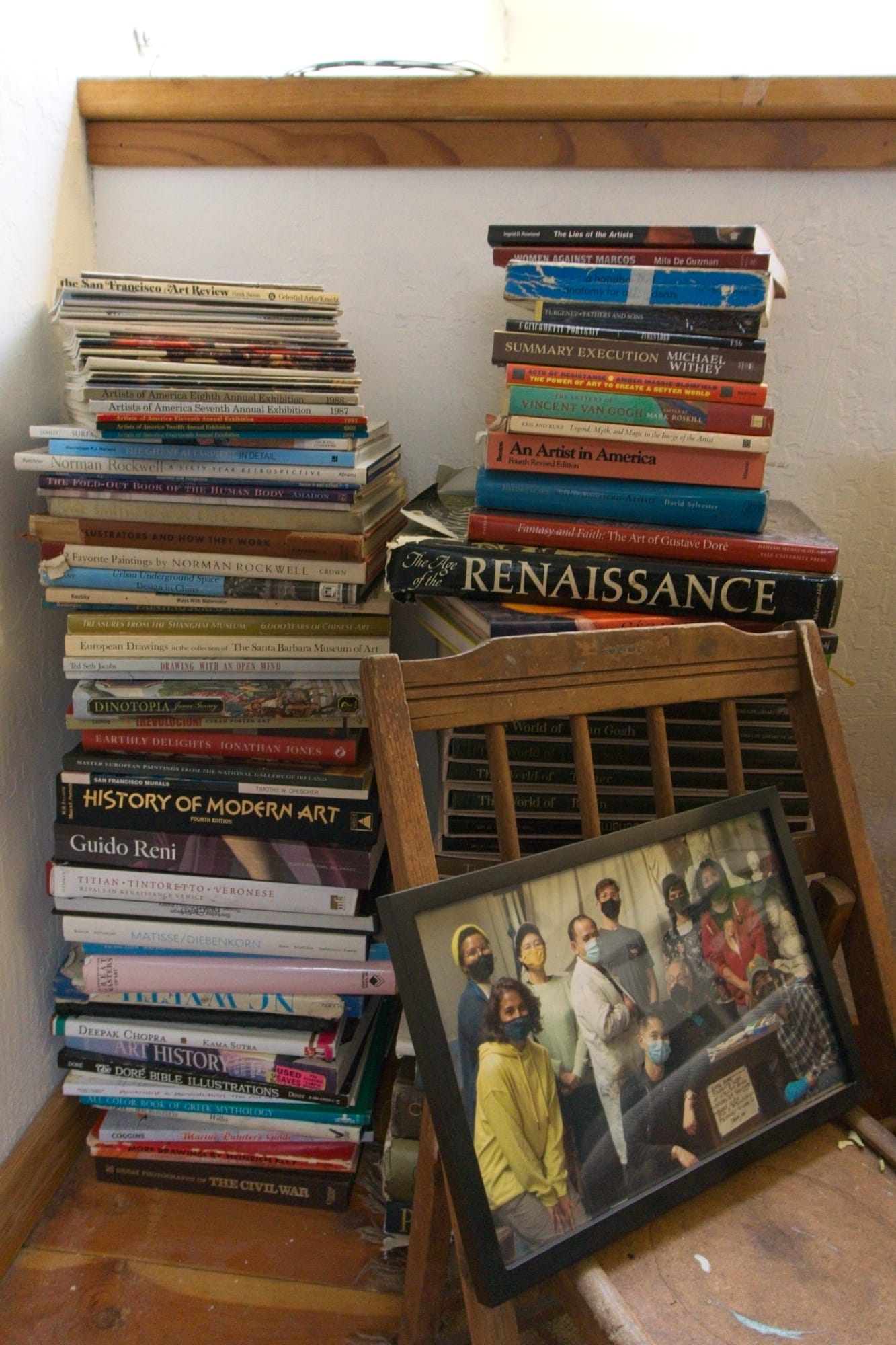
Underpainting Collective's model is radical, but its pedagogy is rooted in classic French tradition. (Soleil Ho/COYOTE Media Collective)
CA: After the handoff, I kept visiting David every week for about a year. At first we'd chat at his kitchen table, and later his daughter would drop him at the studio and I'd help him paint. I wasn't sure how he'd react to seeing someone else run the school he put his whole life into, but he was gracious about it. I think staying in the loop gave him peace of mind.
SH: What was the school like under David, and what have you changed?
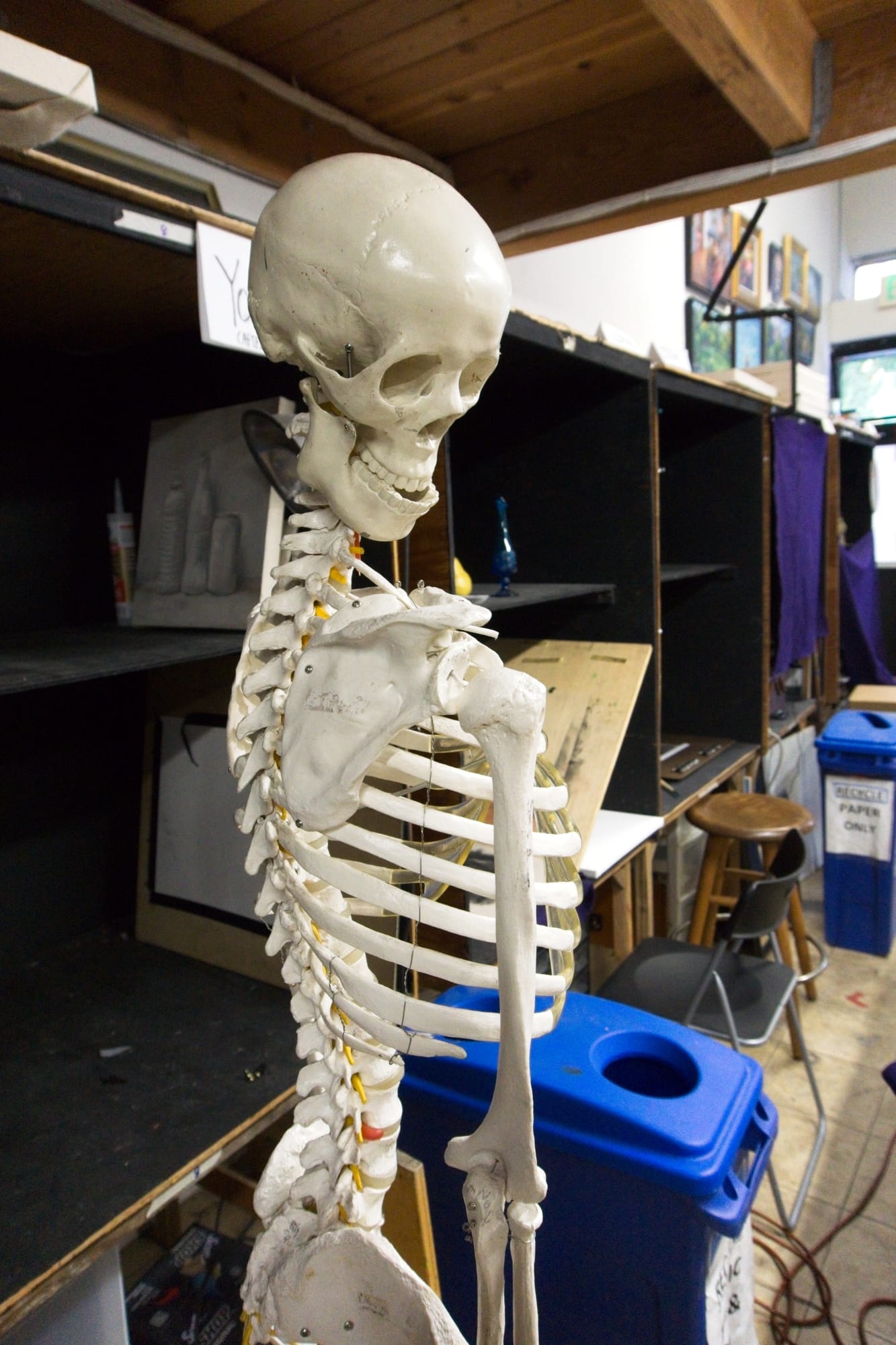
AMF: It was the French academic atelier model. You draw in charcoal and chalk for maybe two years, then paint in black and white, and only after that do you move into color.
CA: It's the 19th-century French academic tradition, to be precise. Ateliers like this came to America in the second half of the 20th century, and this is one of the oldest on the West Coast.
JP: In our cohort it took six months before David let us paint, and that was considered extremely fast. We want to honor some of the old traditions but also interrogate them: what serves us, what we want to keep, what feels bad. The master-and-student designation is one we'd like to dissolve. And as community organizers, we're asking who's been left out of the art world, who gets access to oil painting, and what the barriers are. Art schools keep disappearing or getting bought out by tech.
CA: We're also less narrow than some ateliers. I love [William-Adolphe] Bouguereau and the late 19th-century French painters, but some schools act like art ended with them. I want to draw from the totality. Contemporary work, work from different parts of the world. We take field trips to modern art museums and to the de Young and the Legion of Honor. I'd rather analyze all the ways things have been done with students than say there's one correct way.
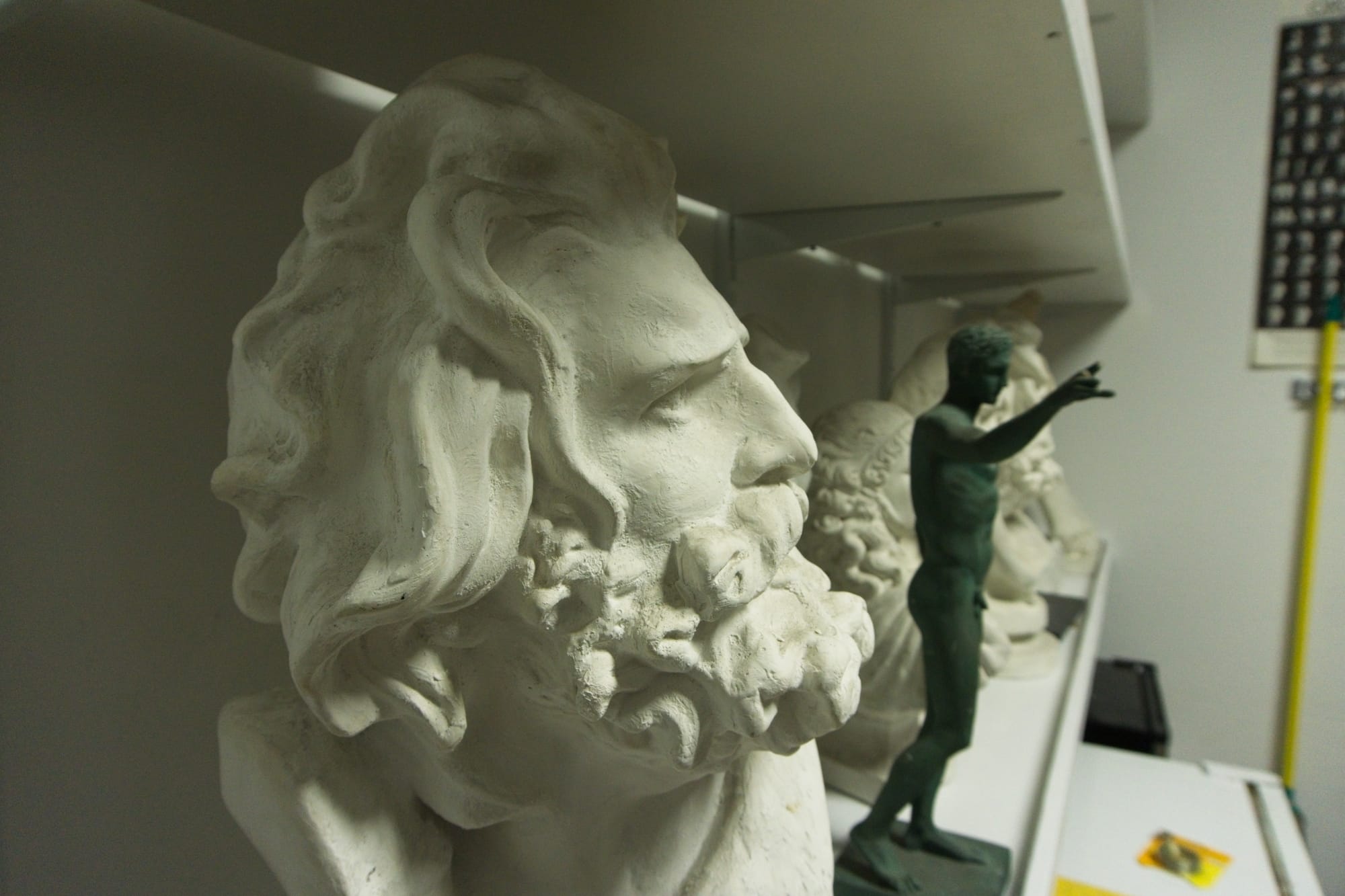
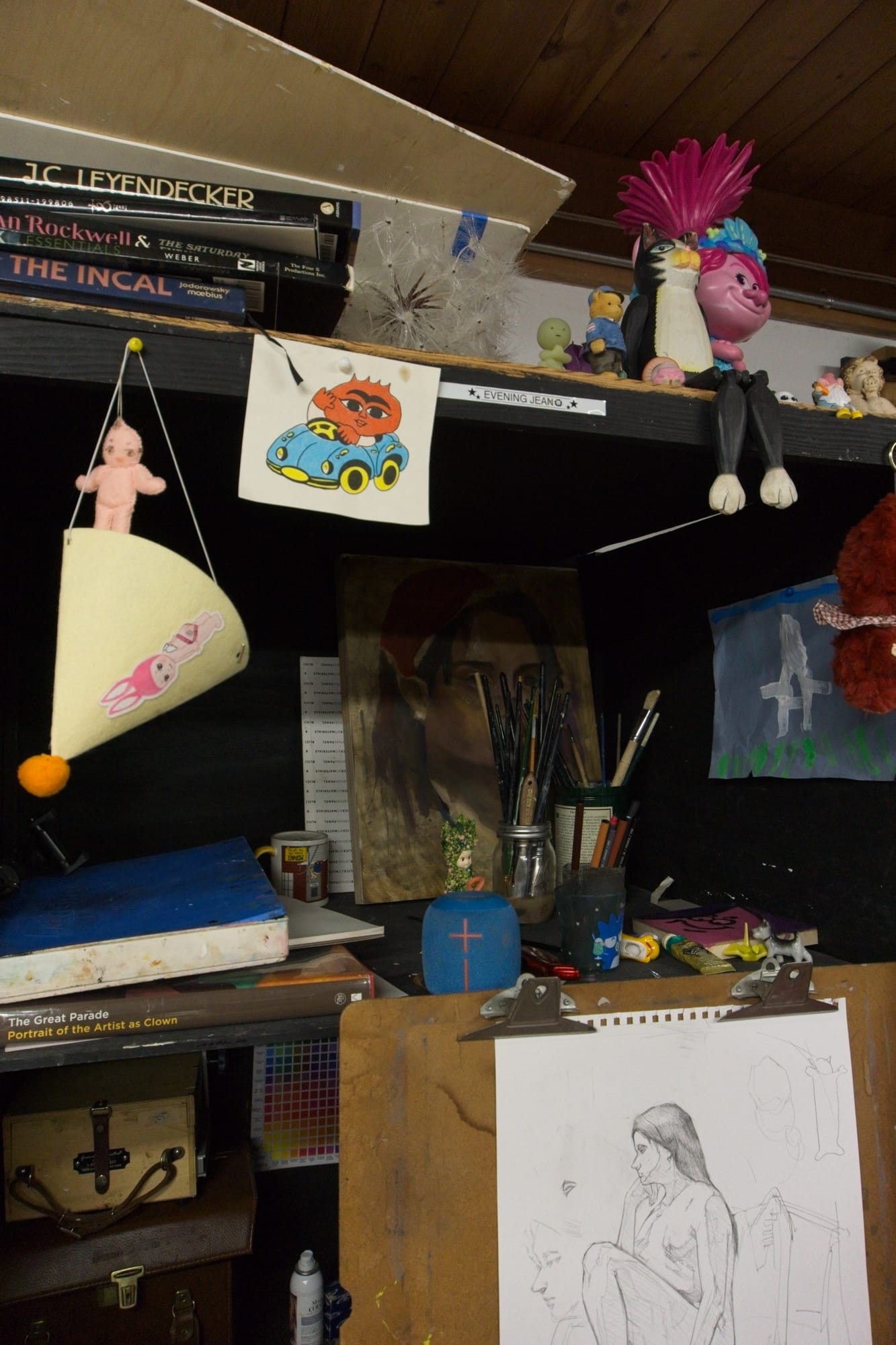
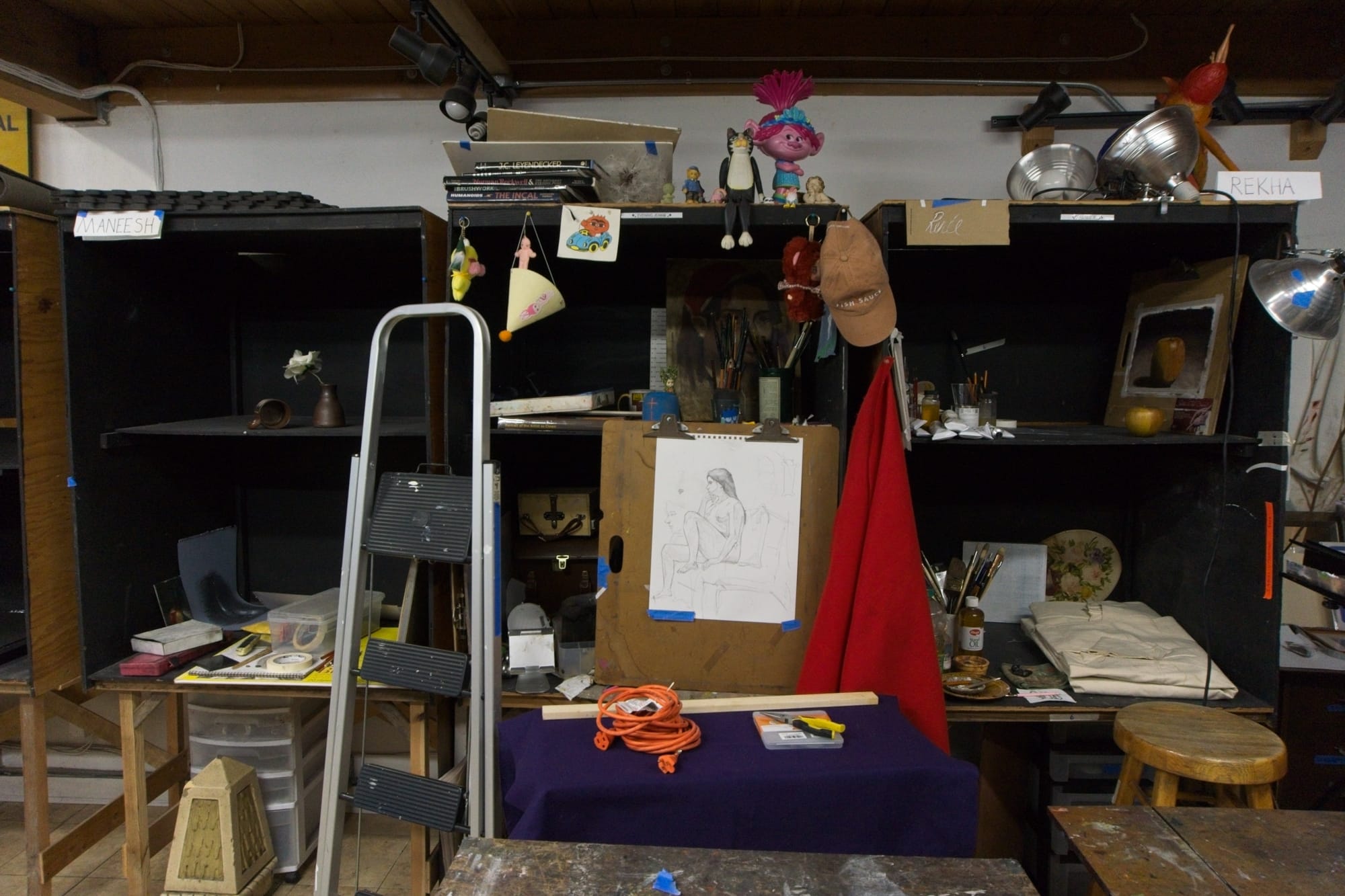
SH: Why does holding space for this kind of instruction matter in 2026?
AMF: The times are dire. It's overwhelming to think about data centers and AI, wealth gaps, climate collapse. We don't even have Wi-Fi in the studio. It's a physical, tangible, interpersonal space, and there's a spiritual element to it. When we wrote our mission statement, Charlie wanted the word "temple" in there. We didn't keep it, but we kept "spiritual." Developing your eye and your hand and making something in front of the person next to you is vulnerable, and people can't get enough of it. They stay for months and months.
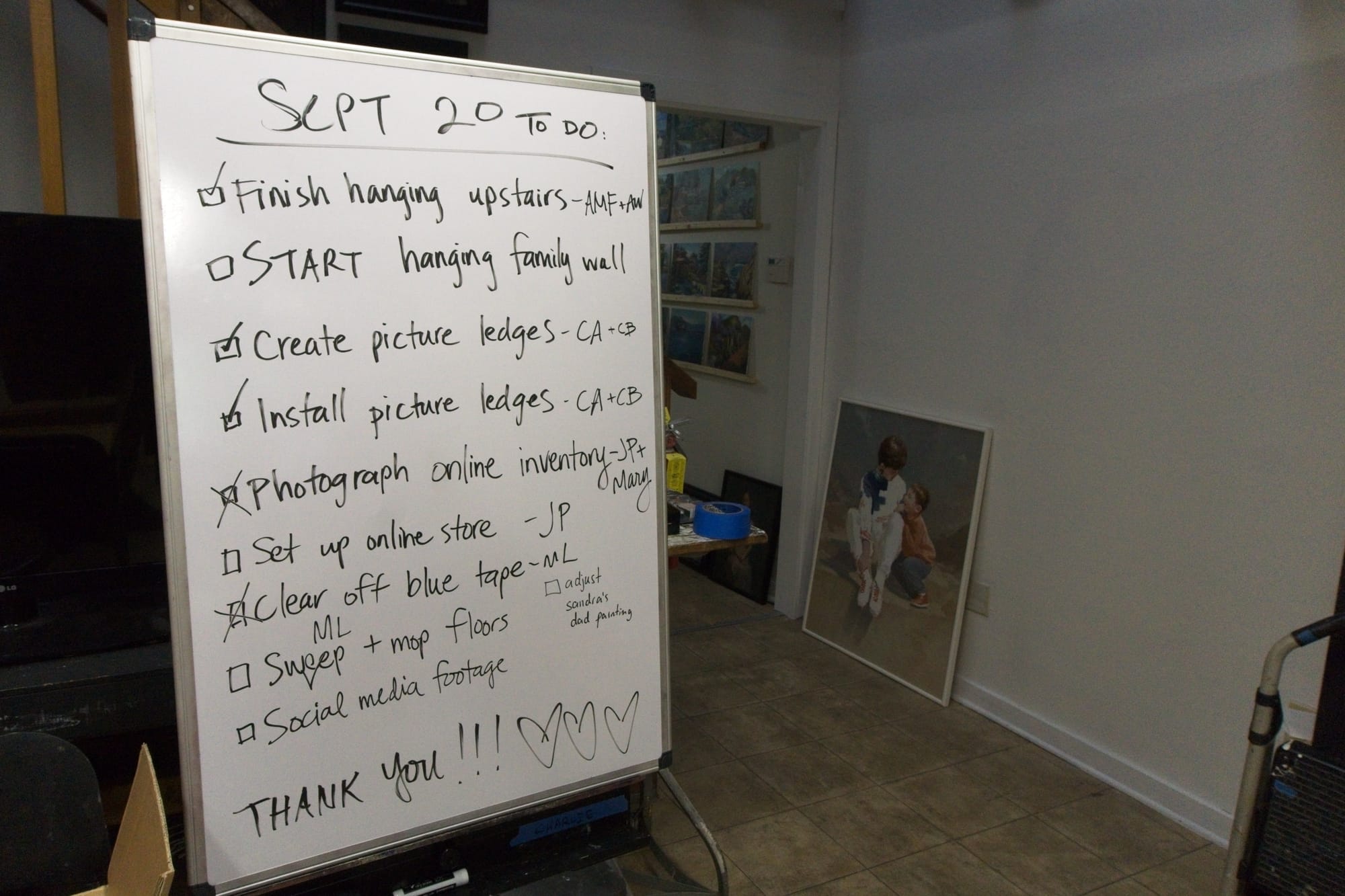
JP: The work is also so slow. The paintings around us took two months each, but really they took Sandra 70 years, decades of putting in hours. That's the opposite of the instant gratification of prompting an image into existence, and I think people feel that. It's also low-tech and human. Everything in this space came from volunteers. People donated furniture and time, Charlie's mom helped with the curtains, and we taught ourselves carpentry to build things out of street furniture. People think oil painting is for ultra-rich kids, but we believe anyone can learn to draw and paint.
SH: How is the collective organized?
AMF: We have fiscal sponsorship from a nonprofit right now, and we'll probably open an LLC or a parallel structure so not everything has to run through them. We might register as a cooperative, though I'm not sure what that looks like in California. The three of us are co-owners. We're new, and our priority has been keeping the doors open and paying rent. We hold weekly admin meetings, review finances monthly, and do retreats to step back and think big picture. We don't have bylaws yet.
JP: Tuition pays for instructor time and rent, and students pay monthly on a rolling basis rather than by semester. The collective work is all unpaid. At retreats we talk about what makes us happy and what's financially responsible, and we try to land in the Venn diagram of the two. We decide by consensus, and being friends lets us move pretty fast.
SH: You started with seven and are now three. What changed?
AMF: Having three people install 800 works is a lot fewer hands. But some of the original seven realized the fiduciary responsibility of a brick-and-mortar space wasn't what they wanted. We parted ways amicably, and we still want everyone to stay involved. Consensus is definitely faster with three. We're having the same conversation every single day, so the culture feels seamless.
JP: With seven, disagreements were hard, and for most of us it was our first time working by consensus or running a small business. Now the mental load on each of us is bigger, but the weight feels balanced. On paper we have distinct roles. In practice we do everything.
CA: We complement each other. Jean has the outreach and communications expertise, Alizarin is business savvy, and I'm on the curriculum side. I trust them completely.
SH: Who are you hoping will join as members and as worker-owners?
AMF: We're planning a membership that [would include benefits like] votes at member meetings, plus critiques, radical book clubs, museum outings, and open studio time. Our mission is something like being a political space for artists and an art space for political folks, so we want both kinds of people. In January we're launching a political art cohort for artists who want to learn more about politics, and organizers who want to learn art skills, from perspective drawing to fast printmaking, where you can make 100 screen prints in a day.
JP: My goal is to create an art movement. Historically those start locally, with friend groups exchanging ideas in the same city. It's discouraging to be an artist, and friends can see the sculpture inside the marble in a way you can't. There's not much difference between our collective members and our friends.
AMF: For worker-owners, values alignment matters most. We're asking for about 15 hours of volunteer labor a week, and what you get is the power that comes with running an art institution in the Bay Area. We don't require a particular project. It helps if you have artist networks, and it doesn't hurt that we're mostly people of color and mostly queer, though that's not a requirement. An oil painter would get the most out of ownership, since you get a studio and focused technique development.
SH: Right-wing movements love classical realist art. How do you keep work like yours from being co-opted?
AMF: In some ways we're the ones co-opting. We teach this style so well that we can use it for our own ends. Beauty and technical skill aren't reserved for right-wing artists. We also offer financial aid and, when we can, work trades.
JP: We're seeing how this style gets claimed by reactionaries. I've read that Grand Central Atelier received $2 million from the Trump administration, and that its leadership framed the school as producing the art conservatives value. There's a lot of overlap between what they practice and what we practice.
Part of it is structure. Being a collective is itself a pushback, and one longtime community member noted it associates us with things like the Free Speech Movement, which [is] fine by us. Part of it is programming, like the block printing class for activists taught by Bay Area printmaker Fernando Marti. And we're upfront about our politics in class, so nobody is surprised by the kind of space they're in.
SH: What's your big swing for the collective? What are you dreaming about?
CA: Owning a space. I don't know how we'd ever get there. There's an art school in Philadelphia where a billionaire covered tuition for 10 years.
JP: Same. Space hangs over us like a sword. Our landlord is the Northern California Land Trust, which plans to demolish this building for affordable housing on top, which is great, but bad for us in the meantime. We were pushed out of Temescal when that building was sold and rezoned for residential. Our lease is year-to-year. We were told the timeline is three to five years. I don't think we're only successful if we last forever, but being able to have a home without fearing it'll be taken away would be great.
AMF: I'd love for us to be more integrated into movement work. I want organizations to come to us and say, we need paintings for our office, for our marches, for billboards and murals. Old masters painted for the church. I want to be that for our movements.
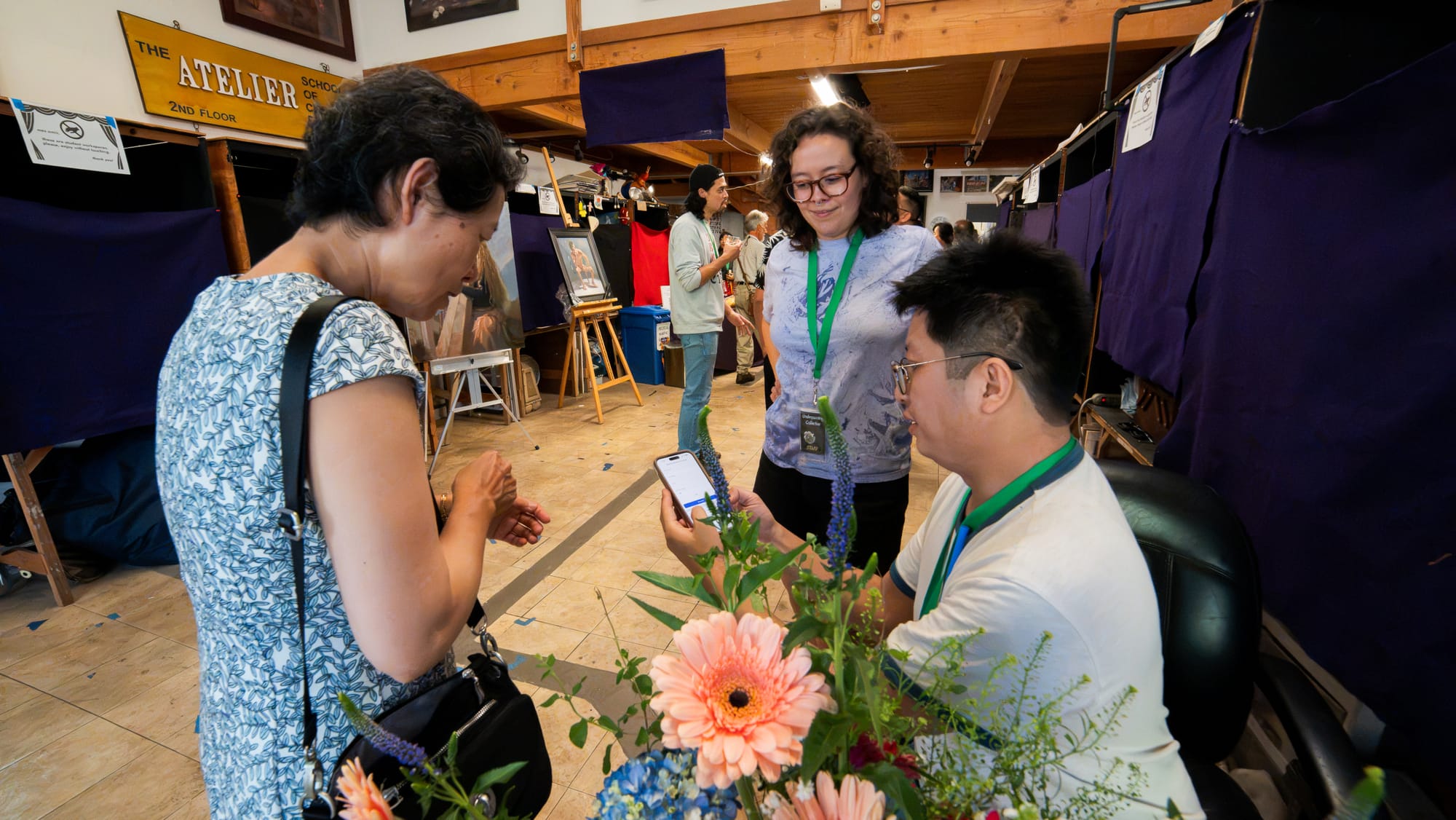
Underpainting Collective is at 3126 Shattuck Ave. in Berkeley.