This Week’s King Tides Are a Harbinger of Doom
Every year, king tides flow up the shores of the Bay Area, offering a sneak peek at how climate change will impact the region’s critical infrastructure.


Every year, king tides flow up the shores of the Bay Area, offering a sneak peek at how climate change will impact the region’s critical infrastructure.

A report from all six nights of the indie band’s residency at the Fillmore, where completists from all over the country convened to fist-pump and cry.

A food critic’s picks for full-service restaurants that are open on Thanksgiving in Oakland, San Francisco, Wine Country, and the South Bay.

Every year, king tides flow up the shores of the Bay Area, offering a sneak peek at how climate change will impact the region’s critical infrastructure.

Waves burst over walls, sending spray into the air. Freeway onramps are under water, their merge lanes and road markings under several feet of water. Green parks that butt up against the edge of the Bay are flooded, rendering them swampy and inaccessible. In photos submitted to an online database of California’s past king tides — the naturally occurring high tides that rise every winter, when the gravitational pull of the ocean is particularly strong — the effect of climate change and rising sea levels are indisputable; the evidence is right in front of us.
This is a winter where the main focus will be on water. Namely, on how much of it there will be and over what length of time. We had an unusually wet start to the rainy season, with a weather forecast offering few breaks; the biggest waves in years are hitting our beaches; and of course peak El Niño, from January to March, has an 83% chance of being one of the strongest on record, according to the National Oceanic and Atmospheric Administration.
But unlike this year’s unprecedented rainfall predictions, king tides happen every year, and they tell an important story about the slow creep of rising sea levels. Annie Kohut Frankel, the public education program manager at the California Coastal Commission, has been tracking this rise for years through the California King Tides Project. Since the winter of 2010/2011, the project has sought on-the-ground documentation of the state’s shorelines during king tides season. Most of the information is submitted by people who happen upon them, like I did earlier this year, when three lanes of the Bay Bridge were submerged at the toll plaza.
“King tides are a natural, cyclical occurrence, but observing and documenting them helps us ask the question: What will our coast look like when the king tides of today become our everyday high tides?” she tells me. Beyond this crazy winter, what can we expect down the line?
This week’s perfect storm of water upon water, when king tides will be exceptionally high, offers us a unique glimpse at what climate change will do to the Bay Area and where our infrastructure is most vulnerable.
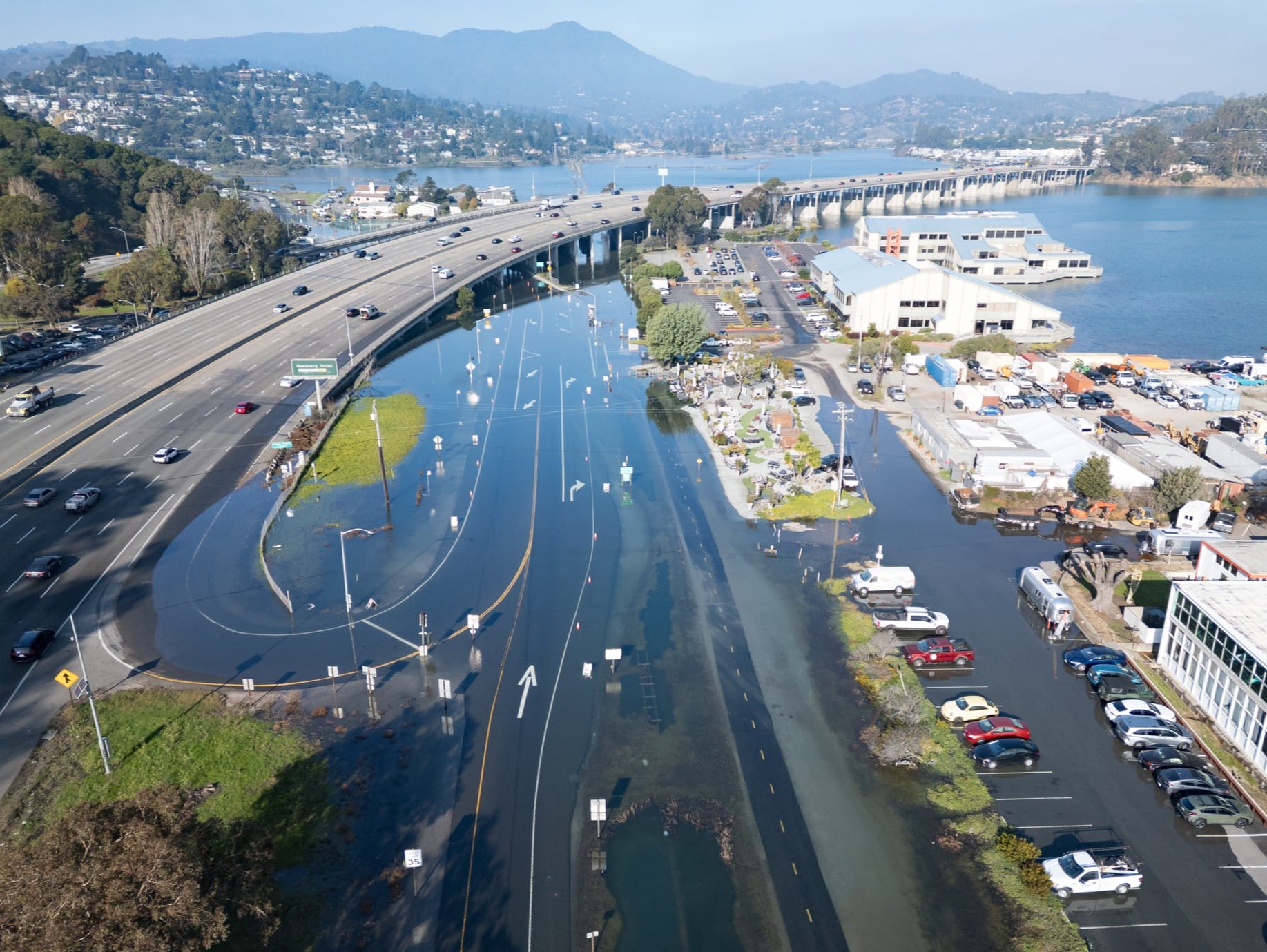
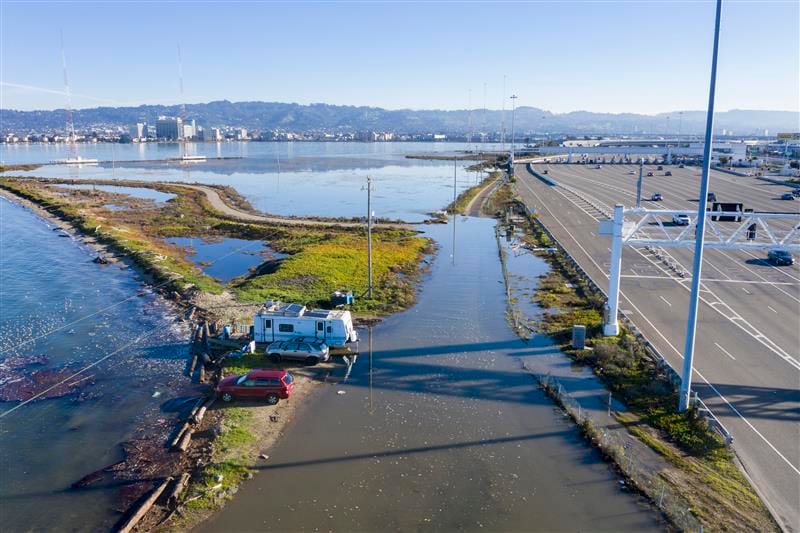
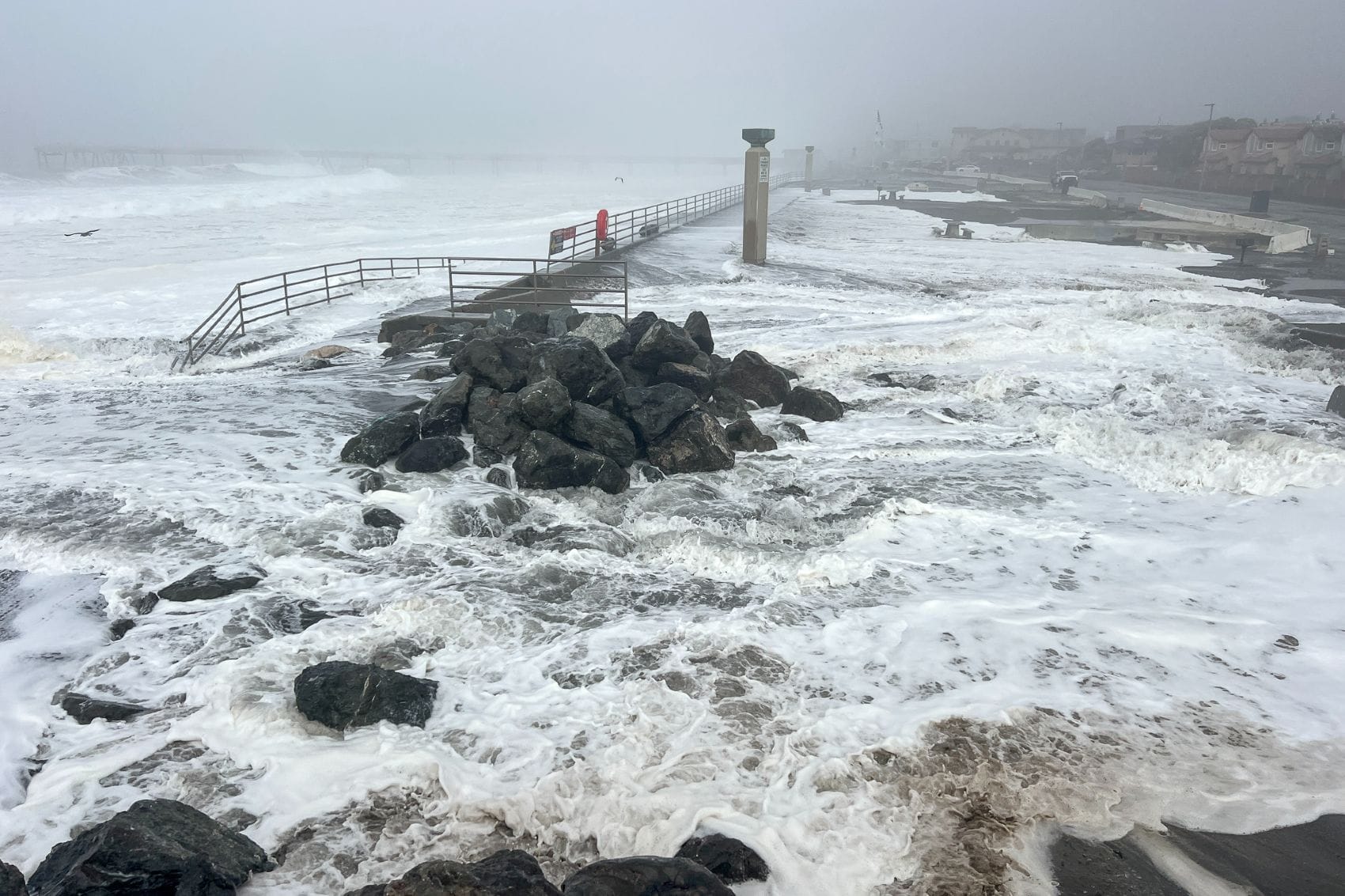
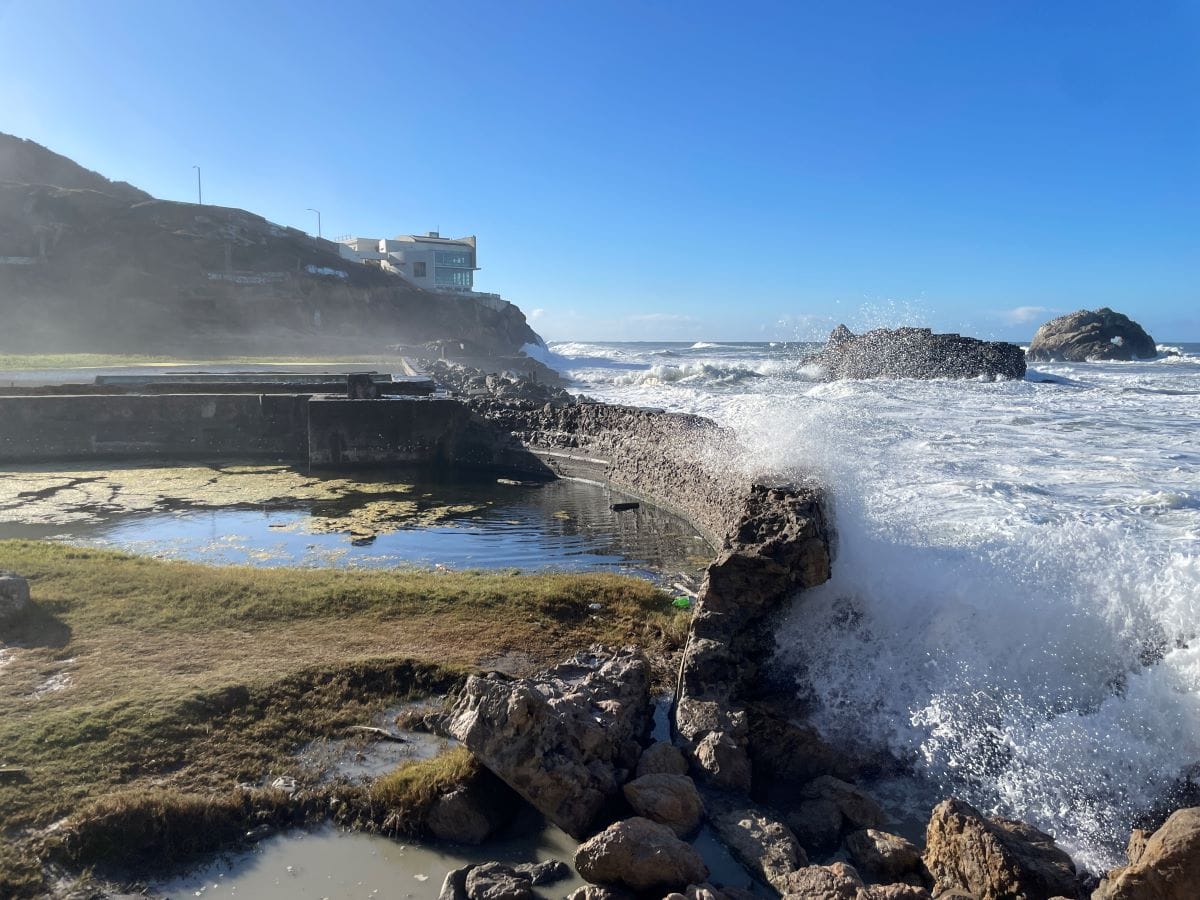
The impact of the tides will be hard to miss, and cities are scrambling to prepare. Caltrans is closing a lane at the Bay Bridge toll plaza to build a so-called “tiger dam” to corral the flooding I witnessed last winter. In Alameda, the Posey Tube, a key path off the island, is closed all week. Runways at the San Francisco International Airport are expected to flood in areas where the seawall is only 8 feet high, and they don’t have an adequate pump to handle the surge of water. Two towns on the coast in Humboldt County are on a mandatory evacuation order.
If it’s starting to feel a little apocalyptic, well, it is. As the burning of fossil fuels heats up Earth’s atmosphere, glacial ice melts and oceans rise. Experts are unsure exactly how much we’ll see sea levels increase by 2100 — 8 inches? Six feet? — but there’s no doubt that it’s happening. If we continue on our current trajectory of building gas guzzling vehicles and hundreds of data centers, a few closed runways at an airport will be the least of our problems.
Which brings us back to the painstaking, important work of documenting these tides to anticipate future impacts. Last year, the King Tides Project received 1,387 photo submissions, “though it often depends on how many king tide dates we identify for the project during a particular season, and whether the dates fall on weekends or weekdays,” Frankel says.
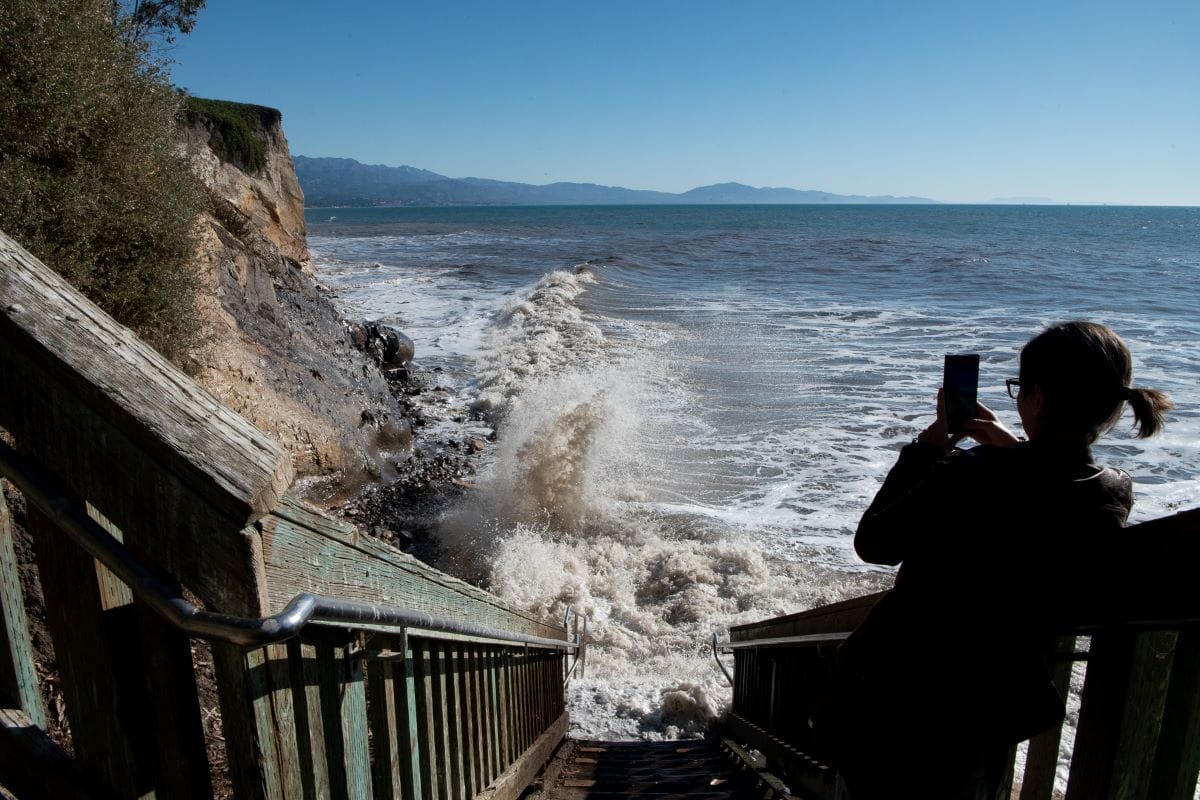
The project won’t work without the participation of everyday people, but it serves them, too. “That’s one of the big goals, to make the photo data easily available for people to explore and learn from, which includes students but also journalists, researchers, city planners, and others,” says Frankel. “The project offers a way to visualize the future of sea level rise from human-caused global heating, and gets people talking about climate change with their community.”
This year’s king tides are predicted to hit over Thanksgiving — from today through Nov. 26 — and over Christmas, from Dec. 23-25. The highest tides in San Francisco will take place on Tuesday at 10:05am, Wednesday at 10:49am, and Thursday at 11:38am. As KQED reports, these tides could be 1-2 feet higher than regular kings, rising more than 9 feet above normal sea levels.
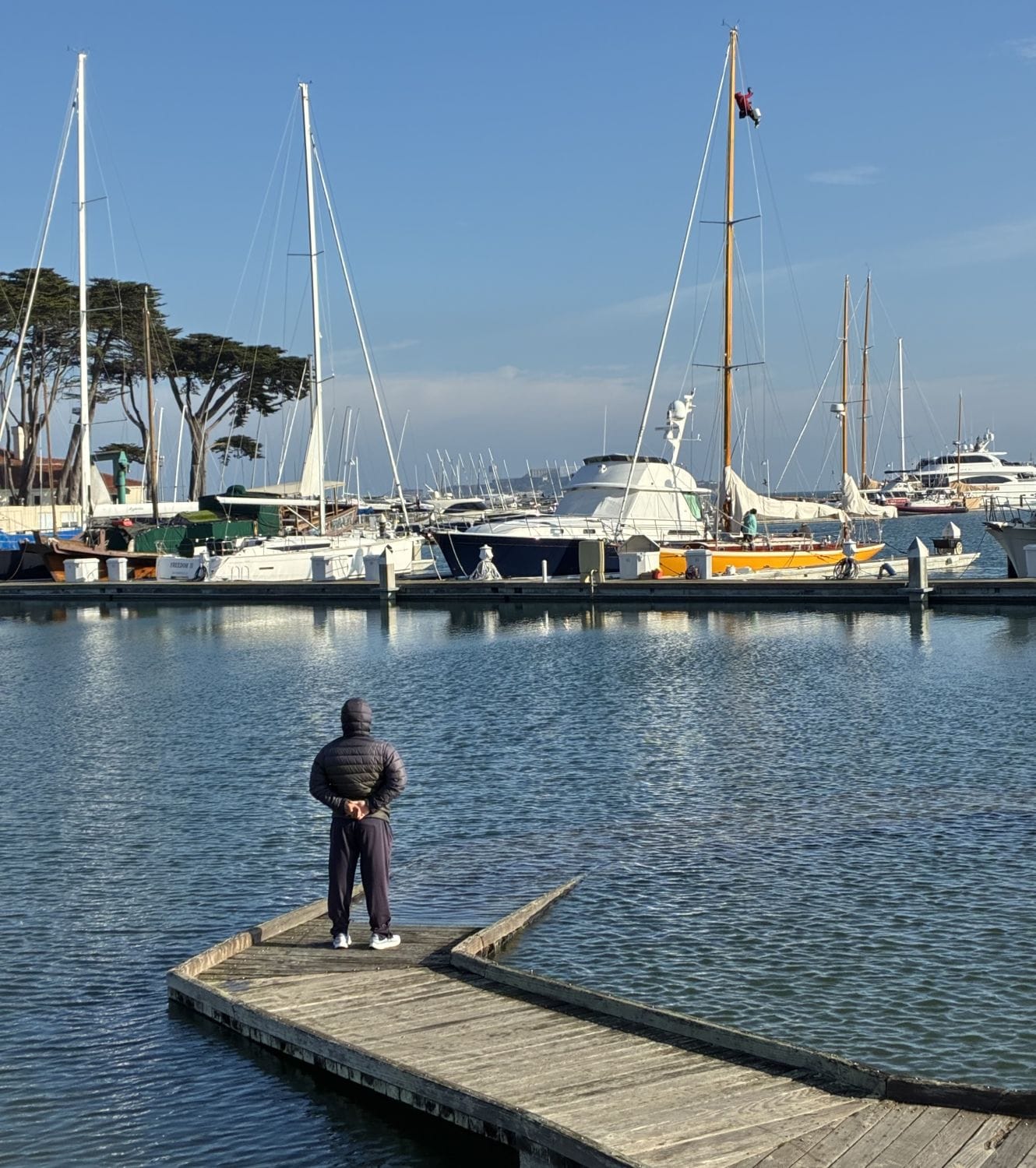
That means documentation is riskier: The National Weather Service has issued high surf and coastal flood advisories this week along the coastline from Mendocino all the way down to Monterey, advising people to stay out of the water, away from the rocks, and off of piers and jetties.
Nevertheless, if you find yourself in (safe) proximity to these high tides, here are some tips for capturing good pictures for the King Tides Project: Take photos within a half hour of peak tide (more times here). For data gathering purposes, make sure your phone’s location service is on, so geotags are logged. And lastly, include something that doesn’t move, like a lamppost or a building, so measurements can be taken. Your contribution can help us all better understand what watery future lies ahead.