The Week San Francisco Became Mountain Goats Mecca
A report from all six nights of the indie band’s residency at the Fillmore, where completists from all over the country convened to fist-pump and cry.


A report from all six nights of the indie band’s residency at the Fillmore, where completists from all over the country convened to fist-pump and cry.

A food critic’s picks for full-service restaurants that are open on Thanksgiving in Oakland, San Francisco, Wine Country, and the South Bay.

Hey there and welcome to COYOTE Weekly, the newsletter featuring our latest stories and favorite reads from around the web.

A report from all six nights of the indie band’s residency at the Fillmore, where completists from all over the country convened to fist-pump and cry.

It wasn’t until the fourth night of the Mountain Goats’ residency at the Fillmore that I actually had a chance to crowd-watch, but that night it was suddenly clear: Something deep was happening for, and between, this band’s devotees.
Residencies at the Fillmore are hardly unprecedented. The six-night run, from Nov. 16 through 21, wasn’t even the first one this fall. My Morning Jacket had a similar residency in October.
But it was the first time that the Mountain Goats, who have played there numerous times in the past few years, had done anything like this, with each night a different theme touching on a body of work now well into its fourth decade. Founded by John Darnielle in 1991 as a roughly recorded vocal/acoustic guitar project before it evolved into full-band realms, the group remains anchored by his earnestly-sung lyrical observations and portraits of lives in intensities.
It was that fourth night, as I waited on the side of the room noticing people — including band members who quickly slipped past audience members, without fuss, to get backstage — that I had a true sense of the potential stories, the intertwined lives and what they might mean, what these songs might mean, for everyone in attendance. The older metalheads, the younger bookish folks, the “regular indie” types, the notable number of out/open trans people each evening (and who knows how many more there were still cracking their eggs?). There was community in unexpected cohesions.
Were the five people who met up near me, all mid-50s or a bit older, longtime friends or couples or more? They gave off an air of NPR listeners at an art opening, chattering over drinks, but then they were fully into the set, even an occasional ‘woo’ moment. There was the fellow accompanied by a girl I assumed was his middle-school-aged daughter — was he the fan first, from many years back, an aging indie-rock lover who ended up passing on that love? Or was she an earnest type who had come across the band via other means, social media, a soundtrack placement, and had fallen for them and turned her dad onto them too? When the band played “This Year,” the pair sang the chorus aloud to each other with glee. Songs move people in the most interesting ways if you let yourself look outside of yourself, even when you’re loving exactly where you’re at.
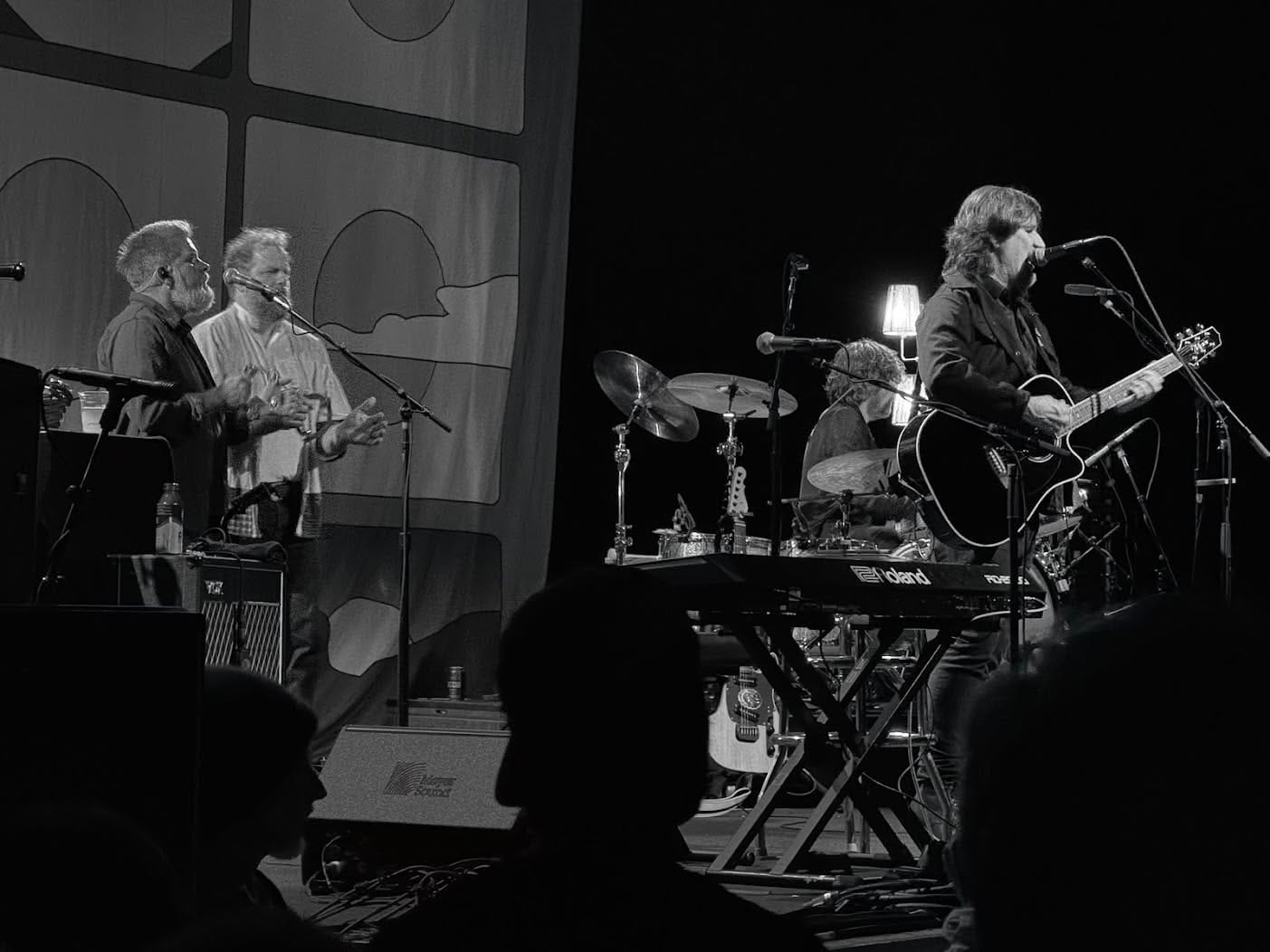
The Fillmore is a good place to get a sense of community, apt for something that started over 100 years ago as a dance hall. It’s had many lives since: from roller rink to Charles Sullivan’s place for celebrating Black musical excellence in the 1950s and 1960s, to Bill Graham’s fabled rock-centered venue, to the Live Nation-controlled experience of brand extension and preservation. But it’s always been a big room with a lot of space for a lot of people, over a thousand at a time if it’s a full show, to bring themselves to the fore as much as whoever is on stage doing that. It’s not a third space — after all, you have to pay money to get in. It’s a business, not a utopia. But you bring yourself with you.
Darnielle knows that, and he brings himself with him when he does this work. Each time the Mountain Goats come through town, it’s a treat to see them perform if I can manage it. But six nights in a row was different. It meant I was able to consider at length both his key gifts — his ear for excellent melodies and choruses, the depth and breadth of his lyrical approaches, a sense of literary reach that feels lived in — and those of the band, composed of drummer Jon Wurster, multi-instrumentalist Matt Douglas, and touring bassist Cameron Ralston.
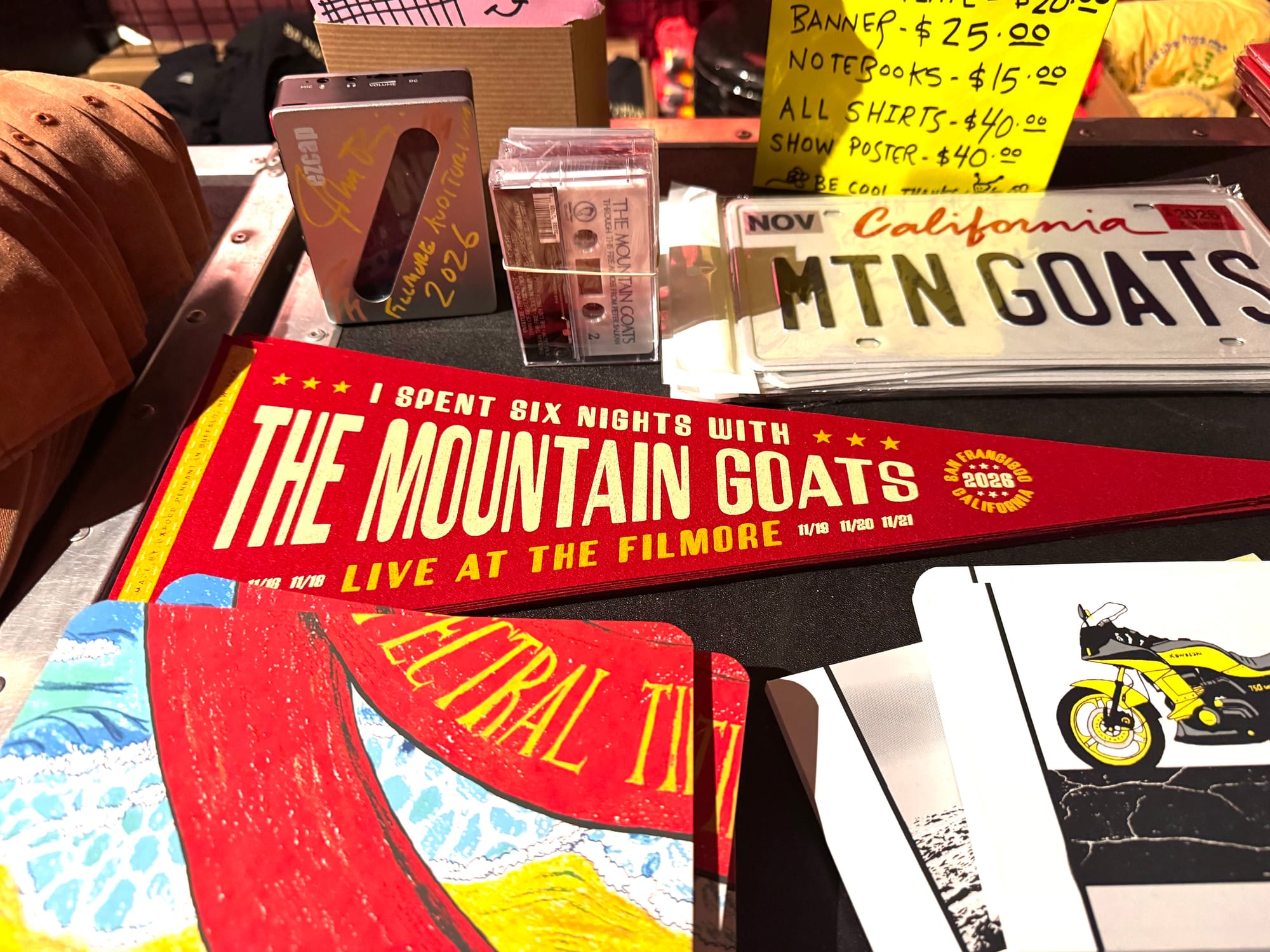
More than once during the week, Darnielle said with sheer joy that those three were the best rock band in America. Thinking about the deftness and skill with which they reworked old songs to create something new, it’s a tough claim to argue with. (I’d be remiss in not noting their roadie/technician Ben as well, regularly appreciated with audience chants. I’ll also shout out Devyn, who handled the merch table the whole week as fans stopped by to pick up event-specific posters, shirts, banners, even a mock California 1990s license plate.)
The structure of each night remained the same. After about an hour and a half of reggae and dub classics on the PA (not for nothing is one of Darnielle’s most striking songs called “Song for Dennis Brown”), the lights dimmed, and a notable song from a Bay Area band heralded the band’s entrance. Sly and the Family Stone one night, Romeo Void another, Metallica another, Boz Scaggs on yet another night. A nod to the location, and a nice touch from a group based on the East Coast; Darnielle moved from his native California 30 years ago.
Core sets were around 90 minutes — though Darnielle joked that the Dead fan in him could be up for four hours — and mostly adhered to the full band/solo/full band/encore approach they’ve done live for some years, the final two nights being straight-through band performances. If they weren’t already in the main set, the songs that people “paid to hear,” as Darnielle put it, usually turned up in the encores: the previously mentioned “This Year,” a memory of an adolescent day full of possibility but clouded by his stepfather’s anger, and “No Children,” about a collapsing marriage that gets even more fraught as the song goes.
The rest was exploration. While the nights were grouped into themes, I found that each set also slightly alternated between what could very reductively be called “up” or “down.” But part of this band’s excellence is in its layers: Sometimes the most energetic, peppy songs are among the darkest; sometimes the quietest and seemingly starkest and saddest can almost be the kindest and warmest.
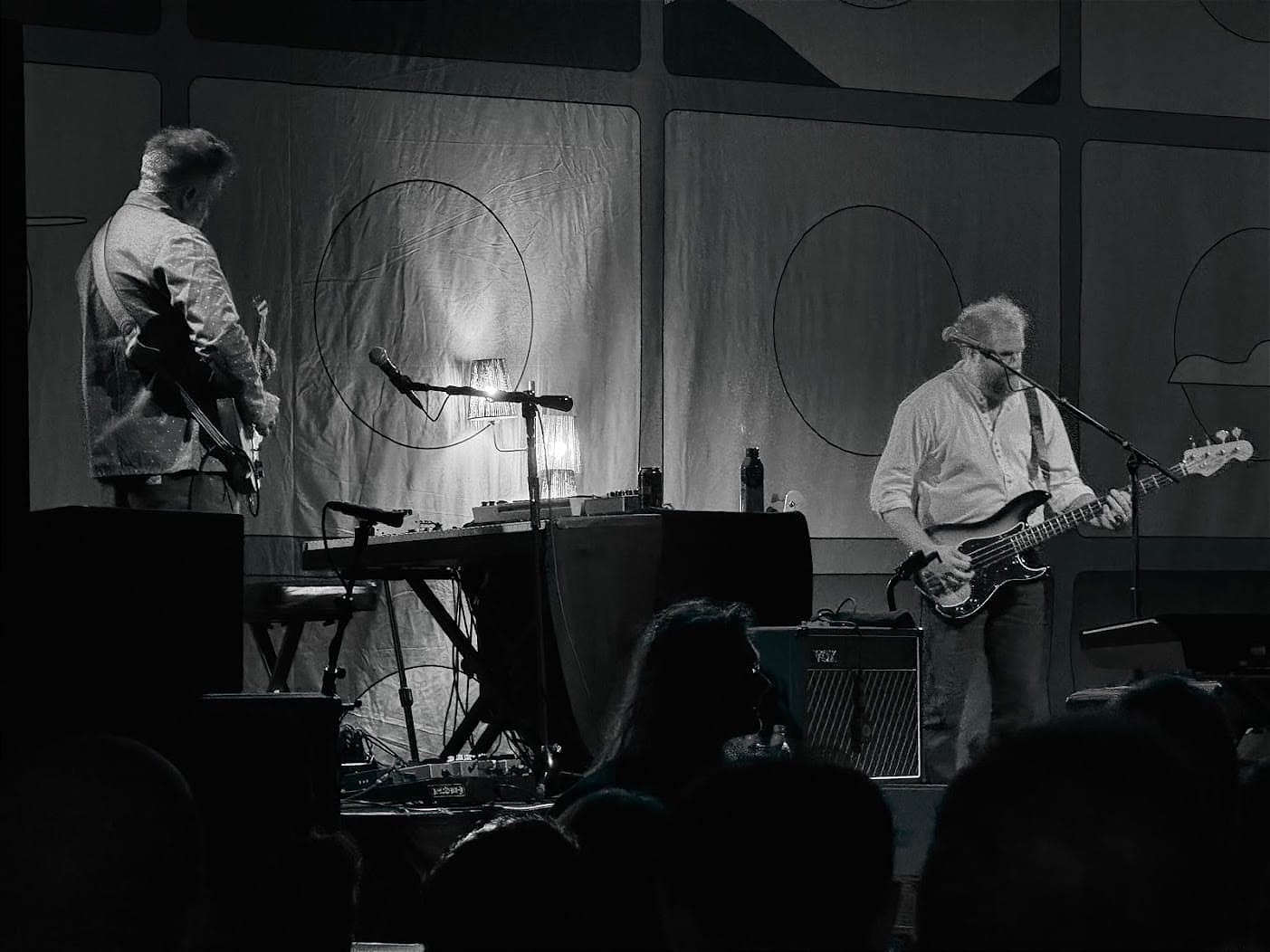
It was all framed by the Openers and Closers sets on the first and sixth nights, pulling songs that either started or ended albums. The first night was a series of energetic “we’re here, let’s go” moments with such stellar songs as “Training Montage,” “Damn These Vampires,” and “Sax Rohmer #1.” The closing night was a way to draw a variety of curtains, like a series of remarkable end-credit songs to a movie. My favorite scenes from that final night were a stellar performance of the title track to Bleed Out, and a great encore moment that involved blue satin Fillmore jackets and a wrestling championship belt, which John used as a launching point for a classic promo challenging pretenders — other bands — to the residency throne.
The second and fourth nights were darker and deeper. The ALPHA night, focused on a series of songs over years and releases about a fracturing couple (“No Children” is the most famous of these tracks), and a playthrough of the 2006 album The Sunset Tree, centering on Darnielle’s complicated relationship with his stepfather, at once a violent abuser and a source of inspiration. The songs on that record are some of his starkest but in some cases the most celebratory; it’s the album “This Year” is from. Darnielle always delivers warm, matter-of-fact between-song chat that invites reflection. But as he spoke about his stepfather, in particular — with Darnielle’s gift for seeing beyond black and white into something far more intertwined and fraught — you could sense, sometimes even hear, people dealing with their own too-similar memories.
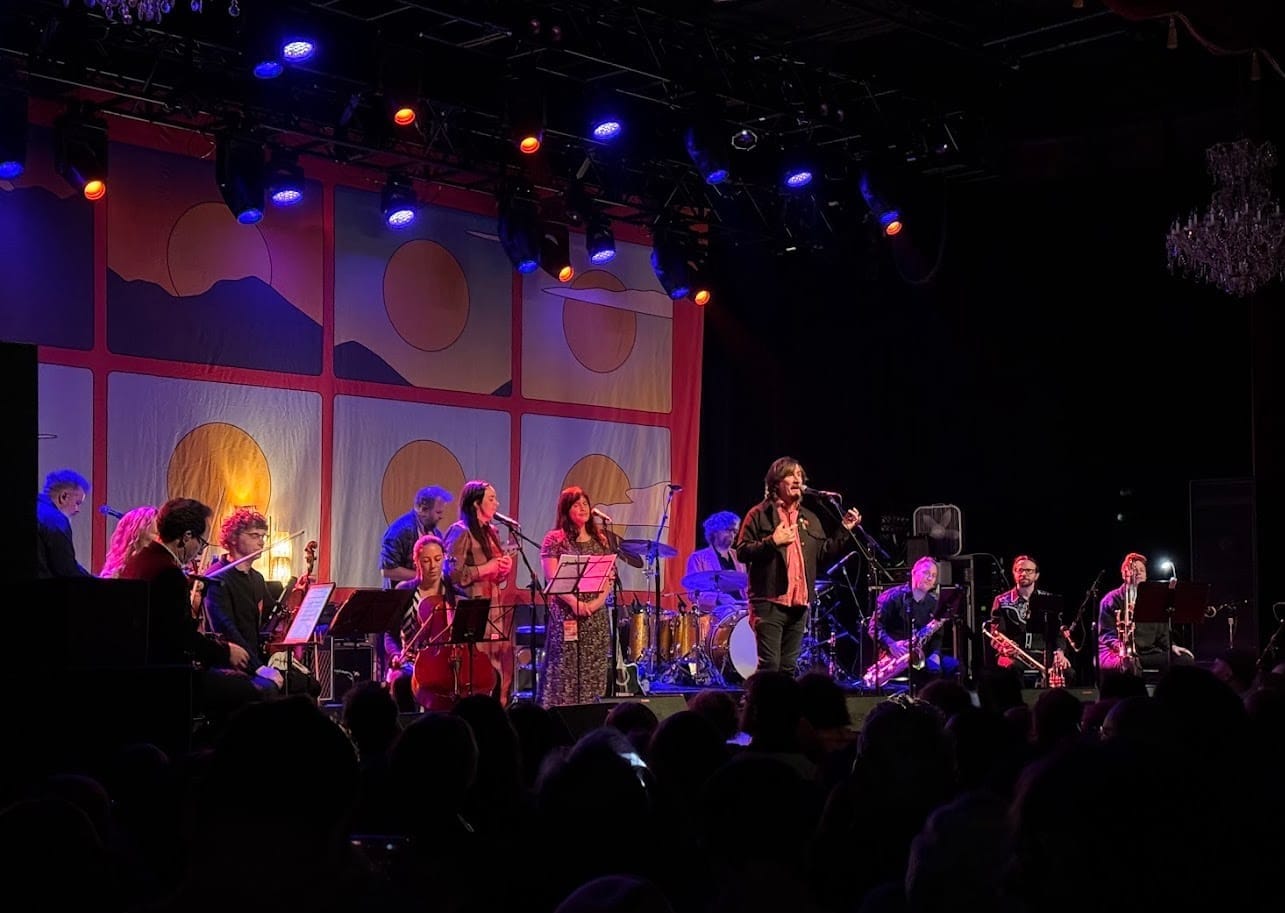
The fifth night, Cast of Thousands, featured the Magik*Magik Orchestra, which contributed horns, strings, and backing vocals. (The pre-show music switched from reggae to lush, orchestrated ’70s soul and funk for this one night.) The addition allowed for a focus on more recent work, like the newest album Days and last year’s Through This Fire Across From Peter Balkan, with Darnielle concentrating on singing rather than also playing. It had a hint of a time when singers fronted big bands, but the evening’s warmth still allowed for a delicate but shattering version of the title track to the landmark album Tallahassee.
But the giddiest night, easily, was the third: Stump the Band. Ticketholders were asked beforehand to choose three songs from throughout the band’s extensive catalog, and those suggestions were printed on slips of paper that ended up in a basket on stage; members took turns drawing from it to determine what was next.
The band had attempted to review (or felt that they’d “touched,” as Darnielle put it) each of the suggestions prior to the show. But it soon became clear, as they gleefully admitted, that this hadn’t quite worked out, especially with songs from early Darnielle solo releases. The sight of him calling audibles via key-change announcements added to the air of loose fun. It also demonstrated the band’s skill, as old unexpected favorites and early deep cuts cropped up, like “Golden Boy,” “Heel Turn 1,” and an astonishing appearance in the encore of “Cubs in Five.” The last time I saw him sing that song was the very first time I caught a Mountain Goats performance, when it was just Darnielle himself, here in San Francisco. It was part of the Terrastock 2 festival in 1998, at a long-since-closed warehouse venue in the Bayview. So much distance passed in so little relative space.
I marveled at it throughout the week: these distances and experiences all of us, onstage and off, had traversed to find ourselves here.
There was Shelby from Texas, experiencing her first time in California, from manga shopping to Mission burritos; it was her 20th time seeing the Mountain Goats, and she was already looking forward to the next. There was the woman in another night’s line, talking about a previous boyfriend who was a judge, and how she had to explain to him that when she sang along to the line “I’m gonna kill all the judges” from “Up the Wolves,” she didn’t mean it was about him. At least one person across the nights had homemade T-shirts for each of them, scrawled black marker indications of night and theme with designs. The gay couple from Sacramento, finally seeing the Mountain Goats for the first time, told me they couldn’t make a show in their hometown once before for a pretty good reason — it was the day of their wedding. There were the two women I noticed in the Mission earlier on the day of the final show, wearing their residency-specific T-shirts while I was wearing one of mine. Like me, they’d attended all the previous nights and couldn’t wait to see how it wrapped up. All of us had found something different in the work.
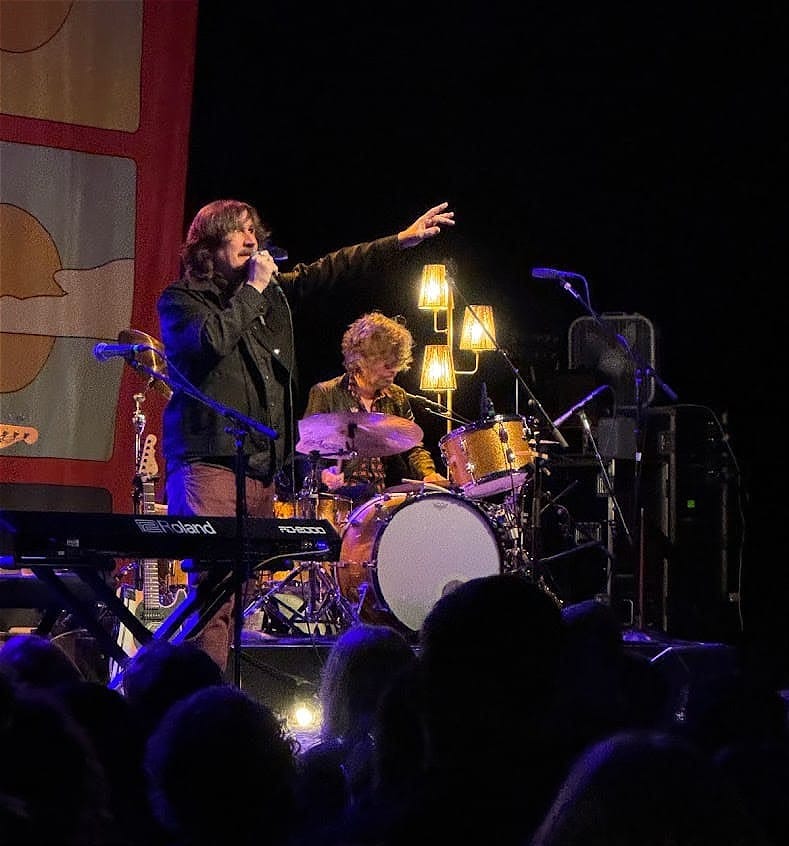
Songs move people, as I said, and perhaps the most stellar example of that in the whole residency for me happened on that giddy and loose third night. The basket went around again, to chants of “Basket! Basket!” from the audience after an offhand Darnielle comment sparked the idea. The choice of song was “The Best Ever Death Metal Band in Denton,” from their 2002 album All Hail West Texas. It’s a song from the solo acoustic guitar/tape recorder days, and it rapidly became one of the early favorites, because it is a song about that subject, but also about something more.
Darnielle’s skill at combining vivid personal portrayals, plus a gift for a singalong that is insistent but not bludgeoning, make this song thrive. It tells the story of two young school friends, Jeff and Cyrus, who dream of doing something more than whatever cards life gave them, never quite able to make it work but driven to go on. One of them is sent away to “the school/where they told him he’d never be famous,” the other still in touch via letters, not letting a dream die. The final verse remains one of the best I’ve ever heard at summing up what happens when you attempt to crush the dreams of young people, no matter how a story ends:
When you punish a person for dreaming his dream / don’t expect him to thank or forgive you / The best ever death metal band out of Denton / will in time both outpace and outlive you
It’s the opening song of All Hail West Texas, so they’d already played it the first night of the residency, Douglas’s keyboards and the whole-band performance making a striking story, a beautiful epic of ruin that wasn’t ruinous. It was well-received then, but that third night performance was something else, something in the air, in the moment.
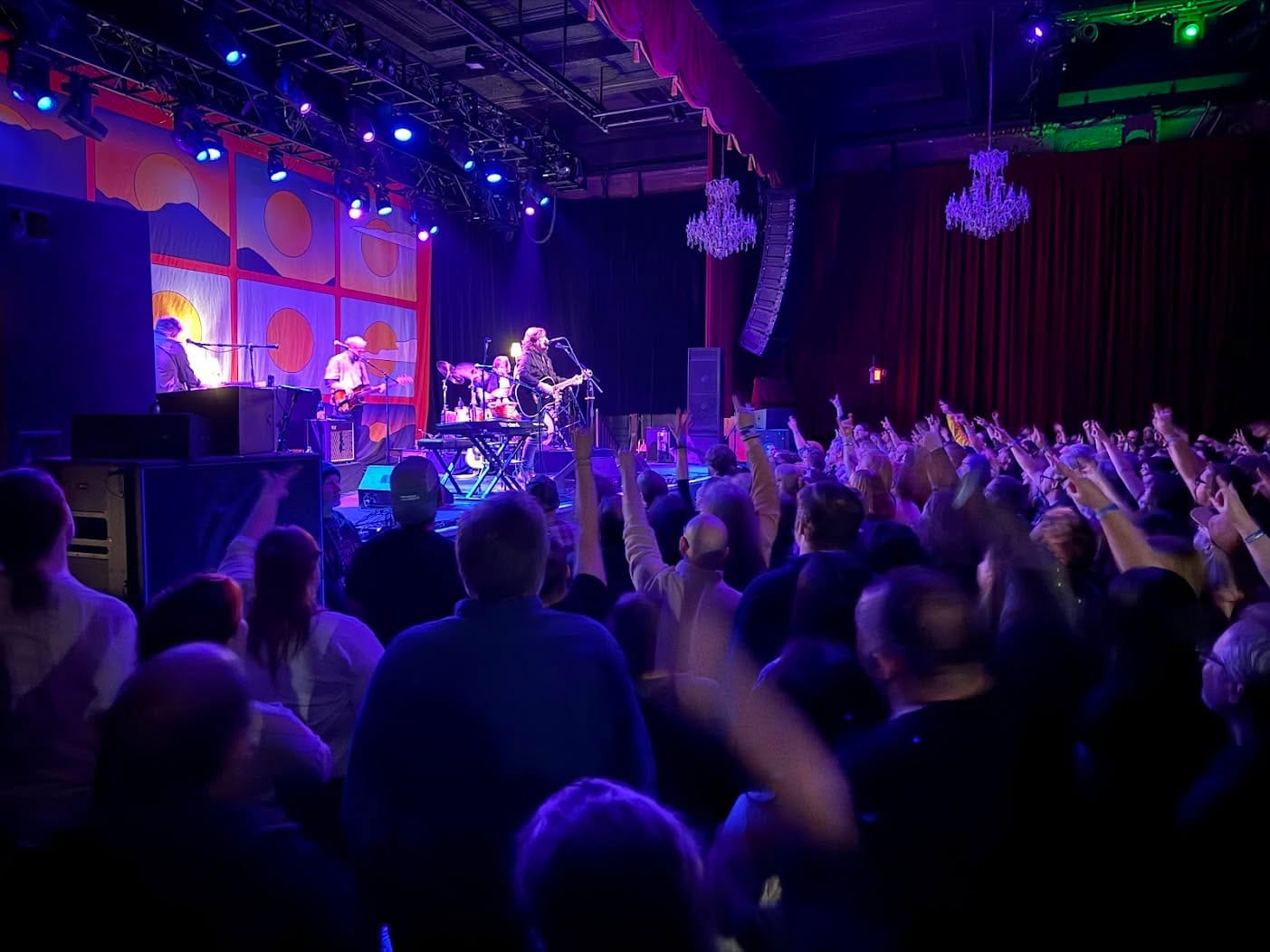
The following night, Darnielle would speak about how, even though he writes music criticism himself, what he owes with his music is to his listeners rather than to critics. How the truth of the work has to be there for them — for us. I’d say pretty much the entire room felt that, made our own connections to the emotions in that song.
And so because of that, my defining memory may be Darnielle leading the band in that anthemic version while the crowd threw devil horns and shouted along to the final lines, celebrating Jeff and Cyrus and all those they could represent with a rousing “Hail Satan/Hail Satan tonight!” Everyone there — no matter, or because of, their individual stories — wouldn’t have had it any other way.