Exclusive: Bottom of the Hill Sold, Will Continue as Live Music Venue
The storied San Francisco club will reopen in 2027 under new ownership.


The storied San Francisco club will reopen in 2027 under new ownership.

This week we've got a broth bar buffet, a backwards reading of the U.S. Constitution, rice porridge for dogs, and more.

(It all depends on how you define the word "can.")
Publisher John Baccigaluppi on 'Making Music,' a new collection of 24 interviews from the essential record production magazine.


For years, my Bluesky bio has included the line, “Probably thinking about sound.” This is not an exaggeration. Over the last two decades, I’ve played in bands, done field recordings, shot jazz videography, written about sound design in TV and film, and, of course, covered off-the-beaten-path concerts and performances for COYOTE.
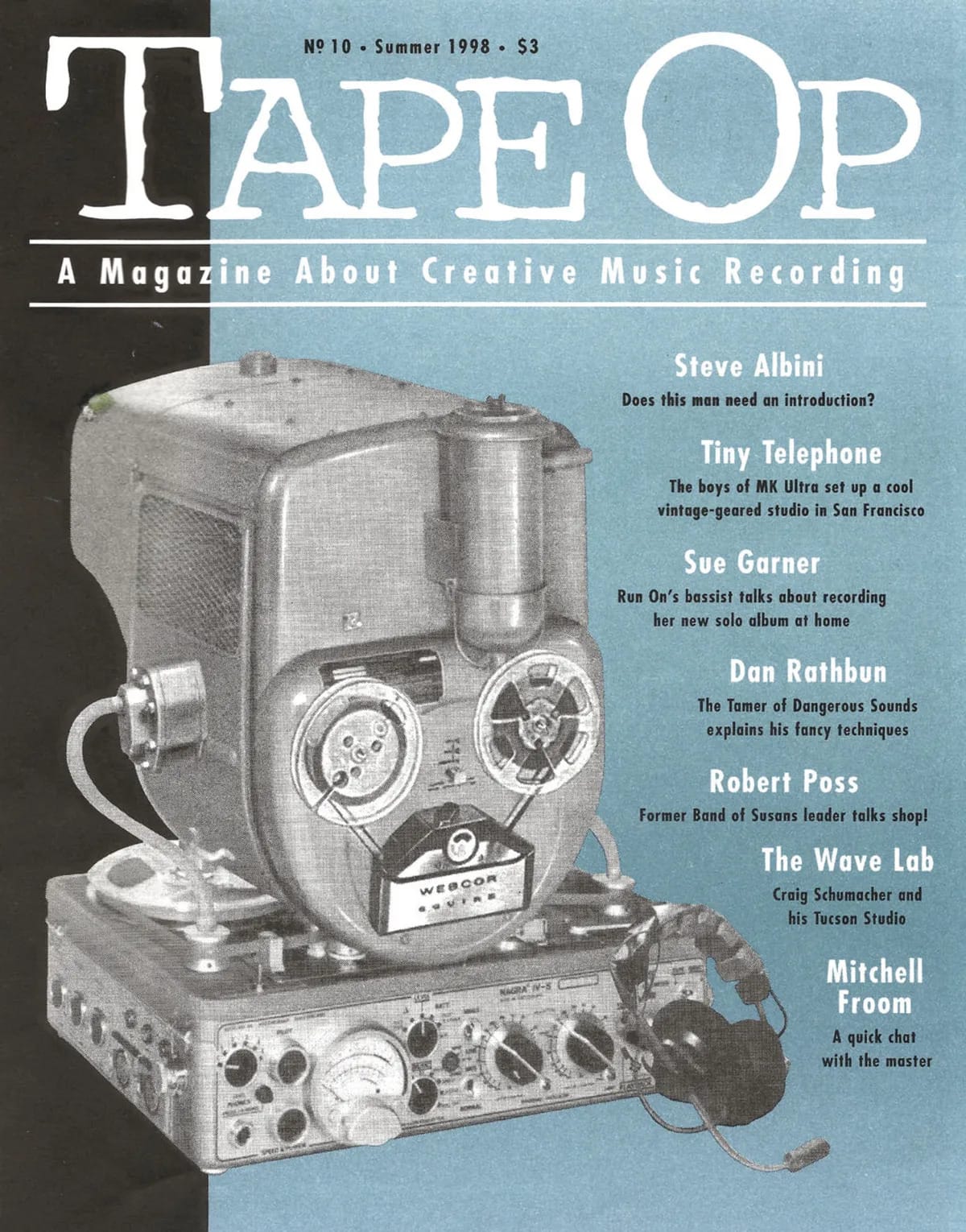
I’ve also spent those years reading Tape Op, which was founded in 1996 and has since become the most widely circulated magazine about the art of recording music in the world, thanks to its fascinating interviews with musicians, producers, and engineers. (For example, here’s Brian Eno, calling the tape recorder “the first musical tool he could handle” because he couldn’t play instruments.)
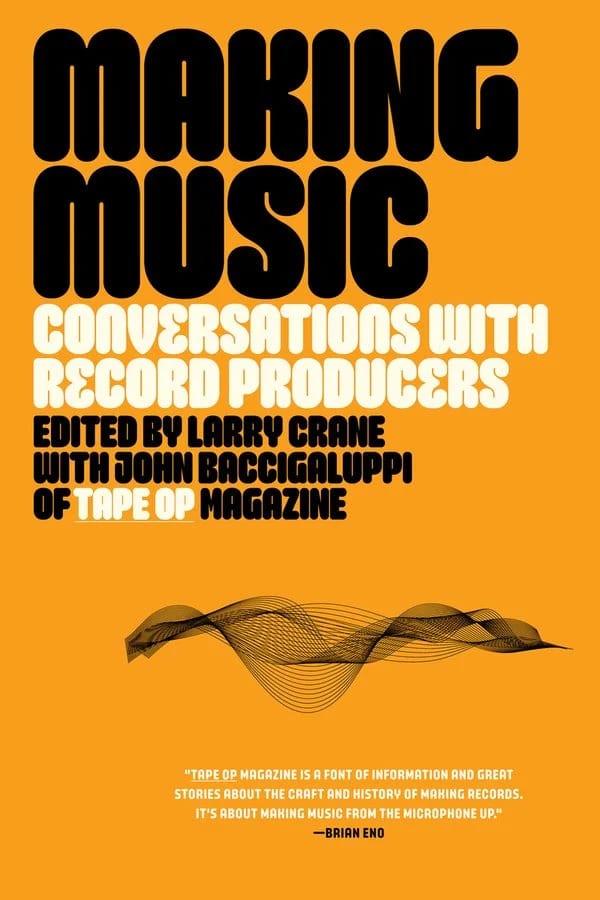
To celebrate the publication turning 30, the folks who run it have put together a book. Making Music: Conversations with Record Producers, out Sept. 1, includes two dozen interviews from the magazine’s history, recontextualized for new and old readers alike.
Last week, I spoke with Tape Op’s publisher John Baccigaluppi, who lives in the East Bay and runs Panoramic House Studio in Stinson Beach, about Making Music and his evolving approach to sound production.
(This interview has been lightly edited for length and clarity.)
RH: How did you get started with [Tape Op founder] Larry Crane, and what led you to join the mag in 1999, a few years after it launched?
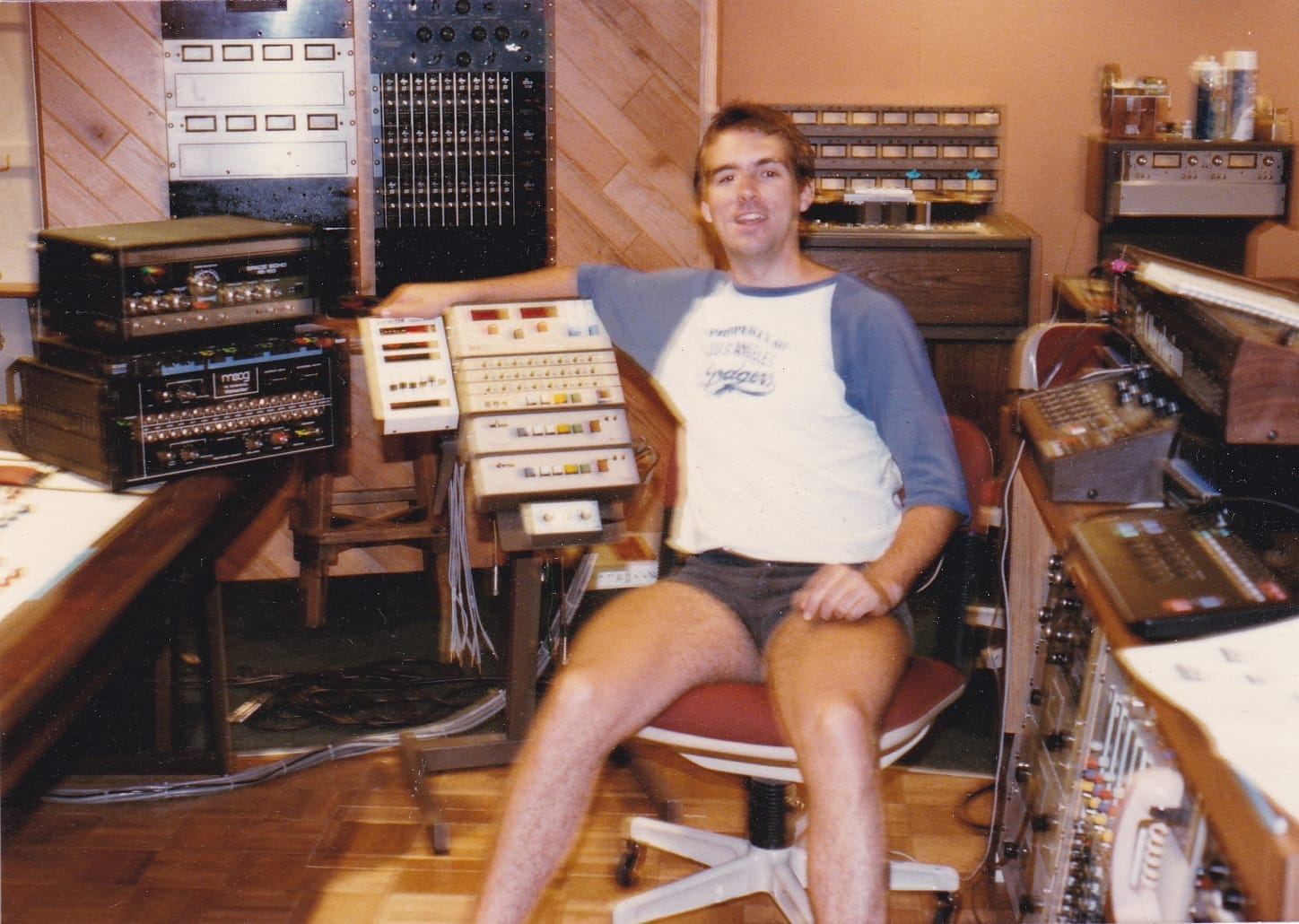
John Baccigaluppi: So back when I was in Sacramento, I had a recording studio and did a lot of remote recordings as well. I was doing a live record for a band called Seven Seconds, and Larry's band, Vomit Launch, was opening. So I was out in the alley with a rented van and an eight-track tape recorder recording Seven Seconds, but I kind of heard Vomit Launch through the microphones, even though they weren't set up properly for that band.
And I was just like, huh, this band's kind of cool. I didn't even meet them at that gig, but I reached out to them later, and I ended up producing two records for Vomit Launch. And then the band broke up.
RH: It happens.
JB: [Larry] moved up to Portland, Oregon, and I stayed in touch with him, to some extent, because every summer I would go visit him and skate in this really cool skate park called Burnside. We’d hang out for a few days, and I’d skate at the skate park, and then come back home. At some point, he started Tape Op. I think I wrote something for the very first issue, but then had nothing to do with it for the next two years.
But during this time, I had started a skateboarding and snowboarding and music magazine called Heckler. And at some point we approached Larry about taking over the publishing of Tape Op [as well], because I was just such a big fan of the magazine.
I eventually became the publisher with issue 10 or 11, I think. Then the skate magazine ended up kind of folding, and Larry and I just moved on with Tape Op, and that was 28 years ago.
RH: Did you have any inkling of what Tape Op might grow into?
JB: I really believed in it from early on. I really liked what Larry was doing with it. At the time, there were other magazines about recording, but they all were speaking to that major label studio culture where everything's just really, really expensive. With Tape Op, it was all about making records with whatever tools you had, and I believed very strongly — and still do! — in that idea and that principle. I was confident that we could take Larry's zine, which he was initially making on a Xerox machine and stapling himself, and turn it into something bigger.
And it had a nice, slow, steady growth, and it eventually exceeded our expectations. I'd say at about the 10-year point, we were like, wow, this thing's actually kind of working. And honestly, it has not been easy to maintain a print publication for the last 20 years, but we're okay. We're surviving. And we have this book coming out this fall, and we’re excited for the next 10 years. We'll see where it goes.
RH: I feel pretty confident that people will continue to make music regardless of the state of media. I think you'll always have an audience of eager readers who are curious about sound. What made you want to publish this book now, particularly as a physical entity?
JB: Well, I like books! We’ve been doing this for 30 years, and it just felt like a nice way to take some of what we've done and hopefully bring it to some new people. I mean, every interview in the book, you can find online. But we put a fair amount of time into re-editing those and creating new intros and adding some context. It’s highly readable. It's much more enjoyable to read this book than it is to read the magazine and certainly more than reading it on a screen.
I think people still really enjoy analog, physical media. Maybe now more than ever since we're inundated with our phones pinging us all the time. You pick up a book, and you set your phone down, and you can just focus on reading, you know?
RH: The plan is to make this a series, right? You mention early in the book that you hope to publish more titles, with future ones focusing on engineers and artists and such.
JB: [laughs] I almost forgot that was in the introduction there. But yeah, a series. There's also a big number ‘1’ on the spine of this book, which is sort of a clue that there will hopefully be more of them.
RH: How does one whittle 30 years of interviews with record producers down to two dozen? What was the story you wanted to tell by the progression you chose — from, say, Lee “Scratch” Perry to Finneas O'Connell?
JB: Well, the first thing you do is you build a really big spreadsheet [laughs]. Then you put about 350 names in it. And then you just have to whittle that down to 25, you know? And it was not easy. It was a lot of back and forth between Larry and I, and [Akashic founder/publisher] Johnny as well, who had input on it. And we just tried to get a good and interesting cross-section that was more-or-less chronological.
We could have easily made it 50 people, but then the book would have been so heavy, large, and expensive. I really wanted a book that would fit in someone's backpack or purse or whatever. I didn’t want a big coffee table book.
RH: Every producer has a unique way of approaching sound and their own idiosyncrasies about how they engage with it. I’m curious what yours is and how it’s changed after these decades of personal experimentation behind the console; but also interviewing and editing all these talks with your peers.
JB: It just keeps evolving and changing. When I was younger, in my 20s or so, when I first started working in studios, I was just so excited to be there, whether I was engineering, producing, whatever. I got to work with a lot of producers, some of whom were really good, and so you learn something from that and see that approach. I also started a record label back then, too, so I was essentially signing bands and putting records out.
And then as I got older, I was just burnt out from being in the studio like 50 to 60 hours a week. It was just grueling, you know? And after 10 years of doing it, it was harder to be excited about recording something that you didn’t care about that much. I think as I continue to get older, because you do continue to get older —
RH: Oh no.
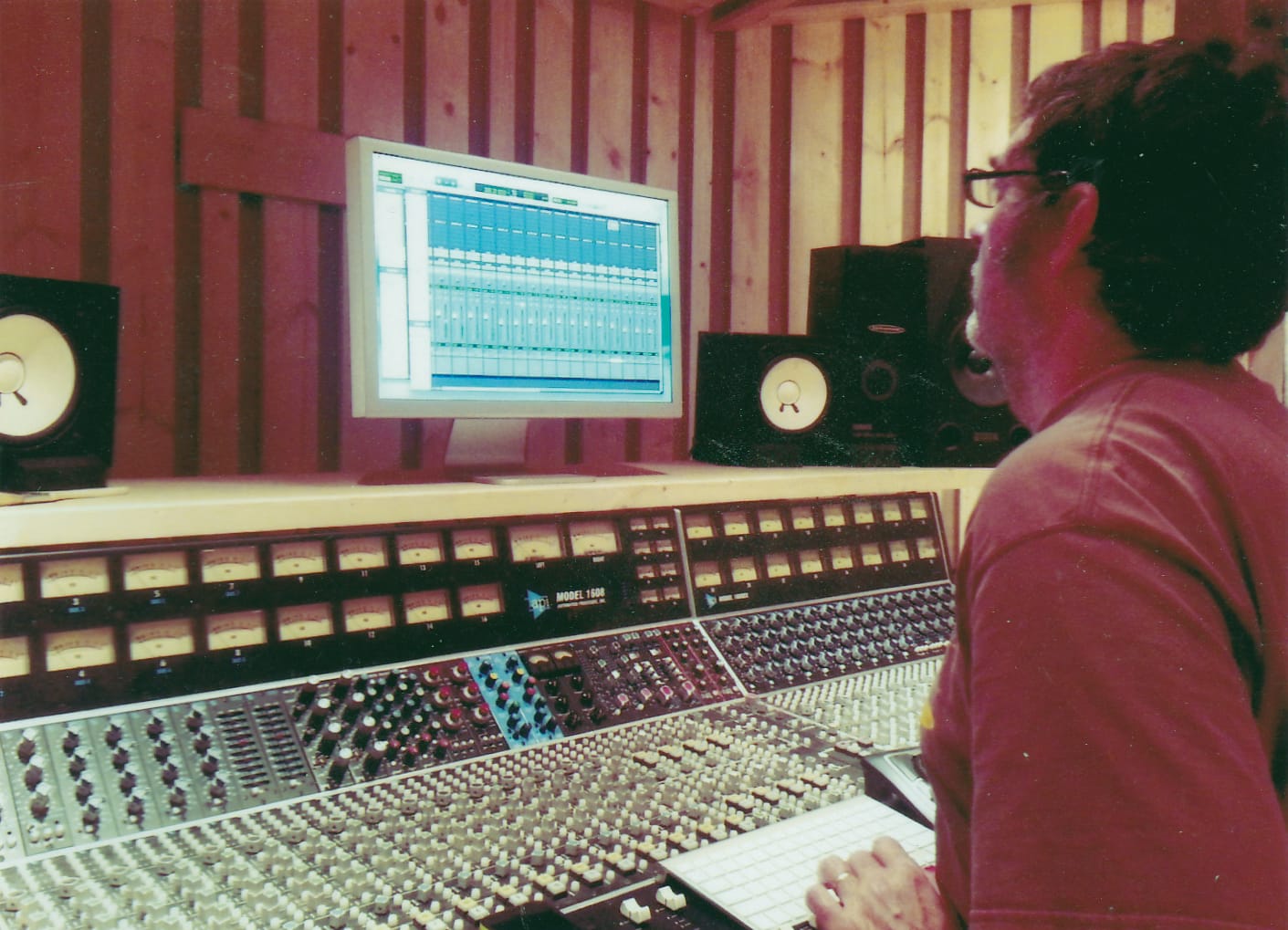
JB: — I became even less interested in just being an engineer for hire. But I’ve never stopped loving making records with people and being in the studio with people. I mean, I got my first paid gig at 21 and I'm about to turn 65. So I've got 44 years now doing this? I think I just became more and more focused on whatever the artist’s vision is.
I have tons of ideas I can bring to the table; and I can play various instruments and contribute stuff, and hire people, and do string arrangements, et cetera. I've got a broad skill set, but in the end, it’s really about whatever the artist is trying to get across. So I think I became more focused in the last 10 to 15 years on trying to figure out, “What does the artist want to get across?” And also just being very picky about what I’ll do.
RH: There’s a part of the Steve Lillywhite interview where he tells you he’s a fan of the people he works with more than anything else. That was interesting to me because it upends this assumption that record producers are simply the spiritual convoy between a waveform on one end of the microphone and the one that emerges on the other end of a speaker.
You mentioned being more selective these days — that the artist’s ideas largely drive your interest in producing them. How do you choose whom to work with?
JB: I don’t jump into anything with anybody anymore, and I don’t do that many records anymore either. Every one of them has a different story, but the common thing is — and I'll agree with Steve 100% — that you’re a fan of the person, and by default you're a fan of their music.
RH: I think that kind of working relationship opens up so many creative opportunities, but is also just painfully intimate, you know?
JB: I’ve had times being in the studio, and you can just have an artist in tears. It can be very emotional. You definitely have to be into it, because there’s no amount of money that could compensate you for making a record if you don’t want to do it. And conversely, you better be willing to do it for free, because in a sense, you know whatever you get paid isn’t going to equal the hours you put in. So you better be getting some real enjoyment out of it.
One of our [Tape Op] writers who’s been with us for quite some time, and is also an engineer and producer, a guy named Andy Hong, had a rate of pay that I always kind of took to heart. He said, “What I tell bands is when we’re done with the record, they can pay me whatever they think it was worth. And then if they want me to do another record, if I think they paid me enough, I’ll do it.” And it was basically just saying whatever you think is fair [is good], and if you want to work with me again, if the amount wasn’t too insulting the previous time, I will.
I’ve kind of done the same thing. I'm so busy that there’s no amount of money you can pay me to make a record unless I really want to. I have a sliding scale when I work with artists, and if it's on the low end of the scale, I will usually ask for some kind of backend [profit] in the event a record does well. And sometimes that pays off and sometimes it doesn’t, but it doesn't really matter. Because in the end, you only did it because you did want to be in that room with that person for all those hours. That’s the only reason you did it.
Making Music: Conversations with Record Producers is out Sept. 1, 2026 on Akashic. There will be a reading on Oct. 3 at 11am at Book Passage Corte Madera (51 Tamal Vista Blvd).