’Horror Movie Love Eggs’: COYOTE Watches ‘You Can See Everything’
(It all depends on how you define the word "can.")


(It all depends on how you define the word "can.")


En Redwood City, un medio independiente en español informa al público con conversaciones cara a cara y un títere llamado Ramiro.

In Redwood City, an indie Spanish-language news outlet is informing the public with face-to-face conversations and a puppet named Ramiro.
(It all depends on how you define the word "can.")

This weekend, a few members of the COYOTE crew watched You Can See Everything, the buzzy new documentary in which comedian Nathan Fielder hangs out with disgraced tech founder Elizabeth Holmes in the days before her incarceration in a federal prison in 2023.
Holmes’s claim to fame was her company’s miraculous, all-in-one blood testing machine — which, she famously told a Forbes reporter, “can perform any test.” Fielder’s quest to understand the person behind the sensational tech implosion, including scenes of her relationship with partner Billy Evans and their joint attempt to rejoin the Silicon Valley tech elite with Theranos 2.0, makes for a strangely compelling three-hour film experience.
This conversation was pulled from a phone call and Slack chats and has been edited for clarity. Spoilers ahead.
Emma: To start, what were your Nathan Fielder feelings going in? Same question for Elizabeth Holmes.
Soleil: I’ve never seen a Nathan Fielder anything. And with Holmes, I’ve absorbed most of it through osmosis and news coverage, not the profiles.
Emma: OK, so we had different backgrounds going in. I’d watched The Dropout and read some about Holmes. And I’m a latecomer, but I’ve watched all of The Rehearsal and a lot of Nathan for You in the last year, and I kind of think he’s a genius. He dialed his Nathan Fielder-ness down quite a bit here, though.
Soleil: What is Nathan Fielder’s shtick, exactly?
Emma: The Rehearsal is basically him doing the last third of this movie, the reenacting, only played mostly for laughs. He helps someone rehearse an interaction they’re nervous about with a friend, and hires an actor to play the friend and do a simulation, and it spirals until they build a full-scale set of the restaurant where they’re going to have the conversation.
Soleil: Oh, like Synecdoche, New York.
Emma: Exactly. The other main part of his deal is he’s sort of always playing a character: You can’t tell what he actually thinks, or what parts are a put-on. So pairing him with someone also known for “what the fuck is their deal?” is a very interesting premise from the jump.
Soleil: So do you think he was putting on his supposed enchantment with Holmes? Was the crush a lie?
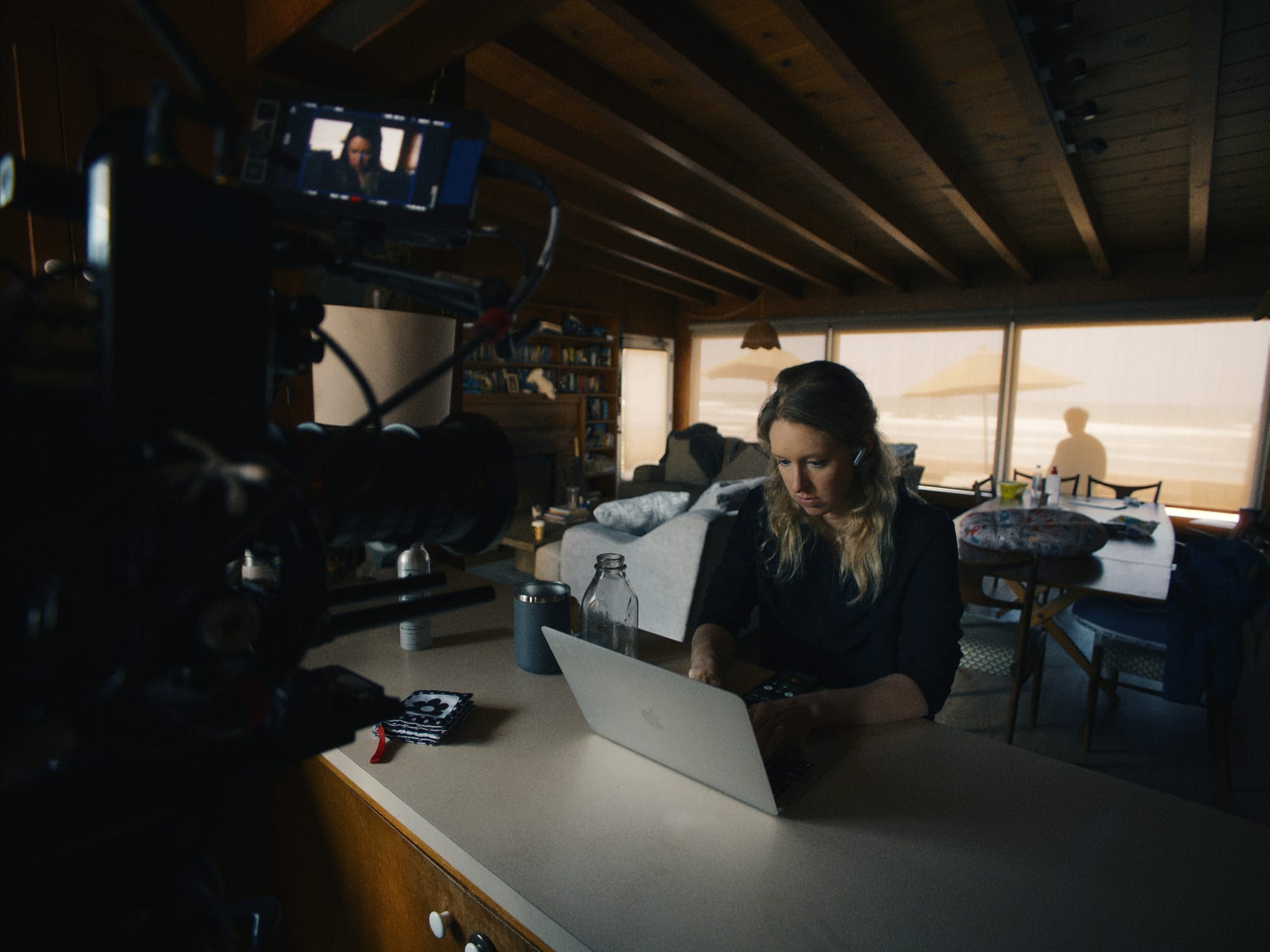
Emma: I don’t think so. There were points where they seemed to have, if not affection, a certain intimacy. Like when he asks if she’s ever lied, she says no, never, and he’s like, “Liz, come on.”
Soleil: When they got down to a debate about what the word “can” means, I was brought back to the Clinton hearings about Monica Lewinsky: It depends on how you define “is”! Do you remember that? Just watching Holmes at work, I ate it up. When she said that her statement that the Theranos machine “can perform any test” meant that it could, one day, if they work hard on it, perform any test? Like who looks at a freshly born baby and says it “can” walk when it clearly can’t even open its eyes?? What?
Emma: That conversation about “can” is the title of the movie, too. But in general with the whole “she has difficulty communicating” thing… it’s obviously not possible that the whole thing is a misunderstanding. She went after whistleblowers and journalists aggressively with litigation. She lied. It’s documented. That this movie made me briefly question any of that is wild.
Soleil: To pivot to where we are now: If she’d gotten into AI, there’d have been no stopping her. It’s all smoke and mirrors, all hype. “Vibe” has been so acquired by the AI set… she’s all vibe.
Emma: Her mistake was producing a physical thing that provably didn’t work.
Soleil: And AI doesn’t work for so many things, yet people aren’t in jail. She just picked the wrong thing.
Emma: It’s a great question, how far she could have gotten now. There are even fewer journalists [today], and fewer people being publicly skeptical of the tech industry.
Soleil: Having seen how much of a narcissist whisperer she is, it’s very in line with trad wives and Erica Kirk. Women who dine out on indulging the patriarchy and capitalism in a way that benefits them personally, even if it doesn’t in the end. To me that felt like the core of her.
Emma: So like batting your eyelashes when you get pulled over for speeding … but writ large and deeply harmful?
Soleil: It’s the white woman damsel-in-distress thing, which has a body count. And Holmes has indirectly killed people!
Emma: We haven’t even talked about Billy!
Soleil: Those two are a match made in heaven. He’s a malignant narcissist, and she, I think, is a covert narcissist who lives off feeding one. It’s all fawning and deflecting. She found an overt narcissist deeply invested in patriarchy to be her shield, and it works.

Emma: Very symbiotic. And she seems to seek out controlling, arguably abusive partners, like Sunny Balwani, so the conversation about how those relationships might also benefit her is really uncomfortable, right? I think it’s hard to hold the idea of someone not being all good or all bad. … Also, in the month before leaving for prison, after having an infant, she’s trying to start another company?! That’s where I get stuck.
Soleil: I want your take on this as a mom. At the end she tells Nathan she could have settled the case and had more time with her kids; but she didn’t because she doesn’t want to admit fault.
Emma: Deeply psychotic. I also read it’s a common theory that they had babies as a bargaining tactic for leniency, which is fucking insane. I felt really bad for the kids. They didn’t ask for any of this.
Soleil: They didn’t ask to live among the lizards. Also, there’s a scene at the beginning where Elizabeth is making breakfast while her boyfriend Billy is talking to Nathan, and she’s beating eggs in a yellow bowl with a fork, but in such a way that it’s like she’s gently bathing an invisible tiny baby sitting in the bowl with the egg liquid. If that is not a metaphor for her as a parent… It’s so purely gestural! A way to covertly antagonize patriarchal provider Billy so he can jump in and beat the eggs the normal way.
That’s how I knew this was going to be a horror movie. Horror movie love eggs.
Soleil: Do you better understand Silicon Valley after watching this?
Emma: I guess it confirmed my belief that it’s populated with sociopaths driven by ego and an overinflated sense of self-importance. Sam Altman said recently that “the world should accept some bad things happening” as a result of AI, but that’s the cost of something still worth doing. That drive is deeply unrelatable to me, and scary. I think more people operate exactly like her than I’d like to believe, and they just haven’t been caught. Or it’s legal.
Soleil: All this revolutionary talk is inevitably rooted in an extremely conservative, right-wing view of aspiration and society. Holmes surrounds herself with a supposedly mind-blowing vision of the future, and yet the tools she uses are so regressive.
Emma: And it benefits her at every turn. “I don’t really care about money, so I let him do the money stuff.” Which keeps her hands clean. Every bit of the setup serves both of their desires.
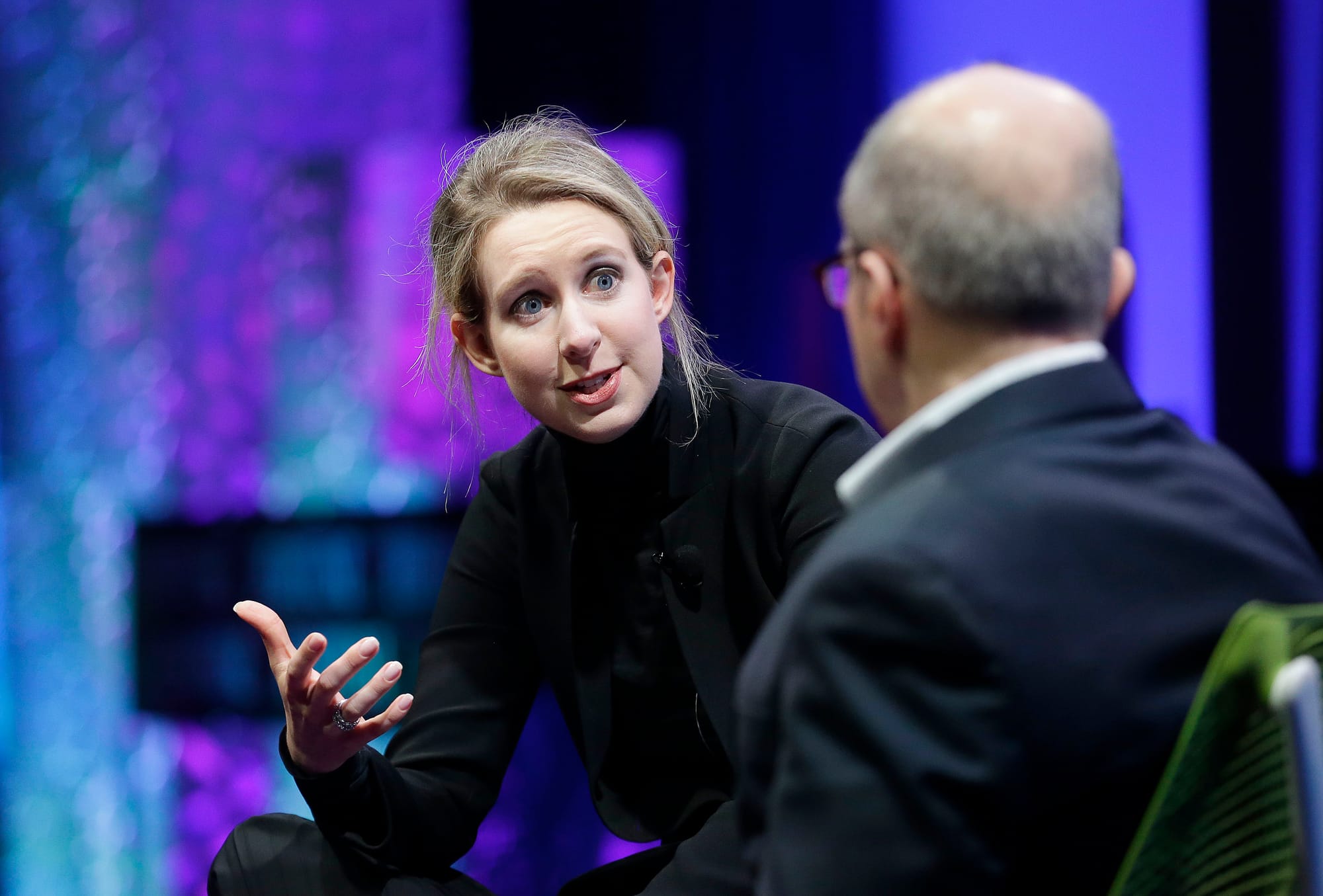
Emma: One thing I keep thinking about is the failures of tech journalism here. The chance to tell a story about a young, attractive, blonde woman who’s also the next Steve Jobs must have been overpowering. But there was so much glowing coverage of Theranos until John Carreyrou broke the story that, guess what, this technology didn’t work. Why did that take so long? How were any of the other journalists verifying the results the company was giving them?
Soleil: I’m so curious about the New York Times conflict, too. In the profile written about her during this pre-prison time period, Elizabeth allegedly criticized her portrayal in The Dropout Hulu series by saying, “They’re not playing me. They’re playing a character I created.”
But in the documentary, she and Billy get so heated about her having never said that, and that they record every conversation and can prove it — but they refuse to produce the audio. And according to the documentary, the Times doesn’t produce anything either.
Emma: It should be easy if you recorded the interview. Why not share the recording?
Soleil: A part of me wonders is this a lie on Fielder’s part? That little detail made me feel so unmoored.
Emma: The other thing I feel isn’t getting enough attention is that Billy seems to have developed a coke habit over the course of filming.
Soleil: Guys like this are about being self-made. Rehabilitating Theranos 2.0 through his own effort — with the combined powers of cocaine and AI. I think AI and coke are very similar products. I think about John Green, who got outed for using AI in his videos. He was so in love with his own capacity that, to maintain the illusion, he used AI to overproduce. It’s easier than acknowledging your limitations as a human being. It’s nicer to say, “I did this. I’m so great.”
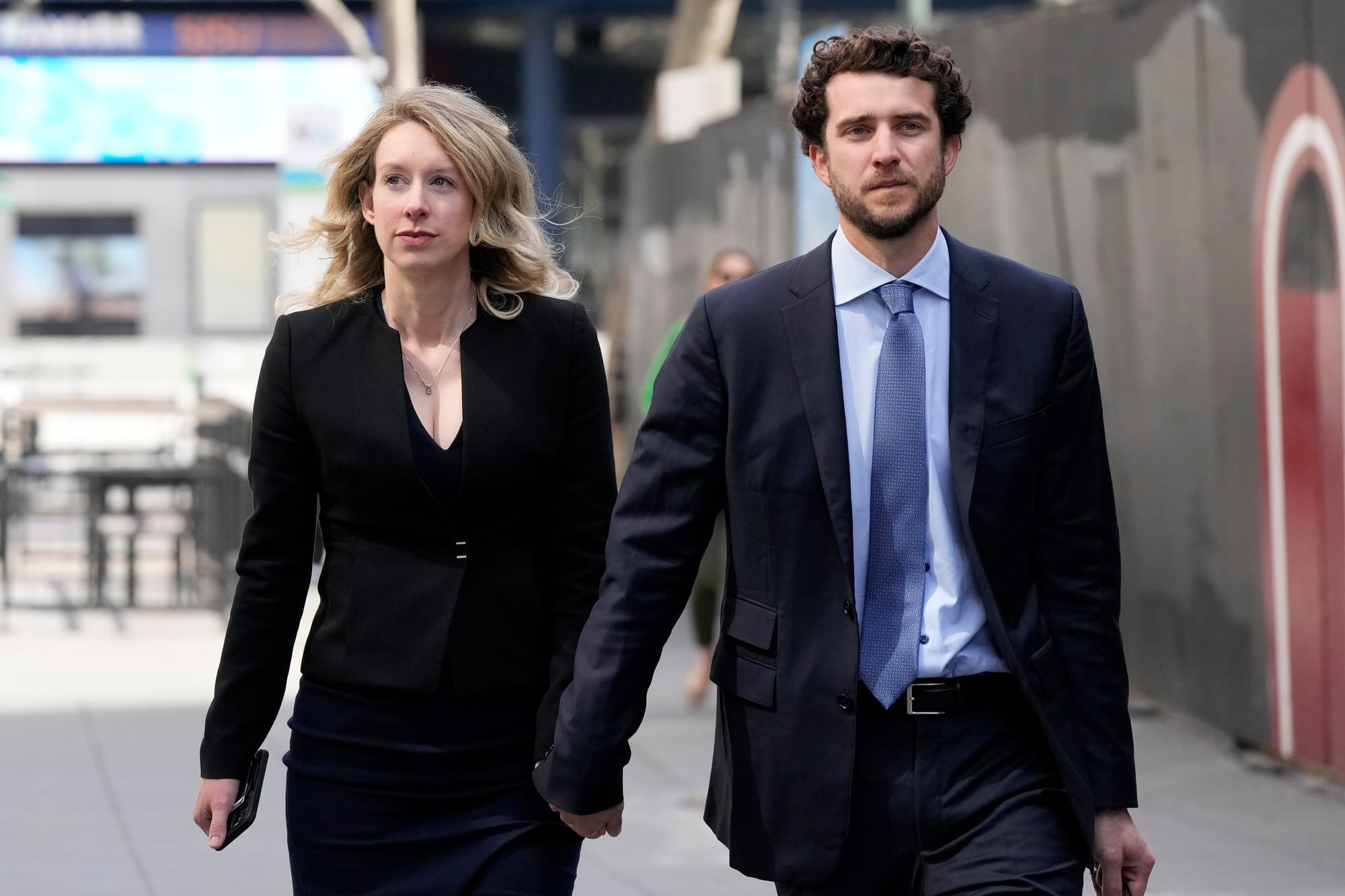
Emma: I kind of wanted to see more of the AI Elizabeth that Billy commissioned of her. They glossed over “Oh yeah, I made this new version of her,” though I know it’s crazy to say they glossed over anything in a three-hour movie.
Soleil: I’m on the website for the guy who does the Elizabeth Holmes strip club thing, and it’s crazy. There’s a petition about Holmes being innocent with 351 signatures... but to be fair, a lot of the comments from signers are about how she’s guilty.
Emma: I think her mythology attracts people, whether they think she’s innocent or not. They maybe feel it shapes their identity to defend her, to a degree that obliterates the documented truth, in a way that reminds me a little of Michael Jackson. But it’s extra confusing to me with her, because she failed, she lied, and she didn’t make something that moved millions of people. There’s no there there.
Soleil: That’s sunk cost. People put so much reputational and material stake into it that it had to work. All her semantic fuzziness made it feel better for them.
Emma: Because if you acknowledge you’re wrong, you have to question yourself, and people don’t want to look that deeply.
Soleil: Especially old white men with power. The Henry Kissingers of the world. Billy is not going to examine himself and ask, “Why do I believe this?”
Emma: It’s not in his toolkit.
Soleil: Last question: do you think Holmes really didn’t understand Abbott and Costello’s “Who’s on first” bit?
Emma: I think her apparent naivete is an act in many other places. But in that scene, I saw a person without a sense of humor who doesn’t participate in pop culture. It was also the first place I wondered how old her baby was. Eight weeks? There’s a glassy-eyed look. What do you think?
Soleil: I think it was a put-on! I’d never seen the original skit, but I’ve seen Looney Tunes do the exact same thing. You also have to remember that the camera is always there in these scenes. They’re miked up. The film calls out that artifice multiple times. And Billy’s follow-up, “That’s what I love about you. You don’t think like other people,” is so Silicon Valley-coded: You’re a fragile, special genius, nobody gets you, and that’s why your claims about this machine were just your beautiful mind at work, not a scam. So I’m not convinced.
Emma: I definitely think she’s manipulative as shit and controlling her reaction elsewhere, and Billy’s response there is full of shit. I’ve vacillated wildly since seeing it, but I’m trying to hold both: I think she’s a scammer and a liar. And I also do think her brain is very different from mine… though, what is a normal brain, et cetera.
Soleil: I’m extremely normal, so I have absolute confidence in my judgment of her.
‘You Can See Everything’ is in theaters now.