First Aid Kit: How and Why to Get a COVID Vaccine (and Also When and Where)
Protect yourself and others this fall.


Protect yourself and others this fall.

This week we've got live mural painting, mushroom architecture, slow walking, and more.

Bay Area community members remember “fierce and generous” Beatrice Dong, the co-founder of Berkeley’s Eastwind Books and lifelong activist for racial solidarity.

At SF's Audium, 176 speakers tell the history of Black sound in the Americas through modular synthesis.


Two weeks ago, news broke that the U.S. State Department presented a map at a global conference in Brazil that mislabeled several African countries. “Mislabeled” is perhaps underselling it: The countries’ sizes were wrong, the locations were wrong, there were lines that led nowhere, numbers left unassigned. The image was produced using OpenAI, for which the state department apologized and took “full responsibility,” whatever that means.
This map came to mind last Friday when I attended golden lionheart collier’s live performance of “Hidden Currents,” a composition weaving original instrumentation, field recordings, found sounds, TV broadcasts, and countless interviews. The transdisciplinary artist and self-described “archival alchemist” calls their piece a “reimagining of the routes of forced migration across the African diaspora—known as the Maafa, or great disaster” through the use of custom-built modular synthesizers.
I can honestly say I’ve never heard anything quite like it, nor am I likely to again; the environment housing the work is a medium unto itself. If one could make an aural quilt of the Americas telling the story of Black sound — and thus Black being — “Hidden Currents” would be it. An inverse to the "no-place" of the U.S. State Department’s artificially constructed blunder.
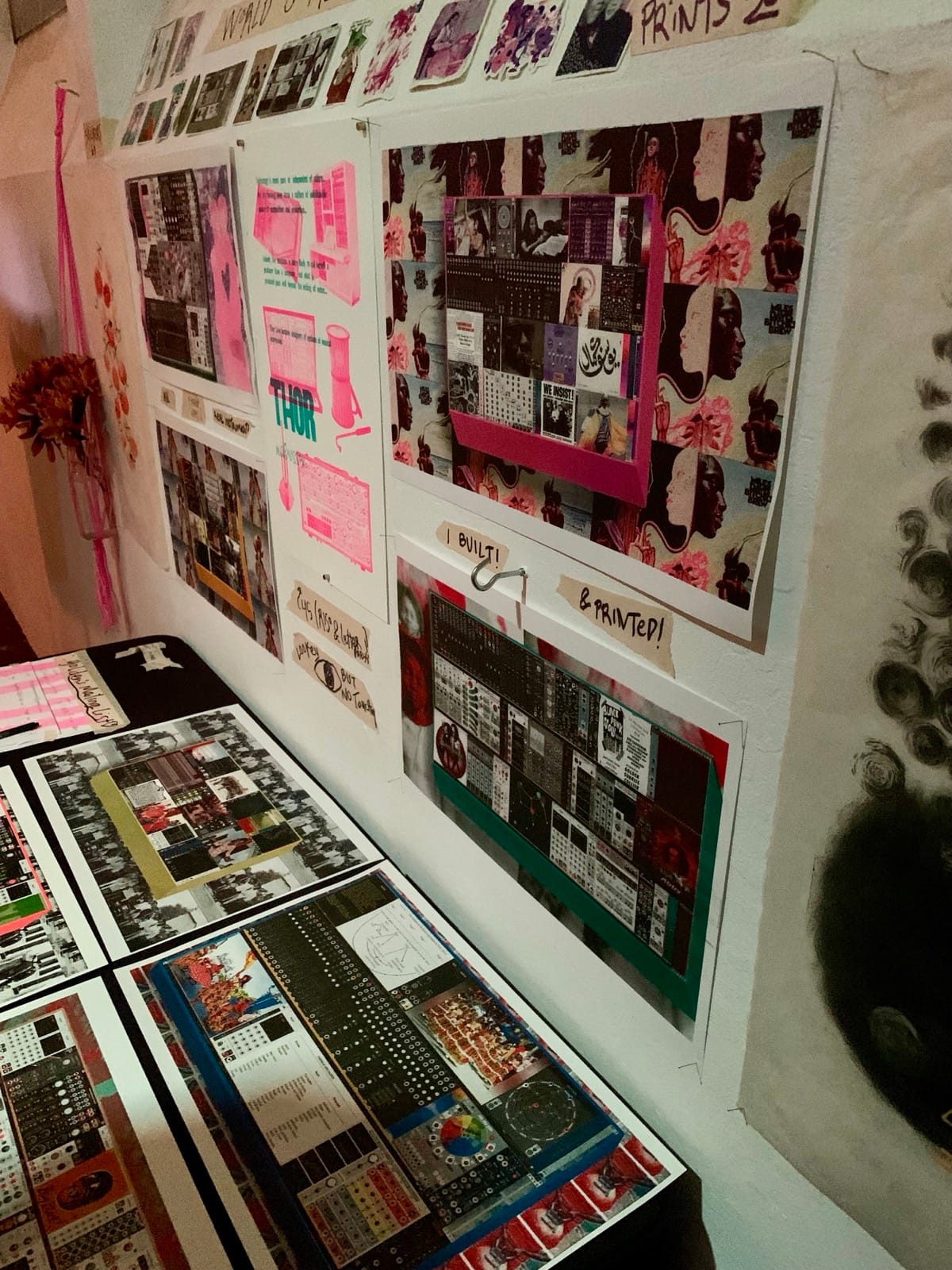
The performance on Friday took place at Audium, a 50-year-old sound theater in San Francisco, whose annual Spatial Sound Residency Program currently features collier. At around 8pm, the dozens of us in attendance streamed into a dimly lit room and took our seats in the concentric circles radiating from its center. Above, around us, and below were 176 audio speakers of varying sizes. I stared up at the constellations of sound boxes, shaped like pendant lights, until the room went dark. And then the darkness sang.
I do not mean voices emerged. I mean an ocean took voice. A static that segued into the percussiveness of trembling shells. We were immersed in what rapidly grew into hundreds then thousands of clips of Black people speaking, singing, drumming, hollering, laughing, strumming, and wishing from across time and the diaspora. Snippets of Brazilian Portuguese and HBCU drumlines, djembes and Pentecostal sermons. We were led and encircled and left trailing — the hold and the wake at once. In the dark, blackness flew past us at all angles and speeds, layered one atop the other then gone.
The trailer for golden lionheart collier's “Hidden Currents."
I’m struggling to think of a comparable experience, and the closest I come is that sequence in Ryan Coogler’s Sinners (2025), in which the spirits of Black musicians across the ages emerge on the dance floor when Sammie sings “I Lied to You.” Briefly, the Books’ sound collage albums drift to mind (or Morton Subotnik, if we really want to go back), but not like this. The ephemerality here feels distinct, pointed even. A spear’s tip.
I found myself running toward terra firma out of habit. A toe to tap, a rhythm to follow. There were the steel drums of the islands and the vibrato of Southern spirituals, crashing for just a moment and then again vanished. Is this ancestry hunger, I wondered. The craned neck and tilted ear? Is this the sensation of straining toward home?
In my notebook, I scribbled “I can’t find a handhold” without bothering to look down, then added “—why should there be any?” seconds later. More words came. In the darkness, I filled page after illegible page. I felt overcome with emotion — not least of all for collier — as banjos and birdsong flitted by.
I still can’t imagine the lifetime it took, sitting among the archive for thousands upon thousands of hours, sorting through all that past for this. To perform time, live, across fragments of varying audio fidelity. The sounds of water dripping and those of preachers’ baptisms. I cannot begin to fathom how one holds us all, pours us back for the span of an hour.
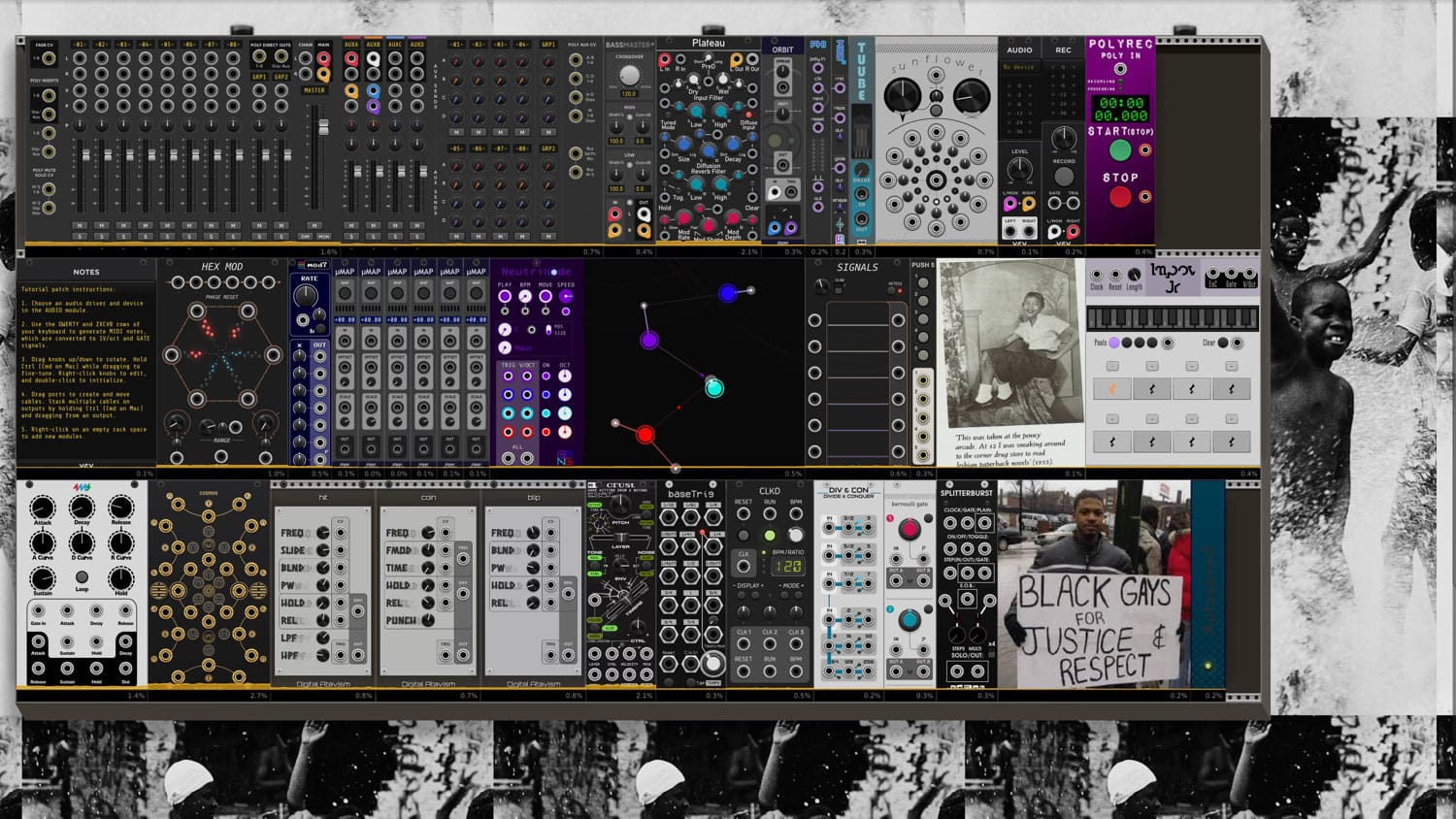
At some point, I registered the tones of journalist Barbara Walters. For the work’s duration, the voices of white news broadcasters — many of whom were attempting to describe Black music — had been interspersed with the sounds of Black people. We were more than halfway through the performance before I realized what collier had accomplished by their inclusion: an aural representation of Du Bois’s double consciousness, in which Black listeners were able to hear how the world heard us while simultaneously experiencing how we heard ourselves.
From a corner, a viola played. From another, bass frequencies reverberated through our shoes, under the plucked lower octaves of a piano and a singer who sounded like Nina Simone but could also have been anyone’s mama. A brass band covered the Luniz’s “I Got 5 on It.” A man played the bones, the body, the spoons.
Afterwards, once the lights rose and the clapping died down, collier invited us to stay for a ritual of self-healing. We were encouraged to close our eyes. A bell rang. Gently, we were asked to envision what we deserved. We were reminded — a bell rang — that we were deserving.
It was an unexpected exercise in self-compassion, there in the present. I was not prepared to sit with the word kindness, but it rested on my tongue all the same. It was, I think, among the most moving parts of the night. For collier to have grounded us, finally, within our own words.
golden lionheart collier will perform “Hidden Currents” from Aug 6–29 at Audium, 1616 Bush St, San Francisco, CA. Tickets: $22–33. Pay-what-you-can tickets are available at doors for each show on a first come, first served basis.