Exclusive: Bottom of the Hill Sold, Will Continue as Live Music Venue
The storied San Francisco club will reopen in 2027 under new ownership.


The storied San Francisco club will reopen in 2027 under new ownership.

This week we've got a broth bar buffet, a backwards reading of the U.S. Constitution, rice porridge for dogs, and more.

(It all depends on how you define the word "can.")
How the hell did we get from bulky trash pickups to AI-powered drones and sky-high fines?


Oakland is becoming famous for its trash.
East Coast newspapers, who have long garnered clicks from profiling California’s homelessness and overdose crises, have found a new target: illegal dumping. “A City Awash in Garbage,” read the headline of a New York Times article late last year, calling Oakland “a city with more garbage than almost anywhere else.” (The rats that run Manhattan could not be reached for comment.)
The sentiment is rubbish, of course, but once you build a narrative that a city is trash, it’s easy to pile on evidence to fuel that claim. However, no one who regularly drives down East 12th Street or cruises the blocks around DeFremery Park can dispute that dumping is a problem in Oakland. It’s gross, dangerous, demoralizing, and frequently abuts non-white, low-income neighborhoods. You may be able to escape seeing mountains of trash daily if you live in Rockridge, but not if you’re in San Antonio.
So what do we do about it? How does one address a practice so common that as soon as one trash pile is cleaned up, another one appears? Is the answer more bulky pickup days, harsher punishments — or something worse?
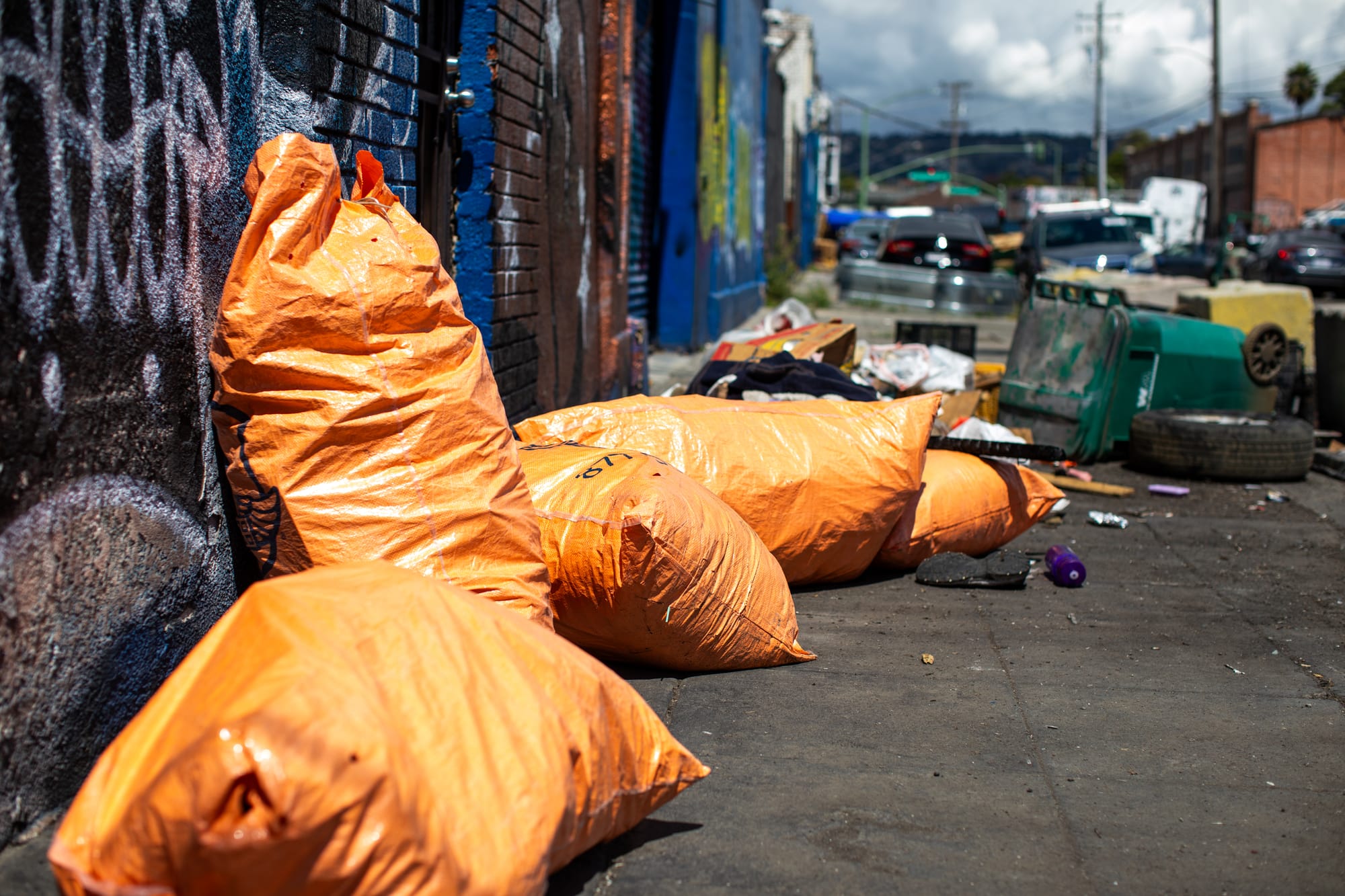
Dumping is nothing new. For years, community-focused organizations and individuals have stepped up to clear enormous piles of trash on their own when the city couldn’t — or wouldn’t — handle it. Highly publicized dumping incidents have stuck to the city’s collective memory: There was 2023’s “tire mountain,” and more recently, the infamous Tesla Cybertruck caught dumping hardwood flooring (this is somehow so on point).
Efforts to address this are ongoing. In 2015, Oakland launched a program to reward people who reported and, if necessary, testified about illegal dumping, promising “$100 or half of all civil penalties collected, whichever is greater.” That same year, the city partnered with Waste Management to provide residents with one free bulky pickup per year. In 2021, that service was expanded to also include one free bulky drop-off at the Davis Street Resource Recovery Complex.
After the New York Times article came out, Mayor Barbara Lee boosted Public Works staffing to clean up more dumped trash — a smart and very overdue move. But that’s not all. As we’ve seen with homelessness in San Francisco, nothing pushes a city towards a tough-on-crime approach like negative national coverage — particularly for a mayor who campaigned on improving Oakland’s national image to draw in new, tax-generating corporations and richer residents to the city’s struggling downtown.
As it stands, the city already has 36 illegal dumping surveillance cameras scattered across hot spots to capture license plates. Now, Oakland’s Privacy Advisory Commission, which advises the city on privacy rights and surveillance technology, has approved a one-year pilot program to use AI drones to track dump sites to the tune of $150,000 a year.
The company that owns the drones, Aerbits, tested the technology in SF’s Bayview-Hunters Point neighborhood, which has the largest population of Black residents in the city, at the behest of a former Zillow employee who left his job and flew personal drones over the area to find trash. The city says the Aerbit drones will not capture license plates or personal data — but it’s unclear what the true benefit is to Oakland. Yes, it could identify dump sites… but so could anyone. There’s a heap a few blocks from me that’s been there for weeks. What’s the point in identifying them all if the city is still struggling to keep up?
It’s also time, politicians say, to go harder after the people dumping. This week, new legislation put forth by Mayor Barbara Lee and Council Member Zac Unger to increase dumping fines passed the City Council unanimously. First-time offenders will now have to pay $1,500 — up from $750. It’s harsh, but up until now, those tickets have largely gone unpaid: Oakland handed out nearly 3,000 dumping citations between 2021 and 2024, landing in at $1.3 million in fines. Of that, only 11% was collected.
That’s where the new state bill comes in. In February, state Senator Jesse Arreguín (yep, the former mayor of Berkeley) brought forth SB 1218, which, if passed, would bar people from renewing their vehicle’s registration at the DMV if they have outstanding dumping violations and unpaid penalties. “We are creating a consequence that is clear, enforceable, and impossible to ignore,” says Mayor Lee, who supports the bill.
It’s hard to argue with this approach being used against large-scale contractors who are repeatedly skipping out on dump fees by leaving loads of construction materials on the side of the road in East Oakland. In those scenarios, these aggressive fines can carry weight: the maximum $5,000 fine is huge for an individual, but small for a construction company.
But the problem with these sorts of broad punitive measures is that they sweep up everyone. There are the big bad actors, but there are smaller ones, too. In those scenarios, this approach is the perfect storm of life-ruining, heavy-handed enforcement: a trap is laid, punishment is high, and the end result may be so removed from the original goal that it’s unrecognizable.
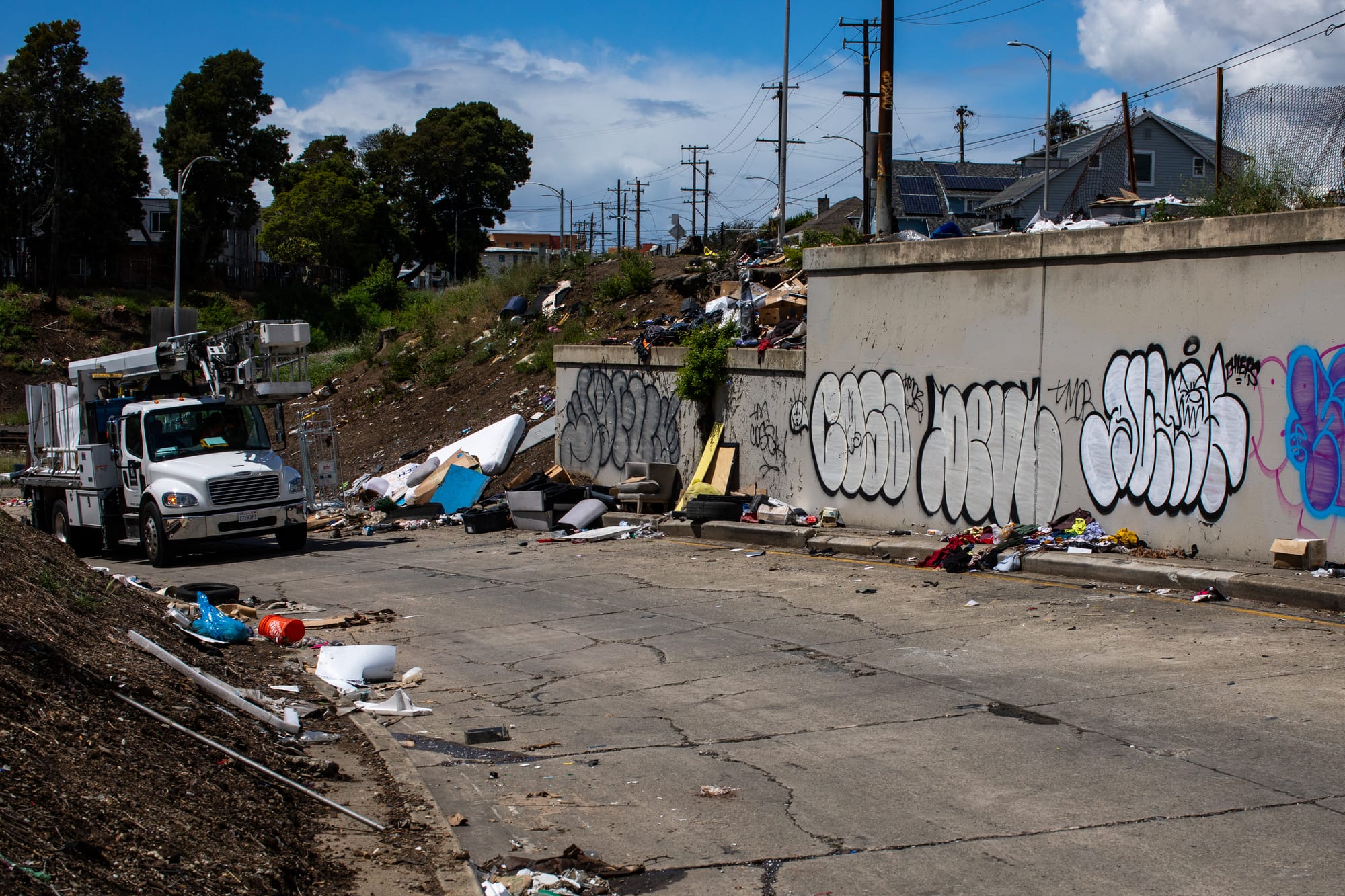
Let’s consider one scenario: Someone has a mattress they need to get rid of. They’ve used up their bulky pickups, and can’t afford the $168.31 fee for disposal at the Altamont Landfill in Livermore. So, they drive it down to East 12th Street and chuck it on the side on the road.
This person’s license plate is captured by a surveillance camera. It’s only their first offense, but they are hit with a $1,500 bill.
If they couldn’t pay the $168.31 fee for mattress disposal, they certainly can’t pay $1,500, and that’s when the subsequent consequences catch up to them: If Arreguín’s bill passes, when they go to the DMV to renew their vehicle’s registration, they’ll be blocked from doing so unless they pay the $1,500 fine.
From there, things snowball. They’re now driving an unregistered vehicle. They get a ticket, or two, which they can’t afford to resolve. Six months go by, and while their car is parked on the street, a police officer flags its expired tags and calls a tow company to impound the car. Our driver notices immediately and heads straight to the tow yard (somehow, because it’s out near the Coliseum), but by that point it’ll cost upwards of $500 to get their car back. They can’t get the money together, and every day the car is in the lot the fees rise.
Now, they don’t have a vehicle to get to work, drive their kids to school, or get groceries. All because they dumped a mattress on the side of the road to avoid paying $168.31.
Make that make sense.
“What SB 1218 does is create a real deterrent,” said Liam Garland, Public Works Director for the City of Oakland, in a statement when the bill was introduced in Sacramento. “One that will improve compliance, reduce illegal dumping, and allow cities to invest limited resources into prevention rather than constant cleanup.”
Will it reduce dumping, though? Or is it only going to push some economically challenged communities further into punitive debt? This whole recent performance about cracking down on people dumping through obscenely high fines, AI drones, and punishing DMV barriers feels creepily self-congratulatory. Everyone is hyping each other up in front of press cameras that THIS will finally be the solution, and it’s starting to feel like the Wild West.
“We’re coming to get you,” Unger said at City Hall on Monday. “If you think you can get away with this, that was a different era, and we will find you.”
What’s a city to do then, if every plan they’ve put forth is loathed by this reporter? Well, we could focus on preventing it from happening in the first place.
“A first step for prevention is to understand the causes and predictors of dumping,” reads a 2023 study in the Journal of Environmental Management. “Illegal dumpers are typically motivated by avoiding the costs of proper disposal.”
With this in mind, we could increase bulky pickup drop-offs and pick-ups to more than one a year — and actually advertise to residents that this program even exists. We could reduce trash can fees; most households use 20-gallon cans, but studies have shown that bigger cans reduce trash on the streets — but at $110 a month, they’re far outside many families’ budgets.
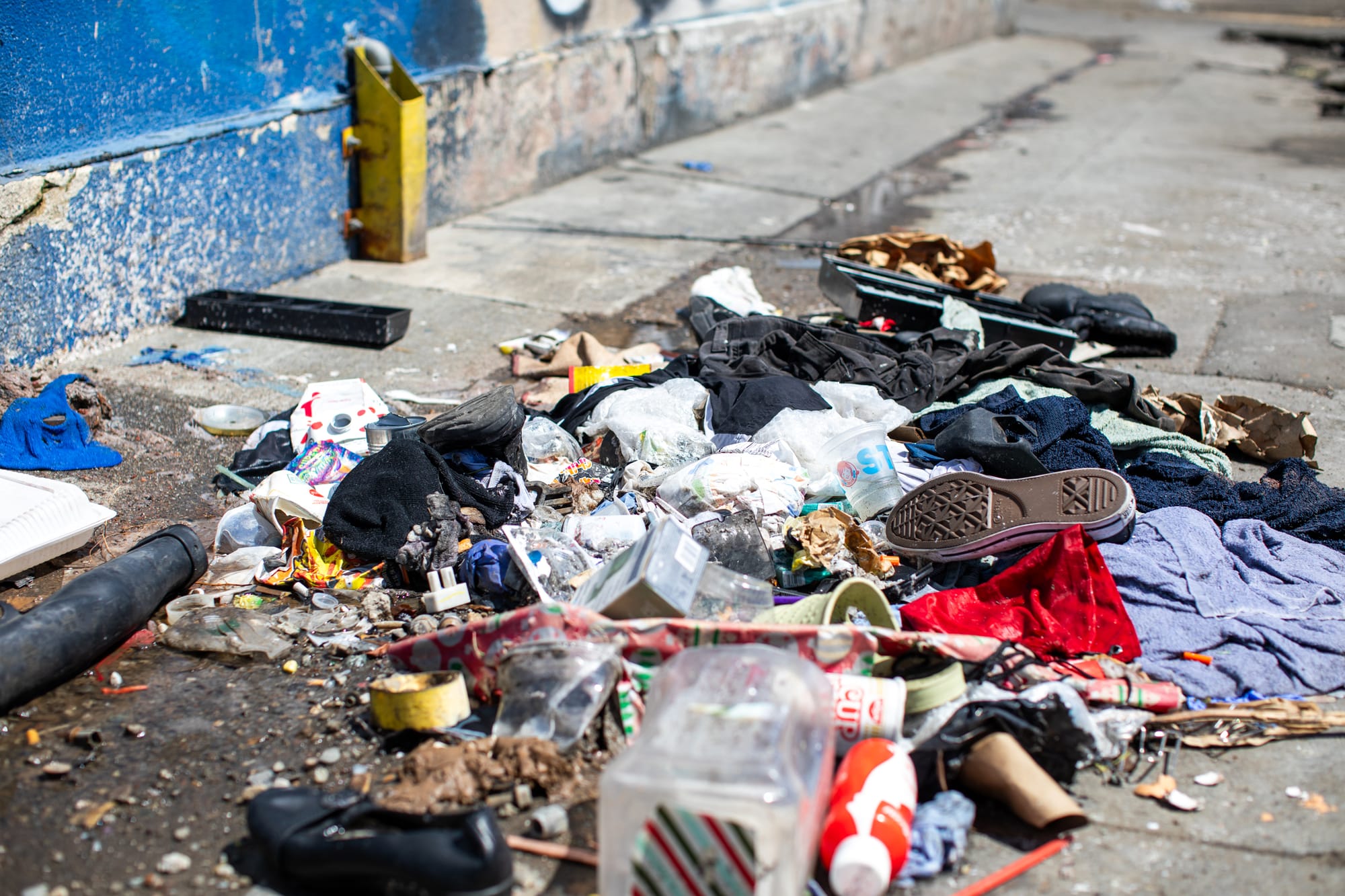
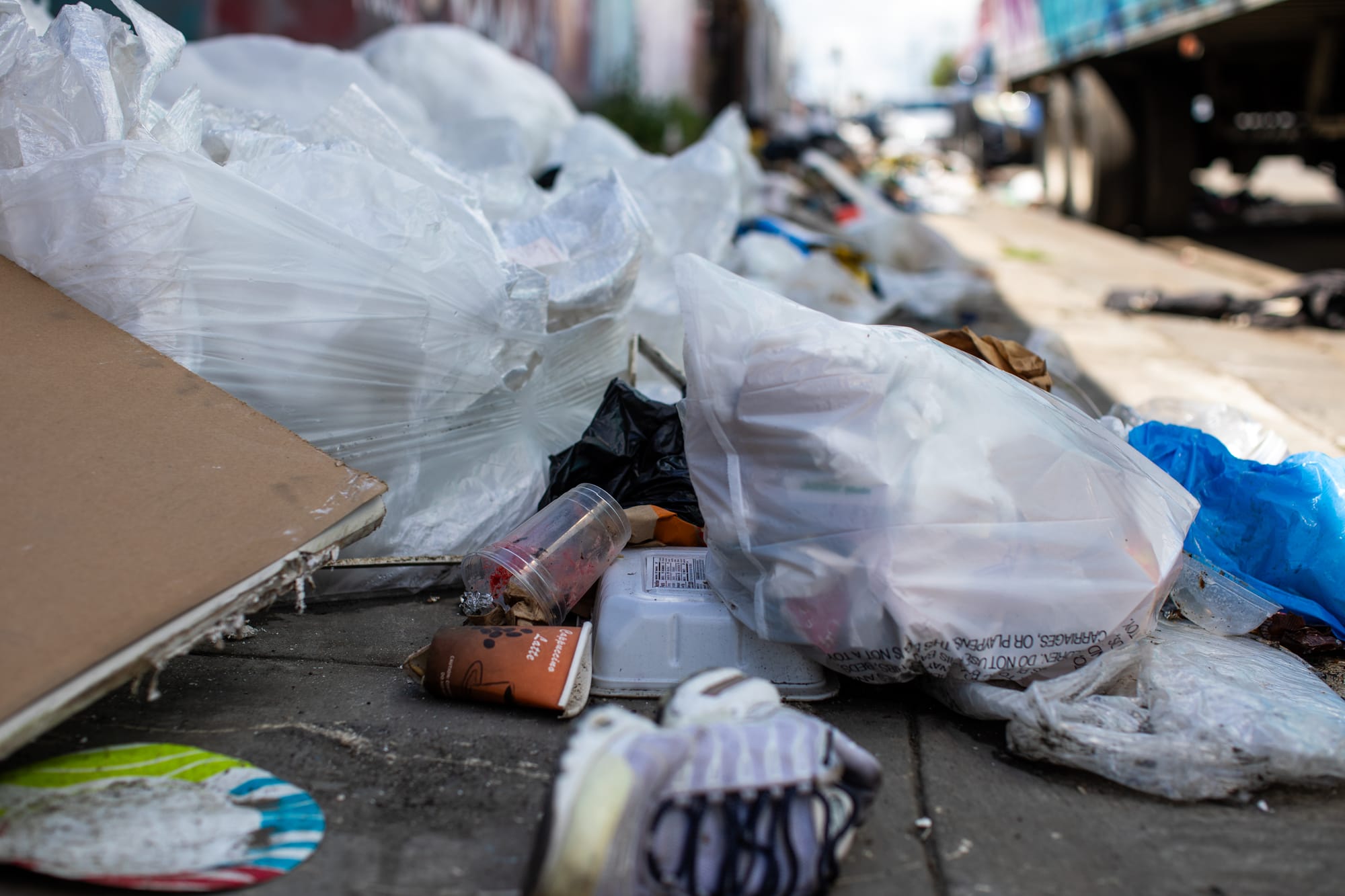
We’re also missing public trash cans in the neighborhoods where most dumping occurs. District 1, where Rockridge is located, has 187 trash cans; while District 7 in deep East Oakland has a paltry 49.
There are creative interventions, too. In Flint, Michigan and Camden, New Jersey, communities have seen success after installing cement barriers to make dumping more difficult and leaning on landscaping, seating, and public art to reinvigorate empty lots.
But it’s Rotterdam, in the Netherlands, that’s exercised one of the most obvious solutions to trash on its streets: talking to people. Recognizing that trash cleanups were an endless game of whack-a-mole, researchers canvassed a neighborhood, going door-to-door and speaking with residents. They inquired if they were familiar with the city’s garbage disposal rules, educated them on regulations and consequences, and asked them to commit to keeping the neighborhood clean. Residents were encouraged to demonstrate their commitment with stickers placed on their doors. The results were astounding: illegal littering dropped by two-thirds.
In other words: Prevention is possible, we just need to find Oakland's version. And while it may not be the sole solution here, it’s certainly one that should be explored before withholding car registration from someone who may not have been aware of their options.
A comprehensive guide for policy makers on reducing dumping, released by York University in Toronto, Canada, summed this up well: “While punishment may achieve the desired behavioral outcome, it is of greater value to educate households about the impacts of illegal dumping and create a shared sense of stewardship in maintaining the cleanliness and safety of public spaces.”
Tough-on-crime efforts seldom generate the immediate, sweeping results people want them to, but they do sound flashy. It’s far less glamorous — and will attract less national attention — to suggest that the solution here could lie in education, public art, and knocking on doors.
But to claim that an increase in fines is going to solve the problem is short-sighted. At a time when Oakland is in desperate need of results, focusing so much on punishment is a wasted opportunity.