The Ultimate Guide to Spring Sports in the Bay Area
Popular or niche, big or small, quiet or loud, there is a spring sport for everyone. Let us help you find yours.


Popular or niche, big or small, quiet or loud, there is a spring sport for everyone. Let us help you find yours.

It’s baby cat season in the Bay Area! Here’s our guide on what to do if you encounter a litter of purrfect miniature panthers in your yard.

“This is the worst fucking time. But watching people’s response to ICE has been the most affirming thing in the world.”


At COYOTE, we’re closely following the ICE news coming out of Minnesota. As people, we’re stunned by the human rights violations happening on the ground and furious at the lives lost.
But we’re journalists, too, and we know that when national media descends on a crisis in a city, they’re going to miss much of what’s happening for residents in their day-to-day lives. Publications rooted in communities offer an entirely different perspective.
So, we reached out to our comrades at Racket, a worker-owned, alt-weekly-style publication (just like us!) in Minneapolis, founded by a group of veteran journalists from the now-defunct City Pages. In a call this week, Nuala and Rahawa chatted with writer-editors and co-owners Jessica Armbruster, Jay Boller, Em Cassel, and Keith Harris about what it’s like to cover local news during a national crisis, why reader-generated ideas define their coverage, and how community resistance keeps them going.
(This interview has been lightly edited for length and clarity.)
Nuala Bishari: As an alt-weekly-style outlet, you run a lot of great stories on music and food and arts and culture — but also your city is under siege. How have you been covering Operation Metro Surge over the last few months, and how do you decide which stories to pursue?
Em Cassel: One of the earlier conversations that we had about this is what is the Racket version of this story? We don't have the resources, frankly, to be doing what the Star Tribune is doing, and we don't have the interest to be doing what the Pioneer Press is doing. We're looking for the secret third thing that nobody is covering, right?
One of the pieces I did earlier this month was going to different restaurants that were acting as either gathering places for observers or gathering donations for the community or for folks who were in hiding. I was just stopping in and doing some scene reporting and interviews about what is actually going on here. What is the role of a restaurant in the resistance? How do people who, two months ago, were just serving egg sandwiches, but now find themselves in this moment showing up and supporting in any way that they can? That's the angle that we've taken with a lot of stuff: How is X group reacting to this moment?
Jay Boller: The marquee piece so far has been a feature that Keith corralled last week, where he did a real-time oral history of this bizarre, awful moment. He collected 30-plus anecdotes from everyday people about what life is like when the federal government occupies and terrorizes your city.
Keith Harris: Another thing that we’ve been focused on is that nobody really needs to hear from us right now. The more that we can open the website up to other voices from people [the better], because there’s no one story that's going on.
One of the things that’s exciting about what’s happening here right now — in spite of everything awful that's happening — is that there’s kind of a leaderless movement. So there's no [one] person that you talk to about this. There's no representative. It's just everyone.
NB: Looking through the anecdotes people have submitted, what do Minnesotans want the world to know that isn’t being covered in national outlets? Were there any recurring themes?
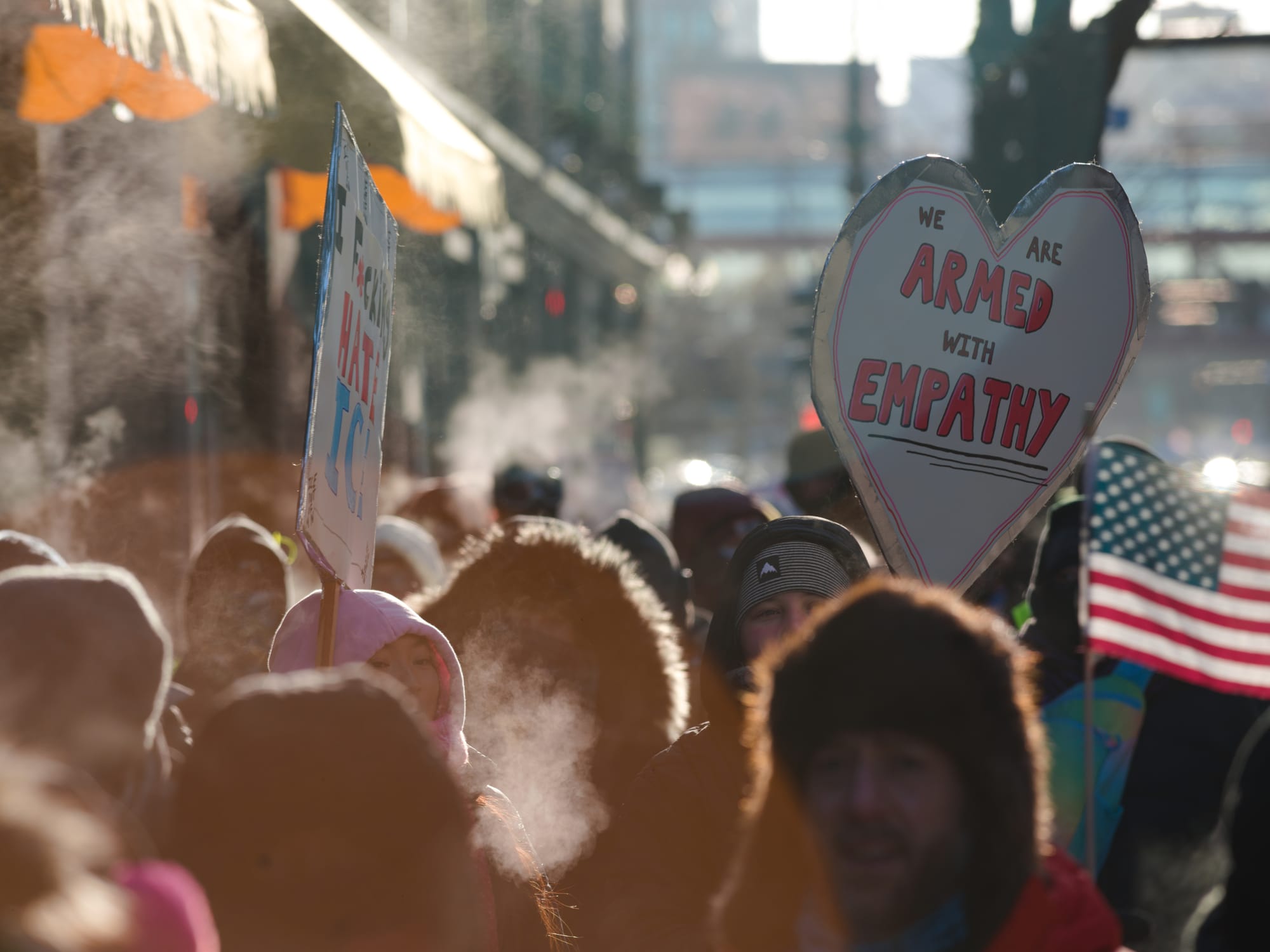
KH: One thing is that everyone gets really on guard about the word “protester,” because it creates this image that there are these protests that are being disrupted by the feds. Instead, it’s the other way around: It’s these federal actions that are being disrupted by people coming out of their houses with whistles, and these neighborhood networks of very ordinary people. Another thing you keep hearing about is training people to use Signal, because these are people who've never felt the need to be secretive before.
JB: One funny quirk of local coverage is last night — and I catch flak from my coworkers for having too large of an appetite for this sort of media consumption — I reviewed Alpha News, which is kind of like our Fox News-light conservative propaganda machine, to see how they're meeting the moment. And they’re really struggling to come up with angles right now. When public sentiment is so far not on your side, you're grasping at straws for how to spin what's happening. So that was refreshing in a sadistic way.
EC: I think one interesting thing that’s happening is there are different people who find themselves in different parts of the movement.
When something happens — like Alex Pretti’s killing on Nicollet Avenue in Minneapolis on Saturday — that began with him observing. It’s a very fluid situation. It can get very hairy and very dangerous very quickly. That’s part of what makes it difficult to cover from an outside lens. If you’re trying to get it into a certain number of column inches it’s going to be difficult, right?
Jessica Armbruster: People are bringing groceries to different organizations to deliver to people. There are people who are volunteering to drive people around. You might be on your neighborhood watch group communicating with people about what you’re seeing. It’s not one simple movement. It’s a different beast than what we’ve experienced in the past. It's very, very organized, and it can be a lot of different things to different people.
JB: One kind of townie critique that we like to point out is — and this is true of news events from the past as well — national outlets will be like, “This one location is a mere 2.5 miles from another location.” Well… that's a complete other side of town! We're a very compact metro.
Rahawa Haile: On top of all of the ICE reporting, how are you managing to still run an arts-driven alt-weekly?
KH: Honestly, sometimes it’s nice to just take two hours and do mindless information wrangling that can take your mind off everything else. I mean, we’re not under lockdown. People still need to take a moment and recharge. Things may be changing right now, but we don’t know how and we don’t know how long this whatever-this-is goes on. The thing with arts coverage is to keep an eye on the fact that, yes, we know this is not an ordinary moment, but also people have a need to gather and live, in addition to always being on guard.
EC: There's also the fact that you can include a protest in your free event roundups. Like, we've been putting anti-ICE bake sales in our guide to the week's best events. All of this stuff can kind of morph to fit the moment. Highlighting stuff that in the past would have been just a regular brewery party, and now it's a brewery party where they're asking everyone to bring canned goods.
NB: You talked a little bit about the national perception and coverage of what is happening. How do you think about your audience in this moment? How do you balance the drive to center locals while also knowing there are national eyes on your site right now?
JB: I don’t think we ever think about anything outside of the boundaries of Minnesota ever. I don’t think we’ve really thought about perception from outsiders that much. Do you guys agree?
EC: It’s been nice to get requests from national media that are like, OK, help us explain to people how we got here and like what you’re actually seeing in the Twin Cities.
NB: How do you feel about how the national media is covering Minneapolis so far? Who’s getting it right?
JB: [The national outlets have] been a huge complementary piece to this, because we’re not sourced up at the Pentagon. We don’t have that. They do. So for those kind of powerhouse national reporters who have those connections to be able to add clarity to our situation, especially in a breaking news context, that’s been huge.
KH: Especially since they’re sending in actual war correspondents.
EC: Which is always a good sign, right?
KH: The thing that war correspondents understand is that people are in danger when you’re talking to them. When I did that oral history, those people are anonymous because nobody knows what will get you in trouble. You’re probably safe… unless you’re the person who’s not safe.
NB: From your perspectives, what does community-centered journalism offer in this situation that corporate-owned local media doesn't?
JB: We love to shit on the Star Tribune, but honestly, I have very few critiques about how they've covered this ordeal. We’ve been very heartened by corporate media shaking free of their consent-manufacturing tendencies and covering this in a really honest, kind of great way.
EC: [Meanwhile,] the great thing about us is we can put out asks, which Keith did earlier this week, for people’s mealymouthed emails that they got from their corporate bosses. Like, what if we ran a story about some of the internal comms that people are receiving from their workplaces about “keeping your head down” and showing up to the office? That’s an angle that we can approach that I don’t think anybody else in town would touch, right? No one else is like, I wonder what executives at 3M are telling their underlings. And we’ll just publish it, and you don’t have to give us your name, we just want the emails.
There’s stuff like that where we have a little bit more freedom, but I would agree with Jay. I really do think that outlets in town are meeting this moment. I’ve never been so pleasantly surprised by television news in my life.
KH: That story about corporate communications was suggested by a reader. One of our secret strengths is that so many of our good ideas, even before all this, come from people who are like, Hey, you guys should do this. To have a whole team out there pitching you is so helpful. People trust us, and they know that if they give us information, we’re not going to fuck it up.
NB: There's this huge push to do a nationwide general strike now. In our newsroom in the Bay Area, we're talking about how to implement that internally and how to express that externally. What does that feel like for you to see that pick up speed nationally and for people to really step in alongside you?
EC: Seeing the photos and videos from solidarity protests is one of the most my-heart-grows-three-sizes things that there is. I live for that shit. The solidarity from other cities and even internationally has been incredible. That… that gets you through for sure.
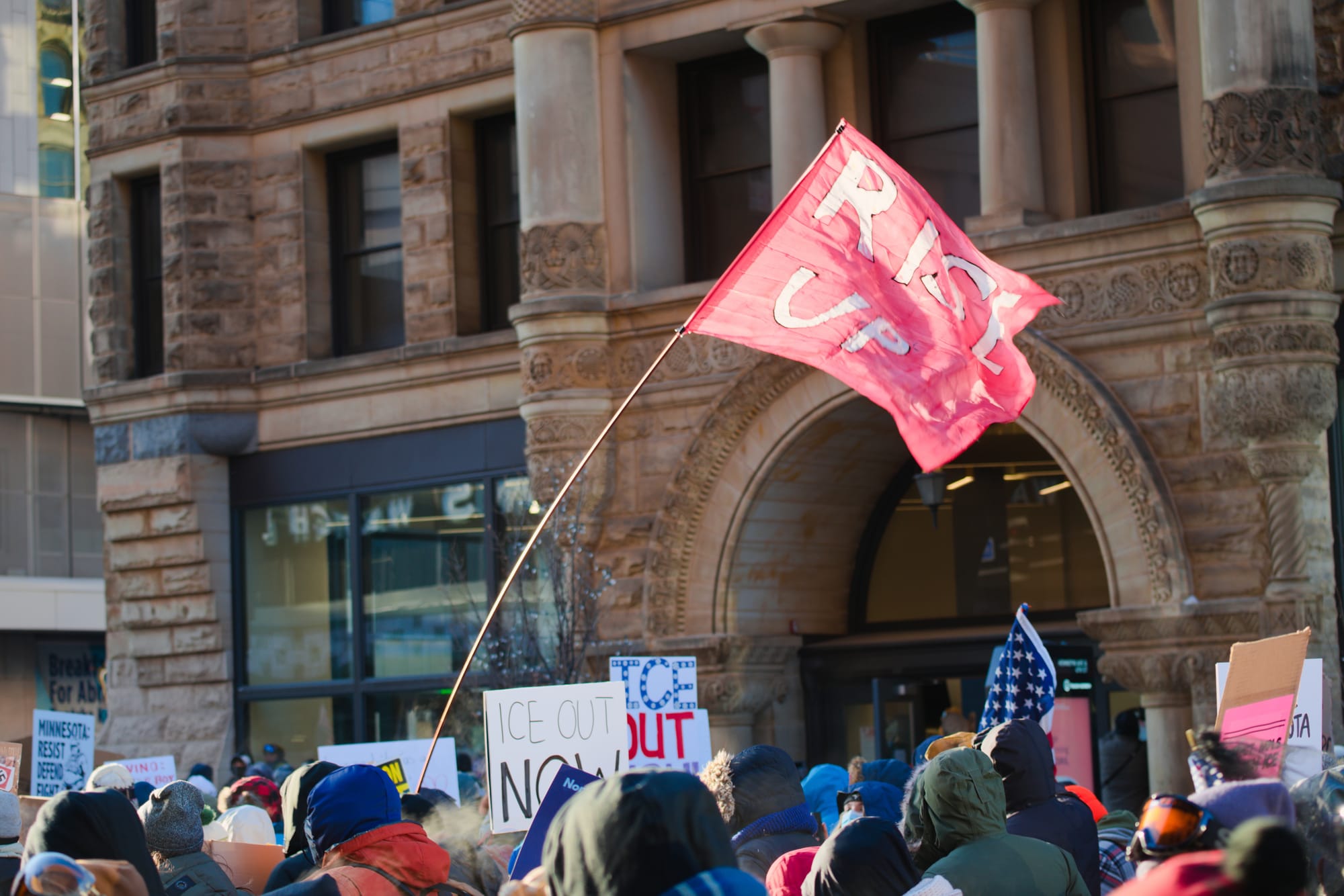
JB: Yeah, I think that Friday in particular… the photographic and video evidence of 50,000 people gathering was just a stark proof of… It’s everyone’s mom. It’s everyone’s aunt. It’s everyone’s friend from work. It is a very, very mainstream resistance to ICE, which has been really inspiring to see.
RH: You’re journalists, but also residents of Minneapolis who clearly really love their city. How has it felt to cover this fucking crisis that has fallen on your doorstep, and how are you taking care of yourselves and one another? How do you sustain this coverage without burning out?
KH: Badly.
EC: Speaking for myself, I have pretty bad work-life boundaries in a normal time, and now they’re just like… there’s nothing.
JB: Yeah, I’m freshly back from paternity leave and still have a three-month-old infant who’s crying the whole time. So that added another layer of a challenge on really feeling like you want to, I don't know, prove your worth in moments like these. But the challenges, they compound.
KH: That’s one thing we should mention: Jay was still on paternity leave when Renée Good was killed, right?
JB: Yeah, it was a three-person news outlet then.
KH: So the first week of the year, we were… yeah. We were hoping to just sort of ramp back up with Jay coming in, and then just —
EC: [Laughing] That did not happen. But I think… this is the only thing that any of us wants to do. I think the reason that the work-life boundaries are not great is because I’ve spent my life in alternative media. This is literally all that I want to do. I would do this whether it was a newsroom that I owned or not. I want to be out there. I love the Twin Cities so much. I feel so passionately about this place that I live in. I really care about living here, and I care about the people who live here.
One thing we’ve talked about a lot is that this is obviously a terrible time. This is the worst fucking time. But watching people’s response to ICE has just been the most affirming thing in the world. It is just moms showing up in orange vests to patrol their schools to make sure kids get inside safely. It is just neighbors with whistles and cell phones on street corners, just standing outside, patrolling all day long when it’s negative 15 degrees out. The response to this… you literally would have to try to find a business that wasn’t hosting a donation drive of some sort. Every single business that I can even think of is collecting something for someone that they know, or for someone who cannot go to work right now, or for someone who’s in hiding.
The community response has been amazing, and I think that bolsters us. Everyone’s giving it their all right now, and that has to include us.