Why San José Leaders Embrace Flock While the Rest of the Bay Flies the Coop
A San José tech journalist reflects on the long-running and embarrassing love affair between the city’s leaders and surveillance tech.


A San José tech journalist reflects on the long-running and embarrassing love affair between the city’s leaders and surveillance tech.

This week we've got soldering, Krampus, Anne Carson tributes, 18 holiday markets, and a lot more ghosts than you might expect.

Every year, king tides flow up the shores of the Bay Area, offering a sneak peek at how climate change will impact the region’s critical infrastructure.

A San José tech journalist reflects on the long-running and embarrassing love affair between the city’s leaders and surveillance tech.

On an overcast day in April 2024, San José Mayor Matt Mahan’s socket wrench audibly clicked as he straddled the top of a ladder installing the city’s 235th Flock camera at the intersection of King and Wilshire in eastside San José. At the time, Flock wasn’t even a blip in the political world, and Mahan’s enthusiasm for automatic license plate reading (ALPR) technology didn’t cause much stir among my fellow San Joseans. In fact, many were supportive.
Just over a year later, that changed overnight when 404 Media reported that ICE was using data captured by Flock cameras to track undocumented immigrants. More reporting showed the data also being used to track abortion seekers, peaceful protestors, and more.
Within months, protests broke out across the country as citizens pressured local governments to cancel their Flock contracts. Many jurisdictions, including Austin, Texas and Eugene, Oregon, delivered those demands. In places where that didn’t happen, activists began vandalizing the cameras.
Now, a growing majority of the country has an “unfavorable” opinion of Flock. And yet, Mahan remains one of its most vocal supporters, along with the Dark Lord of the Sith himself, Darth Vader. Mahan is as embarrassing as your MAGA uncle who won’t shut up about Zohran Mamdani destroying a city he’s too scared to visit, but it’s not as simple as avoiding him at Thanksgiving. Decades of capitulation to business and tech lobbies have entrenched this divide into our community.
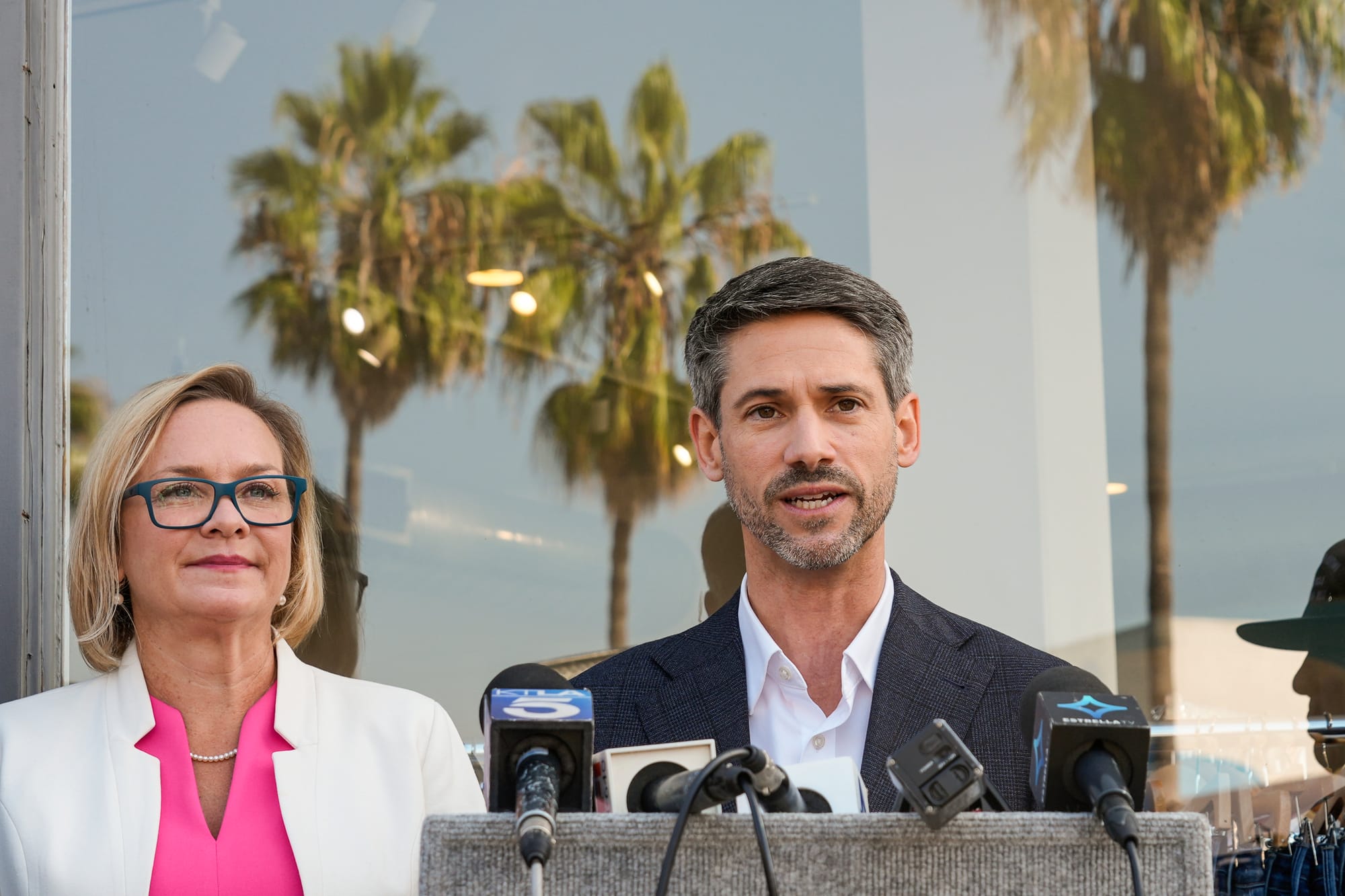
This past September, Mahan was confronted with a situation that he’d previously dismissed as merely a hypothetical: A San José police officer who had logged into Flock from his own phone to search a plate number provided by his cousin. The plate belonged to a woman claiming to have been abused by said cousin, and the data allowed the alleged abuser to track her movements.
The revelations sparked a protest outside city hall demanding San José terminate its Flock contract just as the neighboring jurisdictions Santa Clara County, Mountain View, and Los Altos Hills did earlier this year. Mahan has largely ignored the demands. But that didn’t stop him from seizing the opportunity to repair some of the bad publicity his unabashed support of Flock has brought on.
“I was furious when I heard about this case,” Mahan told NBC Bay Area's Raj Mathai in October. He then detailed his aggressive response of pursuing the decertification of the officer, implementing tighter safeguards around Flock data, and his own push to implement state law allowing for the criminal prosecution of officers who misuse ALPR data.
From the outside with little context, those actions seem quite progressive — and they would be if the city council had listened to the concerns of their constituents years before Flock grew from four cameras in 2022 to over 500 today.
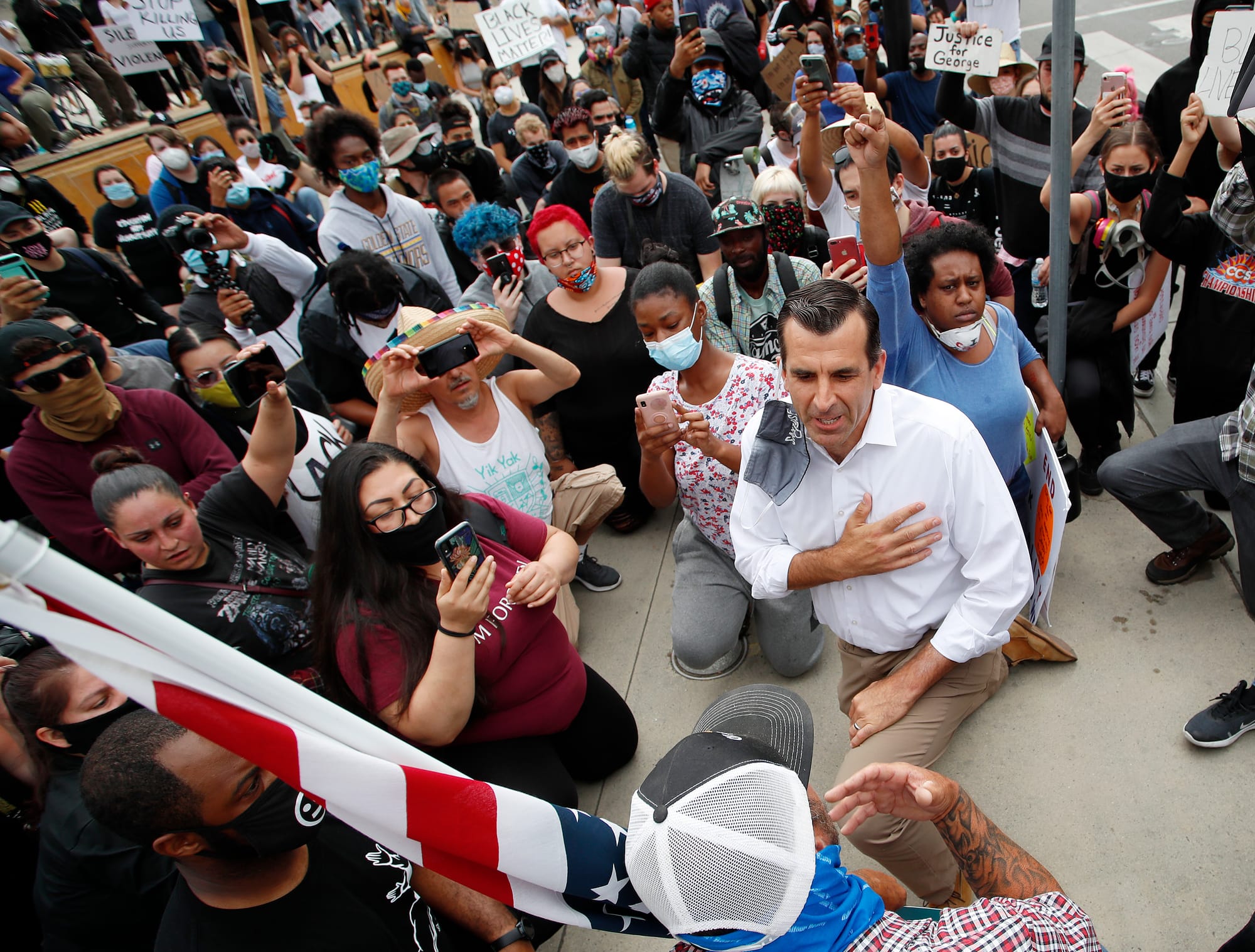
In 2018, as a response to constituent pushback to then-Mayor Sam Liccardo's “smart city” initiative, San José assembled a group of privacy professionals. The “Digital Privacy Advisory Task Force” meets quarterly, reviewing technologies used by the city and flagging privacy risks — and the city doesn’t have to listen to anything they say. In March 2022, as the city was preparing to deploy their first four Flock cameras, the task force raised several concerns. Chief among them: the potential for abuse by law enforcement. That and all others were ignored, and several members of the taskforce consequently resigned.
It’s a textbook case of Bay Area-style capitalism: The financially gutted working class of Santa Clara County has little sway against the deep coffers of the companies in this supposed cradle of innovation.
Flash forward to this past fall, after a domestic abuse survivor’s private information was exposed by a cop, courtesy of Flock. “We're learning as we go,” Mahan said in his October interview with NBC. But they clearly didn't have to. Instead of listening to their own privacy task force four years ago, Liccardo, then-Councilmember Mahan, and the rest of the “Capital of Silicon Valley” council chose to prioritize the assurances of a technology startup whose bottom line benefits from inflated crime statistics.
The trust in business over constituents isn't surprising considering San José has seen 20 straight years of "business candidate" mayors.
Chuck Reed replaced termed-out and labor-friendly Ron Gonzales in 2006, then Liccardo won the reins in 2014, and Mahan — just two years into his political career — won in 2022. In the case of Mahan, his campaign was propped up by Common Good Silicon Valley — Liccardo’s own business-friendly PAC — and the National Association of Realtors. It’s no coincidence that both the business and real estate industries have thrived over the past 20 years while the county’s wealth gap has soared.
It’s a textbook case of Bay Area-style capitalism: The financially gutted working class of Santa Clara County has little sway against the deep coffers of the companies in this supposed cradle of innovation. Tech executives with access to those coffers ensure politicians friendly to their interests are elected with the expectation that those politicians won’t bite the hand that feeds them. Rinse and repeat.

Beyond Flock’s potential for abuse by law enforcement, its inaccuracies have put many innocent bystanders in dangerous scenarios with police — such as an Arkansas couple held at gunpoint because Flock misread a digit on their license plate, thus matching the plate of a stolen car. This is a common critique of ALPR tech, not just Flock.
In November of last year, two South Bay nonprofits, the Bay Area office of the Council on American Islamic Relations (CAIR) and the Services, Immigrant Rights and Education Network (SIREN), sued San José in county court. They argued that an officer searching in Flock's database without a warrant violates the Fourth Amendment rights of San Joseans by showing police everywhere the vehicle in question had driven in the past year, and not just the information relevant to an investigation. Last month, the judge in that case ruled in favor of San José, but a federal judge ruled the exact opposite in a similar case the next day. Clearly, the courts have a long way to go before this debate is settled, which is likely why CAIR and SIREN are appealing their case.
In a statement sent to KQED at the time the suit was filed, Mahan said, “We can’t let fear of new tools get in the way of the safety of our families, especially given that this system is a big part of the reason we’ve solved 100% of homicides over the past three years.”
It’s true that San José has an abnormally high rate of solved homicides, but Mahan’s claim that Flock is owed an outsized portion of the credit is dubious. Not only has no data been provided to back up his claim, but, in 2022 alone, the city only had four Flock cameras, all of which were installed at a single intersection. But who knows, maybe every murderer that year drove through Monterey and Curtner.
Regardless of Flock’s supposed crime-fighting efficacy, San Joseans don’t seem to want the trade-off — and protests continue, most recently by San José State students.
Earlier this year, a photo of Mahan installing the 235th camera made the rounds on social media, even making it onto the exterior of City Hall via projection. One Reddit user posted it with the title “Matt Mahan turning on the ‘share with ICE’ setting.”
“Always nice to see a politician who’s willing to roll up their sleeves and help terrorize the community themselves,” joked another user in the comments.
For San Joseans, this isn't a matter of waiting for a particular politician to run out his term. While Mahan’s attempts to abandon our city for the governor's mansion — or perhaps Capitol Hill like his predecessor, Liccardo — have been thwarted so far, he’ll only term out in 2032, thanks to 2022’s ballot measure B. Then, he’d have the honor of being the longest serving mayor in San José history.
That’s good news for Flock, at least.