Exclusive: Bottom of the Hill Sold, Will Continue as Live Music Venue
The storied San Francisco club will reopen in 2027 under new ownership.


The storied San Francisco club will reopen in 2027 under new ownership.

This week we've got a broth bar buffet, a backwards reading of the U.S. Constitution, rice porridge for dogs, and more.

(It all depends on how you define the word "can.")
The most important item to store for a disaster is also the cheapest.


Disaster planning can be intimidating, confusing, and expensive (the disaster supplies industry is a multi-billion dollar business). It’s also uncomfortable; no one wants to think about what circumstances would knock out the power grid, poison our reservoirs, or destroy our water infrastructure.
As the effects of climate change continue at rapid speed, those situations are becoming more likely. Contaminants from the 2025 firestorm in Los Angeles knocked out water to 23,000 customers in Pacific Palisades and Altadena for four months. In February, a freak snowstorm led to 200 trees falling on a critical water supply network in Tuolumne County, affecting the drinking water supply for nearly all of the county’s 50,000 residents. Earthquakes, floods, and the upcoming strong El Niño could all play a role in our access to clean water.
It’s easy to feel powerless and overwhelmed by it all. There is one prepper task that can be done easily and on the cheap, however — and it’s arguably the most important one: storing water. A healthy human can live a couple weeks without food, but only a few days without water. It’s also essential for basic life maintenance tasks, like cleaning. While it’s easy to take what comes out of our taps for granted, if that dries up, you’ll thank your past self for being prepared.
Here’s what you need to know.
The CDC recommends one gallon per person per day, estimating that half will be used for drinking, and half for cooking and sanitation.
If you have pets, calculate more (a 10-pound cat drinks a cup of water a day; a 50-pound dog drinks around six).
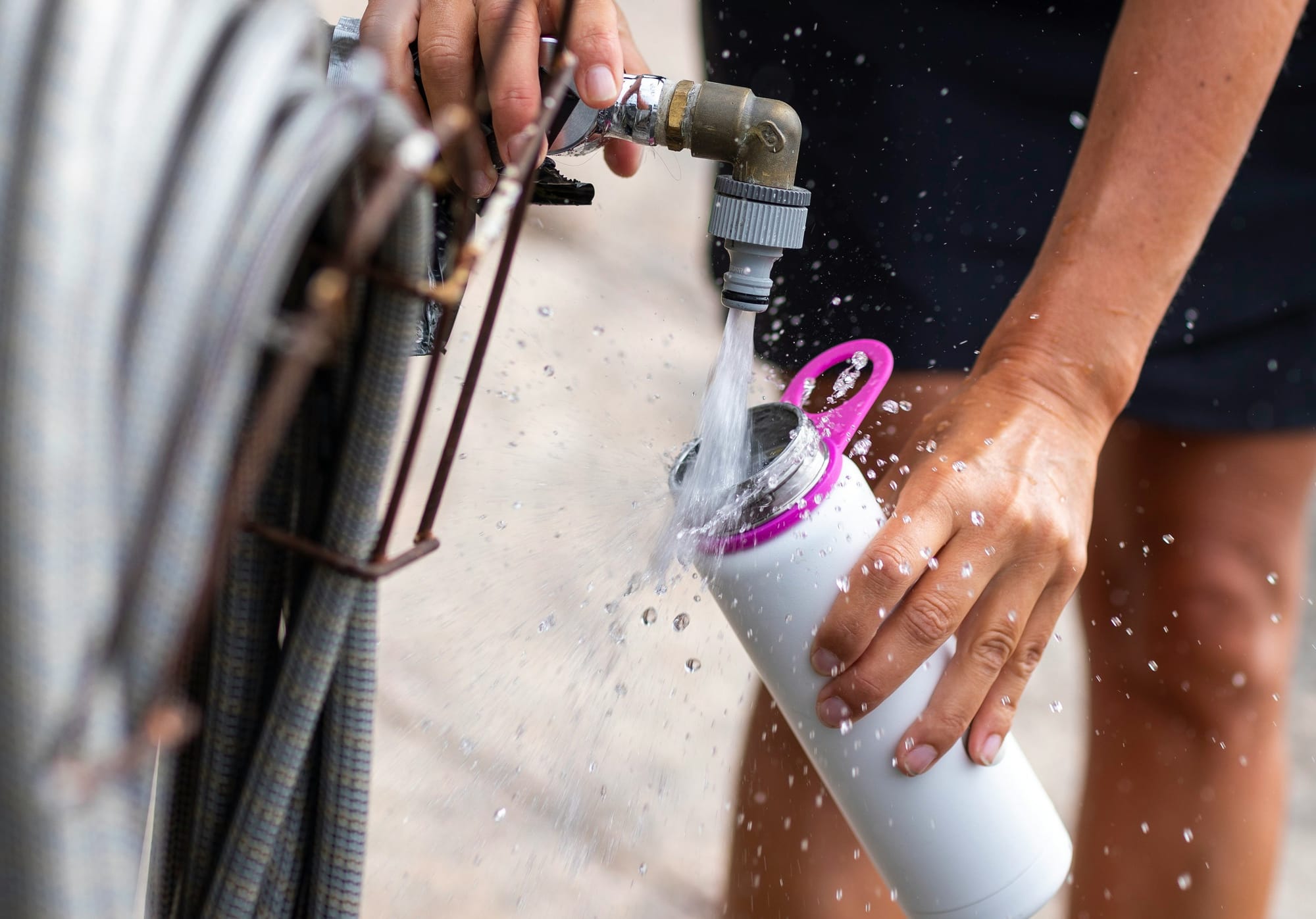
For those in or nearby San Francisco, water can be sourced outside the home from dozens of community taps in the city. You can also use this map to find water wherever you are.
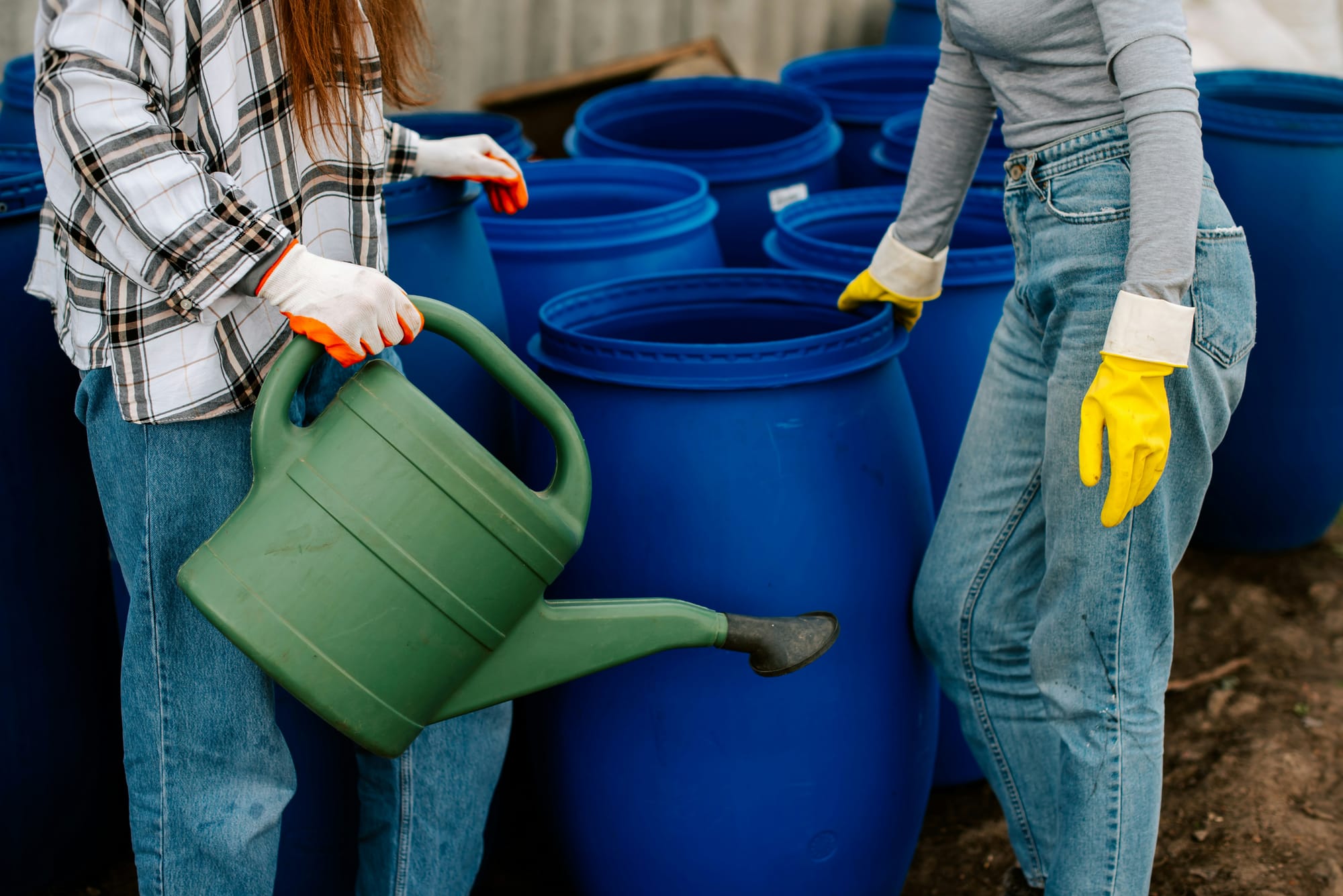
The best storage containers are opaque, don’t contain BPA, and are “food-grade.”
Trays of pre-packaged bottled water are a good temporary option, but they’re not designed for long-term storage, and plastic will leach into the water over time. If this is the route you take, make sure you’re replacing them at least every 12 months to keep a fresh supply on hand.
Large containers designed for storing water are an easy option, too. You don’t need expensive high-end containers — a 7-gallon Aqua-Tainer is $20, and will take care of two people and a pet for a little more than three days. Just be mindful about where you want to fill it, as it weighs 60lbs when full. (Soleil recommends a collapsable one, which will take up less space as you use the water!)
If self-filled containers are the route you take, it’s still advisable to empty out the water and refill it every six months. Just write the date on a piece of tape so you don’t lose track of time.
Here comes an opportunity to be creative, especially if you don’t have a garage or basement. Water should be stored away from heat, direct sunlight, and strong chemicals. Good options are underneath a bed, in the back of a coat closet, or at the bottom of a pantry. If you store it somewhere carpeted, be sure to check it for leaks once in a while. Some people store a gallon on each step of a staircase. If you store it in your car, just make sure you’re swapping it out regularly when the temperature rises.
Depending on the emergency, there are a few options.
If you have a couple hours to prepare:
When an emergency hits:
If stored water supplies have run out, or if you didn’t have any in the first place, there are still sources of water around your home. With all of them, the recommendation is to boil and/or filter before drinking.
The CDC outlines three key options: Boil, Disinfect, and Filter.
Boil: Boil water advisories are a frequent recommendation from municipalities during emergencies. But what does that mean? At sea level in the Bay Area, water should be boiled for one full minute, at a high, roiling boil. Boiling will kill bacteria, parasites (looking at you, cyclosporiasis) and viruses.
Disinfect: “Unscented” bleach is your best friend here. Use eight drops (a little under ⅛ of a teaspoon) in one gallon of water, then let it sit for 30 minutes to kill viruses and bacteria. Yes, the water will taste like bleach. No, it won’t kill you.
Filter: Capitalism rears its ugly head when you start googling “water filter emergencies” — the market is absolutely saturated (hehe). Berkey water filters are a beloved system, as they’re gravity-based (no labor required), but they’re incredibly expensive; on Bay Area Craigslist with included filters they’ll run you $250+. Less expensive options include the Sawyer Squeeze or, if you’re an individualist, the personal water straw.
This might feel overwhelming — More stuff to buy! More things to do! — but the most important thing to remember is that, especially in this case, imperfect preparation can still save your life. Slightly musty water that you forgot to rotate out is still better than no water at all.