First Aid Kit: Turning Not-So-Good Fruit Into Something Delicious
How to make fruit into ferments, jam, kimchi, and lots more.


How to make fruit into ferments, jam, kimchi, and lots more.

This week we've got COVID-safe kink, making art with maíz, haunted dolls, and more.

Names to Love You By, a new DIY imprint for experimental music, kicks off with a Sept. 25 show at Wyldflowr Arts.

How to make fruit into ferments, jam, kimchi, and lots more.

So many times, I’ve walked up to the shelves of slightly off, discounted produce at my local grocery store and felt, well, stumped. I love a deal — but what am I going to do with two dozen mushy grapes? Or I’ll see that dry-farmed tomatoes are being sold by the box, and all of a sudden, I’ve got 25 pounds of them to store in my tiny apartment.
For city dwellers, this is the kind of mindset that many of our grandparents grew up with. But as the food system industrialized in the mid-20th century, Americans largely shed the knowledge of how to process food in bulk, an activity often done together with our neighbors and family.
To be clear, the scale of food waste in this country, which currently hovers between 30 to 40 percent of the food supply, is far beyond what an individual can tackle on their own. In fact, much of it happens before the food even gets to the retail phase of the supply chain, with losses occurring in agricultural fields, during transport, and as food is cleaned or processed. But as the costs of food and other necessities continue to climb, one way to lower your grocery bill is to find ways to make use of discounted produce.
The beauty of the Bay Area is that every season dumps an excess of fruit on you, whether it’s from local farms or the trees in your neighborhood. But once you’ve got 800 pounds of farmers market plums in your car trunk, or a big box of passion fruit from a neighbor desperate to unload them, what happens next?
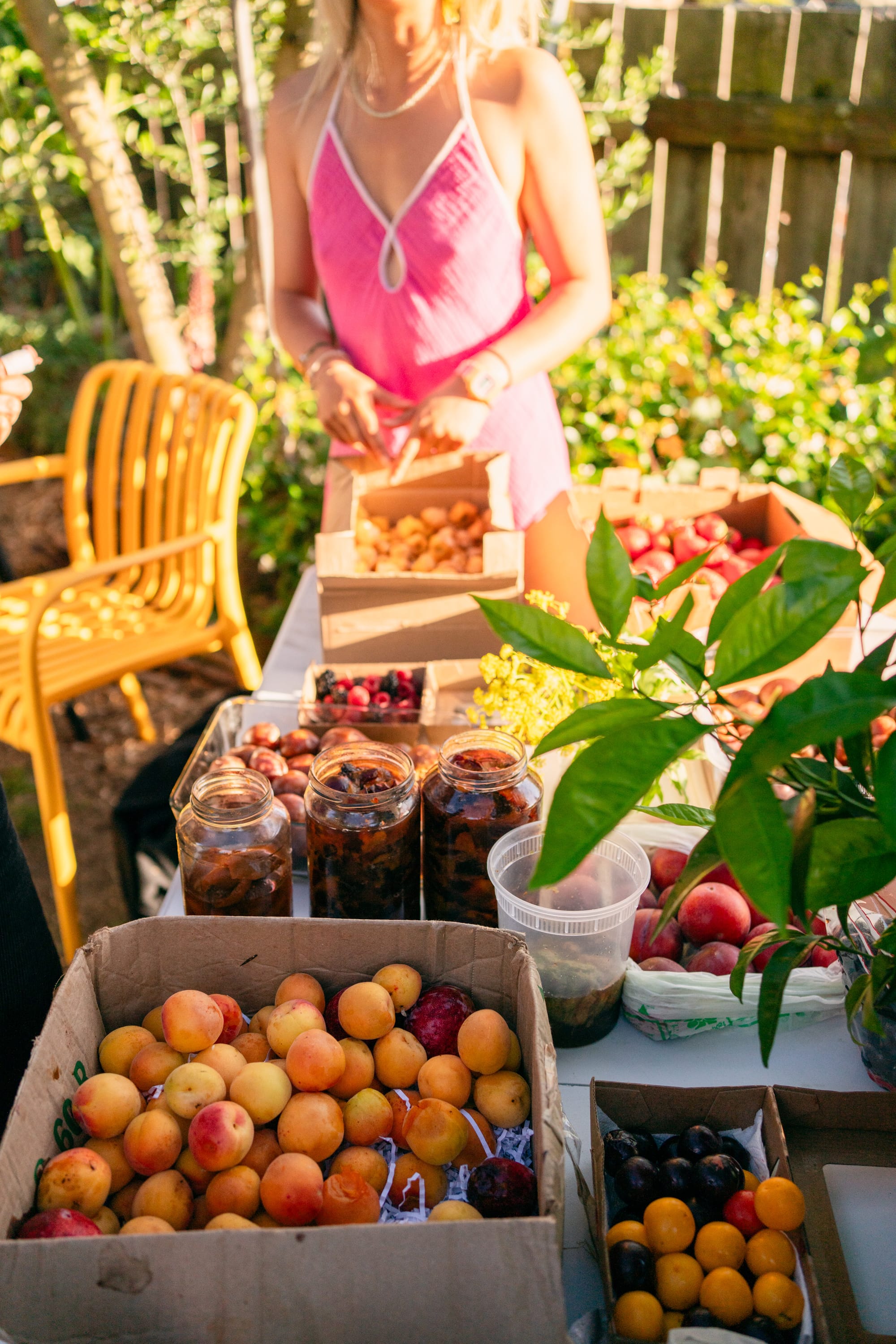
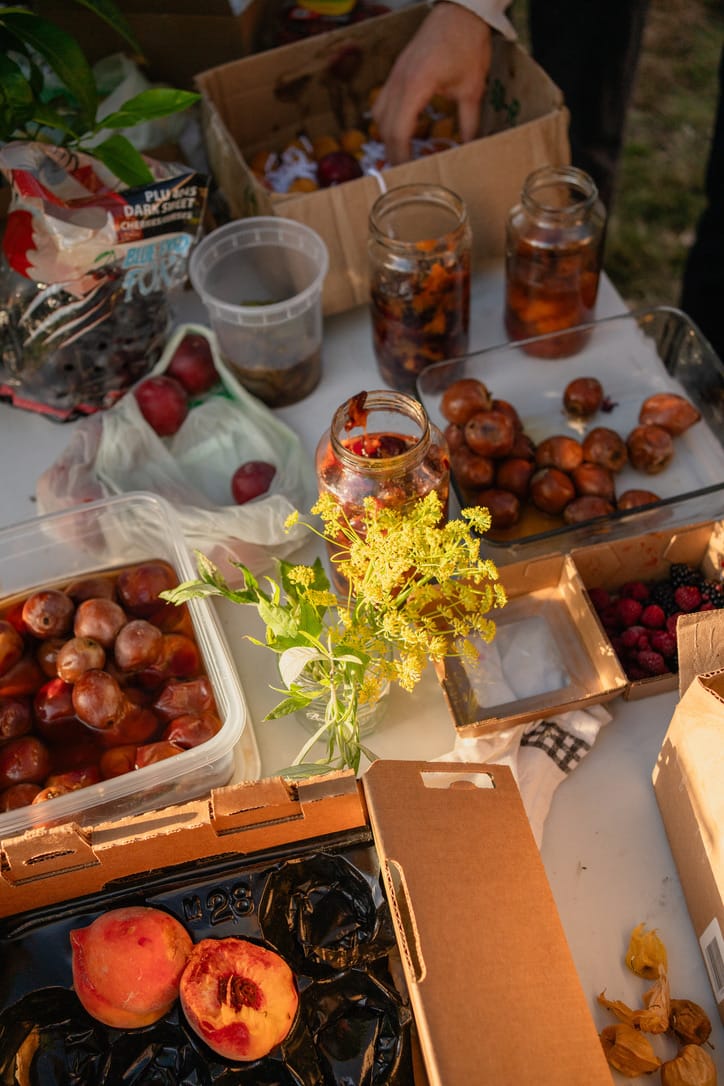
L: Cindy Li showcasing foraged apricots, loquats, berries, and peaches. R: Fruit provided for a fermentation workshop, including loquats, peaches, and cherries. (Courtesy Jayna Milan)
I’ve consulted two local experts on this topic: Osamu Kumasaka, a cook, fermentation fiend, and urban planner, and Cindy Li, a forager who teaches preservation workshops and leads forays into the parks of the Bay Area. I met both of them while taking their workshop on making your own hot sauce out of fermented fruit, taught this past summer at Fig Leaf Gardens in Oakland.
In general, Doedee tells me, the best thing to do in any season is to make stuff that’s produce-agnostic. Apples aren’t only “for” applesauce, and berries can do a lot more than make jam. Why not make persimmon kimchi or turn roasted tomatoes into syrup?
Doedee and Kumasaka have a list of their favorite preservation techniques, from easiest to hardest. Some are afternoon projects, while others might take months to complete.
Freezer storage. Remove the seeds, leaves, and other inedible bits from your produce and cut it into whatever size you think you’ll need (for example, in chunks for smoothies). Freeze it in a single layer on a sheet pan, then bag it up.
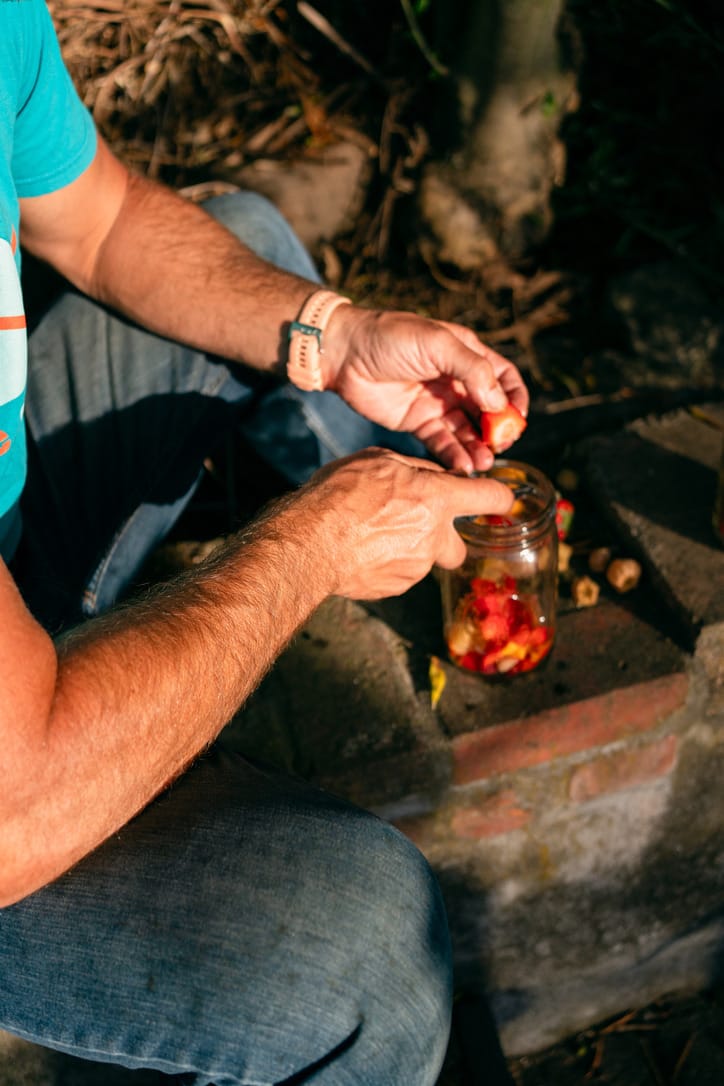
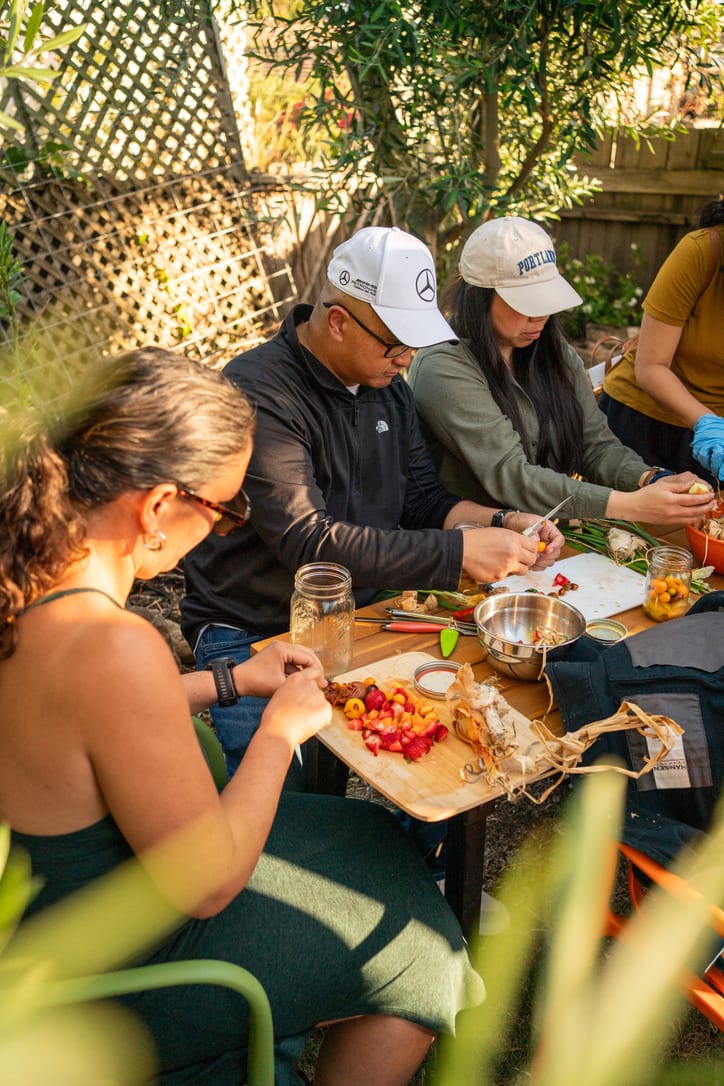
Participants in a fermentation workshop at Fig Leaf Gardens in Oakland cut fruit and aromatics together. (Courtesy Jayna Milan)
Syrup. Simmer chopped raw or roasted fruit in a simple syrup (1:1 sugar to water), allowing the fruit to break down and infuse the liquid with flavor. Kumasaka likes to add a chile pepper or herbs to his for a more savory vibe. Strain the solids out of the syrup, but keep them for your next bowl of oatmeal. Throw the syrup onto pancakes or mix it into a glass of sparkling water.
Jam. You’ll need a 1:2 ratio of sugar to fruit here. Boil chopped fruit while stirring constantly, then add the sugar and let it dissolve. Simmer the mixture until it becomes syrupy. Depending on the fruit you use, you may want to add pectin — check the package for usage directions. Herbs like rosemary and thyme work great as bonus aromatics, too. For more detail, check out this recipe by Sarah Carey for jam you can make with any fruit.
Dry storage. In an oven or air fryer set to its lowest temperature, dry sliced fruit (laid on wire racks set on sheet pans) until the moisture is removed, likely several hours. Flip the fruit about once per hour during this process. Bag or jar it up, ideally with silica packets to keep it dry.
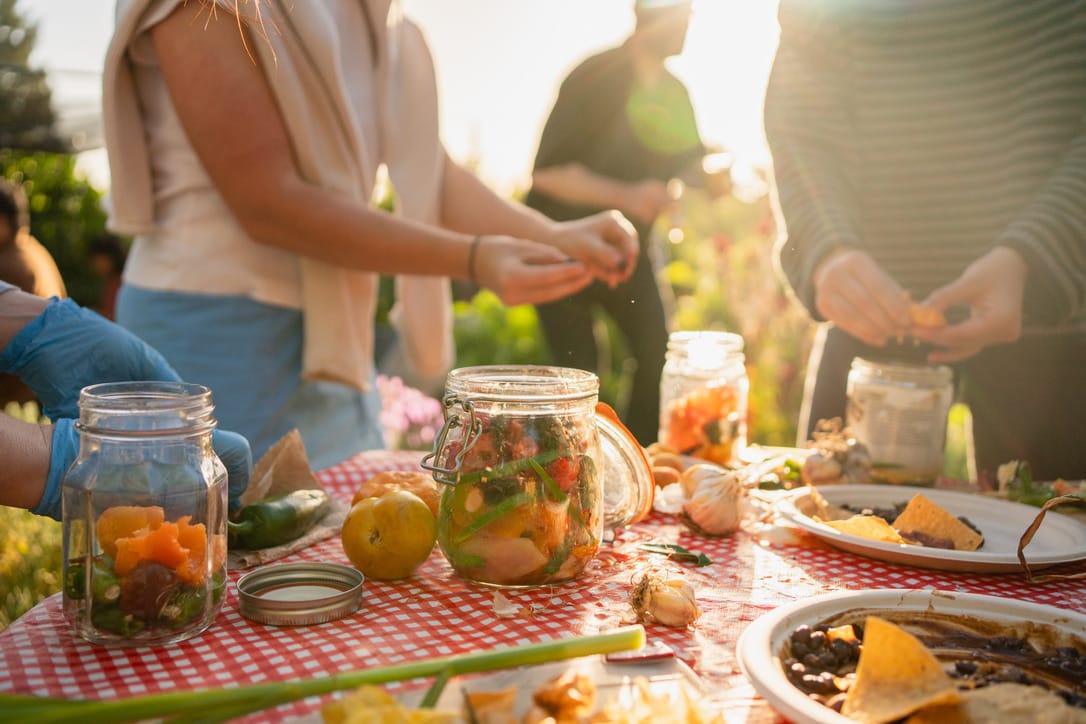
Kimchi. Anyone who’s been to a Korean grocery store can attest that you can really turn a lot of things into kimchi, not just napa cabbage: The constants are Korean chili flakes, salt, aromatics like garlic and ginger, and fermentation time. One of my favorites is pineapple kimchi, which is a nice add-on for Bloody Mary cocktails. Tomatoes and persimmons make beautiful kimchi as well. If you’re totally new to the game, you can find pre-made kimchi base at Korean and Asian grocery stores. Otherwise, if you’re down to make it all from scratch, this recipe from Singapore’s Straits Times is a nice way to get started.
Achaar. This classic South Asian pickle is most known for its green mango variety (aam ka achaar), in which the tart, hard fruit is mixed with mustard or sesame oil and a handful of spices. But you can also apply this technique to other ingredients: According to food writer Nandita Godbole, a quick achaar, like a quick pickle, can accommodate riper produce, like tomatoes, apricots, and radishes. A quick achaar is best eaten within a week.
Hot sauce. To make lacto-fermented hot sauce, you combine fruit, hot peppers, salt, and time. The formula (see below) is very customizable. Want to make it more Southeast Asian? Swap thyme for lemongrass! Those with higher or lower spice tolerance can also shift the chile pepper amount to taste.
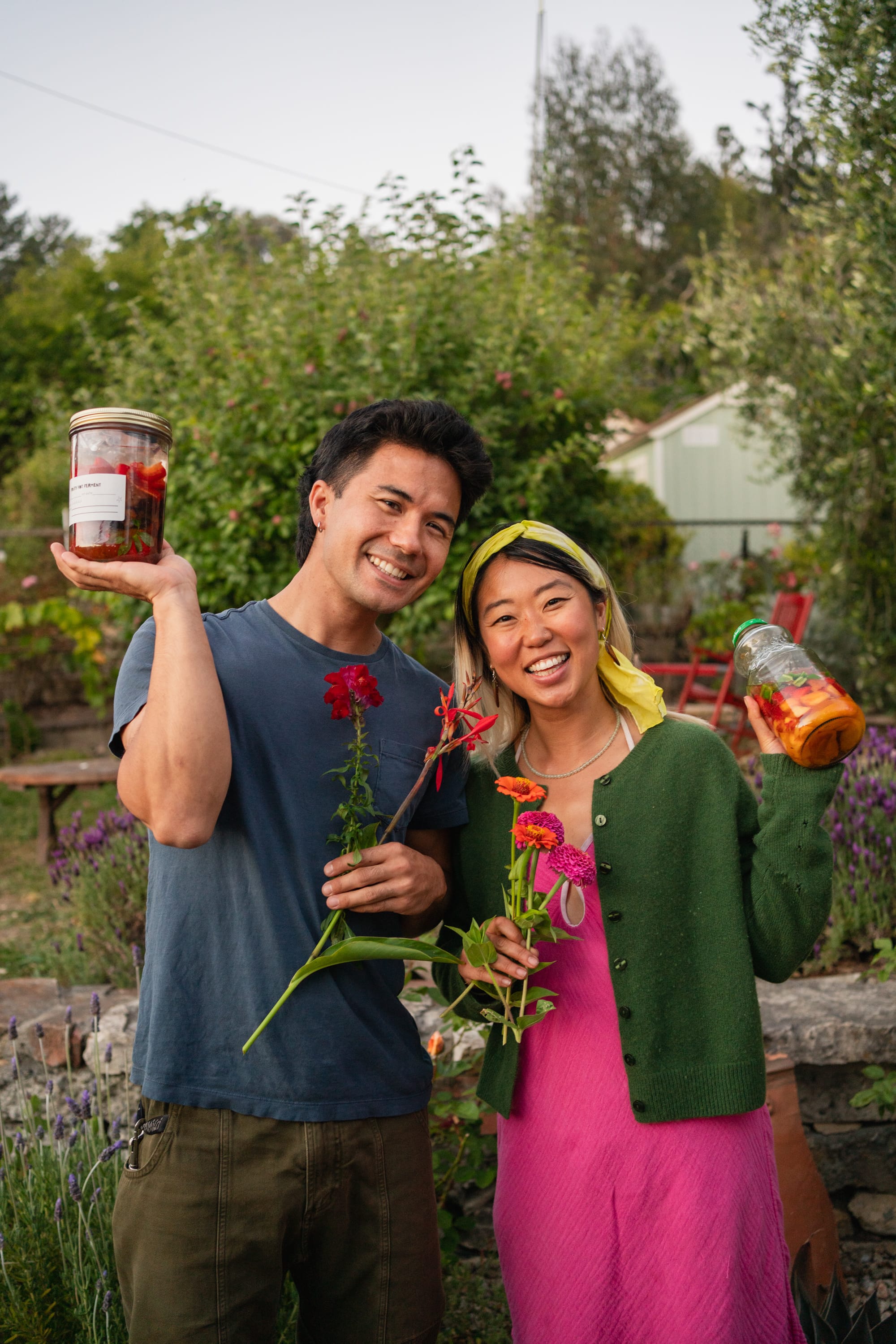
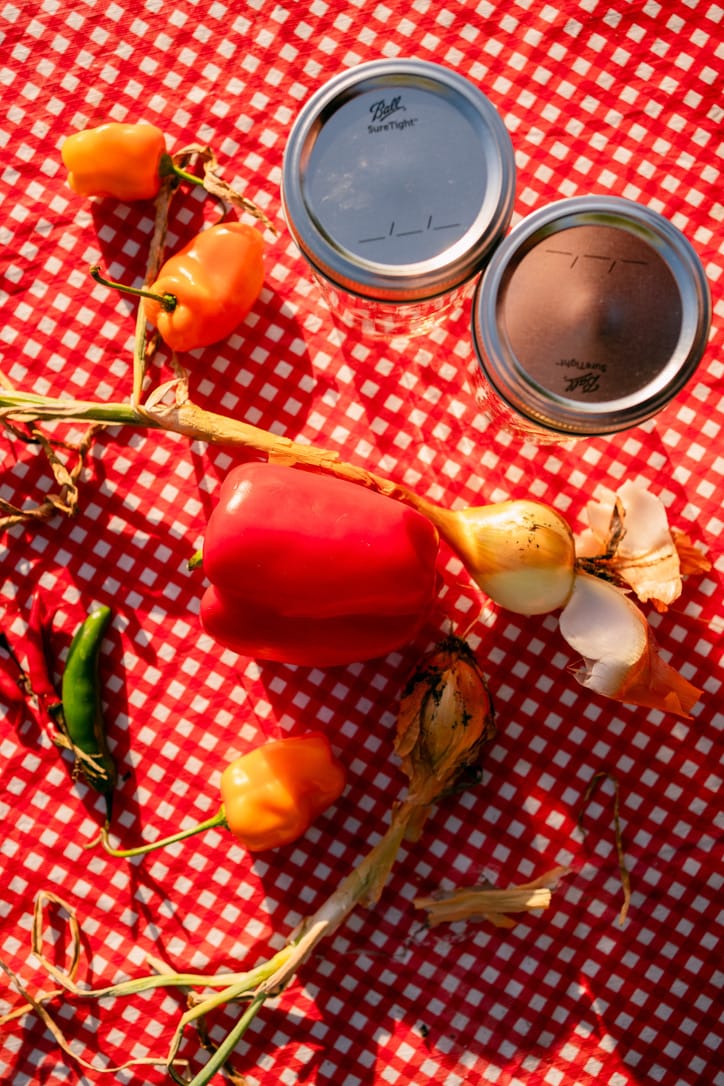
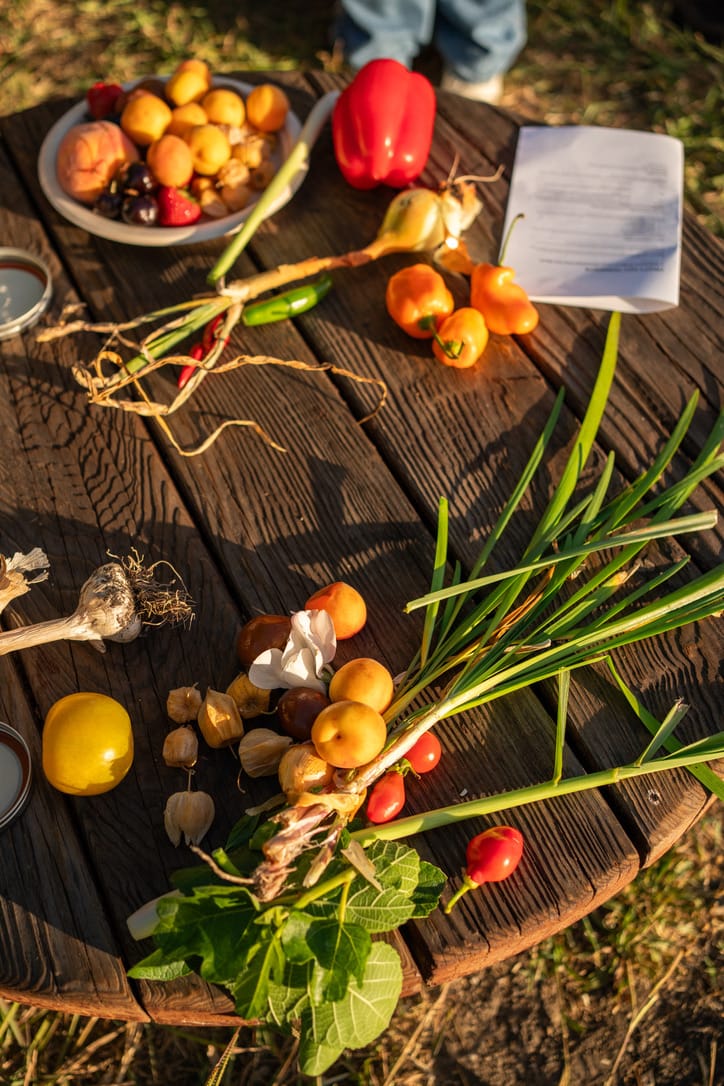
L: Osamu Kumasaka and Cindy Li pose after their fermentation workshop at Fig Leaf Gardens in Oakland. R: Peppers, aromatics, and mason jars. (Courtesy Jayna Milan)
Makes 24-32 ounces (3-4 cups)
A thin, vinegary hot sauce like Tabasco with bright acidity, moderate heat, and smoky notes. This vibrant purple ferment is great on grilled meats, eggs, oysters, tacos, roasted vegetables, or pizza! Based on Serious Eats’ Louisiana-style berry hot sauce.
Note: You can find fermentation supplies at hardware stores or specialty shops like Preserved in Oakland.
To finish
Equipment
Prepare the ferment
Roast the aromatics
Near the end of fermentation, roast or grill ½ onion and 6-8 cloves garlic until softened with deep charred edges. This adds sweetness and another layer of smoke without dulling the fermented fruit.
Blend
Pour off any of the briny liquid floating on top of your mash, reserving 2-4 Tbsp. Then combine in a blender:
Blend on high until completely smooth. Gradually blend in apple cider vinegar, tasting and pH testing until you reach your desired level of acidity. Aim for a final pH below 4.0 for good, long refrigerated shelf life.
Strain
For a silky smooth Louisiana-style Tabasco sauce, pass through a fine-mesh sieve, pressing firmly with a spatula. For a more rustic sauce, skip straining or use a coarse food mill.
Taste and adjust as needed. If you want...
Refrigerate the sauce for up to 1 month.
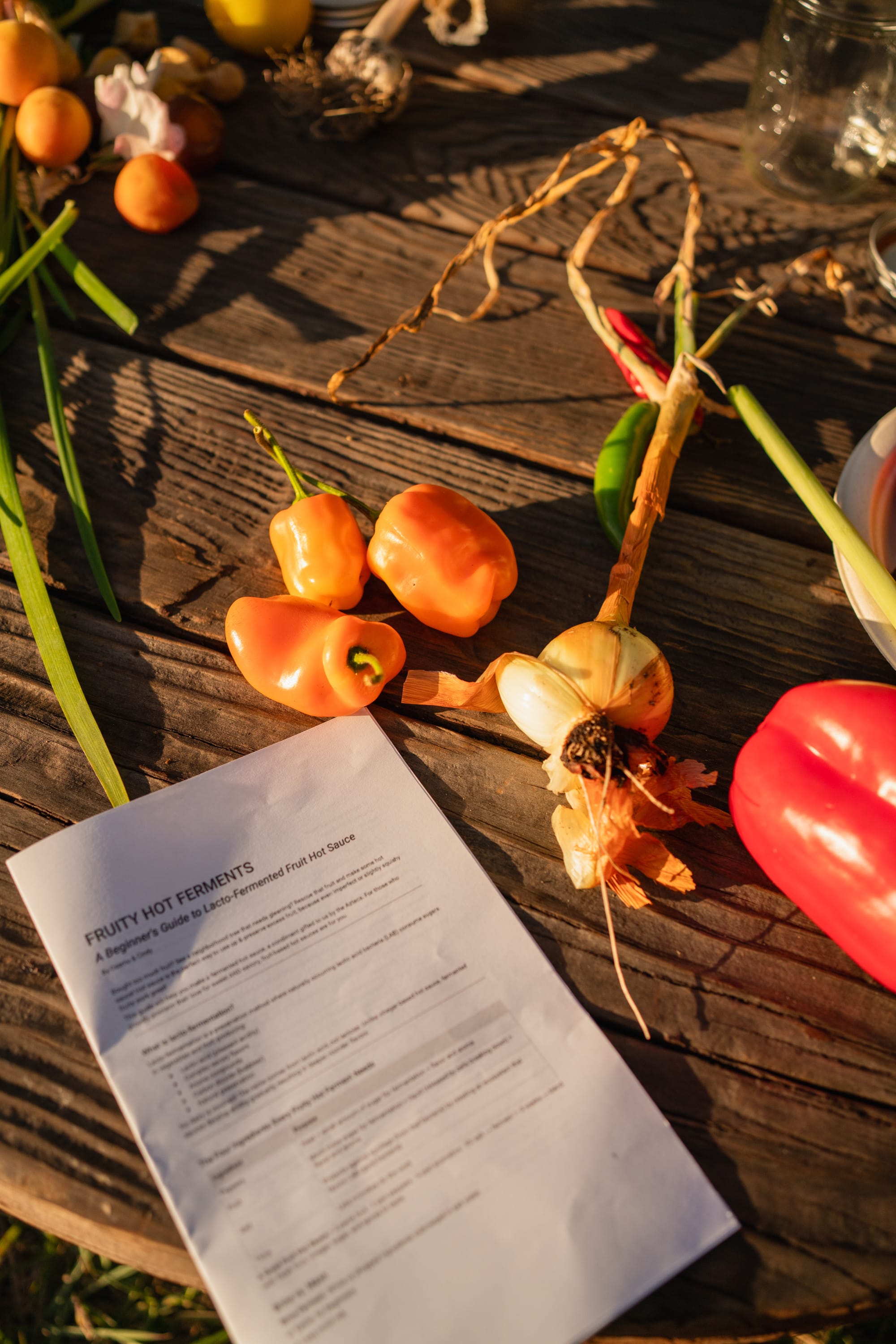
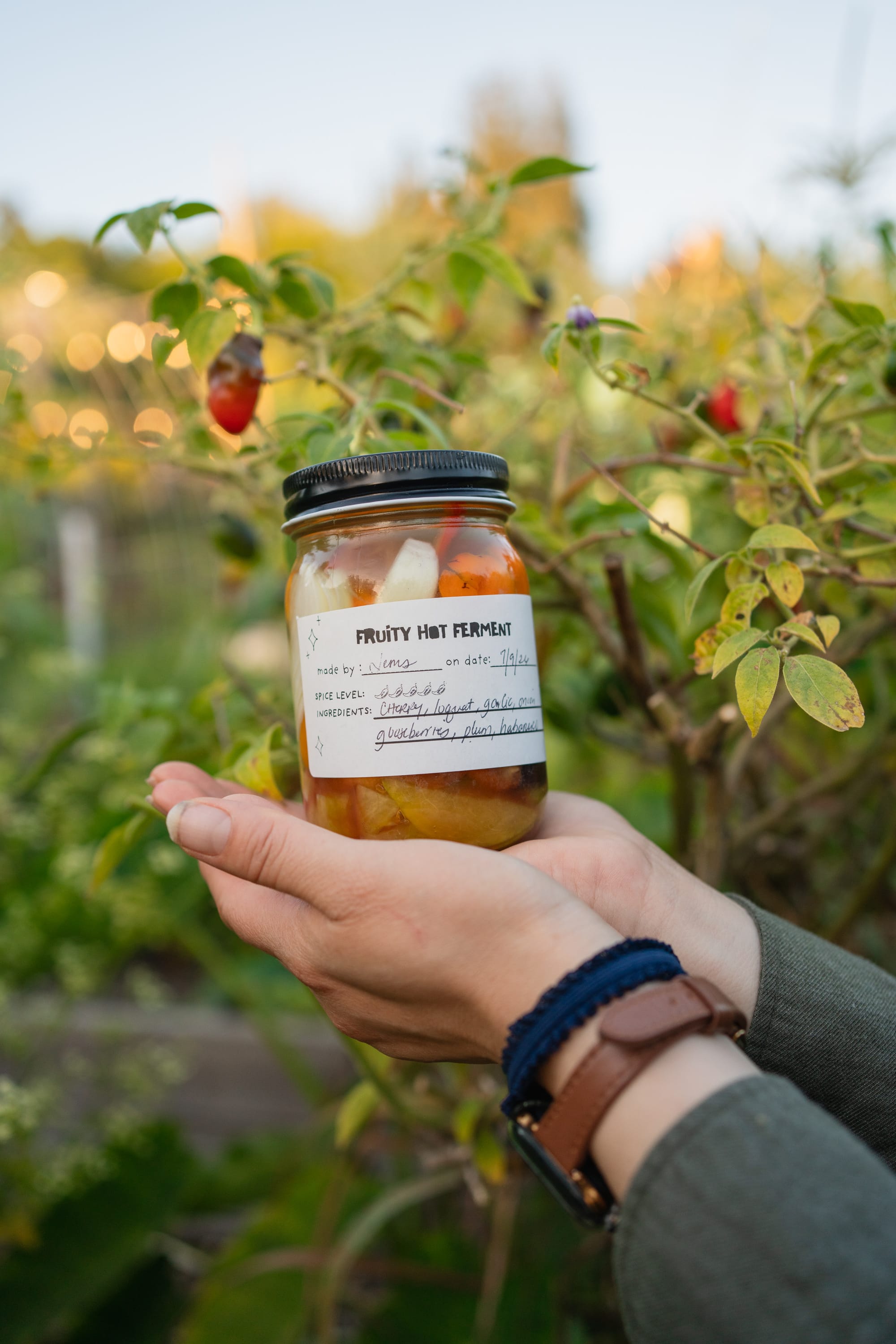
L: A recipe for hot sauce provided by Cindy Li and Osamu Kumasaka. R: A jar of foraged fruits, peppers, and brine. (Courtesy Jayna Milan)