What the ‘Asian Market Boom’ Is Missing: An Ode to Pacific East Mall

As shiny, new Asian grocery stores are hailed as retail "saviors," the decades-old Pacific East Mall in Richmond shows how immigrant cultural spaces matter beyond their economic benefits.

The entrance to Pacific East Mall, a shopping center, at dusk.
Since opening in 1998, Pacific East Mall has continued to be an intergenerational meeting ground for the Asian American population in Contra Costa and Alameda counties. (Cecilia Lei/COYOTE Media Collective)

In the Bay Area, 2025 was the year of the Asian grocery store. 

While many areas of public life seem to falter last year, Asian markets flourished.

There was the joyful, effervescent “Late Night Madness” dance party series at Daly City’s Seafood City, the largest Filipino supermarket chain in North America, where intergenerational crowds danced to live DJ sets and enjoyed late-night street food inside the store-turned-nightclub. 

Last fall, a very heated weeks-long debate took place on social media over a controversial TikTok video where a mixed Asian creator talked about giving side-eye to white shoppers at Asian grocery stores. It led to fiery conversations about who gets to occupy cultural spaces, while also exposing deep frictions within the Asian American community itself. Even Black TikTok was riveted by the discussion.

But most notably in the Bay Area, Asian grocery stories gained a major spotlight in 2025 because new ones just kept opening: every couple months, I saw headlines announcing that the Bay Area was experiencing an “Asian market boom,” with glossy new grocery stores opening across the region: Korean food market Jalgalchi in Daly City. Japanese grocery stores Tokyo Central in Emeryville and Hashi Market in Cupertino. Canada’s largest Asian supermarket chain opened T&T Supermarket in Millbrae

Many of the stories positioned the Asian grocery store as some kind of economic superhero, swooping in to revive the struggling local retail scene. The San Francisco Standard used the term “unexpected savior.” A KQED headline proclaimed “Asian Food Is Coming to Save a Mall Near You.” The businesses, many of them branch openings of large successful Asian corporate chains, were held up as proof: the spending power and cultural influence of Asians and Asian Americans in the Bay Area were undeniable. 

On the surface, these stories felt positive. They were solutions-oriented and offered rare notes of optimism from the consumer and real estate experts quoted in the coverage, highlighting how mainstream appreciation for Asian food and culture was an indicator of how Asian American households were growing and thriving. This was a departure from the well-worn narrative that many Asian Americans have readily adopted: the shorthand story of growing up “embarrassed” to eat the family dinner leftovers that our mothers packed for our school lunches. Now, Asian American palates and consumer preferences were shaping local economic strategies and demanding the attention of savvy investors. 

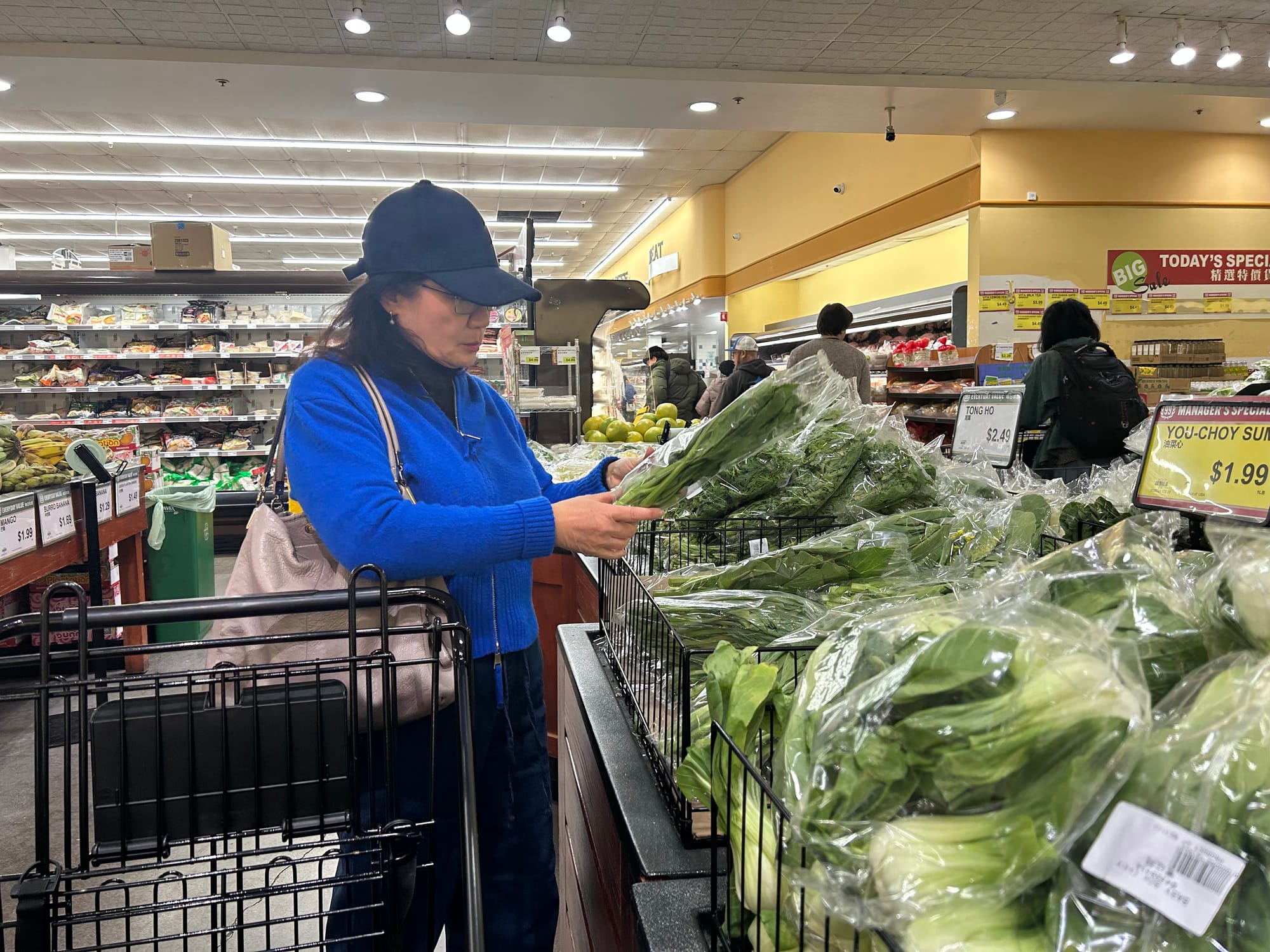
A woman in a blue sweater picking up and examining a plastic-wrapped bundle of Asian greens in a grocery store.
Anna Li (mother of the author) shops at the Ranch 99 Supermarket at least once a week to restock her essential Chinese greens. (Cecilia Lei/COYOTE Media Collective)

All of this sounded like community progress, like Asian Americans as a whole were leveling up.

But for some reason, these stories triggered in me some slight — yet familiar — hesitation. There was something about the “Asian market boom” narrative that felt incomplete, and maybe a bit flattening. 

Perhaps it was the sudden burden I sensed being placed on Asian American communities to revive in-person retail and keep our local economies afloat. Or maybe it was the way these stories nudged Asian Americans into a single, convenient archetype: high-income earners with tremendous spending power. Whatever it was, the coverage lightly nagged me, rubbing the same nerve that the film Crazy Rich Asians did when it first broke through, or when political pundits casually reduce Asian American voters to a supposedly conservative monolith during election seasons.

What do these cultural milestones even mean for the Asian American community? What does it mean when essential facets of immigrant life, like our food and gathering places — which were traditionally “othered” and sidelined — go mainstream? Why doesn’t it, at least for me, feel more empowering?


Recently, I visited the brand spankin’ new Jagalchi in Daly City to see what the hype was about. I wisely followed the advice I had read to wait until the long lines and eager crowds died down before checking it out. I was immediately struck by the sheer size of the 75,000-square-foot complex, which included not only a Korean grocery store, but also a swanky restaurant, a bakery, an oyster bar, and an extensive Korean beauty section. Roughly a quarter of the shoppers I saw that day were non-Asian. In one section, I saw a young white mother trying her best to answer her curious son’s questions about the wide variety of instant noodles on sale.

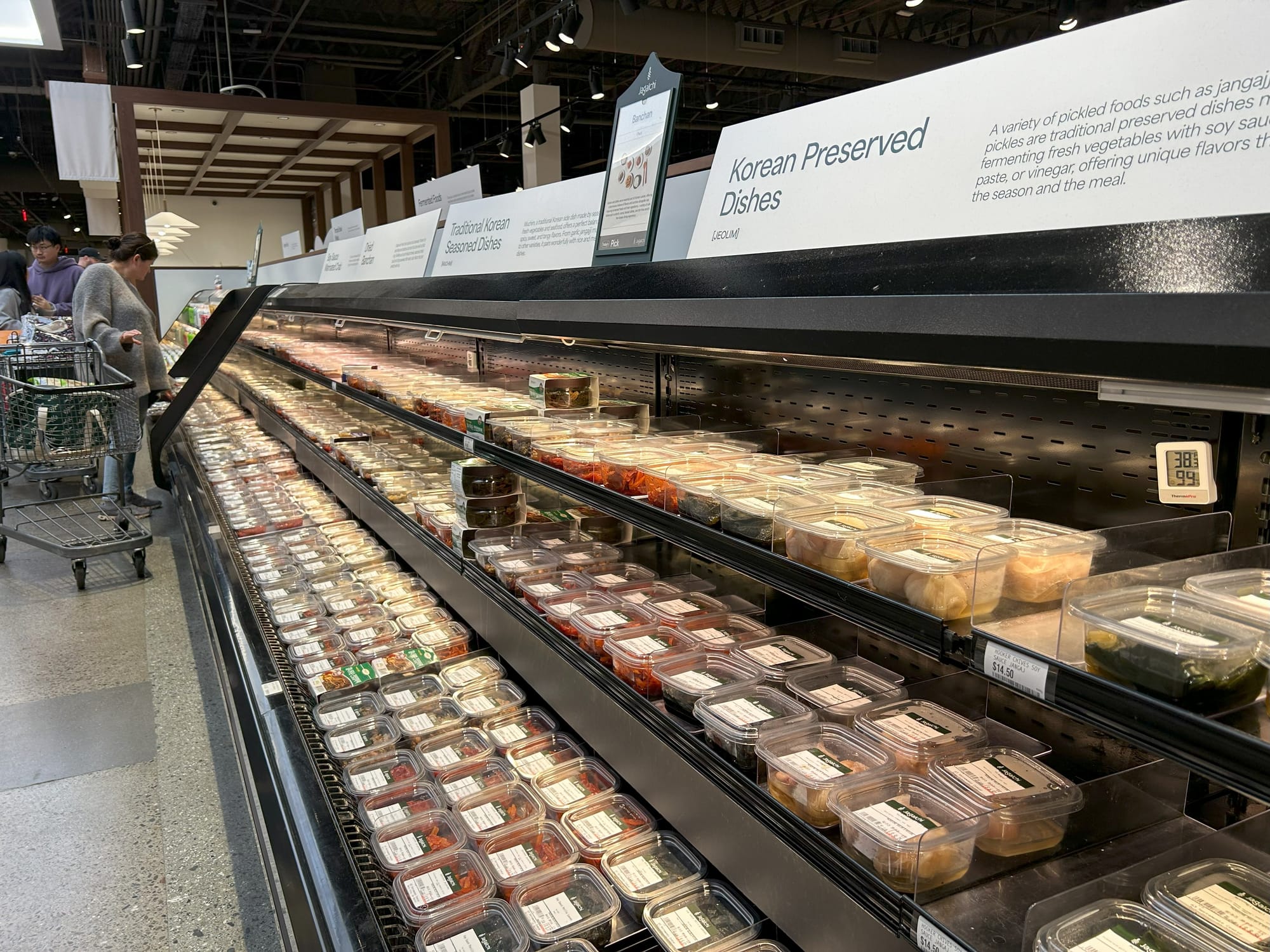
A cooler containing three shelves full of Korean side dishes and pickles. Signage above says "Korean Preserved Dishes."
Jagalchi opened in March 2025 and sells a wide variety of Korean groceries and ready-to-eat offerings, displayed with English signage to help non-Korean shoppers navigate the massive shopping complex. (Cecilia Lei/COYOTE Media Collective)

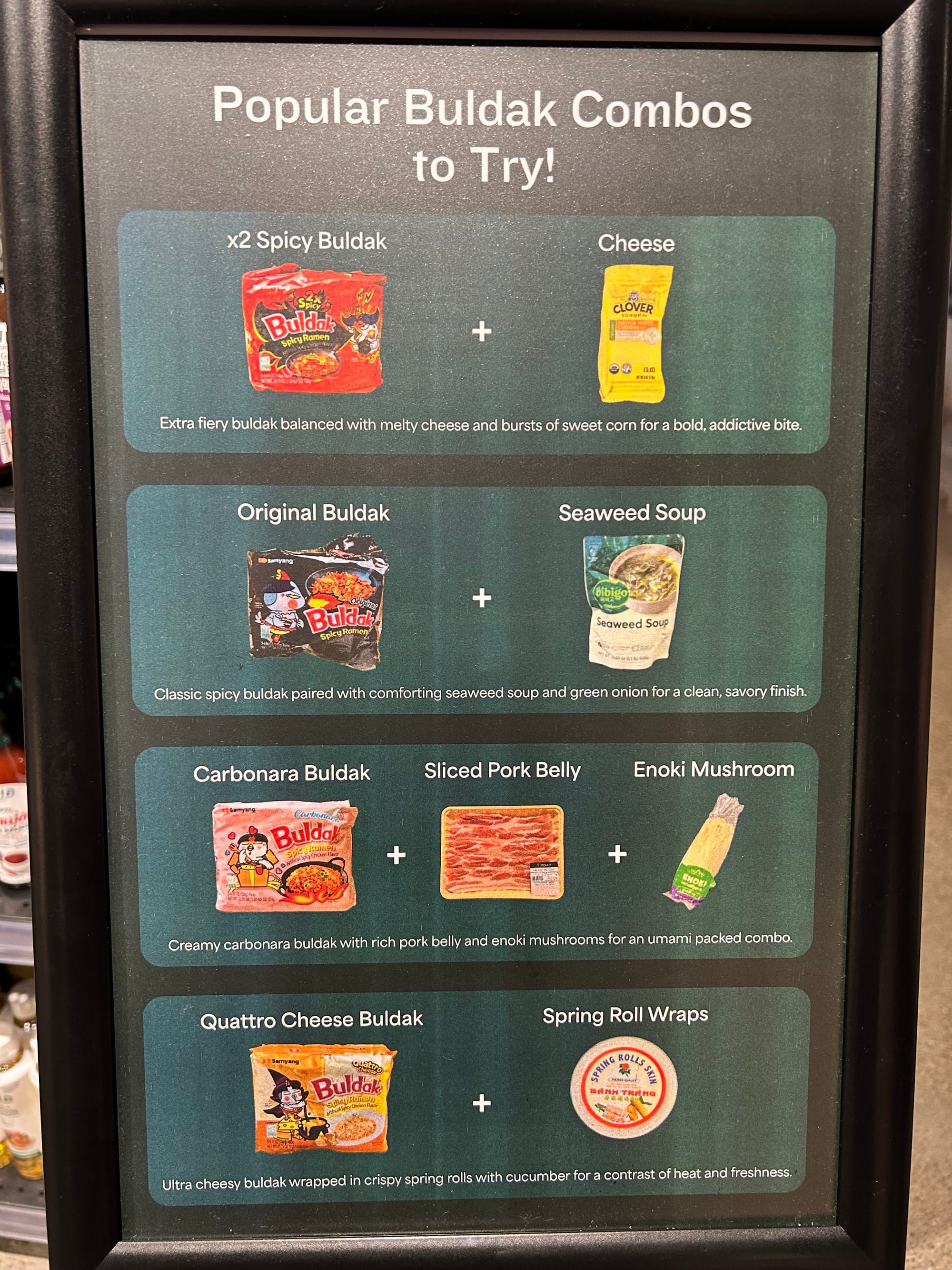
At every turn, there were explainer signs, educating non-Korean shoppers about the products and deli items sold throughout Jalgalchi’s various departments. “If you’re new to makgeolli, try a flavored version like peach, banana, or yuzu first,” one section urged. The tone of the store was encouraging, friendly, and welcoming, but there was also — undeniably — a lot of eager hand-holding… and sterility.

It lacked the chaotic frenzy of traditional Chinatowns, where you have to dodge the elbows of tiny grandmas to get the best produce bargains, and the dizziness of the overstuffed aisles of the suburban markets I grew up in — notably, one in particular.

Long before Asian grocery stores and culture were framed as economic saviors, there was my beloved Pacific East Mall, one of the Bay Area’s earliest Asian-centric shopping centers.

Pacific East Mall sits right at the border of Richmond, El Cerrito, and Albany. As a kid of divorced parents, I grew up pinballing between those three East Bay cities, so the mall became the epicenter of my world when it first opened in 1998. It is most known for being the home of the popular Asian supermarket chain Ranch 99 (no, let’s not litigate the whole heated “99 Ranch” vs. “Ranch 99” name debate here). 

Unlike a shopping center like Jagalchi, Pacific East Mall is not pristine, or neatly laid out. It has unapologetically stayed what it’s always been throughout the decades: a mix and match of modern and old-school Asian shops with very little cohesion. 

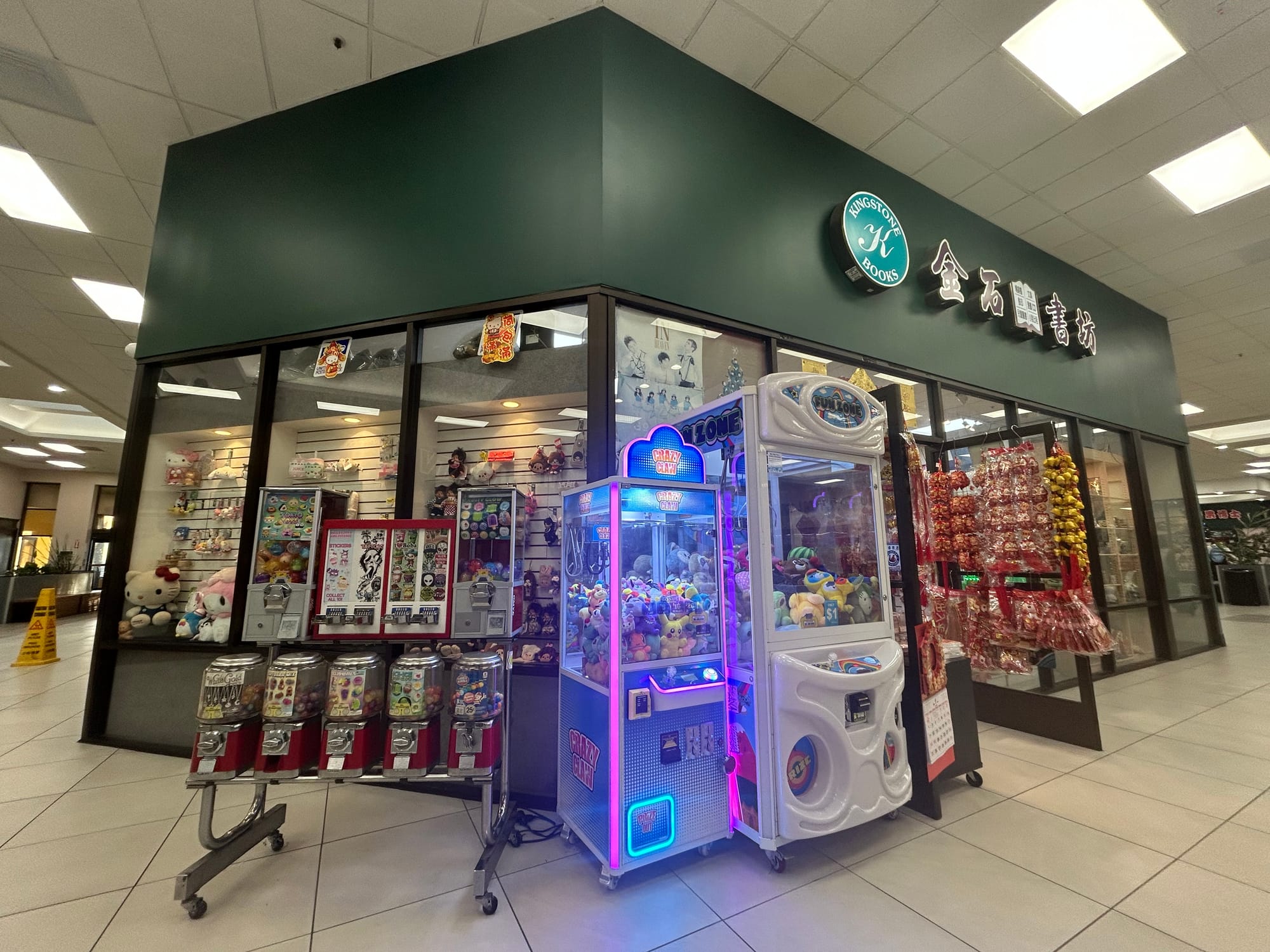
A storefront inside of a mall featuring claw machines with stuffed toys and Asian decor items.
For decades, Kingstone Bookstore has attracted young kids and teenagers to their store, selling Sanrio stationary, Labubus, and other fun odds and ends. (Cecilia Lei/COYOTE Media Collective)

While the “Asian market boom” headlines of 2025 boasted venture capital and hype, Pacific East Mall’s story started with community demand. 

Its developer, GD Commercial Real Estate, is behind several of the big, old-school Asian shopping hubs around the Bay Area, including Milpitas Square and the Shops at Vietnam Town in San Jose. 

A 1999 San Francisco Chronicle profile of the mall called it a “suburban Chinatown under one roof” made to cater to “an Asian American population that is spreading far beyond the boundaries of Oakland and San Francisco Chinatowns.” Developers curated tenants to “include a piece of culture from as many Asian countries as possible.” Since then, the mall has continued to be a meeting point for Asian American residents in Alameda and Contra Costa counties by doing what it does best: speaking directly to the needs of the target population, rather than trying to appeal to everyone. 

Inside, there is a variety of Asian businesses including a sushi restaurant, a couple of boba tea shops, Sheng Kee bakery, a karaoke bar, hot pot and dumpling restaurants, and even a specialty store that exclusively sells fancy-packaged durian, the notoriously fragrant tropical fruit. 

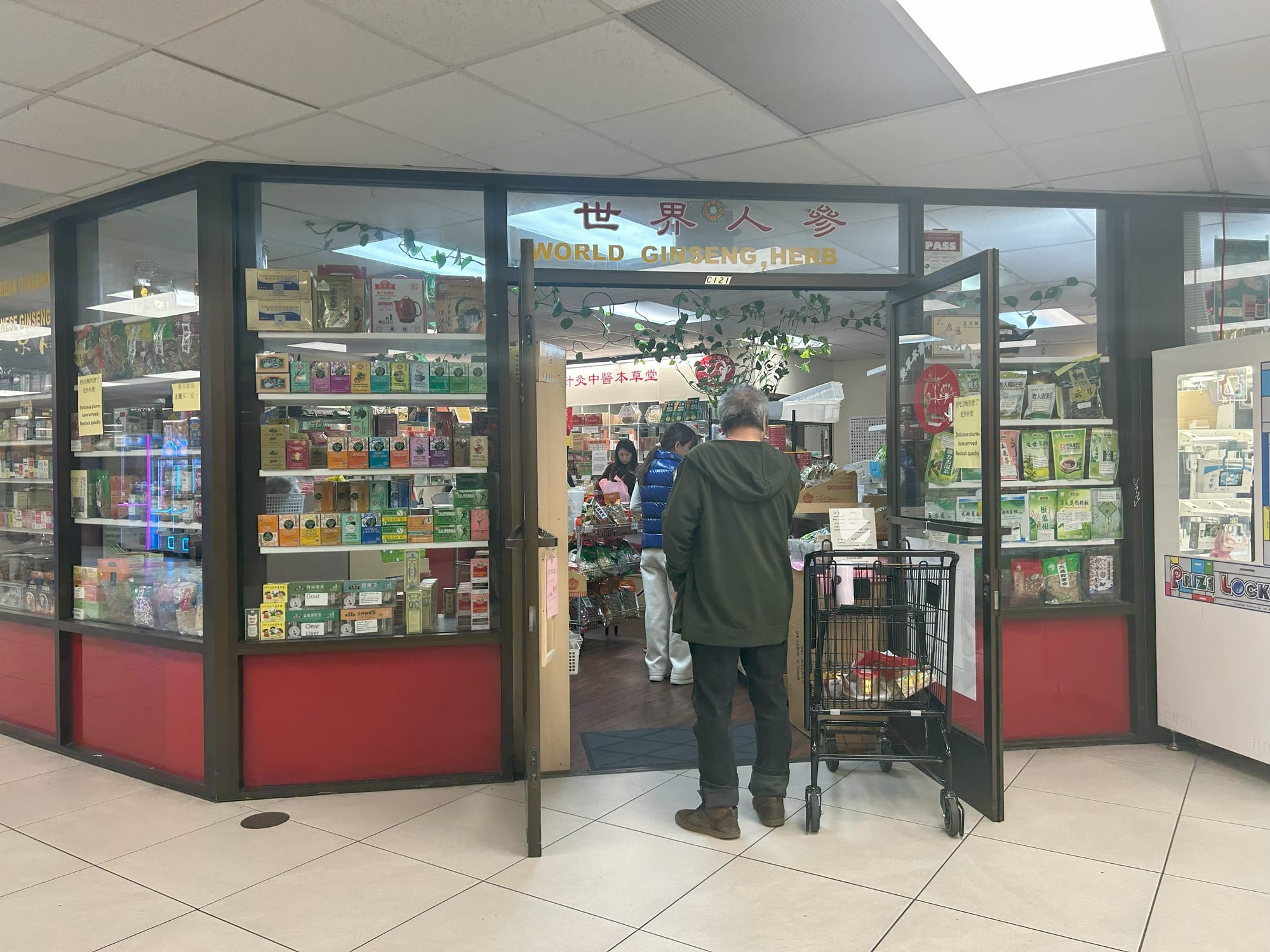
A storefront inside of a mall selling Chinese Traditional Medicine items.
In addition to selling Chinese medicinal products, World Ginseng Herb also serves as a medical group practice that specializes in acupuncture. (Cecilia Lei/COYOTE Media Collective)

Over the decades, the mall has gone through some modest facelifts and dealt with the same challenges that other retail spaces confronted, especially during the pandemic. And while a number of different businesses have rotated through the mall since it first opened, many anchor storefronts have remained since my pubescent years. These include an optometrist’s office that my father still goes to, a hair salon my mom used to frequent, an extremely no-frills Chinese herbal medicine shop, a candy shop that displays a barking toy dog at its entrance to entice young customers (I swear, it’s been yapping there since the late 90’s), and a very-just-okay pho restaurant where I used to inhale grilled pork chop rice plates and Thai iced teas with my friends after school.

After living near well-known Asian American hubs in San Francisco and Oakland throughout my adulthood, I moved back to Albany a couple of years ago — and was pleasantly comforted by the steadiness of Pacific East Mall, the way it still anchors my life.

The significance goes far beyond having easy access to all my Asian grocery and pantry needs.

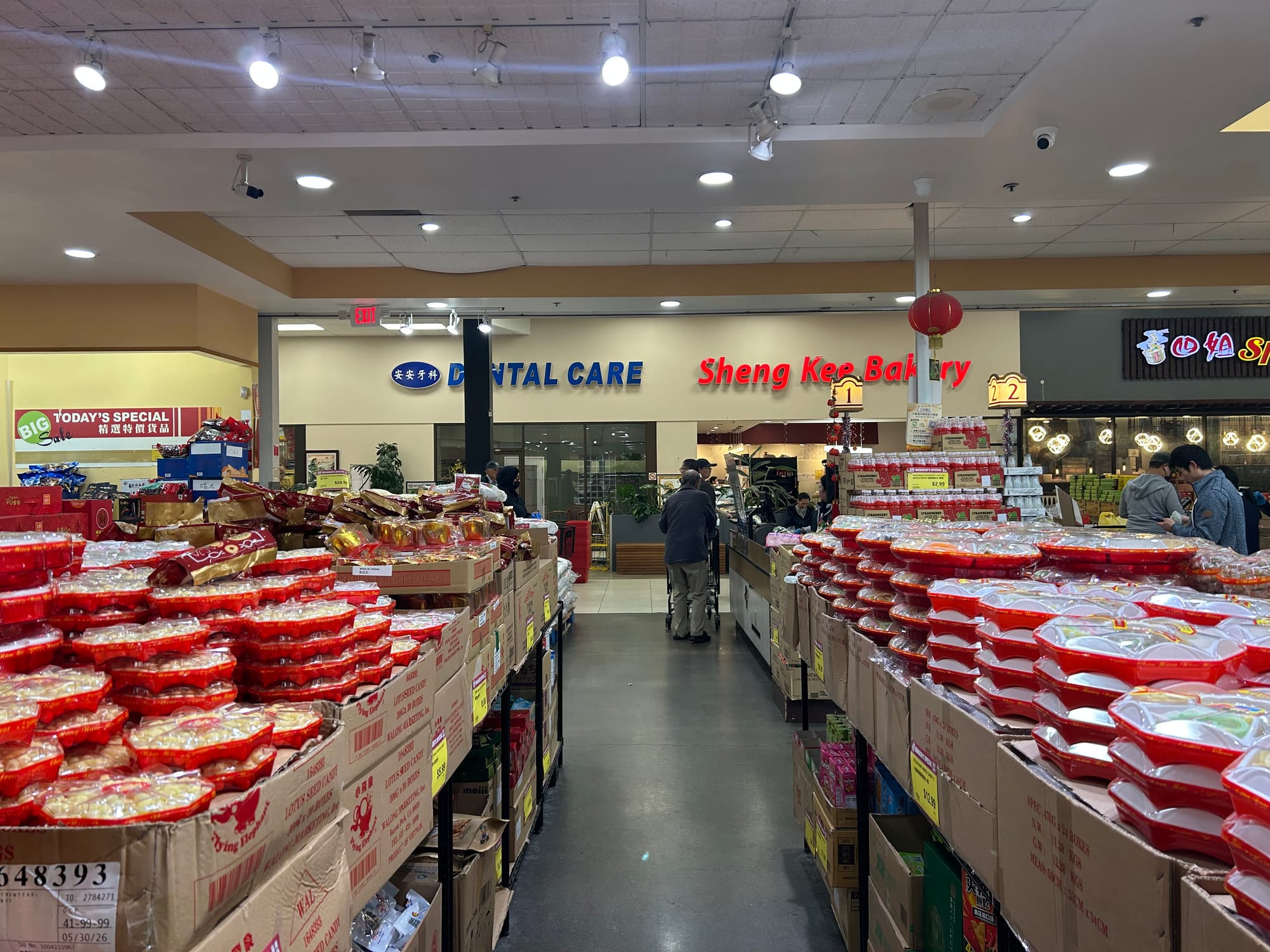
The entrance of Ranch 99, with shelves holding red trays of sweets and snacks. In the background are storefronts for a dental practice and a bakery.
Lunar New Year essentials are on display at the entrance of the Ranch 99 where shoppers can prepare for the incoming Year of the Horse. (Cecilia Lei/COYOTE Media Collective)

When most people arrive at Pacific East Mall, they park in the massive front lot where the speed bumps are still much taller than they need to be (much to the dismay of many scraped rice rockets that had to learn to slow down the hard way). But the real OG’s who want to quickly bypass Ranch 99 to access the mall’s other businesses — including one of my go-to’s, the southeast Asian restaurant Mi Noodle House — park by the fishy-smelling dumpsters at the back of the mall. Here, you nod at cooks wearing dirty aprons and rubber boots taking their cigarette breaks before you enter.

Walking into the mall today, the shopping center smells very similar to how it did when I was young. Upon entrance, your nose gets a preview of what awaits inside the building: the sweet tinge of teas being brewed for boba drinks, the briny bouquet of fresh seafood laid on ice inside the supermarket, the warm fragrance of bread baking, and the woodiness of Chinese herbs.

Pacific East Mall carries me back to the most tender parts of my life. After school, I’d wander its circular layout, spending my allowance on cutesy knick-knacks from the stationary book store, and then to the market for braised pork and mustard greens rice bowls, my go-to afternoon snack. Around me, aunties hurriedly ran errands, teenagers loitered and flirted with one another, and families convened for noisy get-togethers. Here, I could linger without purpose and claim a sense of freedom I couldn’t find in other social spaces — I was able to exist comfortably inside my cultural identity without self-consciousness. The mall was where my coming-of-age quietly unfolded as I navigated puberty and an often unstructured household.  

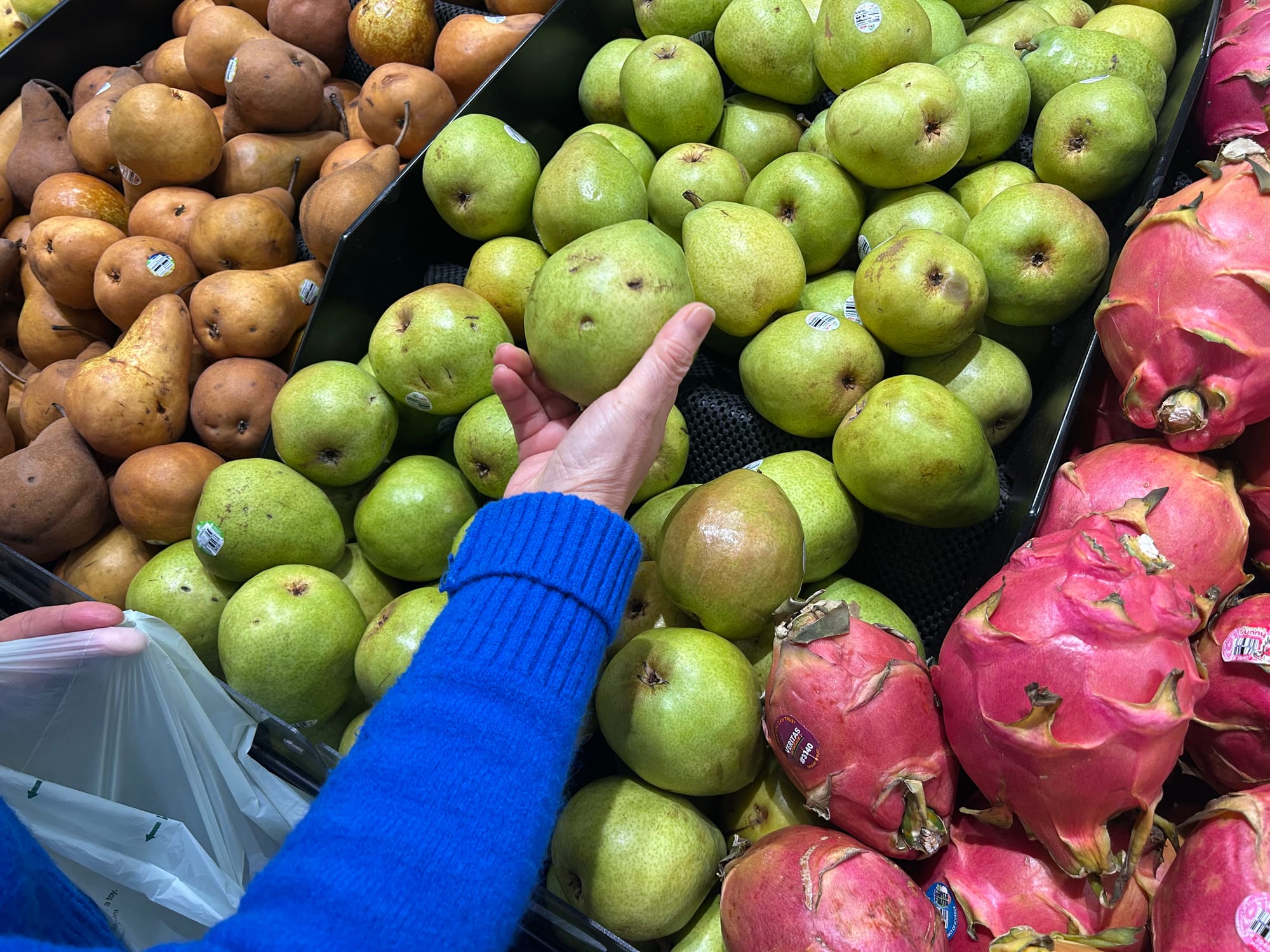
A person wearing a blue sweater picks up a green pear from a display of fruits including brown and green pears and pink dragonfruits.
Like many other Asian mothers, Cecilia Lei's mom, Anna Li, has a quick discerning eye when selecting the freshest produce. (Cecilia Lei/COYOTE Media Collective)

Nowadays, I don’t hang out idly in the shopping center like I used to. Instead, I enter with specific intentions and tasks. Regularly, my father and I like to meet up for dinner at the Asian Pearl Seafood restaurant, a spot that serves authentic Cantonese cuisine, from steamed whole fish and stir fried crabs to dim sum favorites like lotus leaf-wrapped sticky rice. (The restaurant also features a comedically large floor-to-ceiling television screen that plays all the major sports games. I don’t get it, but I’ve learned to kinda dig it.) While my mother and I wander the aisles of Ranch 99 together, I make mental lists of all the essential ingredients and brands she plucks out for our family meals. Recently, on a particularly downcast, moody winter day when I needed a pick-me-up, I ordered a steaming bowl of pho ga and egg rolls from Pho Saigon II, where I ate alone, next to tables of middle aged men dining solo — my unsuspecting kindred spirits for the evening. 

For a long time, I held Pacific East Mall outside the realm of explanation. It existed, offering predictability when other things felt uncertain throughout multiple formative stretches of my life. It didn’t need to justify its existence beyond just that, and it was a space I didn’t feel needed any explainers or translation. Those who walk through its doors should not expect hand-holding, nor a fully mapped out or cohesive concept, but rather an authentic experience they are welcome to be curious about.

That’s another part of the mall’s charm — it wasn’t designed to tell a single story about the East Bay’s Asian American population. It reflects how immigrant communities actually exist. The mall feels a tad disjointed because that is the Asian American experience. 

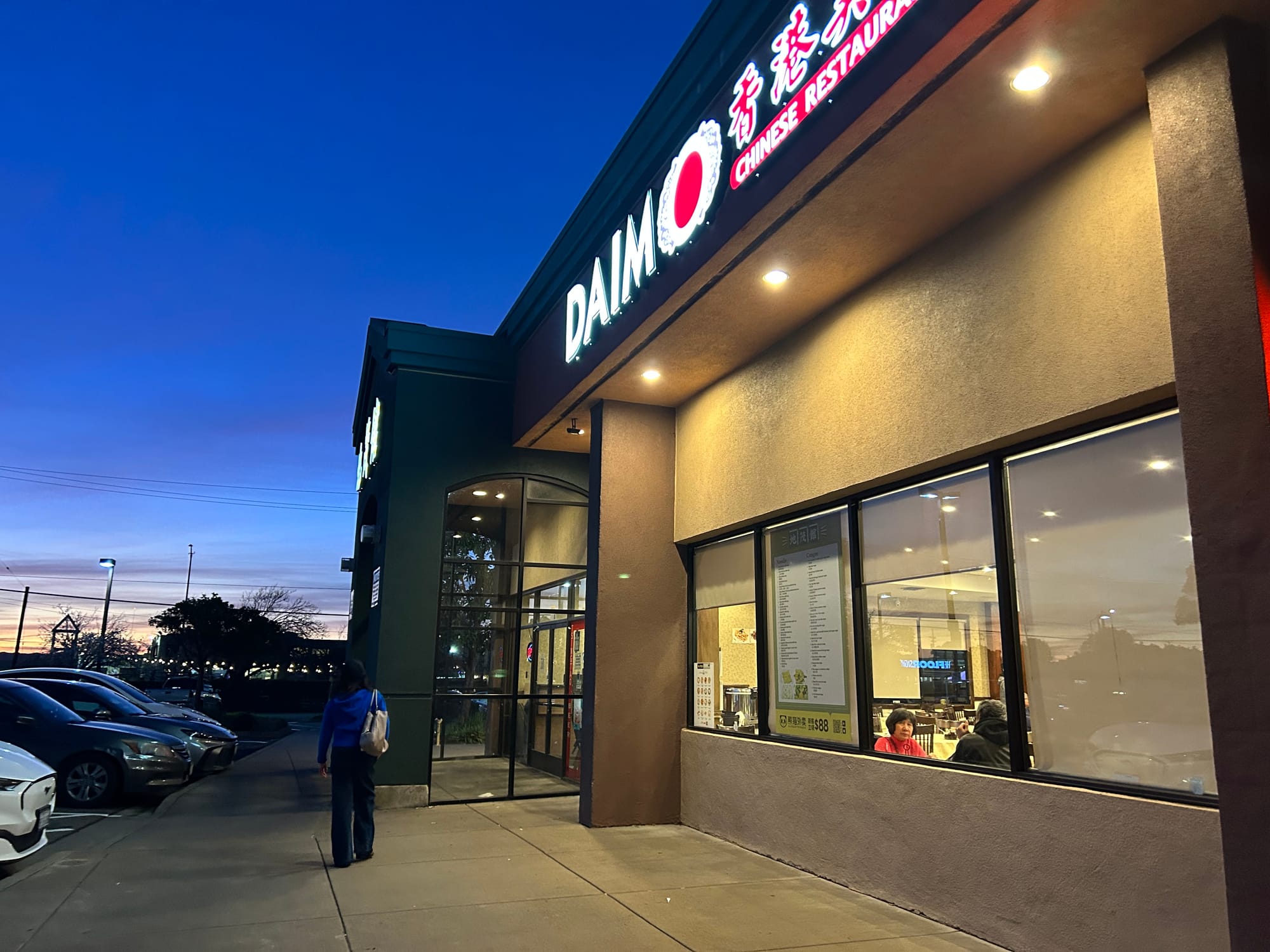
I think about the ways that my parents continue to turn to Pacific East Mall as a place that allows them to hold onto the familiar tastes and sensibilities that they enjoyed as young people in China. I think about how they still call to ask me to meet them there: “Do you want to get a late-night bowl of wonton noodles with me at Daimo?”; “I’ve been craving congee and fried dough sticks, let’s go get some.” As someone who struggles to find a common social ground with my aging parents, I love that Pacific East Mall — in all its gritty and unpolished ways — still exists, even just for that selfish purpose.

A woman in a blue sweater walks in front of a restaurant, Daimo, at dusk.
When Anna Li wraps up her errands at Pacific East Mall, she'll often call up her daughter Cecilia Lei to meet her at Daimo, a casual restaurant that serves late-night dim sum, Chinese BBQ, and other Cantonese comfort food. (Cecilia Lei/COYOTE Media Collective)

Perhaps my unease about Asian grocery stores being recast as bright spots in a faltering retail landscape has to do with how these community infrastructures — which uphold tradition and instill cultural pride — are now framed as economic interventions. I worry about our communities being reduced to metrics that can be celebrated, replicated, and scaled at a time when immigrant communities need these spaces to feel more potent and safer than ever — not neutralized to fit the growing appetites of the mainstream public. It’s impossible to shake the irony of reading about Asian grocery stores as retail saviors at a moment when immigrants are being framed, yet again, as threats — to jobs, to safety, to the nation itself. 

It’s so easy to celebrate immigrant communities and their contributions most loudly when they are profitable and legible. I crave a radical new narrative for cultural spaces like Asian grocery stores – one that values communities for who they are, and not for how useful or palatable their cultures are. 

What would it look like for developers, investors, and city leaders to reproduce spaces like Pacific East Mall not because they save retail, but because they sustain people, strengthen connections, and uphold the dignity of the communities they were designed for?

That’s the kind of investment our cities should be prioritizing — and the kind that deserves headlines.  

Great! You’ve successfully signed up.

Welcome back! You've successfully signed in.

You've successfully subscribed to COYOTE.

Success! Check your email for magic link to sign-in.

Success! Your billing info has been updated.

Your billing was not updated.