Yap Zone: How We Got the Bottom of the Hill Story
Emma Silvers on how we got COYOTE's Bottom of the Hill closure story.
As shiny, new Asian grocery stores are hailed as retail "saviors," the decades-old Pacific East Mall in Richmond shows how immigrant cultural spaces matter beyond their economic benefits.
“Everything that we think is disgusting about human life, pigeons wear without shame.”
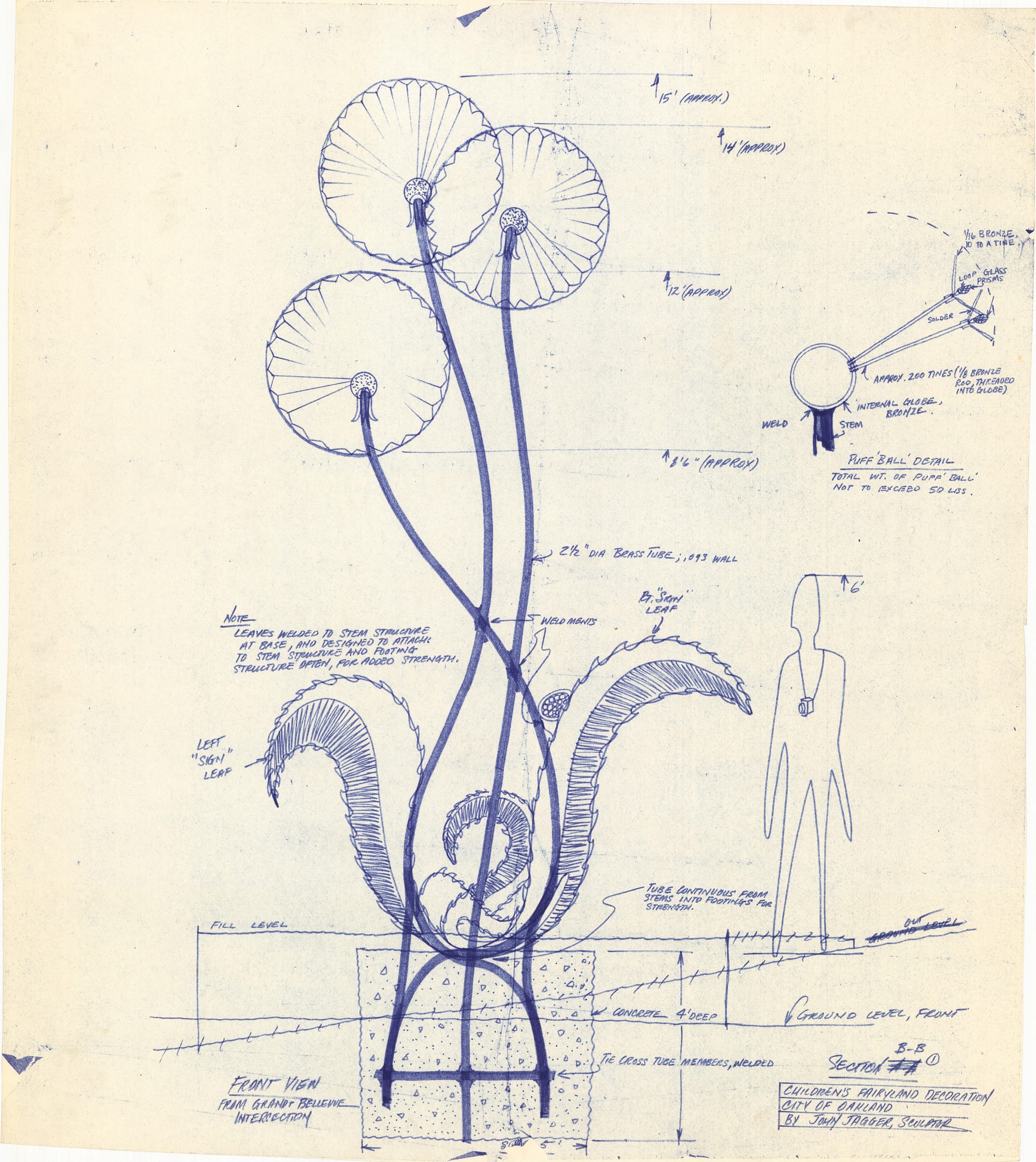
For more than 45 years, three huge steel and bronze dandelion puffs reached for the sky outside Children’s Fairyland only to disappear without a trace. COYOTE went on a quest to find them.
Liesl Piccolo was, at least for a little while, something of a Children's Fairyland celebrity. Every weekend she would arrive at the park dressed in a frilly white dress layered over a blue shirt, white stockings and black flats, her blonde hair pulled back by a little headband. Then she would assume the most coveted role in the park: Alice in Wonderland. As Alice, she would roam the winding grounds, greeting visitors and doing performances. Some weekends she even traveled around the country to walk in parades.
"I wanted to be Alice so badly," Piccolo tells me, three decades later, recalling her audition monologue and song. Being a part of the Fairyland Personality program was a highlight of her childhood. "If you grow up here, and you come here, this place is the most magical," Piccolo says. "And I had backstage access."
For years Piccolo came every weekend, her character shifting from Alice, to Snow White, to Raggedy Ann, to a jester, before she aged out of the program. All told, Piccolo spent hundreds of hours over several years helping to make Fairyland a little bit more wonderful for each and every guest.
On a muggy, sunny day in August, Piccolo and I met up in front of Fairyland, under the shade of the sprawling oaks that still stand in front of the entrance on Grand Avenue. These days, she's a nurse practitioner in family medicine, but Fairyland is still one of the most enchanting places she can think of. She now brings her own children and watches them play in the same whimsical landscape where she once reigned as Alice. "Seeing it through their eyes is pretty cool," she adds.
I asked Piccolo to meet me at Fairyland because a few months earlier she had written in to COYOTE's "What's the Deal?" form with a query.
How could we possibly ignore this quest?
When I first started looking into this mystery, I thought I'd learn a little bit about Oakland history. I was not expecting a winding tale of eccentric artists, burned down houses, endless wives, pie, and a missing sculpture right under our noses.
Piccolo did not dream up this sculpture. It was installed in April of 1971, commissioned through a donation from the Lake Merritt Breakfast Club, an organization that still works to care for Lakeside Park.

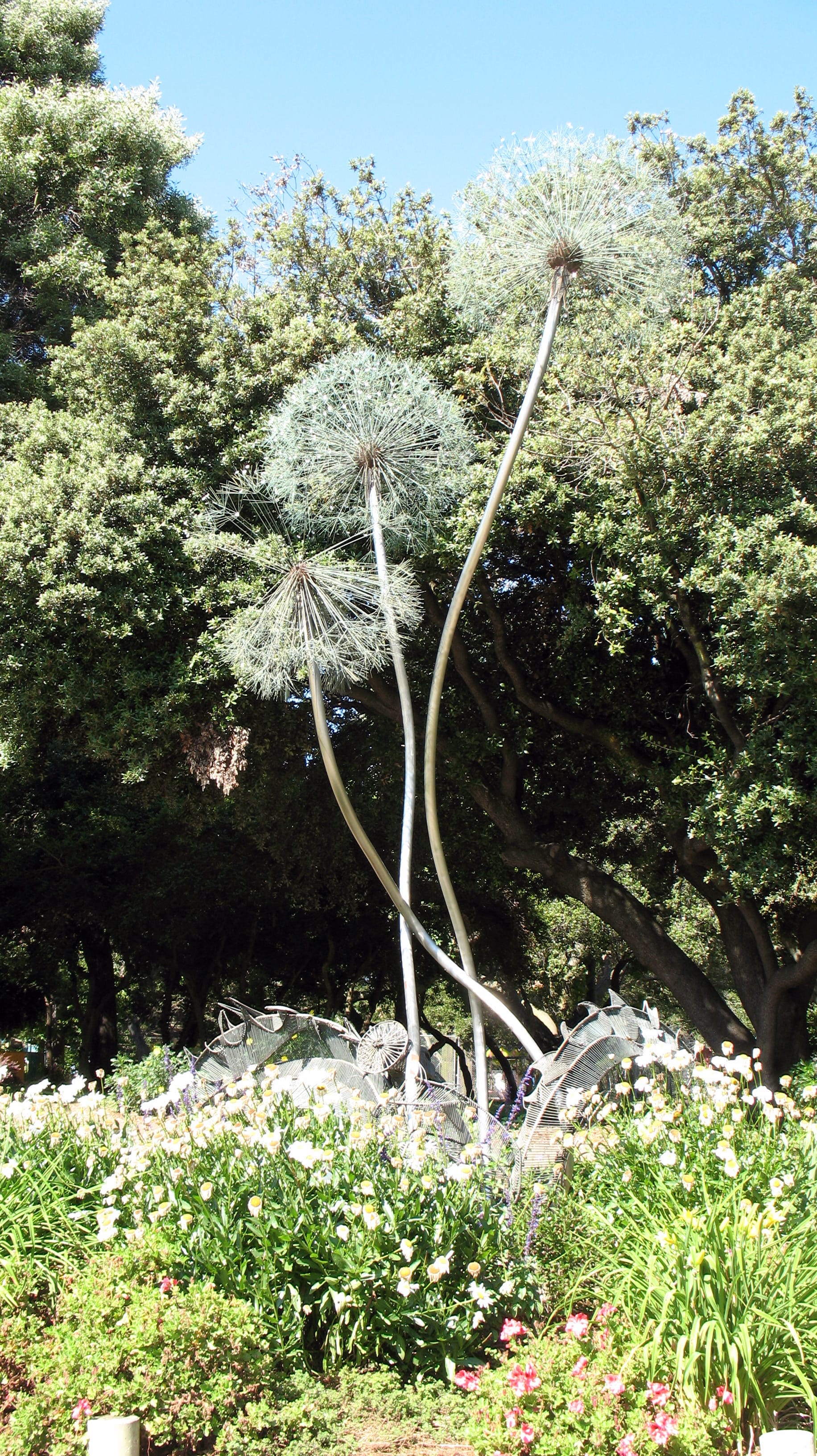
"The carefree spirit of Children’s Fairyland is beautifully caught up in a giant new metal sculpture at the street entrance to the world renowned land of make-believe in Oakland’s lakeside park," wrote the News Register at the time. "Reaching toward the open sky from 18-foot stainless steel stems, three dandelion seed puffs of bronze, sparkling with prism-cut glass at the ends of 600 radiating tines, joyously call attention to Fairyland’s gateway from either direction on Grand Avenue.”
Later that year, The Berkeley Gazette noted that "Fairyland is easy to find," because it's "marked by the big dandelion sculpture."

Photos from the earliest years of the dandelion's life are hard to come by. The Oakland History Center has nothing, Neither does Richard Kirkmire, a long-time Lake Merritt photographer. Even Randal Metz, director of the Storybook Puppet Theater, and official historian for Children’s Fairyland, had trouble finding early images of it.
The only photo I could find from its installation was this dark, blurry scan from The Oakland Tribune taken by an unnamed photographer (if you know who took this picture, please get in touch!). The image shows four men standing beneath the massive sculpture, although their faces are hard to make out. The caption explains that the piece was suggested by a man named Fred Ernst, and funded by the Lake Merritt Breakfast Club. And standing near Fred is the sculptor himself: a man named John Jagger.
Jagger arrived in the Bay Area from Chicago when he was 15 years old and funded his education from San Jose State University by playing tennis and performing at piano bars. He would eventually work at IBM for nearly a decade as an industrial designer where he would later say that he "made the machine say what it does. It really was sculpting."
Like most stories Jagger told this one might be apocryphal, but his path to professional sculpture allegedly went like this: One day at IBM, he was walking through the metal shop on his lunch hour, watching the welders work. He stopped one of them and asked the man to show him how to use an acetylene torch. With that, he was hooked. "I bought a set of tanks and promptly burned up the linoleum of my apartment kitchen," he later told The Tribune. For a few years, he was an industrial designer by day and a metal magician by night. In 1963, Jagger won first prize at the San Francisco Civic Center art exhibition. "On the side I was metal sculpting, and when this equaled my IBM pay, I quit," he said.
Soon, he was showing his work all over California.
He created towering pieces that stood at the Federal Reserve Bank in Washington D.C., Caesars Palace in Las Vegas, Schlitz Brewing Co in Milwaukee, Harrah's in Reno, and a Sheraton Safari Hotel in Dallas. He built several soaring metal sculptures for shopping malls in San Diego and Los Angeles.
In the Bay Area, he made art for the Bank of California — a seal (the animal) that once stood in their lobby on California Street. He created a set of bronze doors for 251 Post St. near Union Square, now an art gallery (the doors displaced), and a chandelier for the San Jose Mercury News. He made 12 sculptures for the University of Santa Clara’s chapel.
After he completed the dandelions in front of Fairyland, he was inspired to continue working with that form and shape. Years later, he installed a second dandelion piece — a single stalk this time, much larger than the delicate Oakland puffballs, tipped with 10,000 crystals. The piece still stands outside the Westside Towers in Los Angeles, glinting in the southern California sun.
At his peak, Jagger was selling commissions for as much as $30,000 (which would be nearly $150,000 today) and regularly receiving auction bids for five figures for smaller sculptures.
For years, Jagger’s studio was a tiny, jam-packed 220-square-foot warehouse in Paso Robles where he slept on a couch next to several bronze sculptures. "Just turning around in this mini-marvel of organized clutter can be hazardous," wrote reporter Greta G. Kopp in a profile from 1988.
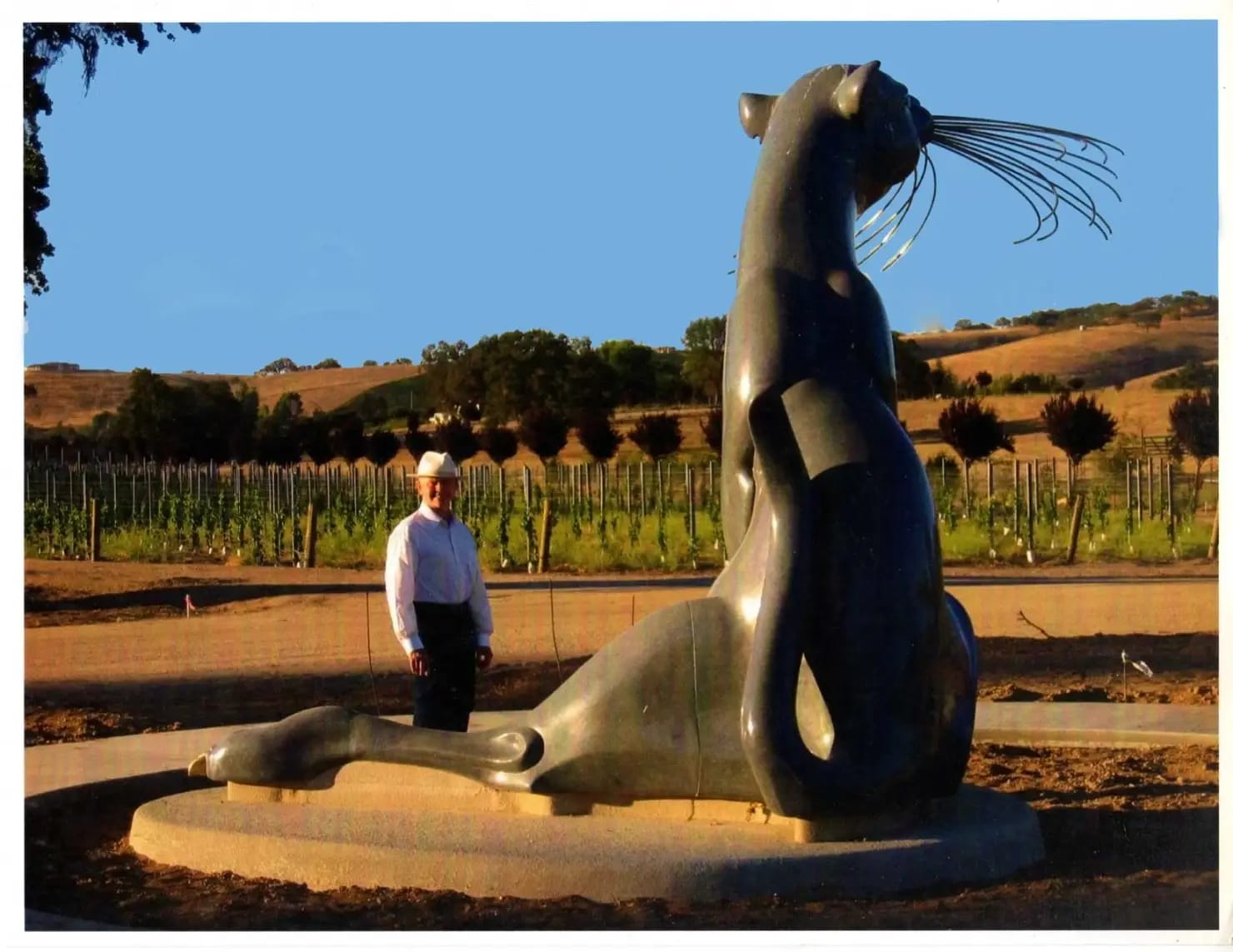
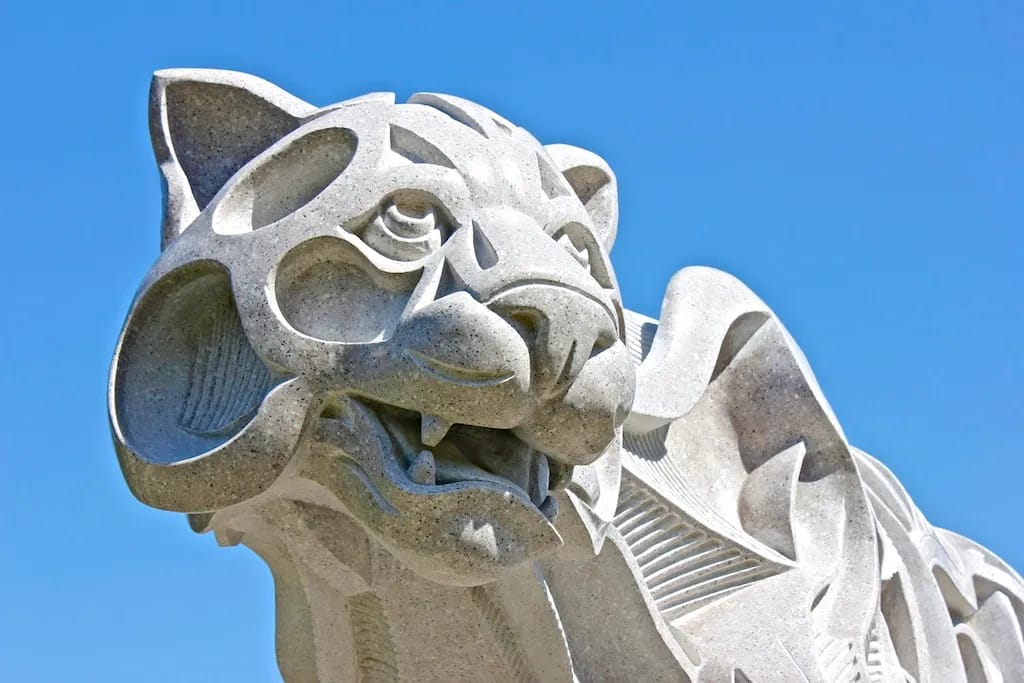
But even when operating in these small quarters, Jagger worked big. His portfolio is dominated by huge elaborate sculptures — 17, 18, 20-feet tall. He experimented with methods — new ways of welding to create distinctive shapes and forms. He made hulking pieces out of stone, including a granite puma that weighs 20,000 pounds. The larger-than-life portfolio is fitting for a man who felt like a titan of sculpture himself.
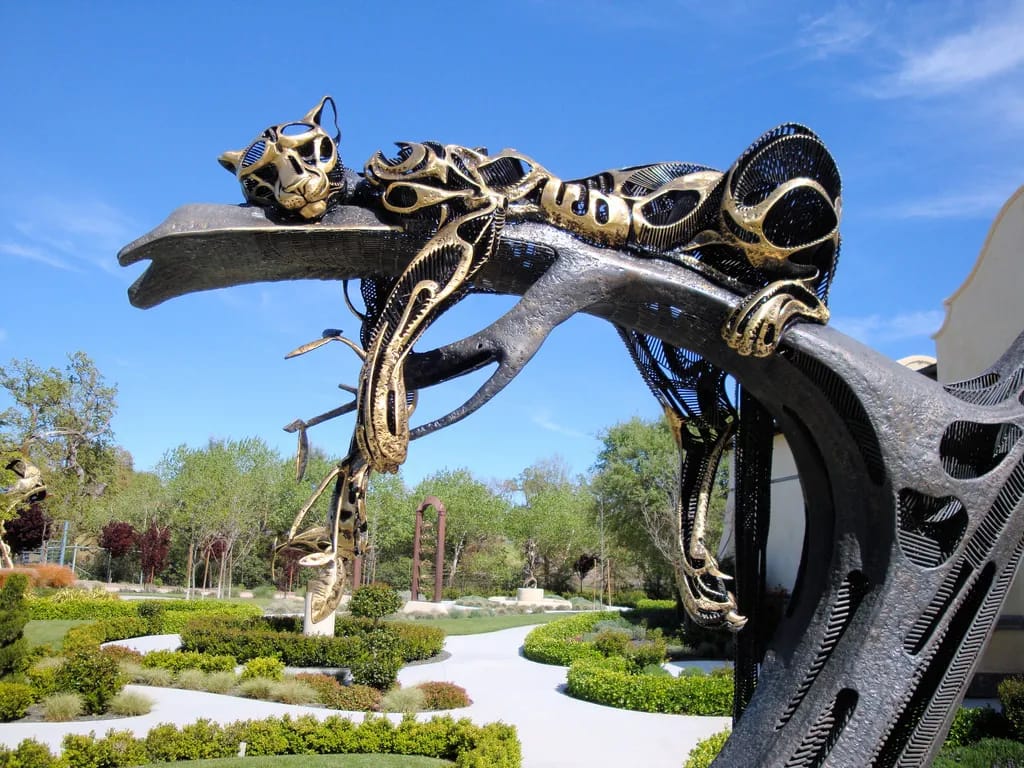
Jagger's work is distinctive. Once you've seen a few pieces, it's easy to identify his art — the architectural take on natural themes, the sweeping shapes, the elegant whiskers (he seemed quite fond of whiskers, whether on seals or cats). The sculptures loom larger than life and have a kind of latent movement to them, the way an animal can be very still yet still emanate danger. "I become my animals," he once said. "I'm able to feel the musculature, the movements, all of it."
Dale Evers, a fellow sculptor, met Jagger in Beverly Hills at an art show, during a time when both of them were driving around the country, living out of their vans, and selling art. In his car, Jagger often had a metal cheetah with him, so lifelike that it allegedly scared children.
Evers considers Jagger a dear friend. "I love John Jagger," he tells me. But he also was honest about the man's faults. "John was an absolute piece of work." He always drove a Jaguar, an homage to his name, and burned through wives — "I lost count after six," Evers says. The man was loud, and brash, and sometimes frustrating. "John was a freaky, world-class, da Vinci-level brain." The problem was that he knew it.
Ever ambitious and always moving forward, Jagger was never satisfied despite his success. He always seemed to be crafting some new side project or scheme, envisioning novel ways to make extra money. In 1978, he told one newspaper that he was considering starting a leasing corporation to lease his artwork out rather than sell it. "That way I'll never lose them," he said, "When I get older, they'll be a pension."
Over his life Jagger built several elaborate, huge houses, first in Santa Cruz and later a home atop Frog Mountain in Atascadero which he called "The Falcon's Nestegg." He told the local paper that once it was completed, he would install a helicopter pad. Six years later the house burned to the ground.
Never deterred, Jagger and his then-wife Reina announced they would build again. They considered a Japanese-style pagoda, and even a recreation of a Balinese village "complete with six separate buildings elevated on poles." Ultimately, they decided on something else completely: a two-story building made completely of metal. "People will be surprised when they walk in," Jagger told The Tribune in 1995, because while the outside would look like a storage container, the inside would look like a palace.
Still, Jagger's most enduring non-artistic endeavor lay in the kitchen.
When I first started digging into the newspaper archives for more information about the sculptor behind our missing dandelions, I never expected to come across an advertisement for avocado pie.
But there it was, in the Santa Cruz Sentinel from July of 1974, an ad with the big, bold headline: "Famous Local Sculptor Is Pieman."
You have probably seen my work in the San Francisco Bay Area. The Bank of California Seal in their lobby on California Street is mine. So are the Bronze doors and lights at 251 Post Street, across from Gump's.
The giant Dandelions at Children's Fairyland in Oakland, and the Chandelier hanging in front of the San Jose Mercury-News. And you may recall me working on my life-sized Lion in Santa Cruz last summer.
But Sculpture is not all that I do well. I make a PIE. With Avocados, and it's phenomenal. The raves have been such, that I want to share it with you. JAGGER AVOCADO PIE is better than cheesecake, and you can freeze what you don't eat. It's a simple pie to make, but the proportions are somewhat critical. That's why you haven't seen it in the market. It's the final touch for any great dinner, bridge party, or encounter session.
Jagger went on to explain that any lucky soul could get his JAGGER AVOCADO PIE recipe, along with a poster (personally signed by him, of course) by sending a check or money order for $1.50 to his address in Capitola.
"You may like my sculpture; you'll LOVE my pie!" the ad ends.

Jagger did not invent this pie. In fact, according to an article by Wally Trabing for the Santa Cruz Sentinel, his version was inspired by the sister of his third wife. Jagger was invited to a dinner party at her house, served an avocado pie he didn't like, and took it on as a challenge. For years after that, he tinkered with the recipe. "Jagger had reason to work in the kitchen," Trabing writes, "survival. All those bachelor periods between his five marriages can add up to cultural shock."
Trabing and Jagger had at least one thing in common — a flare for the dramatic. In his piece, Trabing calls the pie a “super pie” and goes on to write “My mouth knows of which it speaks: it has tasted and it spake gloriously of that taste.”
And sometimes those dramatics pay off. Even now, when you look at recipes online for avocado pie, you'll see people referencing the sculptor without even knowing it. "The real name is Jagger Pie although I have no idea what that means or where the recipe originally came from," writes one food blogger.
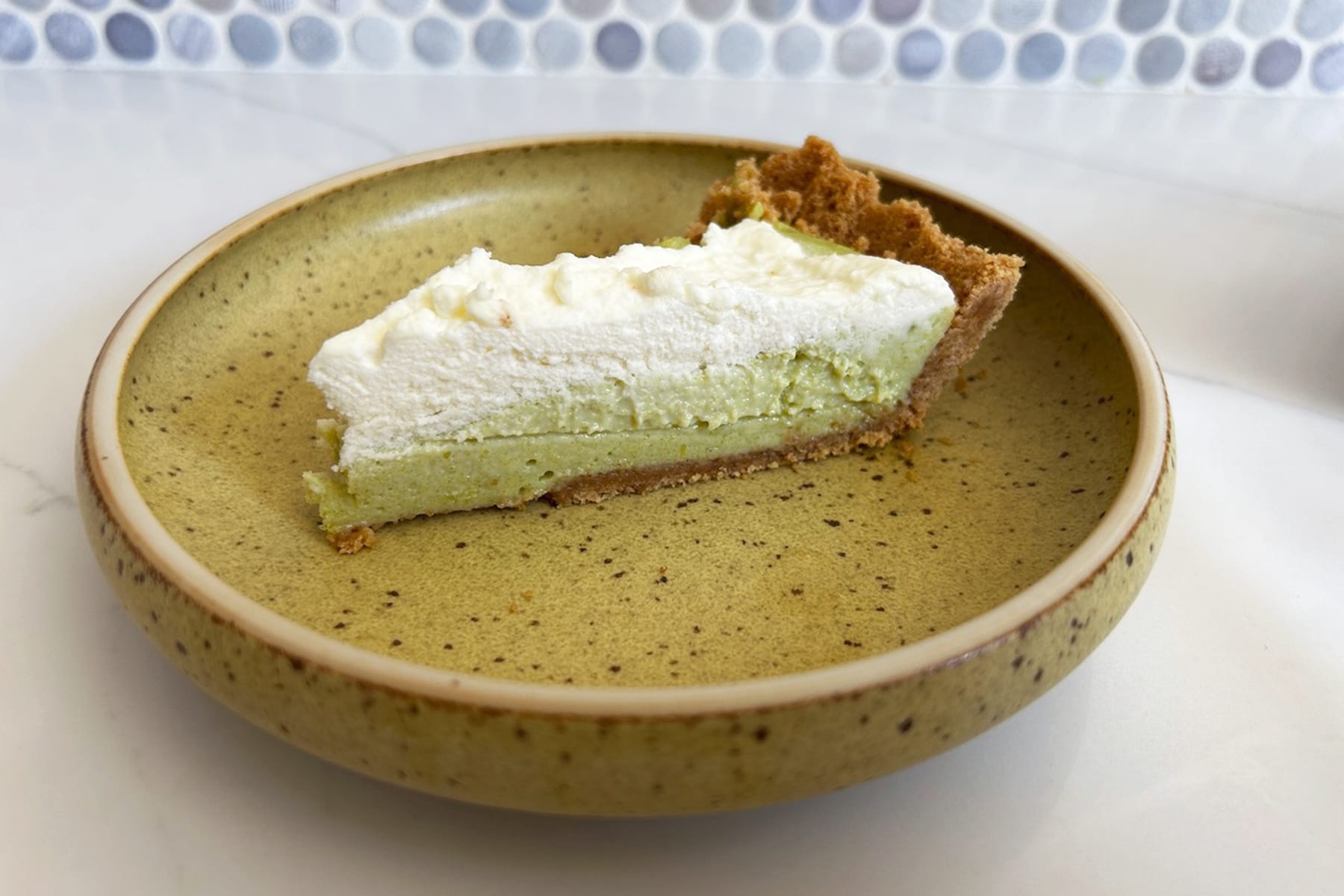
I could never track down Jagger's exact recipe. According to Trabing, he used Florida Alligator avocados, or California Bacons in a pinch (both are said to be high in oil). But the exact details and proportions — so crucial, at least according to his advertisement — are lost to time. In its place, COYOTE's resident recipe expert Soleil Ho and I created our own version. You can find the recipe below, should you want to recreate a slice of ‘70's Bay Area history.
John Jagger died in 2013, but near the end of his life Evers tells me that his friend’s outlook and demeanor totally changed. He started going to bible school classes and attending church regularly.
At one of those classes, he met a man named Warren Frankel, a missionary physician. The two became friends, and one day after class Jagger invited Frankel to his studio to show him his work. Frankel was impressed, and together, they hatched a plan: Frankel would cut back some of the grapes on his property and start a winery, and Jagger would provide the art. They would call it Sculpterra.
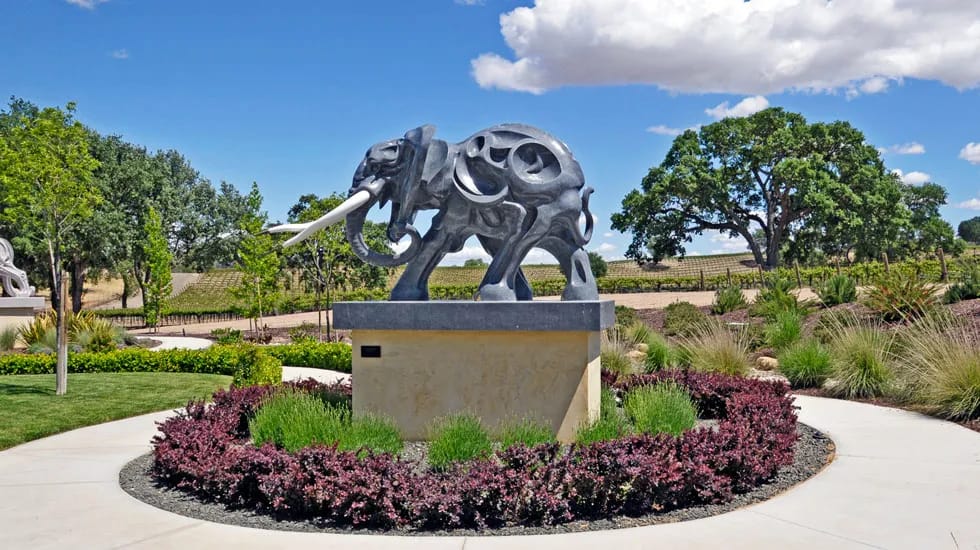
Unlike some of Jagger's other schemes, this one actually worked. Sculpterra still exists, and on the winding grounds now sit several of Jagger's sculptures that once lived all over California. The flame that had gone to a Beverly Hills shopping mall. The mermaid that once swam through a bank in Chicago. The 20,000-pound granite puma. A 16-foot-tall dancing horse. Dale Evers has work there too. He took over as the lead sculptor at Sculpterra after Jagger passed away.
Before he died, Jagger married one last time, and Evers tells me that he seemed to settle in a way he never had before. Evers, who is a Christian, saw it as a sign. "I was basically like, if God can change John Jagger, any miracle is possible."
But what about the dandelions? The sculpture that set us on this adventure to begin with? They are not at Sculpterra (I checked). And Liesl Piccolo isn't the only one who wants to know their whereabouts. In the Oakland History Facebook group, another Fairyland fan asked the same question back in 2021 and commenters noted how they missed the piece.
It turns out the towering flowers were removed in 2017 to make way for a new sign along Grand Avenue marking the entrance to Fairyland. The sign was a long time coming, according to former Fairyland executive director C.J. Hirschfield. "You’d be amazed how many people don’t know Children’s Fairyland exists (or “still exists”)," Hirschfield wrote in a blog post in 2018. "It’s not that we’re a secret, exactly, but our public façade has always been a bit … reserved. If you were driving past our Grand Avenue entrance in a hurry, you could easily miss us."
Piccolo says she loved this about Fairyland, personally. "It was like stumbling into a magical realm."
But Hirschfield had bigger dreams than that. For 16 years she pictured "a big sign, illuminated at night, on our Grand Avenue frontage." She had hoped to put the new sign up in 2008, after the park got $500,000 from a bond measure for renovations, but it wasn't quite enough. It took several more years to raise an additional $50,000 from private donors before she could get her sign.
In May of 2017, they broke ground along Grand Avenue, and the dandelions had to go.
Randal Metz, the Fairyland puppeteer and historian, told me that after 46 years of duty, the dandelions had seen better days. Children used to climb up and pluck the jewels from the tips of the puffs, and eventually the park stopped replacing them. Looking at photos from the early 2010s, you can see that one of the puffs had been warped and dented.
And so the dandelions were dismantled and taken away.
So where did they go? It turns out, not far. In fact, they're still at Fairyland, although you'd never know unless you were really looking.

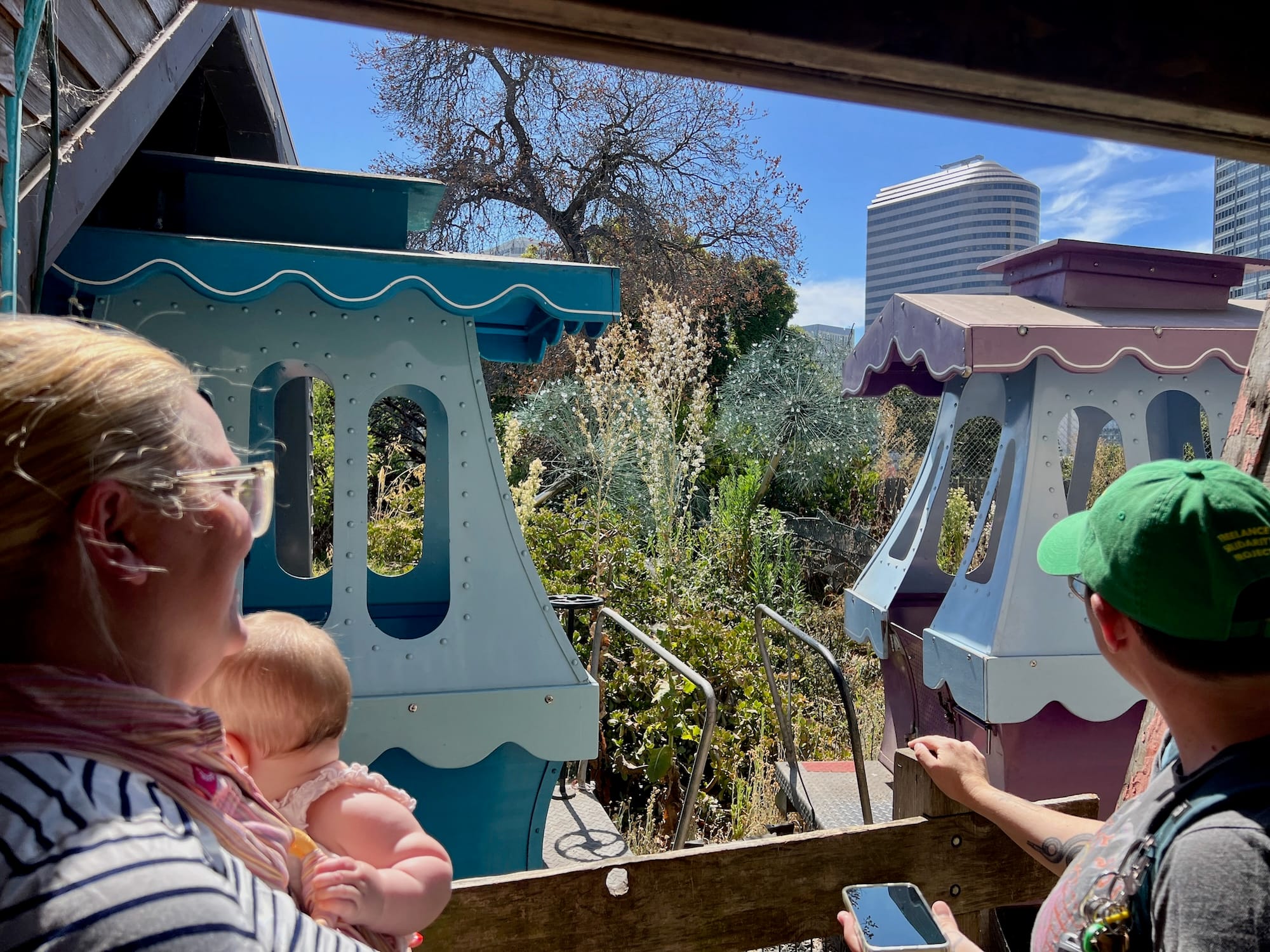
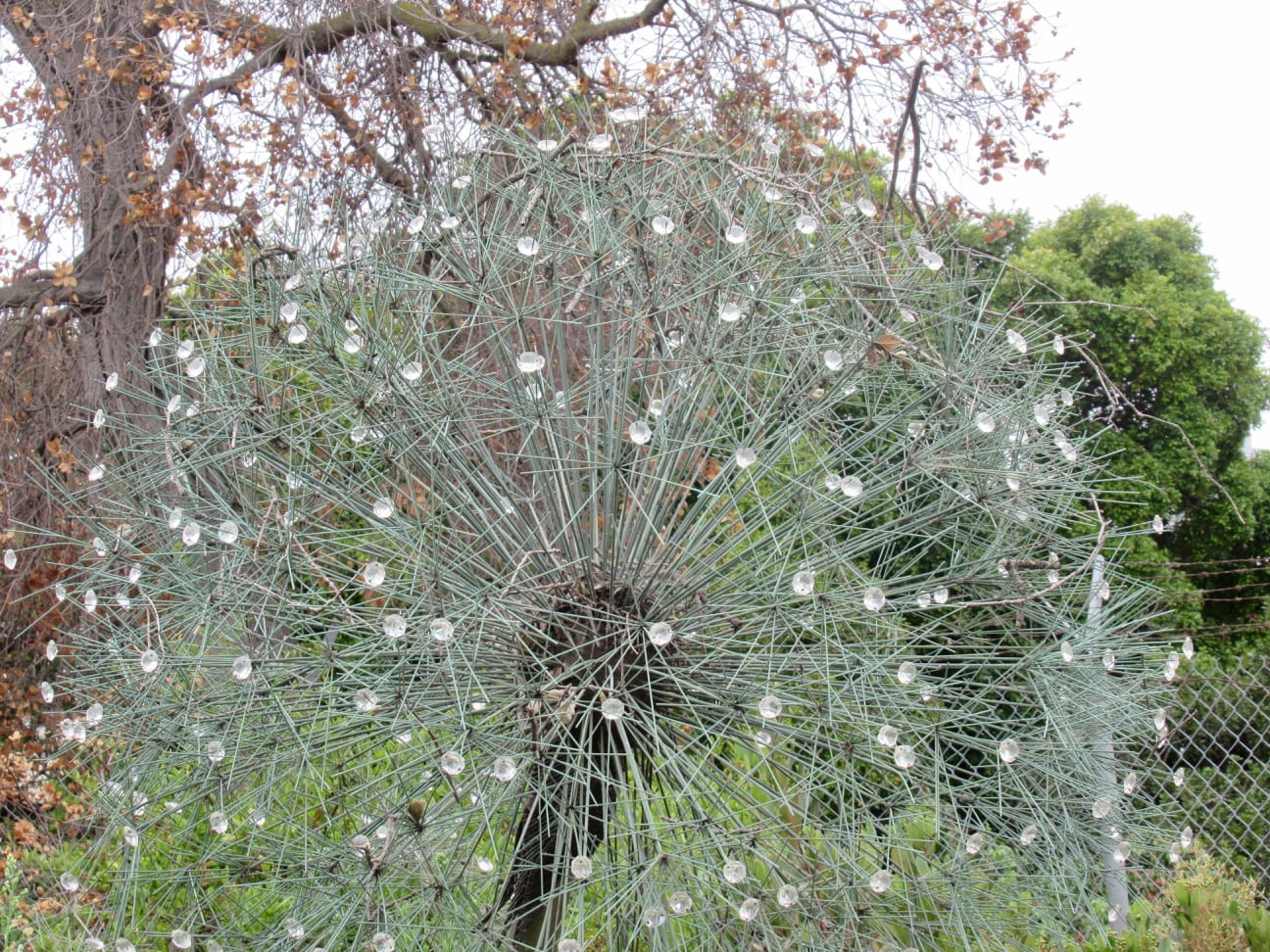
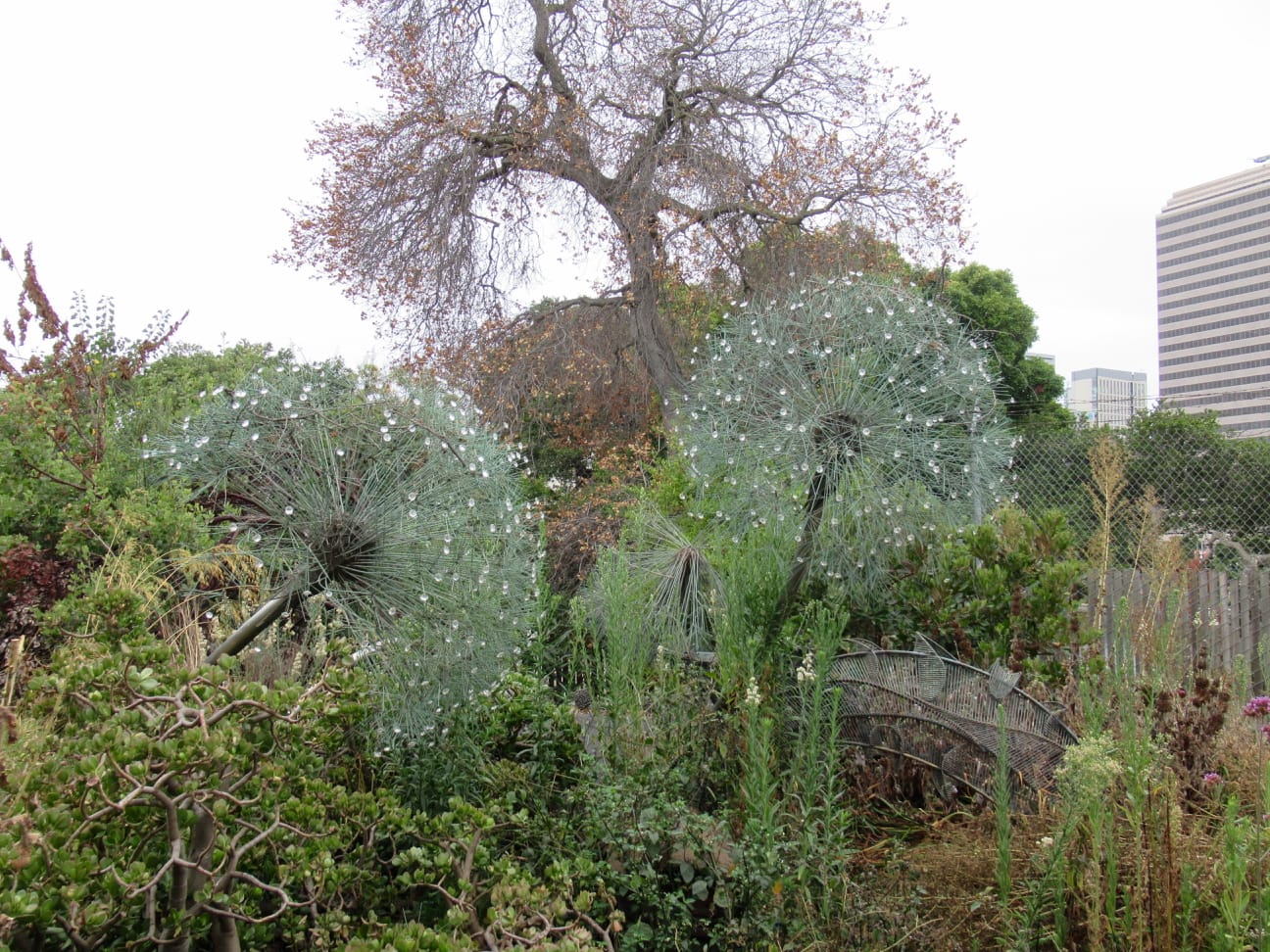
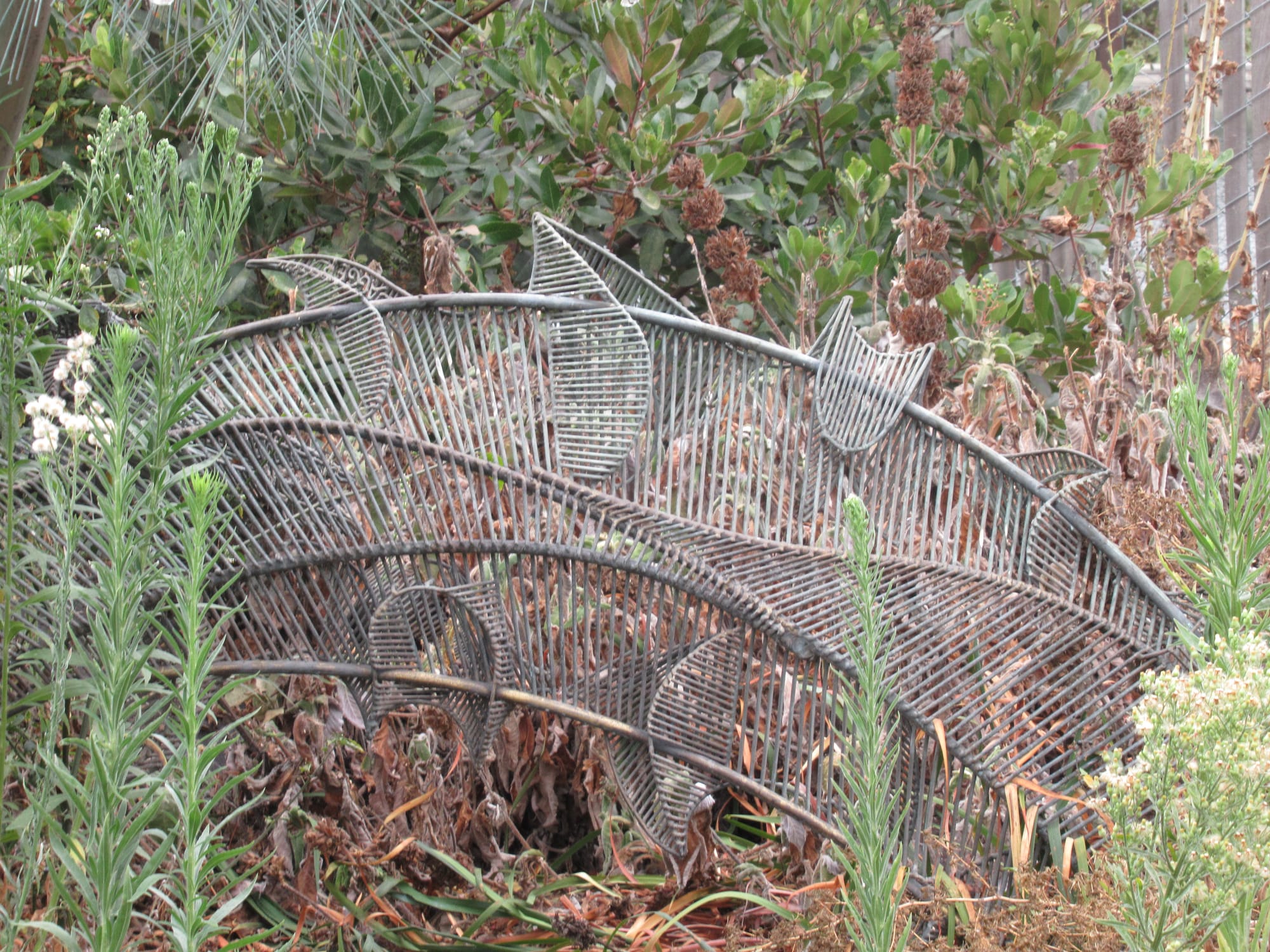
Tucked in a far back corner, in the southwestern edge of the park, behind the Jolly Trolly train and obscured by shrubs and bushes, the dandelions sparkle in the sun, waiting. They are no longer 18-feet tall. Their long, twisting stalks lie flat on the ground. The puffs themselves are littered with twigs fallen from a nearby tree.
Metz told me that there was talk of trying to relocate the sculpture, re-erected, into the park “as a centerpiece in some area.” But the cost of moving it whole — including the 18-foot stalks and the 4 by 5-foot metal-reinforced concrete cube that anchored the piece in place — would have been expensive and challenging given Fairyland’s tight entrances and narrow paths. “And so, it was decided to save sections of the statue, and that is how it came to be on the Jolly Trolly train tracks,” Metz says.
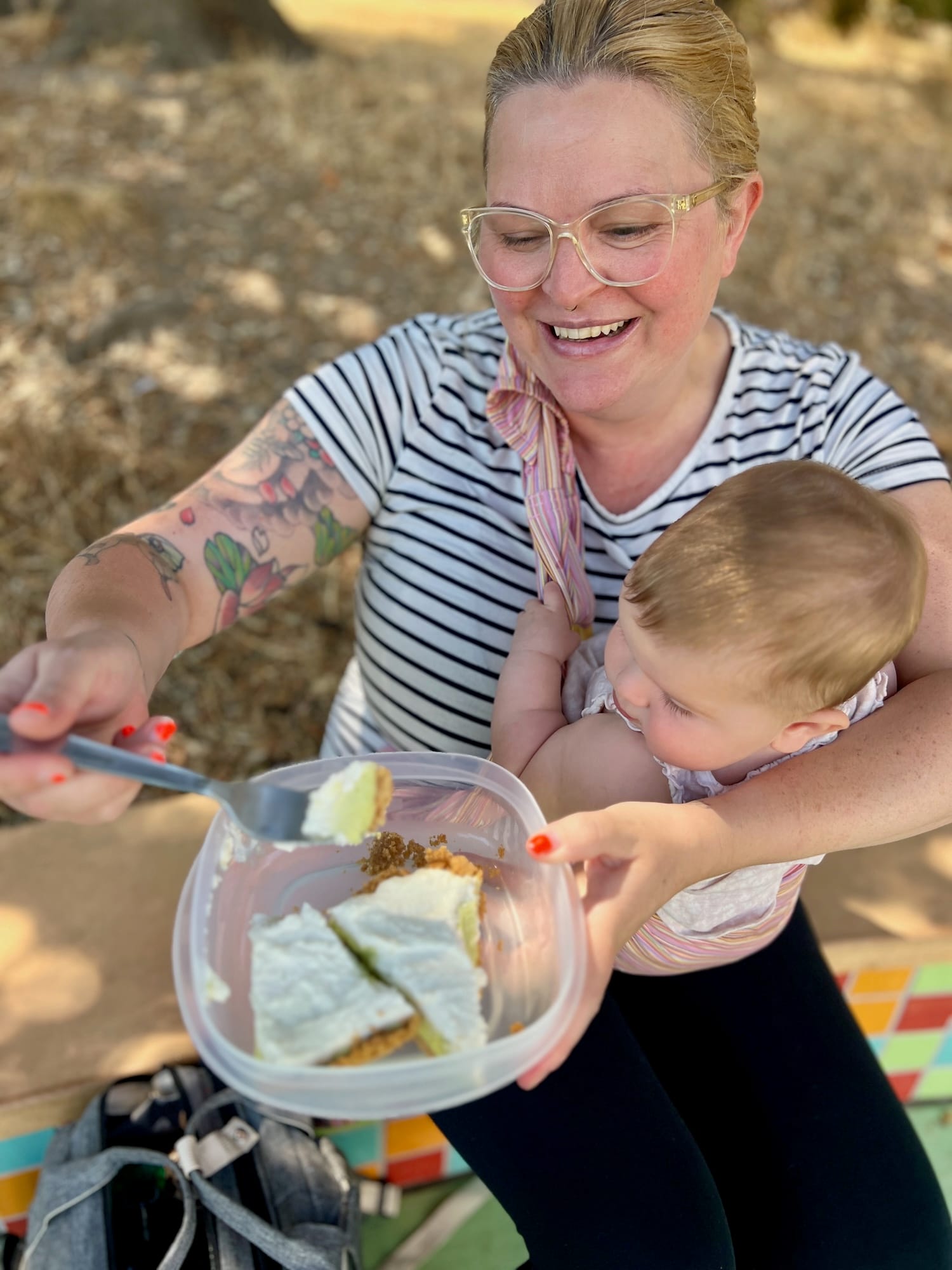
Piccolo and I met up at Fairyland so I could reunite her with the sculpture she’d been missing. It had been right under her nose the whole time. I brought her a slice of Jagger Pie, and we ate under an old oak while I showed her a presentation on my computer of everything I just told you — John Jagger, his art, his legacy and eccentricities.

Piccolo tells me that as a kid, she would look out the window of the car, and know where she was based on different landmarks. The giraffes painted on the pylons under the 580 on Harrison Street and MacArthur Boulevard (the work of an artist named Dan Fontes), the Red Baron out in the Bay near Berkeley (currently missing, another piece of art I’m trying to track down). The dandelions, she said, were how she knew she had arrived at the most wondrous place on earth.
Piccolo and I wove through the winding paths toward the back, and I pointed her to the gap between the faux-western saloon style buildings where you can see the felled dandelions best. "Oh my god," she says. "Oh my god." We look for a moment, and then she laughs. "They are fucking amazing. Just imagine them standing up. They're so beautiful. Look at the crystals, they're gorgeous."
I can imagine them standing up. But if I'm honest, I wish I didn’t have to. These dandelions are a part of Bay Area art history. They're beautiful, historic, and deserve better than being lost amidst the shrubbery near a chain-link fence at the edge of the park.
Perhaps one day the dandelions can be restored to their former glory, stood back up to sparkle in the sun and mark a magical place for a new generation of kids.
"Thank you for seeing their majesty with me, they're beautiful, they're so beautiful," Piccolo says.


The dandelion sculpture where it now sits, in pieces on the ground in the back corner of Children's Fairyland. (Photos courtesy of Randal Metz/Children’s Fairyland Archives)
Do you have a mystery you'd like COYOTE to tackle? Send us your tips and questions here.
As soon as I found John Jagger’s advertisement for his special avocado pie in a 1974 edition of the Santa Cruz Sentinel, I knew we had to make it. With the help of COYOTE co-founder Soleil Ho (James Beard-award winner, food critic, and recipe creator extraordinaire), we tested the recipe we found online for the pie and made a few of our own adjustments.
I’m not going to lie: I was skeptical of this pie. Even during recipe testing when we tasted the filling before putting it into the pie dish, I was not convinced. But you know what? I’ve been converted. I genuinely like this pie, and I hope you try it! If you do, please send me your Jagger Pie pictures and thoughts.
Note: For one of our test pies, the avocado I purchased was so hard we had to peel it like a potato to use it. It still worked! Riper avocados taste better, but if you’re stuck with unripe fruit don’t sweat it. You’ll be fine.
INGREDIENTS
EQUIPMENT
First, make the graham cracker crust.
(You can use your favorite recipe for this, if you have one. This is the one we made.)
Next, start making your filling and topping.
This sets up pretty fast, so you want to wait to start this part of the process until your pie crusts are pretty cool.
Slice, serve, and enjoy!
Reo Eveleth is an award-winning reporter and writer who has covered everything from fake tumbleweed farms to million-dollar baccarat heists. Their work has been nominated for a Peabody, an Emmy, and an Eisner Award.
View articles