Yap Zone: Valkyries Beat 🤝 COYOTE
We talk to women's sports reporter Marisa Ingemi about the Valkyries and the stories she's planning for COYOTE.


We talk to women's sports reporter Marisa Ingemi about the Valkyries and the stories she's planning for COYOTE.

For Valkyries fans, the inclusiveness of Ballhalla is sacred — even moreso as the culture war comes for the WNBA.

You can’t build a movement around a person whose only commitment is staying uncommitted.
For Valkyries fans, the inclusiveness of Ballhalla is sacred — even moreso as the culture war comes for the WNBA.


This piece is a joint publication between COYOTE and Valkyries Beat, a newsletter covering the Golden State Valkyries from the perspective of a women's sports journalist.
Whit Guerrero was never a sports fan.
Men’s sports, to him, felt like a toxic, patriarchal space with little room for queer and trans people to participate — or even watch — without feeling like they didn’t belong.
But in 2025, when the Golden State Valkyries debuted, he found the WNBA. It felt like he had discovered the exception to everything that had turned him away from sports in the first place. The WNBA had cultivated a reputation as a welcoming place for LGBTQ+ fans, and the Valkyries made inclusivity a central part of their identity from the moment they arrived in the Bay Area, from explicit statements from coaches and players to in-game activations centering various communities.
That was why it was so jarring to see even a small anti-trans protest outside Chase Center before the Valkyries played Minnesota on Aug. 19.
This wasn’t supposed to happen here.
“It felt like this was a sacred space,” said Guerrero, who is a transgender man. He and a handful of others shouted toward the anti-trans group, but he noticed that even people who weren’t confronting them were still dismayed by the display. “ I overheard [people] being like, ‘Are you serious? This is what we're doing in San Francisco?’ … So I think people were pretty caught off guard that this was happening.”
Though small, the protest was another indicator that the Valkyries, despite their all-in stance on LGBTQ+ inclusion, have been forced into the national fight over transgender inclusion in sports, with conservative activists and commentators focusing on a league that has no openly transgender players currently on its rosters and has never had a transgender woman on a team.
The latest flashpoint began with Indiana Fever forward Sophie Cunningham, who said earlier this year that she had received criticism accusing her of being anti-trans after she spoke about “protecting girls and women in sports.”
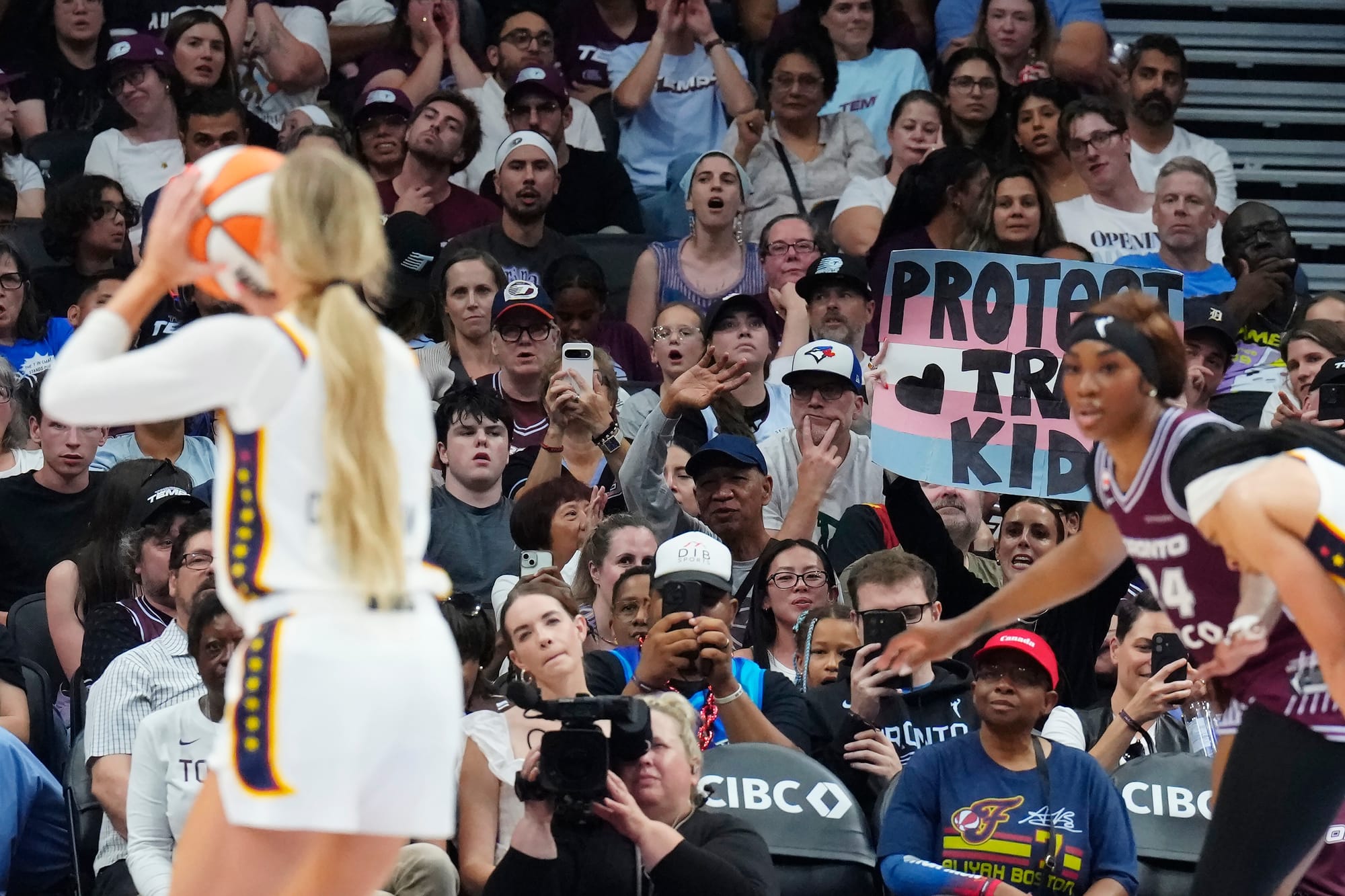
“I got a lot of negative feedback about me hating trans. And I’m like, ‘I never once said that,’” Cunningham told ESPN. “I think that I am here to extend love. But I also think that love is truth, being honest. And I want to protect young girls in a locker room, or young girls in sport who shouldn’t have to go against biological men.”
Cunningham has since appeared alongside anti-trans activist and former athlete Riley Gaines and continued to defend her position.
Her comments have also attracted the attention of organizations campaigning against transgender participation in women’s sports, including anti-trans apparel company XX-XY, founded by former U.S. gymnast and Levi Strauss executive Jennifer Sey.
That campaign came to Chase Center when the Valkyries faced Minnesota on Aug. 19 — hence the protest Guerrero saw. The timing was significant: Lynx coach Cheryl Reeve has been an outspoken supporter of transgender rights.
About 10 protesters gathered outside the arena, and, according to reporting by Rough Notes reporter Maya Goldberg-Safir, one security staff member even seemed supportive of their presence. On the other hand, Guerrero said he saw Chase Center security keeping the protesters away from the arena.
“I feel like in other cities, what I witnessed was that the security wasn't getting involved until something escalated,” he said. “So I was impressed to see that Chase Center staff were the ones being like, ‘Yeah, we're not gonna even engage in this, like, we're not gonna let you bring that inside.’”
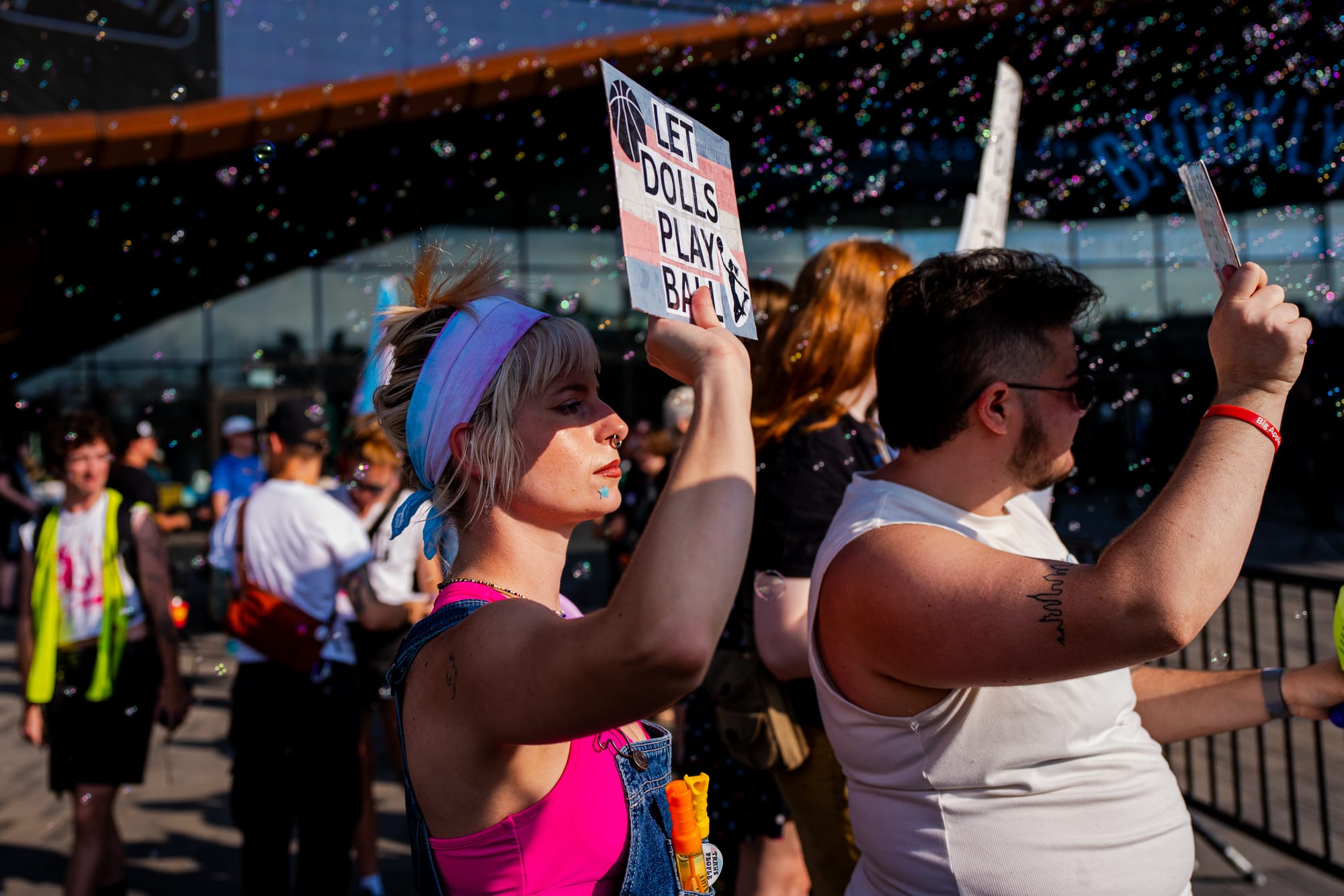
For the most part, though, the Valkyries have avoided the intensity of the national fight surrounding Cunningham and the Fever, in part because Golden State has not played Indiana since July. (Cunningham's supporters have increasingly made those games a focal point for their broader anti-trans platform.)
That changed in August, when Valkyries player Gabby Williams found herself pulled into the conversation after an old interview resurfaced in which she openly supported the possibility of a transgender woman playing in the WNBA.
“I think … trans rights, right now, is our new battle,” Williams said in the May 19 interview, recorded during a post-practice media availability. “We see trans people’s rights being stripped away from them; there’s a lot of discourse around trans athletes and what they can compete in.”
“I would welcome a trans athlete on my team or against my team, anytime. I don’t think it’s a problem in the world. It’s just another way to kind of attack trans people. We’ve seen players like Layshia Clarendon, who stepped into that forefront, and have been brave enough, and courageous enough, to step up. So I guess that’s the next battle we have to fight as athletes.”
Clarendon, who retired from the WNBA in 2024, became one of the league’s most prominent advocates for transgender inclusion as the first out non-binary player in the league.
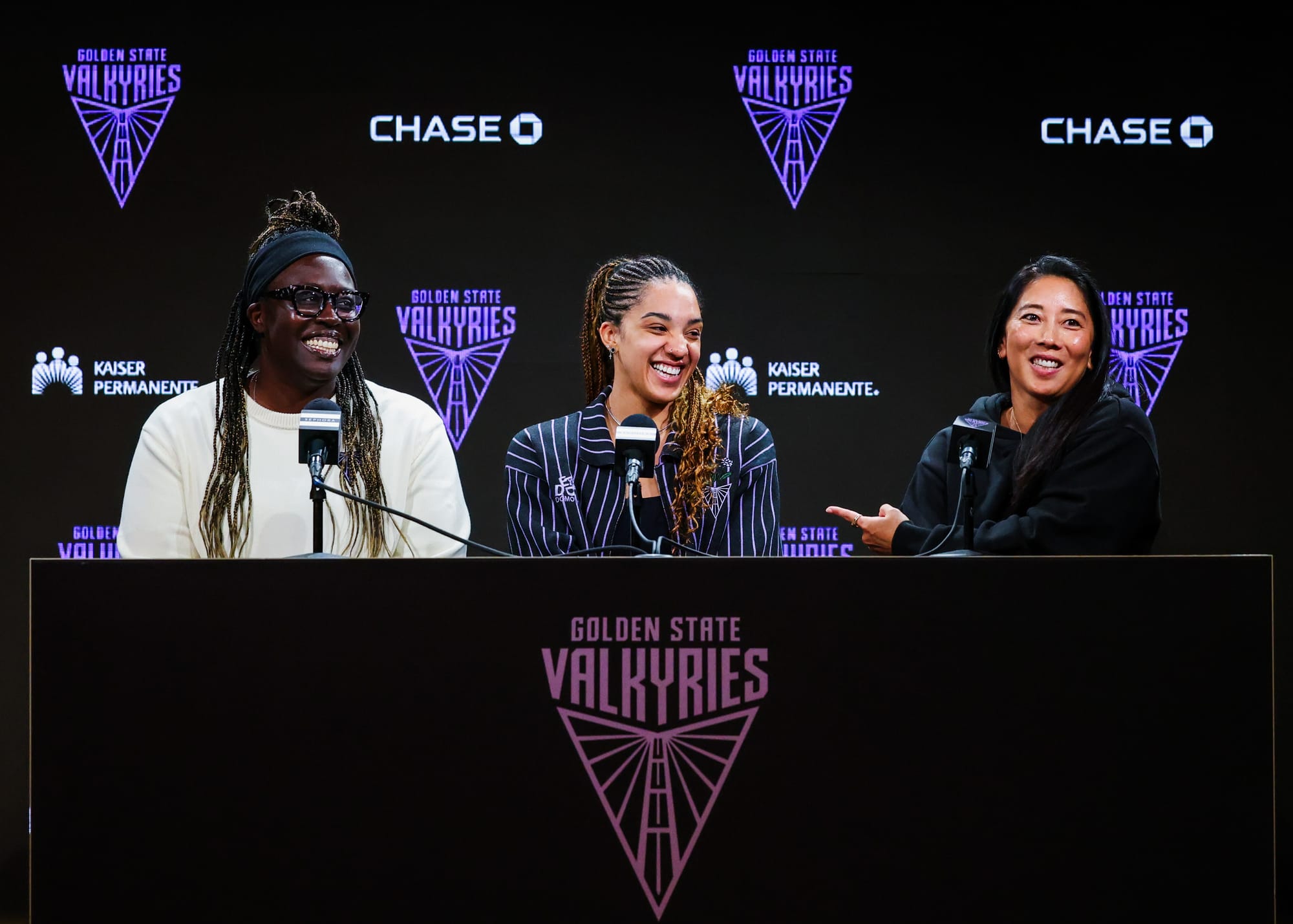
Valkyries coach Natalie Nakase also spoke in support of transgender inclusion when asked about Cunningham’s comments on Aug. 2.
“I’m all about women, little girls deserving to play, and that includes trans women,” Nakase said.
“For me, sports is about belonging. It’s about inclusivity. It’s about allowing everyone to be their authentic self. I’m big on that because I have been criticized for my height, for my ethnicity. I’ve been in those ‘you shouldn’t belong here’ conversations, and for me I don’t want that space, especially Golden State, to ever feel like that.”
They are hardly alone. Players and prominent figures around the league, including Aces guard Brianna Turner and Sky guard Natasha Cloud, have also spoken publicly in support of transgender people.
The issue has been further inflamed by former NBA players Enes Kanter Freedom and Royce White, who have said they intend to pursue opportunities in the WNBA, backed by anti-trans groups attempting to create a publicity stunt. The league has said that they are not eligible for the WNBA draft.
For Guerrero, however, the vitriol directed to trans and queer individuals has remained mostly outside the arena.
“I’m really grateful and impressed by the coaches and players,” he said. “Despite this being an institution that tries to sort of shut down players' politicism, they're still so outspoken.”
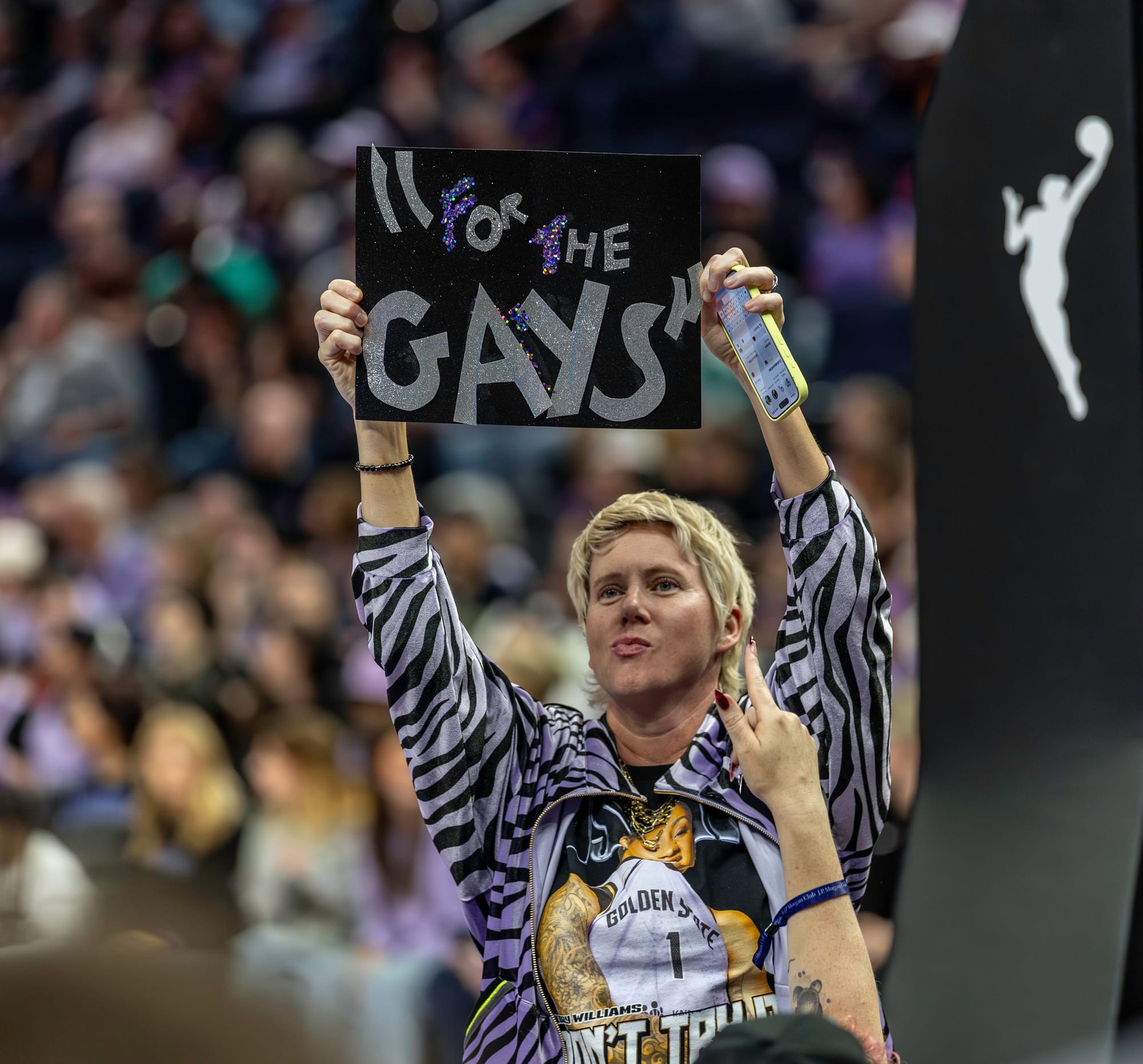
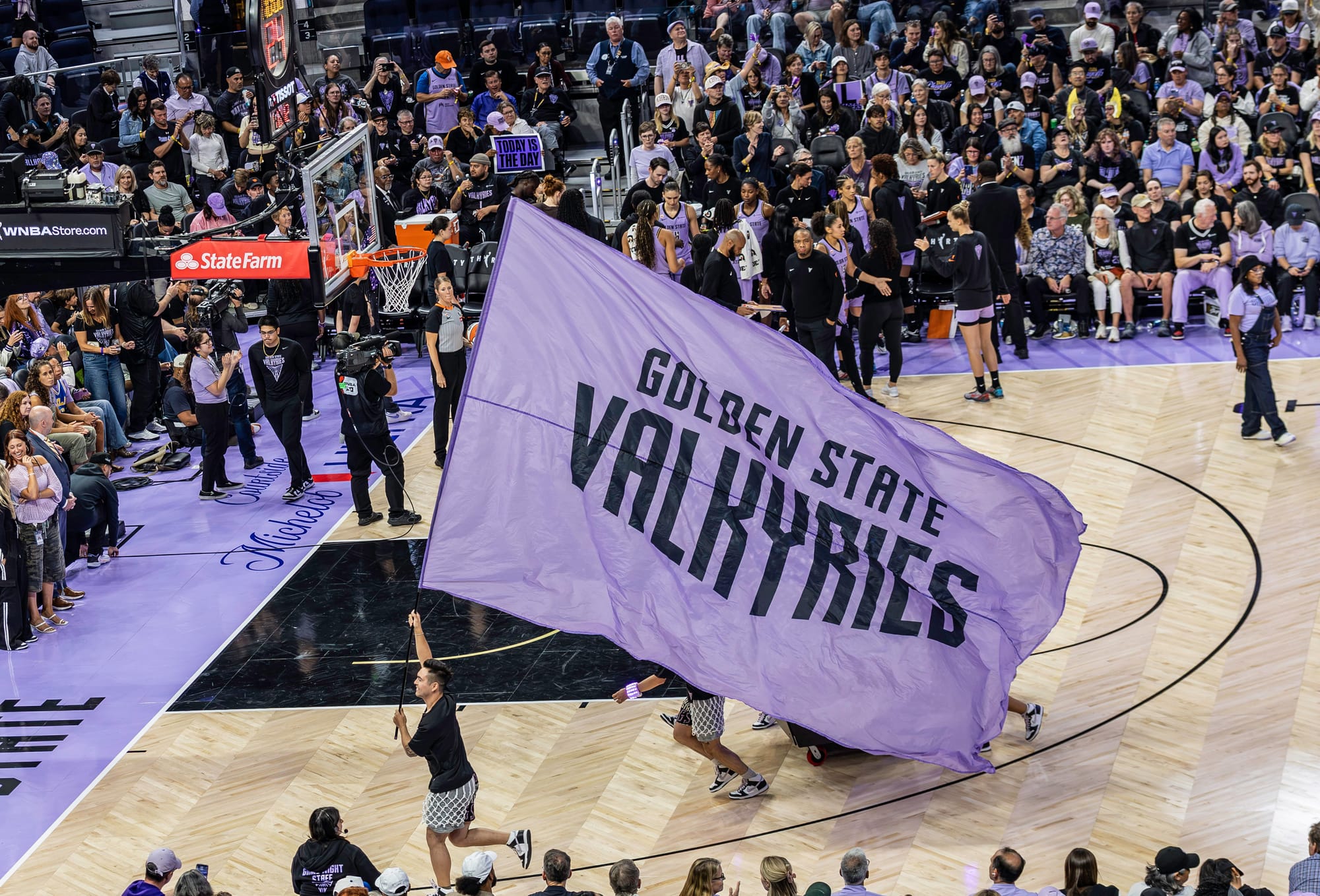
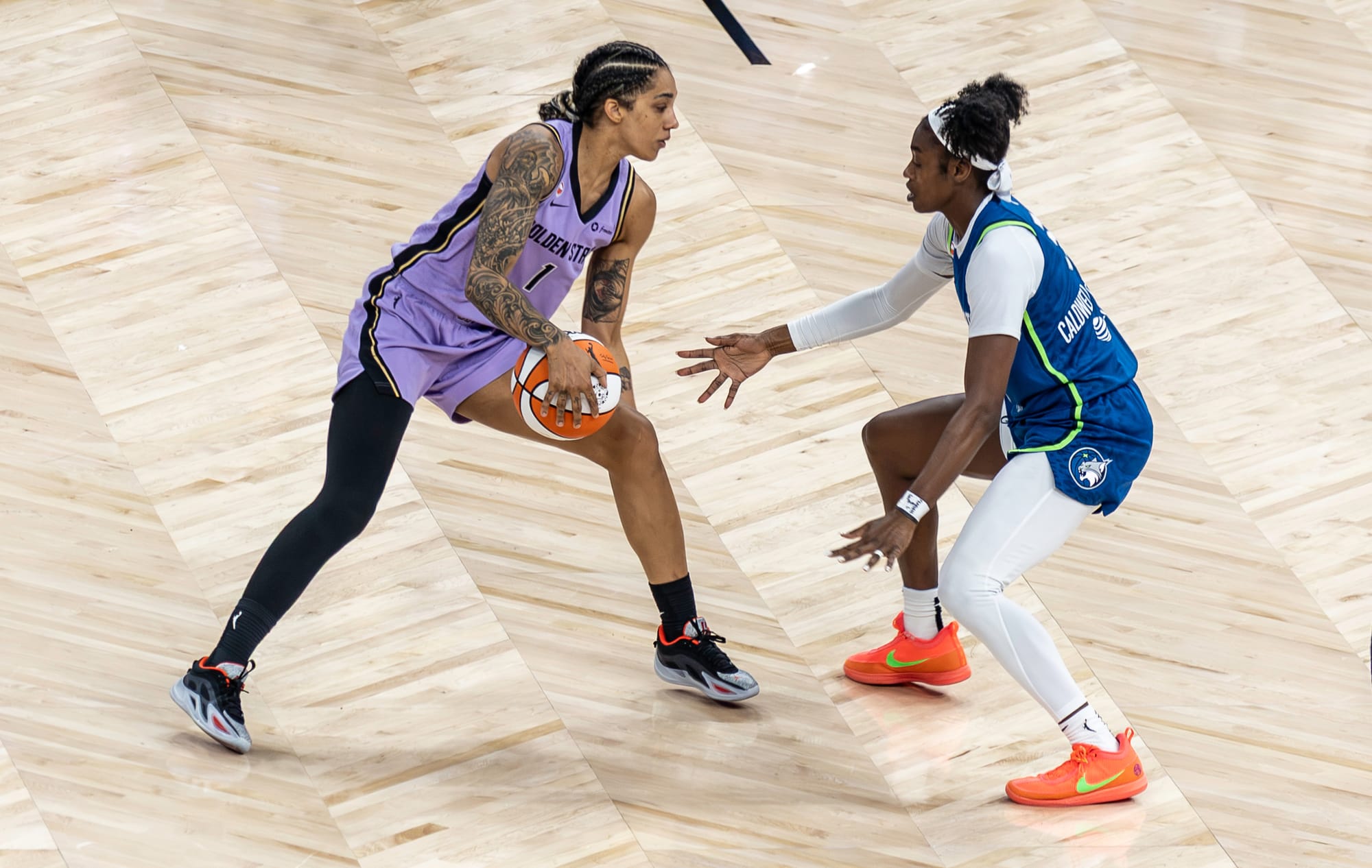
While Williams and Nakase have attracted attention in conservative online spaces, the day-to-day experience of attending a Valkyries game has not fundamentally changed.
“There's an opportunity that a lot of women's sports have where [participants] are already part of a marginalized group,” Valkyries fan Liz Paiva told me. “[They] get to sort of say, well, if we're not in the spotlight, then we get to be ourselves here…. The celebration of who we are is just baked into it.”
For now, Ballhalla still feels like what team president Jess Smith has described it as this season: Pride Night every night.
Earlier this season, I spoke with Sasha Colby, a transgender woman and close friend of Williams who won RuPaul’s Drag Race in 2023 and performed at halftime of the Pride game on June 26.
“How much the team shows up, and how much the community shows up for us, just makes me feel, as a trans girl in sports — it's really nice to know that there's a lot of open arms,” she said.
For Guerrero, that feeling is the point.
The WNBA once felt like a place where he could simply be a fan without having to think about whether he belonged there. Now, as the league becomes more visible and more politically contested, that sense of refuge is being tested.
Maybe that is an unavoidable consequence now that more people are watching and paying attention. And some of them are bringing in battles that the league once seemed able to keep outside the arena.
The question for fans like Guerrero is whether Ballhalla can remain the space they thought they had found — a place where belonging doesn't have to be debated before the game can begin. So far, the Valkyries’ actions have been encouraging, according to fans — but the same can’t be said of the WNBA. While the league has called White and Kanter’s efforts “bad faith,” it still hasn’t condemned transphobia as a whole.
“That (the Valkyries) have stood up has been super powerful,” Guerrero said. ““But I think the league could absolutely do more.”