COYOTE Has Entered the Building: Warfield Commons!
Another startup moves into an office building in downtown San Francisco??


Another startup moves into an office building in downtown San Francisco??

Protect yourself and others this fall.

This week we've got live mural painting, mushroom architecture, slow walking, and more.

As mahjong grows in popularity, can the diverging fanbases come together?


In a 1923 interview in the Los Angeles Times, USC student Eleanor Chan pushed back against businessman Joseph Babcock’s claim that he invented mahjong: “We have not only played Mah Jongg years before Mr. Babcock ever visited China, but our Chinese ancestors also have played the same game.”
103 years later, a similar conversation is playing out across social media, news outlets, and public radio. Mahjong’s growing popularity — and a mahjong-content-favorable algorithm — have reopened an old question: Where is the line between cultural appreciation and cultural appropriation when it comes to this beloved Chinese tile game? Entering the mahjong “multiverse” provides a unique view into America today.
Mahjong’s “resurgence” did not appear out of thin air. I’m part of a recent wave of people lucky enough to make “mahjong stuff” their full-time gig. Last year I published Mahjong: House Rules from Across the Asian Diaspora — part memoir and part instructional guidebook on how to play — specifically focused on Chinese mahjong, as well as under-documented (in English) styles played across the Asian diaspora. I teach mahjong, conduct oral history interviews, give talks at bookstores and public libraries, facilitate workshops for corporate clients, and partner with community organizations to host local events.
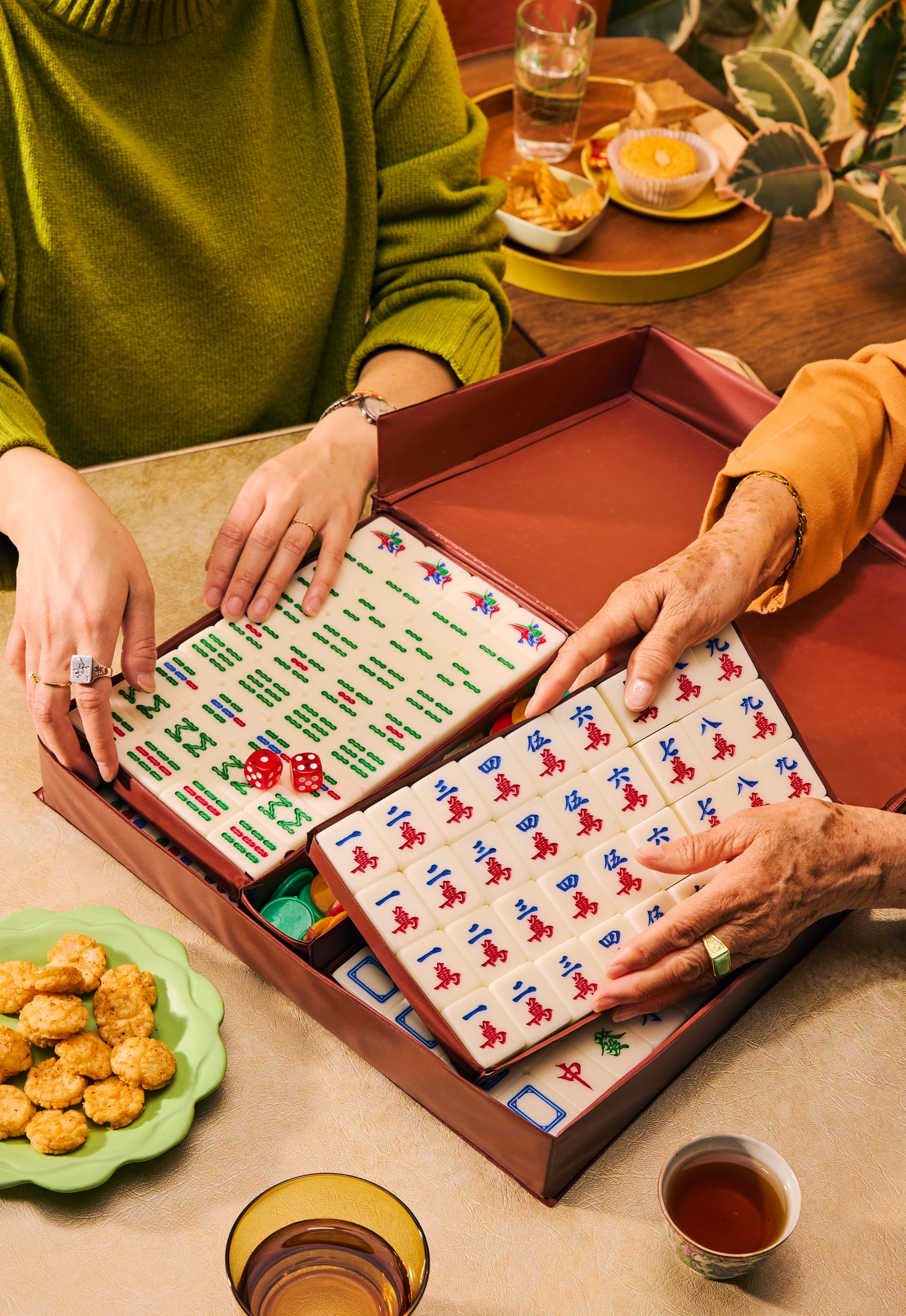
A core value that connects me to mahjong is celebrating the “house rules” and variations that dictate gameplay, because I believe the way you play, especially for Asian diasporic communities, is tied to family history, immigration stories, heritage, and identity. It’s not just about the tiles in your hand, but the community of people you play with.
Across Asia this game is entrenched in daily life, but I’ve talked to hundreds of Americans across dozens of events who are just reforming this connection, after years of feeling like their Chinese-ness or Asian-ness was something to minimize. It’s a beautiful thing.
Similarly, mahjong clubs around the country are playing to engage with cultural heritage and to create and reclaim public space as safe places for self-expression. Many of us started hosting game nights simply because we craved community, and opportunities have grown steadily. Earlier this year, East Never Loses hosted glittering parties in Los Angeles and New York, partnering with Hennessy and Gold House to teach mahjong to Hollywood stars. Green Tile Social Club was featured on the Today Show and hosted 800 people at their recent NYC Lunar New Year soiree. Bo & Mei’s kid-friendly mahjong set was featured on “The View” this month. My book sales have performed above expectations.
Here in Oakland where I live, mahjong den and speakeasy 13 Orphans has become a beloved fixture of the community, and there’s regular gameplay at the Ferry Building on Wednesday afternoons and every second Sunday at the Asian Art Museum. Bay Area restaurants like Mamahuhu, United Dumplings, Dragon Well, and Belly have all started weekly mahjong offerings.
Through mahjong, we are reactivating knowledge through cultural celebration, community, and connection. Mahjong, once a game affiliated with our private or family life, like perhaps our Asian identities, now has an added association with social life and chosen family in the diaspora.
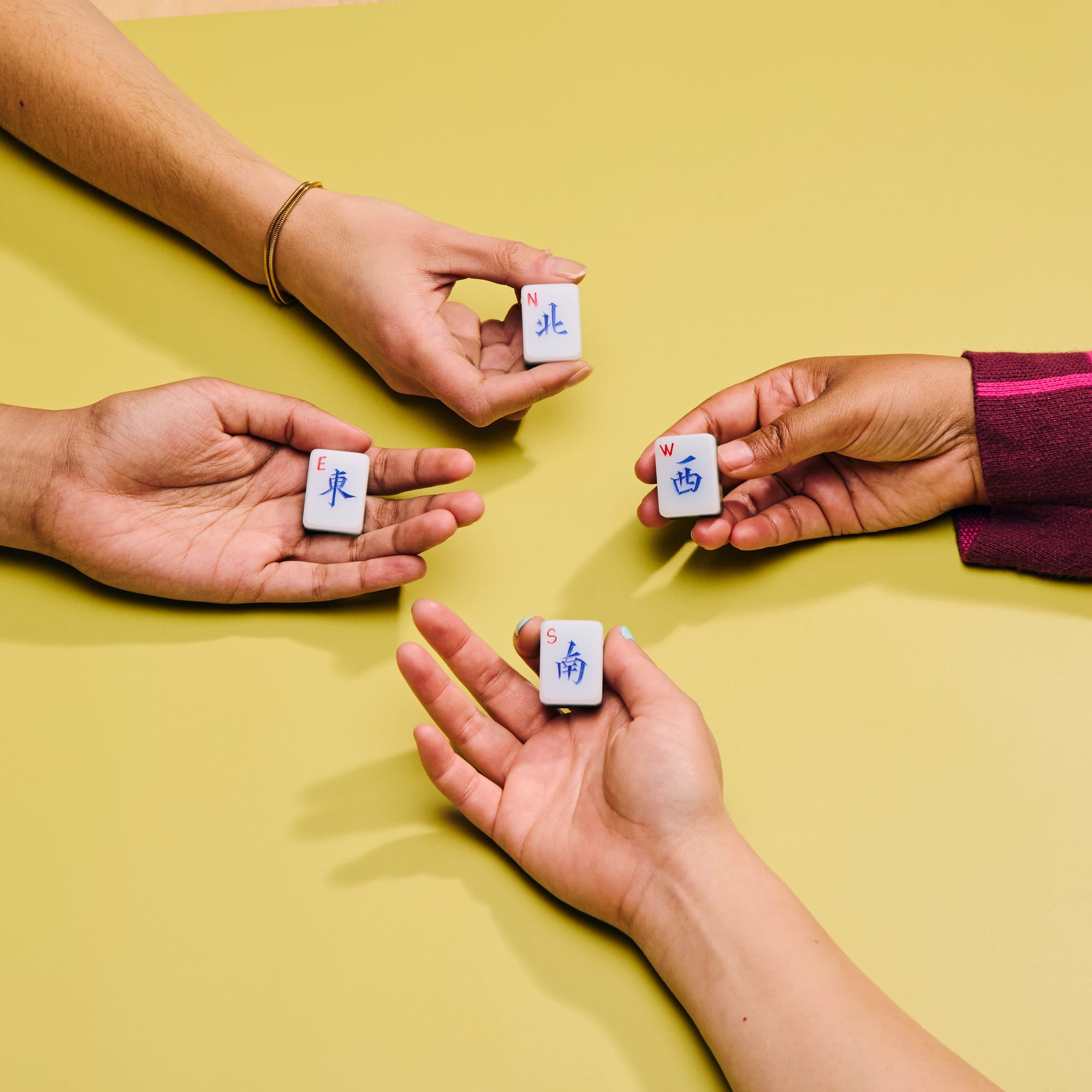
Across Asia this game is entrenched in daily life, but I’ve talked to hundreds of Americans across dozens of events who are just reforming this connection, after years of feeling like their Chinese-ness or Asian-ness was something to minimize. It’s a beautiful thing.
In the 1920s, when the first mahjong craze hit the United States, marketers explicitly leaned into its “exotic” nature to sell it to Westerners newly fascinated with the East. They promoted Orientalist fantasies, claimed it was an ancient game (it is not), and intentionally separated the idea of consumable Chinese culture from the actual Chinese citizens living amongst them. The history of mahjong in the United States is inextricably connected to a history of anti-Asian sentiment and discrimination.
American mahjong, also spelled “mah-jongg,” was created in the 1930s, about a decade after the 1920s craze hit its peak. (This story uses “mah-jongg” when referring specifically to the older American style of the game, while “American mahjong” refers to the newer wave of interest.) Its origin is closely affiliated with Jewish American women in New York who played during long summers in Brighton Beach and the Catskills as a way to build community. Before Chinese mahjong was featured in 1993’s The Joy Luck Club, American mah-jongg made a notable appearance in Driving Miss Daisy (1989), as a hobby among Jewish women in the 1950s-era South.
From a gameplay perspective, the differences from Chinese mahjong are fundamental: the American style uses racks, thinner tiles, jokers, and dragon tiles with literal pictures of dragons rather than Chinese characters. There’s a tile-passing phase called the Charleston, and most notably, an annual card issued and sold by The National Mah Jongg League dictating what counts as winning hands. The nicknames “mahj” for mahjong, “craks,” “bams,” and “dots” for the three suits, and “soaps” for the white dragon tiles, all come from American mah-jongg.
There is certainly an Old Guard culture of American mah-jongg today, one that ties the game’s association to senior centers (like this recent viral video), fundraisers, conferences and Florida cruises. I have friends who speak fondly of watching their Jewish grandmothers play mah-jongg in a way that parallels my own story. As part of my book research, I joined a popular Facebook group for mah-jongg enthusiasts, which focused on game strategy tips and swapping notes on rare antique sets purchased from secondhand markets. But in less than two years, the group has doubled in size to 200k+ members and is now awash with mahjong “hauls” and questions about what tile sets match the best with specific decorative mats.
Whereas the mah-jongg scene has existed in parallel to the game being played in Asian households for decades, the past five years, since the start of the Covid pandemic, has seen a rapid uptake by people without a prior connection to the game, spurred by its presence across social and institutional media.
Now, a bit further out in the mahjong multiverse, you’ll find mahjong showrooms in Dallas; Parisian-themed sets where the suits have been replaced with caviar, the Eiffel Tower, and Can-Can dancers; unboxing videos of the sold-out set from Sam’s Club; influencers sharing neuroscientific reasons for why “everyone is obsessed with mahjong”; tips for tile storage; and business advice for how to monetize the game.
Mahjong itself has become a content vertical — comedians comparing it to an MLM, mahjong-themed parody songs to Eminem and Hamilton, meme trends. People online talk about their “mahjong habit” with a sense of frenzied consumption reminiscent of Labubus, Lularoe leggings, or Tupperware parties. This specific fandom skews white and female. As one woman aptly put it: “it gives sorority energy.”
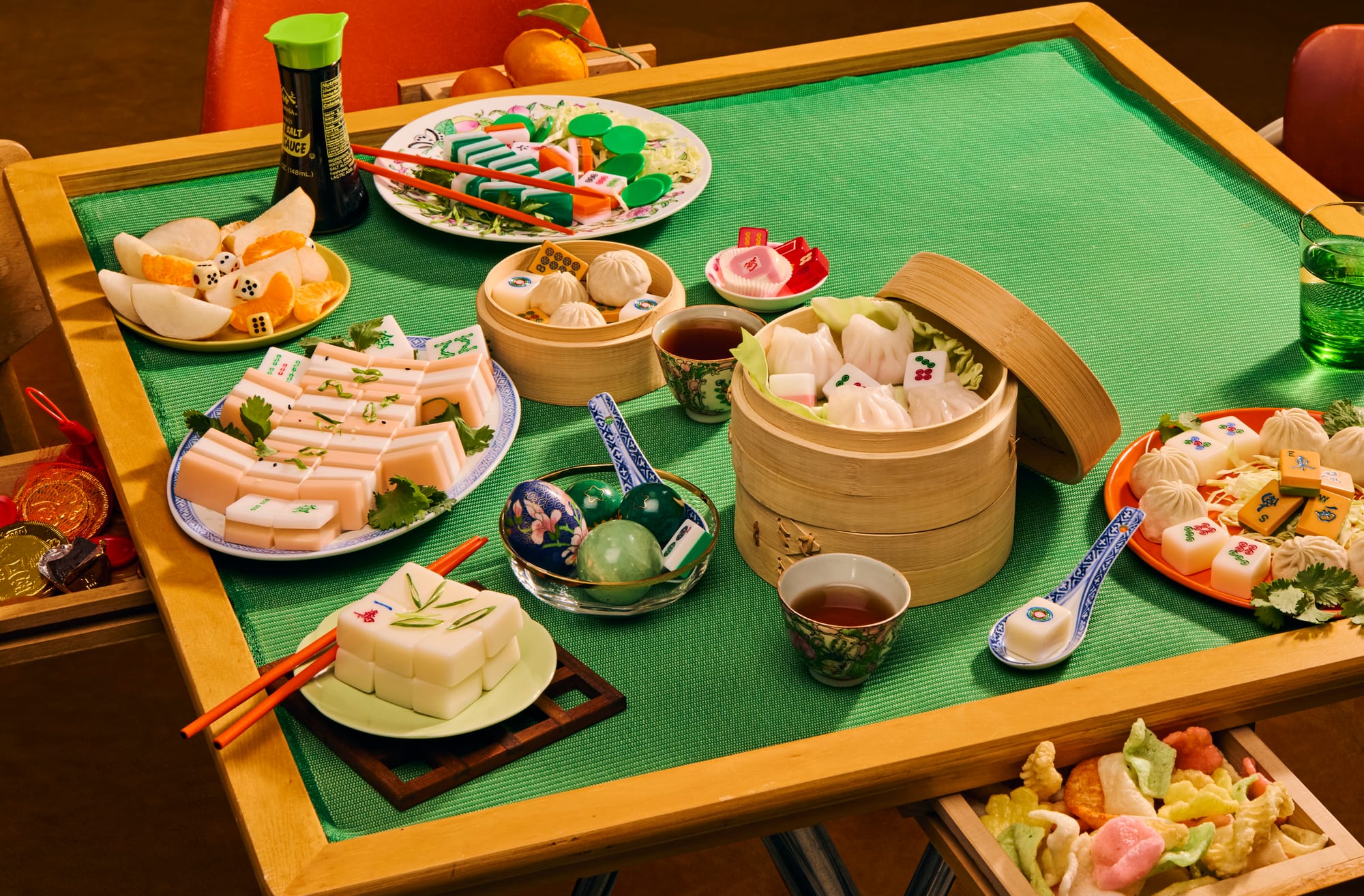
At the lifestyle level, Kelly Ripa has talked repeatedly about her love of mahjong on her daytime talk show “Live With Mark & Kelly,” referring to her Palm Springs teacher as her “guru.” Meghan Markle featured the game on her Netflix series “With Love, Meghan.” Joanna Gaines and Martha Stewart are fans, positioning it as a novel symbol of hospitality. It’s the new dinner party and a chance to display wealth and leisure time. Vogue published a round-up of the best designer sets, and interior designers are encouraging clients with spare space to consider a mahjong room. The aesthetic overall is marked by soft pastels, sundresses, tablescaping, and tiles photographed in warm soft light.
The standardization and complexity of American mahjong has also lent itself to expensive teachers and accessories that have been marketed as essential for enjoying the game. A recent Vanity Fair article reported that the popular brand Oh My Mahjong “has surpassed $30 million in annual revenue and, by its own accounting, sells a mah-jongg mat every 10 seconds.” Their teacher certification costs $1,300, and a typical set runs over $400, compared to $60–$90 at a local Chinatown shop. This is a different universe from free or “pay what you can” mahjong lessons at public libraries, AAPI festivals, and pickup games with volunteer instructors at Asian-owned businesses.
American mahjong is currently being introduced as a new hobby to invest in with both money and time, accessible in rarified spaces.
That’s why, when articles cover mahjong’s popularity with a quizzical fascination and say that “in 2026, it’s less about tradition and more about the vibe,” it strikes a nerve. When people in this community see a movie poster for a Hallmark movie about mahjong with a mostly non-Asian cast, we feel outraged and confused. When we see mahjong tiles where the traditional Chinese characters have been removed, it feels like erasure. A “trend” implies a passing moment: something to be tried on only for a time before moving on to something new, rather than an integration of the practice into life going forward. It makes you feel disposable.
Can white American mahjong businesses succeed in ways that Asian-owned ones cannot? Asian Americans may carry the weight of filial piety and the pressure of cultural transference — to monetize cultural knowledge risks “selling out.” White people without a prior personal connection to the game don’t face the same conflict. If something is appealing, the ability to sample or adapt it as part of one’s identity is more acceptable. But immigrants seem to come with default settings about where they belong.
I want to be clear that I’m not calling into question these players’ enthusiasm for the game, or their right to play it. Mahjong is for everyone, and I believe that their admiration for the game is genuine. It’s when that enthusiasm is being expressed with an uncomfortable sense of ownership, and an underlying interest in monetization, that makes others feel pushed out and alienated from the game themselves.
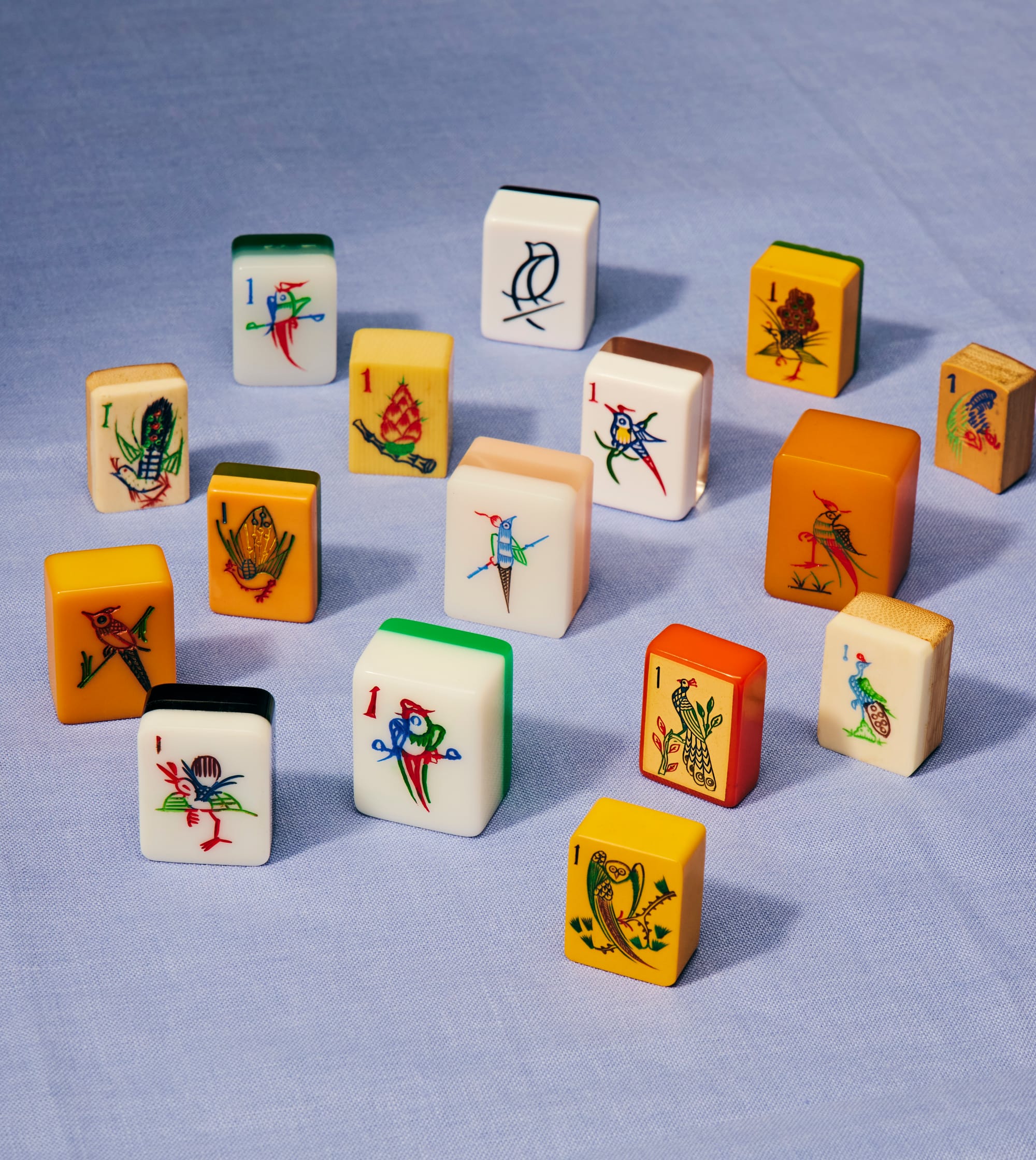
Part of why it feels like mahjong is “everywhere” is the wide variety of communities newly embracing it — from Gen Z postgrads playing in nightclubs and bars while connecting more deeply with their cultural heritage, to suburban moms looking for a social outlet, to pickleball-playing retirees looking for a mentally stimulating activity. But while all of these groups adopt mahjong into their social lives, they rarely overlap. From the outside what could appear to be a moment for unity and mutual appreciation is actually feeling like a widening divide.
Playing and enjoying a game is distinct from adopting it as a revenue-generating opportunity. If you do the latter, you have a responsibility to know the culture and context of what you’re profiting from.
The viral moments kept coming. In 2021, mahjong had its first internet-breaking moment when The Mahjong Line faced backlash for describing how they wanted to “refresh” and “modernize” the game. They apologized. Earlier this year, the company was profiled in D Magazine with the hook, “How two Highland Park moms survived cancel culture and disrupted the mahjong universe.”
In late February, a post from fashion watchdog Diet Prada went viral after Oh My Mahjong shared an image that at first glance appeared to be a New York Times Magazine profile. Commenters were aghast at “the caucacity.” But it was actually a social media graphic, not a cover story, but the damage was done. The original post was quietly deleted.
That mostly white Hallmark movie about the game, All’s Fair in Love and Mahjong, premiered this month and was co-produced by American mah-jongg teacher Ronni Rice, who goes by The Marvelous Mrs. Mahj. Her husband is a veteran Hallmark producer. The discrepancy in knowledge between the mahjong communities, Hallmark’s lack of sensitivity toward how the film would be received, and the decision to elevate certain stories over others led to a perfect storm that left a bad taste in many people’s mouths, as social media is wont to do.
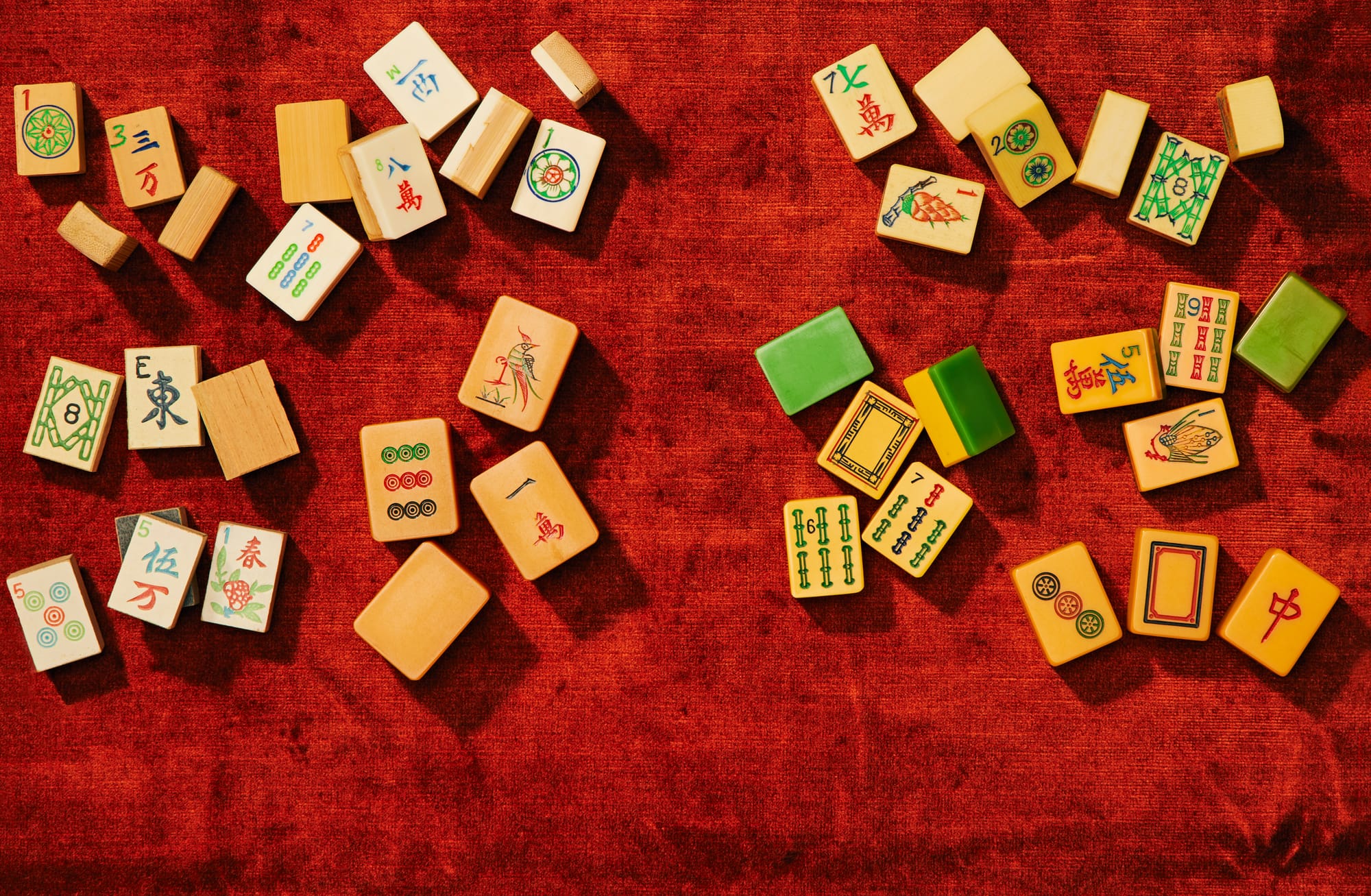
Perhaps most telling, though, was something that did not go as viral. On Lunar New Year’s day, A24 opened pre-orders for an American mahjong set inspired by Everything Everywhere All At Once — a quintessentially Asian American film. The tiles are redesigned thematically for the film, but the flower tiles are unnumbered (which is typical for the American style), rendering the set unplayable for many popular versions of Chinese and Hong Kong-style mahjong. It’s a set for a version of the game that many Asian Americans — and presumably the central characters of the film — do not play.
Whether it was an oversight or an intentional decision to cater to a perceived larger consumer market, the message is clear: even a set made to honor Asian Americans is not for us. In name, but not in practice. Lately, ads for the set have started to trail me around on the internet, reminding me of what could have been.
The growing default assumption that “mahjong” refers to American mahjong rather than its Chinese predecessor (still played by millions globally) or any other of the 40+ variations of the game, reflects something larger. Acknowledging that American mahjong has its own history does not mean it isn’t cultural appropriation. American mahjong is entrenched in American culture, like yoga, jazz, and Taco Tuesdays. What’s less clear is whether the styles will continue to move further apart, or whether there’s still some benefit to them being called the same game. For what it’s worth, I still think there is.
As a community, we have internalized fears: the fear of being written out of history, of being invisible, of being systematically excluded. It’s happened before: Asian Americans’ involvement in civil rights movements, Chinese immigrants who helped build the railroad and were then barred from citizenship or marriage, US citizens and immigrants being detained by the federal government in 2026.
And yet, after all is said and done, I choose to remain optimistic. At in-person events, I’ve met many curious and generous people who play American mahjong and have actively sought out to learn different styles or are teaching with context and culture. Online, I’ve noticed more upfront clarification on the style of mahjong being offered or discussed. I see these game variations as starting places for dialogue and the potential for meaningful exchange. The viral moments have created more awareness on all sides. The 2021 mahjong controversy was personal motivation to keep documenting my own family’s house rules, which led me down the path to all of the work I do today. This summer in Washington, D.C, a joint event will combine American, Hong Kong, and Japanese riichi mahjong tournaments under one banner. A company that has long-organized American mahjong cruises aboard Royal Caribbean is now offering its “first ever Chinese Mahjong cruise” from San Diego to Mexico.
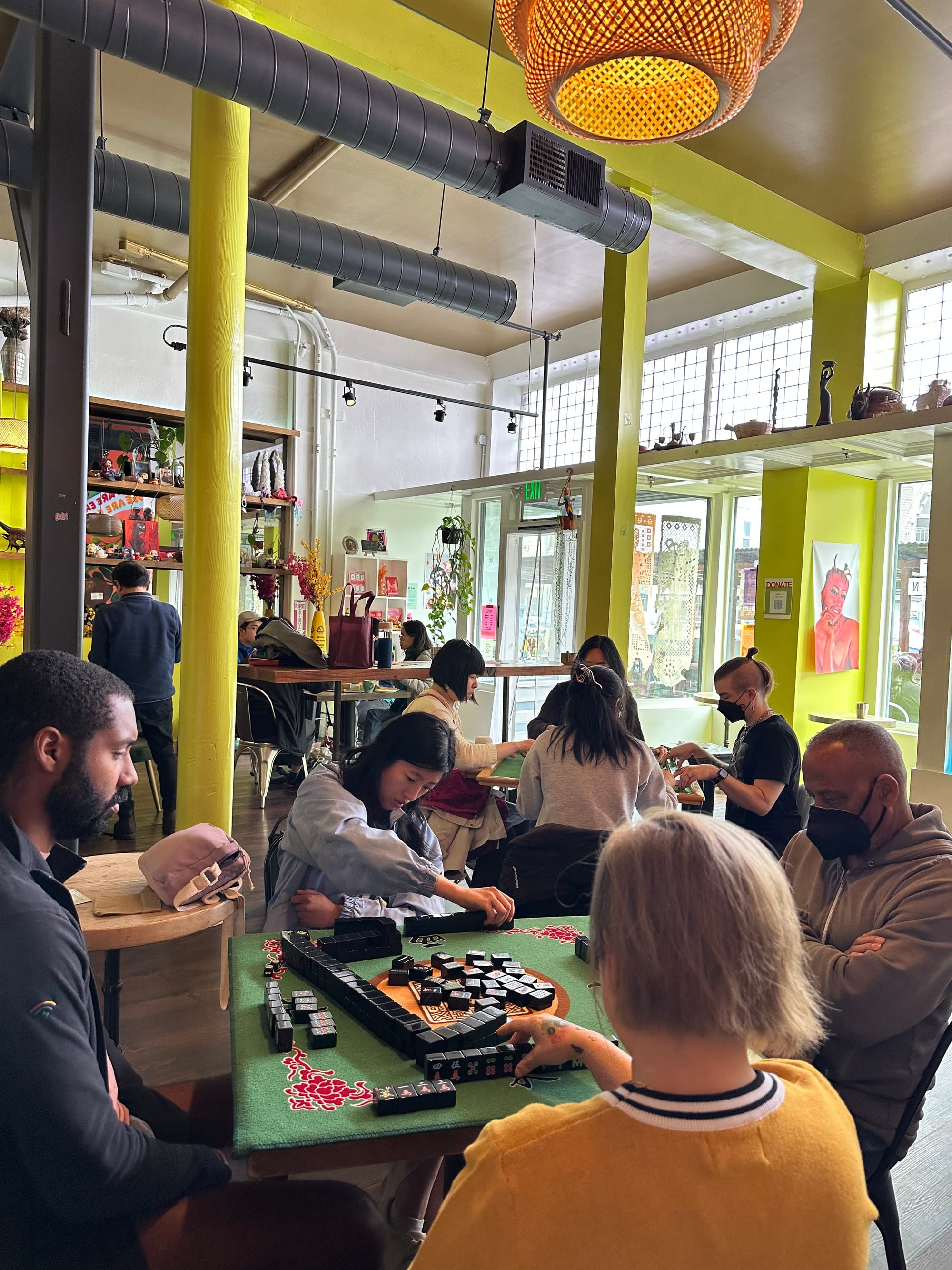
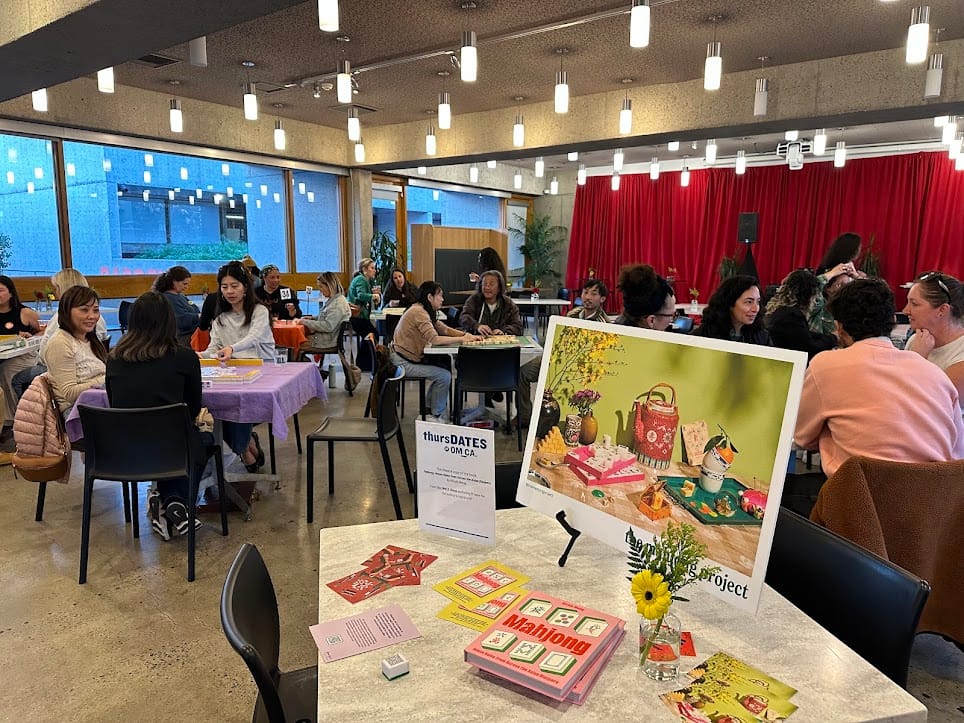
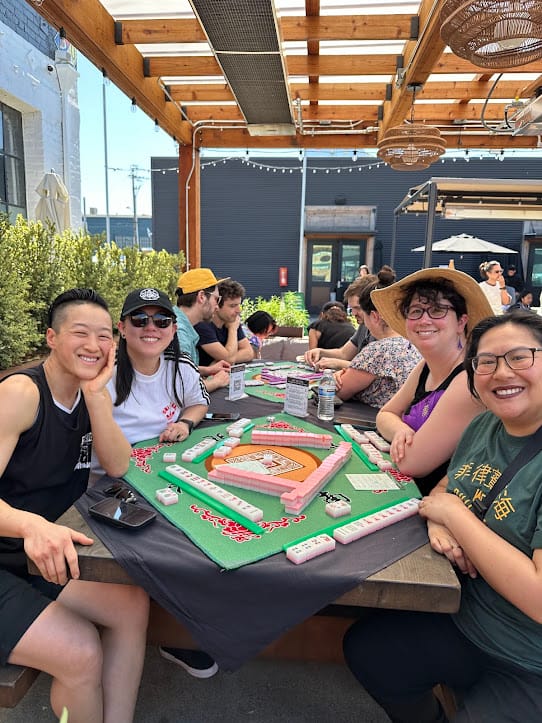
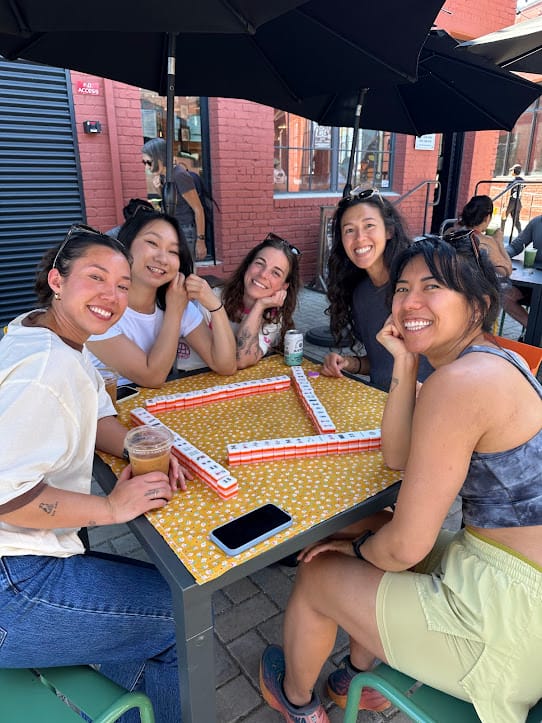
Mahjong players at Oakland Museum of California, Open Test Kitchen, and Prescott Market in Oakland. (Courtesy of Nicole Wong)
I’m also hopeful that an interest in mahjong will lead people to support their local Chinatown and Asian-owned businesses like San Francisco’s On Waverly. I would like for people to discern where they spend their money, supporting artists and creators sharing work that’s meaningful to them rather than someone hopping on a trend. Playing and enjoying a game is distinct from adopting it as a revenue-generating opportunity. If you do the latter, you have a responsibility to know the culture and context of what you’re profiting from.
To see a game we consider so central to our culture embraced so fully by the mainstream is disorienting. We fear conditional acceptance and our labor being taken for granted. We don’t know what to think about mahjong tiles appearing in country clubs and fancy restaurants where Asian people have been historically excluded: reclamation, or tokenism?
As Asian Americans living in the US, we are tasked with holding multiple truths in our minds at once. You can feel disconnected from your own heritage — at times by necessity, from fear of exclusion or ridicule — while also watching people outside your community take those things up and make them their own. As mahjong’s popularity grows, we can celebrate feeling intensely empowered and seen by our community while also grieving that a part of it is being taken away. Everything everywhere all at once.