COYOTE Calendar: April 9-April 15
This week we’ve got linocut hangouts, a pro wrestling themed market, animal tracking classes, and a surprising number of sheep.


This week we’ve got linocut hangouts, a pro wrestling themed market, animal tracking classes, and a surprising number of sheep.

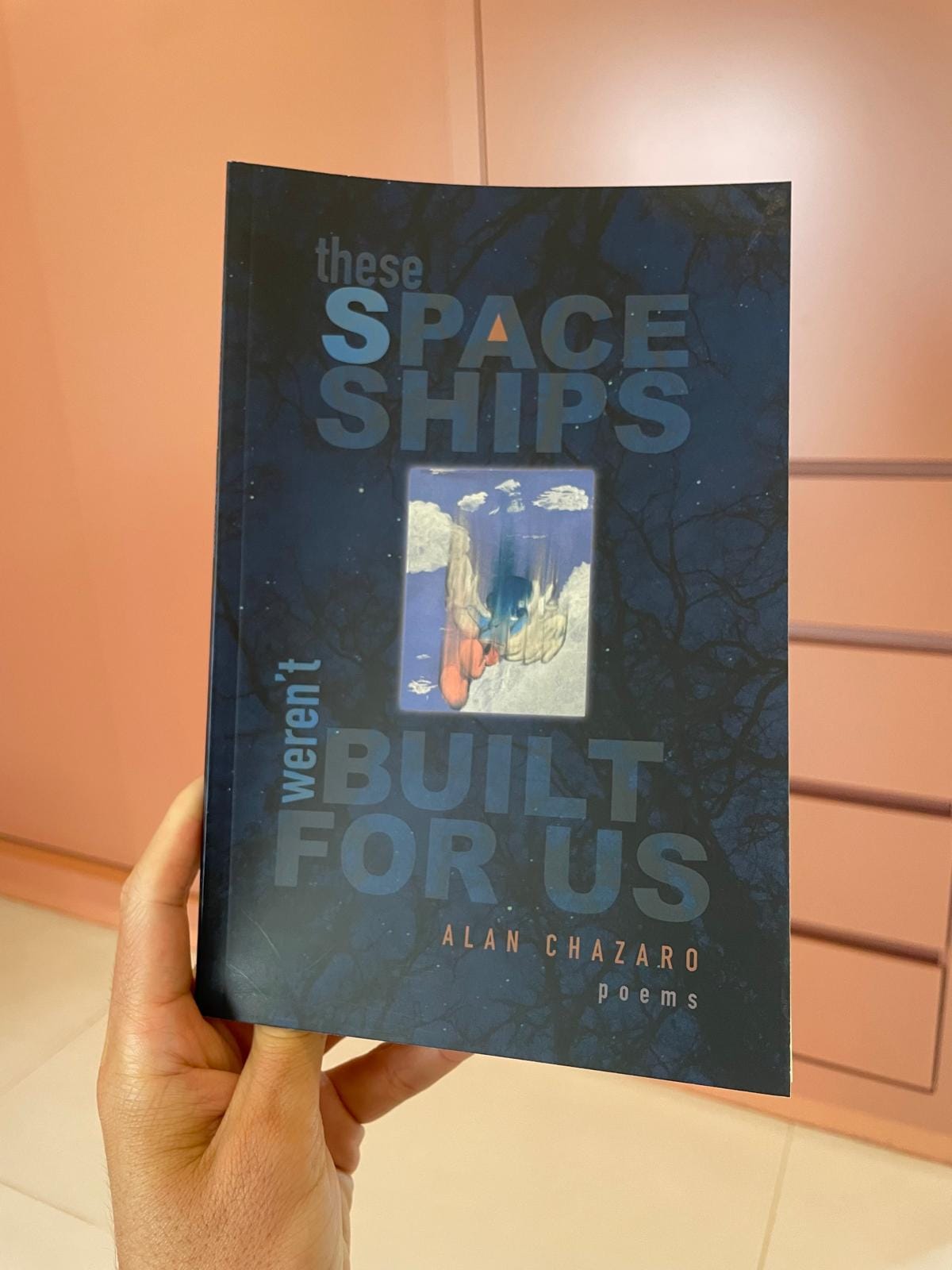
After eight years of grappling with displacement and the loss of community in the Bay Area, I’m publishing a book of poems about it.

The rapper made an error with the song “Heaven Sent,” writes fellow Bay Area emcee Rocky Rivera. But not listening to his community was the bigger mistake.

After eight years of grappling with displacement and the loss of community in the Bay Area, I’m publishing a book of poems about it.

In 2018, I was a full-time English and Art History teacher at the Oakland School for the Arts, a charter school in uptown Oakland. At the time, the school felt like a Hogwarts for wondrous Bay Area talents, where teenage and adolescent artists would come from all over the region to dance, sing, drum, act, build stage designs, sew, film movies, take photographs, produce and engineer music in a studio the size of a closet, write their own plays, and more. That’s when it hit me: I also need to be writing creatively, too.
Every morning, before the first period of classes began, a group of students would hang out in my room before wandering off into the hallways at the sound of the bell. I remember telling them that I wanted to write about outer space (I knew my fellow creative weirdos would understand). Eight years later, I am now publishing a book of poems titled These Spaceships Weren’t Built For Us. Part of the book’s acknowledgments section is dedicated to the group of students who inspired me to write these poems — some of whom even read them with me on stage at the Fox Theater in Oakland during a school fundraiser (luckily, my wife uploaded a video of it on YouTube six years ago).
In many ways, this poetry collection reminds me of my best times living in Oakland: biking around Lake Merritt to and from the school; roaming the city with friends, artists, and strangers and stumbling through unknown portals. It reminds me of a Bay Area that still felt livable for me as a local teacher and poet. But even then, I could sense the end of it all looming. I wrote the book as a manifesto to what it feels like when your native planet no longer feels inhabitable. For me, in the case of the Bay Area, the fucking rent and cost of living felt inhumane; in 2024, I left the country as a result.
As someone who grew up in the Bay around immigrants and the middle and working classes, I’ve seen many of my closest friends, students, and their families get pushed out of the region. It’s been going on for decades now. Whether forcefully deported, erased through gentrification, or shoved to the peripheries, the Bay Area’s people have been dispersed elsewhere like stardust.
These Spaceships Weren’t Built For Us is a series of poems that reimagines the possibilities of building our own worlds. It’s out April 14, 2026 on Red Hen Press, but you can read a few early excerpts below:
A Postcard from the Next Dimension
These days are taking me
towards an unclothing, towards
a starburst beneath oiled palm trees
and space drizzle. I’m standing on
the roof of a decayed building, between
the crooked prayers of someone else’s
god. I’m looking
down at the city. In the distance, farther
than my eyes can navigate, there’s an open
shore. The gravel is thickening
inside me. Wake me up
when it’s over, when these ruins and moon
patterns have been mapped. Until then,
I’ll tongue coconut water and move
to Bad Bunny with El Espíritu Santo. I’ll leave
dirt in my pockets, a labyrinth
I cannot untangle in my throat.
Someone’s Astronaut Tío Is Selling a Constellation of Paletas on a Faraway Tropical Planet
because even the fringe planets need the music of cart-pushing paleteros—their voices lifting from wildly-decorated spaceships. And I don’t mean to make this about some Pocho sci-fi shit. But I will. I’ll slide the freshest galactic currency into the gloved palms of someone else’s astronaut tío. Because right now I’m inside the paleta multiverse: where paleteros are living their best lives; where they never get assaulted because that would be a communal felony; where they collect unlimited clout and retirement funds for their hustle on a faraway tropical planet. And I say tropical because it’s hot there and everyone will need the religion of something cold on a stick to enjoy. And these paleteros will be the most luminous gods we’ve known. We will praise their frozen galaxies, memorializing their routes like biblical scriptures graffitied onto asteroid belts from here to the luna and back. And nothing will ever melt here. How could it?
Post-Apocalyptic Pastoral at Lake Merritt in Oakland
Pretending to be a ghost here is nothing
new—I am wandering without a body—
there is a boneyard of buildings
inside my chest—I don’t know
what exogenous means
but it somehow calls my name—
across broken waters,
shadow-clouds gather—where sky-
scrapers used to stretch towards an open
ceiling, there is now absence—like missing
teeth—how can I unbraid toxicity
from my scalp?—what if memory
is more than a tangle of nerves
wiring my ribs?—the opposite of this
is skinning a pomegranate
with your survival
instincts—it’s the crush of organic
seeds in clenched jaws—
it’s the chewing—the red juices.