The Ultimate Guide to Spring Sports in the Bay Area
Popular or niche, big or small, quiet or loud, there is a spring sport for everyone. Let us help you find yours.


Popular or niche, big or small, quiet or loud, there is a spring sport for everyone. Let us help you find yours.

It’s baby cat season in the Bay Area! Here’s our guide on what to do if you encounter a litter of purrfect miniature panthers in your yard.

The stone front of Esther’s Orbit Room is in danger. Preserving it is about more than just rocks.

A few years ago, Noni Session kept losing her keys. "Over and over again, in really astonishing ways," she says.
She'd come to work in the morning at Esther's Orbit Room — a former jazz club and restaurant that Session and her team is trying to preserve and restore along Seventh Street in West Oakland — and over the course of the day it was as if the construction site would find new, surprising ways to make her keys disappear. Eventually, Session offered up a deal with the space: She made a copy of the keys for the venue’s original owner Esther, and placed them on an altar she had set up to honor the woman's legacy.
"We haven't lost keys since," Session says.
Today, Esther's Orbit Room is the crown jewel of the East Bay Permanent Real Estate Cooperative’s (EB PREC) Cooperative Cultural Corridor Revitalization Plan (a mouthful, Session recognizes). The most recent challenge they face is unexpected: the building’s iconic stone facade.
A few weeks ago, EB PREC posted a plea to Instagram: "Our construction company and other builders insist that conserving or reproducing the current rock facade is either impossible or cost prohibitive due to a decline in skilled craftsmanship in our country." Session tells me that the contractors they've asked so far wouldn't even give her a quote for saving the wall. Tear it down, they said, seeing no point in trying to save it.
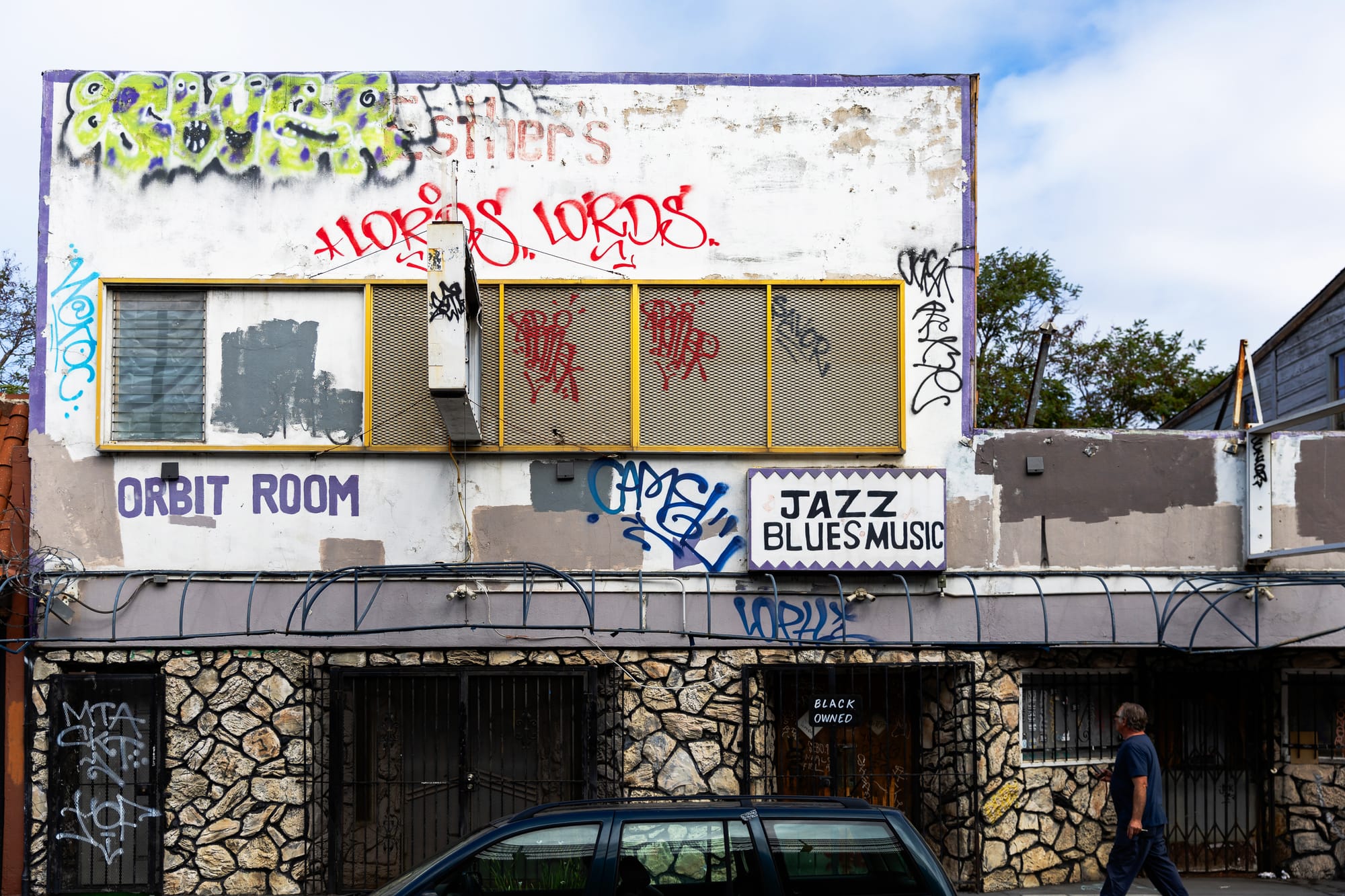
But Session and the EB PREC are not willing to part with the facade that has marked Esther's Orbit Room for so many decades. And their attempt to preserve this wall offers a lens into not just the challenges of historic preservation for important sites of Black history, but also a suite of philosophical questions about what it means to respect and preserve a place with a complicated history.
Session is the first to admit that the front of Esther's isn't her aesthetic. "This is a very ugly facade," she says, laughing and patting one of the faux stones, "but that's not the question. We could list a hundred really important cultural conservations that are not cute, but they are a story. They are culture."
That culture was established here by one woman: Esther Mabry. Mabry moved to Oakland in the 1940's from Palestine, Texas and got a job at a spot called Slim Jenkins Supper Club on Seventh Street. When she arrived, the neighborhood was already booming, and it would eventually come to be known as the "Harlem of the West" — a place where Black music and culture thrived and people were able to make a good living.
"All the clubs and everything was going good and everybody was having a good time," Mabry said in an oral history project from 2002. She wanted a piece of it.
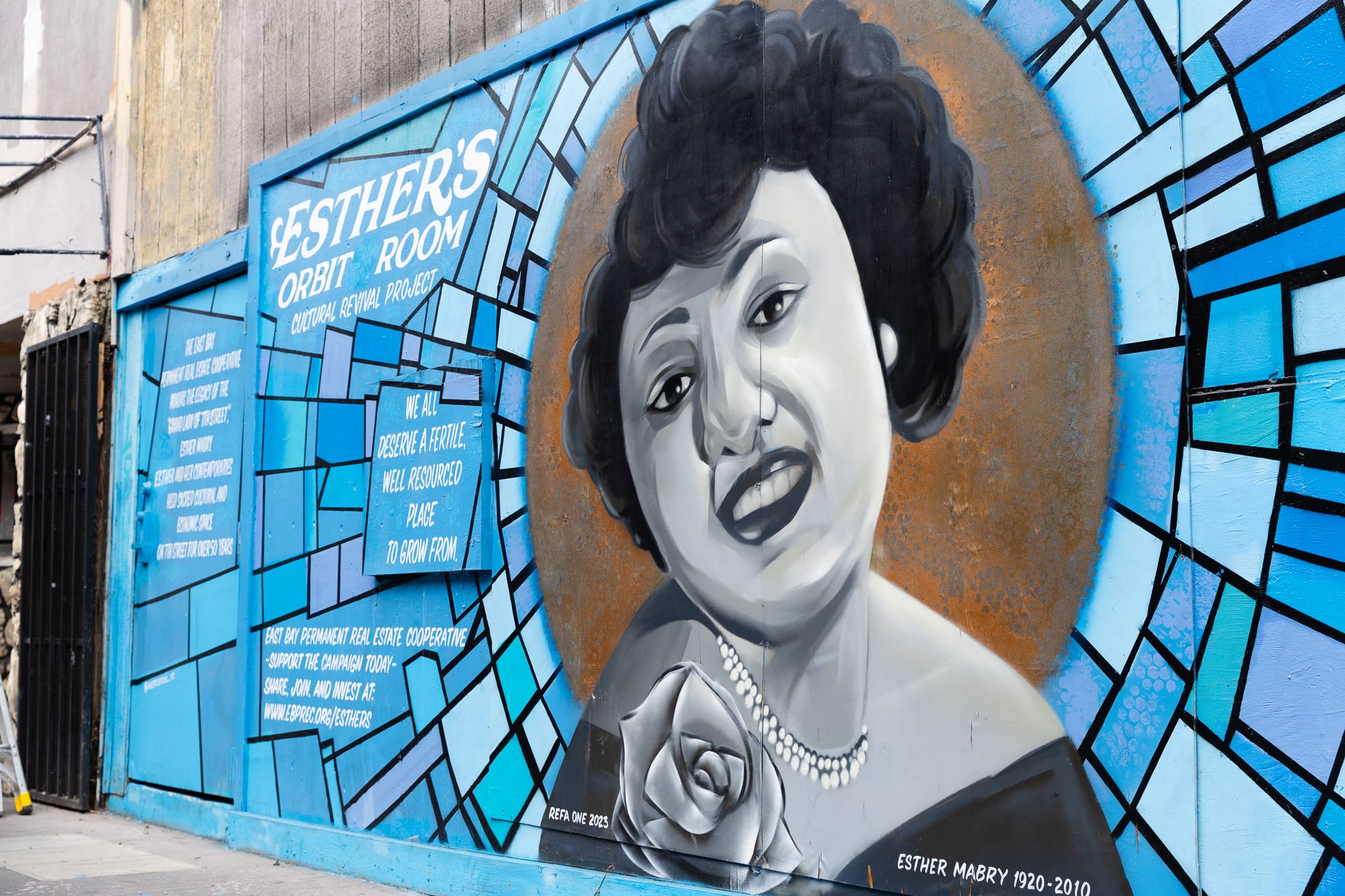
She opened Esther's Orbit Room in 1959. Pretty quickly, it became the go-to spot for a good show and something to eat. "I don’t care where they were, whatever club, whatever affairs was going on, they was going to come there, and eat," Esther said in that oral history.
The Orbit Room (that part of the name a nod to the space race) would eventually host not only icons of blues and jazz — Tina Turner, Etta James, B.B. King, Z.Z. Hill, Eddie Gibson, Lou Rawls — but also local artists who developed their own unique sound: Oakland Blues. And despite an endless stream of targeted developments that destroyed much of the old Seventh Street neighborhood, pushed out many of the mostly Black residents, and destroyed more than 6,000 buildings in West Oakland under the guise of "slum clearance," Esther held on. The Orbit Room closed in 2011, a year after Esther died.
Since then, the space has been silent, locked up behind boards and metal gates.
Now, Session and EB PREC (of which Session is the executive director) are trying to bring it back, along with several other units on that stretch of Seventh Street including a museum and community space next door.
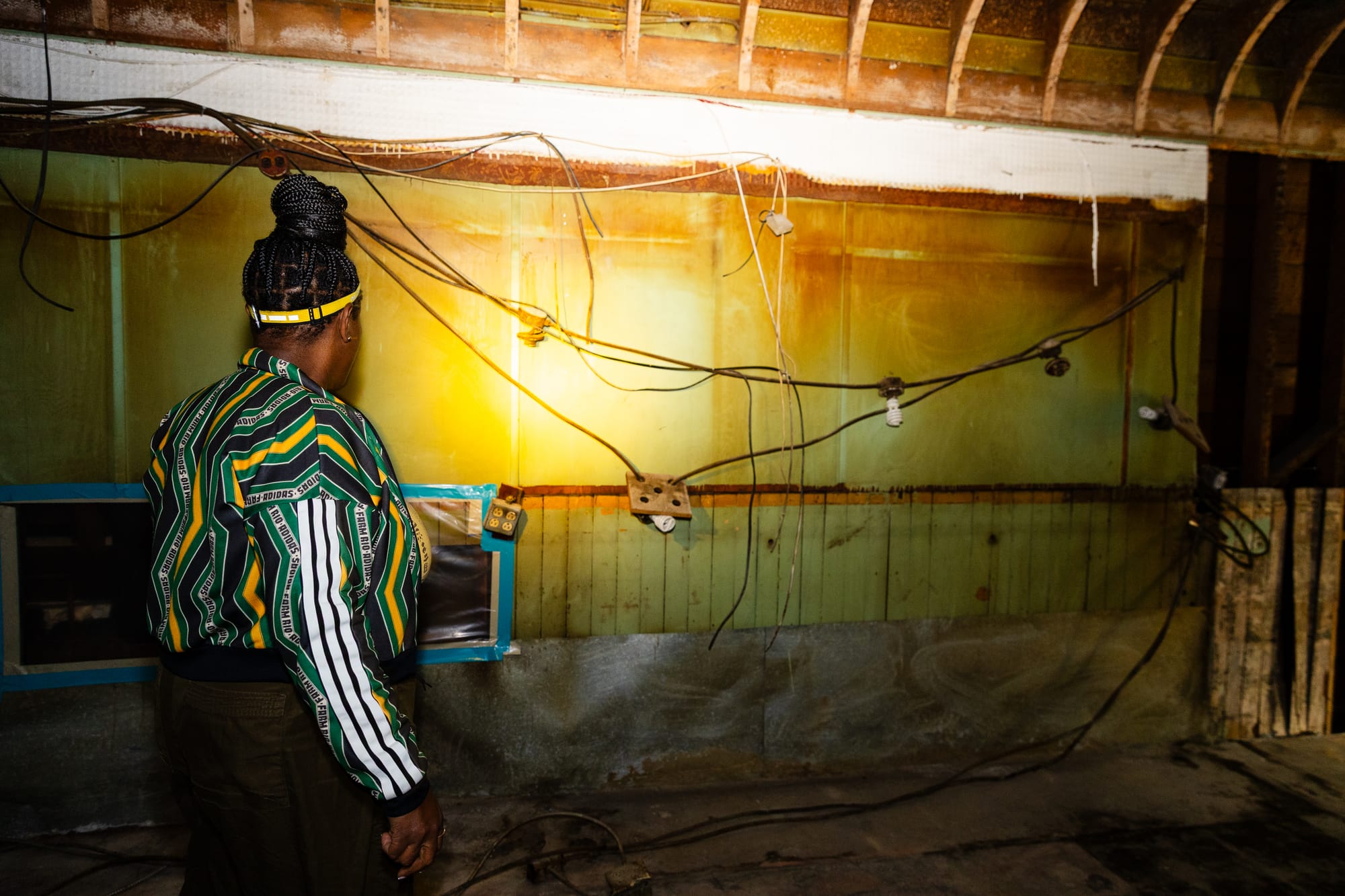
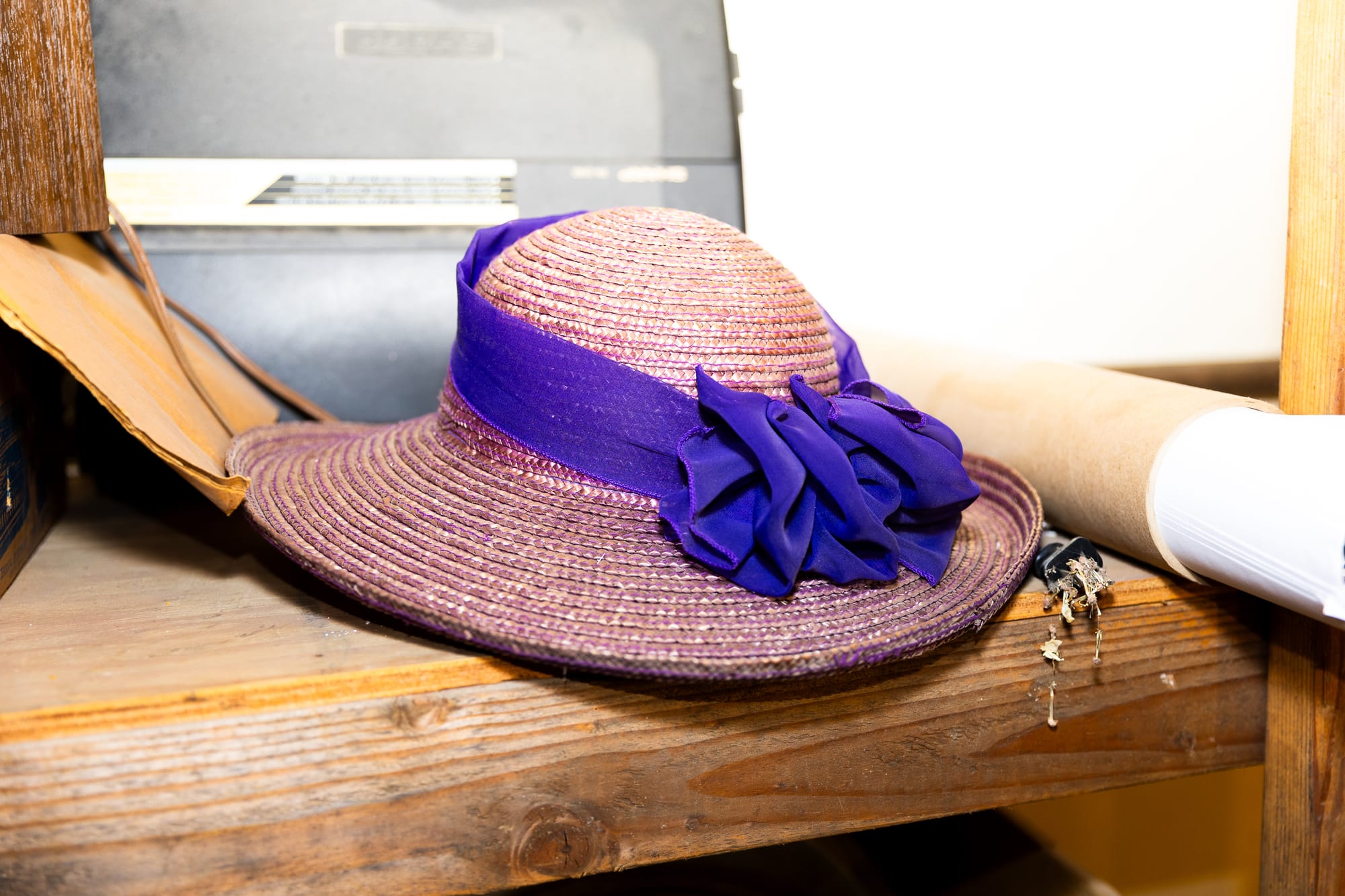
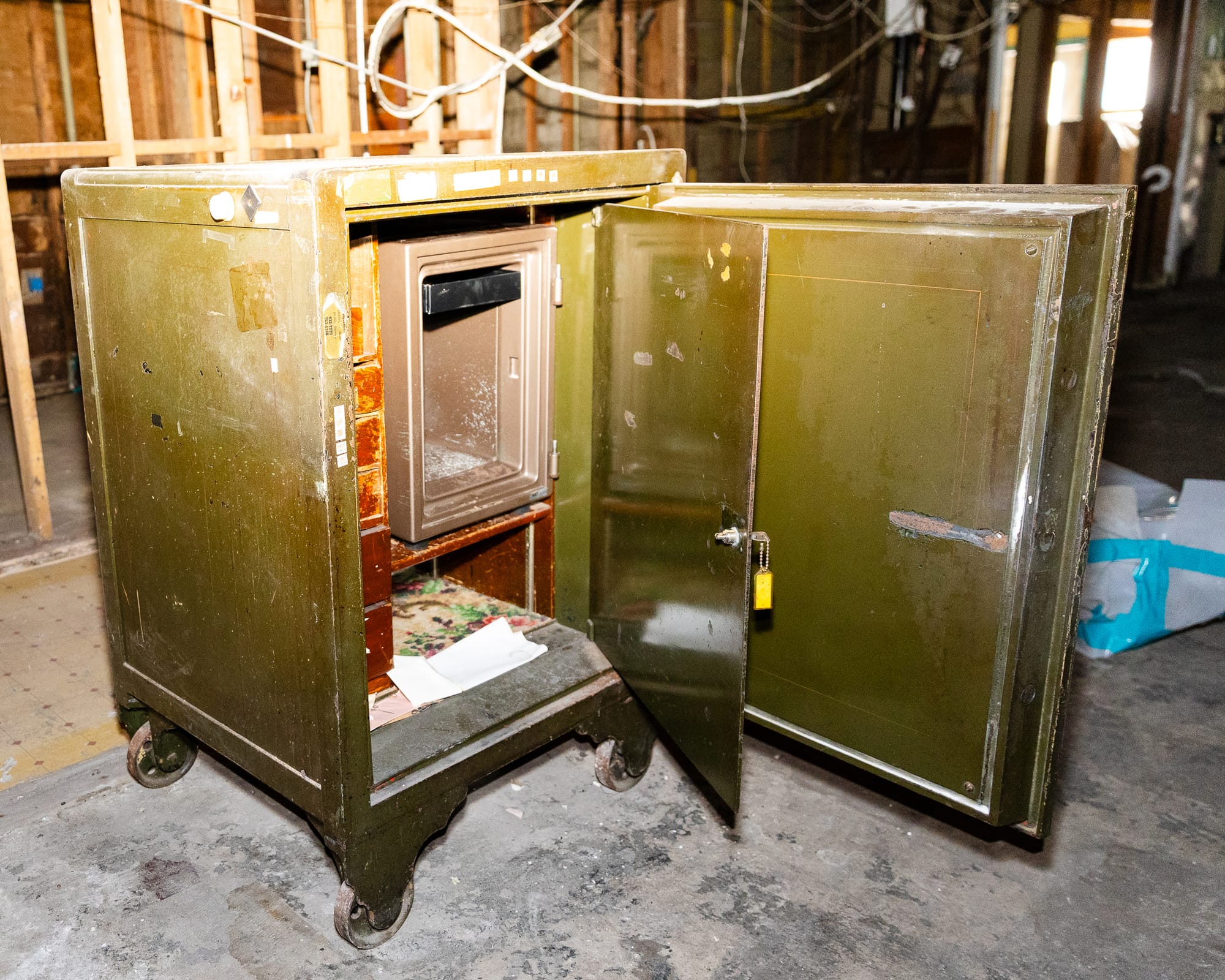
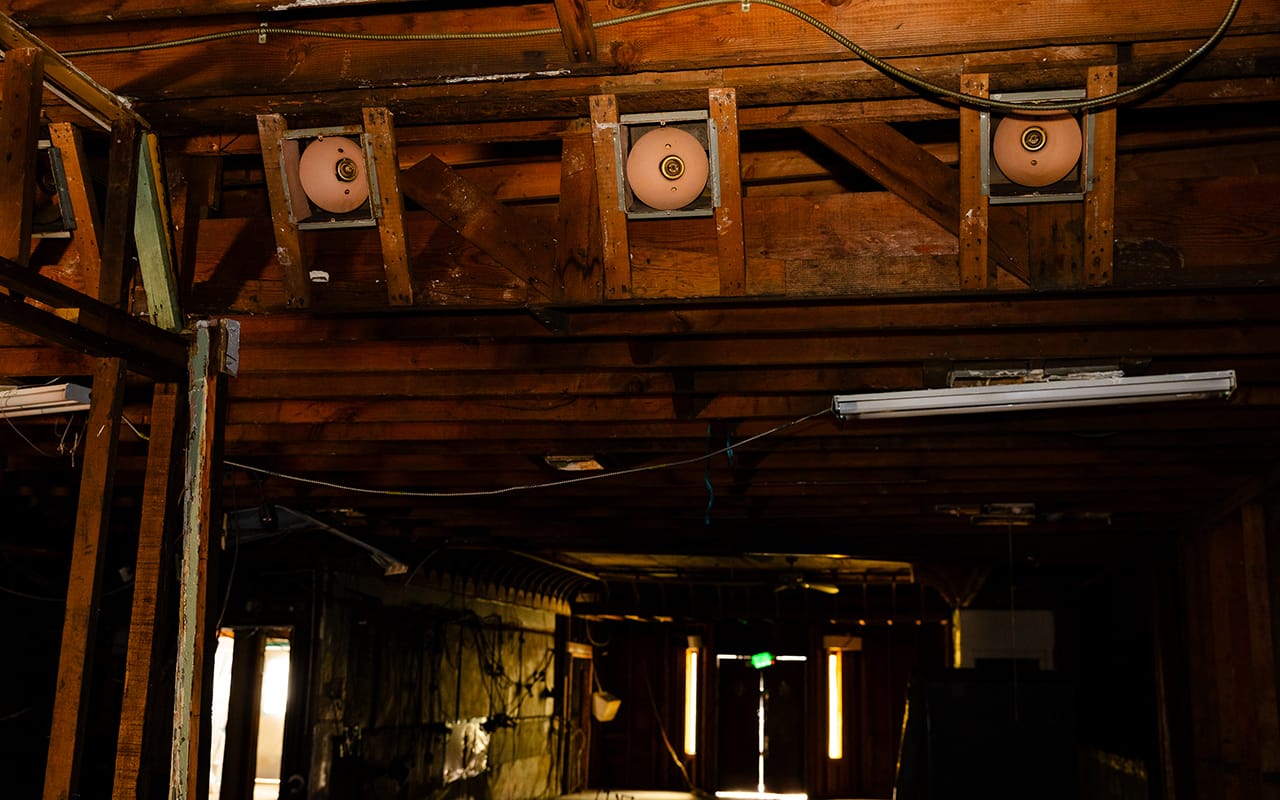
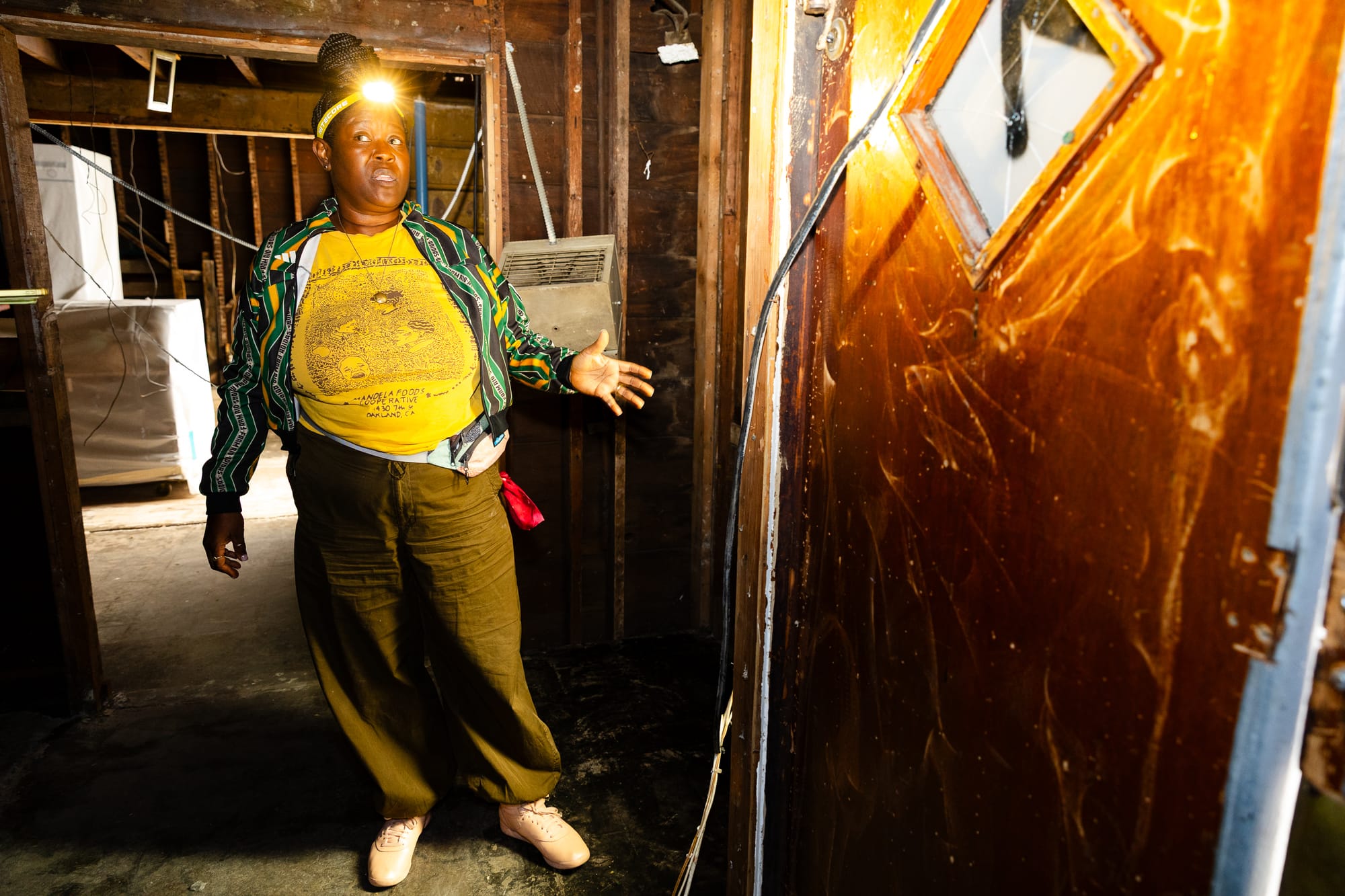
Noni Session walks through Esther's Orbit Room, which still has Esther Mabry's straw hat, an old safe and original stage lights. (Estefany Gonzalez/COYOTE Media Collective)
As we walked around the Orbit Room’s construction site, lit with headlamps and work lights, Session pointed out items they'd uncovered from the venue's history during construction: Esther's straw hat with a purple ribbon that they found hanging in the back of the money counter’s office; original tables and chairs; bottles, cutlery, pots, and pans; the original stage lights, waiting to shine again. But nothing marks Esther's like its stone facade.
The technical term for the front of Esther's Orbit Room is "random splitface stone veneer." The effect is essentially that of a faux stone wall — except the "stones" at Esther's are actually chunks of concrete. Up close, you can see that the pieces have been pressed into mortar on top of chicken wire, which was then nailed to the front of the building.
But after 70 years, the walls behind those fake stones need work. To make the space safe and sturdy, the front of the building needs to be reinforced. The facade is getting in the way. Repeatedly, Session has been told to give it up and just rip the wall down.
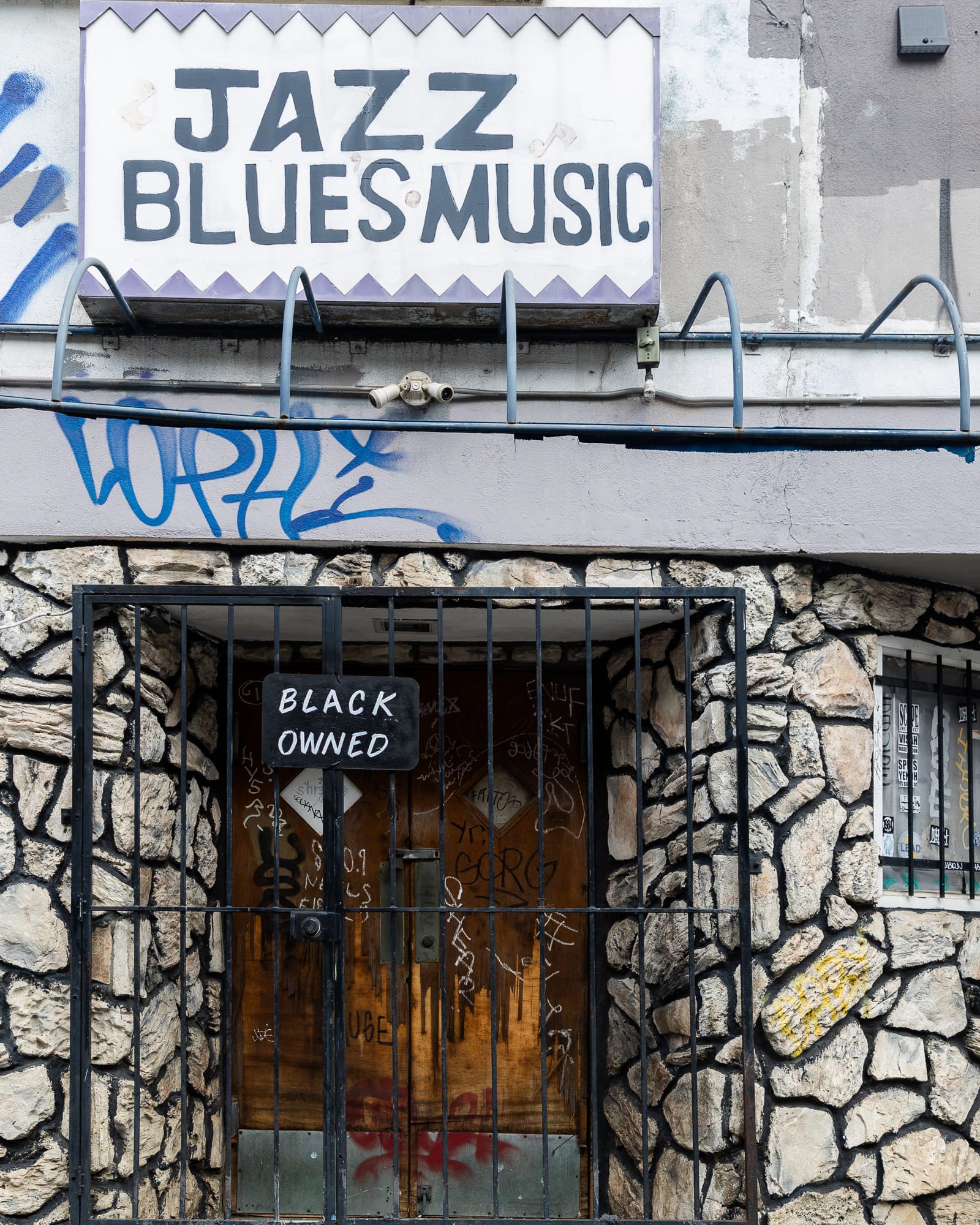
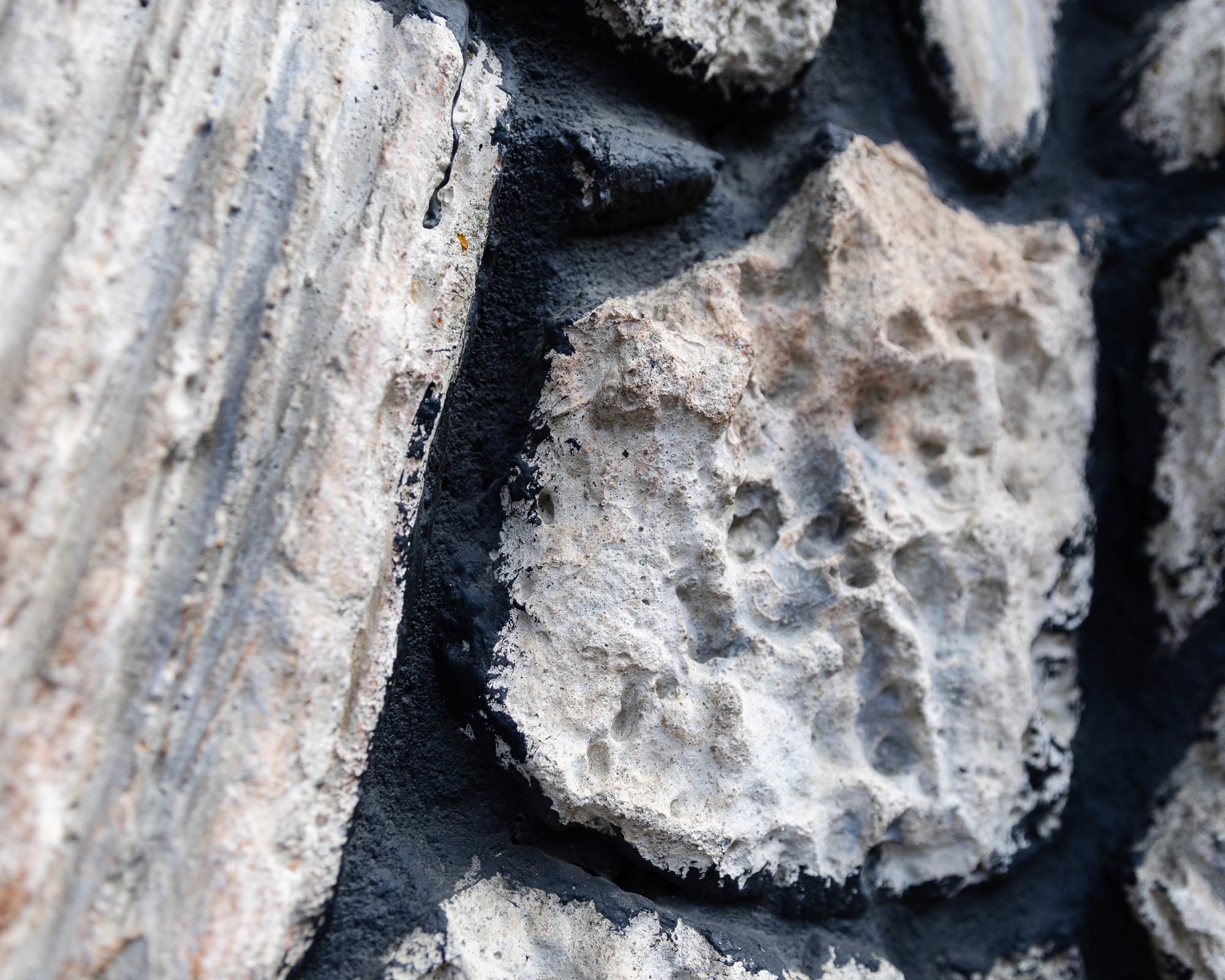
The "stone" facade at Esther's Orbit Room is actually made of concrete chunks attached to chicken wire. (Estefany Gonzalez/COYOTE Media Collective)
She isn't willing to part with it. Whatever it costs to save it, she says, she'll spend. "If that means I have to shake another 100 hands for another $100,000 worth of $1,000 investments, that's easier than mourning the loss of this place for the next 50 years."
When I visited, she had invited Charlie Spaeth — an expert mold maker based at The Crucible, just a few blocks away — to come look at the wall. Spaeth talked about flexible mold compounds, and casting each stone anew to reproduce the look of the building if they can't save the actual pieces. Session considers this a last resort. "The rocks feel important," she says. "They're historical artifacts."
Session's latest idea is to remove each rock by hand and then reassemble them once the building's walls have been shored up. While I was there, she climbed up on a ladder and took a chisel to one of the pieces, and it popped off in her hand. Now that she knows they can be removed one by one, she’s planning a community rock-breaking ceremony for the first week of December. Once they remove all the stones, they’ll hire a mason to put them back up.
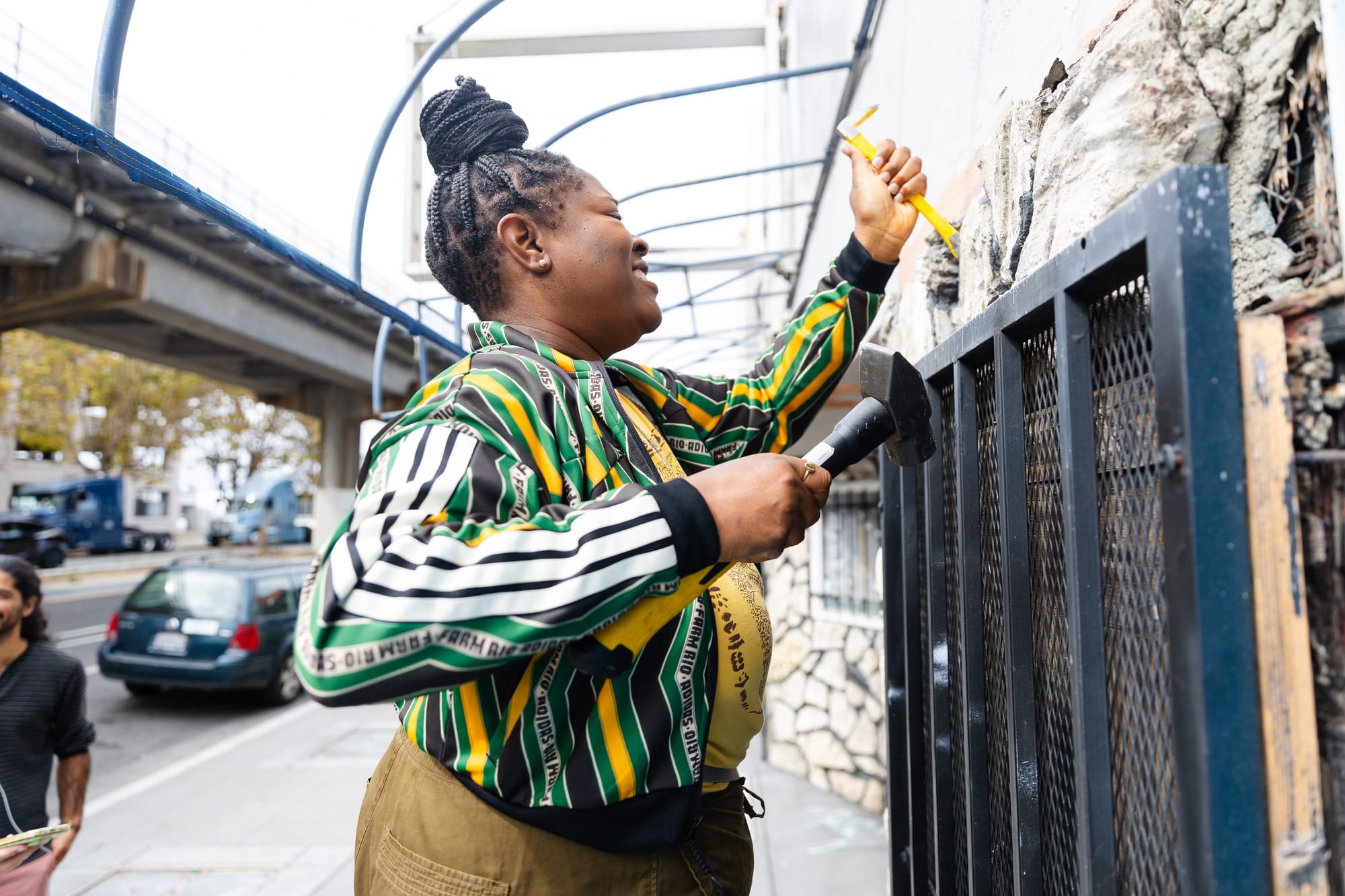
It’s not the perfect solution. "That should be your last resort," says Ean Frank, a historical preservationist and expert mason who’s been working in the field for 30 years. Once you start removing stones, he says, you're going to lose more than you expect. If you absolutely have to take it apart, he says they’ll want to do a high-detail laser scan so they can put it back together exactly the way it was. "It's not optimal," he says, "and it generally winds up being more expensive."
Frank tells me he's not surprised that Session has had trouble finding an expert stonemason to even give her a quote. Much like other traditional crafts, the pool of masons is aging out and retiring, and there isn't anybody taking their place. Skilled tradespeople have struggled to recruit new apprentices, and training programs have low enrollment. Frank says the lack of stonemasons with any knowledge of historic stonework is especially bad in California, where there are so few historic stone buildings to begin with.
"You can't even find people who can do it wrong," he says, laughing, "let alone people who can do it right."
About halfway through our tour of the Esther's Orbit Room construction site, Session admits that she didn't want to keep the facade at first. In early renderings of the project the wall was gone. In its place was a sleek new facade with a large mural painted above. But when they submitted the plans to the city, locals were incensed. "We literally had one of the old men in the neighborhood put on public record that he thought our project was 'cultural genocide.'"
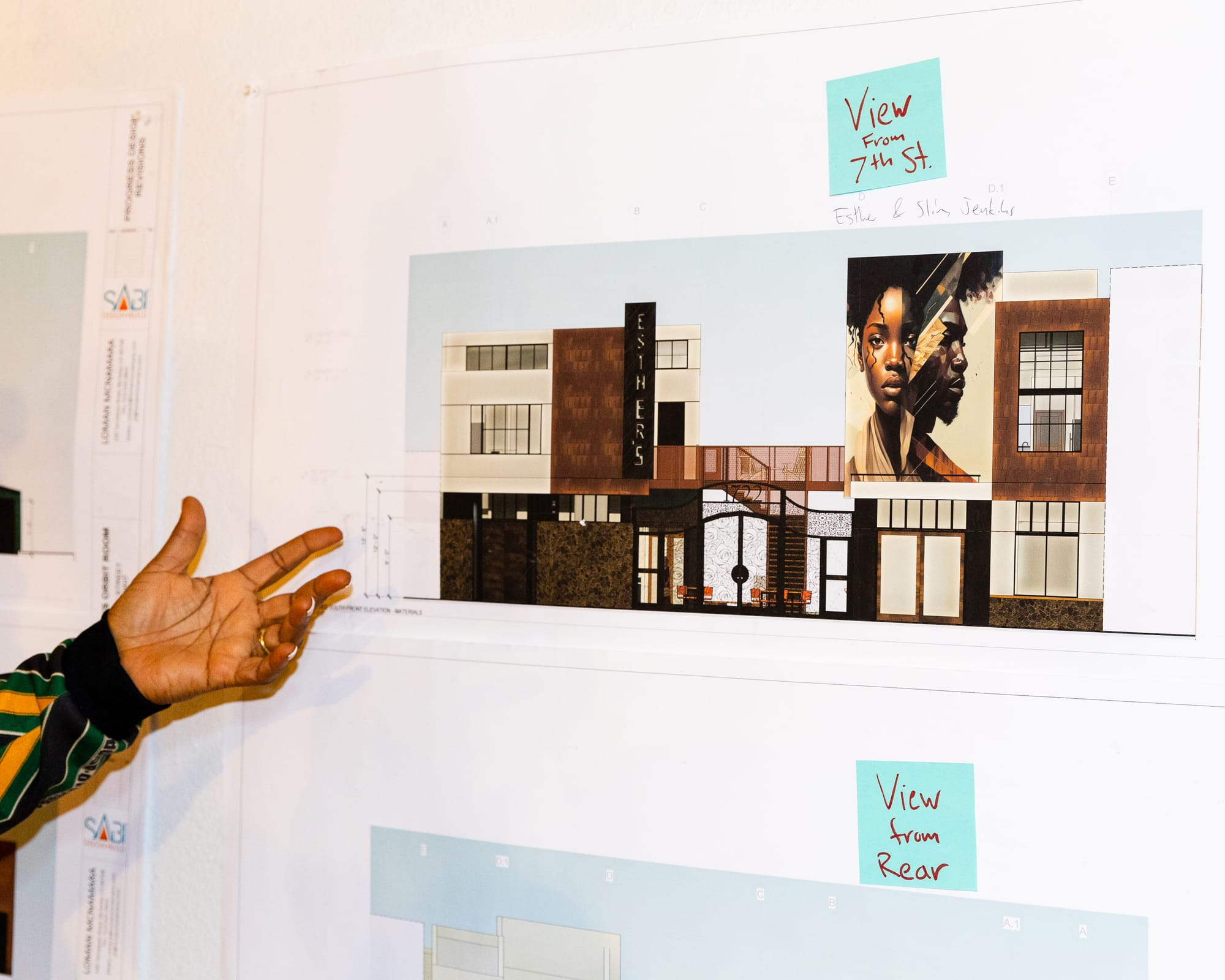
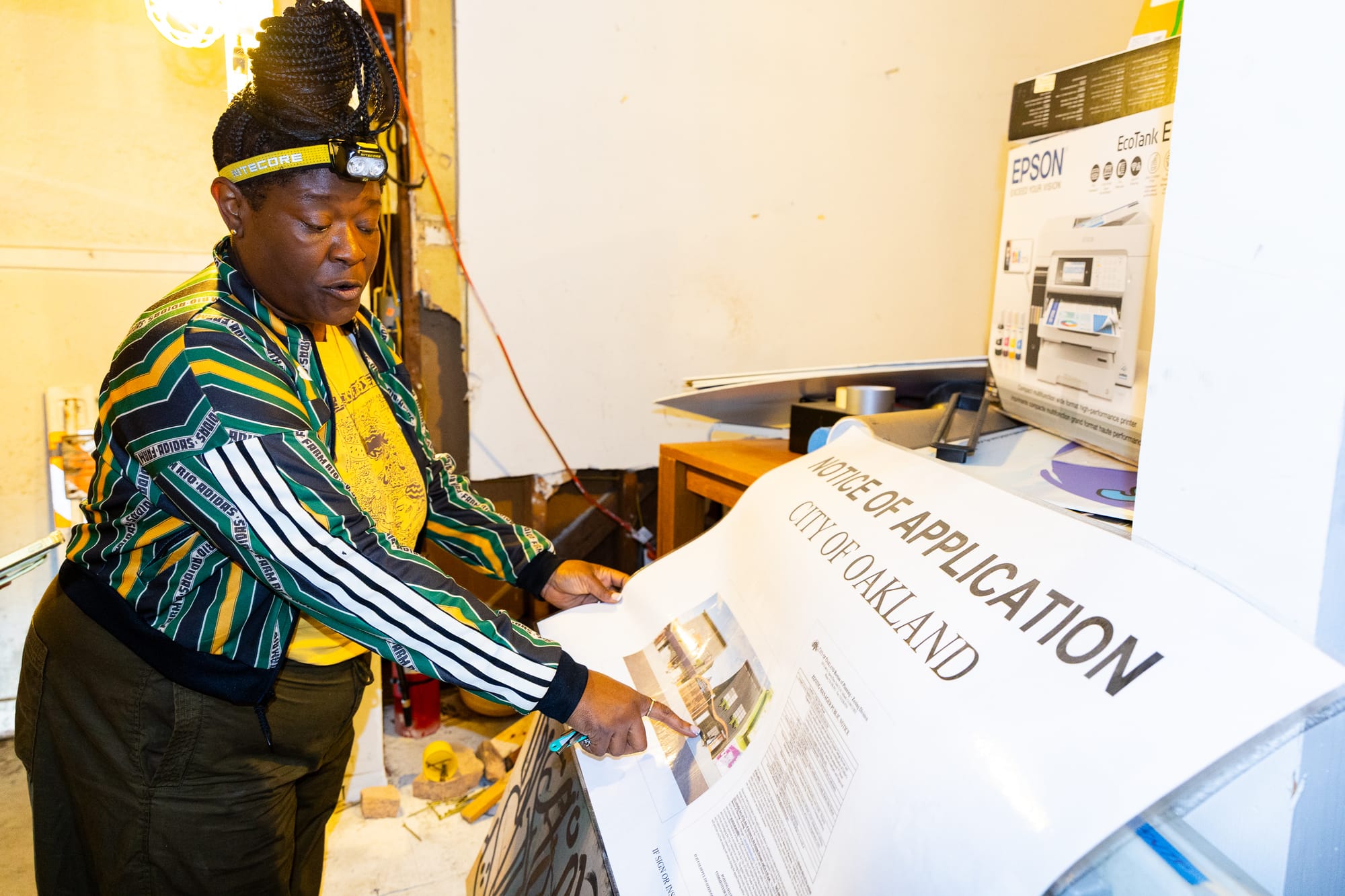
The previous construction plans for Esther's Orbit Room didn't include the stone facade. (Estefany Gonzalez/COYOTE Media Collective)
Session, who is a third-generation West Oaklander, was shocked and a little offended. She grew up here. She was trying to save this place by pushing away things that, to her, signified the kind of systemic urban destruction and neglect that Black communities in West Oakland have been subjected to for decades — creating communities where services have been completely removed.
“All that’s left is a liquor store, in neighborhoods like mine,” Session says. And Esther’s contains that history too. "This was a bar," she says, "and there's hella trauma as well as memories.”
She tells me that for every person who is starry-eyed with joyful memories of jazz at Esther’s, “another is telling me about how they had to come get their uncle or their father out of there because they were stone-cold drunk every night. The first rendering I was like, tear all that shit out; nobody needs that."
It wasn't until the community spoke up that she realized she could balance old and new another way. Session says she called Ojan Mobedshahi, EB PREC's finance director. "I was like, hey, Ojan, I know you're going to hate me, but I think we need to redo the plan."
Mobedshahi laughs as he tells this story. "That's typical Noni," he tells me.
And so the renderings were scrapped.
Session tells me that she is still grappling with the real history of West Oakland. The good and the bad. The incredible people and music and life, and the violence and oppression and pain. What stays and what goes? How do you honor a complicated legacy? For Session, pretending the darker pieces of this place didn't exist is another kind of erasure.
When I called Frank to ask him about masonry, he talked just as much about mindset as he did about mortar. What is your goal with a project? Are you trying to freeze it in amber and preserve it exactly the way it is now? Are you trying to restore it to a version of what it used to be? Or are you trying to create a hybrid: something that maintains elements of the past but offers up a new future?
Session has landed on that final answer. "We thought at first that our job was to give people something new," she says, "but now I think we're giving people what they always wanted to have but just didn't have the resources to keep." What they wanted to have was a community space, a place for music, a space to meet up and connect and find common ground. The wall is a piece of that. But there are changes that can be made too.
"We've made some modifications that allow people to experience Esther's without the demand of being closed in a dark, toxic, space and more like bringing forward the elements that build community, that feed people," Session says. The design now features a long window and an exit to the corridor between Esther's and the building beside it so people can easily move in and out of the space.
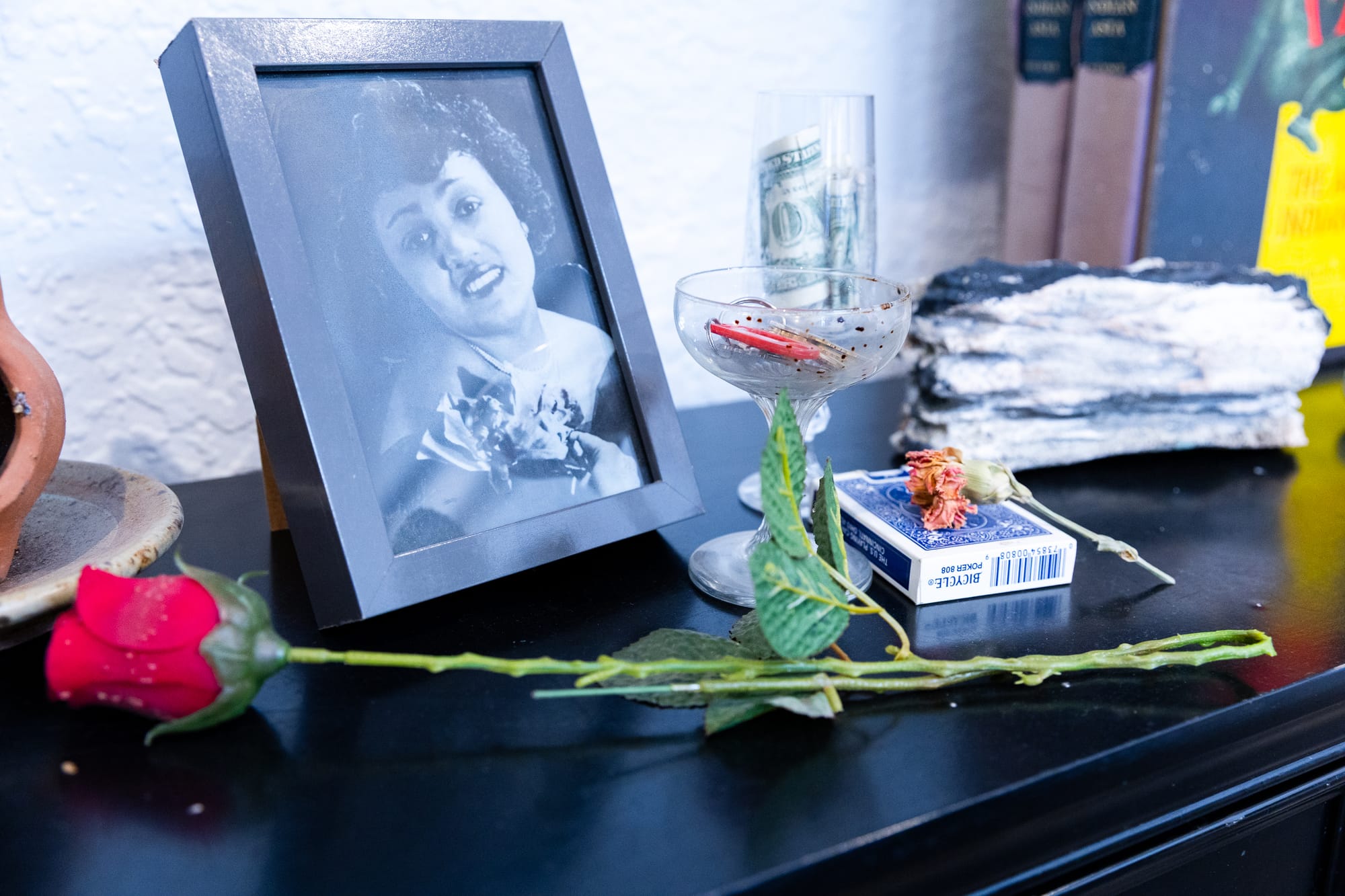
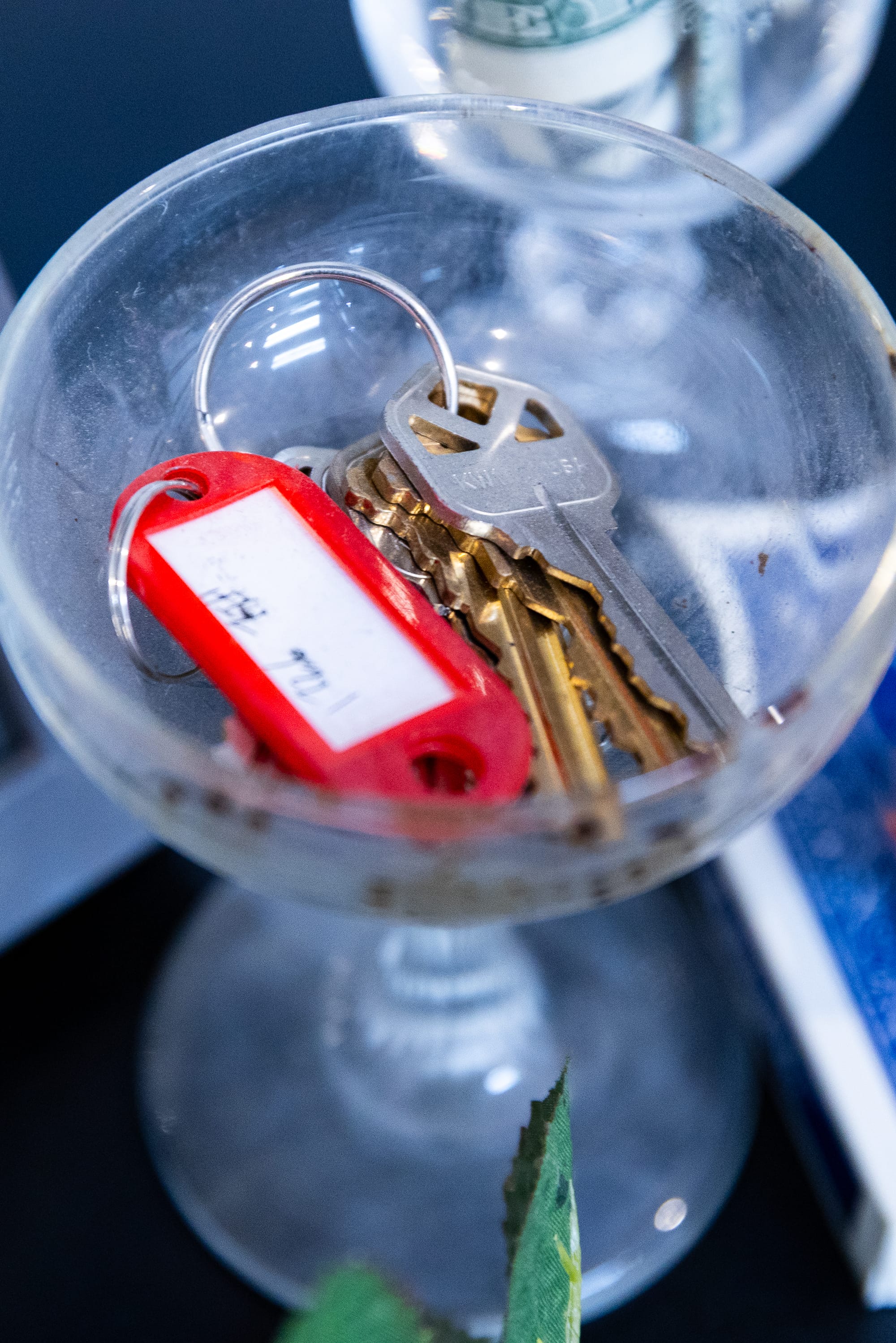
A set of keys resides in an altar for Esther Mabry, the venue’s original owner. (Estefany Gonzalez/COYOTE Media Collective)
When EB PREC first got the keys to Esther's four years ago, they discovered something incredible: The night before the bar closed for the last time, someone had carefully wrapped up every single bottle of alcohol in saran wrap to keep the dust off, with the belief that they would be back soon to begin pouring and playing once again. "That's some deep hope," Session says.
Whoever wrapped those bottles won't get what they wished for, exactly. But Session believes that much like making Esther herself a set of keys, the new design can appease the spirits who established the space, while also welcoming in new ones.