Forget Lurie’s Boosterism. SF Artists Say Only DIY Organizing Can Save the Scene

While the mayor boasts about Vogue World as a win for the local “creative community,” one thing’s never been more clear: A healthy art scene can’t depend on politicians or wealthy donors.

two people stand in front of colorful art in a gallery while other people smile around them at a gallery party
Visitors check out work by Andrea Bergen at Moth Belly, an artist-owned and operated gallery and event space in the Tenderloin. (Brandon Joseph Baker)

When Maria Judice was awarded a city grant to help open an independent micro movie theater in the Mission, she felt like she was finally getting recognition and support for her cultural work. The filmmaker and organizer, who grew up in San Francisco, was overjoyed to receive a Dream Keeper Initiative grant in 2023 to help bring BlackMaria Microcinema to life.

But the reality of working with the city and its partners has been deflating, to say the least. From an inhospitable rental market to a grant structure that expects artists to front their own money before getting a payout, what should have been a path to prosperity has been full of roadblocks.

After six months of bureaucratic hurdles, “I was feeling very beat down,” she says. “As someone who grew up here, it was very hard to level up and become established in a secure place in this landscape.”

While artists like Judice struggle to keep their dreams afloat, Mayor Daniel Lurie has been on an advertising campaign — mostly via Instagram zealotry — that would have viewers believe San Francisco is a mecca of arts and culture. In early August, he touted the 2027 Vogue World coming to San Francisco as a boost for the “creative community.” At the end of the month, the same day he appeared at a block party featuring the soft-rock band Train, he announced record-breaking tourism numbers, which should mean more money for art, based on hotel tax funding for city arts grants

It’s not news that social media optics don't amount to real support. But for artists at the fringes, the contrast between their current struggles and city leaders’ marketing efforts has never been more egregious. It’s also made clear what many have known for years: A healthy art scene isn’t one that depends on politicians or wealthy donors. DIY and community organizing, artists say, is the only way to keep the true essence of the art scene alive. 
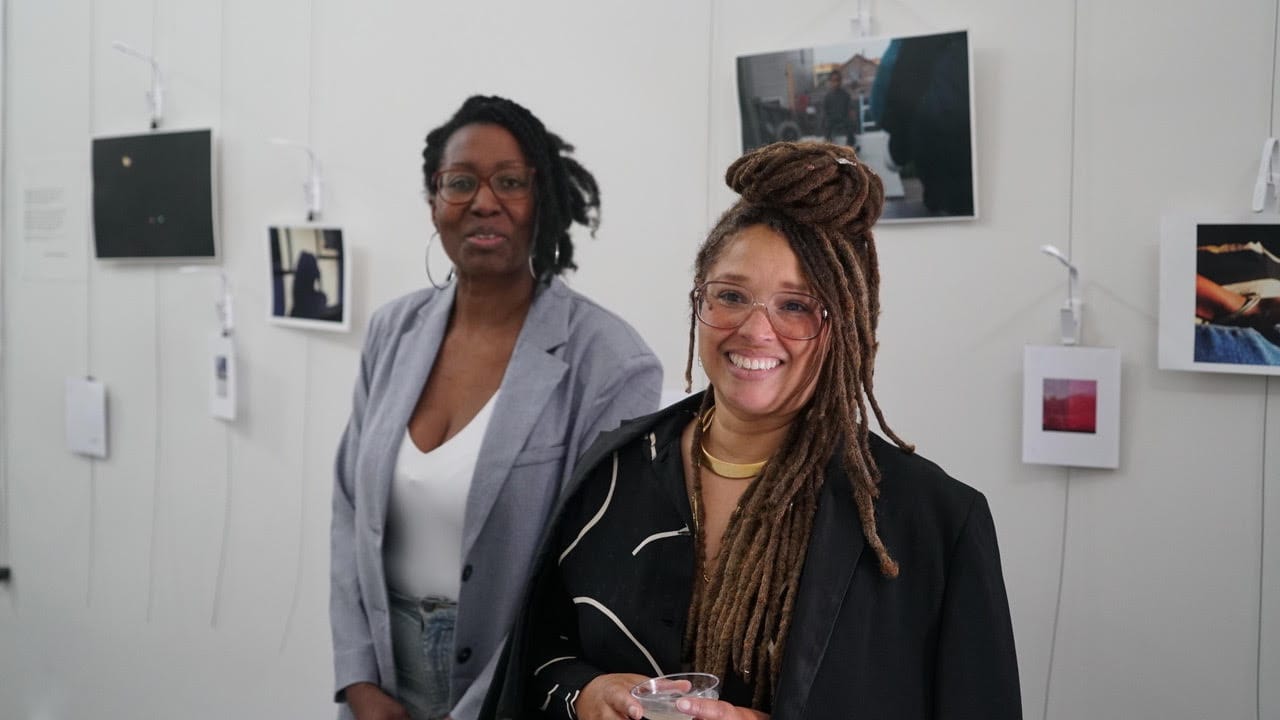
two women stand in front of a wall with art on it at a gallery opening, smiling, dressed nicely
Artist Shantre Pinkney with curator Maria Judice at the soft opening of Judice’s gallery in the Tenderloin. The space took more than three years to open following her Dream Keeper grant in 2023. (Zach Sexton)

To John Vochatzer, cofounder of Moth Belly Gallery in the Tenderloin, city leaders’ current relationship with what’s left of the creative class is an extractive one. “Artists and small businesses are exploited as props in the mayor’s million-dollar propaganda campaigns to give tourists and investors the illusion of this ‘city-on-the-rise’ narrative,” says Vochatzer. 

“The reality lately has been a heightened cost-of-living crisis, more and more beloved small businesses and institutions shuttering for good, more police and surveillance, and the proliferation of more sterile, corporate tech culture that people are bored and sick of.”

 Via the hotel tax, the San Francisco Arts Commission and Grants for the Arts, which were recently unified into a single agency, administer grants to individual artists and arts organizations. While Lurie says public investment in art will help drive San Francisco’s comeback, the city has also increasingly pursued public-private partnerships, like the Big Art Loop, the Civic Joy Fund, and the Larkin Street Revival Project – primarily funded by tech millionaires and billionaires.

“What we’re seeing right now is that there is a bigger divide and disconnect between the wheelers and dealers and those that are actually making stuff — be it paintings or performances or food,” says Jason Wyman, also known as Queerly Complex, an artist, cultural strategist, and member of 465 Collective in the Mission. When it comes to material support and opportunities, Wyman says, “we’re seeing the pipelines evaporating.” 

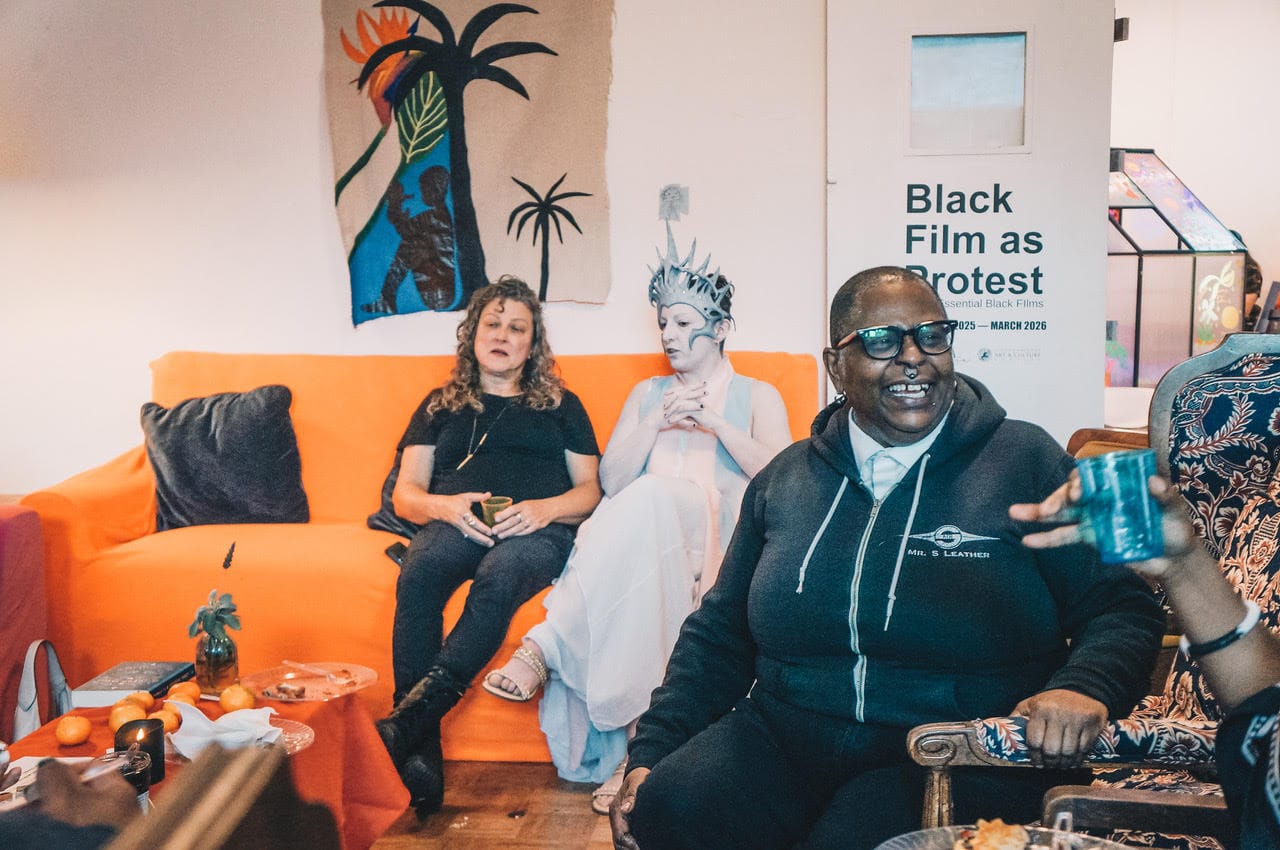
three people, one in white makeup with an elaborate headdress on, sit in a gallery room talking and laughing. Two of them sit on an orange couch, another person sits in a chair in the foreground, laughing at something a person out of frame is saying
Artists and community members at a Healing Through Self Expression gathering at 465 Collective. (Beam Yompool)

Doing it ourselves

The last year has been full of awful headlines for the city’s art scene: at least six commercial art galleries have shuttered in San Francisco. The city’s last nonprofit art school announced its closure and subsequent purchase by Vanderbilt, followed by its prospective reopening as the Jen-Hsun and Lori Huang College of Art in 2027. Of course, this erosion has actually happened over years, since the first dot-com boom pushed artists out of the Mission

Behind an unassuming facade on South Van Ness, 465 Collective feels like a counterculture holdout: Armchairs and couches line the front room, inviting visitors to sit and chat. A graffitied bathroom boasts political messaging. Art fills the back room gallery. Here, communion is as important as what’s hanging on the walls. The art they show is regularly sourced through open submissions with loose parameters, creating welcoming and democratized art opportunities Wyman calls “anti-curation.”

That approach has made all the difference to Judice, also a member of 465 Collective, who ended up operating the BlackMaria Microcinema as a pop-up there through 2025. That was after unsuccessfully looking for her own brick-and-mortar spot for almost a year, a time during which she encountered Mission landlords looking to lease commercial spaces for 10-year agreements at $4,000 to $6,000 per month.

Now, Judice has opened a location in the Tenderloin, the neighborhood where she also works as vice president of development at Code Tenderloin, a digital literacy nonprofit. She’s managed to do so with the support of further grants from the Tenderloin Storefront Opportunity as well as the Downtown ENRG grant through SF New Deal, which is backed by a mix of public funding and private philanthropy. But she has also invested around $30,000 of her own money on mandatory renovations to the space she’s renting at Eddy and Larkin. The gallery had a soft opening this month, and the theater will finally open in December — more than three years after she first received the Dream Keeper grant that was supposed to be a game-changer.

“We can’t keep our monies tied too much to the city and our relationships with politicians,” she says, of what she’s learned from the experience. 

“We’re not in a relationship, we’re in a transaction.”

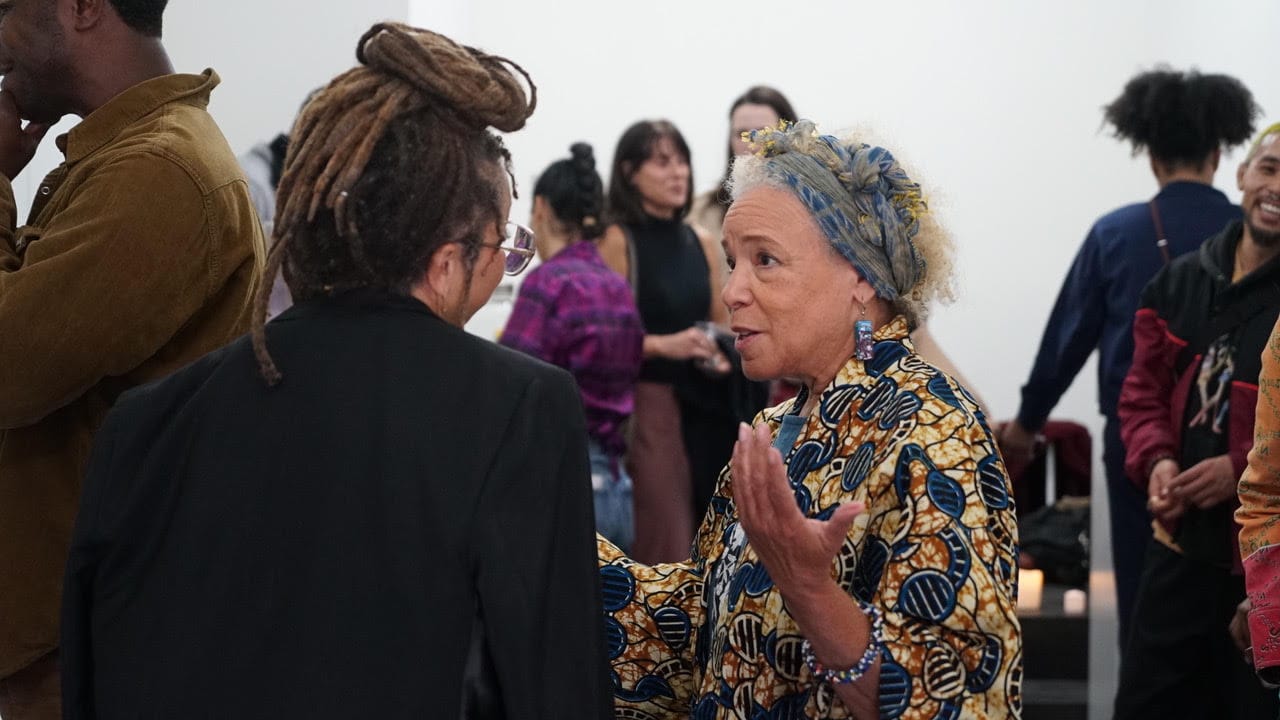
two women, one with her back to the camera, another in a colorful shirt, talk to each other surrounded by others at a gallery opening
Maria Judice (with her back to the camera) speaks to an attendee at BlackMaria's soft opening in the Tenderloin. (Zach Sexton)

Many city grants, as well as some private grants, operate on a reimbursement model, requiring artists to get loans or front their own capital. A policy announced by the Arts Commission in September 2025 that would have put a massive burden on artists hoping to receive grant money was eased after pushback, and now allows artists to receive up to 50% of their grant funds in the first year and 40% in the second. 

But the distribution system and bureaucracy involved still prevents some artists from pursuing grants altogether.

“I have checked out of real government support as a Black person who grew up in San Francisco and has experienced disparity firsthand as early as the 90s and 2000s,” says Tray Smith, an artist and founder of Realest Exposure, a creative agency and photo center in the Tenderloin. Smith invites local artists and activists to stage events there. He also hosts his own event series, Healing Through Self Expression, at different artist-centered spaces around town.

“I’ve made the decision to lean on my own community,” he says, which has included bartering and work-trade agreements. 

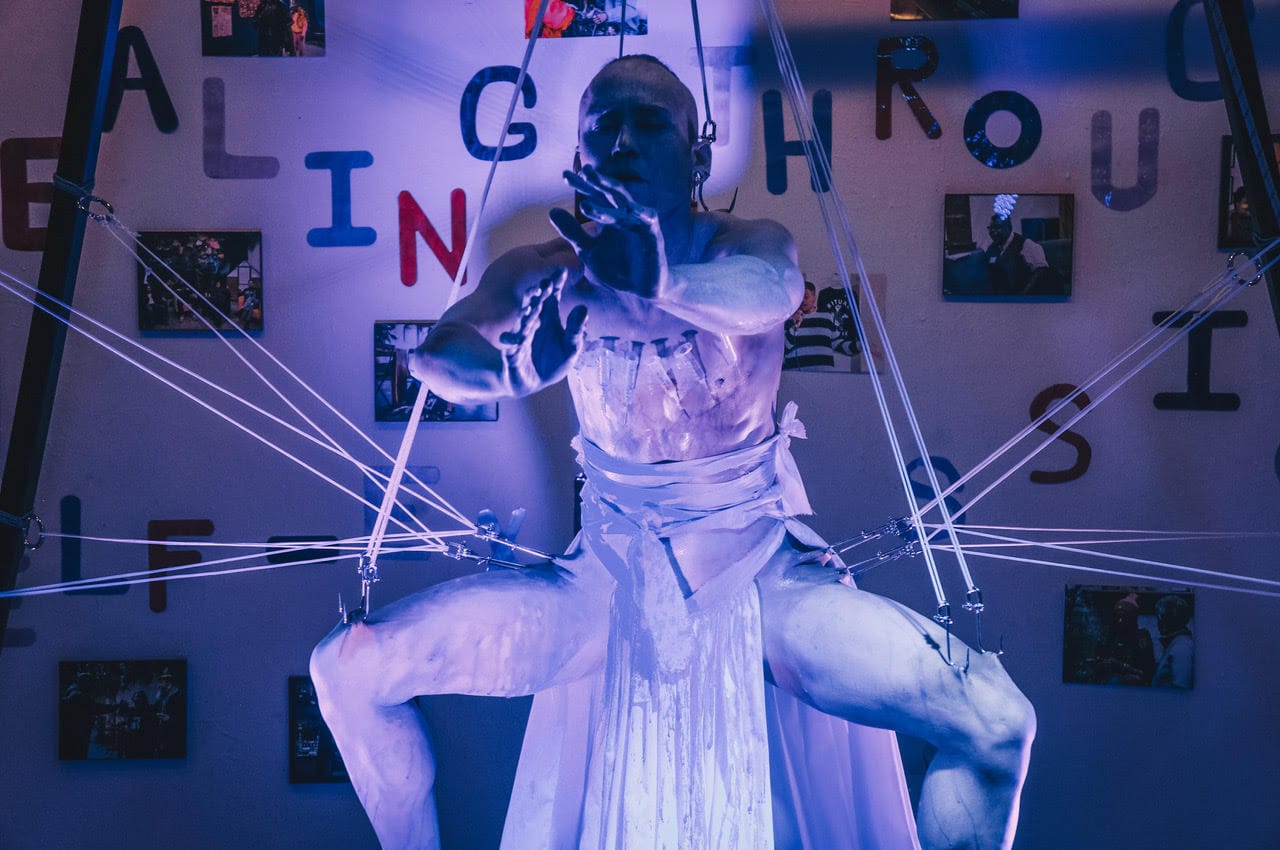
a suspension artist in white makeup performs in a gallery lit dimly in purple with letters and photos on the back wall
Suspension Fox Lyraphic performs at a Healing Through Self Expression gathering at 465 Collective. (Beam Yompool)

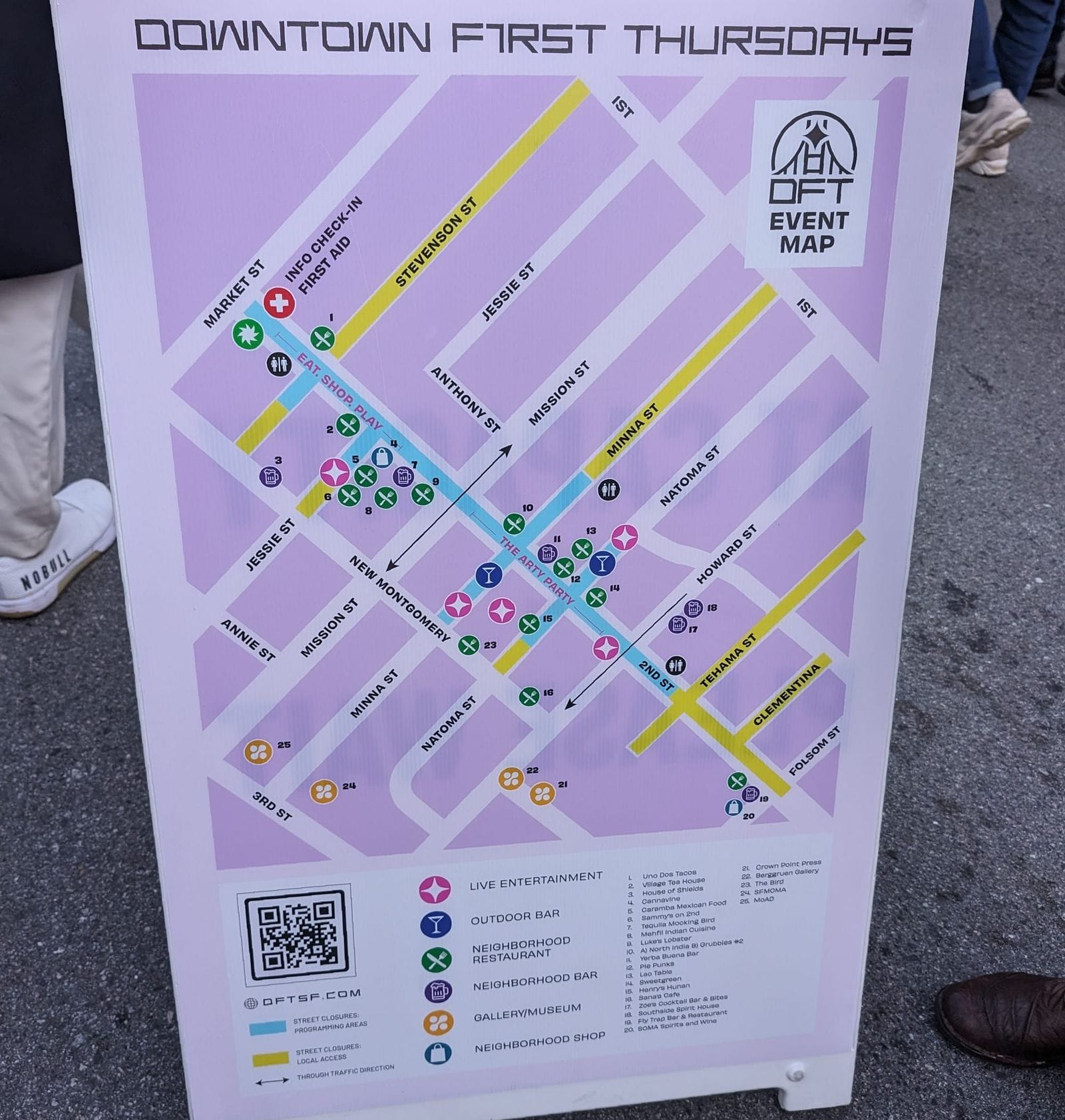
Meanwhile, “recovery”-focused efforts downtown have missed the mark, Smith says. “The Downtown Business Fund funding First Thursday does little for local artists,” says the artist. “I’ve yet to see big outcomes of downtown brick and mortar initiatives. While all of this is happening, rent is through the roof.” (The median rent for a one-bedroom apartment in the city is currently more than $3,800; the more than 25% increase since last year caused Lurie to declare a “rent emergency” in September.)

Smith is hardly the first to observe that the mayor’s many marketing efforts around art and culture have primarily focused on temporary activations, such as block parties or filling empty storefronts with pop-ups, while longstanding smaller arts institutions continue to struggle.

Sometimes, the two are directly at odds. Downtown First Thursdays actively detracted from the pre-existing Tenderloin First Thursdays Art Walk, introducing confusion about the two events and drawing attendees away from the independent, artist-focused one, as Vochatzer detailed in a February op-ed. He has since switched to a First Saturday model for openings at the gallery, along with a handful of other neighborhood galleries.

Moth Belly, which mostly runs on volunteer efforts, received a few smaller grants from the city and other foundations between 2022 and 2025. While they may have kept the doors open, Vochatzer says they weren't significant enough to propel the gallery into any sort of stability. 

Still, he says support for all San Franciscans in the form of affordable rent or basic income initiatives would be more welcome than more grants tailored specifically to arts spaces or creative workers.

The high-profile announcement of Artist Hub, a new public-private partnership to build below-market-rate artist housing on Market Street, sparked mixed reactions from the artist community. Slated to open in 2028, the complex will likely offer housing at rates higher than many working artists can afford, according to artists who spoke candidly at a recent Arts Commission meeting, where the project was presented. The project will also require a vetting process in which the city will decide who qualifies as an artist.

“Sure, more city funding for arts and relief programs for artists and creative spaces sounds great,” Vochatzer says. “But I'm really more concerned about the changes that need to take place that will make life more egalitarian and sustainable for everyone. When wealth is not increasingly concentrated in the hands of very few, and is more justly distributed in our communities, artists will be among those that prosper.”

The inflection point 

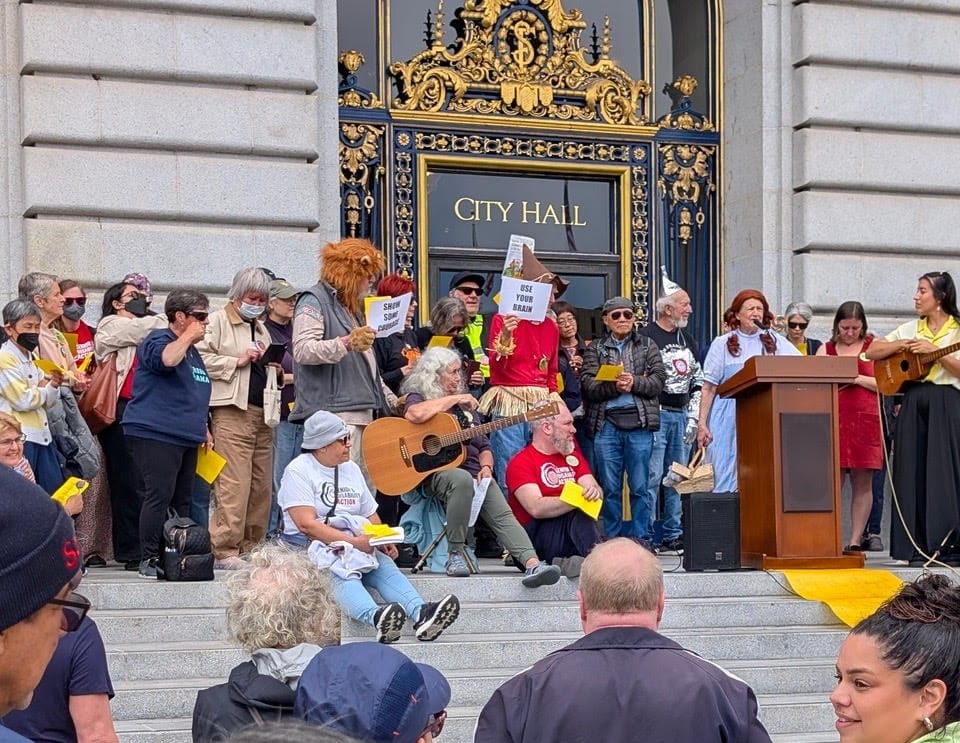
In June, four performers staged a protest inside City Hall while dressed as characters from The Wizard of Oz. Visiting supervisors’ offices, they sang “Somewhere Over the Rainbow” with changed lyrics, asking politicians to “have a heart, a brain, and some courage to stand up against and to the mayor for his proposed cuts,” says Wyman, who helped organize the protest.

This performance-as-intervention was the work of the People’s Budget Coalition, which pushed back against proposed cuts of over $20 million to essential services for seniors and disabled San Franciscans.

Following this action and many others — including June’s Free Speech Cultural Celebration in Civic Center Plaza, which featured an appearance by this cast, the Siu Han Cheung Choir, and drag laureate Per Sia — some $26 million for these services was restored. 

a protest at san francisco city hall with about 20 people on the steps, someone holding a guitar, and some people dressed as characters from The Wizard of Oz, as supporters watch
A protest at City Hall in June featured performers dressed as characters from The Wizard of Oz. (Jason Wyman / Queerly Complex)

“One of the beautiful things about San Francisco is that performance drives so much of the lifeblood of the city,” Wyman says, “be it in the form of Aztec dancers offering ceremony at the start of protests, the Brass Liberation Orchestra coming out to Mayday festivals, or performances during the tech bus protests in the Mission over a decade ago.”

The tradition of art as protest is a longstanding one, of course. But many artists see the city’s current unaffordability crisis as a new inflection point, and say it has encouraged them to think even more creatively about their work.

“It is forcing us to go back to the drawing board and be in love with our art and find ways to fund our own art,” Judice says. “We were all living in an era of cookie crumbs keeping us somewhat sustained; and now we have no crumbs and no future. We need to figure out ways to bring people in and converge like we did when we had amazing art in the 1960s and 70s, and said ‘Fuck you.’ We’re not quite saying ‘Fuck you’ yet in San Francisco.”

What a collective “fuck you” would look like in modern-day San Francisco is for artists to decide — but the ethos runs in the city’s blood. Free Love, the Free Speech Movement, the Black Panther Party, punk, and the Mission School were all countercultural, community-driven movements which did not find their power in establishment-friendly optics. On the contrary, they focused on collective self-determination and pushing back against the status quo.

These movements weren’t created in a vacuum. They arose in direct opposition to censorship, hostile policies, and inequality, which affect all working people. And they grew out of alliances between people who saw art as a necessary component of social change — financial backing be damned. 

“I’m fighting for everyday San Franciscans,” says Wyman, “because fighting for everyday San Franciscans is fighting for artists.”

Great! You’ve successfully signed up.

Welcome back! You've successfully signed in.

You've successfully subscribed to COYOTE.

Success! Check your email for magic link to sign-in.

Success! Your billing info has been updated.

Your billing was not updated.