Text Me When You Get Home
Nearly a decade since the MeToo movement began, women’s daily lives are still shaped by efforts to avoid assault and harassment. How do we move forward?


Nearly a decade since the MeToo movement began, women’s daily lives are still shaped by efforts to avoid assault and harassment. How do we move forward?

This week we've got salty lakes, vampiric debates, speculative sculpture, and more.

When someone is detained, they usually spend up to 8 hours at a processing center before transfer. Having a lawyer advocate for their rights is essential — but shortages make that less likely.

A private initiative founded by the mayor and backed by a crypto billionaire is increasingly shaping San Francisco’s arts scene. Musicians are asking questions — and some are calling for a boycott.


At first glance, PloverFest was a no-brainer of a gig: a free event planned to celebrate the first anniversary of San Francisco’s Sunset Dunes, the 2-mile-long oceanfront park previously known as the Great Highway. The party would include a kids’ zone and live music, with stages at five cross streets.
To fill those stages, the nonprofit Friends of Sunset Dunes booked local musicians who had previously played the park’s casual monthly “Second Sunday Serenades” series. Offers were made, stage plots were sent, and planning for the April 12 party proceeded peacefully.
That is, until April 1, when performer Sweet Lew received an image of the PloverFest flyer to post on social media. The San Francisco musician noticed a tiny purple logo in the bottom-right corner: The Civic Joy Fund was a co-sponsor. He immediately emailed organizers to let them know he was out.
“For those of you who do not know, the Civic Joy Fund was started by Daniel Lurie and known Zionist Manny Yekutiel, and on top of that they’re funded by… crypto billionaires, people who fund the surveillance state in San Francisco,” said Sweet Lew in a reel he posted to Instagram two days later. Yekutiel, owner of the Mission cafe and event space Manny’s, has long faced criticism over his ties to Israel, about which, he once wrote, he has “complicated feelings.” The “crypto billionaire” would be Chris Larsen, the Ripple founder who has also invested nearly $9.4 million in surveillance technology for the San Francisco Police Department.
“I know it’s hard to make a dollar as an artist in this city, but if we let entities like this take over the arts in San Francisco, it’s going to get even harder,” Sweet Lew continued. “The more and more private equity gets in, the more and more we let the ruling billionaire class muscle their way into our spaces.”
Sweet Lew is part of a growing group of artists calling for a boycott of events affiliated with the Civic Joy Fund, an initiative to “activate” San Francisco’s streets with block parties, music, and trash cleanups, all privately funded by a group of the Bay Area’s ultra-wealthy.
Accusations of artwashing, meager artist compensation, and opaque financial practices have been leveled at the Civic Joy Fund, and its parent nonprofit the Civic Space Foundation, since its founding in 2023. But three years later, the backlash has reached an inflection point: Those in the arts scene are increasingly questioning both the motives of the fund’s primary backers and the role the Civic Joy Fund is playing in shaping the city’s cultural landscape.
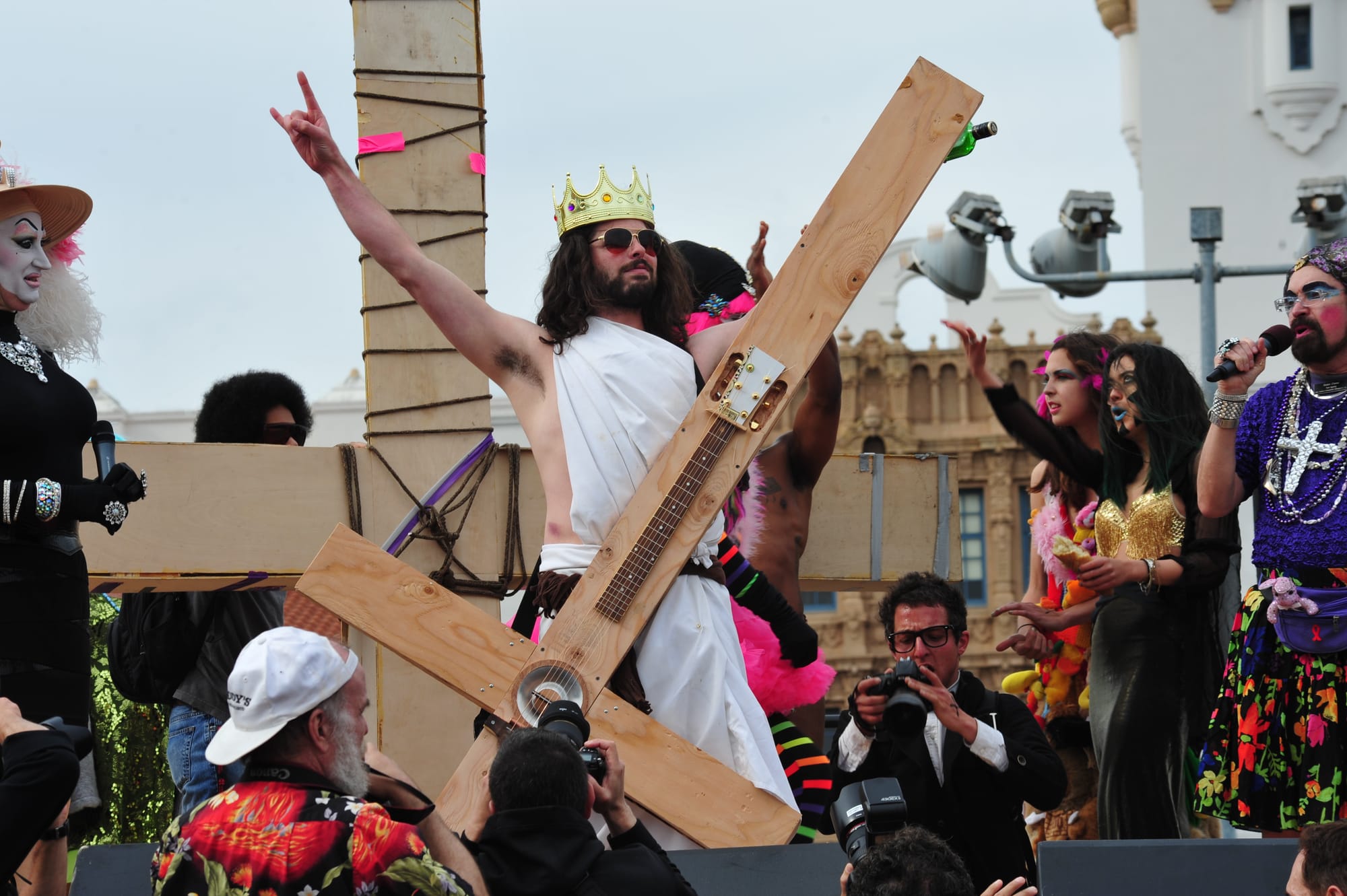
“Our joy cannot be bought with a DJ and a $5 million crypto check,” wrote filmmaker and performer Mama Ganuush in an April 10 email to their subscribers. Their message included a list of events to boycott: night markets and block parties such as Downtown First Thursdays, as well as events that predate the Civic Joy Fund but have since received support from it, including Castro Halloween and Hunky Jesus at Dolores Park.
But avoiding Civic Joy-related events may be easier said than done.
Over the past two weeks, an untold number of texts and calls and links have flown between artists booked at Civic Joy-funded events, as the scene grapples with thorny questions about art and integrity under capitalism. If you take a Civic Joy gig, does it mean you’re complicit with the views of its financial backers? Is your art laundering the public images of neoliberal politicians, or will the paycheck and the exposure benefit your career enough to outweigh all that? What does it mean that the health of the scene seems to rely on a handful of billionaires?
And how, ahead of a family-friendly celebration of a public park, did those three words become such poison in the first place?
In San Francisco, 2023 was the Year of the Rock Bottom PR Problem. The San Francisco Chronicle arguably started it, after introducing readers to the term “doom loop” and amplifying the narrative that the city’s demise was imminent and possibly irreversible. It took off nationally. “How Did San Francisco Become the City in a ‘Doom Loop’?” asked The New York Times. “What Happened to San Francisco, Really?” demanded The New Yorker, in a longform epitaph that I got served in sponsored Instagram posts for months.
This is the context in which, in May of 2023, the Civic Joy Fund was born. Its co-founder was Levi Strauss heir and businessman Daniel Lurie — then four months from launching his mayoral campaign against London Breed. He was joined by polarizing cafe owner and organizer Manny Yekutiel — then two-plus years from announcing his candidacy for District 8 Supervisor, though his political aspirations were an open secret.
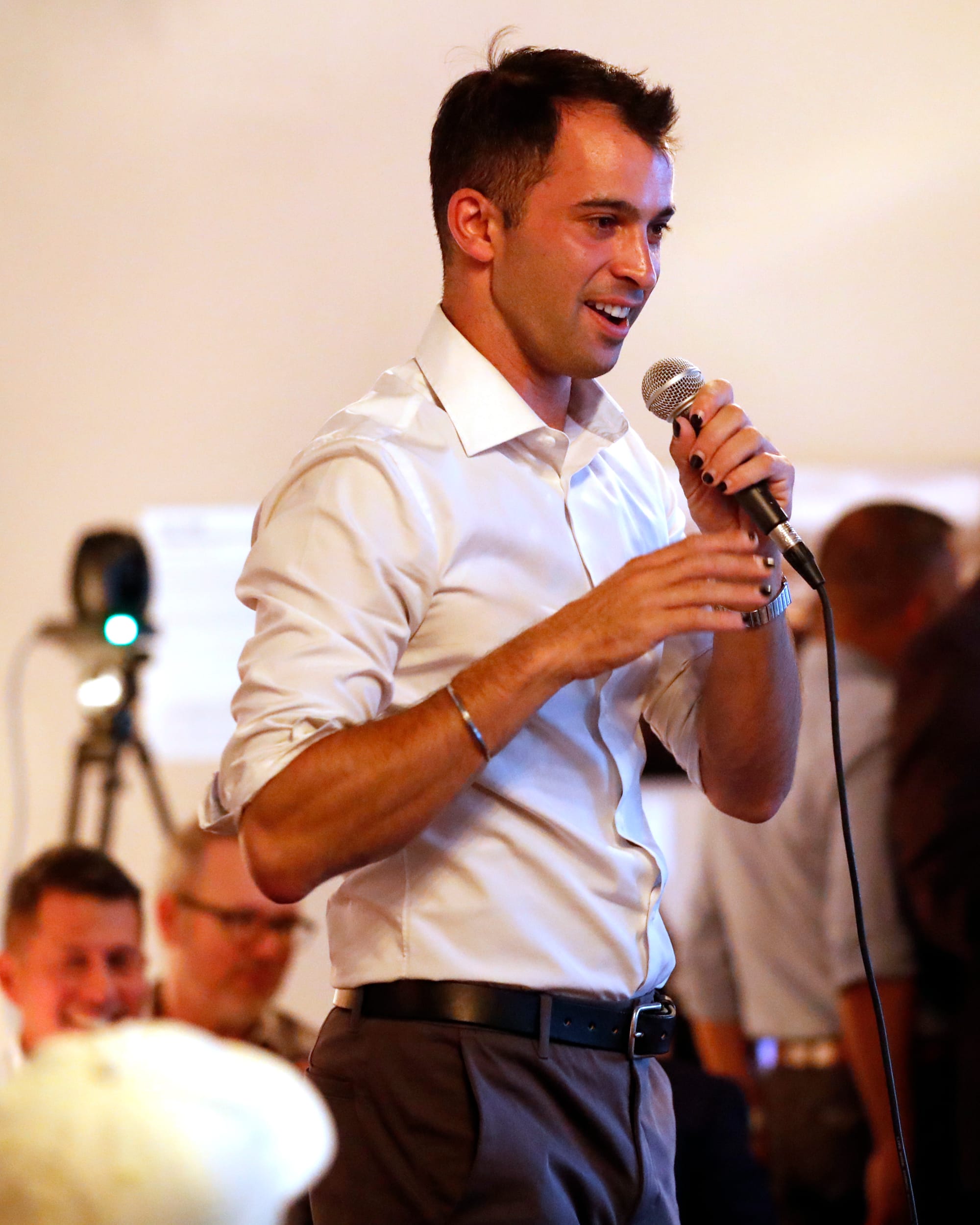
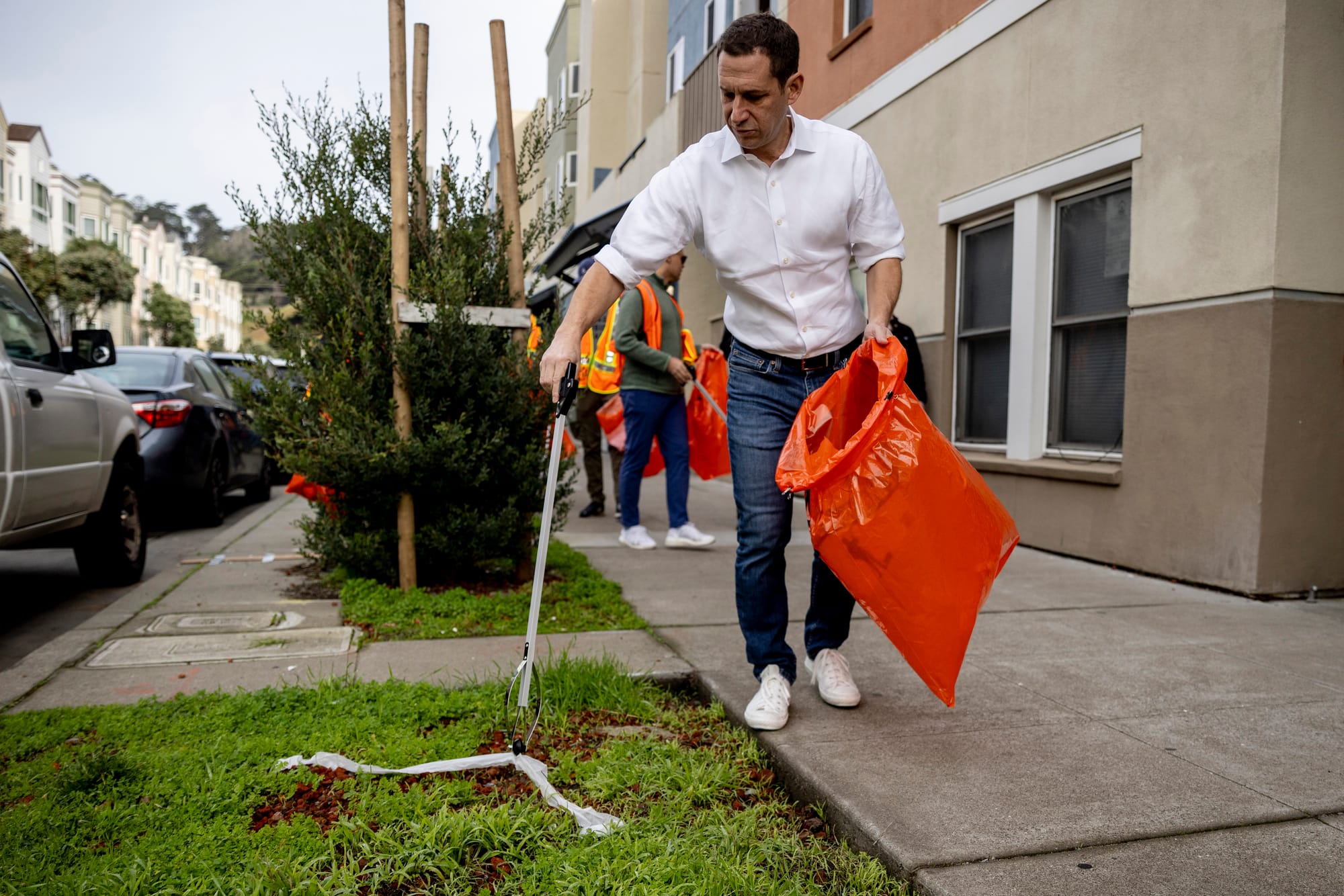
Left: Manny Yekutiel, now a supervisorial candidate in San Francisco, speaks at his cafe Manny's in 2019. (Photo by Scott Strazzante/San Francisco Chronicle via AP) Right: Mayor Daniel Lurie picks up trash as part of a January 2025 cleanup co-organized by the Civic Joy Fund, which he and Yekutiel founded in 2023. (Photo by Stephen Lam/San Francisco Chronicle via AP)
Its major backers were crypto mogul Larsen, Hyatt Hotels heir Joby Pritzker, and Gap heir and former chairman Bob Fisher. The Fund also started with donations from Crankstart, the foundation started by Michael Moritz of the political action group Together SF, among contributions from other very, very wealthy Bay Area residents .
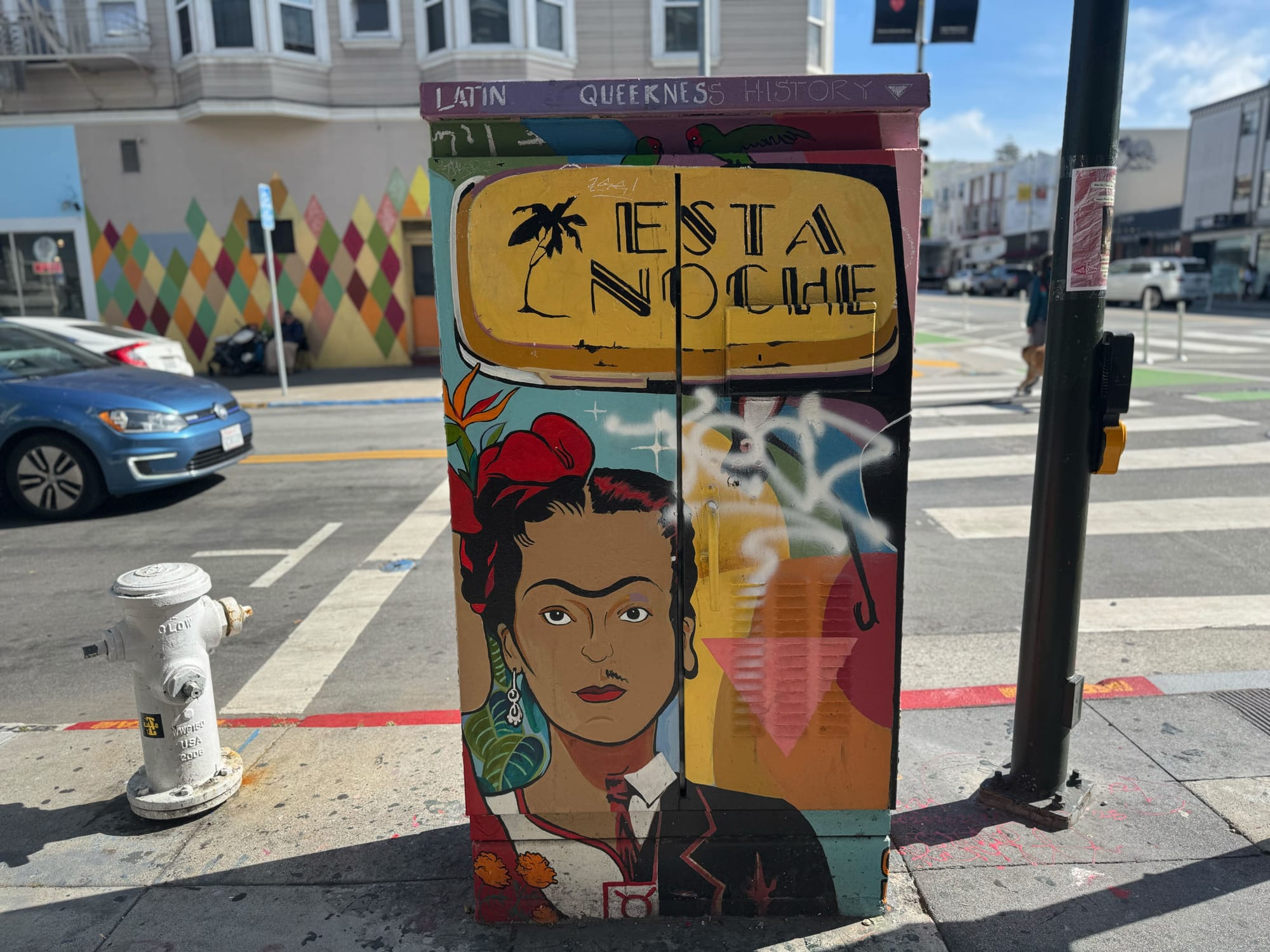
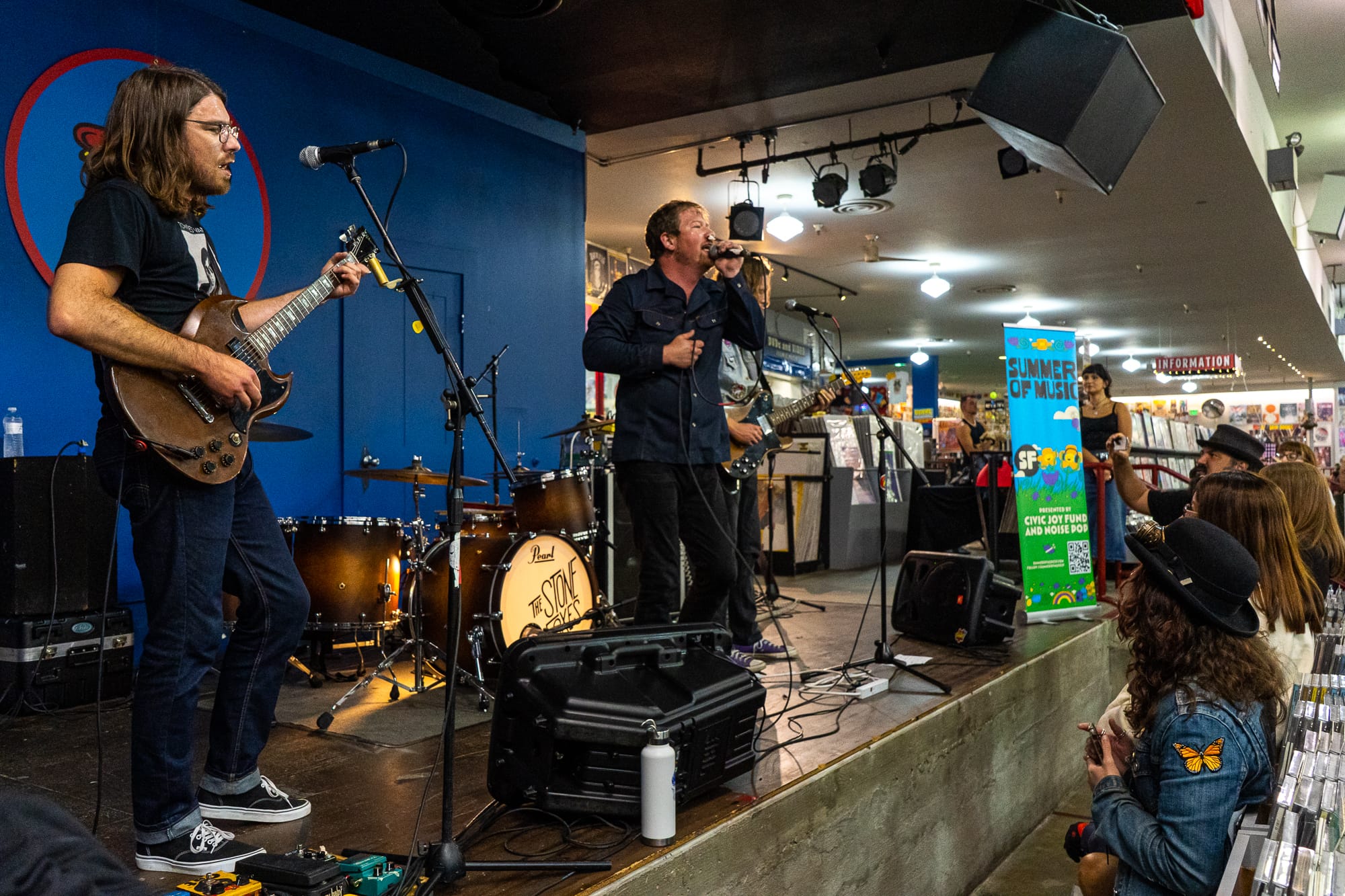
Through partnerships with music promoter Noise Pop and nonprofit Paint the Void, the Fund hired musicians to play on street corners and at parklets (for $50 an hour per person) and visual artists to paint utility boxes. It also launched three street cleanup and beautification programs.
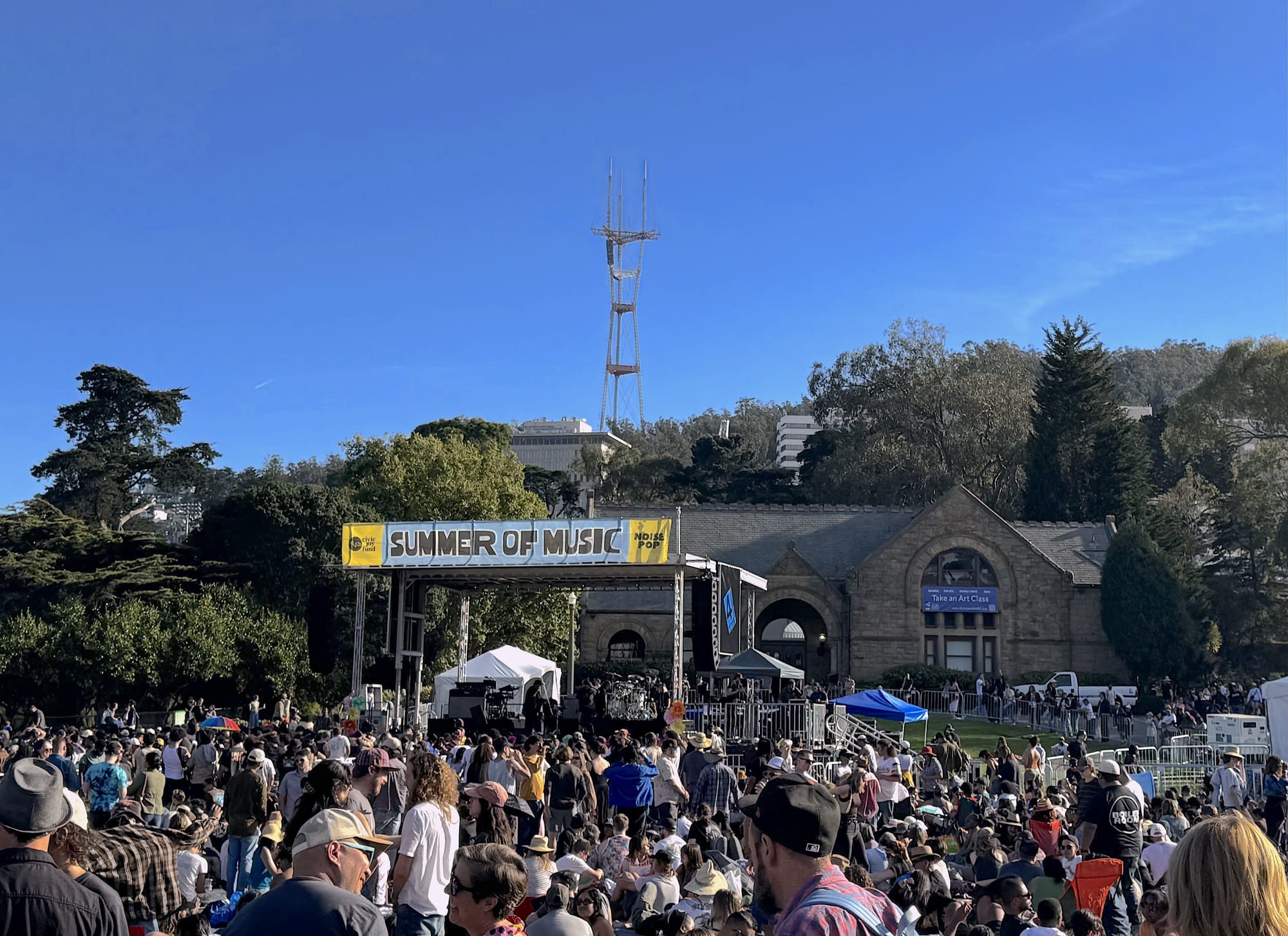
Three years later, while it still organizes neighborhood trash pickups, the Civic Joy Fund’s signature events are large-scale night markets and block parties. The Summer of Music sidewalk shows expanded into a free concert series featuring national acts, with a grand finale starring Thundercat at Golden Gate Park.
The nonprofit reported more than $8.2 million in revenue in 2024, up from $2.7 million in 2023 — a roughly threefold increase — and ended the year with a $2.7 million surplus. It has a staff of five, including executive director Luke Spray, who took over after Yekutiel left the organization last September. Lurie is no longer involved in the Fund’s operations.
But some things remain the same: Crypto billionaire Larsen — who is currently spending tens of millions of dollars to prop up moderate candidates in California, fight labor unions, defeat the state billionaires tax and San Francisco’s own overpaid CEO tax — is still one of the Civic Joy Fund’s biggest benefactors. This is reflected on the organization’s own “funders” page, which lists cute categories for these very wealthy people, like “Disco Queens,” “Street Sparklers,” and “Joy Makers.”
The organization’s latest tax return showed a gift of cryptocurrency from a single source in 2024 of nearly $5 million, but per federal tax law, the Civic Joy Fund does not have to publicly disclose its individual donors. Crankstart, the foundation started by Moritz, gave $1 million that same year.
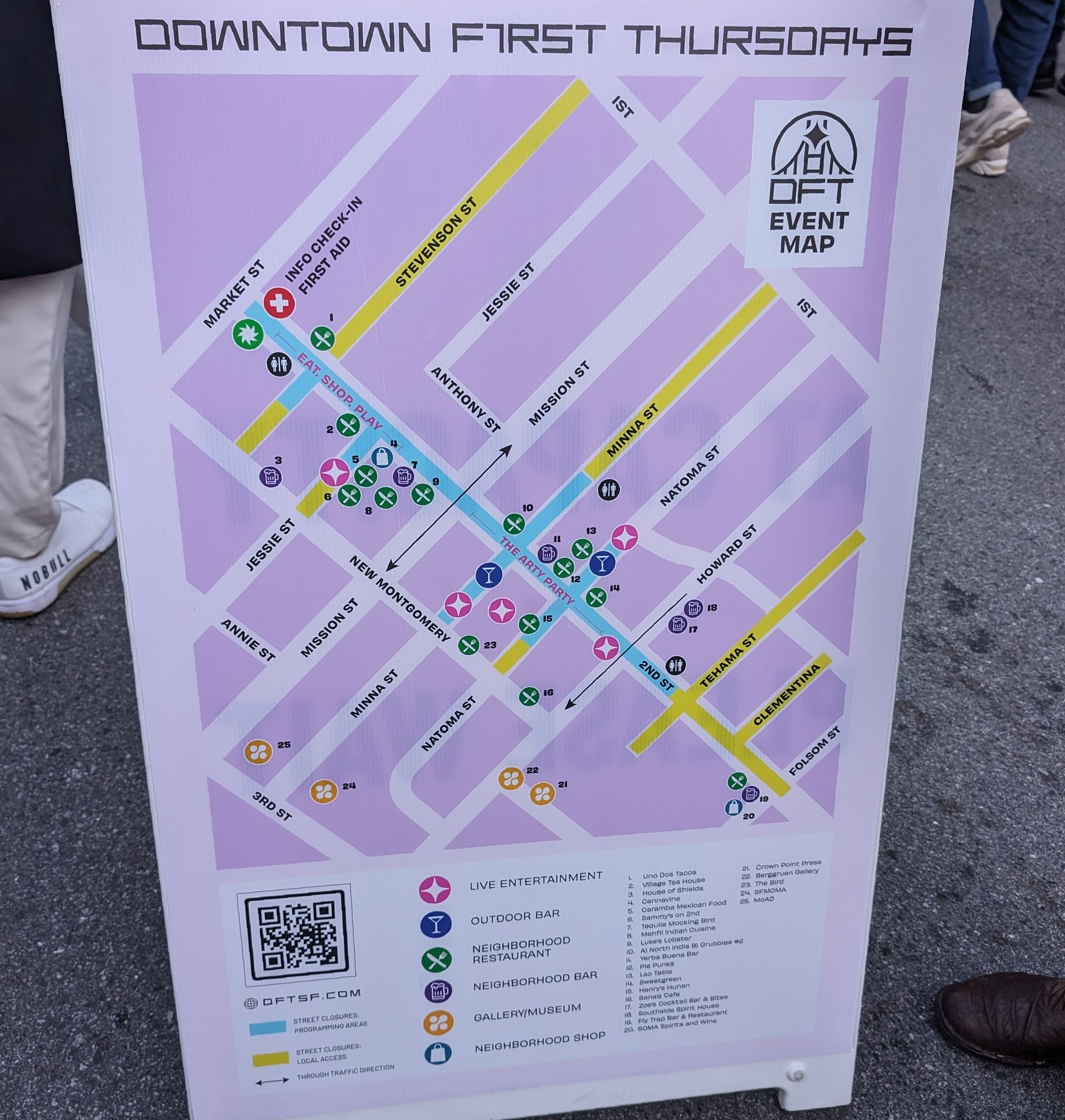
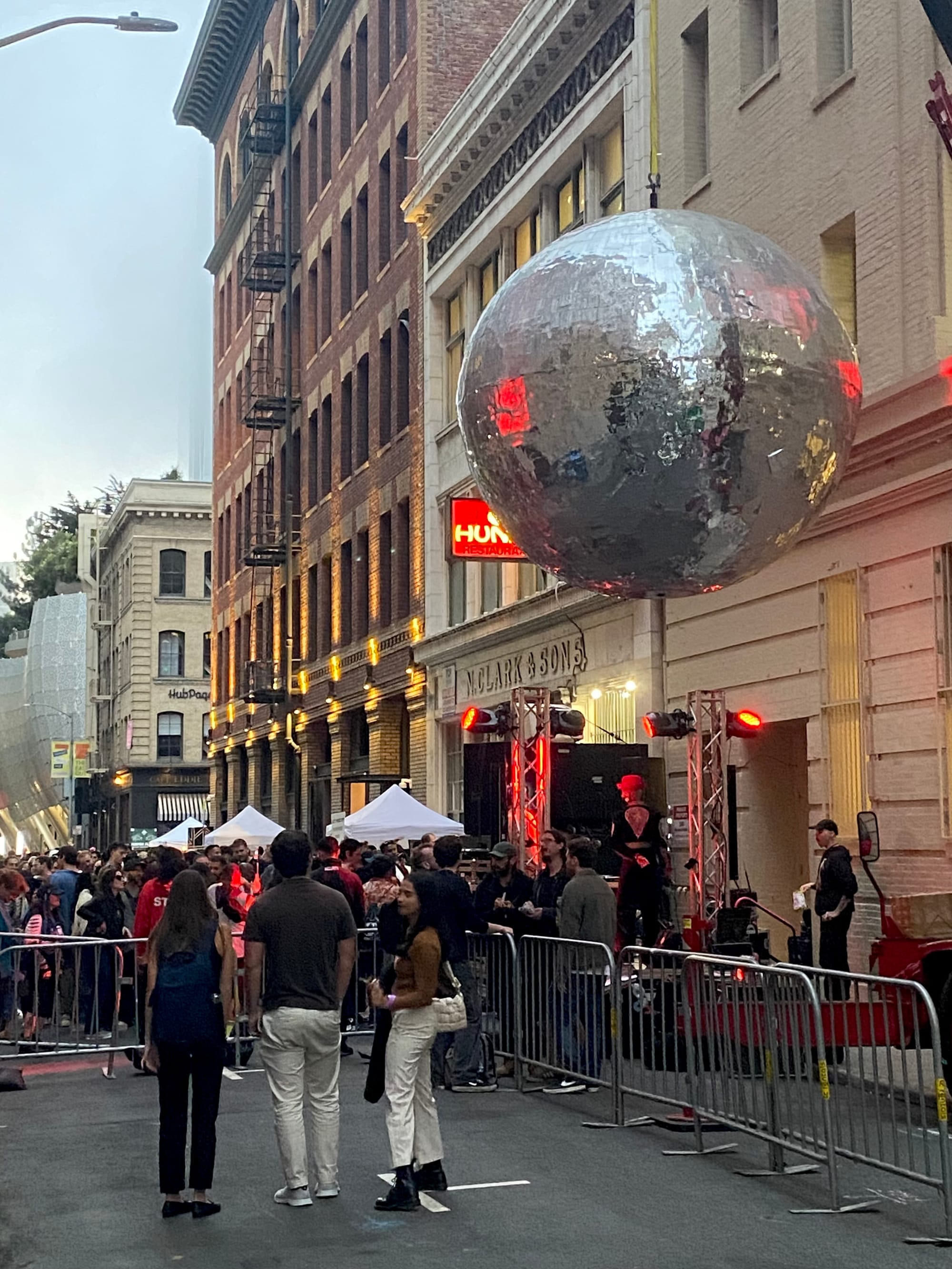
Left: A map of a Downtown First Thursdays event in San Francisco. (Photo by Carnaval.com Studios/Flickr) Right: A disco ball at a Downtown First Thursday party. (Photo by Rob Corder/Flickr)
Spray maintains that, despite the organization’s origins and power-broker benefactors, its goals are apolitical. “The money that comes from our donors does not have strings attached,” he says. “There's no conditions around what we're doing. These are people who generally want to support San Francisco's revitalization and it becoming the best version of itself.”
Decisions about grant applications are made by the staff as a team with no input from donors, he says; the Civic Joy Fund’s main criteria are that an event is free, outdoors, and involves partners, merchants, and artists in the neighborhood where it will take place.
“All of the things that you see Civic Joy helping to bring about in the world are being initiated and led by local communities,” says Spray. “So I have a hard time understanding how there would be an ulterior motive here.” He declined to comment directly on the call for a boycott.
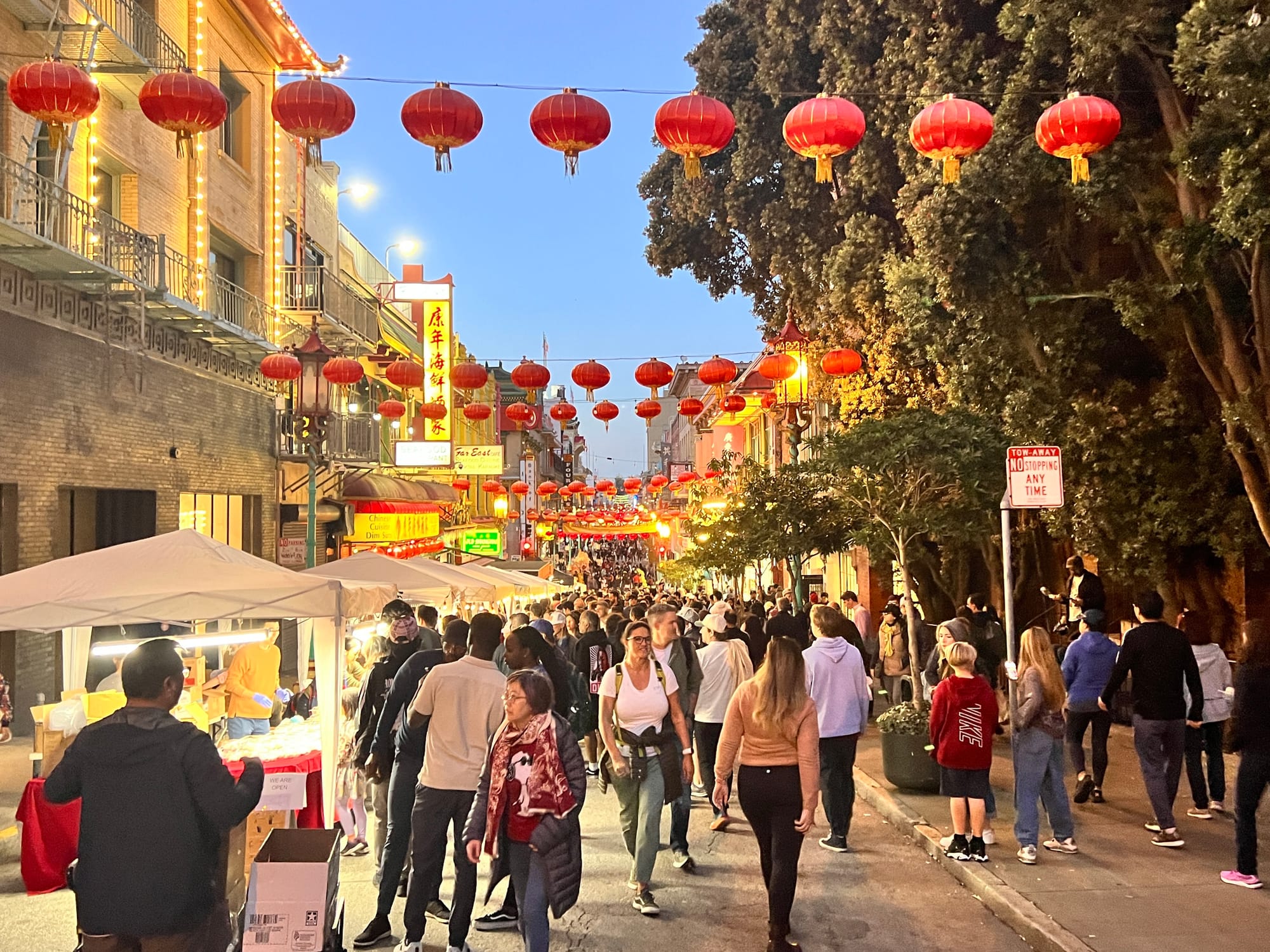
In 2025, Spray says the Civic Joy Fund sponsored or supported 938 events. The vast majority were street cleanups, but that figure also includes 68 night markets and more than 75 block parties. “The desire to activate our streets seems to only be increasing,” says Spray. Since opening its 2026 grant period, he says they’ve received 95 applications from local organizations and artists requesting more than $5.6 million in funding.
In other words, in the coming year in San Francisco, it might be difficult to not literally stumble into an event the Civic Joy Fund supported in some way. (Disclosure: I learned about the PloverFest debacle because my husband was hired as a sound engineer.)
For artist and activist Stella Lochman, a big-picture look at the local arts landscape is key to understanding how Civic Joy Fund money has crept into so much of the city’s culture.
To put it bluntly, shit is bleak.
“Our city is hemorrhaging funding for the arts,” says Lochman, “and I think it's no coincidence that the Civic Joy Fund is rising in the shadows of that.”
As the block parties and night markets have proliferated, pillars of San Francisco’s arts world are all but crumbling into the sea. SOMArts Executive Director Maria Jenson, among others, has called it a “crisis.” The past six months alone have seen a slew of art galleries and independent music venues like Bottom of the Hill announcing their closures, followed by major cultural institutions, including the nonprofit California College of the Arts and the Mission Cultural Center for Latino Arts.
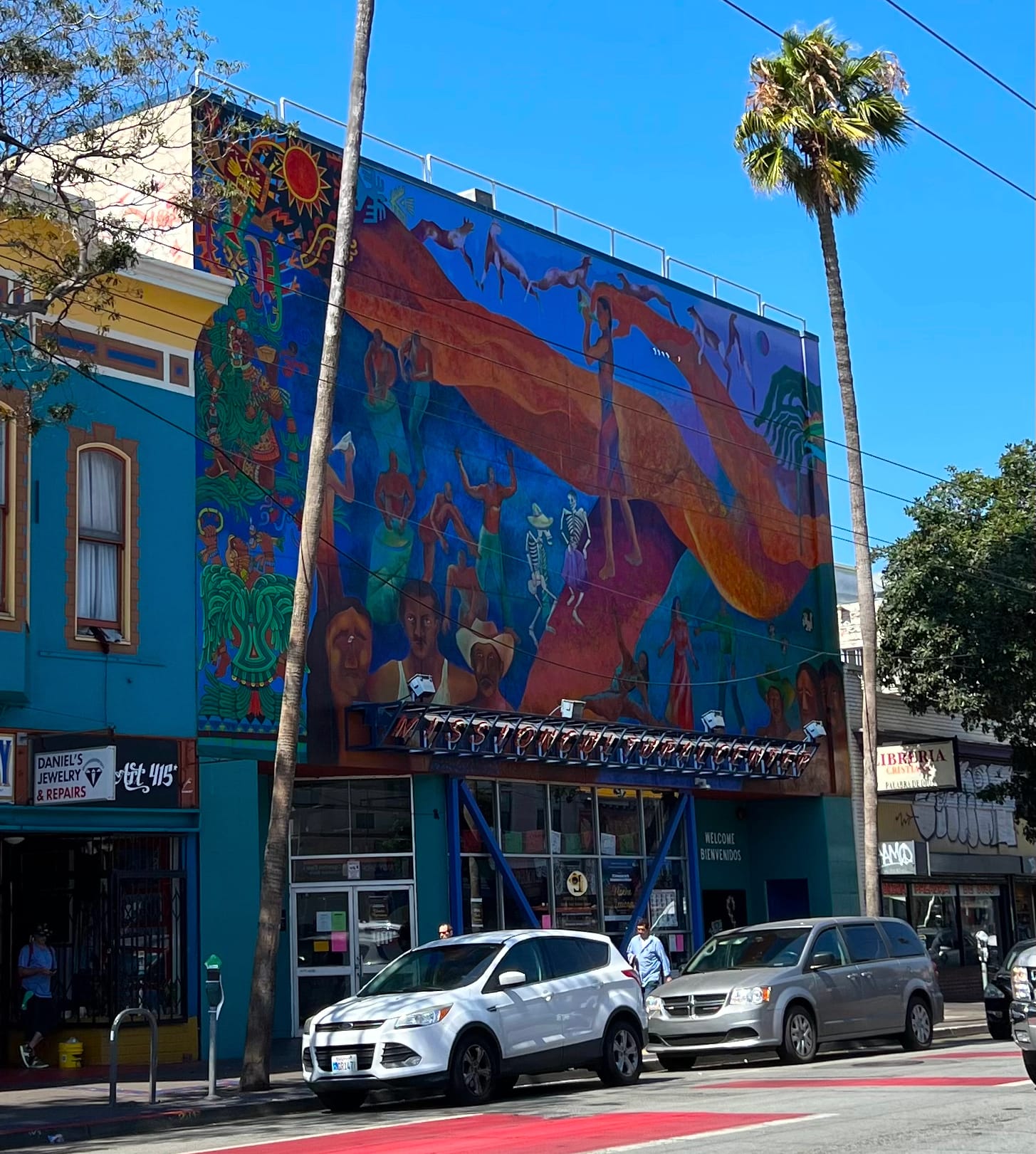
Nearly three dozen local arts nonprofits lost National Endowment for the Arts funding in 2025. At the city level, some $14 million in grants promised under the Dream Keeper Initiative were canceled last year.
The Civic Joy Fund, says Lochman, “is playing an overweighted role in the ecosystem because arts infrastructure is collapsing.”
“It’s part of this broader shift, from cutting [public money for the arts] to the need for private funds,” she says. And with private funding comes some messy baggage — like less transparency about funding sources and the ability to bypass public input. We happen to be in a moment “where private interests can really capitalize and get a big piece of the market.”
It is tough to ignore, even if Lurie is no longer involved in Civic Joy’s day-to-day operations, that this shift is taking place on his watch — and transferring influence to an organization he started.
The Civic Joy Fund is clearly meeting a need, says Spray. Philanthropy has long played a role in San Francisco’s cultural landscape, he notes, and it does not require citizens to love the personal politics of each donor.
“For as long as San Francisco has existed, it has had benefactors, some of them [with] questionable politics and morals, and yet we sit in their squares and in their amphitheaters and enjoy their programs,” says Spray. “I see us as part of a lineage of taking private dollars and investing them into civic goods.”
“By and large, we’re really just turning money back over to communities to do what they want to do… in a way that honors their neighborhoods and puts money in artists’ pockets,” he says, adding that he welcomes questions about the Fund’s work. “The San Francisco that we have is the result of this push and pull, this tug of private and public, and the city that we get is a result of those conversations.”
And this is where the Civic Joy Fund becomes one of those hidden-picture psychological tests: Do you see a lamp or a woman’s face? Is a group of billionaires using tax loopholes to advance a technofascist takeover of public space, or are a bunch of benevolent philanthropists swooping in to save the arts when no one else will?
What you see may depend on how badly you need funding. Lochman notes, with a half-hearted laugh, that I’m the third person who’s called this week alone to ask her about the Civic Joy Fund and what it might mean to work with them.
She tries to be even-handed in these conversations. Civic Joy is funding great things, she says, pointing to its work with Oasis Arts and D’Arcy Drollinger on drag events. The end result is still money in artists’ checking accounts, groceries in refrigerators.
Lochman is certain of one thing: It’s unfair for the onus to be on artists to “choose” to work with the Civic Joy Fund when there simply aren’t enough other paying gigs in town.
“That’s not a choice if that’s the only place that the money is coming from,” she says. “Especially if that’s the difference between paying your rent or not.”
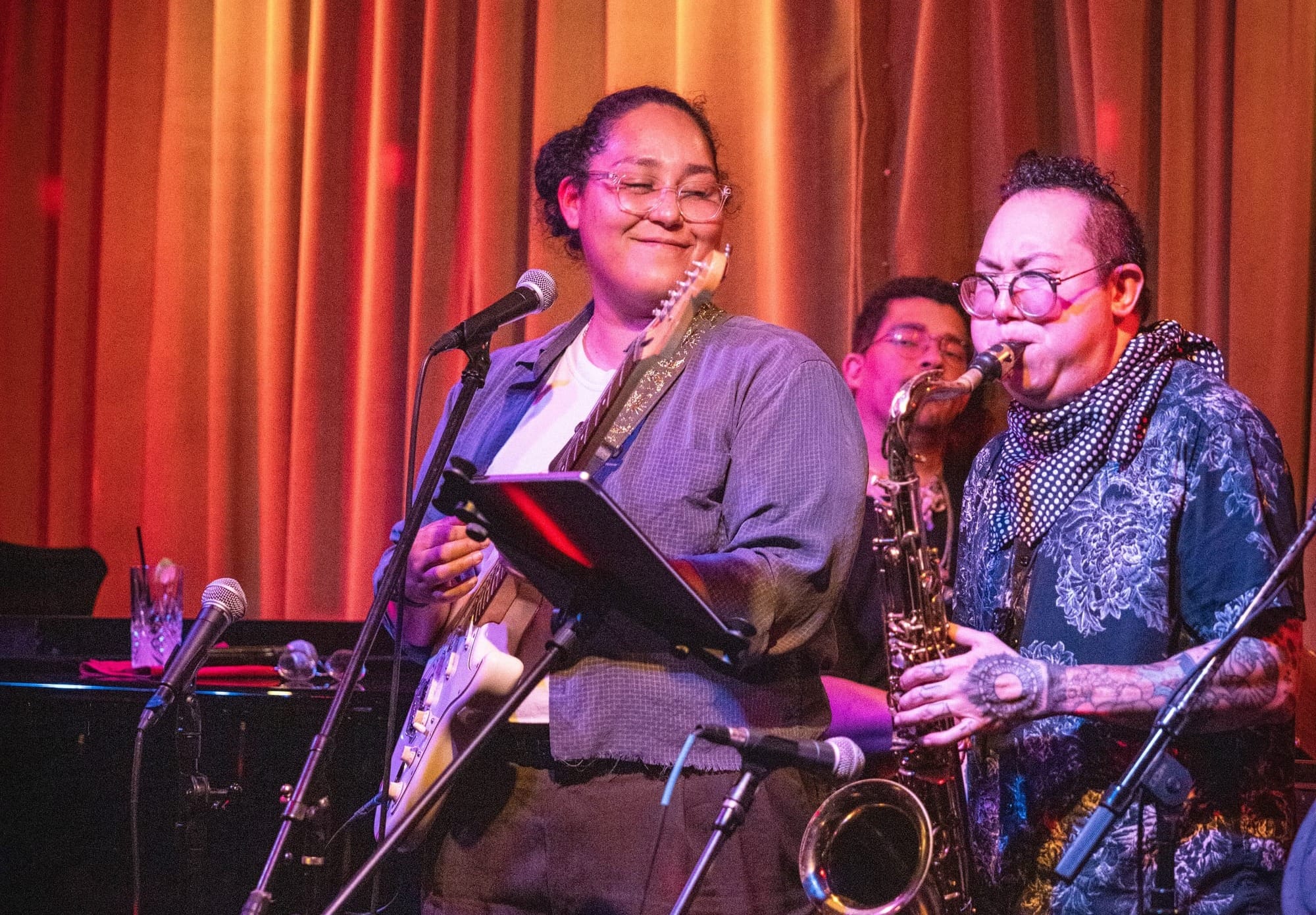
Oakland artist Azuah is paying their rent without the support of the Civic Joy Fund, but is well aware of how that choice has limited their career. Azuah first learned about the organization in 2024, when some in the queer community protested SF Pride due, in part, to the Fund’s sponsorship. After looking into the politics of its major figures, Azuah resolved not to play or attend events that are connected with the Civic Joy Fund, including collaborations with Noise Pop or Empire.
“I think a lot of people are scared to lose a source of income, right?” asks Azuah. “A lot of us have had to make decisions on whether we can still play these gigs and somehow protest in our own ways, or whether we’re able to say, ‘No, I’m not doing this. I'm not aligning myself with this at all.’”
Azuah is struggling to figure out how to advance their music career without wading into spaces that they see as tainted with deeply problematic money and politics. For now, they’re squeaking by financially thanks to their day job in food service.
Still, they want to be playing out. “As I kept growing in the music scene and getting better gigs, I kept realizing that some of these kinds of gatekeepers in the scene are in cahoots with the Civic Joy Fund,” says Azuah. “It became obvious that, if I want to go further in music, I have to start playing these types of shows and associating with these organizations … It feels like they’re taking over the music scene.”
In a healthy arts ecosystem, one might argue, there would be lots of other stages for Azuah to play: independent venues where musicians don’t have to construct a red-string evidence board to determine where the money’s coming from.
This is not to say traditional music venues run on uncomplicated or “clean” money, if there even is such a thing. Every time you buy a ticket to the Fillmore, you are lining the pockets of executives at Live Nation and Ticketmaster, who are, objectively, ghouls. Does that mean you shouldn’t go see your favorite band at one of the most beautiful and storied rooms in the city?
One glaring difference is that the Civic Joy Fund has positioned itself as a public service — an act of altruism from magnanimous patrons of the arts. In his excellent, widely read piece on Downtown First Thursdays, artist and gallery owner John Vochatzer describes the Civic Joy Fund as “yet another arm of the technocratic billionaire class’s crushing stranglehold on the soul of San Francisco, but all the more nefarious in its masquerading as culture, equity, and inclusion.”
Even the name, some say, strikes Orwellian notes: “Calling it the ‘Civic Joy Fund,’ right off the bat, creates this feeling of, ‘If you're against it, you're against joy,’” says Amanda Guest, founder of indie radio station BFF.fm. “How could you be against joy?”
In February, at the “Music Industry Summit” — the conclusion to San Francisco Music Week, another Lurie project — I watched as the mayor strode to the stage at the Swedish American Hall. There, before an audience of struggling artists, engineers, and small venue staff, he triumphantly reported that the last summer of concerts in Golden Gate Park resulted in “$150 million worth of economic impact,” and that, according to new data, “our independent music venues generate $1.4 billion in economic impact annually.”
Lurie paused for applause. “That’s because of all of you in this room.”
We clapped dutifully, but the people in that room did not need to be reassured that they had contributed to $1.4 billion in “economic impact.” They would have preferred to hear that any of their favorite clubs might exist next year. The people in that room could use health insurance — and they might be able to afford it if Lurie’s billionaire buddies were taxed appropriately; say, with a one-time 5% excise tax on net worth exceeding $1 billion to save Medi-Cal.
But hey, that sentiment doesn’t make for great social media content.
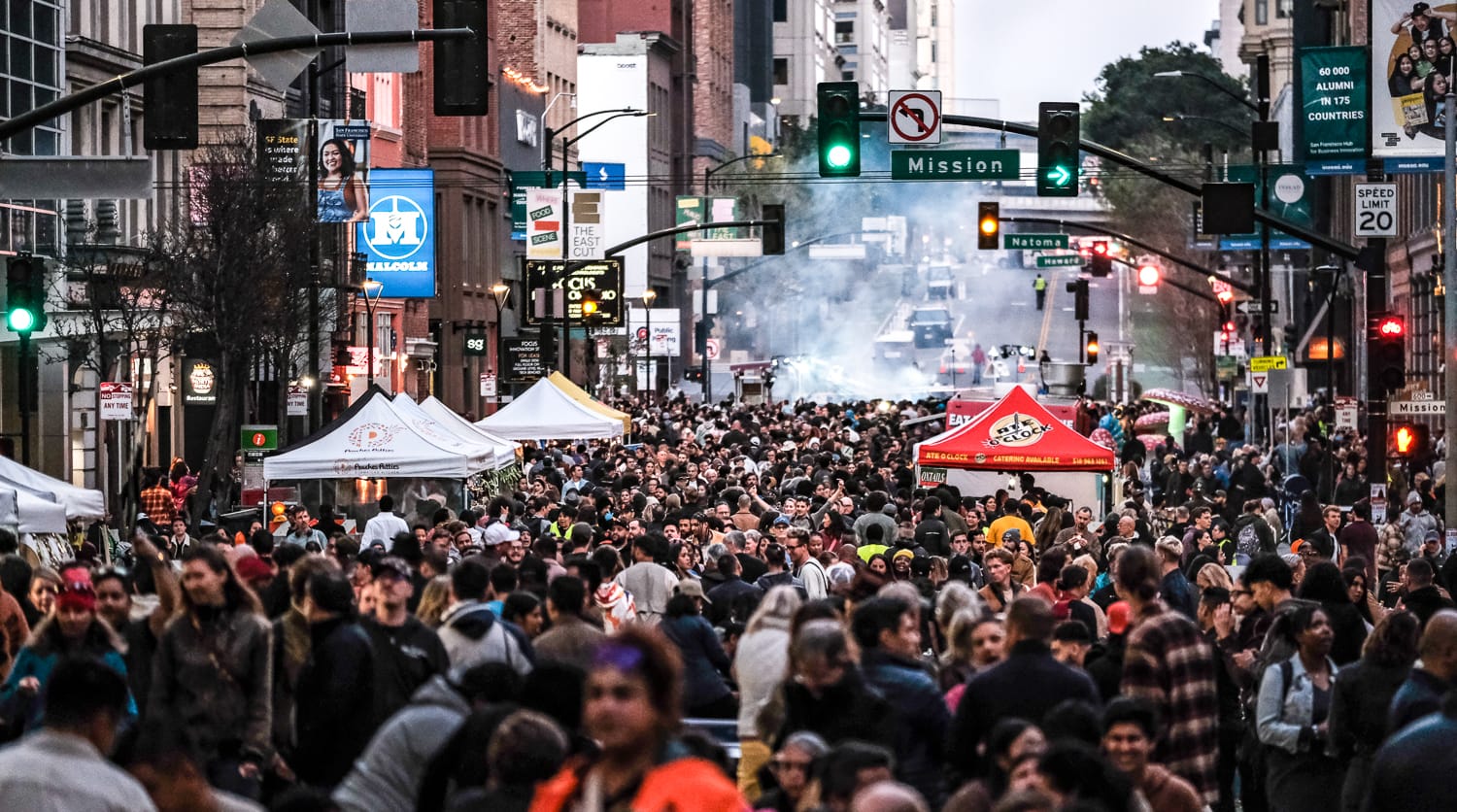
Indeed, the dissonance between Lurie’s spirit-squad act around cultural events and the material struggles of the people actually making the culture is, at times, ear-splitting. One gets the sense he is physically unable to hear it.
“Those of us on the ground who work in [music] know that it has never been more difficult to be here, and try and provide the city with the core thing it is known for historically, which is free-thinking progressive ideologies and good art,” says Austin Waz, frontman of the band Analog Dog and a booker at Kilowatt. “We see the incredible amount of venues going out of business, people losing their jobs left and right. We have an absolute crisis.”
It’s frustrating, he says, to see the large-scale parties into which the Civic Joy Fund pours resources. “It’s one day, and they put $100,000, $200,000 into these things, and it’s like — you could have saved an entire community with that. You could have created the conditions that would allow a venue to flourish for years,” says Waz. “You’re not thinking about how to develop or support artists who come from the city … it's a slap in the face to put up some [barricades] in the street and say, ‘Look how wonderful this all is.’”
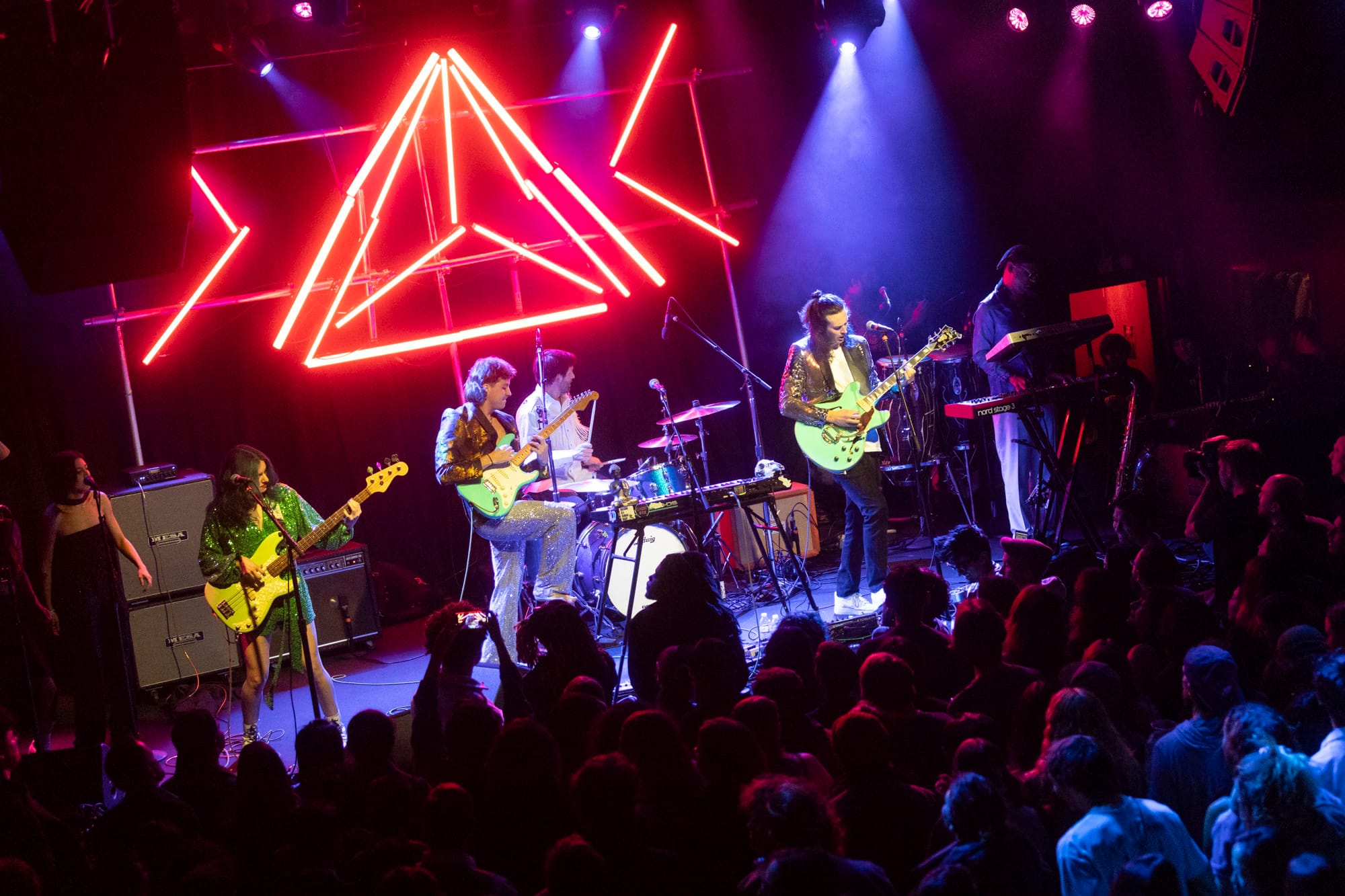
Guest echoed his dismay about the focus on one-off events — which make for great publicity — over sustainable support. “I think [Lurie] is basically making art into a consumable,” she says.
“I’m hearing artists rightfully starting to question, like, ‘Ultimately, who is this for?’” says Guest of the block parties. “Is it for the public, or is it to set up this area as being worthy of real estate investment? Because if the point of it is to cater towards visitors … it’s really not about supporting art or artists at all.”
True support, both Waz and Guest said, would include expanding access to affordable housing, making sure artists have adequate health care, and direct, ongoing grants to venues and culture makers. “My biggest anxiety in all this isn’t who’s taking the Civic Joy money,” says Guest. “It's ‘How are we going to hang on to all these people if these very structural issues aren't addressed?’”
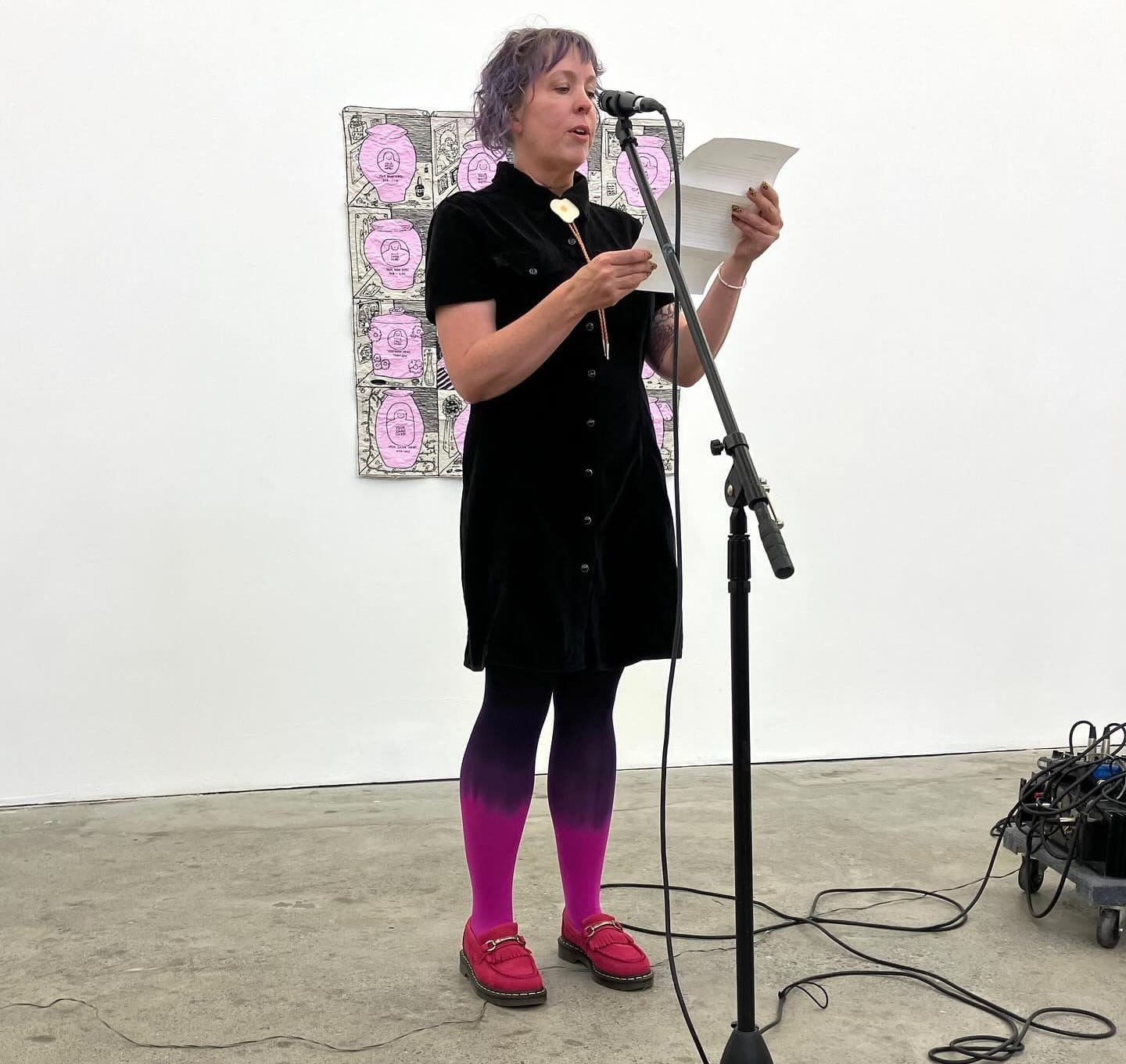
Talk to enough people in the arts community about the Civic Joy Fund — and I did talk to a lot, though several told me this was incredibly sticky and declined to speak on record — and you pretty quickly get into some age-old conundrums about art and money, the nature of patronage, and what it means to accept a check.
You might also start to get the feeling that, while many criticisms of the Civic Joy Fund are valid, it is simultaneously being asked to answer for the sins of the nonprofit industrial complex, long-gone city leaders who first set the stage for a tech takeover of San Francisco, and perhaps capitalism itself.
As a fan of art and culture and this city, I was left with more questions: Is it possible to enjoy a show when you disagree with its funders about what constitutes a genocide? How about if you simply think the need for the fund in the first place is a clear indictment of local government? At Hunky Jesus last weekend, as thousands celebrated queer joy — actual joy — at a time when everyone really needs it, did the nefarious fumes of billionaire tax write-offs really spoil the fun? How are these uber-capitalists the same or different from Warren Hellman and Hardly Strictly Bluegrass?
“Is art made with gross money inherently bad?” a friend texted when I told him the gist of this story. “We interview Michelangelo to find out.”
Everyone has their own answers to these questions, and the way they add up is a deeply personal math. Only you know how to balance your moral checkbook in a way that allows you to sleep at night.
There are ways to protest besides a boycott. In the punk world, it is not uncommon for bands to take the money, then talk shit about the sponsor onstage. In 2024, after San Francisco artist the Ferocious Few was booked for a show called “Fleet Fest” during the expensive display of military porn that is Fleet Week, singer Francisco Fernandez got up on stage at the pier, in front of a massive Navy ship, and changed his lyrics to be about the U.S. funding genocide. Someone eventually cut the power.
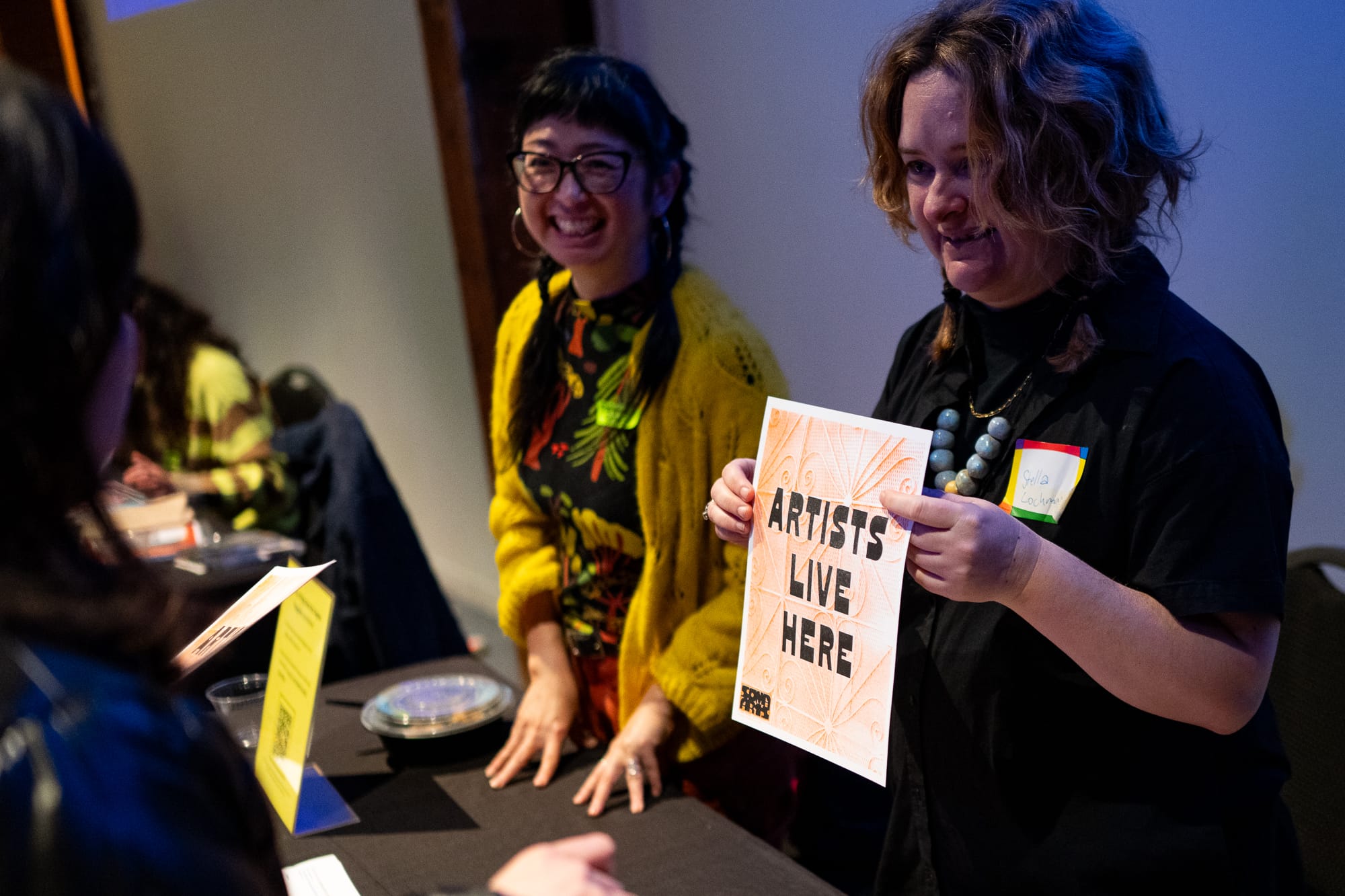
Avenues for expressing concern about the lack of a social safety net for artists are less flashy, but still important. Lochman hopes those asking questions about the Civic Joy Fund will pay attention to Lurie’s proposed charter reform, attend the next “Artists Live Here” community convening at SOMArts this Friday, April 17, or join her at the Civic Center rally on Tuesday, April 21 for Arts Advocacy Day.
“You can be on the steps of City Hall advocating for … Daniel Lurie to pay attention to us through other kinds of funding, through actual civic funding,” she says.
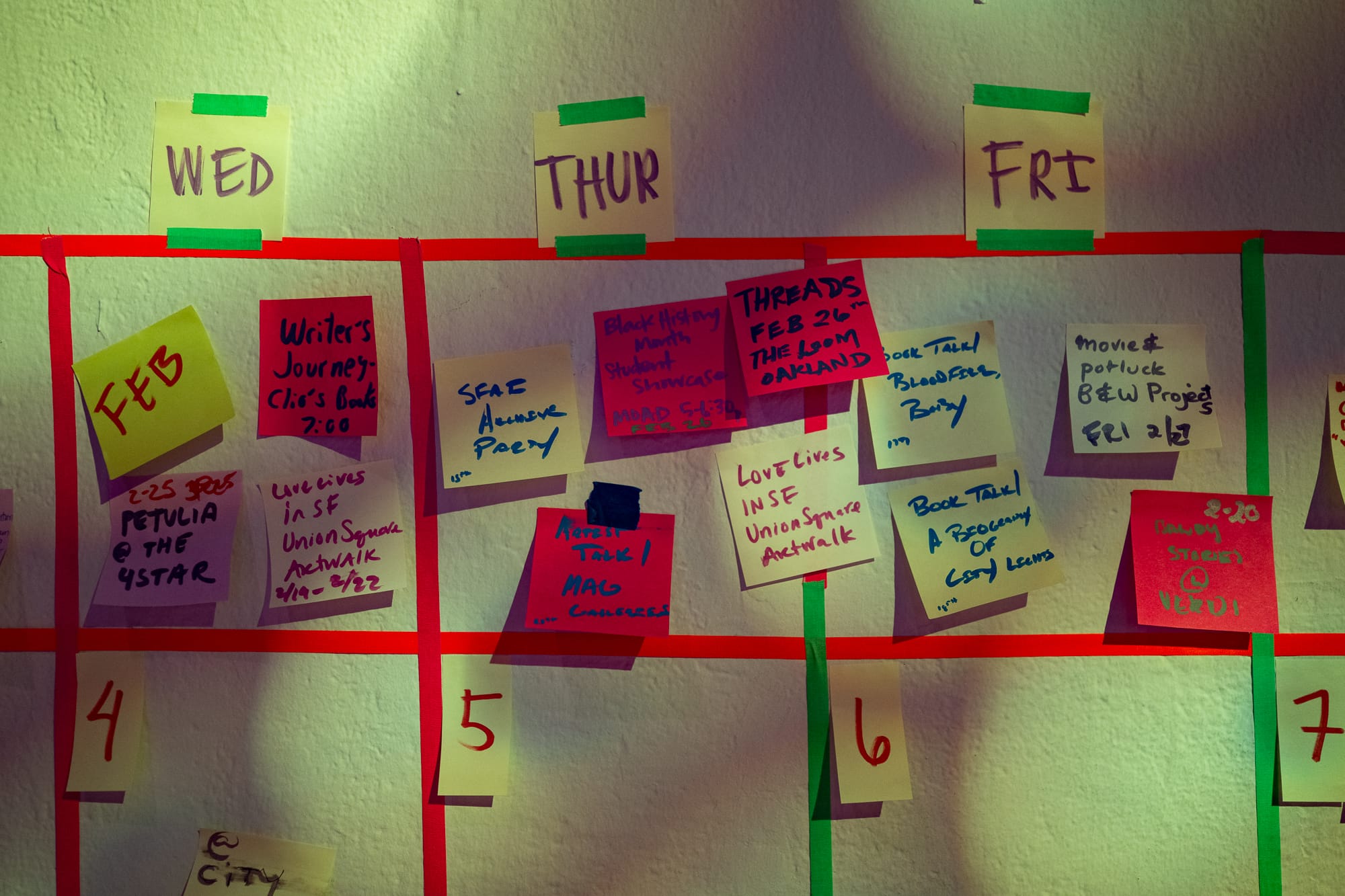
For some, the conversations about the Civic Joy Fund have been a galvanizing force in another direction. Sweet Lew declined to expand on the comments he made in his Instagram post, other than to say he’s working to get some alternate shows going “in response to billionaire money being in our space.”
Guest says she’s felt a renewed energy about DIY shows in the scene.
“Maybe what’s happening [with the Civic Joy Fund] is indicative of the current culture of San Francisco, but San Francisco has always been a city of counterculture … and if enough people start speaking out about it, and finding each other, this could be the catalyst for a revival of that counterculture,” says Guest. “If I was Gil Scott‑Heron, I’d say ‘The revolution will not be presented by your local Community Benefit District.’”
Others still see a chance that the Civic Joy Fund could adjust course, or expand its focus, in a way that would help artists on a deeper level. It would require dialogue — which Spray, again, says he welcomes. He reached out to Sweet Lew to talk last week, he says, and received no response.
But Waz would love to have a conversation with the Civic Joy Fund. He’d like to talk about what it would take to build a truly supportive arts ecosystem — “about how these [benefactors] can help our city, and not in a performative way … but in a real, concrete infrastructure way that can actually make the city a better place,” says the musician.
“They are in power and they have the money. And we would like to invite them to the table to see how deeply we are suffering, and to see that there are ways their contributions could alleviate some of that,” he says.
“I think they’ve got an opportunity to show their true colors in what happens next.”