What Is the Point of Gavin Newsom?
You can’t build a movement around a person whose only commitment is staying uncommitted.


You can’t build a movement around a person whose only commitment is staying uncommitted.

How to make fruit into ferments, jam, kimchi, and lots more.
This week we've got COVID-safe kink, making art with maíz, haunted dolls, and more.

‘It’s rare to see Chinese LGBT people or to hear their stories.’ Lesbian artist Xiangchi Chen shares the origin story of the OUT Museum in San Francisco’s Chinatown.


Like many Chinese Americans who grew up in the Bay Area, my relationship with San Francisco Chinatown began as a form of loving obligation. As a kid, I tagged along with my grandparents as they bought groceries on Stockton Street, peered into glass display cases of dim sum while my parents shouted their orders, and celebrated special occasions in banquet restaurants where distant relatives pinched my cheeks and slipped red envelopes into my palm. Chinatown was a kind of portal into the old world, one that felt familiar and safe for my grandparents, and one that tugged at the heartstrings of my immigrant parents.
But becoming a journalist has changed the way I see the neighborhood. I’ve been reporting on the legal victories of early Chinese immigrants that helped establish constitutional protections for Americans and non-citizens in the country. For me, Chinatown is no longer just a backdrop for family memories or nostalgia: It’s become inherently political.
And today, younger generations are pushing the boundaries of who Chinatown belongs to. There are now Chinatown Pride celebrations featuring drag queens. New independent publishers and bookstores have opened in recent years, infusing fresh creative energy into the area. Political art exhibitions, murals, and creative installations have popped up throughout the neighborhood. On every corner I’m confronted by the community’s ingenuity as it continues its legacy of building a self-sustaining neighborhood while also embodying the spirit of reinvention.
Last Saturday afternoon, I strolled up the steep hilly sidewalk of Clay Street to visit one of Chinatown’s latest ventures. I met Xiangchi Chen, a lesbian artist from China who recently opened OUT Museum. It’s the world’s first Chinese queer museum that’s dedicated to reclaiming China’s LGBTQ+ history, and creates a space to capture San Francisco Chinatown’s untold queer stories.
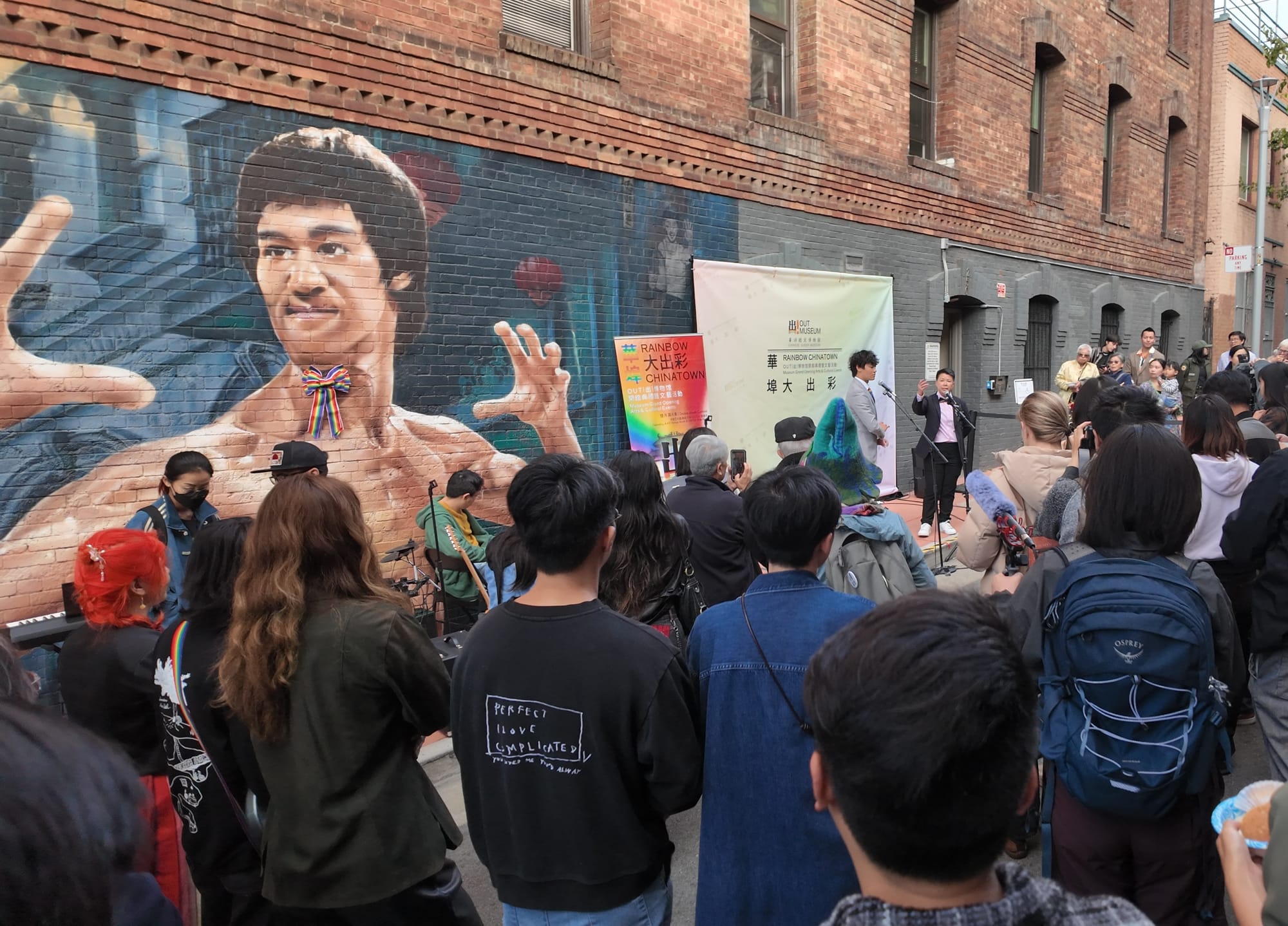
Chen first conceived the idea of the museum in 2021, when she was living in COVID quarantine in Shanghai. In 2024, she collaborated with 41 Ross, a Chinatown art gallery, on a three-month experimental exhibition — a preview of the OUT Museum — to test the waters. It was a success, and the museum on Clay Street had its grand opening at the end of May.
The current installation, “The Ongoing,” uses art to tell the history of LGBTQ+ people in China and the diaspora. On display are exhibits and pieces from five artists, including Chen. Multimedia artists and life partners Shi Tou and Mingming contributed a photographic installation: a chapter of the performance series called Rainbow Handstand. The lyrics of a Cantonese opera are painted onto a porcelain vessel crafted by Dixon Ngai, a gay artist from Hong Kong. Chen herself created an altar, hidden inside of a traditional wedding cabinet, dedicated to Hu Tianbao, the Rabbit God, a Chinese folk deity that blesses love between men.
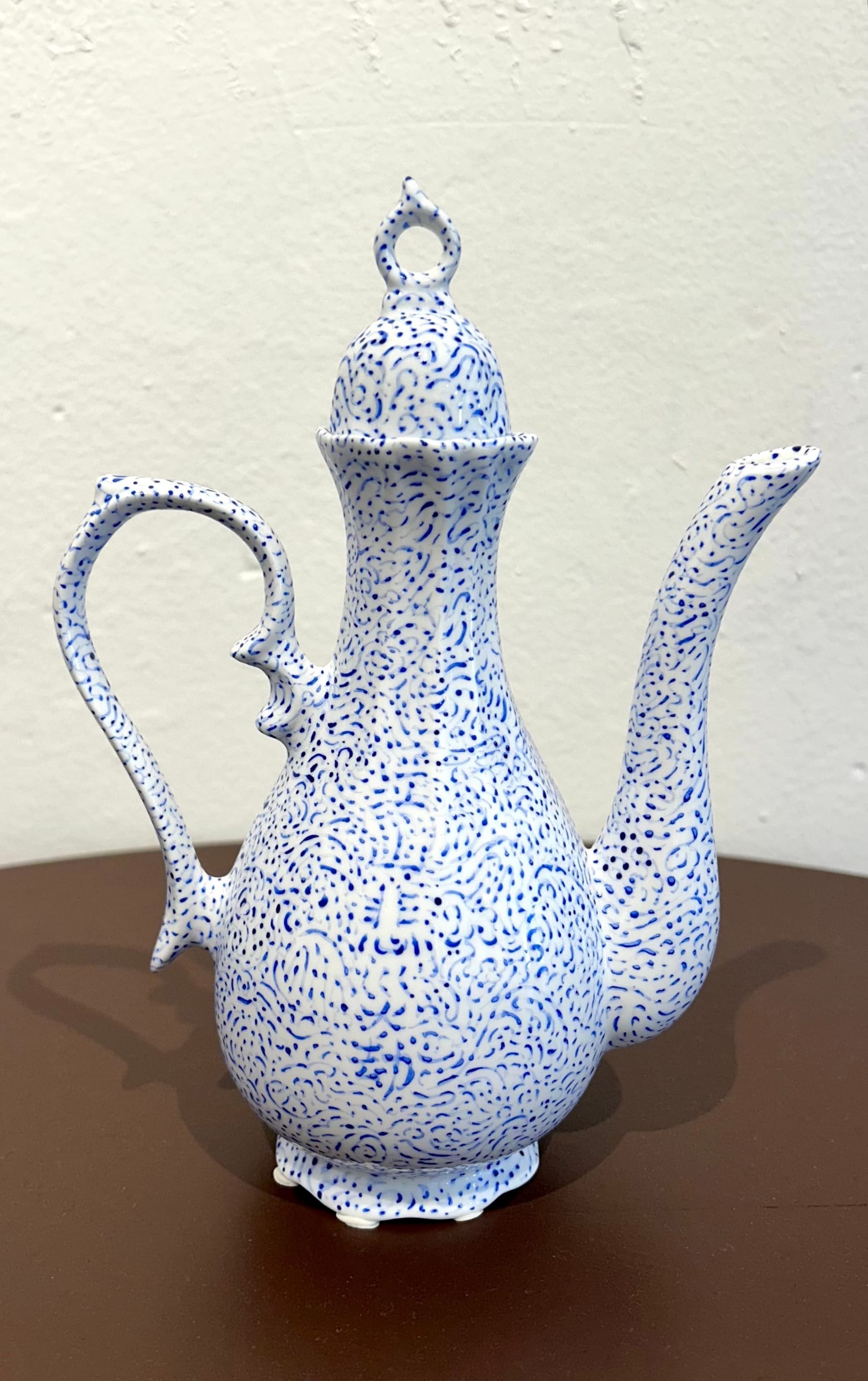
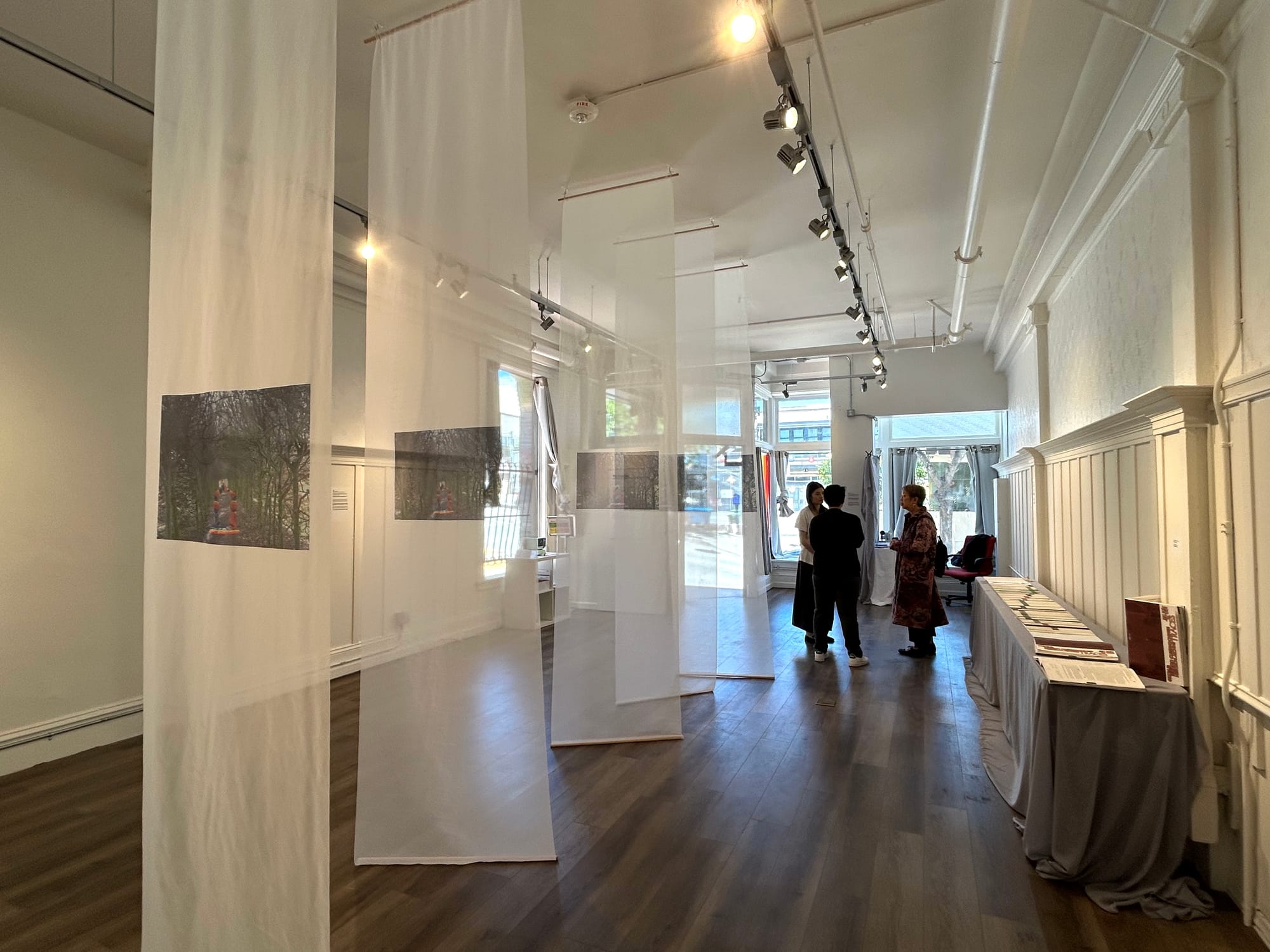
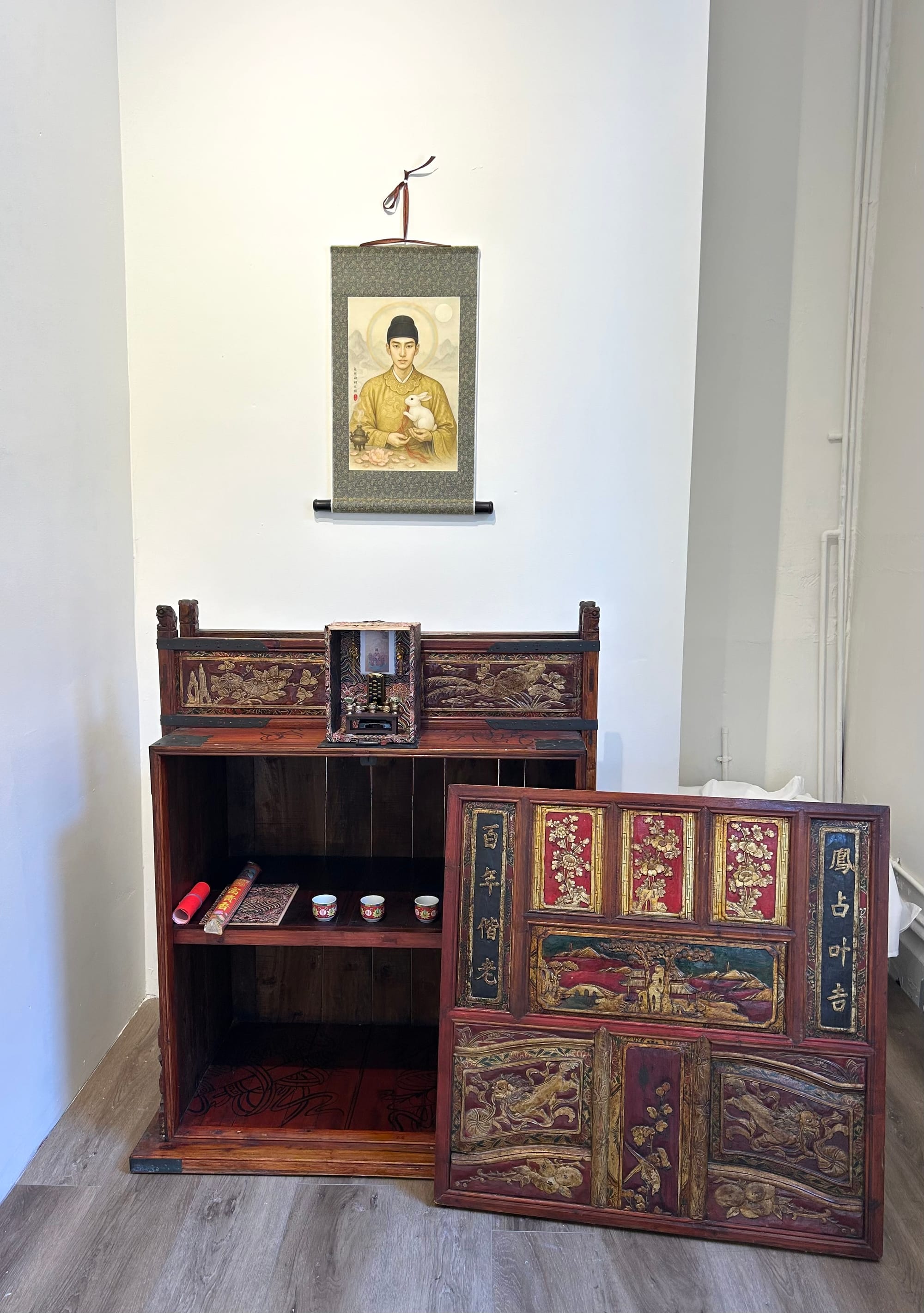
Left: A vessel by the artist Dixon Ngai, Center: A photographic installation by the artists Shi You and Mingming hangs in the center of OUT Museum. Right: Xiangchi Chen reimagines a traditional Chinese altar with a dedication to the Rabbit God. (Cecilia Lei/COYOTE Media Collective)
I spoke to Chen about what it means to open OUT Museum in such a historic neighborhood and what she hopes Americans can learn from it at this moment.
Because of my very basic Cantonese proficiency, this interview was conducted with translation help from Chen’s friend and artist, Zijing Hang. (Shoutout to my mom for the extra assist!) The Q&A below has been condensed and edited for clarity.
As someone who grew up in China, what was your first impression of San Francisco Chinatown?
I came to the United States for the first time in 2012, and it was the first time I visited Chinatown. I was invited by the Chinese Cultural Center to be a visiting artist for an art show, and I lived in the neighborhood for about two weeks. I had never thought of leaving mainland China because it was my home; or that after more than 10 years, I would return to open the world's first LGBT museum.
The neighborhood makes me feel welcomed, and I enjoy walking around its streets. I often tell my friends that when I am here it feels both familiar and new: There is something about it that makes me feel at home. I really like the people who live here. Over time, as I’ve made new friends — especially the older aunties of Chinatown — I’ve become inspired by their commitment to the neighborhood. There are a lot of people here who are doing things to support other people, and I find that very inspiring.
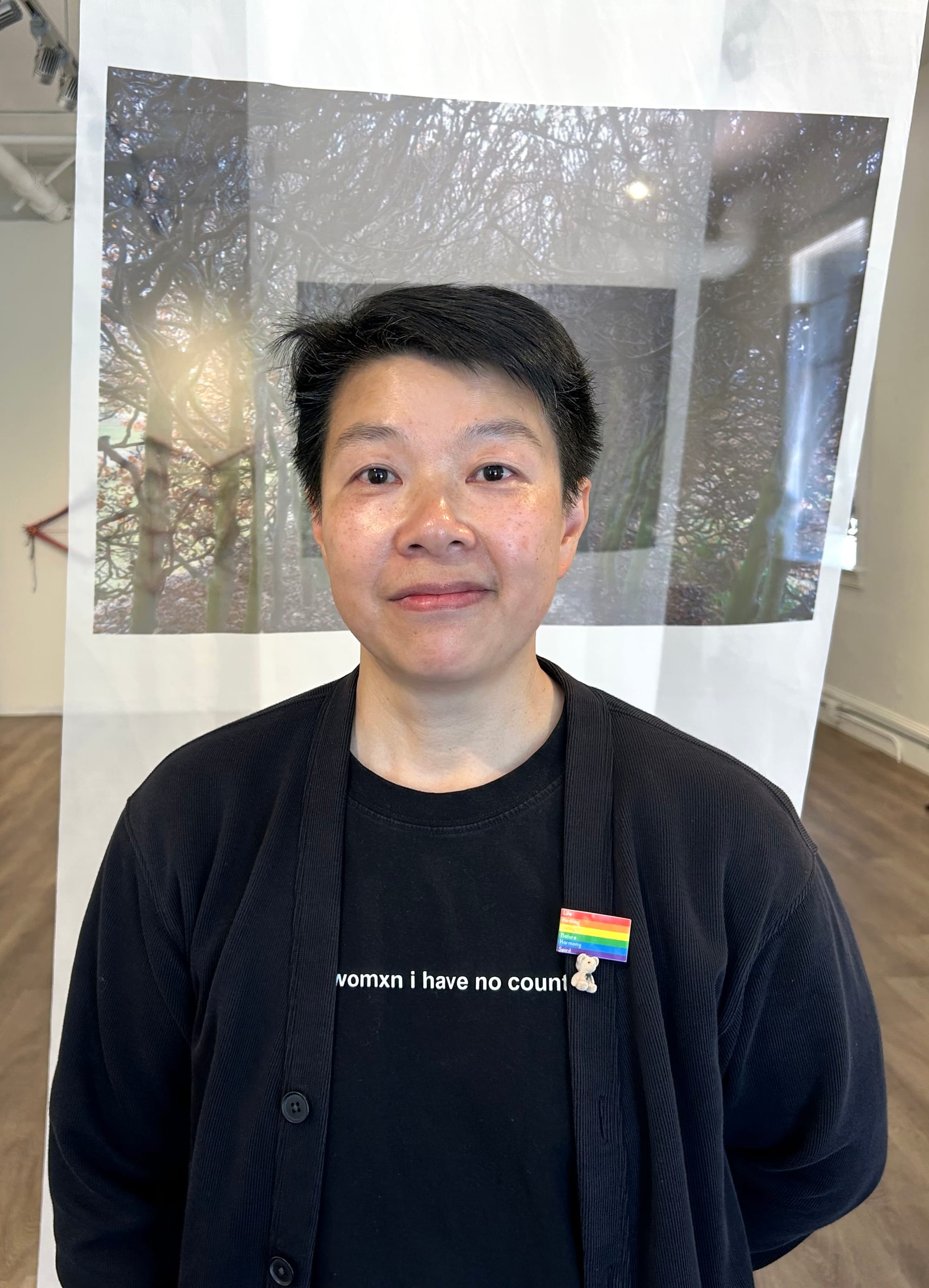
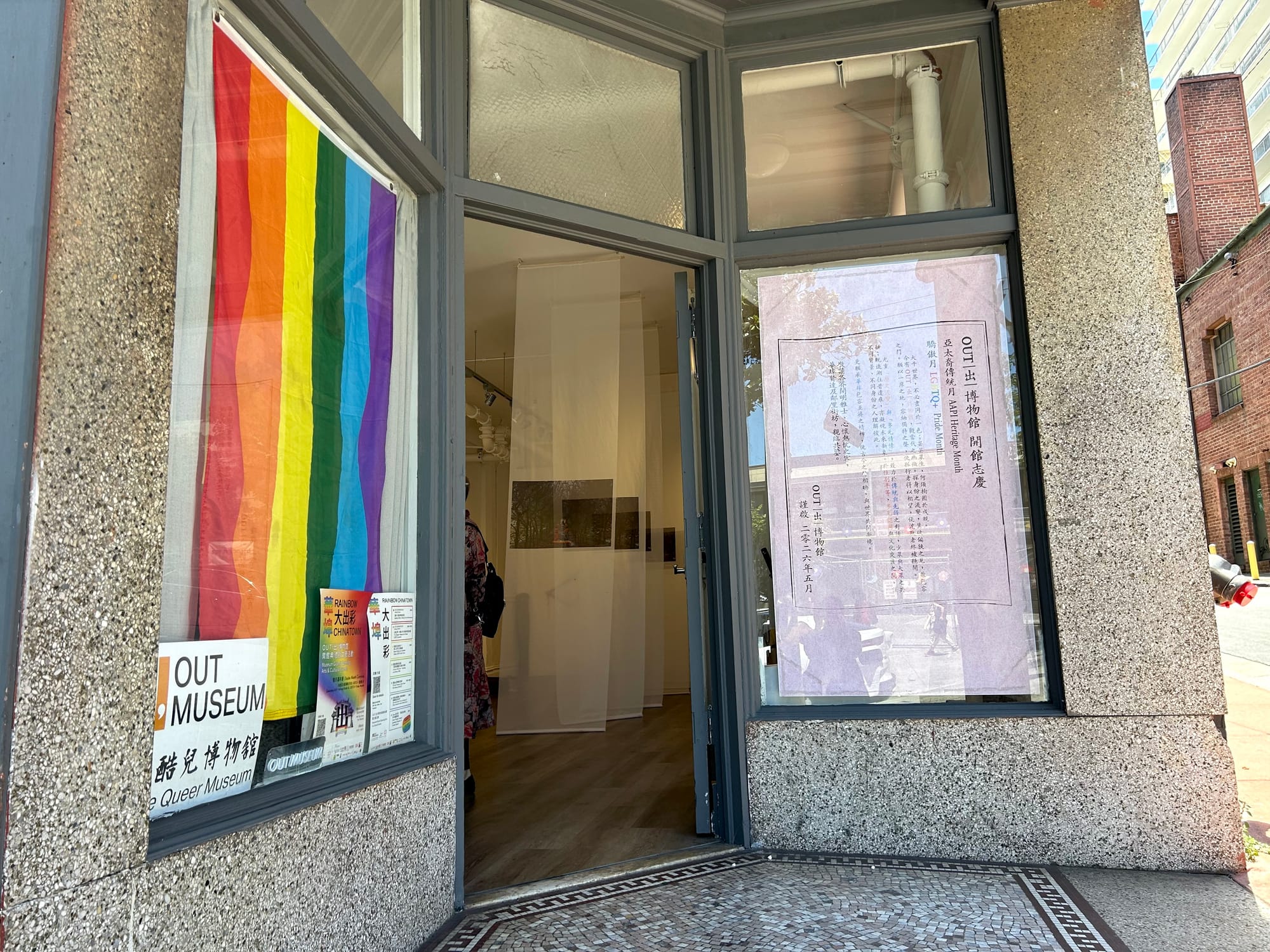
Left: Xiangchi Chen poses by the front of the OUT Museum entrance, which opened at the end of May. (Cecilia Lei/COYOTE Media Collective)
What's something about queer Chinese history or culture that people often assume incorrectly?
People outside of China may think the country is now open and advanced, and that may be true when it comes to things like technology and what we see online. But in fact, LGBT issues and topics in mainland China remain relatively invisible in real life. There are discussions happening online, but when it comes to mainstream media, newspapers, or TV, we’re not allowed to talk about it. That includes schools and universities. It’s rare to see Chinese LGBT people or to hear their stories. And LGBT artists are rarely publicized. It’s so hard to come out to our families. In relation to the size of China’s population, the number of people who understand and accept the LGBT community is very small. We can find similar problems here in San Francisco Chinatown.
What has the reception been like for opening a queer museum in this neighborhood?
When we were preparing for our grand opening, we printed our posters and flyers at a local print shop in the neighborhood. After the printing, the shopkeeper said to me, “I think I have an idea about what you all are up to.” Then she said, “I’ve been here a few decades and I’ve never seen anything like this here.” She didn’t say much after that, but when our grand opening event arrived, she came in support. So that’s another aspect of Chinatown that I really enjoy. Chinatown really wants to preserve tradition — and that is important — but it also is capable of pioneering new, fresh ideas.
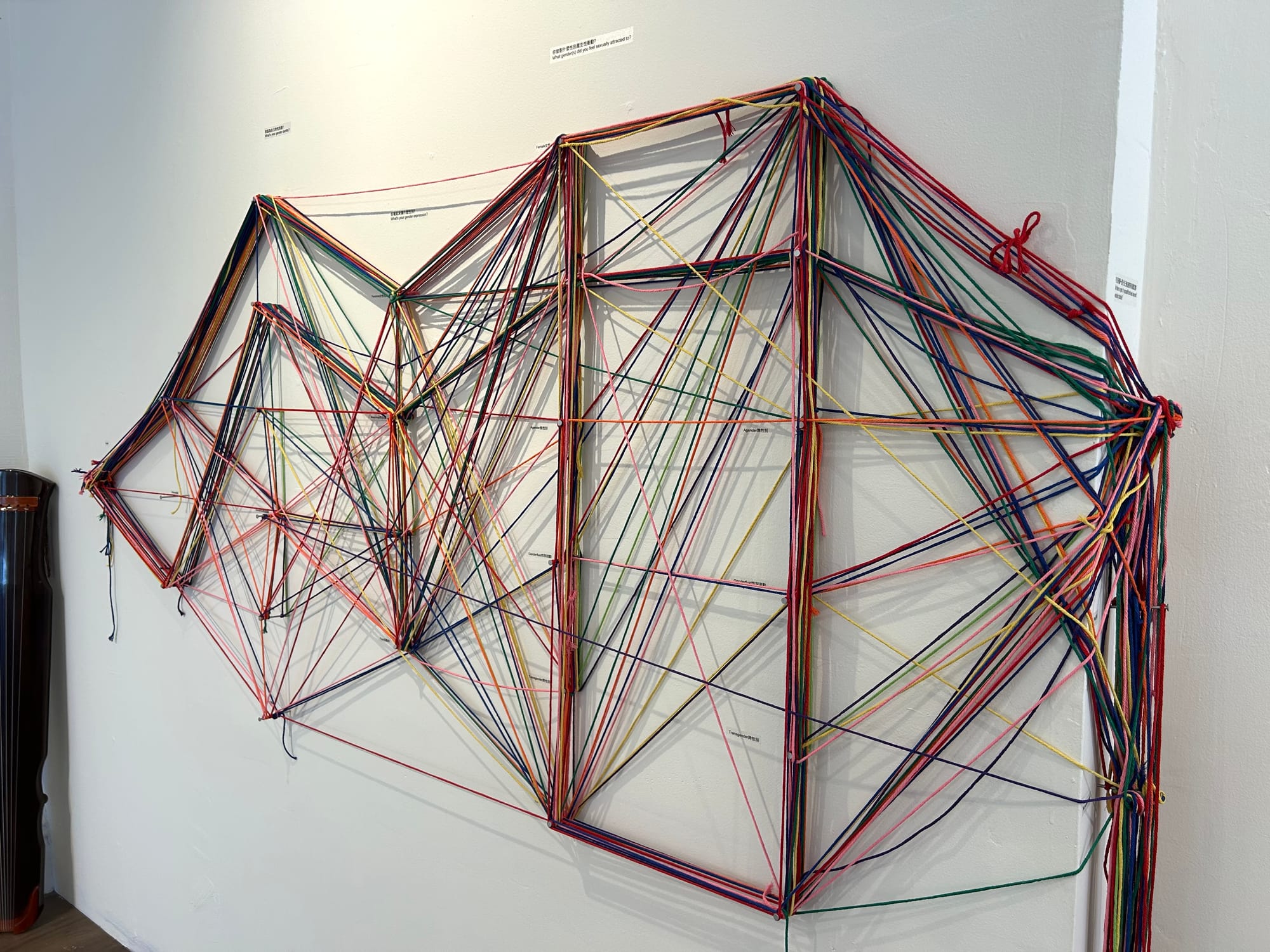
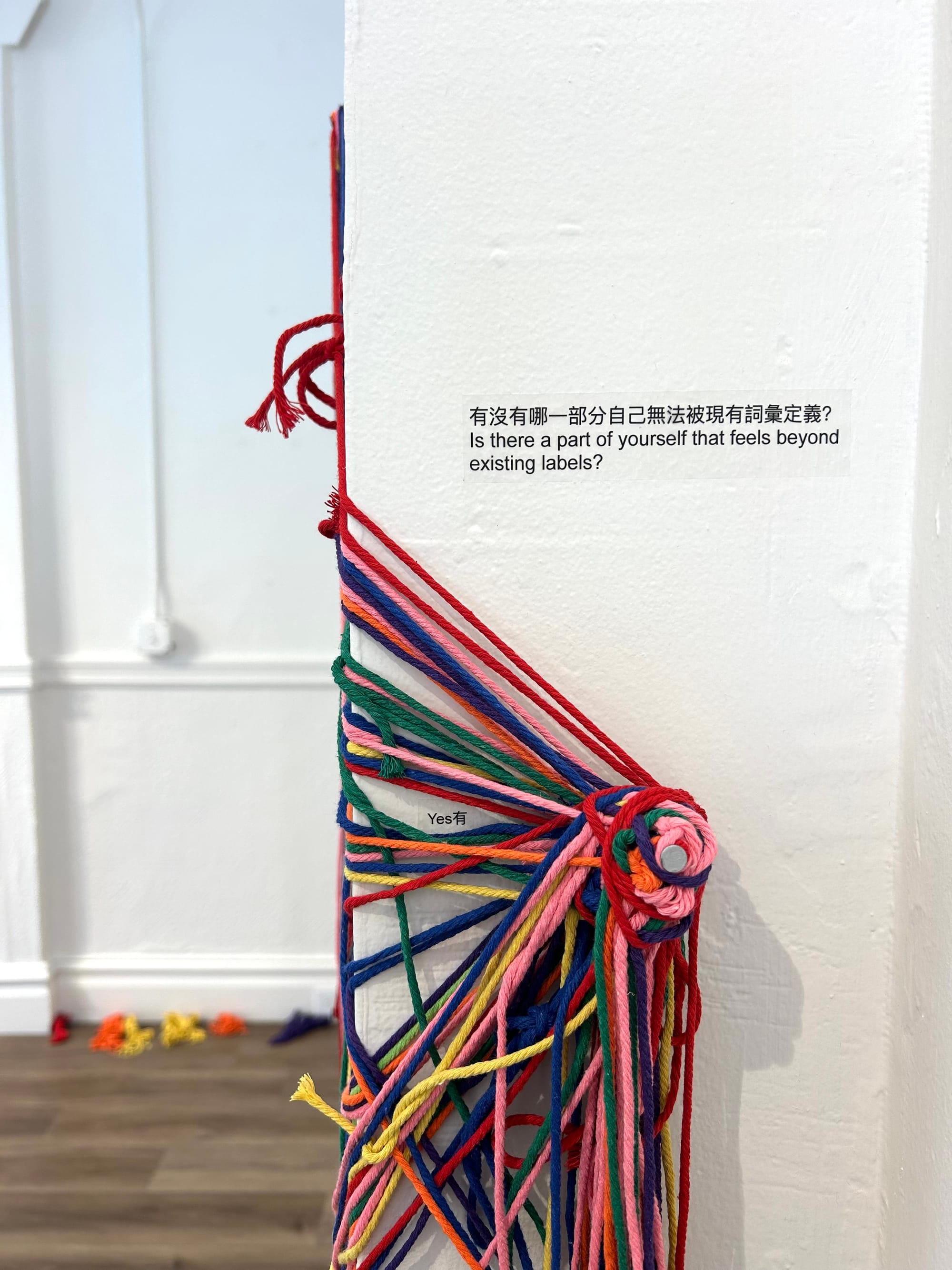
Xiangchi Chen also created an interactive installation called "Collective Notation" where visitors can trace their own paths of identity, and expressions of gender and sexuality. Later, it will be translated into a composition for a traditional Chinese instrument called guqin. (Cecilia Lei/COYOTE Media Collective)
When you were creating the museum, who were you creating it for, and how did you want them to feel?
I definitely want to serve people from the LGBT community. I want that community and their issues to be front and center and visible to the public. I hope everyone can come and visit so they can familiarize themselves with LGBT issues. No matter what your opinion is, and even if you don’t necessarily accept LGBT people, I hope you can just see and learn that these issues exist, and that there are different gender expressions. And I want the LGBT community to find a place of belonging. I also think people should know about the great LGBT artists in China and know their work.
Now that the museum has been open for a few weeks, what’s surprised you about how visitors are engaging with it?
Overall, the feedback has been great, very supportive and encouraging. But I want to share a memorable experience from when I had an art exhibit at 41 Ross Alley in Chinatown in 2024; it left a deep impression on me. Older Chinatown aunties and uncles would often pass by and come in after buying their groceries. One day a 70-year-old man visited and checked out the exhibit because he saw it was relating to the Chinese LGBT population. Afterwards he told me, "I’m from Guangdong, I moved to the U.S. in the 1970s because in China I wanted to have surgery to become a man – I was originally a woman – and there was no way I could’ve done that in China during that time. So I immigrated to the U.S. to get the procedure.” I thought to myself, if more people like him have a space like this, then little by little, more people will come in and have a space to tell their stories.