’Horror Movie Love Eggs’: COYOTE Watches ‘You Can See Everything’
(It all depends on how you define the word "can.")


(It all depends on how you define the word "can.")


En Redwood City, un medio independiente en español informa al público con conversaciones cara a cara y un títere llamado Ramiro.

In Redwood City, an indie Spanish-language news outlet is informing the public with face-to-face conversations and a puppet named Ramiro.
Sure, Facebook will promote your upcoming show. But have you considered using a random AI-generated white lady instead of your band?

Bay Area musicians have it tough these days. The cost of living is astronomical; small venues keep closing. How’s a local band to break through the social media cacophony with a simple message like “We are playing live in Occidental next Friday. Please come to our show”?
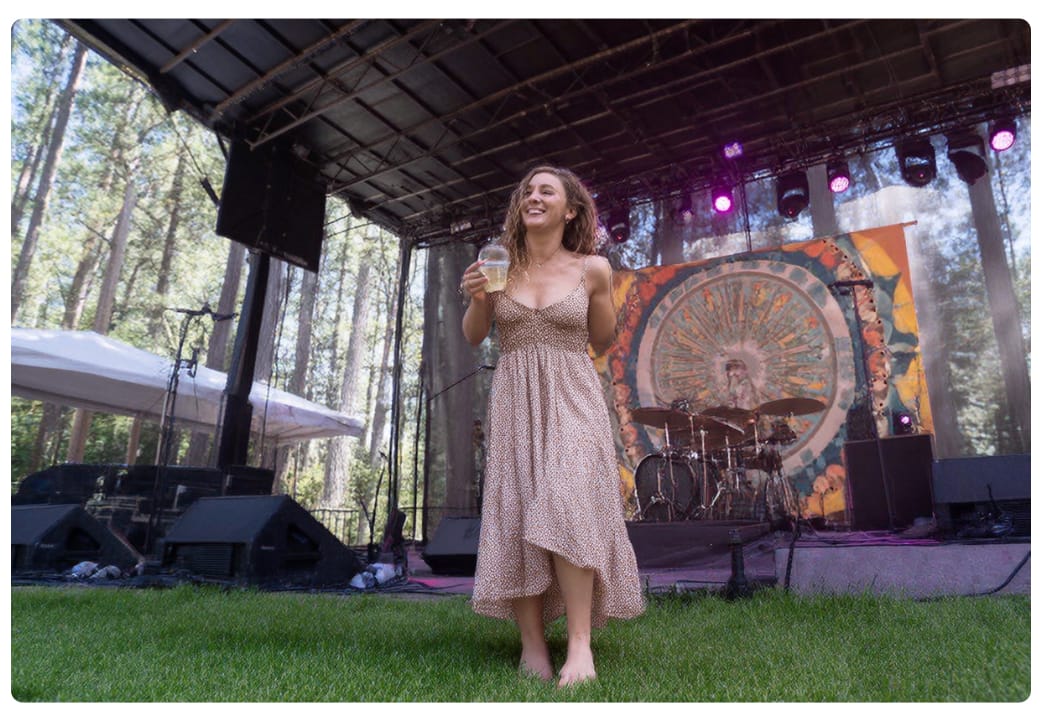
Well, artists, Meta has some suggestions for you. Namely, what if you ran an ad for your show on Facebook, but instead of a nice photo of your seven-piece funk-soul group playing live, you used an uncanny image of a one-armed girl who does not exist gripping what looks like a Slurpee cup of wine on a stage that’s covered with astroturf, no instruments in sight?
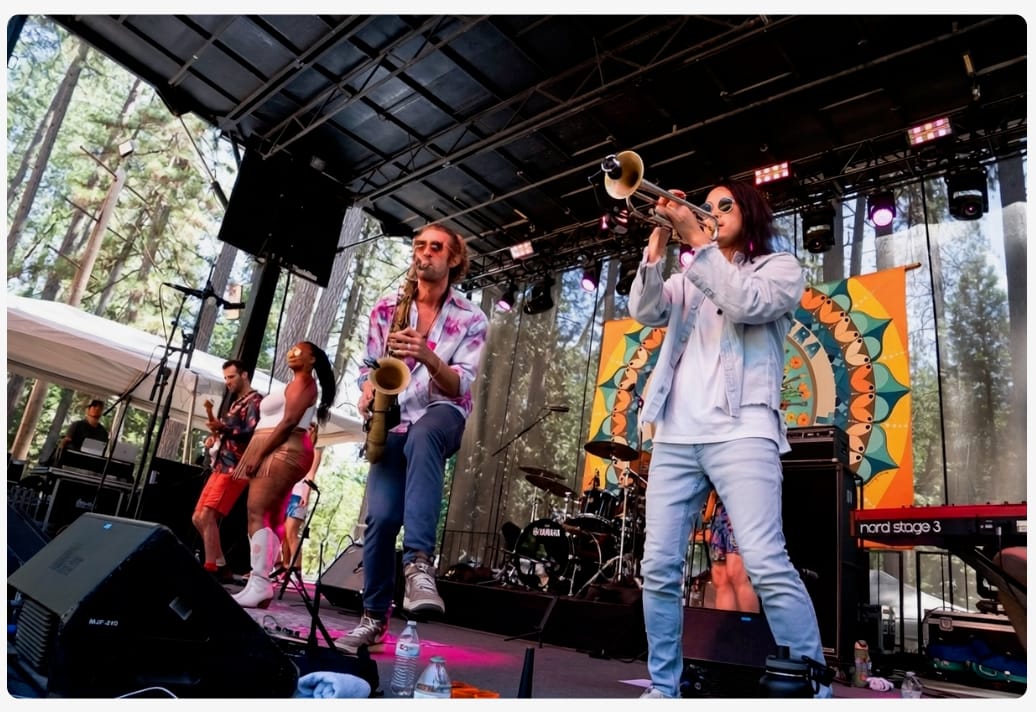
This was one of several confounding options offered to Chris Hoog, saxophonist and bandleader for Oakland group the Westones, when he attempted to post an ad this week for their upcoming show — something he’s done at least a dozen times over the last few years. But this time, the interface had a new feature, as he documented in a July 14 Instagram reel: After Hoog added a recent, lovely photo by local photographer and musician Evan Lanam, the app suggested a number of baffling, AI-generated “improvements,” optimized for a “high CTR” (click-through rate).
“They kind of had a progression from least noticeable to just wildly unrecognizable and offensive,” says Hoog. “The first couple I saw, they tweaked the lighting or made it higher contrast … but then as I started to scroll through, it went from those kinds of changes to things that didn't even make sense.”
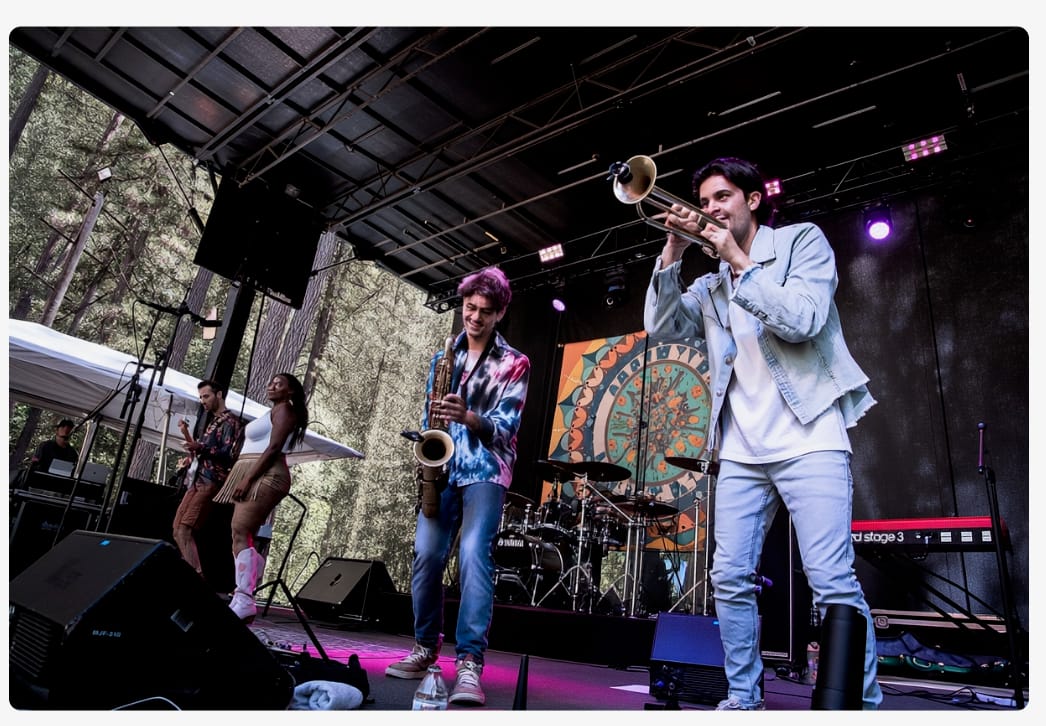
Options included one that swapped Hoog and trumpeter Brendan Liu for two different men playing AI-generated wind instruments with some unconventional hand positions, and one that replaced the entire band with the aforementioned astroturf-and-amputee-in-a-sundress situation.
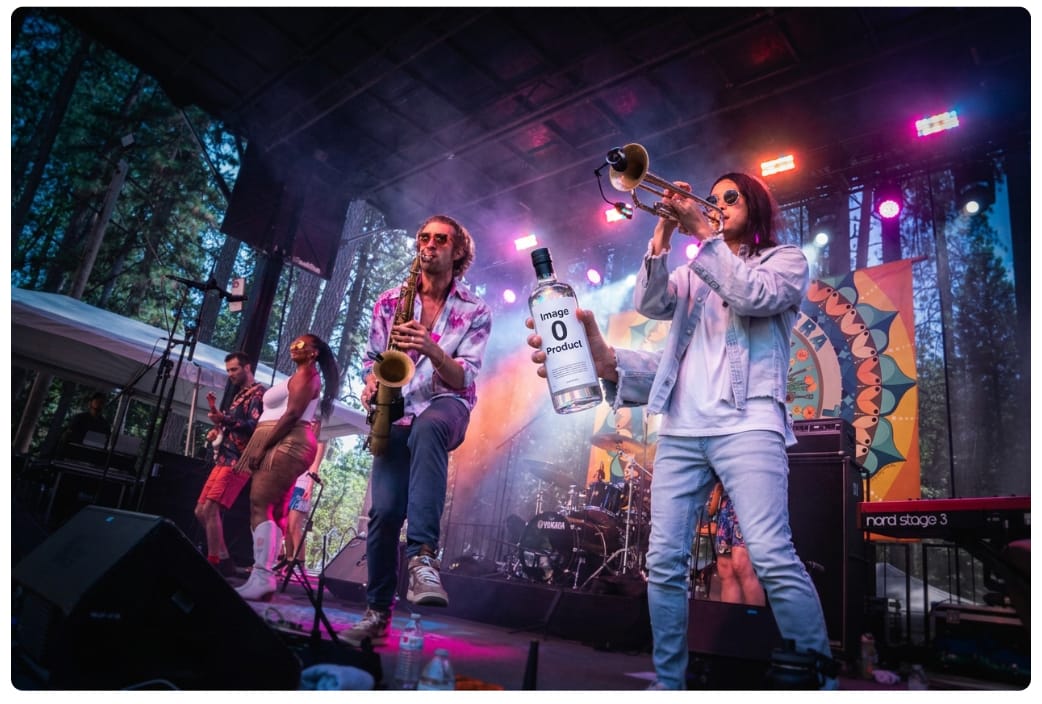
Then there’s the pièce de résistance, in which an oversized forearm and hand protrudes from Liu’s torso and grips a liquor bottle — dummy text helpfully placed on the label — as he continues to nonchalantly play the trumpet at some type of music festival turned funhouse of failed medical experiments.
“It's clear that they’re testing their capabilities around brand placement and furthering the capitalist angle,” says Hoog, “but to do that without any kind of acknowledgement, just hoping that I’m going to click ‘next’ and not even realize what we’ve done, is just ridiculous.”
Notably, the Westones are a racially diverse band. Each AI-generated person in Meta’s ad suggestions — again, with the implication that the image would “perform” better and lead to more conversions — appeared to be white.
Meta has not responded to a request for comment.
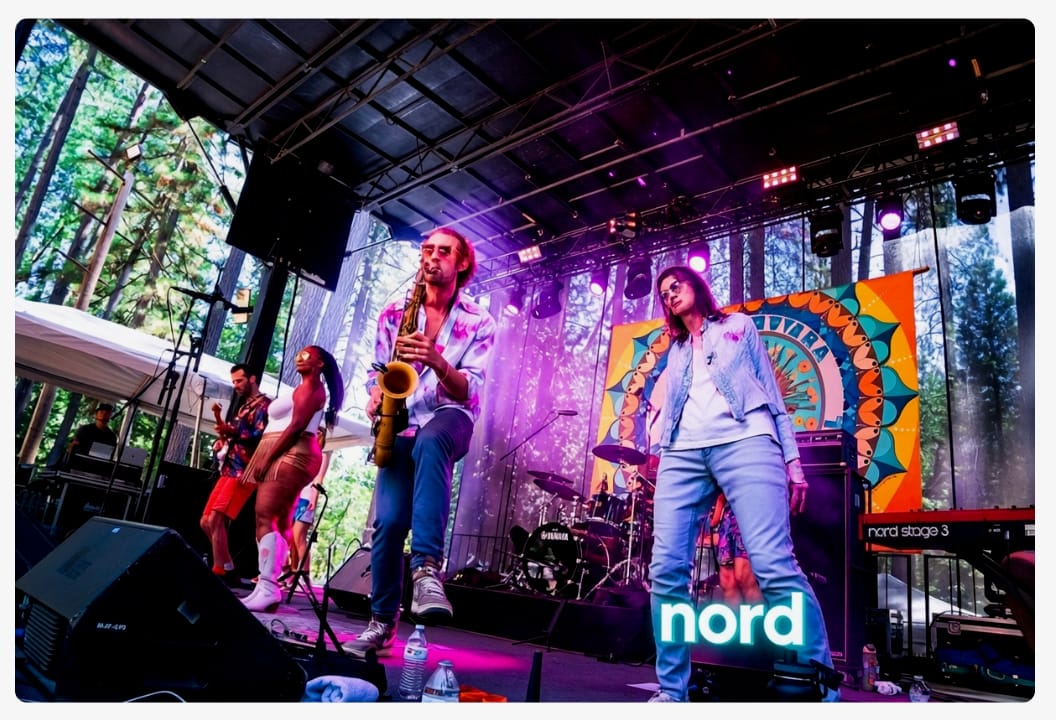
Of course, it’s not news that AI is racist as hell. And no one’s laboring under the illusion that these companies or their soulless executives value art or creativity. But against the backdrop of AI’s encroaching creep into the music industry, this new overstep feels even more insidious. It’s another increasingly unavoidable intrusion from a worldview that flattens all art into interchangeable, monetizable “content.”
“The bigger context of this is Spotify flooding itself with AI-generated music that people don’t even realize is AI, and taking away from the small pot of money that is going towards artists already,” says Hoog. A massive tech company quietly introducing yet another way to replace musicians’ assets with their own, he says, “just feels dystopian.”
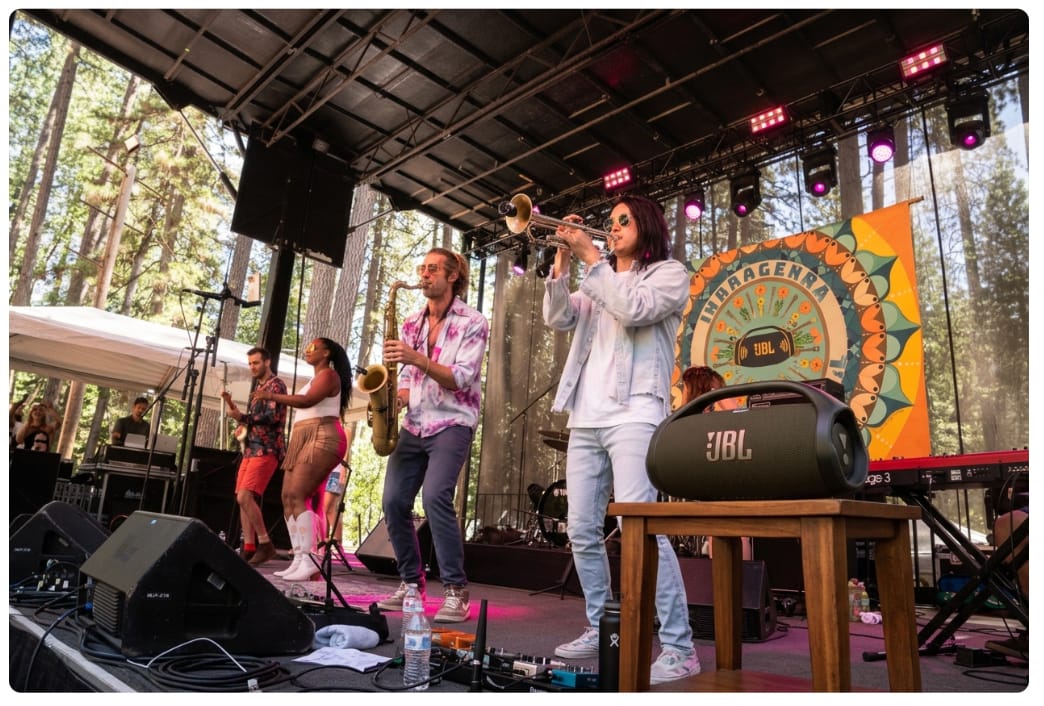
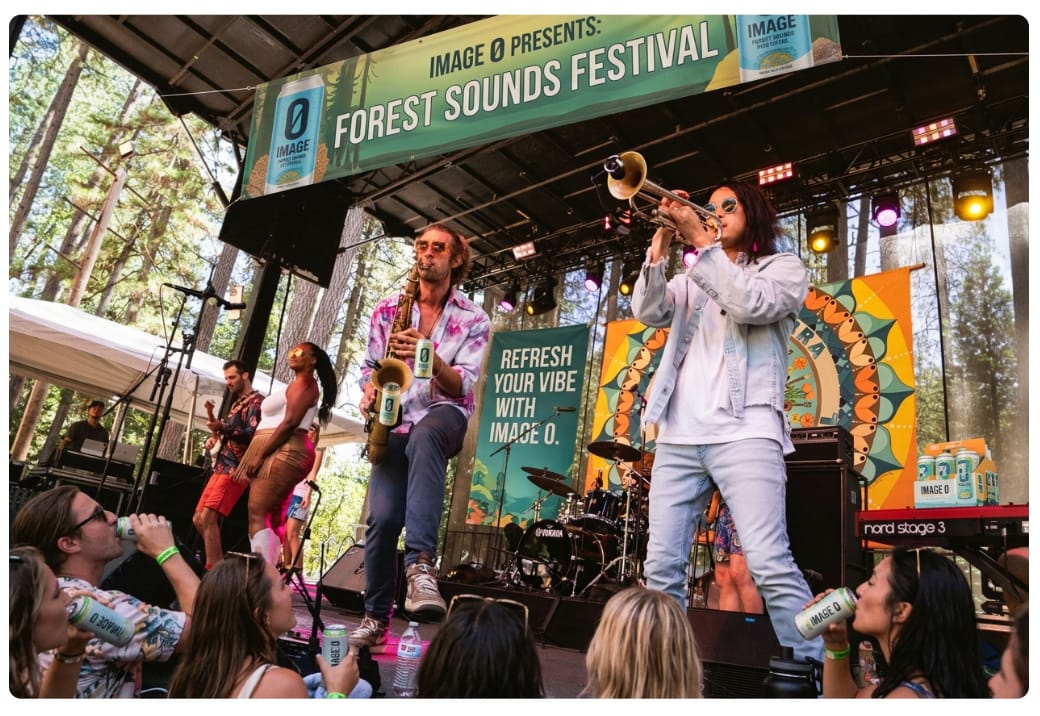
Left: The Ihaaagenra Music Festival, brought to you by JBL speakers. Right: The Forest Sounds Festival, brought to you by a drink called Image 0, cans of which apparently float.
What’s extra galling is Meta’s apparent assumption that users will acquiesce to anything, so long as it increases reach. In an ecosystem where the most important thing is click-throughs, and the algorithm can either throttle your business or help you make rent this month, why not use an unholy AI creation in place of the talented, hard-working musicians you’re selling tickets to see perform? It’s all just ones and zeroes, right? Who’s to say the “right” place for an arm to be on a body, anyway?
On July 16, two days after Hoog successfully posted the ad — with the original, untouched photo — he realized Meta had published it with automatically selected, possibly AI-generated music. There was no option to swap it out for the Westones’ music, since the band is not in Meta’s library. He was eventually able to remove the music altogether, after finding a “disable” toggle under the platform’s advanced settings.
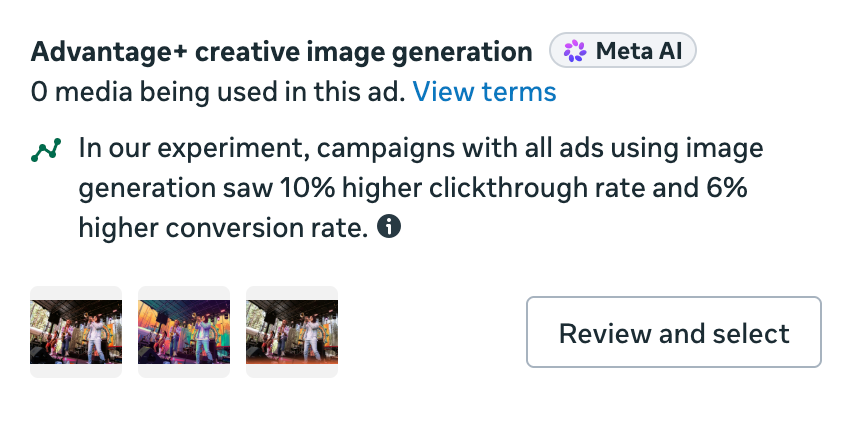
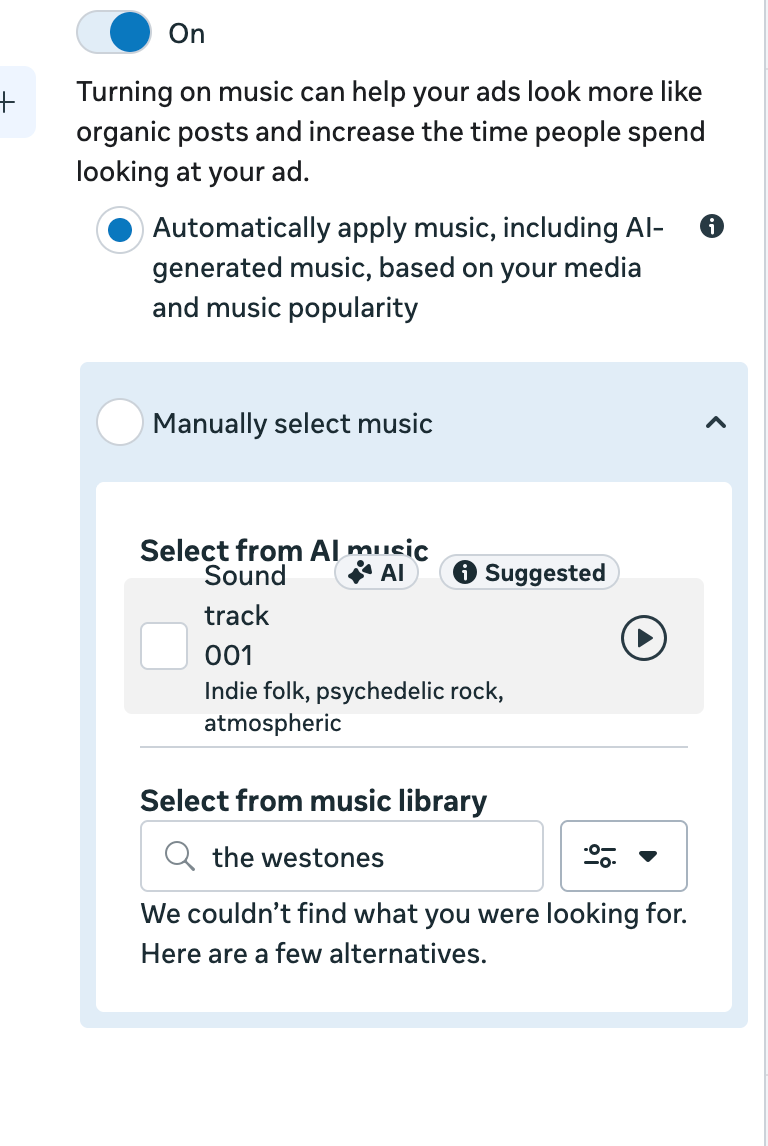
Some upsetting screenshots of Meta's interface, courtesy of Chris Hoog.
“We spend money on these awful companies because we have to, but… the ways this technology is being used, it’s just so obviously predatory and capitalistic that it actually gives me hope. I have optimism that people can see right through it,” says Hoog.
“I’m hopeful that it keeps motivating people to escape virtual reality in favor of real experiences and real art and real life.”
The Westones play this Friday, July 24, at the Altamont Yard in Occidental. It’s outdoors, the weather should be beautiful, and that spot has a great burger. If you go, please interact with real people, and tell the musicians you liked their set afterwards. Maybe have a beer, and enjoy holding the bottle in your normal-sized hand.