First Aid Kit: How to Make the Most of Your Food Pantry Haul
More people are accessing food pantries than ever, and it's not all cans and boxes. Here are some tips for storing perishables, planning good meals, and getting creative in the kitchen.


More people are accessing food pantries than ever, and it's not all cans and boxes. Here are some tips for storing perishables, planning good meals, and getting creative in the kitchen.

This week we've got spiders, bonsai, orbs, raptors, Chinese knots, DIY phone books, tacos, stained glass and more.

When heirloom beans are caught in the middle of a messy divorce, who should get custody? Bay Area food club leaders chime in.

More people are accessing food pantries than ever, and it's not all cans and boxes. Here are some tips for storing perishables, planning good meals, and getting creative in the kitchen.

At the beginning of this year, I started working at the Midtown Family Services food pantry in West San Jose. As San José Spotlight recently reported, food pantry lines are growing longer as more people seek assistance. At Midtown’s pantry, which opened two years ago, monthly food distribution increased from 1,500 pounds in March 2024 to 80,000 pounds in June 2026. Regularly, I see at least a hundred people waiting in line for the pantry’s doors to open. The Bay Area is one of the most expensive places to live in the U.S.; layoffs and skyrocketing grocery prices are only making it more difficult to get enough food on the table.
As a recipe developer, my favorite part of this job has been talking to people about what they plan to cook using the pantry’s ingredients. I often introduce visitors to unfamiliar ingredients and provide cooking tips. In exchange, clients share strategies for stretching food as much as possible. This guide is for anyone considering visiting a food pantry who feels intimidated by the process, or is unsure about what to expect.
Requirements for using a food pantry vary across organizations. For a majority of food pantries, you aren’t required to show your tax returns or paystubs. It also isn’t necessary to be signed up for food assistance benefits such as SNAP. Some food pantries might ask for ID to ensure that there aren’t repeat customers throughout the day, but it is unlikely you will be turned away if you don’t have an identification card. Proof of address is also generally not required, meaning you can visit food pantries in other neighborhoods or cities if needed.
There are two types of food distribution sites. The first offers pre-bundled packages of food, or features a line where you’re given one of each item. The second is more of an open grocery shopping experience, where you come in and pick what you need. (There may still be limits on certain high-demand items, like eggs.) Generally, a food bank refers to an organization, such as Second Harvest or the SF-Marin Food Bank, that distributes groceries to food pantries. As an individual, you can’t pick up food directly from those kinds of food banks as it’s packaged in bulk. However, the names aren’t regulated and it can get confusing — for example the Alameda Food Bank does serve individuals directly. If you’re unclear which is which, check out their websites. In addition to food pantries, there’s weekly or monthly food distribution events at community centers, churches, and clinics.
There’s a common misconception that food pantries only offer canned or boxed foods. In reality, you can find frozen meat, fresh produce, dairy, eggs, and bread. California Senate Bill 1383 requires grocery stores to donate edible food rather than discard it. I’ve also seen meal donations come in from Kaiser hospital. This means the ingredients you find at a food pantry are a bit random. It can make it difficult to tick off all the items on your grocery list in one visit. Instead, plan to visit a food pantry a few times per month to collect components of a dish. For example, you might pick up tomato sauce, spaghetti, and bacon across several trips to assemble a pasta.
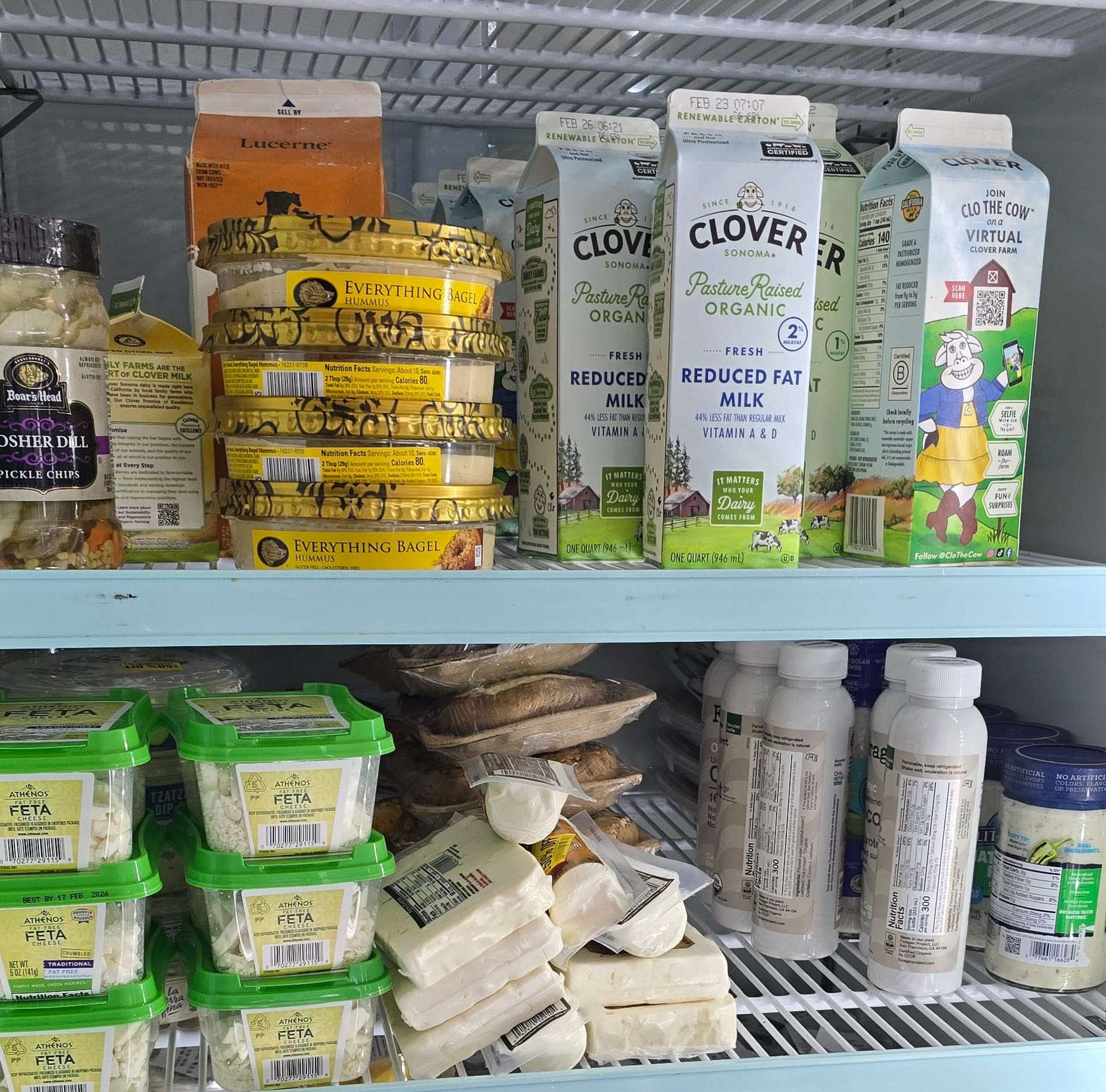
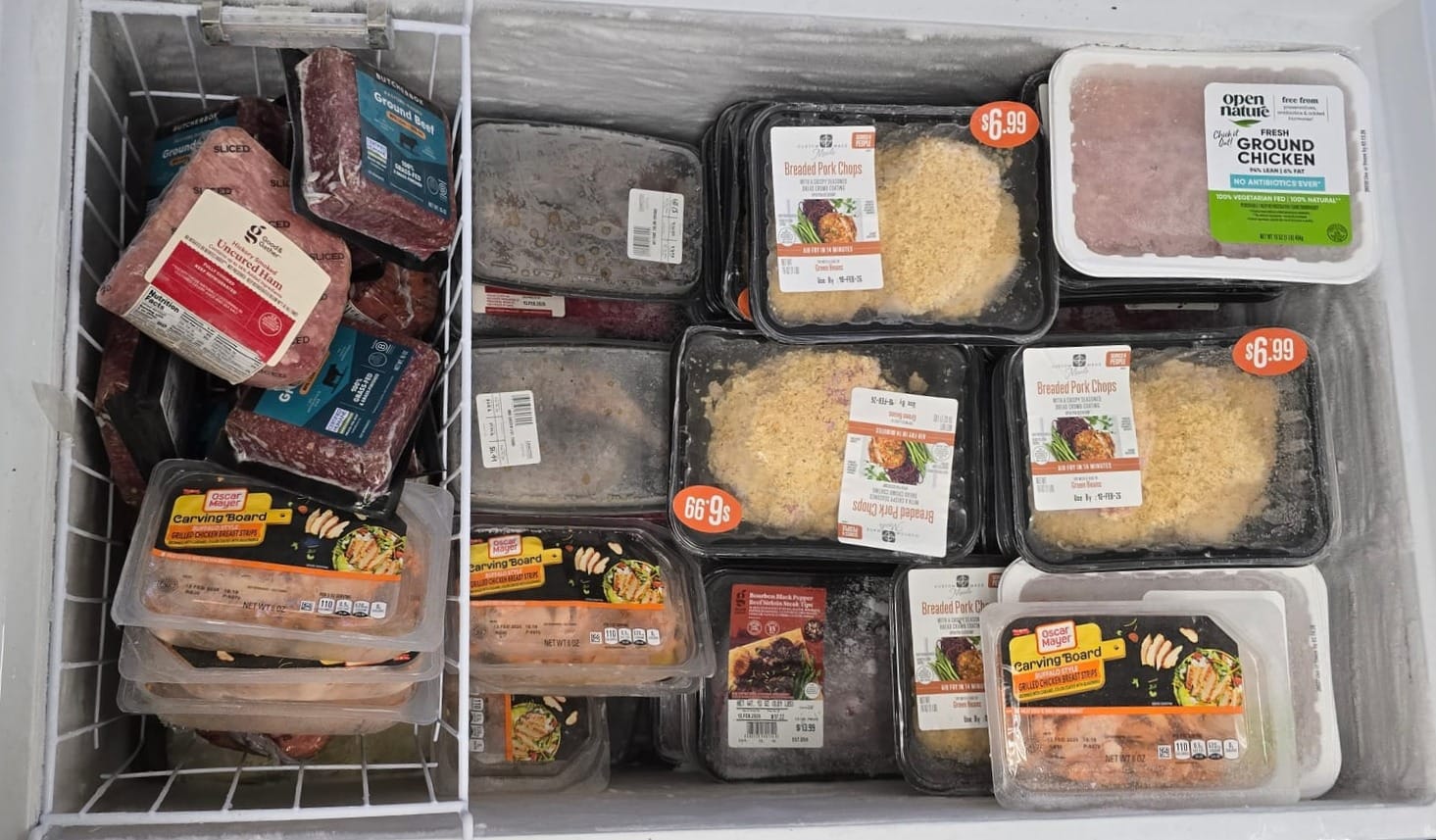
As you build your ingredient stockpile at home, it’s useful to know how to properly store them. You’ll typically receive meat from food distribution sites frozen, and it’s best not to thaw it until right before you’re ready to cook. The general guidelines of raw meat lasting a few days in the fridge doesn’t apply here, since the amount of time the meat has already been sitting out is unknown. As for vegetables, you can choose to freeze or pickle them. You should always peel and wash produce before freezing. Note that leafy greens, cucumbers, and other high-moisture vegetables get soggy in the freezer, so taste better eaten fresh. If you pick up a surplus of bread, it should also be stored in the freezer. Bread rapidly deteriorates in the fridge and on the counter. If your bread goes stale, you can transform it into croutons or breadcrumbs.
The most common question I hear at the food pantry is: “How can I make meat less tough?” Food pantries tend to receive a lot of collagen-rich cuts of meat like drumsticks, pork shoulder, or chuck roast. If you’re not planning to cook the whole hunk of meat at once, you can divide it into portions before freezing. Sometimes people will mistake these for pork chops or steaks when they’re sliced into slabs. Try preparing them with a quick sear. The secret to transforming these meats into succulent, flavorful meals is to cook them low and slow. Collagen turns into mouth-melting gelatin when roasted for a few hours in a low-temperature oven or simmered in a stew.
Rice is by far the most common ingredient you will stumble upon in a food pantry. There’s only so many times you can have plain white rice per week before it starts to feel monotonous. Remember, you can cook rice with any liquid in your kitchen including bean water, stock, dashi, coconut milk, or tomato sauce. You can also take inspiration from dishes that star rice as the main ingredient with a few additions like oyakodon (a Japanese chicken and egg bowl) or morisqueta (a Michoacan specialty of saucy pork and beans). One of my favorite recipes I’ve developed is Mexican fried rice with chorizo and pickled jalapeños.
Sometimes, you won’t find a fully-stocked food pantry and might have to pick up a couple cans of ingredients you’ve never cooked before — like gefilte fish or marinated snow mushrooms. My advice for these situations is to use the new ingredient in a familiar way. A fun project I’m working on in the pantry is social media videos of guest chefs and volunteers cooking a meal in the food pantry using only what we have in stock.
The easiest way to find food assistance near you is to visit findhelp.org. This website works across the U.S. Select the food tab and enter your zip code to receive a list of food pantries along with requirements and hours of operation. You can also find food pantries from Daly City to Gilroy sponsored by Second Harvest of Silicon Valley using their map tool. The city of Oakland has a list of food distribution sites across the East Bay.