COYOTE Has Entered the Building: Warfield Commons, Our New Home
Another startup moves into an office building in downtown San Francisco??


Another startup moves into an office building in downtown San Francisco??

Protect yourself and others this fall.

This week we've got live mural painting, mushroom architecture, slow walking, and more.

Another startup moves into an office building in downtown San Francisco??

We have incredibly exciting news to share with all of you. Last week, it was announced that COYOTE Media Collective is getting an office space! (Or as we call it internally, our San Francisco pied-à-terre.) And it’s not just any old office space: We’re moving into the Warfield Commons, a building in San Francisco’s mid-Market neighborhood that is being re-imagined as a new collaborative hub for independent journalists and creatives in the Bay Area, and we were invited to be one of its first tenants. (Cue excited howls!).
This was all made possible by a partnership between the nonprofit real estate developer Community Arts Stabilization Trust (CAST) and KALW Public Media, which is celebrating its 85th birthday this year. The Warfield Commons is now the headquarters for both organizations, and COYOTE will join other media makers on the building’s “Third Floor,” a new shared workspace. We’re excited have access to many of the building’s amenities, such as production facilities and resources, conference rooms, and events spaces. Other tenants in the building include LitQuake, Diasporic Vietnamese Artists Network, and SF Public Press. More information can be found in this press release.
Obviously, this is a huge glow-up for COYOTE, but what does this actually mean for us? Don’t worry: It doesn’t mean we’re becoming a San Francisco-focused publication; we’ll always be dedicated to covering the entire Bay Area. But in short, it will allow us to dream bigger and become more ambitious in our vision and planning for our one-year-old newsroom. We’d love to hold more meaningful in-person events, explore other ways to tell stories, and exchange ideas with other rad, like-minded local creatives. And, of course, this is a game-changer for how we work with one another. We no longer have to rely on seeing one another in virtual Google Meets, or convening in Soleil’s apartment.
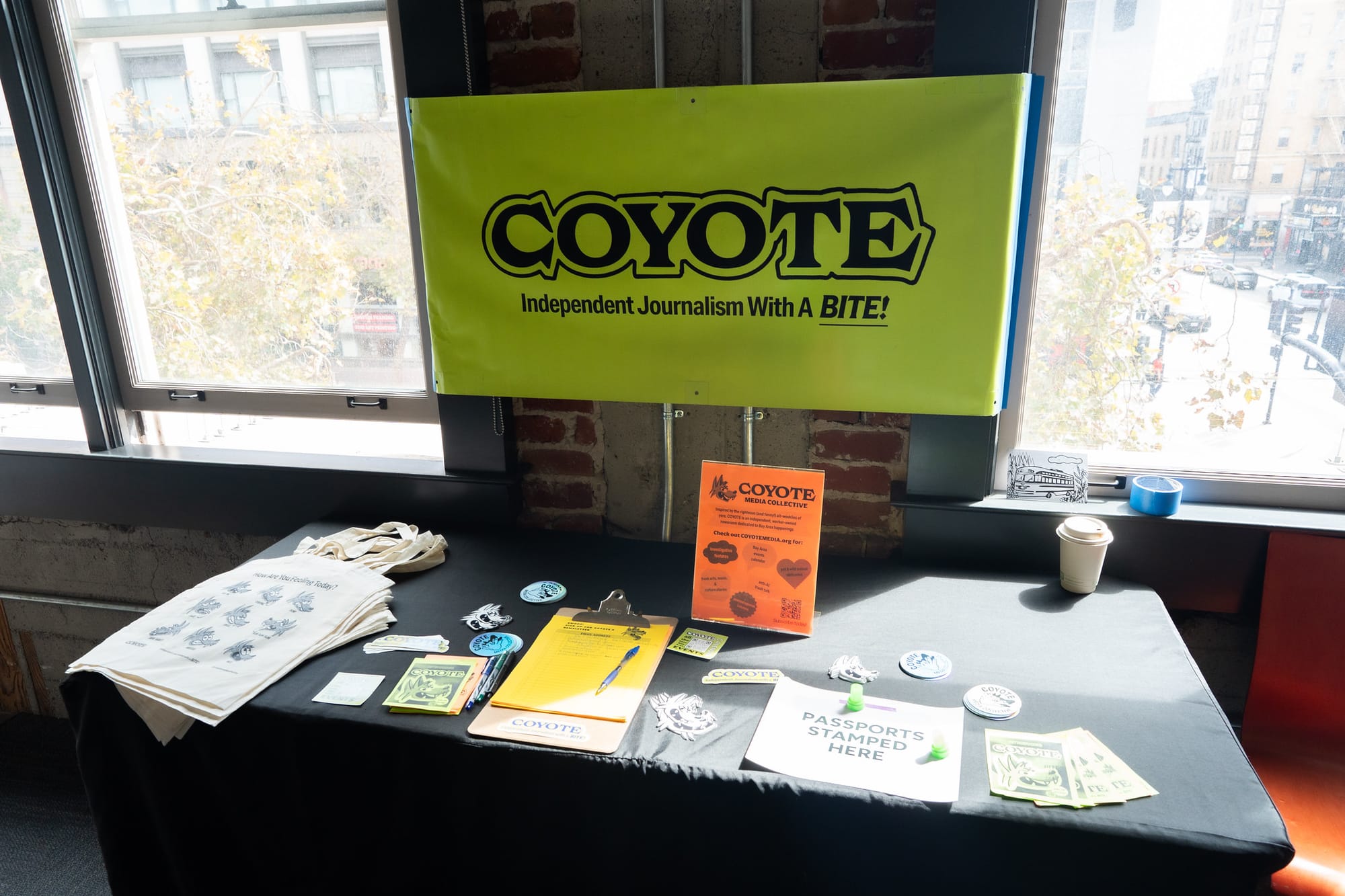
On Sept. 27, the Warfield Commons threw a huge, rousing neighborhood party to celebrate opening its doors, and we were thrilled to be a part of it. Hundreds of people poured into the building to watch live bands, listen to readings, and watch gravity-defying dancers perform. They also engaged with tenants across the building’s nine floors. Already, the building feels alive and the vibes are just right: full of optimism and possibility about what’s ahead.
I chatted with James Kass, the executive director of KALW, earlier this week to talk about what this partnership means for COYOTE and local indie creatives — and why opening the Warfield Commons was a form of defiance.
This interview has been edited for length and clarity.
Cecilia Lei: How did the idea for Warfield Commons first come about?
James Kass: Ken Ikeda, the CEO of CAST and I have been friends for about 25 years. And on my very first day as the executive director of KALW, I was like, “Why are we still at this high school?” [For 30 years, KALW broadcasted from studios inside San Francisco’s Burton High School.] We looked for about a year before we were able to get this building, and it was the right price, at the right time, so we got very lucky. All the buildings we were looking at were bigger than KALW's needs, and so right away, we got this idea: What would a multi-tenant building look like?
From the beginning, the purpose of the building was to create a below-market nonprofit center. CAST is a nonprofit real estate developer, committed to the arts and culture, and at KALW, we’re committed to serve our civic responsibility. So that became the gist. We began thinking, what if we built a floor of independent journalists and media makers and podcasters, etc? And it matches the KALW vibe because KALW has always not just survived, but thrives in collaboration.
CL: Buying a building mid-Market at a time when it feels like so many have given up on this part of San Francisco feels like a leap of faith. How intentional was that move?
JK: It was definitely intentional to be downtown so that we’re really accessible by public transportation for Bay Area residents, but mid-Market was honestly an opportunity because it was more affordable. These tech firms [Spotify, Match.com, Zen Desk] left this beautiful building in great shape and nobody else had snapped it up because of the neighborhood. It was also a value system for us. We’ve done a lot of stories about the Tenderloin … What attracted me to this job was I wanted to be part of helping the Bay Area tell its own story. I had grown so frustrated from news stories dissing San Francisco, dissing the Bay Area.
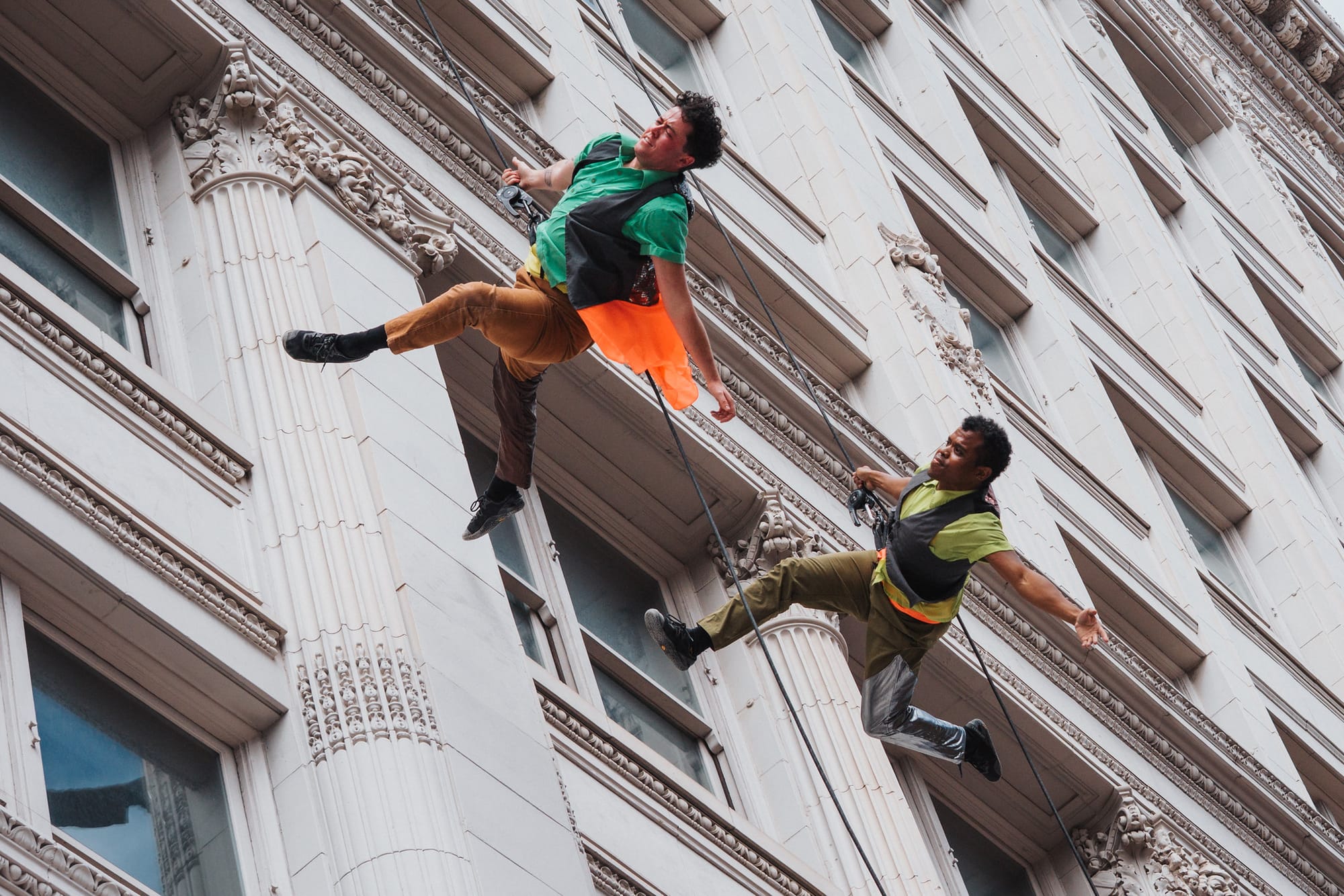
On Sunday [during the Warfield Common’s Housewarming and Grand Opening event], while BANDALOOP was dancing on the outside of the wall, and there was like five or six hundred people coming in and out of the building and another 150 people outside watching, an open-air tour bus pulled down Market Street, full of tourists, and they stopped at the red light right in front of the building at the corner of Sixth and Market. And they all looked up and saw these dancers dancing on the outside of the building and all these people in a great joyous mood. When people talk shit about San Francisco, it’s Sixth and Market. So to, even for 10 minutes, completely change those tourists’ understanding of where they were, I think that’s our job.
CL: This building is like a bet on independent creatives and journalists like COYOTE. What’s the bet that you all are making, especially when the industry feels so embattled?
JK: There’s two main things. One is: You can't have a functioning democratic society if there’s complete distrust in the media. And our bet is that more and more people are feeling that they cannot trust big commercial, corporate media. This growing distrust is an opportunity for groups like you guys, or groups like us, to rebuild trust and in doing so, help rebuild civic imagination — and even more importantly, inspire people to be civic and cultural participants of the place where they call home. Nobody wants to be a part of a movement that they don’t see themselves in. And so I think it’s important that independent journalists help people recognize their stories. Who else should be an author of a place more than the people who live there?
The other part of the bet is: Can we as KALW, as a public media entity, work in partnership with different groups so that we can inform the public discourse in ways that represent the aesthetics and politics of the Bay Area, but that are undergirded by the values of rigorous journalism?
This is an organized effort to bring journalism and media makers into collaboration with each other … I almost feel like it is a moral imperative to take some risks, to do some experimenting with what public media can be. Particularly in a region that can fund and research experimentation … I feel like it’s a moral imperative for KALW to try some shit. This building is trying some shit.
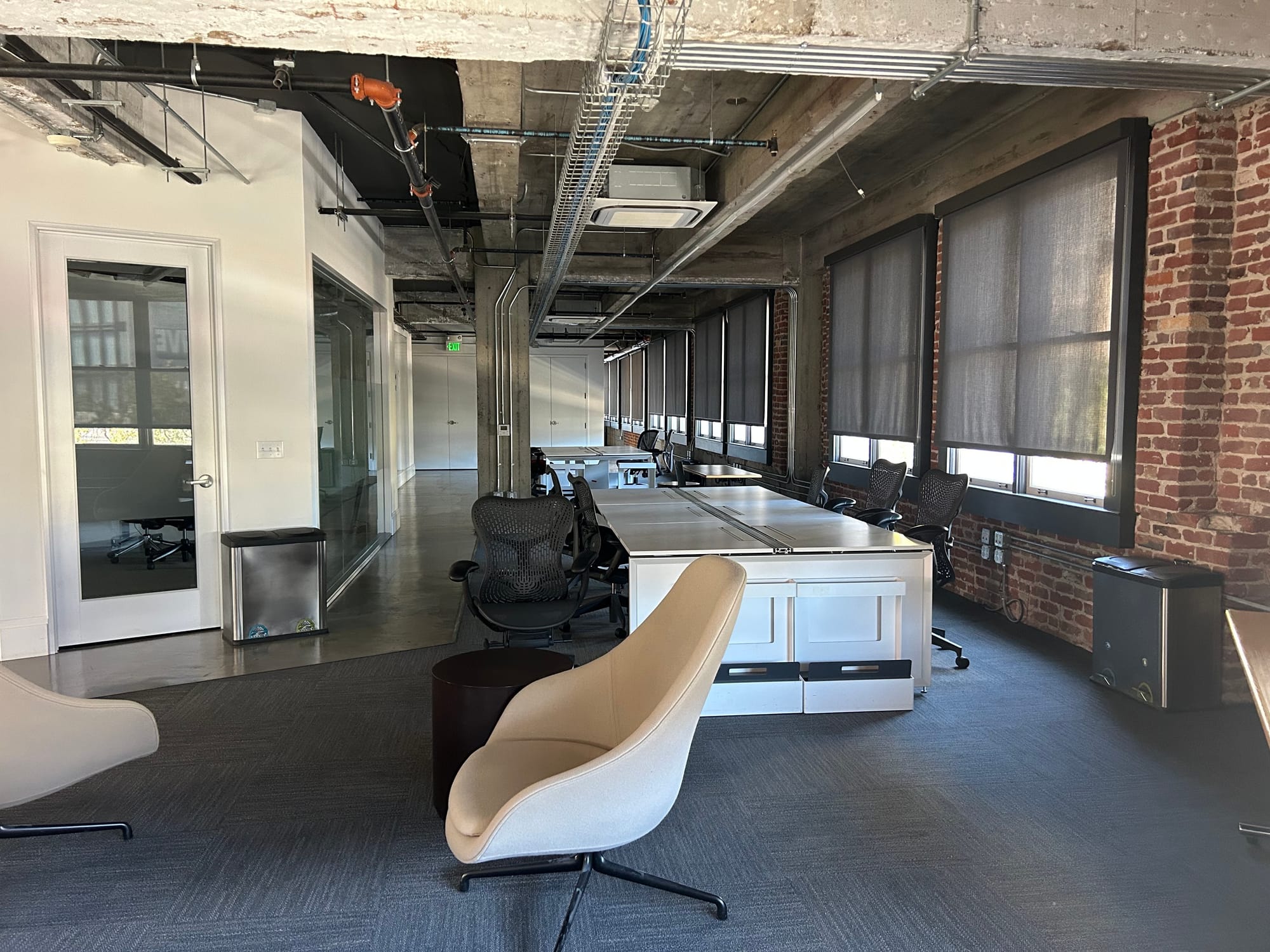
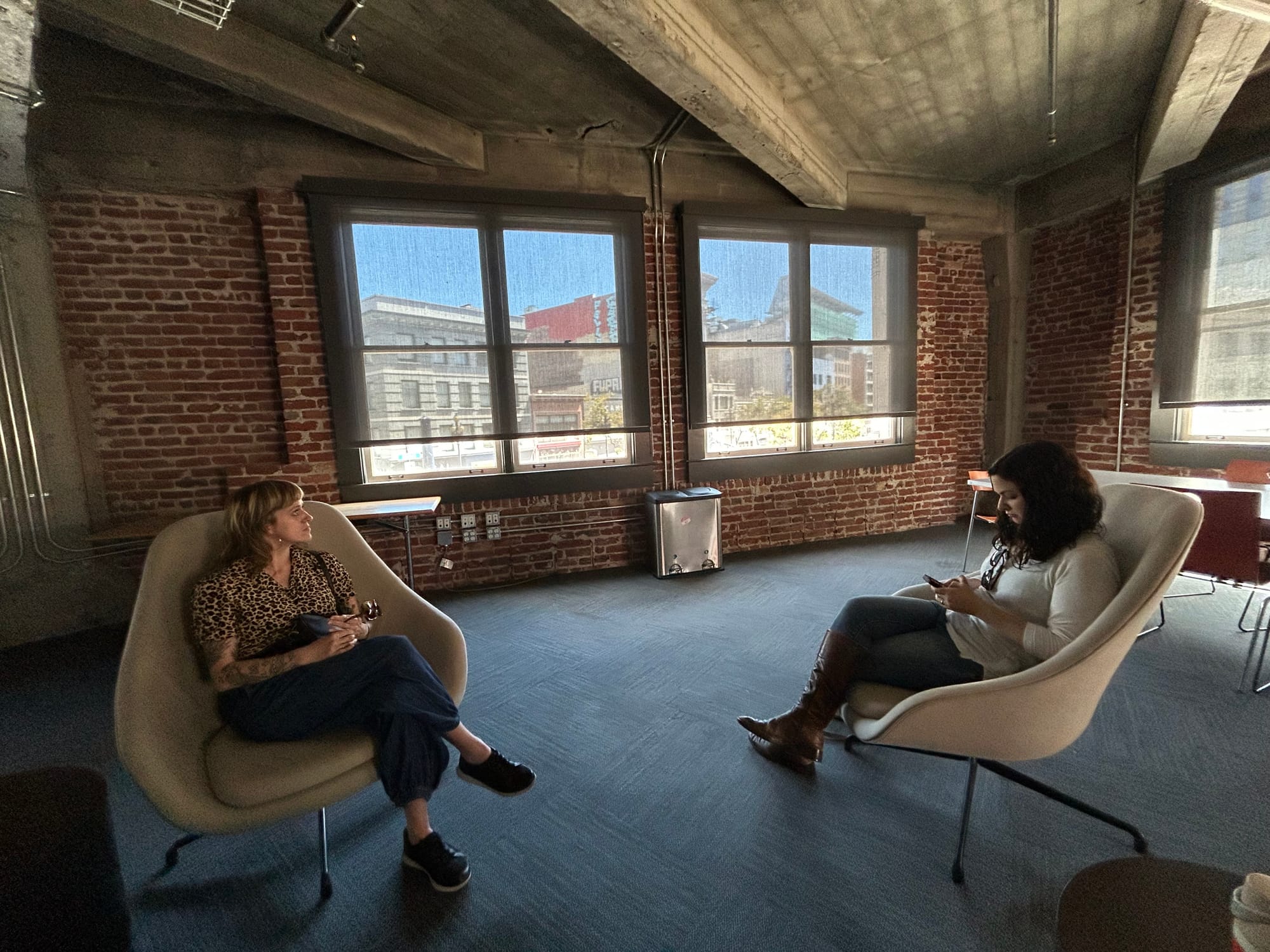
Left: The third floor space at Warfield Commons, the future collaborative hub for Bay Area independent journalists and creatives. Right: COYOTE worker-owners Nuala Bishari and Emma Silvers daydream about the office space possibilities during a tour this past summer. (Cecilia Lei)
CL: Everyone here at COYOTE is thrilled that we were invited to be a tenant of the Third Floor — it’s such a validation of what we’re trying to build. What made it feel like we were a good fit for the space?
JK: Everybody here respects you guys as journalists and respects what you're doing. It's just like, game recognize game. The journalists here think the journalists at COYOTE are awesome, and covering a diverse range of stuff. You all are an interesting collection of people. And for me personally, I was like, here are people who know how to do shit, who are down together, didn’t ask for permission, and willed this thing into existence and are already having an impact. And I’m not kidding when I tell you, every time I say, “Hey, COYOTE is moving in on the Third Floor,” there’s always a cheer. We want to inspire other journalists to come and be a part of it, and we find you guys inspiring and we think you’ll inspire others to take part in it too.
CL: Thank you! We’re already getting questions from other people who want to be a part of the Third Floor. What’s the process?
JK: Right now our plan is to make the application live in November, and our hope is to start bringing in new tenants. There’ll be a couple of tenants like you all at COYOTE who are part of the initial pool, but our hope is really to start having new tenants move in starting in early 2027. That’s the timeline right now, and we’ll have an application process and do some vetting. We want folks who are truly independent and have a commitment to journalism, to the Bay Area, and innovation in practice. Are they able to articulate their impact goals and what voices they’re bringing into the media landscape?
CL: Let’s fast forward 5 to 10 years from now. In your wildest dreams, what’s happening at the Warfield Commons? What does it look like?
JK: Obviously we want the building to be occupied with really great, mission-driven organizations that are all committed to doing great work and being in collaboration with each other. But also, that they’re committed to being good neighbors to this neighborhood. That’s an important part. We have a second phase of the development of the building, which includes activating the ground floor and turning that into an event space, and to have multiple different organizations curating that space. That’s the long-term vision too. We want this corner to be an active corner.