


A Home for Misfits: Why Roller Derby Might Be Your New Favorite Sport
With several Halloween bouts coming up, now is the perfect time to get into this inclusive, high-intensity sport.

The Bay Area has been through a lot of highs and lows in recent years when it comes to our sports teams. We lost the A's and the Raiders, then gained the Valkyries and Bay FC. But the bigger the team, the bigger the cost to see them play — Warriors tickets, for example, start at $85 for the nosebleed seats.
Yet, there are smaller, lesser-known teams and sports that are not only more affordable but also unique and incredibly fun to experience. In the Bay Area, independent and minor-league teams like the Ballers and Roots/Soul are flourishing, and there are all kinds of sports that you might not even realize have found a home here. At COYOTE, we want to introduce you to sports and regional teams that you may not have heard of, but that we think are a blast to watch.
And we're starting with roller derby.
What is roller derby?
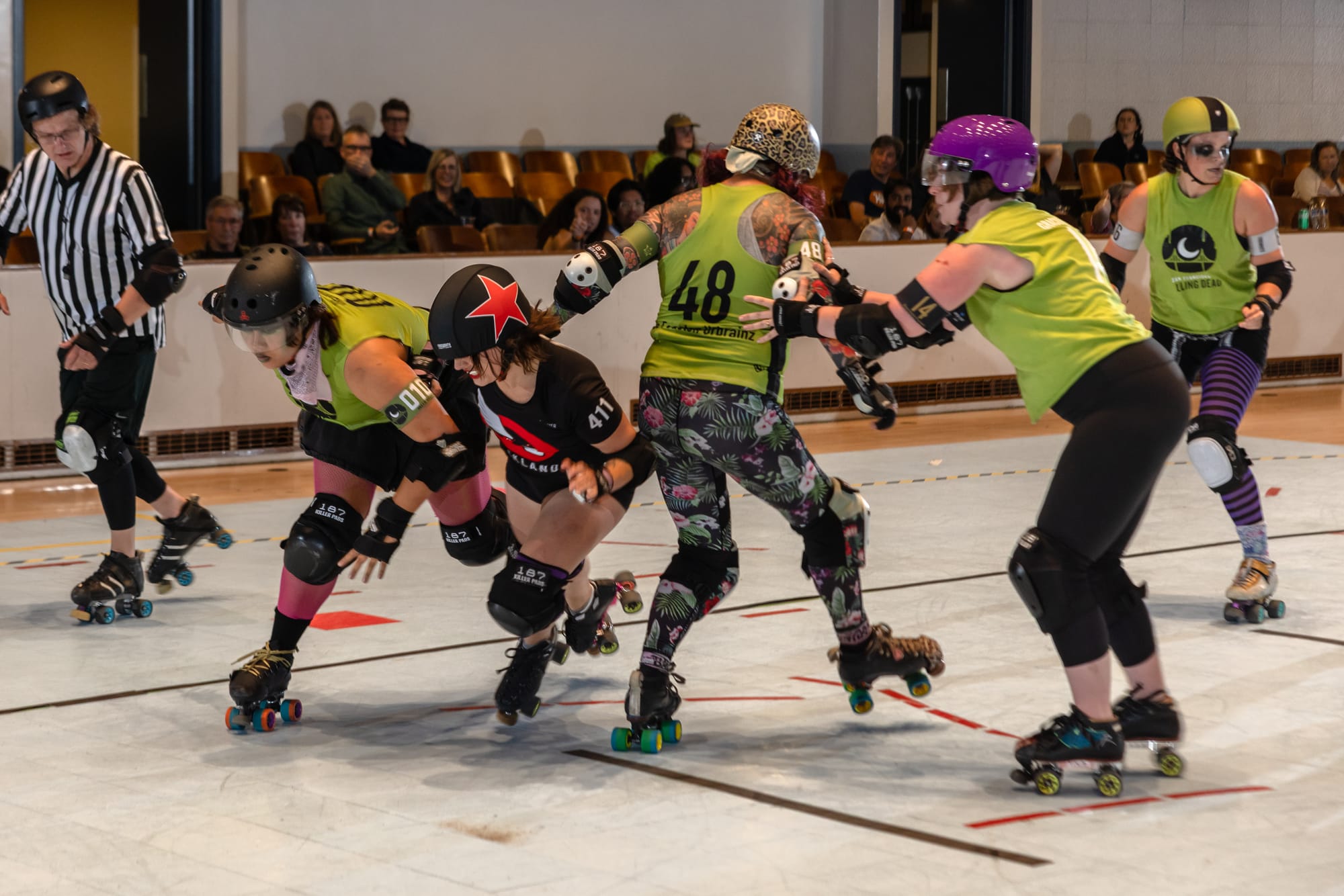
If you’re an old school roller derby addict and watched it in the 70's or 80's, forget what you think you know about the sport. Back then, it was more like professional wrestling than anything else. (And if you’ve never seen that form of roller derby, it’s worth watching throwback footage of the San Francisco Bombers for quite the wild ride.) Modern roller derby has done away with the fake punching and theatrical drama. Instead, games are won and lost on the track through strength, agility, strategy, and, like any sport, a little bit of luck. It's also a sport known for balancing intense competitiveness with a radically welcoming environment. In short: Come for the good vibes, and stay for the incredible skating.
What makes roller derby cool?
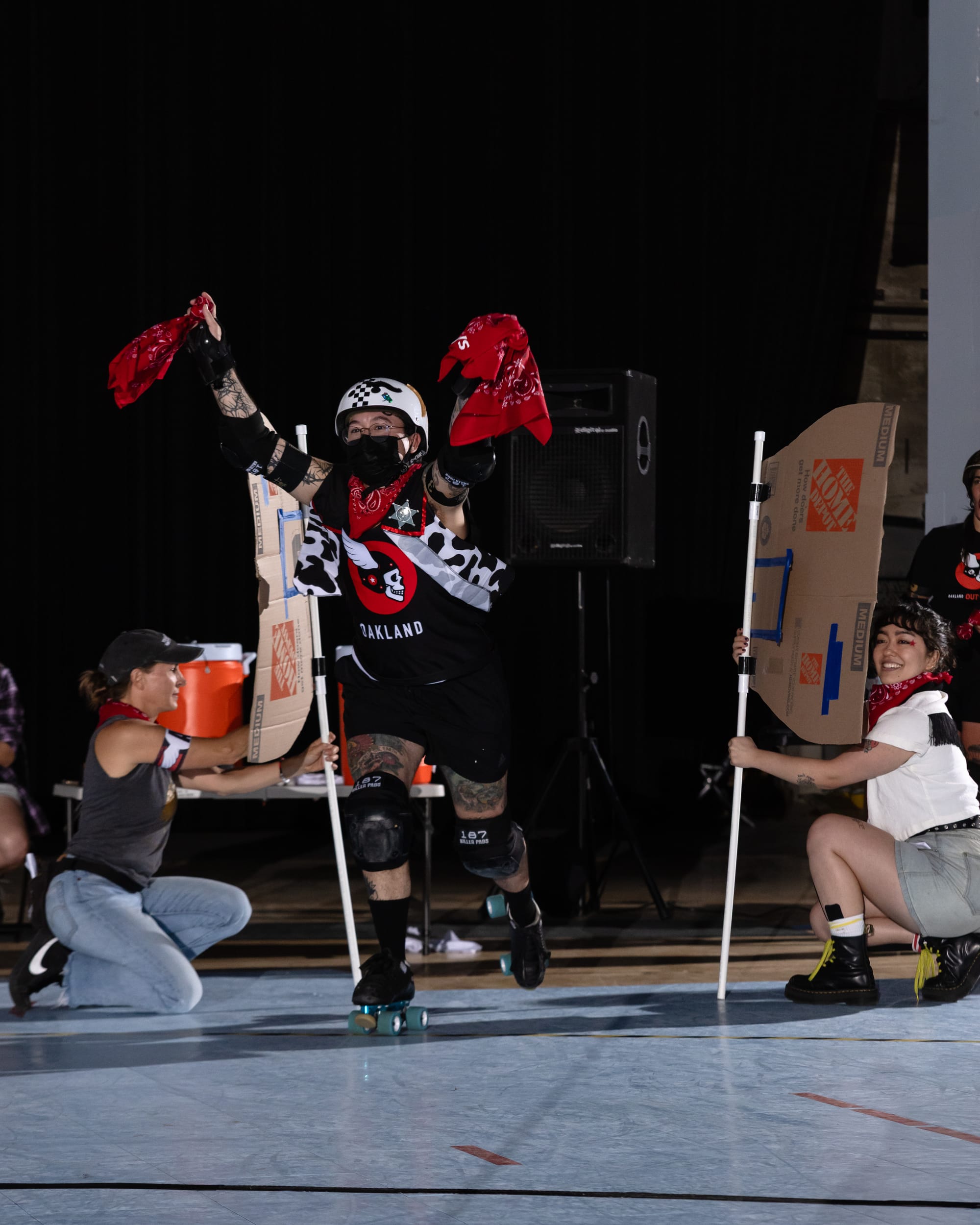
Gender sucks, but sports are cool. One of the most unique things about roller derby is that you can be fully immersed in an intense, full-tilt contact sport without having to cringe at the gender binary of it all. Derby is one of the most inclusive sports around. Teams are open to and supportive of trans and nonbinary skaters — which makes the sport a natural fit for a region with a strong history of embracing diversity.
"Derby is a sport that feels like a home for misfits," says Anna "Wrath Putina" Kaplan.
Every player gets a cool, punny, derby name. On the Bay Area Derby (BAD) teams, skaters have chosen names like “Sleigher Moon,” “Jagged Little Kill-er,” "Girliath," "Elliot Rage" and two different plays on the word wrath: the aforementioned "Wrath Putina" (a play on Rasputin) and "Sylvia Wrath" (in homage to the 20th Century writer). Not only are these fun in their own right, they also mean that you get to scream things like "GO RAGE!" and "COME ON GIRLIATH" from the stands.
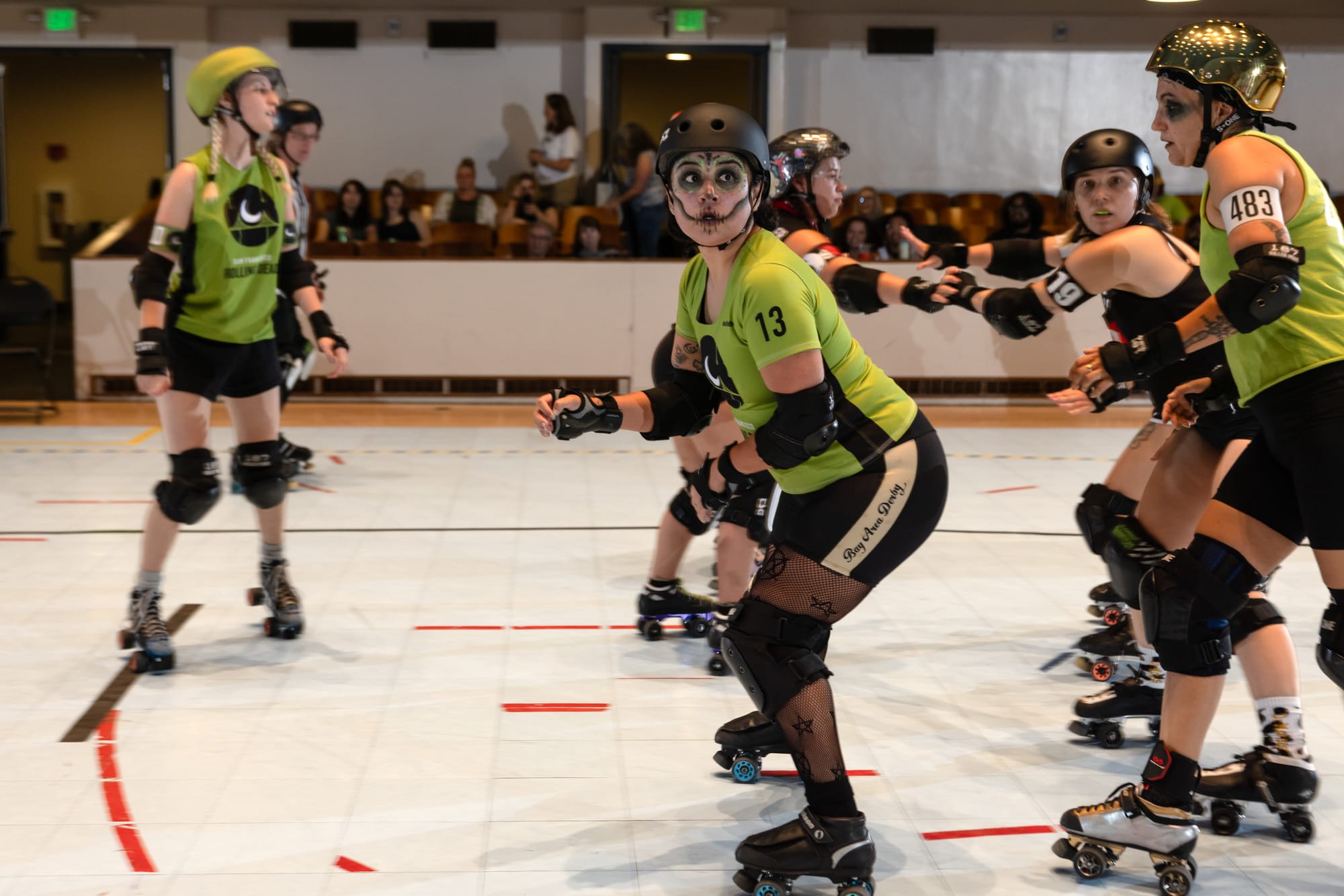
Derby inclusivity isn’t just limited to gender and witty alter-personas either; it’s also a space for a wide range of body types and athletic skills. "There's all different shapes and sizes of people who do it,” says Aya Newman, better known as “Ringo Scarr.” “Anybody can be a good derby player, and it's really fun to watch different players do different things."
Skaters come from all kinds of athletic backgrounds, with many having no prior sporting experience. "There's an interesting combination of people who are sporty and have always been athletic, and people who've never been athletic but derby is the one sport they love," says Wrath. She considers herself of the latter variety. "I've never identified as being an athletic person until I found out that this was a way I could be athletic," she says.
Others find that derby is a place where they can flex the kinds of strengths they’ve always loved about sports. Ekene "Queene of Hearts" Azuka used to play basketball. "I really liked boxing out [a basketball term for positioning your body and hips beneath the rim to secure a rebound], and feeling like I was able to overpower somebody with my strength. That's when I felt the most confident in my body." Now she's a blocker, where her whole job is to box out the jammer by using similar tactics she did on the basketball court. Her favorite part of derby? "When I knock somebody over. When I get a really good clean hit, no penalty box, and I stop the jammer in their tracks. That's really fun for me."
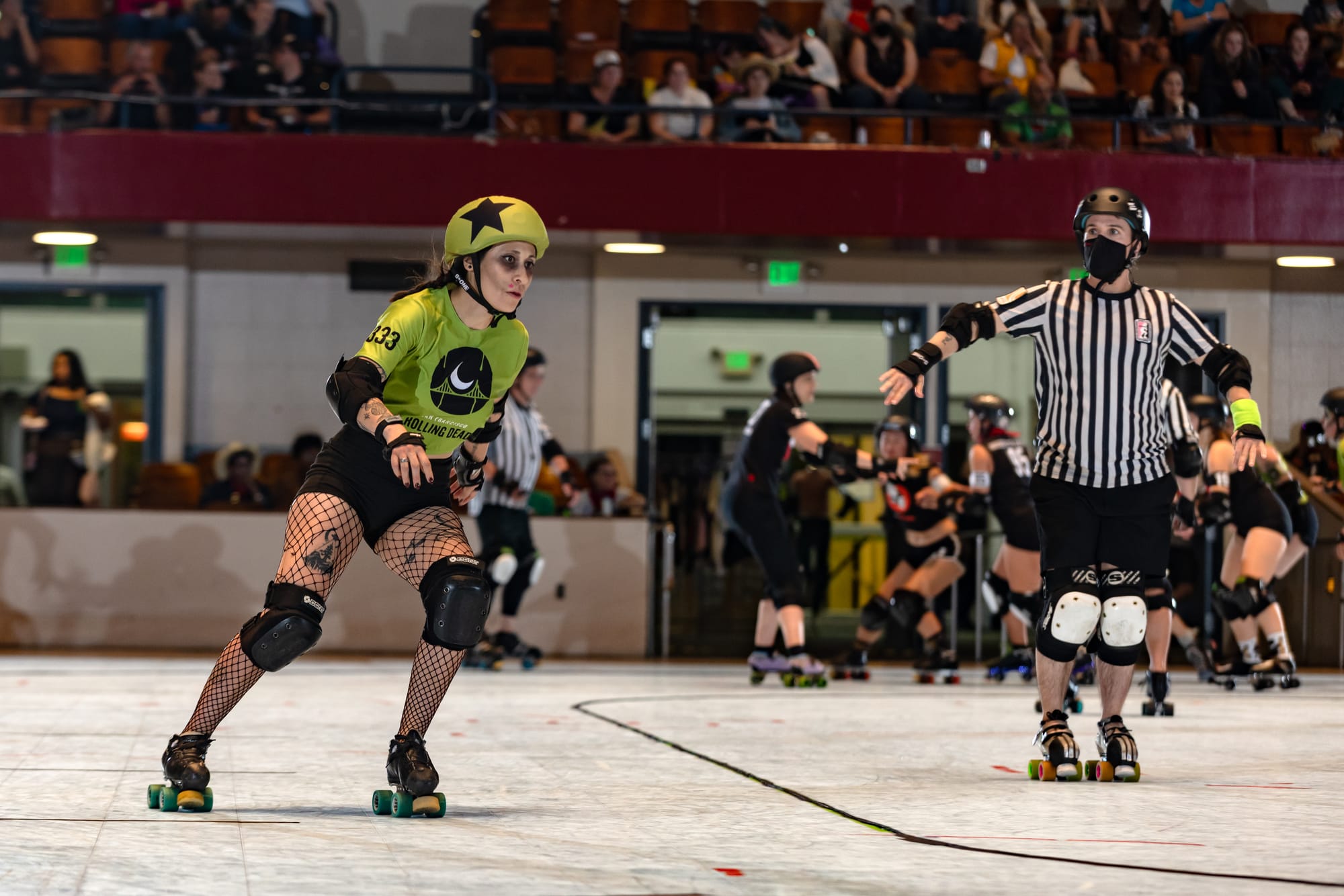
Another thing that makes derby different from other sports, Queene says, is the way it strikes a balance between intensity and that radically welcoming community. "It's such a unique experience. On the track people are so intense, so competitive, but the second that we step off the track we're able to be like 'oh my gosh you totally knocked me the fuck out. That was amazing. Show me how to do that.'"
If you're a competitive weirdo who has never found a sport you loved, or if you're a sports lover who wishes you could find something a little less gendery, then derby is worth checking out. “It’s a real ass sport,” says Ringo Scarr.
Even if you're not in the market for a new team to root for long-term (commitment issues?), derby bouts are fun as hell to attend. Plus, you won’t be the sole person who’s there for the first time. "Don't be intimidated," says Queene. "Come with an open mind. Somebody there will take care of you."
Who are the local derby teams?
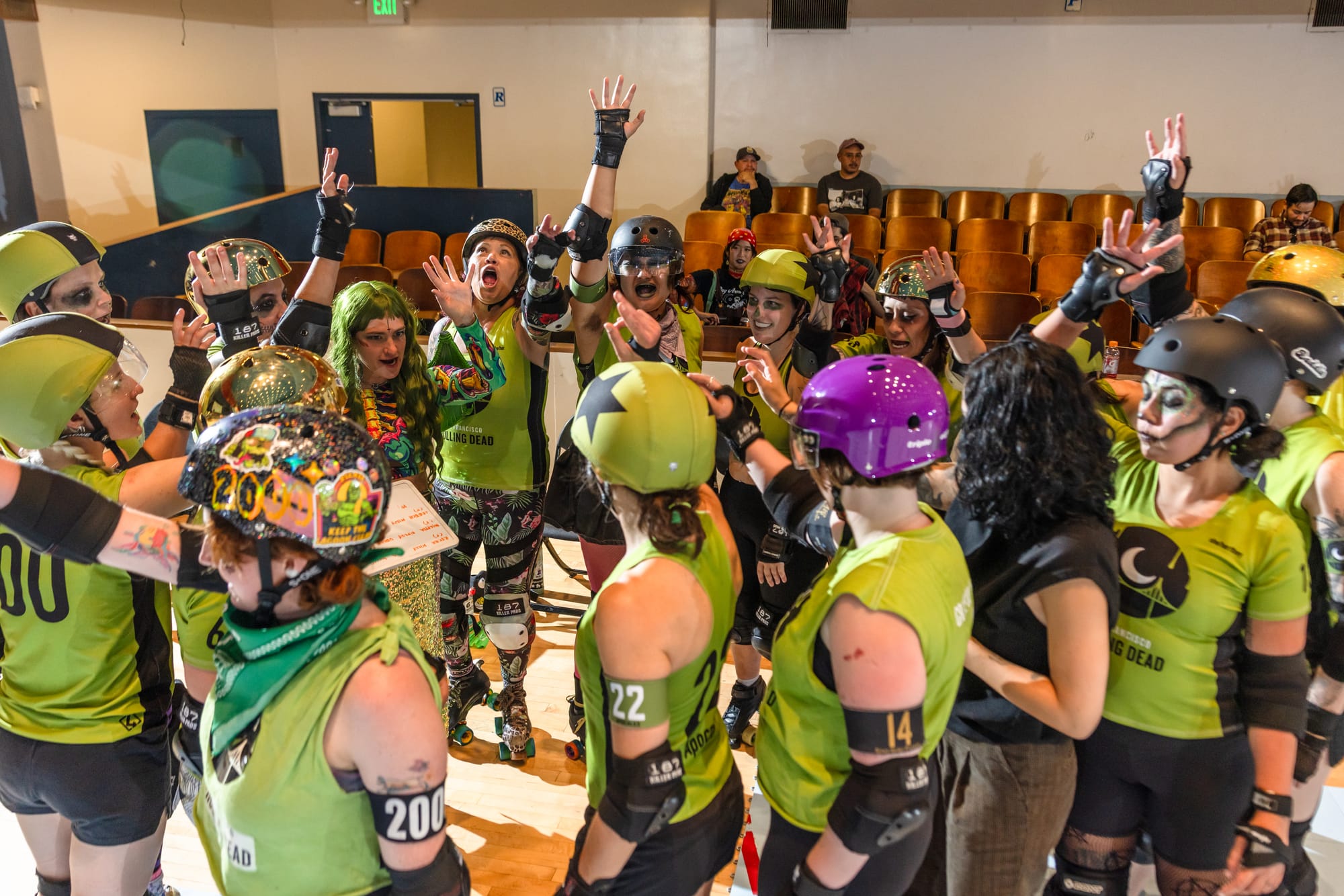
In the Bay Area, there a bunch of different organizations that field teams you can root for which include:
- Bay Area Derby (BAD) fields two home teams: the Oakland Outlaws (cowboy-themed) and the San Francisco Rolling Dead (zombie-themed). There’s also a travel team, composed of the top skaters, called the BAD All-Stars.
- In the North Bay, you can cheer for the North Bay Derby home team.
- On the peninsula there is Peninsula Roller Derby in Burlingame, which has a home team and a travel team called Slam Andreas.
- The Carquinez Quad Squad fields a home team in Solano County.
- Monterey Bay Roller Derby hosts two teams: Beasts of Eden and Cannery Rollers (shoutout to Steinbeck).
What are the rules?
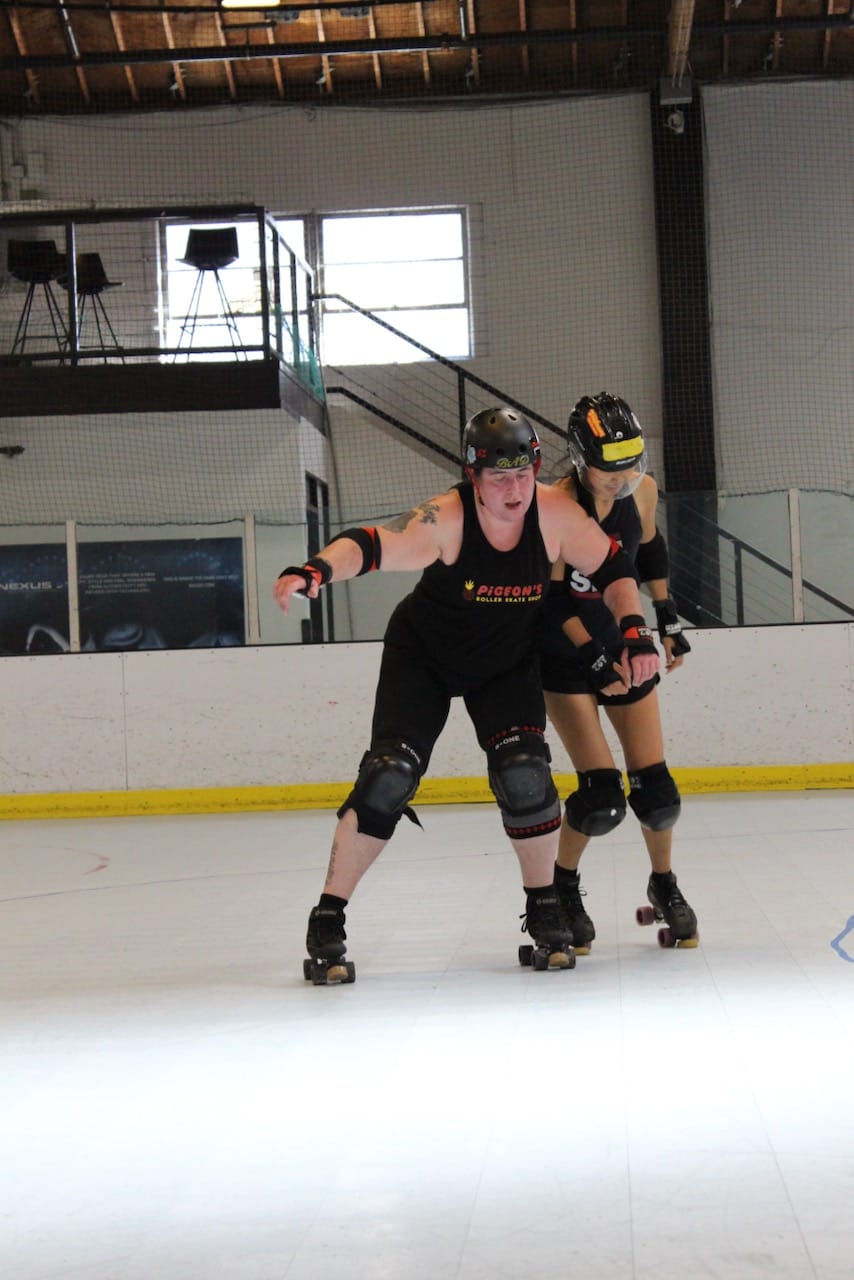
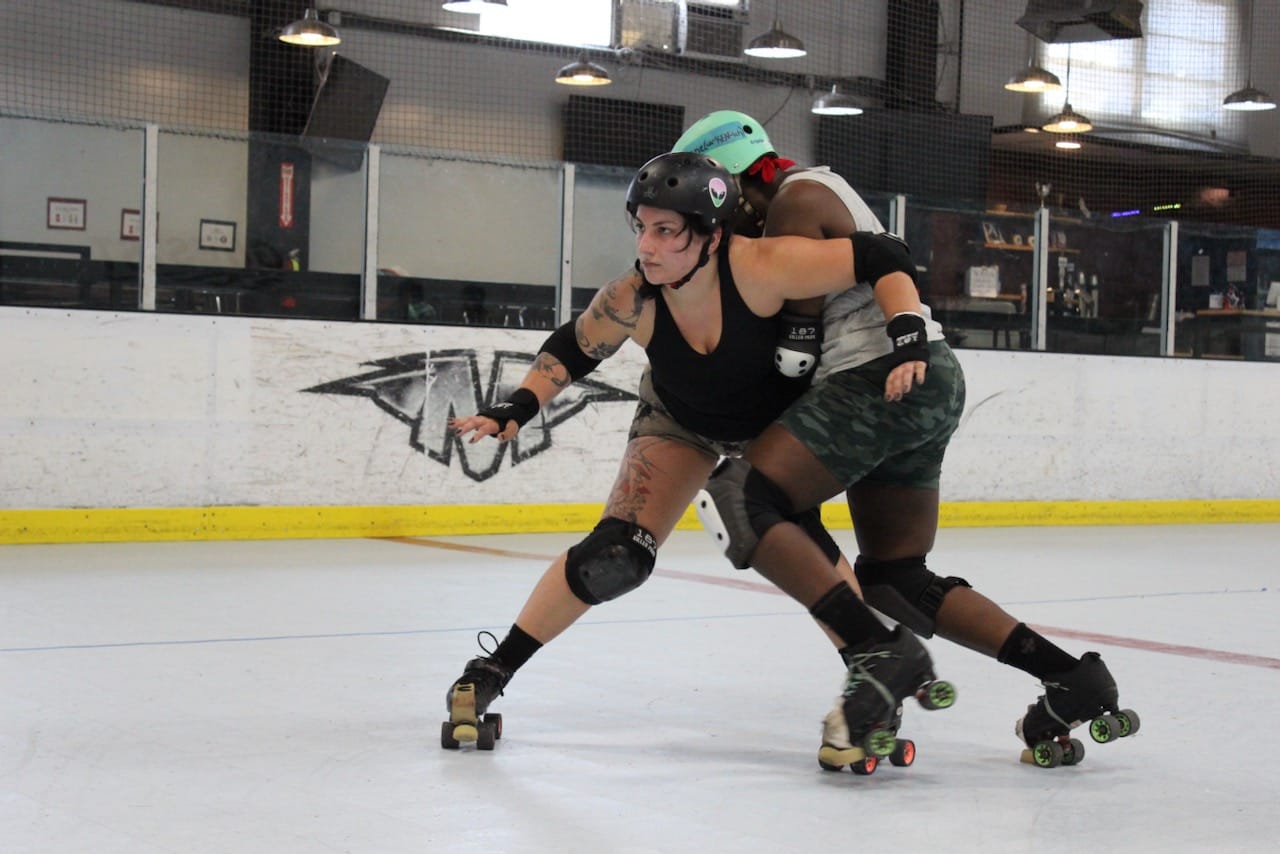
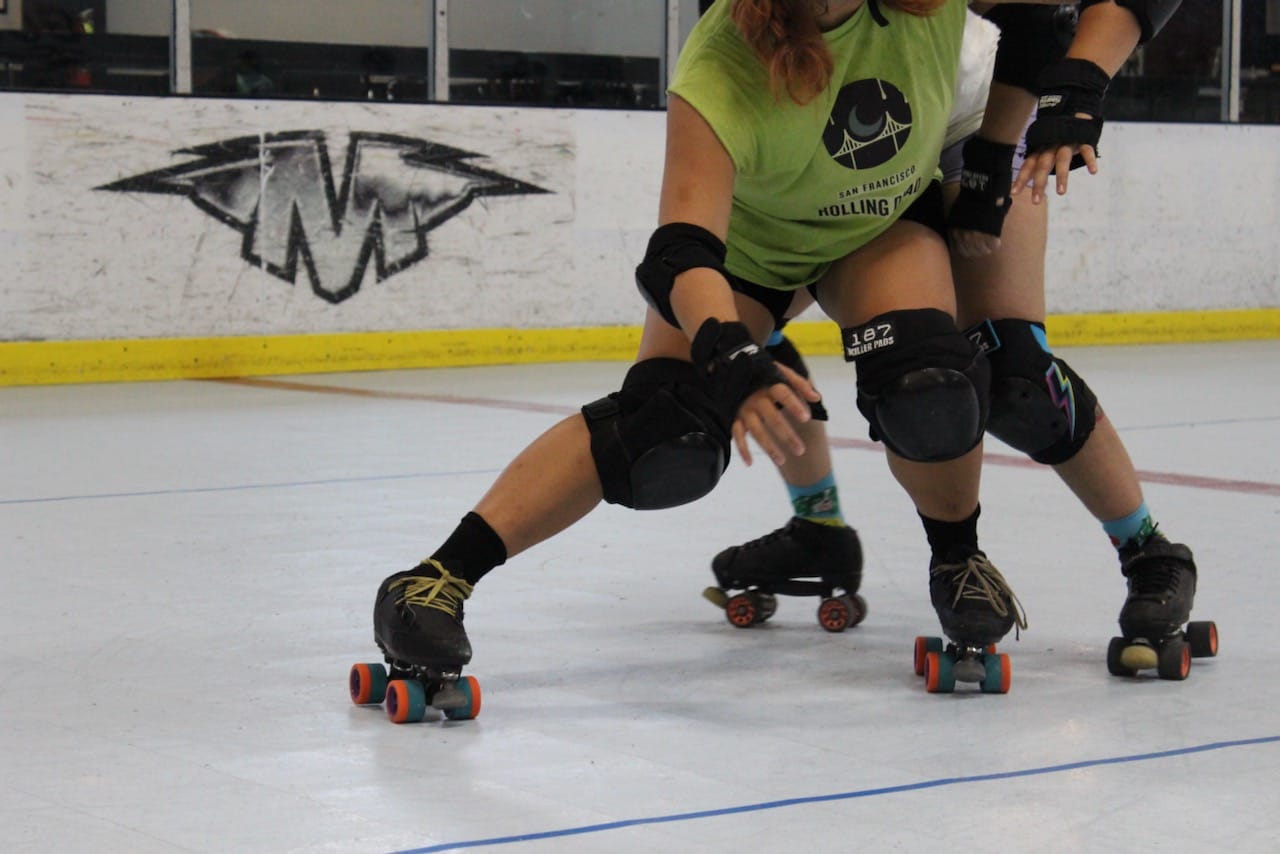
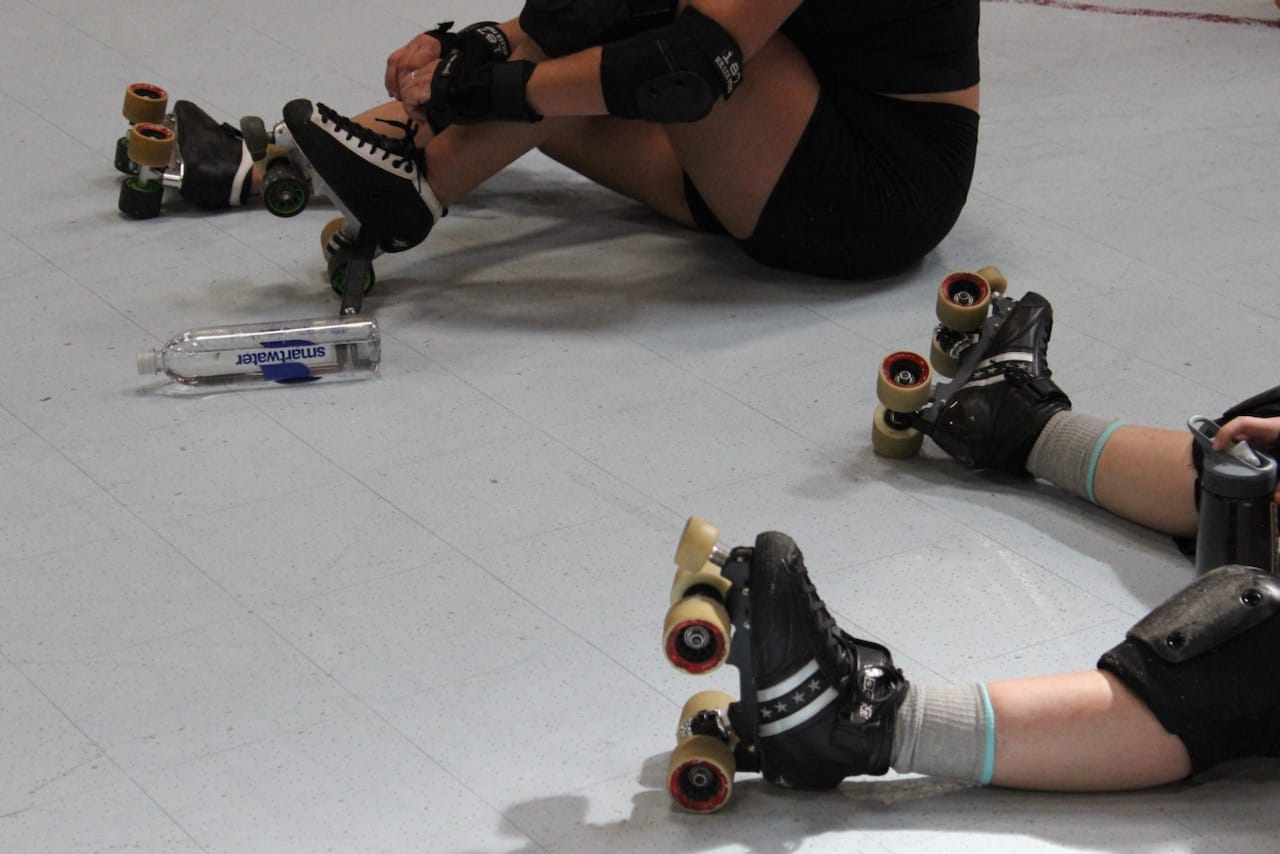
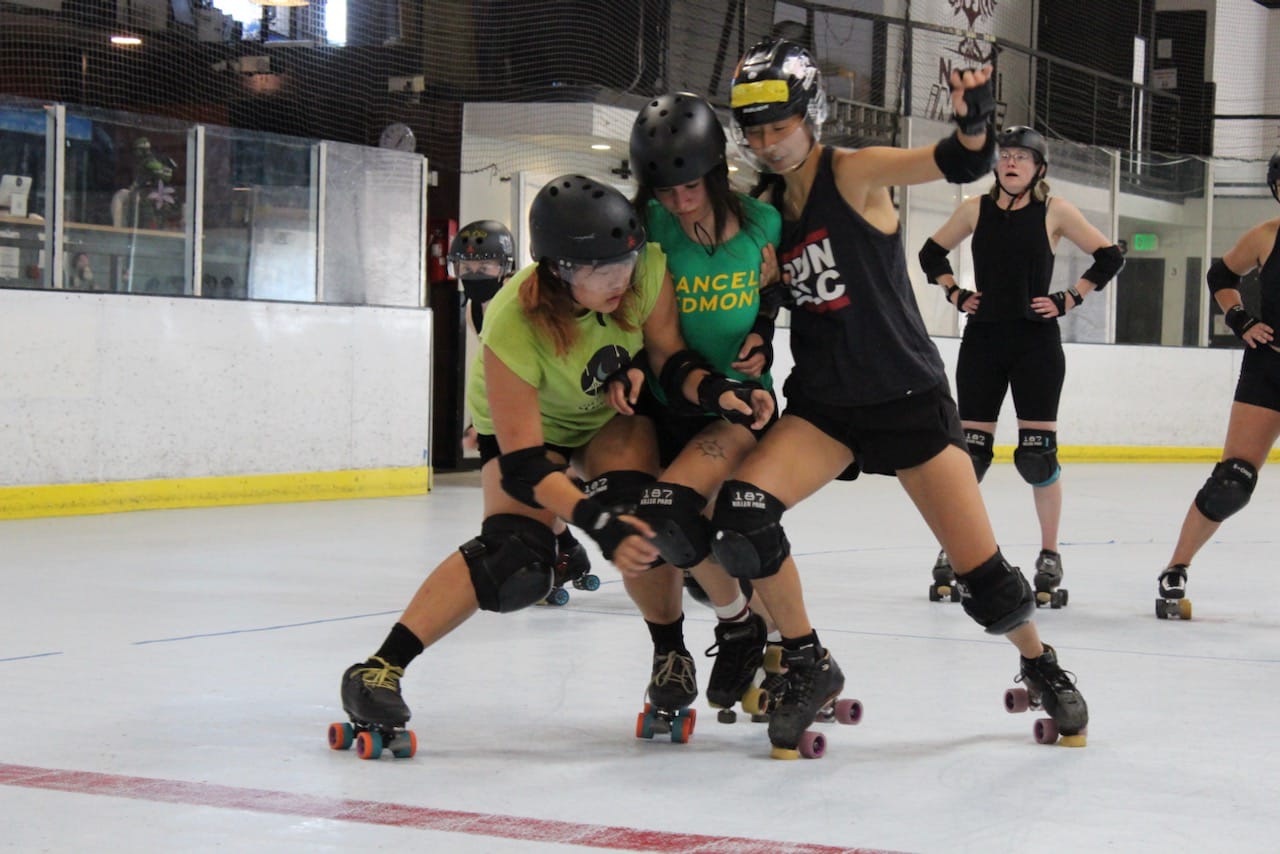
Bay Area Derby skaters practice different forms of blocking and jamming at Norcal Inline in Oakland. (Reo Eveleth/COYOTE Media Collective)
Like any sport, roller derby has plenty of technical rules. But the key things to know are: Each team puts five skaters out on the track at a time. Four of them are "blockers" whose title describes exactly what they do. The fifth skater on each team, noted with a big star on their helmet, is a "jammer." The sport's entire premise is that the jammer needs to get through the blockers, and skate past members of the opposing team. For every opponent they lap on the track, they score a point.
Each "jam," or unit of play, is two minutes long. A jam starts with both teams skating as a pack, trying to get in each other’s way to get their jammer ahead. The jammer who gets out of the pack first gets to start scoring by skating and trying to dodge and zip past the blockers. If that jammer gets stopped, and the other gets ahead, they get to start scoring for their team.
When in doubt, watch the people with the stars on their helmets — those are the people who can score. At some bouts, they'll put the jammers up on the scoreboard so you can scream for them by name.
Roller derby is a full contact sport, but it doesn't mean anything goes. Tripping and hits to the head, back, elbow and below the knees are illegal. Skaters who break these rules are sent to the penalty box.
I’m in. How do I watch derby in the Bay Area?
Some bouts are livestreamed, but most of the time, the only way to see roller derby is in the flesh. There are two bouts this weekend you can go see.
When: Oct. 25th. Doors at 12:30 p.m. Double header: first bout at 1 p.m., second bout at 3 p.m. Doors close at 5:30 p.m.
Where: McCormack Hall, Solano County Fairgrounds (900 Fairgrounds Dr, Vallejo, CA). Afterparty from 6-9 p.m. at Mare Island Coal Shed Brewery (50 Nimitz Ave, Vallejo, CA).
Who: Carquinez Quad Squad vs. Bakersfield, followed by a mixer bout of "Tricks" vs. "Treats." Tickets here.
When: Oct. 25th. Doors at 4 p.m. The Bay Area Derby Seeds (youth team) scrimmage takes place at 5 p.m.; main bout begins at 6 p.m.
Where: Richmond Memorial Auditorium (403 Civic Center Plaza, Richmond, CA).
Who: Oakland Outlaws vs. San Francisco Rolling Dead. Tickets here.
Then, don’t miss the next double header in the North Bay:
Where: Grace Pavilion at Sonoma County Fairgrounds (1350 Bennett Valley Road Santa Rosa, CA). Afterparty starts at 8pm at Shady Oak Barrelhouse (420 First Street, Santa Rosa, CA).
Who: North Bay Derby Charter Team vs. Peninsula Roller Derby: Slam Andreas and then a mixer bout of Werewolves vs. Vampires where teams mix it up based on their chosen monster-y identities. Tickets here.
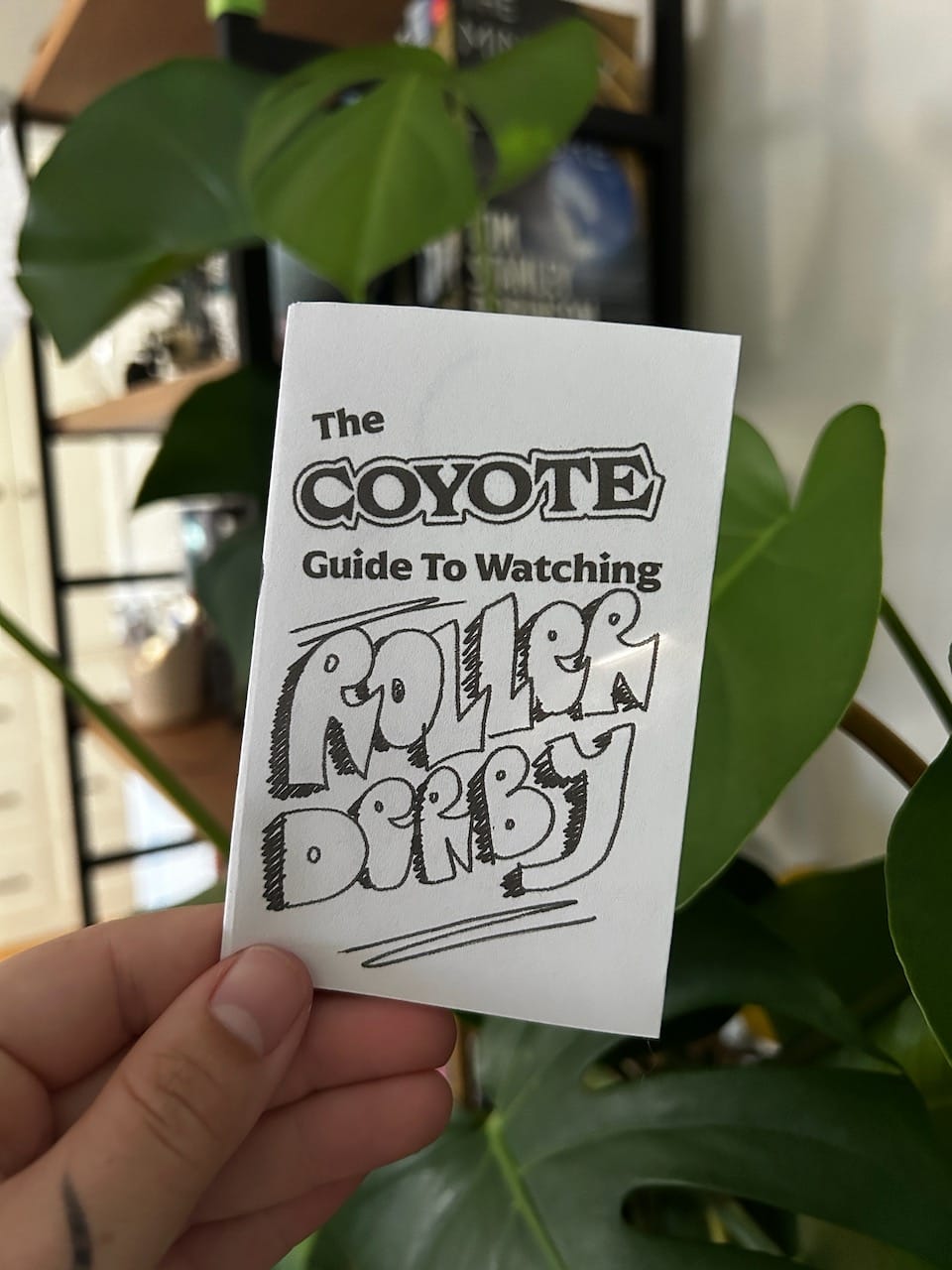
Need a cheat sheet? We got you. Print this little zine and you'll have everything you need to know for your first (or 20th) roller derby bout. (For more on how to make and fold zines, go here.)
