I’m Supposed to be Visible Today — But Why?
Every year I wonder if visibility and joy are the same thing. And every year I am more and more convinced that the answer is no.


Every year I wonder if visibility and joy are the same thing. And every year I am more and more convinced that the answer is no.

With new EP ‘Invidia’ and two more on the way, the San Francisco musician and prolific collaborator comes into his own as a solo artist.

On making friends with maps and Marxists.

What is queer food? Danny and Soleil go to Deluxe Queer to eat and find out what “queer food” is.


Soleil: Nearly every essay that I have read about queer food begins with the question, “What is queer food?” so I will oblige with a bit of context.
James Beard biographer John Birdsall shot the first volley of such a concept with his 2014 essay on the gay progenitors of new American cuisine, titled “America, Your Food Is So Gay.” For Birdsall, who expanded the piece into a whole book earlier this year, the queerness of food is all about context: who’s cooking for whom; where they’re doing it; and why. Queer food is the cannabis brownie dropped off at the doorstep of a person living with AIDS; it’s the composed salad that conceals the closeted garde manger cook’s flashes of rage and frustration within its tangles of frisée.
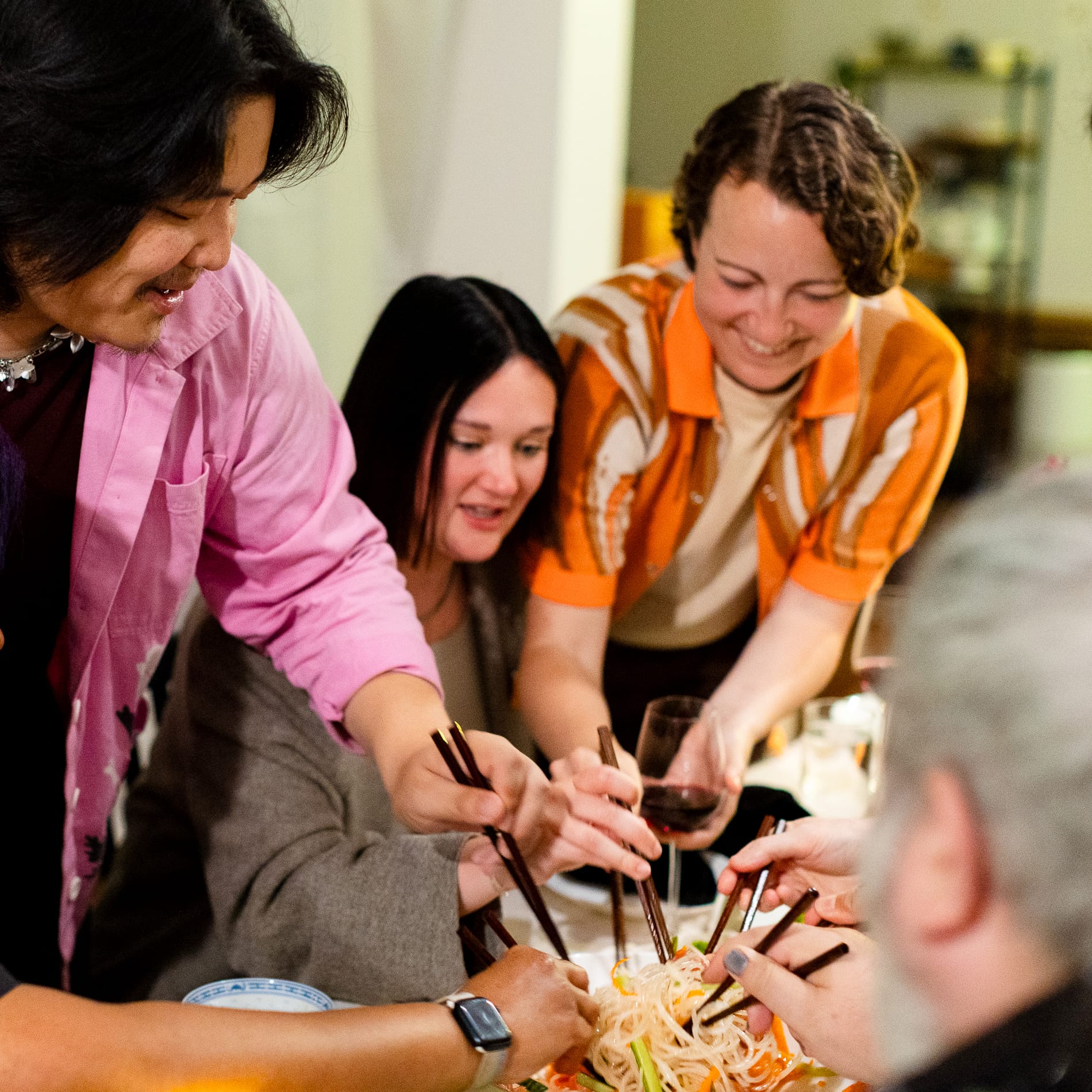

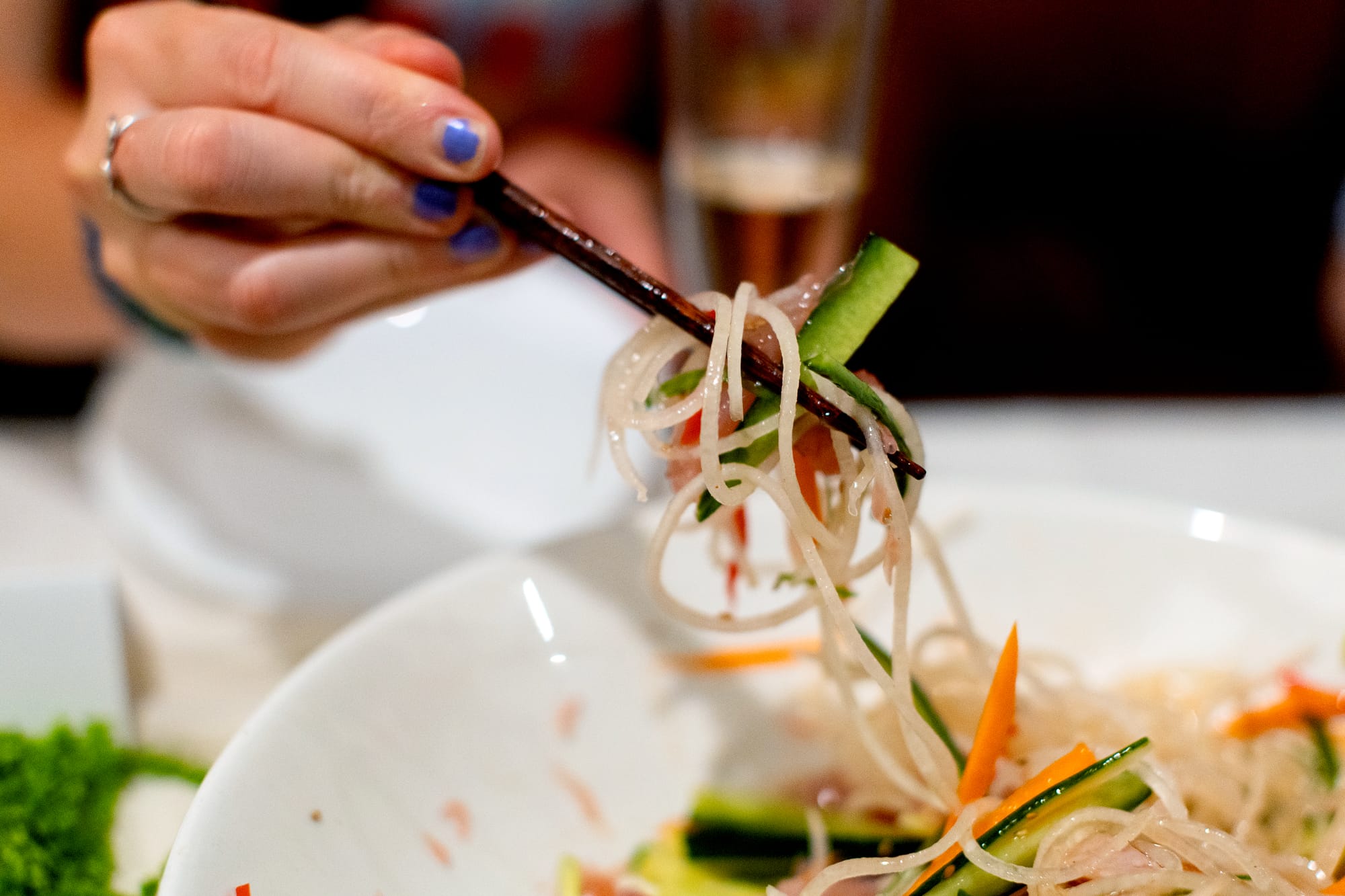
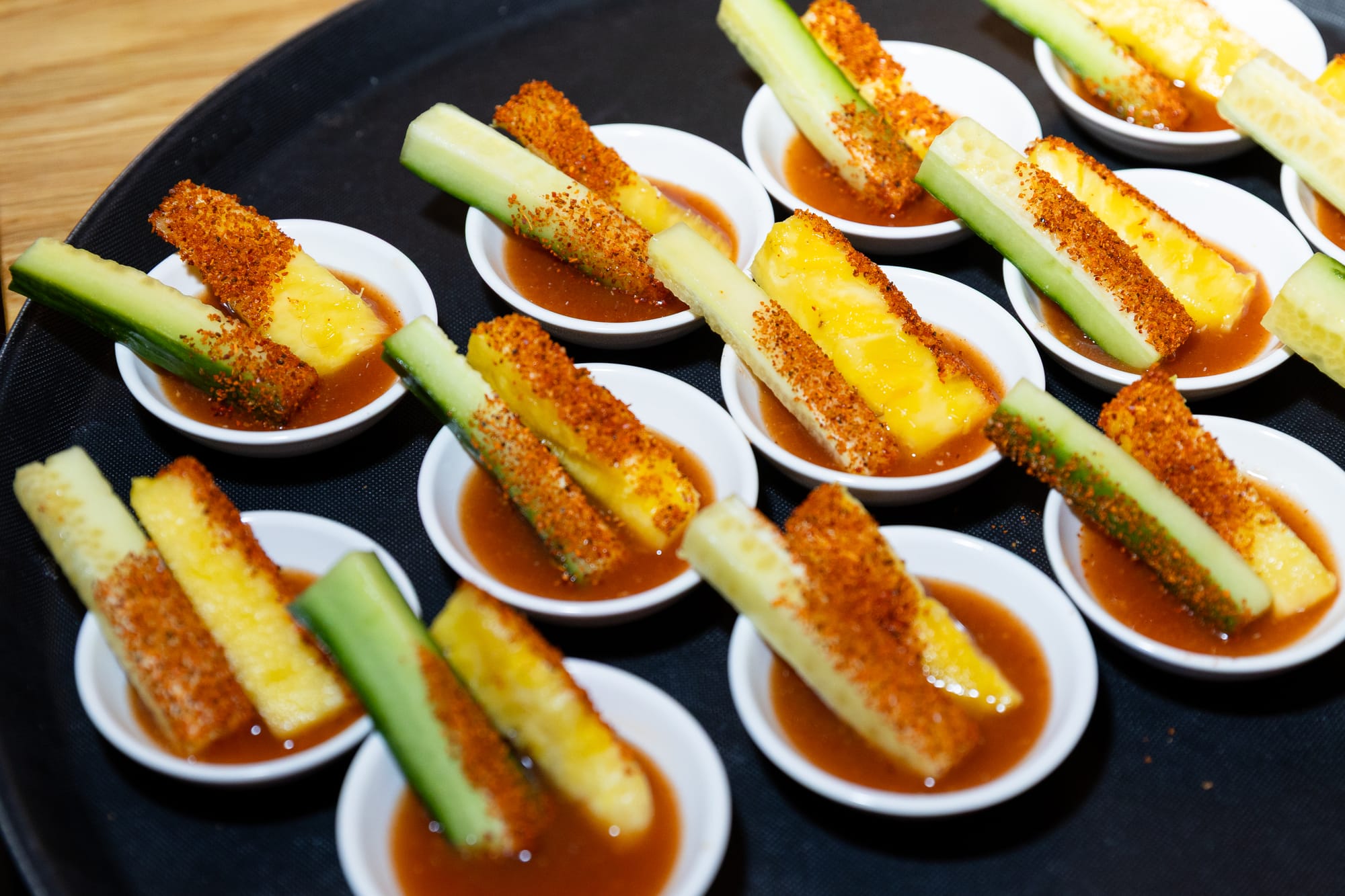
Sean Ang, left, chef and founder of Deluxe Queer, serves Lo Hei and small bites during a Deluxe Queer dinner. (Estefany Gonzalez/COYOTE Media Collective)
In a 2018 article for Eater, trend writer Kyle Fitzpatrick continued Birdsall’s initial thread: “The one thing queer food isn’t is a rainbow cupcake …. It is less about what is literally eaten, but it’s more than just the presence of queer people at the table. Queer food is the food of a temporary utopia, one where unexpected eating styles and culinary creativity thrive, where things that seem too weird to work actually do.”
Queer food is having a persistent moment, serving as a conceptual foothold for so many branching paths in the culinary world. You have Queer Soup Nights in Sonoma, Portland, and Queens; a whole-ass Queer Food Conference, now entering its second year; and even a christening, three years ago, of Oakland as “the queer food capital.” (It’s also worth noting that the strongest example in Oakland, Friends and Family, plans to shutter in December.)
Is that clear enough? Probably not. Some may still be vexed by queer food in the way that I’m personally vexed by a beautiful person who I’m not sure is flirting with me or not. What are you about? What did you mean by that? Why did you touch my shirt? Where do we go from here?
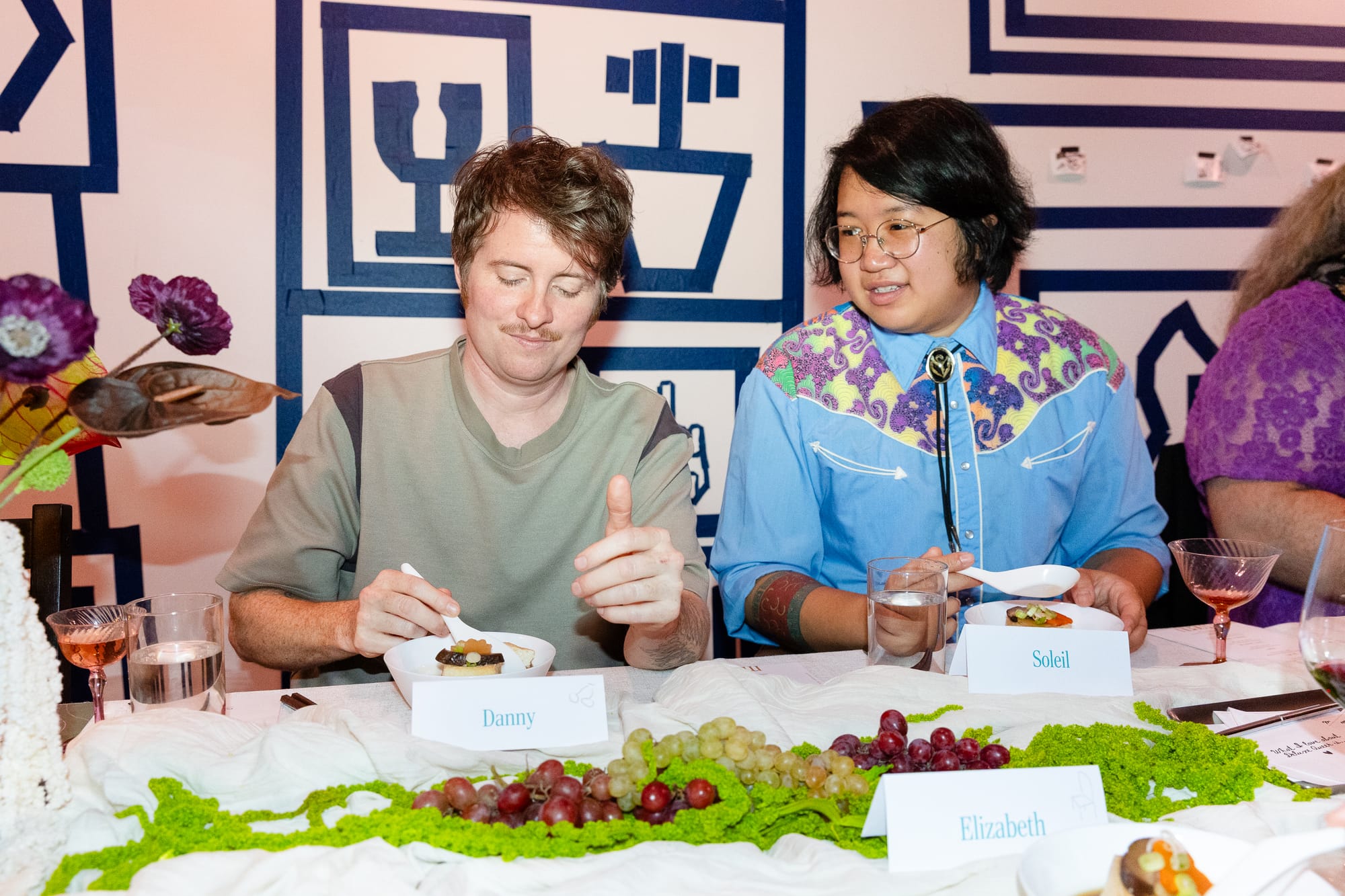
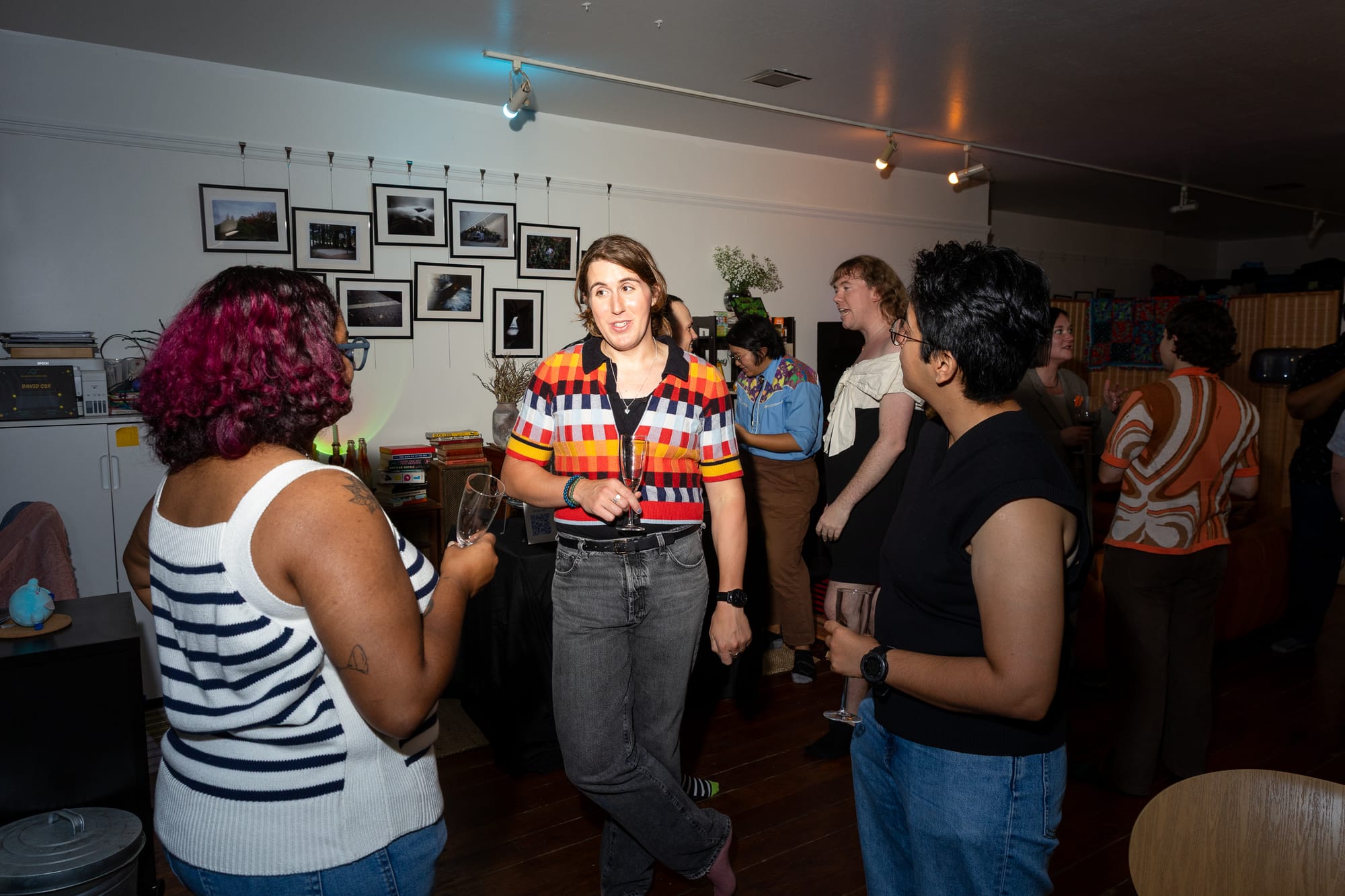
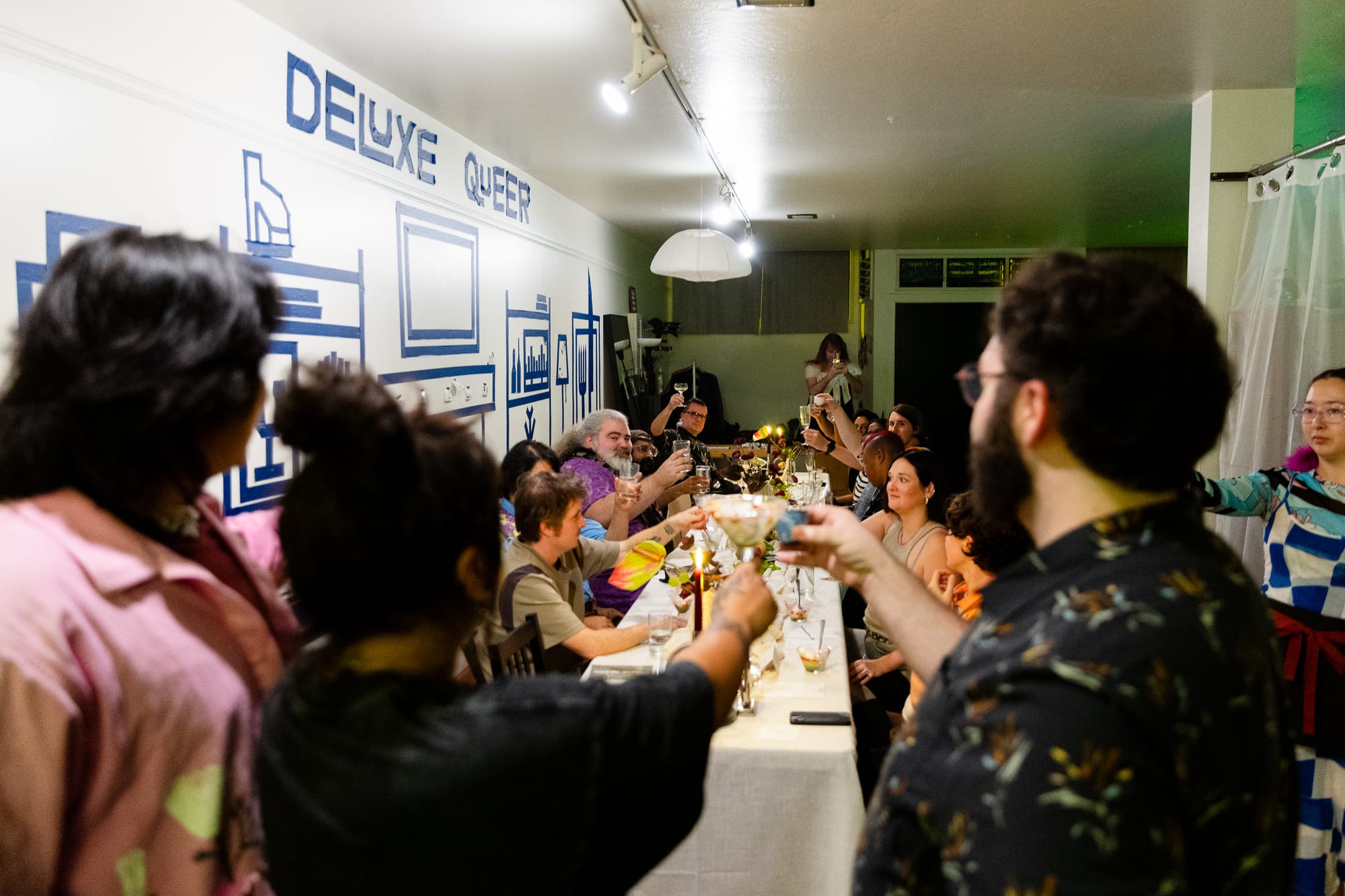
In pursuit of clarity I took my colleague Danny Lavery with me to Deluxe Queer, an Oakland-based collective that’s been throwing roving, themed dinner parties for queer people for the past three years.
We brought a bottle of the finest non-alcoholic bubbly on the market (Heinz Wagner’s Pinot Noir Rosé), our winningest smiles, and a shared desire to get to the bottom of this question. (And question some bottoms.)
To set the scene: Danny is handsome, roguish, killer smile, 5 foot 8, eats like a king in a medieval movie, lightly skeptical about the “queer food” concept but equally ignorant of its provenance; therefore willing to be convinced. (Soleil is exactly the demographic targeted by Deluxe Queer and is, in fact, 5 foot 9.)
Danny: I don’t understand why “queer food” would have “less to do with what is literally eaten.” Wouldn’t it just be “queer people getting together,” in that case? And for all that I love and appreciate queer people, I bristle at the idea that we have some sort of monopoly on uniqueness. Doesn’t everybody have to eat? Don’t they all eat in context, and for a variety of complicated reasons?
Listen, I like the idea of meeting gay people and eating together. I just think a gay dinner party is something real and discrete, and “queer food movement” feels so much squishier. That said I did really enjoy having dinner with a lot of gay people I’d never met. More than I thought I would, even!
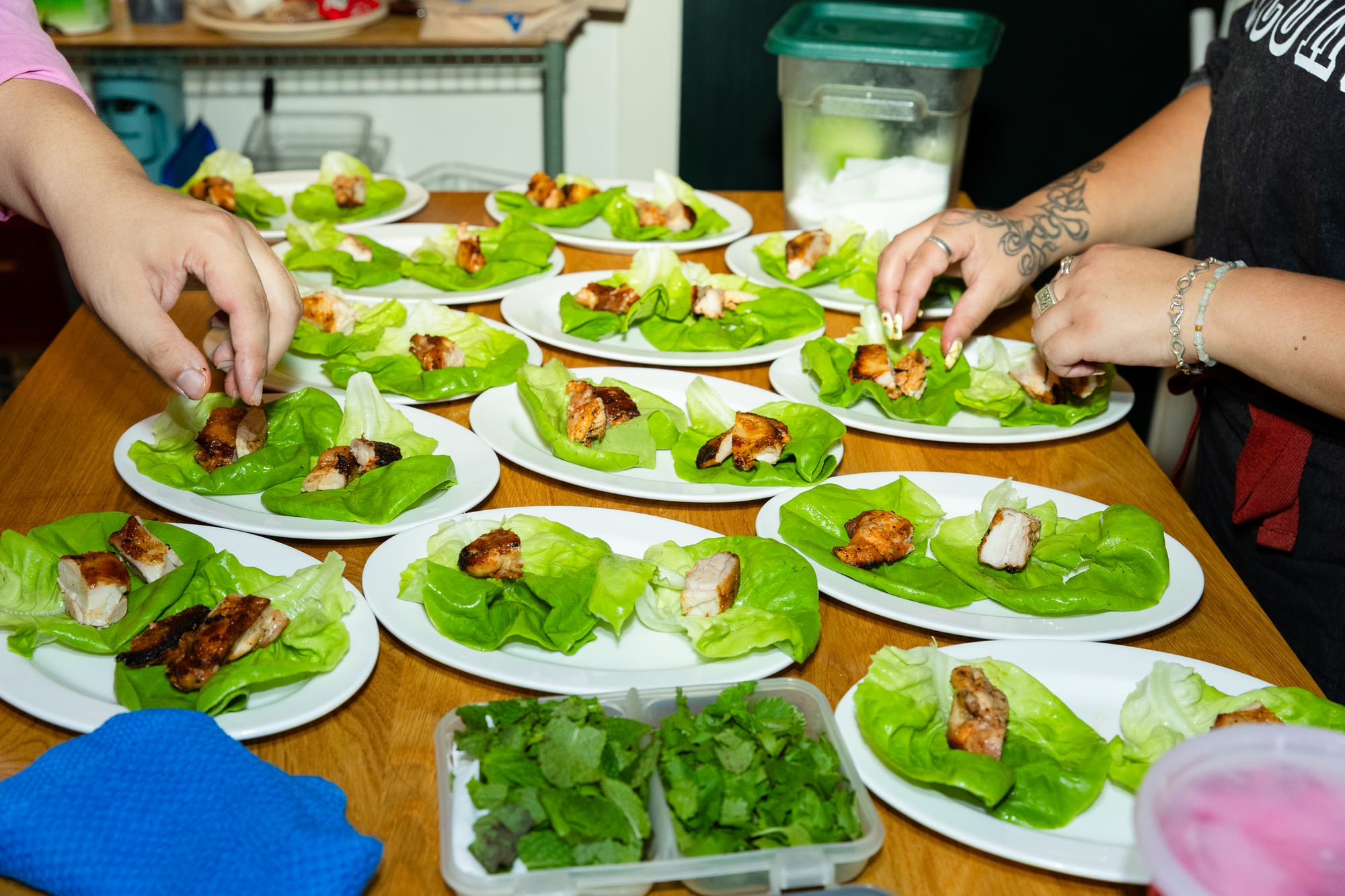
Soleil: On to dinner. I’ve been going to Deluxe Queer for a while now, and big-picture conceptual nitpicking aside, it’s always a banger of a meal.
Danny: I liked everybody who’s a part of DQ. I can certainly appreciate queer food as a marketing strategy, and if it helps them make money, I’m all for it.
Soleil: Deluxe Queer co-founder Sean Ang has described the team’s approach to food as “third culture” — and in execution, that means an Asian American-liminal they/them-both/and sensibility that includes things like chocolate cake with five-spice cream and Chinese-style tostadas on scallion pancakes. Last year, a Lunar New Year dinner included platters of toothy handmade dumplings and poached chicken coated in a savory-salty dressing of ginger-scallion oil. At a Pride dinner hosted this past June at Understory in Fruitvale, the people at my table had a good-natured brawl over the last bits of garlicky, annatto-tinged rice in the family-style bowl.
It’s nice to have a concept to describe the ineffable difference in gathering outside of a heteronormative setting! It’s nice to have a cute and flirty time over dinner as you’re stirring family-style platters of veggies and sashimi together, and maybe hyperfocusing on the gorgeous spiciness of the mustard on the mushroom char siu bao because everyone at the table is so adorable! I have no idea what to do with myself at these things. I’ve made real friends at Deluxe Queer, and I do love it!

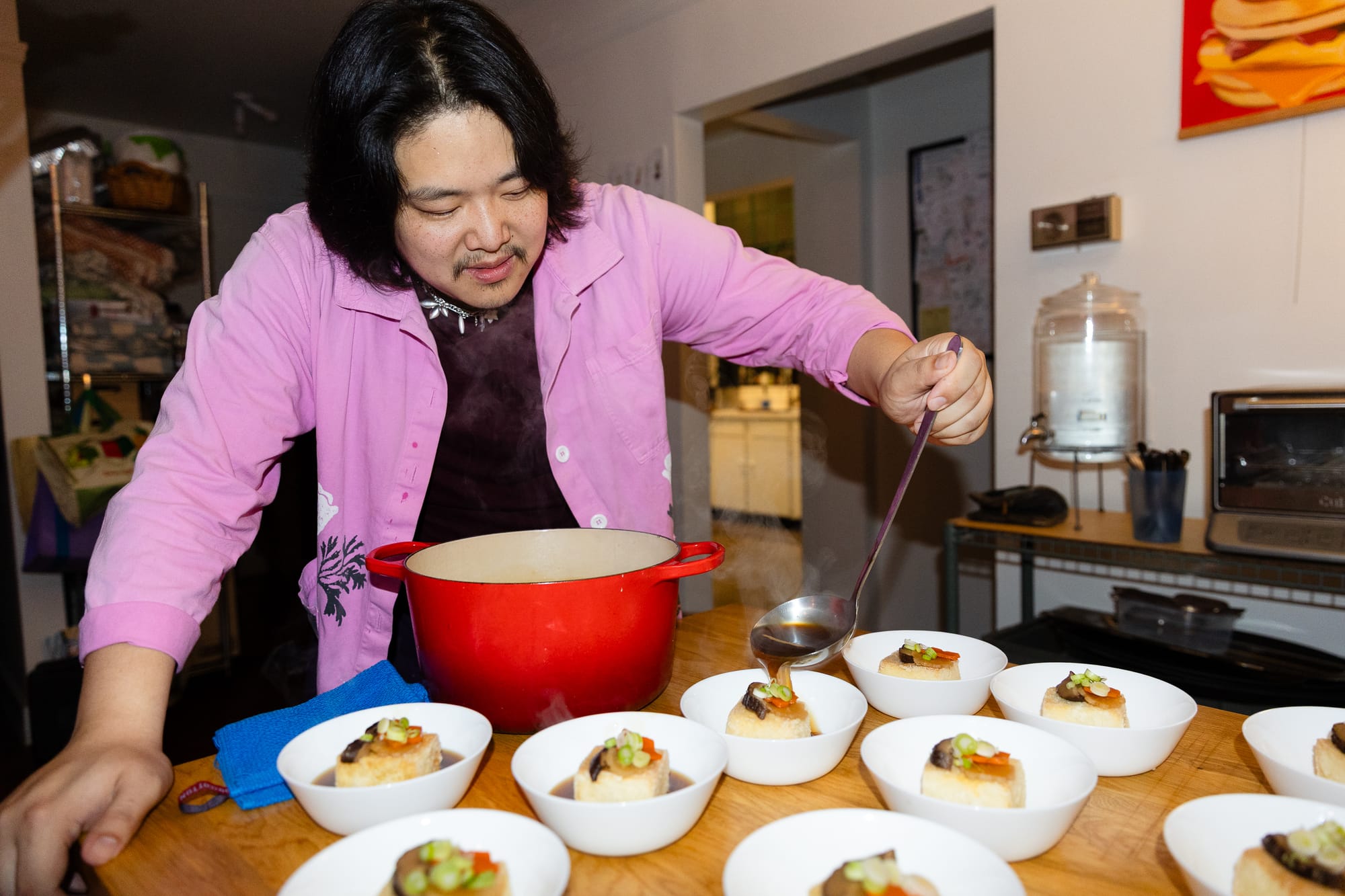
Sean Ang, chef and founder, makes soup with fried tofu, vegetable dashi. (Estefany Gonzalez/COYOTE Media Collective)
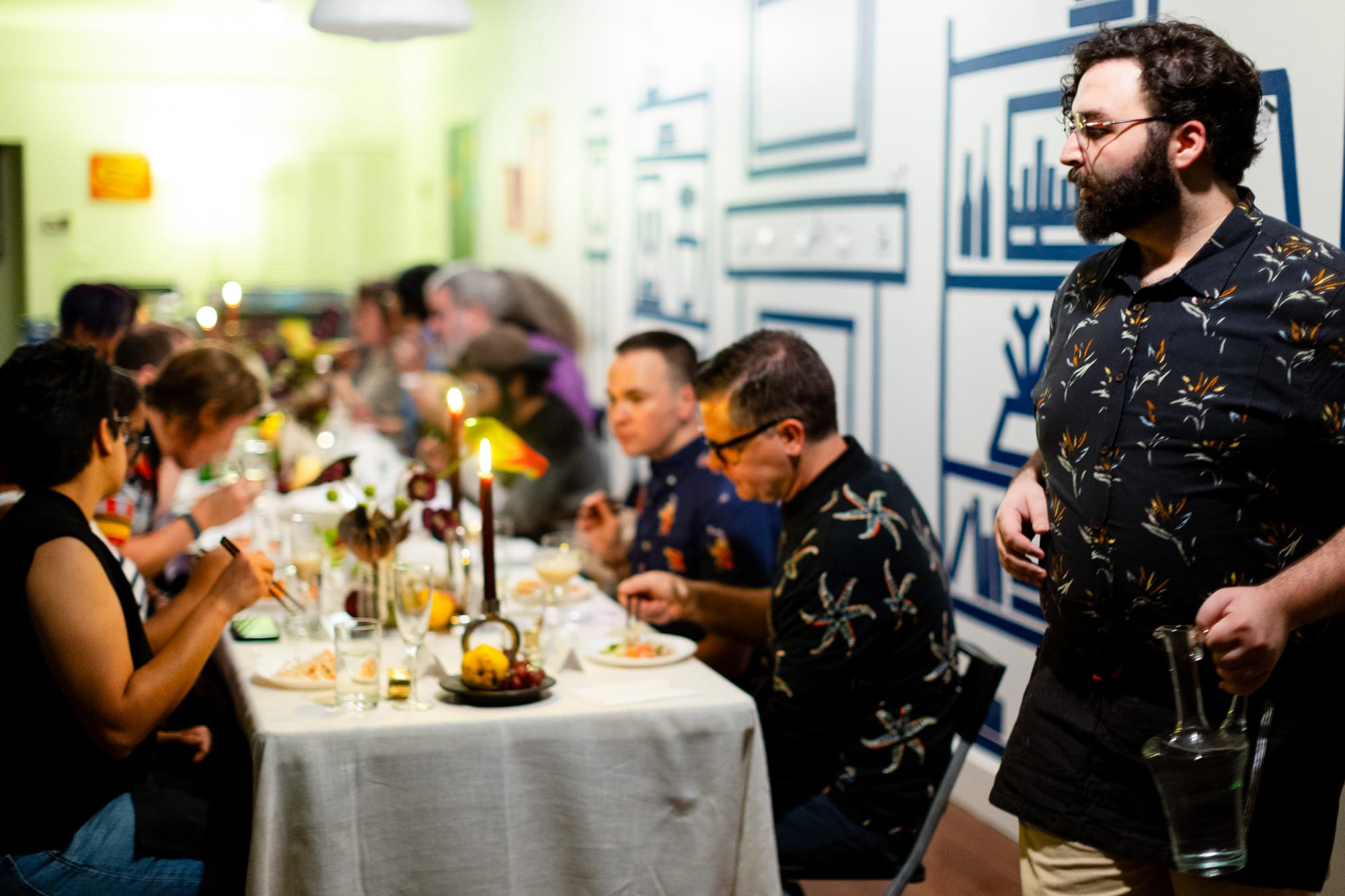
Danny: I think a straight person could have easily eaten any or all of this menu though. I don’t think it was beyond a straight person’s conception. And I do get that it’s nice to have a place for gays to get together besides bars, nightclubs, bathhouses, and community centers. I like places! “Restaurants for gay people” is a cool idea!
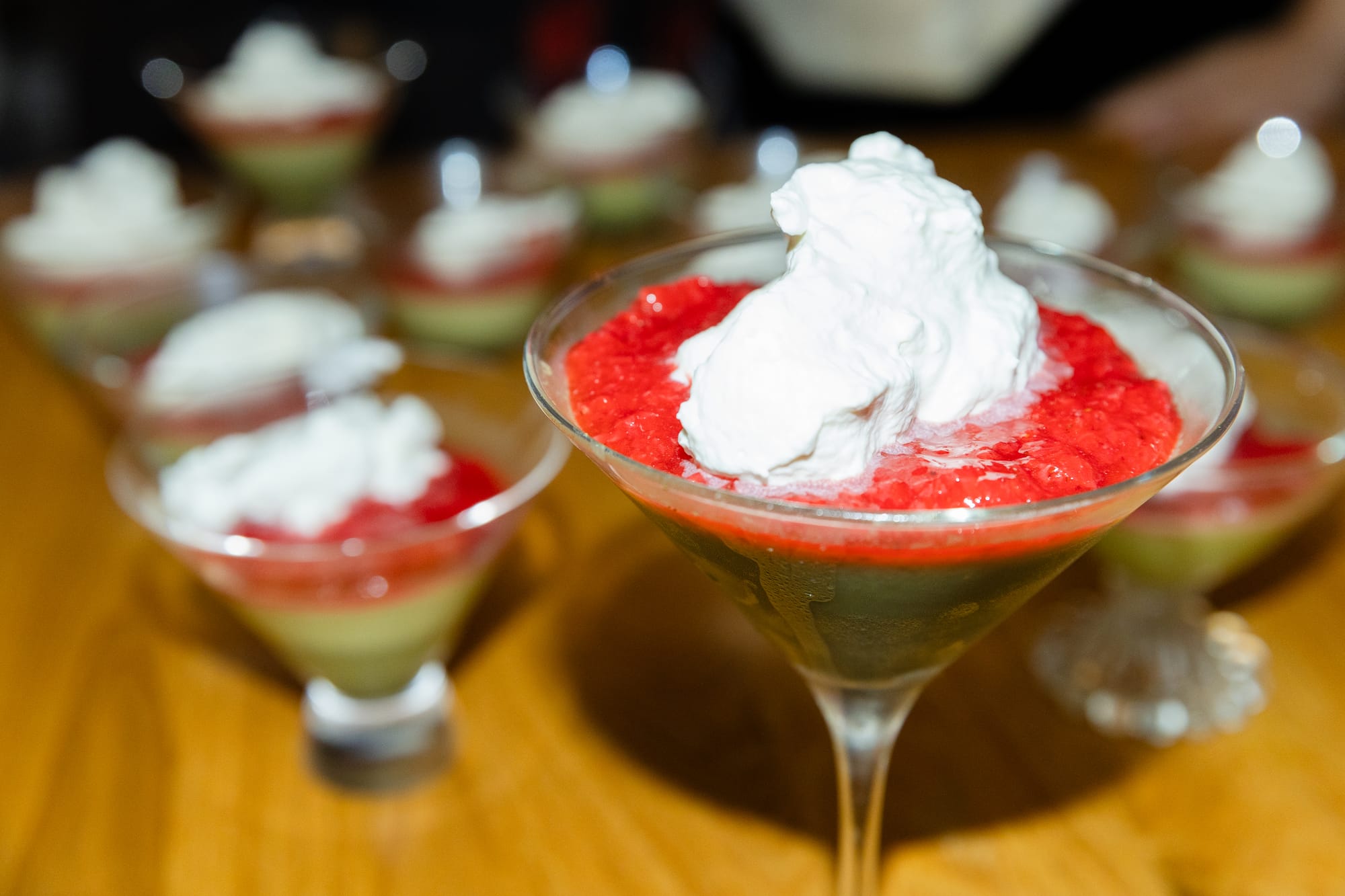
It just feels a little bit like it’s trying to avoid evaluation. If it’s more about community than it is about food, then what kind of dick would criticize community? But the salted chantilly cream was just way too salty in the dessert. I’ve never left whipped cream behind on a plate in my life, and I left most of it that night. It feels like “queer food” is so often pop-ups and community-based and sort of “this doesn’t really count as a serious business; this is a fun thing we do once in a while for ourselves.”
As a marketing strategy, I guess I don’t object to the “queer food” taxonomy any more than I would object to, say, an “alternate history” section in the bookstore, but it doesn’t do much for me otherwise. Is the food good, or is the food important? I would rather the food be good!
Soleil: You do have a point there. When I started going to lots of restaurants in earnest as a critic, I did start thinking that “good” and “important” are two ends of a spectrum for mid- to high-tier concepts; that it’s helpful to separate the two instead of always conflating them. Yes, few people would doubt that Chez Panisse is important — but is it also good? You can acknowledge the gap, if there is one. I’d say queer food is important but not always good. It’s important to grab some fried potato tacos to get your energy up after a hookup at the bathhouse.
And to be less qualitative and more moral in my use of “good”: is queer food also what’s on the tables at the Human Rights Campaign galas where they’re awarding places like fucking Raytheon with gold stars? Would that also be queer-centered, and — eugh, god forbid — even a little flirty? If so, we should be open to queer food also having the potential for doing evil.
The question isn't whether food cooked by queer people for queer people exists. Of course it does. It always has. The question is whether naming it and celebrating it makes it more vulnerable to the same bullshit that hollows out every subculture once it gets a cute label and a marketing budget.
You can generate your own existential gay queries by following Deluxe Queer on Instagram. The pop-up is on a break until 2026 but is still open for private events.