


What Does Frida Kahlo Have to Do With the Bay Area? I Found Out in Mexico
A review of Mexico City's latest Frida Kahlo museum and a tangent about finding home away from home.

I’m riding a bus across Mexico, through the craggy, mountainous roads of Veracruz and the arid states of Puebla and Tlaxcala, into the not-so-photogenic outskirts of Mexico City’s megasprawl. It’s not my first time rolling along this specific route. For years, I’ve caught redeye flights from Oakland, landing in the Mexican capital at an ungodly hour to eat street tacos, then zagging over to my family’s hometown in Xalapa, near the Gulf of Mexico’s humid coastline.
Seeing this place each time is comforting: the indigenous fauna, the highway vendors with baskets of potato chips and homemade tortas, the nearby peak of Perote, and, on the clearest of afternoons, the Pico de Orizaba, Mexico’s tallest mountain and an active volcano. I’ve known this landscape since childhood, through my teenage years as a college student, and into my young adulthood as an aspiring wanderer. Even now, as a father with a skittish, open-eyed toddler at my hip, this still feels like home. Mexico’s warmth — its literal heat, but also its figurative embrace — has never failed to deepen my appreciation of being wholly American. My consciousness has been shaped by living, and observing how others live, on both sides of a contentious U.S.-Mexico wall. Being here is an unavoidable reminder of who gets to represent “America” and of what reality looks like for so many residents of this vast, complex continent that extends far beyond any singular politic or government entity.

I now live in Mexico with the privilege of dual citizenship. I’ve spent the past year renovating a house in Xalapa with my wife, away from the chaotic unraveling of the U.S.’s social, cultural, and economic fabrics. As Mexican Americans, we enjoy our days here with caring neighbors who invite us over for meals and revel in the simple gratitude of being present with each other. And of course, there’s an endless wealth of arts and culture. Mexico’s poets and artists — living and gone — have always grounded me, offering a sense of connection and balance.
Art is the reason why I’m on this five-hour bus ride into the heart of Mexico City, where Museo Casa Kahlo, a privately-owned museum featuring personal belongings of the renowned Mexican artist, Frida Kahlo, recently opened. I admit that upon hearing about the museum’s opening, I questioned: Do we even need another Frida Kahlo thing? In and around Coyoacán, the neighborhood in which Kahlo was raised, there are already three museums dedicated to Frida and her equally famous husband, the Mexican muralist Diego Rivera. The more popular Museo Frida Kahlo, or Casa Azul, is just around the corner. Having visited all of them over the years, I wanted to know if this latest museum — known as Casa Roja — was distinct. So just a month after its public inauguration, I stepped foot inside Casa Roja.
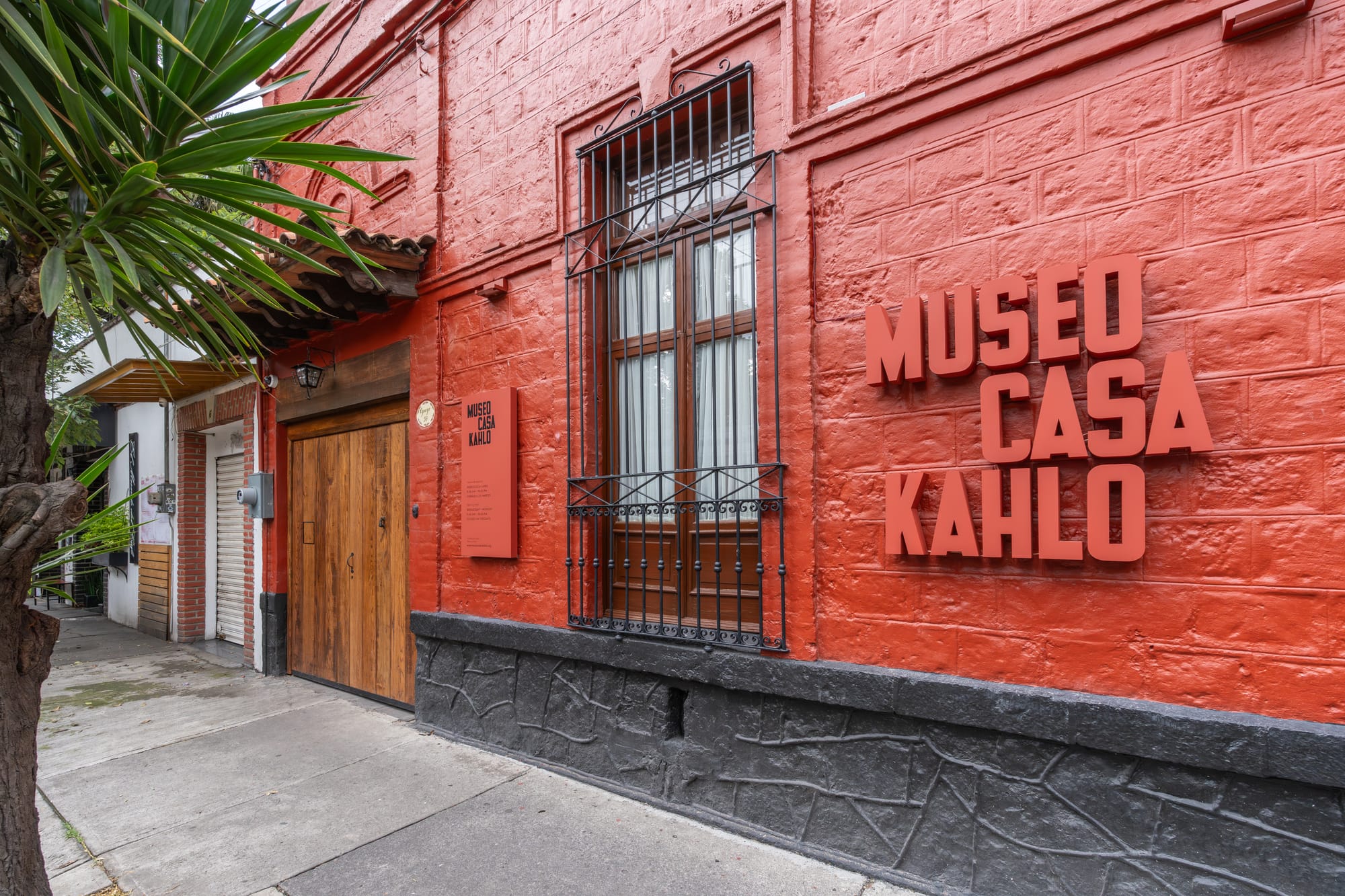
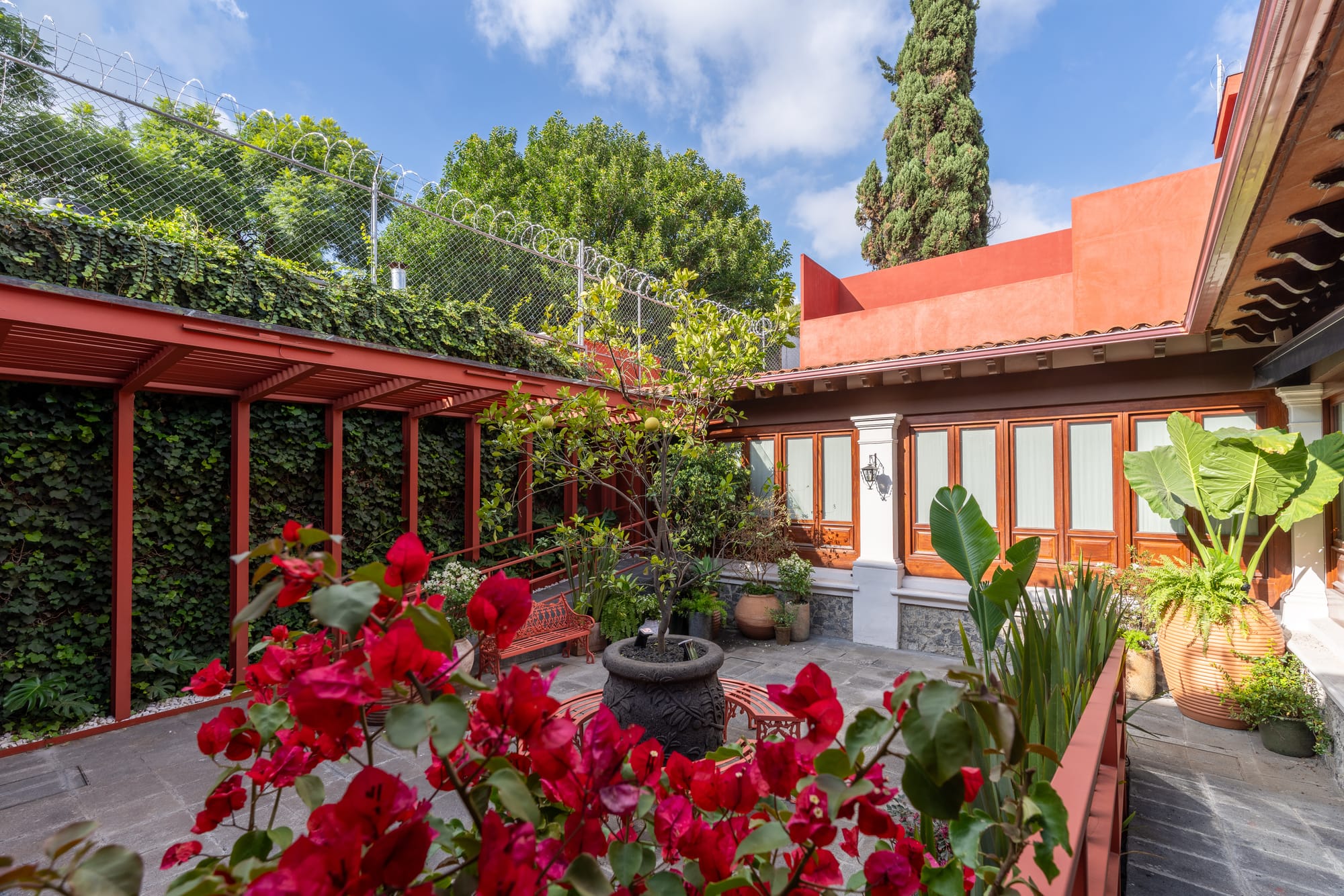
Left: Exterior of Museo Casa Kahlo, Right: Courtyard of the home-turned-museum, which is painted red to represent the heart of the family. (Courtesy of Museo Casa Kahlo)
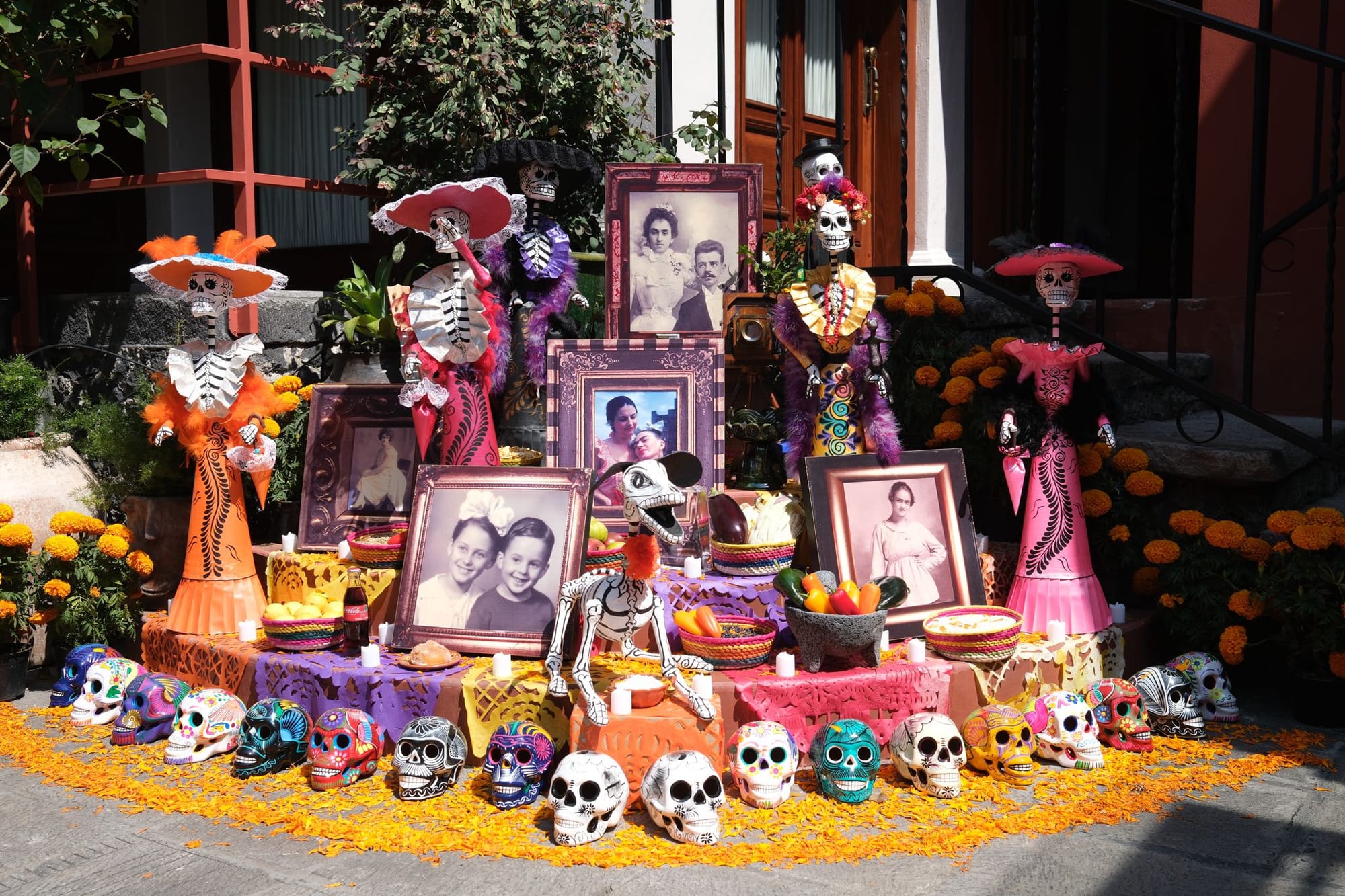
The surreal delirium of Día de Muertos weekend was the backdrop of my visit, enhancing the museum’s charm and mystique. A delicately arranged altar was assembled in the house’s sunlit courtyard in honor of Kahlo’s closest relatives. The red tones of the centuries-old building offered a binary contrast to the more globally popular Casa Azul — a museum that requires booking far in advance, since it’s rated as the most-visited museum in the city.
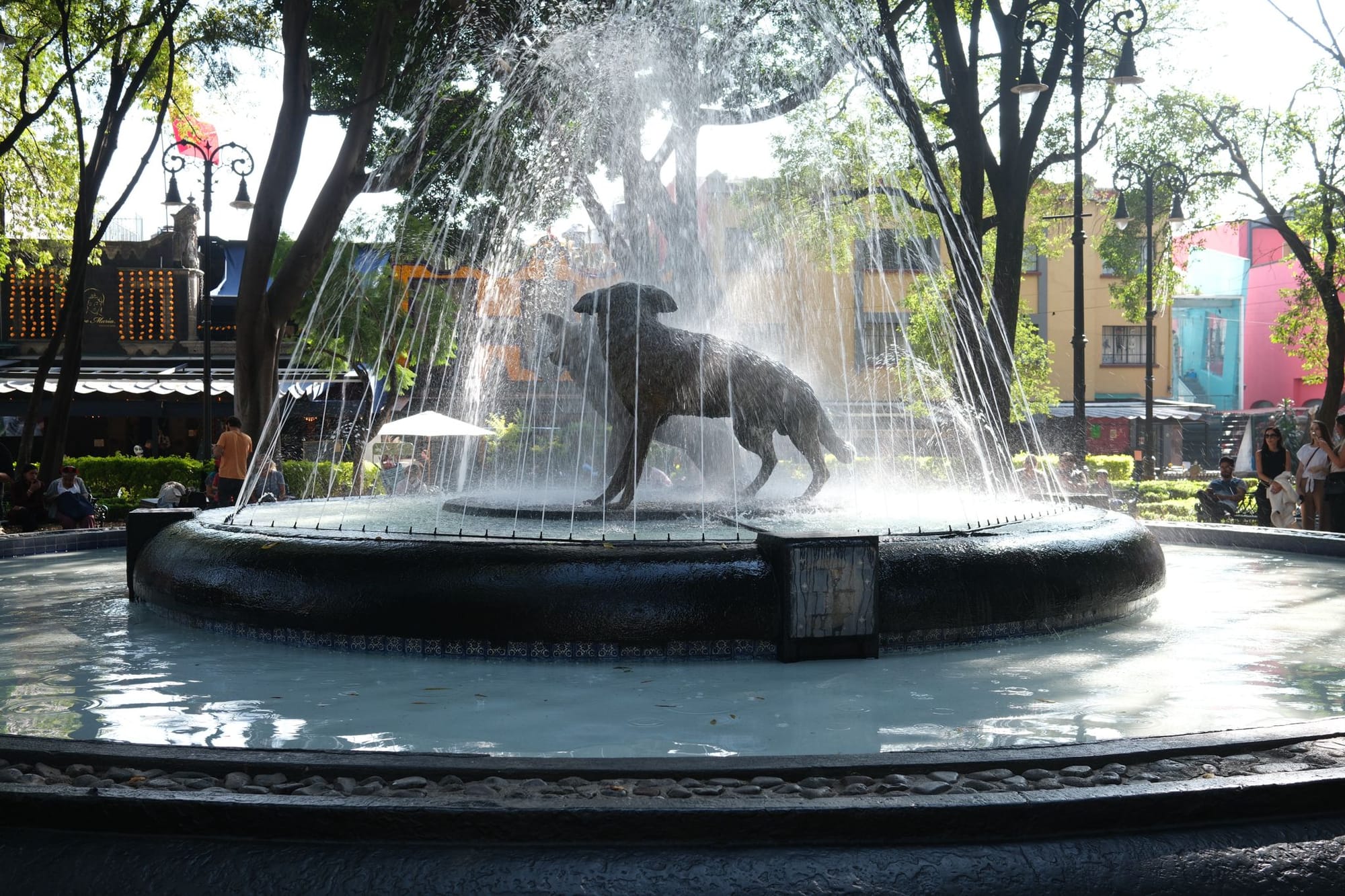
But as of now, many people don’t even know about Casa Roja. In fact, the museum was so freshly minted that when I mentioned it to a friend who lives and grew up in the surrounding area, she told me no such thing existed and thought I had mistaken it for Casa Azul. (She made up for it later by apologizing and taking me to a nearby fountain of coyotes after I told her about COYOTE, where she explained that Coyoacán means “place of coyotes” in Nahuatl.)
The building of the home-turned-museum was donated by Frida’s great-niece, Mara Romeo Kahlo. And it turns out that Casa Roja isn’t about Kahlo as an individual artist at all: It’s about her family dynamics. It was painted red because it was the heart of the family, and the museum explores, in true Mexican fashion, the central role of the home as a source of intergenerational connection. The building was purchased by Kahlo’s parents in the 1930s after their daughter married Rivera; Frida later lived in the house for a year in 1947.
My visit to the museum stands apart from other Frida-centered exhibits and museums in the city: It’s intimate, focusing on Kahlo’s interpersonal exchanges with each family member. Her father Guillermo, a German immigrant and reputable photographer known for documenting Mexico’s porfiriato architecture, heavily influenced Kahlo’s artistic development. The tour takes visitors through a room filled with his photos, and then into his dark room at the far end of the house. Everything — the bathroom, kitchen, bedrooms and basement — is on display, including handwritten letters, family recipes, jewelry made by family members, wardrobes and other artifacts.
The final room showcases the Kahlo family’s commitment to supporting other women — specifically single mothers — with a program that Kahlo’s sister Cristina founded called La Ayuda (or, “The Help”), and it also documents Frida’s role as an arts teacher. In the future, the room will be used as a rotating gallery to showcase contemporary Latin American women artists, according to the tour guide.
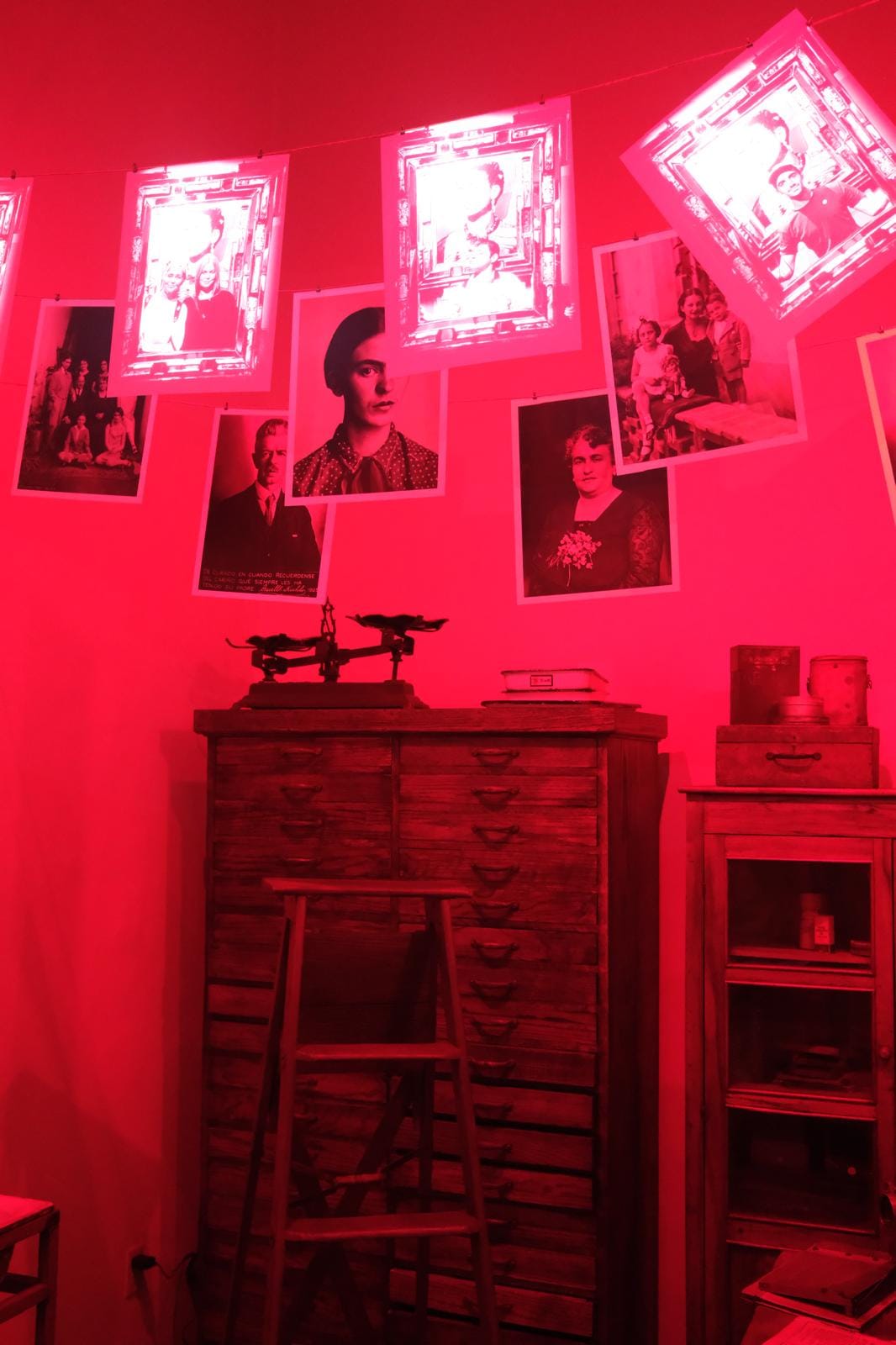
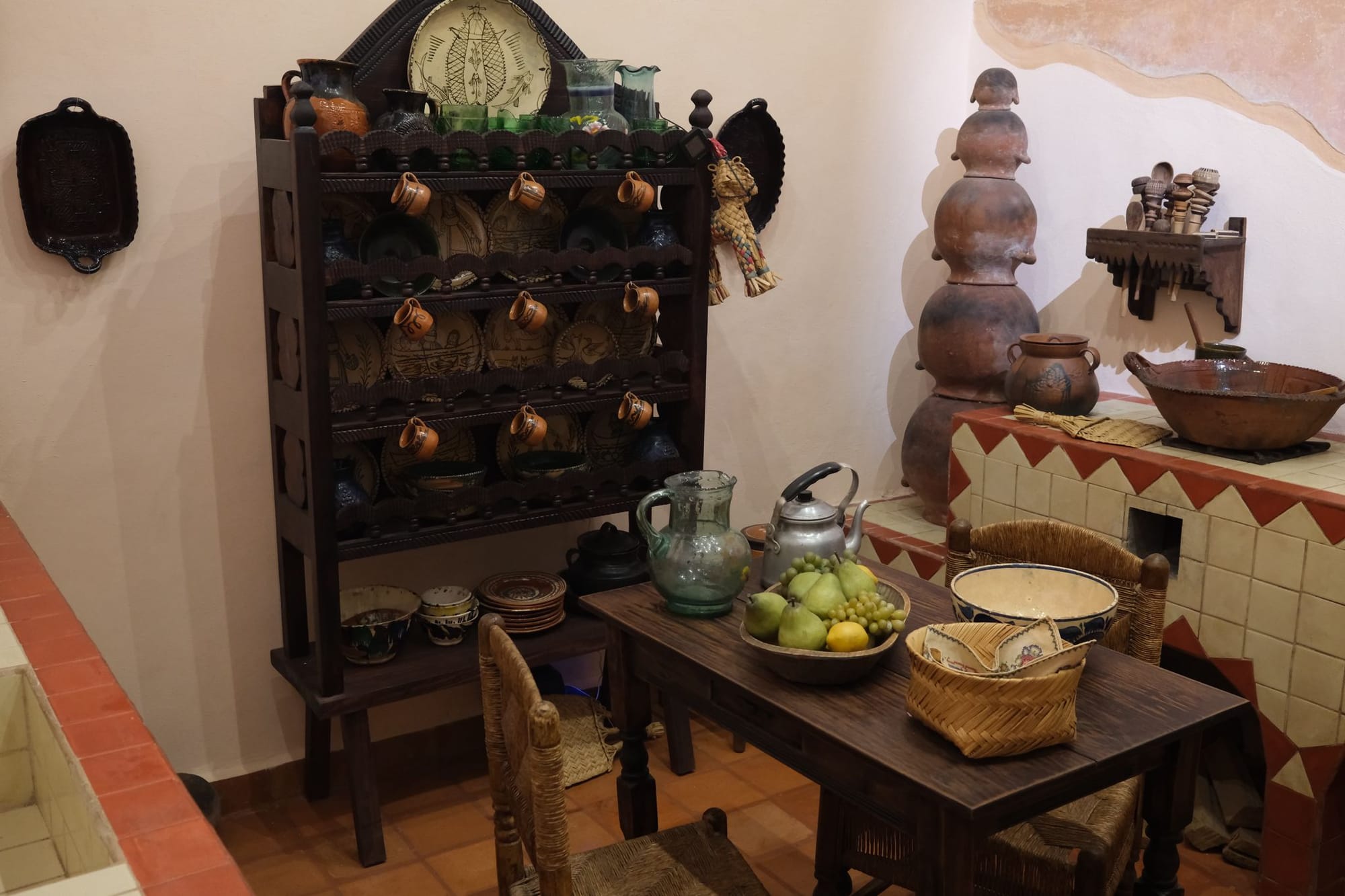
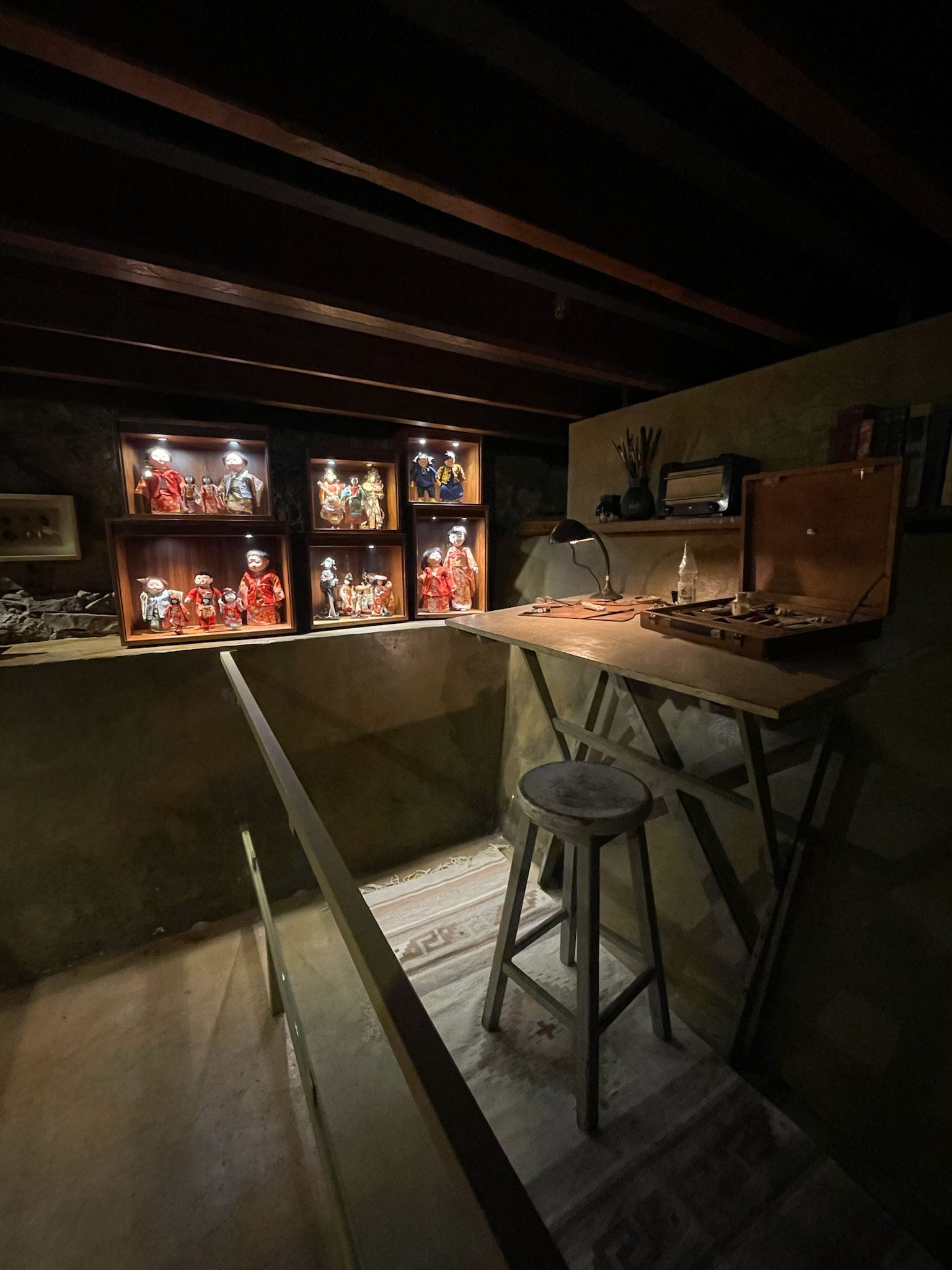
From left: A large portion of the museum is dedicated to Frida’s father, Guillermo, who was a respectable photographer. Visitors can walk through his darkroom at the far end of the house.; The kitchen in Museo Casa Kahlo displays family recipes written by hand beside the family’s kitchen table.; The basement of the museum houses a collection of Japanese porcelain dolls Kahlo sent home as a gift for her mother from San Francisco’s Chinatown. (Alan Chazaro/COYOTE Media Collective)
Yet what pulled me in the most were the stories of Kahlo’s time in San Francisco, including six months during the Great Depression. I encountered handwritten letters she mailed from the city, a video featuring cable cars, and gifts that Kahlo sent her relatives from the Bay. At Casa Roja, I discovered a serendipitous connection with the artist: Decades before I left the Bay in search of myself in Mexico, Kahlo made the opposite journey. In a way, we switched places, across time.
Kahlo’s stint in Northern California — her first time living outside of Mexico, a period she later rhapsodized about and credited as shaping her artistic worldview — comes alive throughout the museum in videos, letters, and a prized collection of porcelain Japanese dolls that Kahlo sent her mother from San Francisco’s Chinatown. After visiting the museum, I rabbit-holed further into Kahlo’s relationship to the Bay.
The famously unibrowed painter spent her formative Bay Area chapter in a downtown San Francisco apartment studio on 716 Montgomery Street. She arrived on the West Coast as an unknown 23-year-old “housewife,” according to a 1929 marriage certificate, with her husband Rivera, a notable if not controversial figure who was commissioned to paint inside of the California School of Fine Arts (now the San Francisco Art Institute) and Pacific Stock Exchange building (which has since been renamed to The City Club of San Francisco). Before her arrival, Kahlo dreamed of visiting San Francisco and sketched a portrait of herself in what she imagined the hilly city might look like.
During her time in what she dubbed “the city of the world,” the Mexican visionary befriended local artists like Pele deLappe, Dorothea Lange, and Emmy Lou Packard, the latter of whom Kahlo stayed in contact with for over two decades. Kahlo also met with a famous California horticulturist, Luther Burbank, which inspired her ongoing series of paintings that incorporated themes of roots and botany. In letters sent home to her family in Mexico City, Kahlo raved about the cultural diversity and eclectic tapestry of San Francisco, where she herself gained notoriety for her indigenous garments and bold, Mexican fashion. A San Franciscan writer even drafted an unpublished play and short story about her titled, “The Queen of Montgomery Street.”
Kahlo’s time wasn’t only limited to the big city: There are records of her visiting Oakland, Sacramento, and Santa Rosa. When Rivera finished his murals in 1931, the couple returned to Mexico before embarking to New York City and Detroit for more of Rivera’s commissioned work. In 1940, Rivera and Kahlo would both return to the Bay Area while fleeing persecution in Mexico City for their openly Communist allegiances. This time, they arrived separately as divorcees and for disparate reasons: Rivera to paint a mural on Treasure Island, and Kahlo to reconnect with Rivera and seek medical attention for her ongoing health issues. Rivera welcomed Kahlo into his apartment in Telegraph Hill before Kahlo received care at St. Luke’s Hospital in the Mission. Shortly after, Rivera and Kahlo remarried at San Francisco City Hall, which, I’m guessing, has to be the most badass marital reunion in San Francisco City Hall’s record books.
Kahlo would close her second trip to the Bay as a celebrated artist in her own right, having been photographed with Rivera in the Oakland Tribune and granted her own proper exhibits at the Golden Gate International Exposition and Legion of Honor. After Kahlo’s passing in 1954 at the age of 47, her art would continue to be championed in the Bay with exhibits, murals, and grassroots events at various art institutions and community spaces like La Galería de la Raza in the Mission and the San Francisco Museum of Modern Art. In 2018, a street near City College of San Francisco’s main campus — where Rivera’s “Pan Unity” mural was relocated to in 1961 — was officially renamed after Frida Kahlo. The Bay and Kahlo, it seems, have never parted ways.
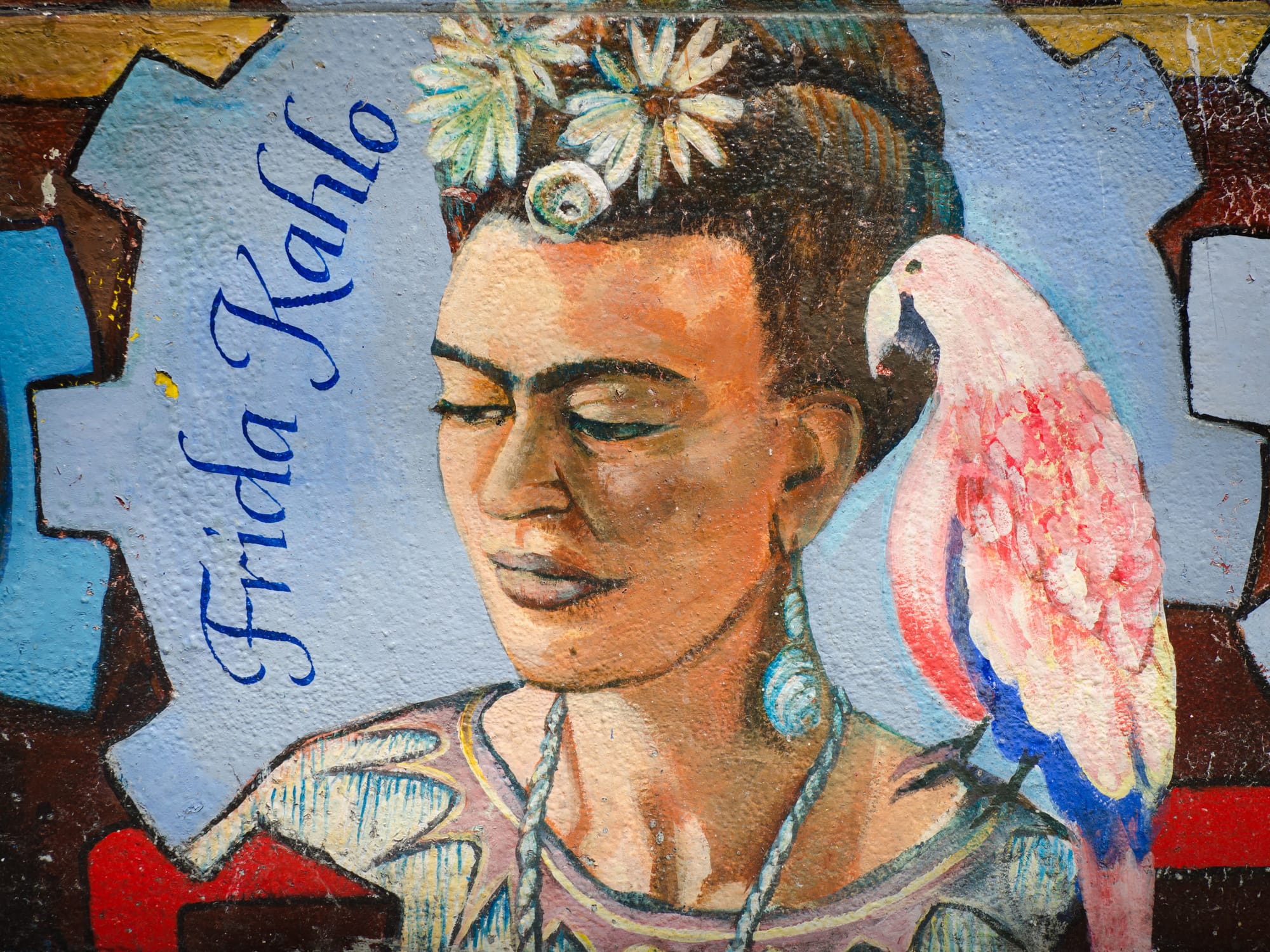
In a world of TikTok reels and endless doomscrolling on bluelight screens, I wondered what value a building devoted to the art and life of someone we know only through half a century of careful curation still holds. I don’t have a simple answer on the total sum value of adding another. All I can say is that, in making my pilgrimage to Casa Roja, I unlocked a series of microscopic revelations that led me to an understanding I already knew, but had forgotten among the chaos of today’s increasingly tense climate: that being out in the world, and learning about how others exist and existed, is a necessary, urgent medicine. And Kahlo provided enough of that during her lifetime to fill up museum after museum, gallery after gallery in her honor — from Mexico City to the City by the Bay.
Maybe I didn’t have to go all the way to Mexico to realize that about Kahlo. But, as the pair of bronze coyotes at the center of the zócalo reminded me, just a five minute walk from Casa Roja’s front door, I felt like I was in the place I was called to be.
____
Museo Casa Kahlo (Aguayo 54, Del Carmen, Coyoacán, Mexico City) is open from 9 a.m. to 7 p.m., Mon. through Thu., and is closed on Tue. On weekends, it opens until 8 p.m. The home can only be seen as a guided tour, which lasts about an hour and is available in English and Spanish. Walk-ins are welcomed, but purchasing tickets in advance is recommended.
