After Manny Yekutiel’s Campaign Implodes, Who Holds S.F. Leaders Accountable?
After fumbling accusations of sexual assault, S.F. politicians deserve a reckoning.


After fumbling accusations of sexual assault, S.F. politicians deserve a reckoning.

This week we've got polyamorous condors, cardboard costumes, sapphic vampires, and more.

Living in San Francisco means being a guinea pig for the tech industry — but I draw the line at my second-grader.

Oakland’s Understory wants you to come for the political mission AND the great food.

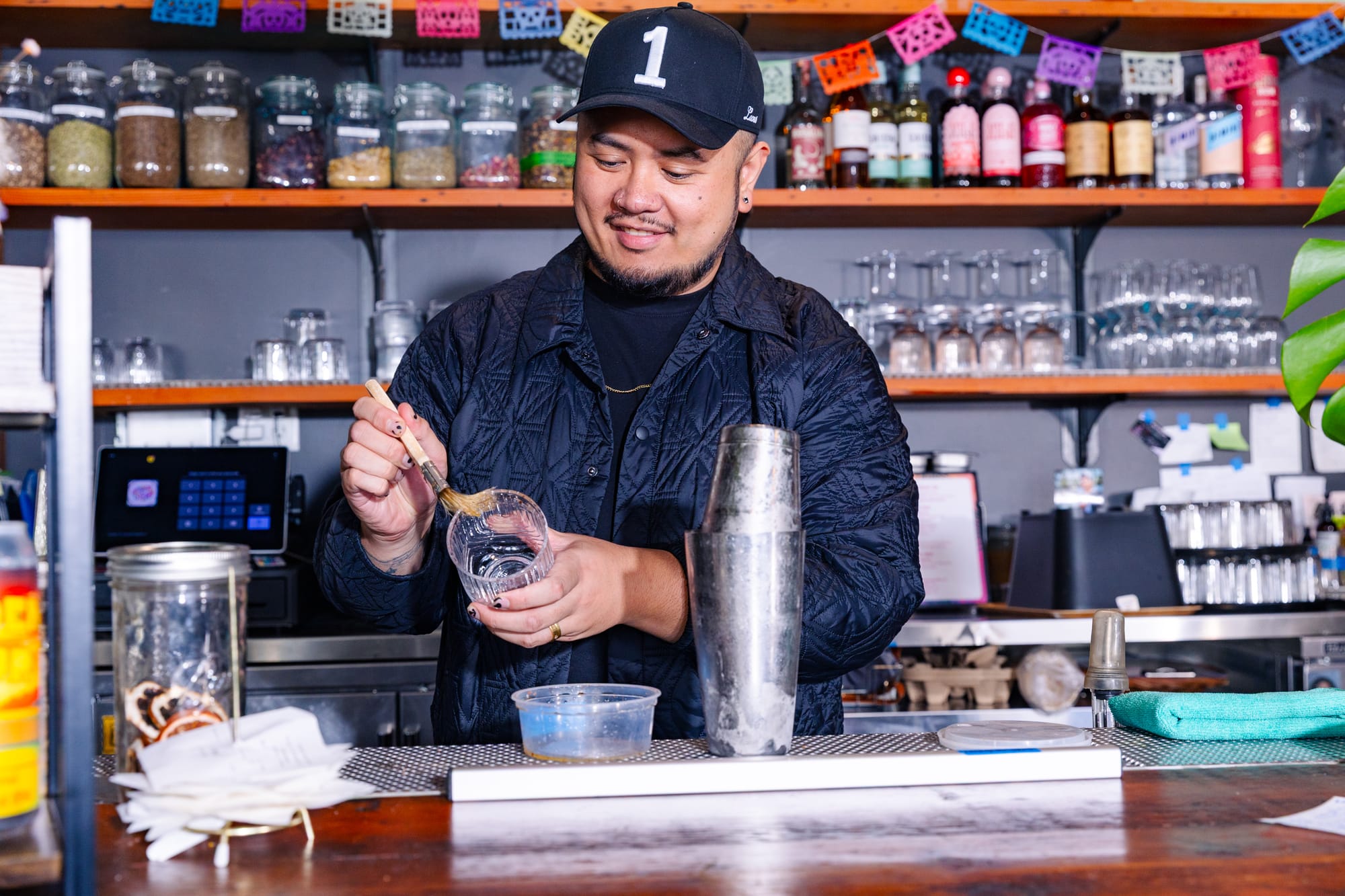
When Understory opened in the later half of 2020, it was built on the premise that a restaurant could be both politically driven and serve incredible food. The Oakland-based cooperative, which serves as a restaurant, bar, and community space, is run by five worker-owners who do the day-to-day work of running a business on top of their political organizing. Founding members Jenabi Pareja and Florencio Esquivel, along with newer owner Rochelle Bunyapanasarn, spoke to me about what it actually takes to build something collectively: the trust, the fights, the 10 months of pop-ups when everything fell apart, and why they’d do it all again.
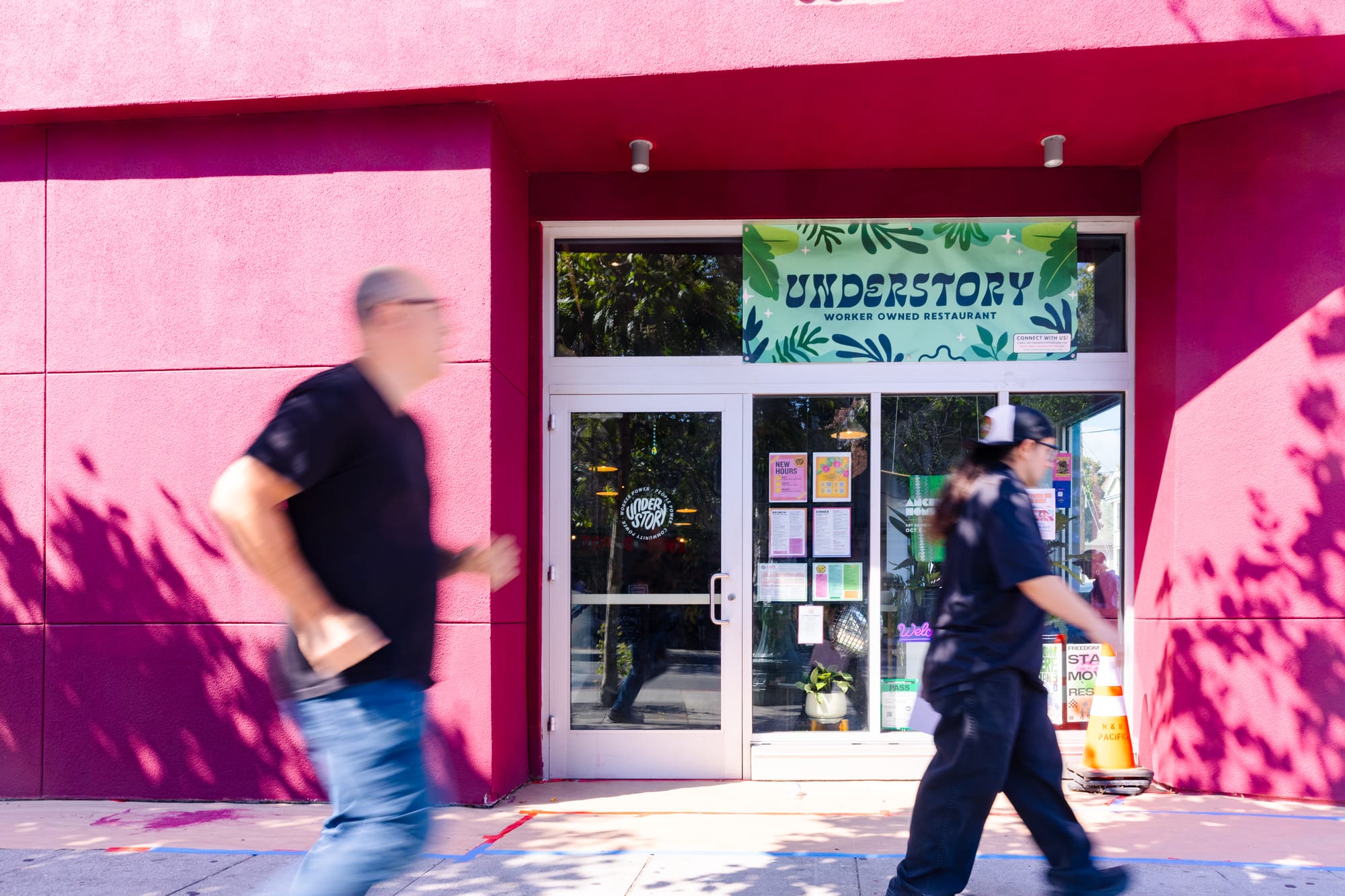
Soleil Ho: For people who aren’t familiar, what is Understory?
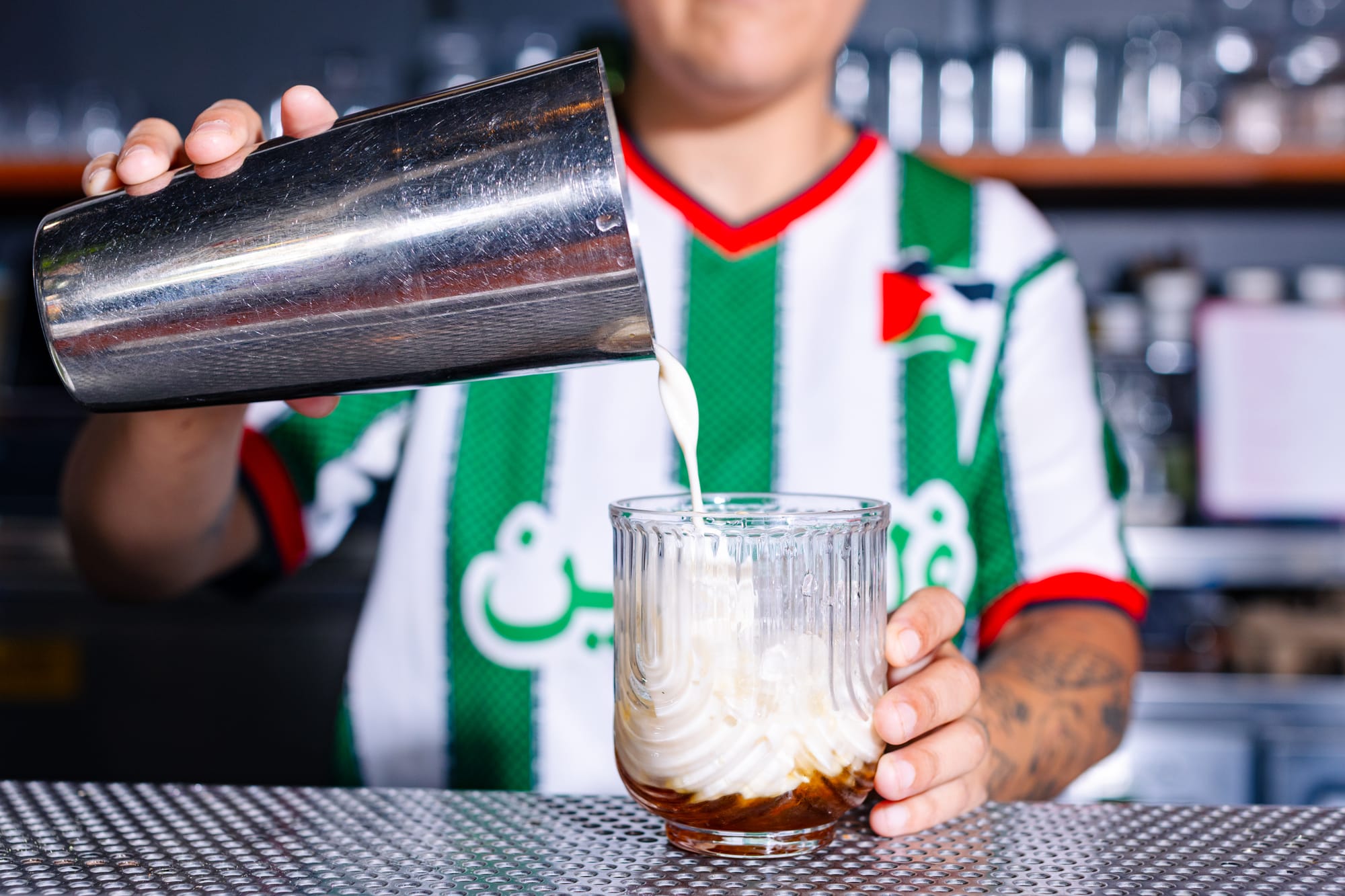
Jenabi Pareja: There’s sometimes an assumption in the food world that if your restaurant is politically driven, food has to be secondary. For us, it’s a non-negotiable that it’s both. People get attracted to Understory because of our political values and mission, but people keep coming back because of the food. It’s intertwined. When May Day comes around, when there’s a big protest, when it’s International Women’s Day, we’re going to be here feeding hundreds of people. That’s always been our compass.
Florencio Esquivel: We’ve always been rooted in solidarity. What that looks like is really wanting to invite in everybody’s full self: people’s struggles, their daily challenges, their culture, what being in diaspora feels like. We’re trying to co-create a home for all of us that feels safe and affirming. That is deeply political.
If someone says, “I just want you to tell me what to do,” this genuinely might not be the right place for them.
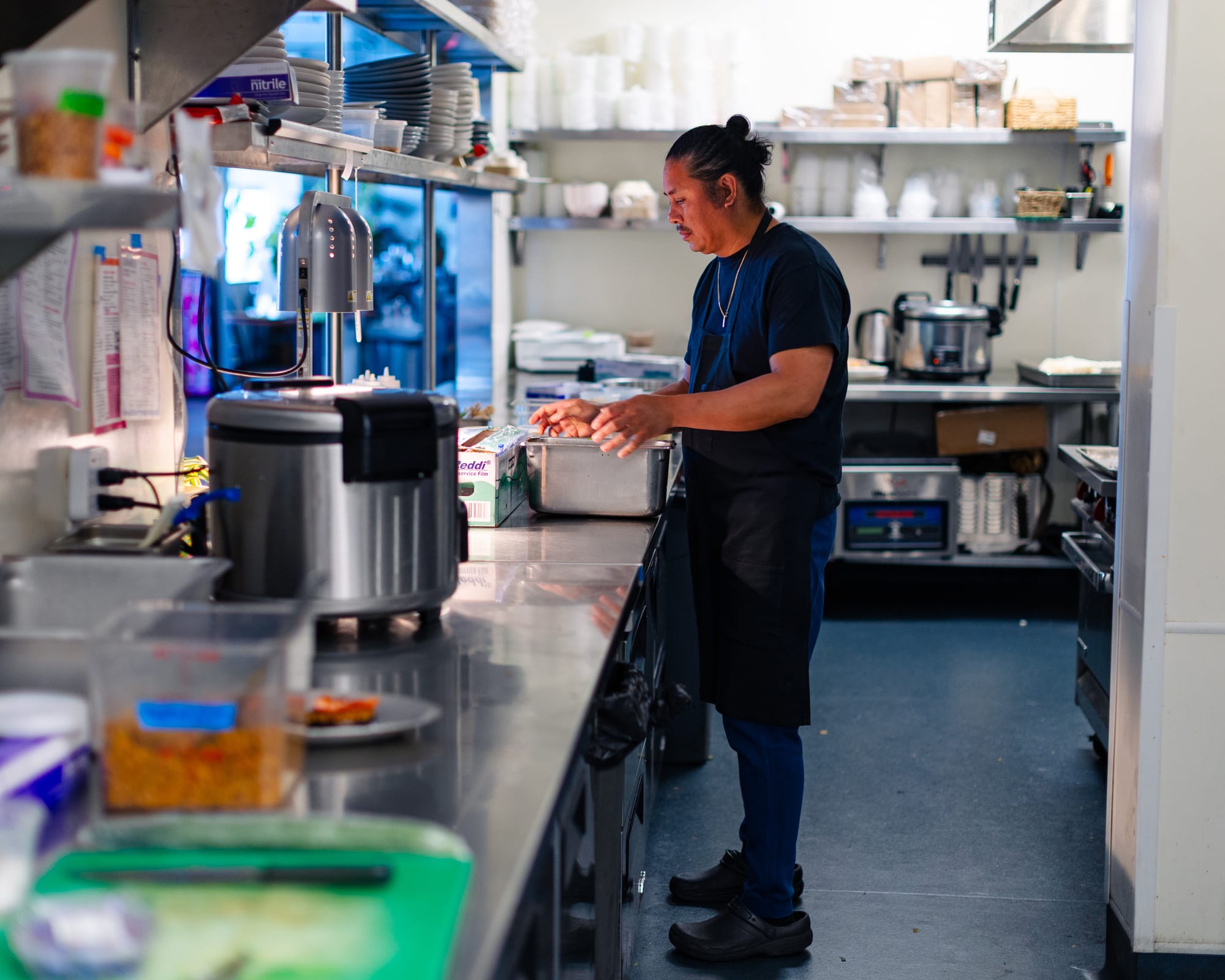
JB: And the menu reflects the people who work here. We’ve had folks like Cedoy, who started off just doing dishwashing, who now leads the line during busy cafe hours and has his own food — Turkish food — on our menu. There are people who started as servers who now run a full busy brunch. These are the kinds of things you can explore when you’re actually dismantling the idea that it all has to revolve around one person.
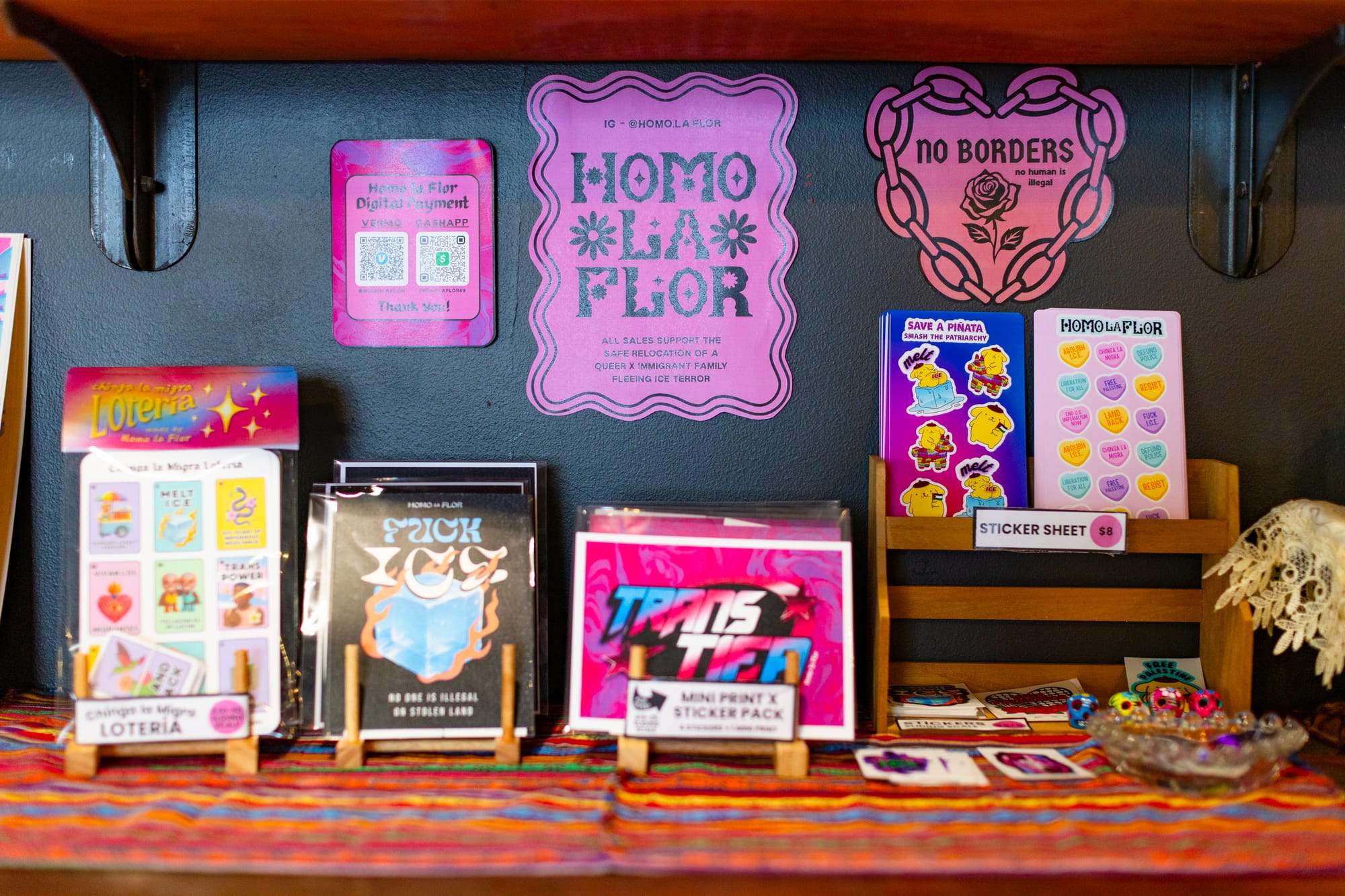
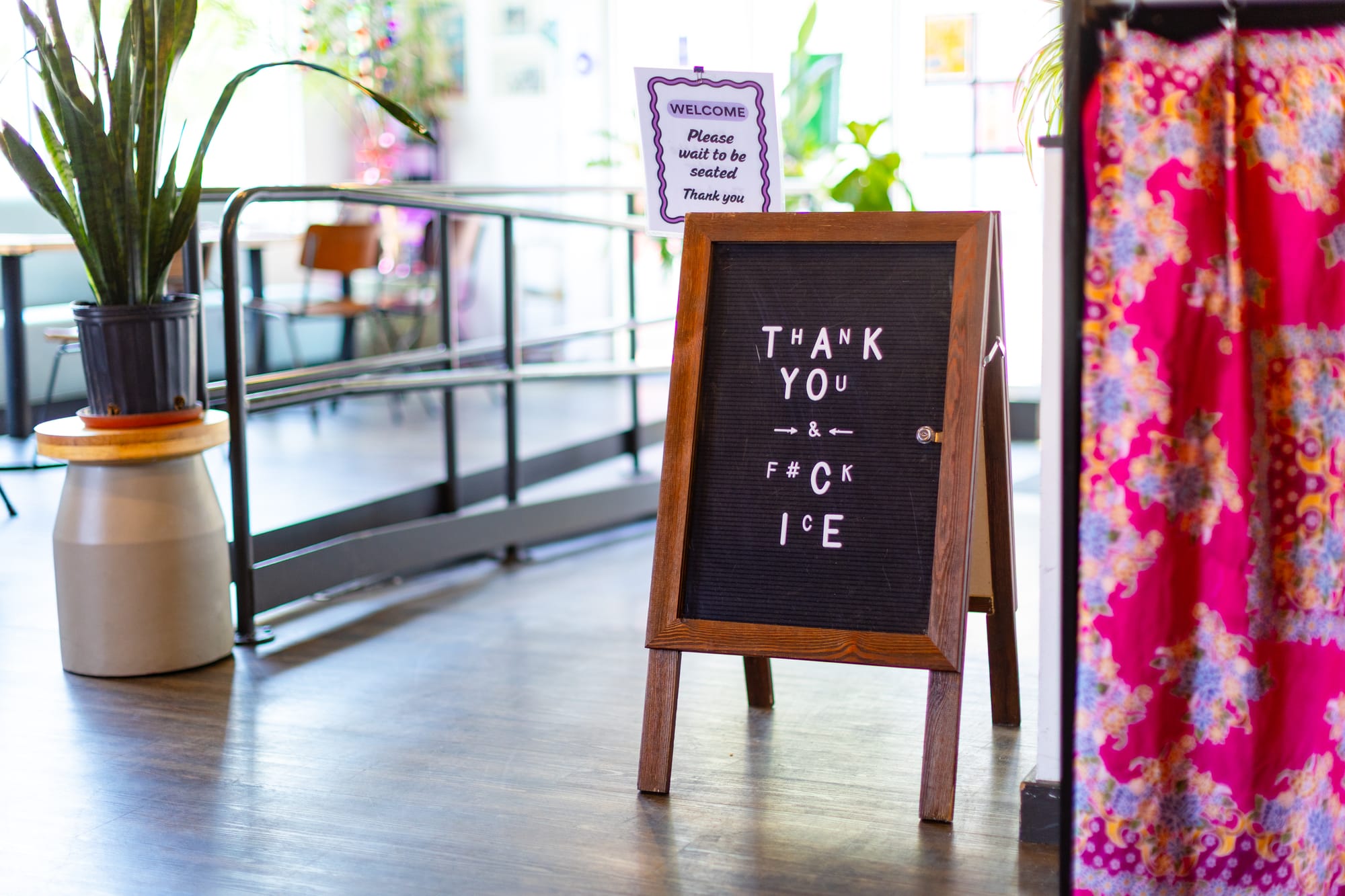
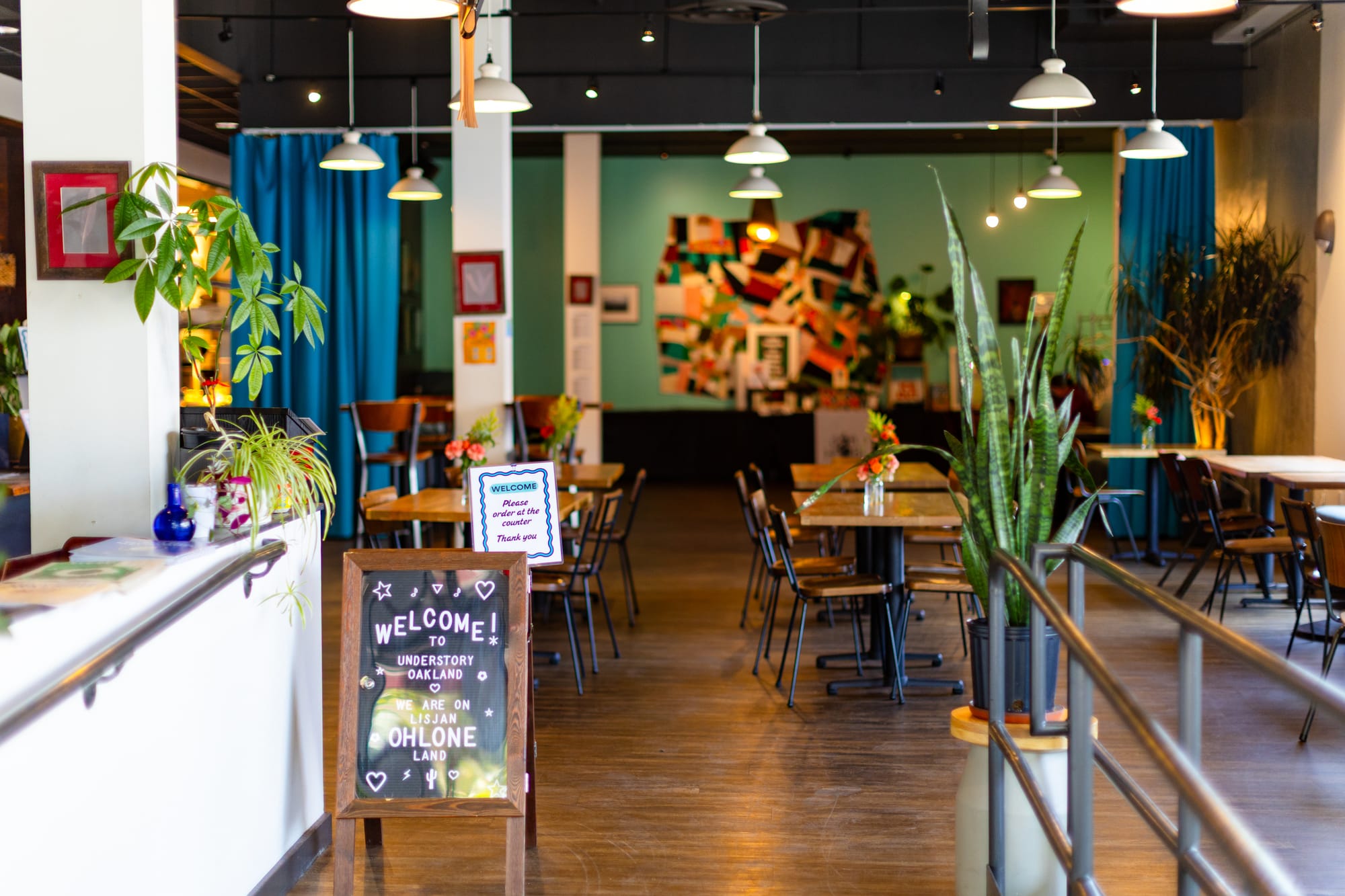
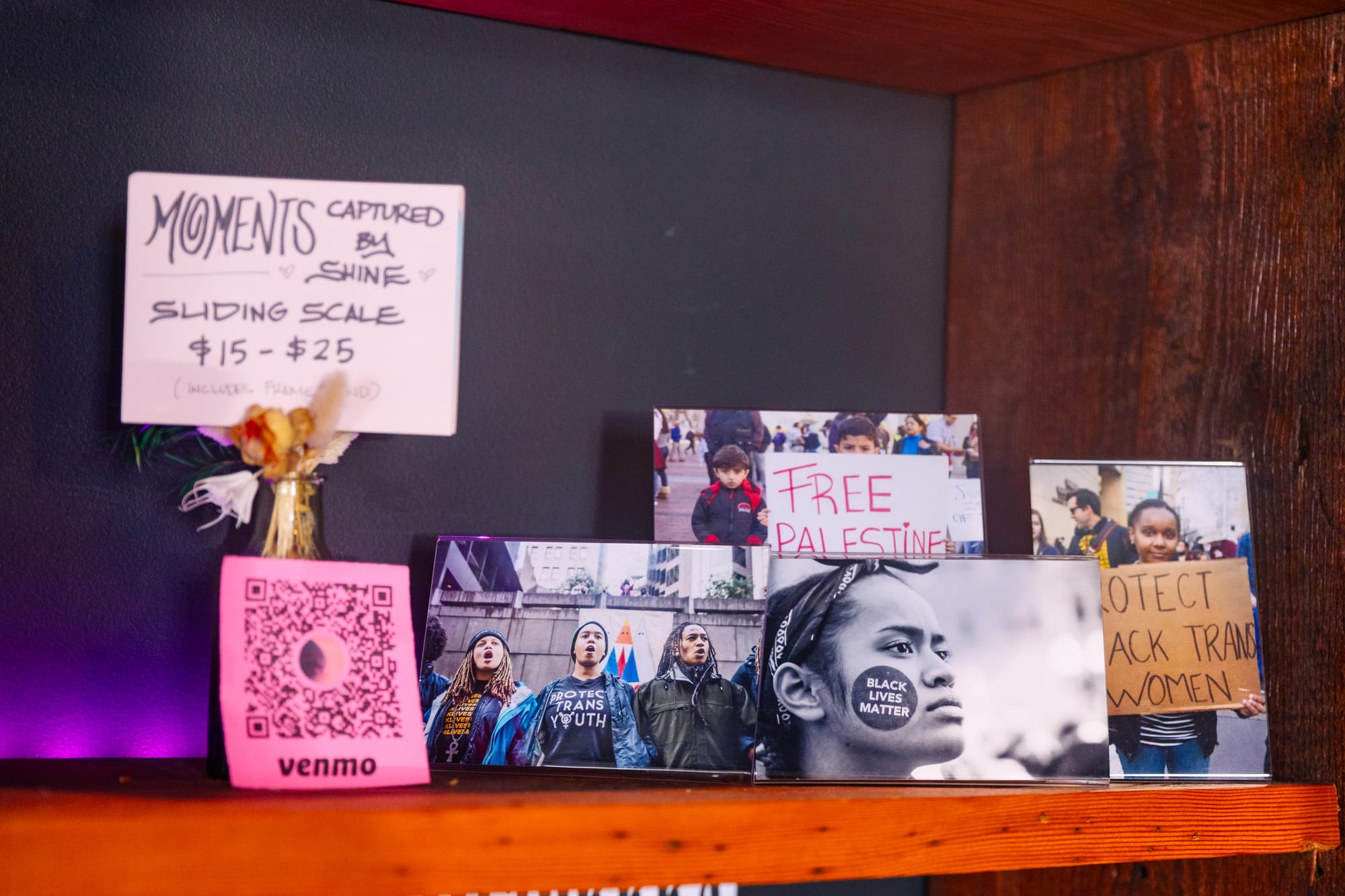
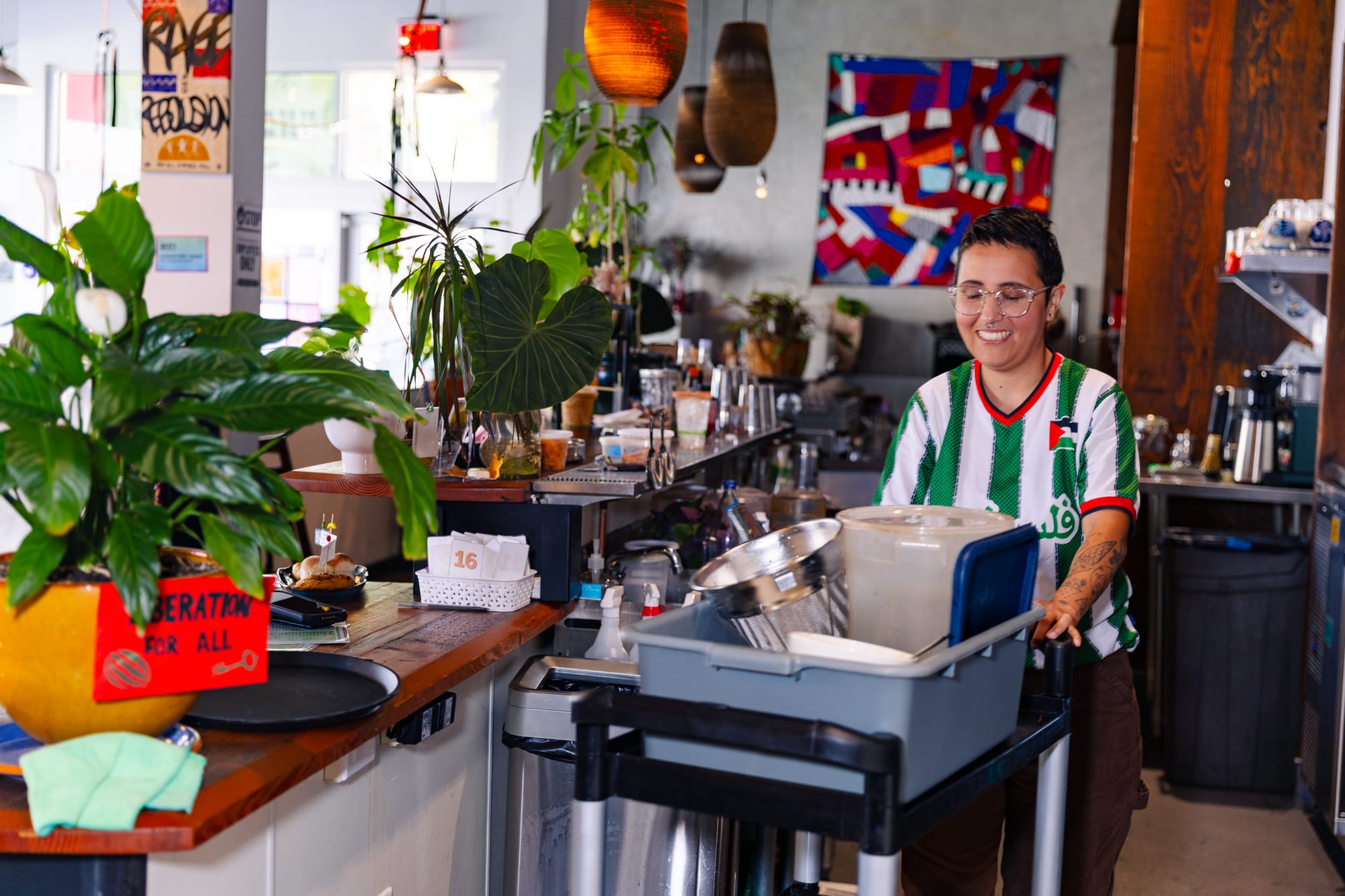
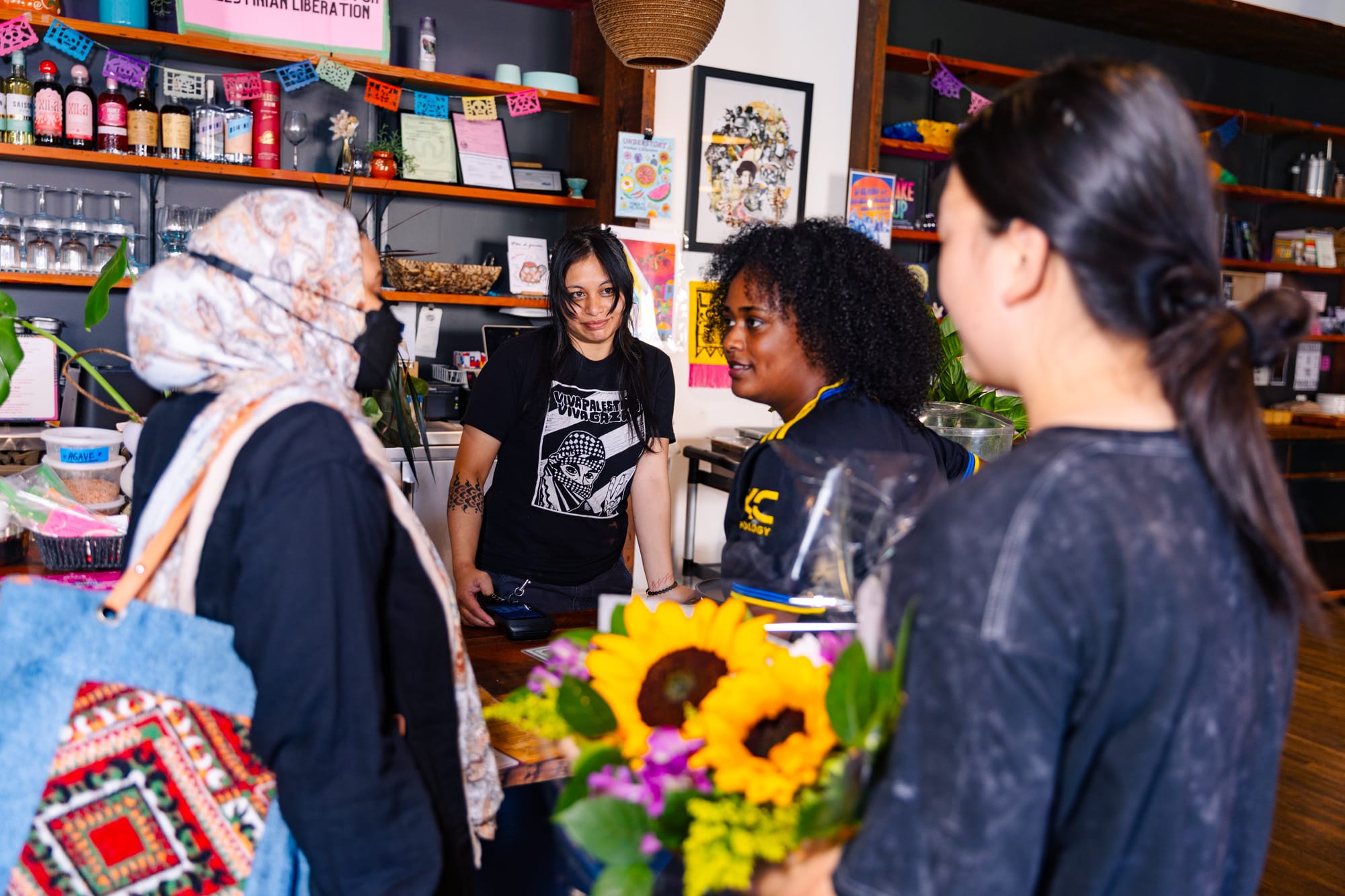
Signs in support of immigrant rights, Palestine, indigenous rights, and LGBTQ communities are displayed at Understory. The worker-owners say political values and the food itself are both integral parts of the restaurant. (Estefany Gonzalez/COYOTE Media Collective)
How did you figure out what you were looking for in a worker-owner? That seems super hard to define.
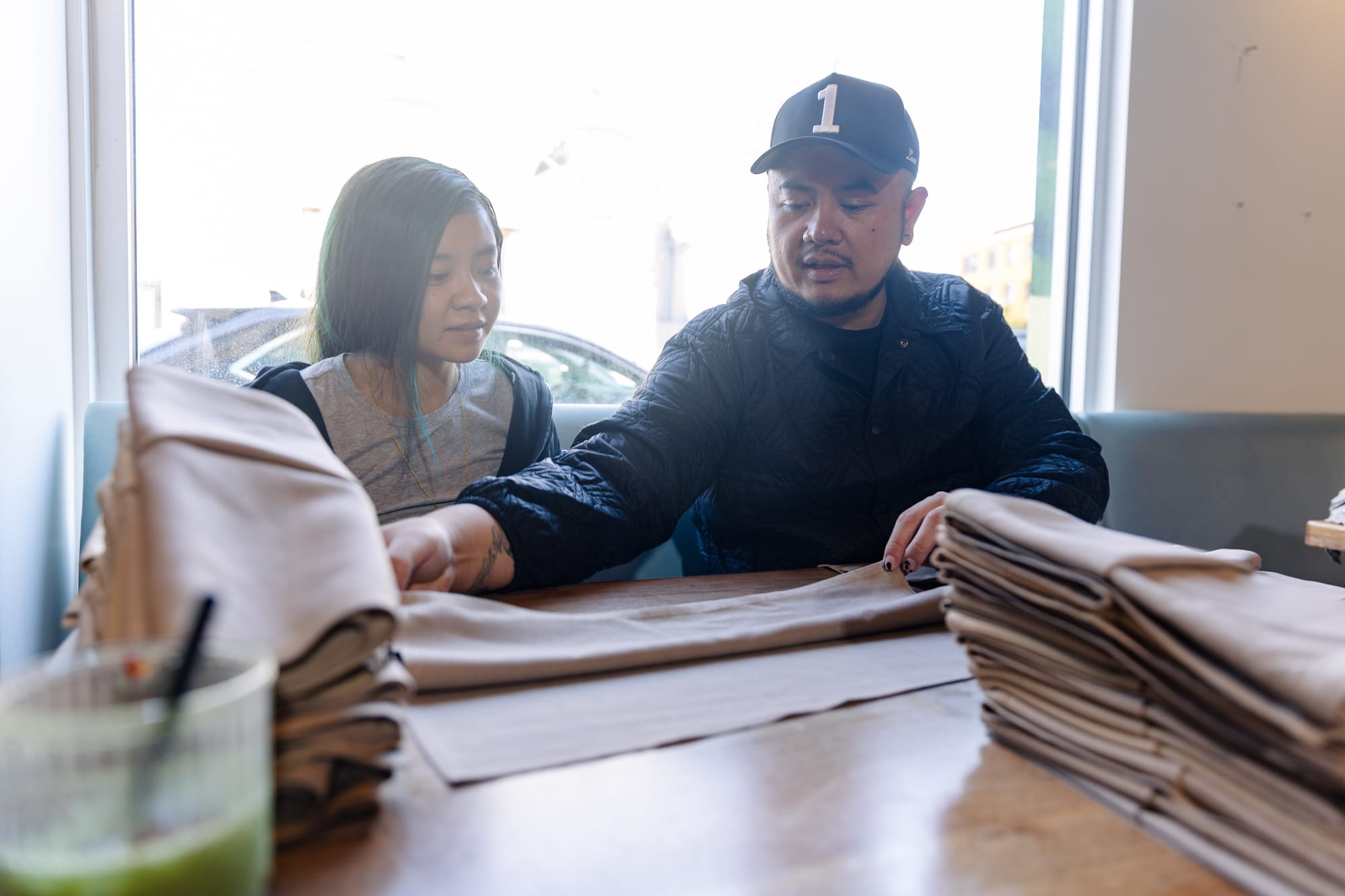
FE: It is. Part of what we try to do in the candidacy process is curate an experience where folks can self-reflect and share with the collective. We’re looking at things like their political orientation, their contributions, but honestly, it goes back to trust. This business asks a lot. We’ve dealt with break-ins, our entire walk-in freezing over, all kinds of crisis moments. What mitigates the intensity of those moments is being able to rely on each other. That’s what we’re really looking for. It can be learned, but it’s also something people just naturally show up with — this willingness to jump in.
We all know how to run a restaurant. The question is, where do we stand while we’re doing it?
JP: We were ambitious in the beginning. We said, let’s do a six-month candidacy, it’ll run like clockwork. And then we kept extending it. We’ve had folks who went through almost the entire process and, at the end, weren’t quite ready [for worker-ownership]. Giving people that grace, and being honest about it, is part of the work. If someone says, “I just want you to tell me what to do,” this genuinely might not be the right place for them. And we’ve become OK with that. For a long time we kept trying to make it work regardless. That wasn’t the right direction.
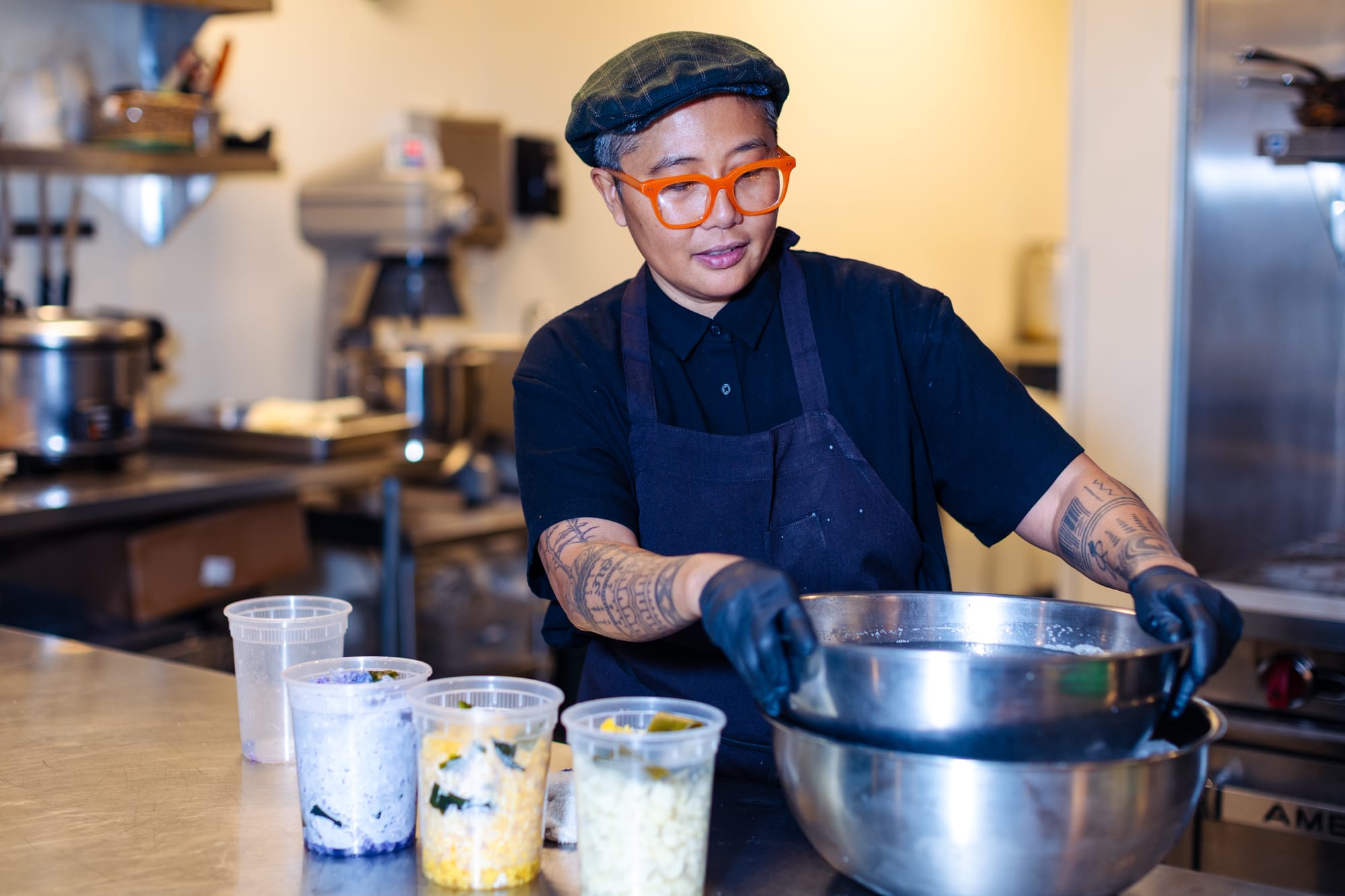
Rochelle Bunyapanasarn: Being here as an employee first helped me understand what it actually meant to be part of something like this. I came out of the pandemic thinking differently about collective work; I’d seen how some owners treat restaurants like a revolving door. At Understory, I found people who were thinking beyond that, and I wanted to practice what I believed in. I officially became a worker-owner last November.
You mentioned a crisis point around closing your old location. What happened?
JP: Mid-2023 we started seeing some heightened contradictions with a partnership we were in... a misalignment with a nonprofit we were working with. We took it through our process. When there’s a fight, when there’s a disagreement, we have a structure for that, and we came to it wholeheartedly. We went through mediation. We did a town hall. We reached out to the community. Ultimately, when we saw that others weren’t willing to come to that process the same way, it became clear [that we had to separate and close].
FE: In that moment, we really had to decide: Do we choose stability and compromise our founding principles, or do we choose instability and fight for each other and the actual vision of why we started this? It was scary and labor-intensive. Figuring out what was even happening took months. Making the decision took more months after that.
JP: Honestly, I wish we’d made the decision sooner. We gave that situation more time and energy than it deserved. But the other side of it — when we did close, and we were doing pop-ups and catering out of people’s homes and kitchens to stay afloat — and then when we secured a new lease and every single person who had been with us was immediately ready to come back the very next day? That was the icing on the cake. That’s what trust actually looks like in practice.
FE: There were people, Rochelle included, who took other jobs for a few months just to stay connected to the project, knowing they’d come back. When we reopened with almost our full crew, that was a proud moment.
What does political education look like internally, when it comes to catching people up on how a cooperative works?
FE: When we first reopened, Jenabi and I put together a three-day training. It was a lot — people were like, ‘What is happening?’ — but it was really focused on where we align ourselves while doing this work. We all know how to run a restaurant. The question is, where do we stand while we’re doing it? We also meet at least once a month as a collective, revisiting things, talking through problems, thinking about how we made decisions together.
The current political climate wants you to retreat from community. Push back on that.
JP: We also think a lot about language justice. Right now in the kitchen there’s Turkish, Tagalog, a few different Spanish dialects being spoken. Some folks are monolingual. So how do you even run a political education across that? How do you translate not just the language but the concepts? I think people sometimes wonder, ‘Why do you care what I think about this stuff?’ But there’s a difference between someone just telling you what to do versus actually growing into decisions together. The second thing is slower and harder and more uncomfortable — and it’s also the thing that actually works.
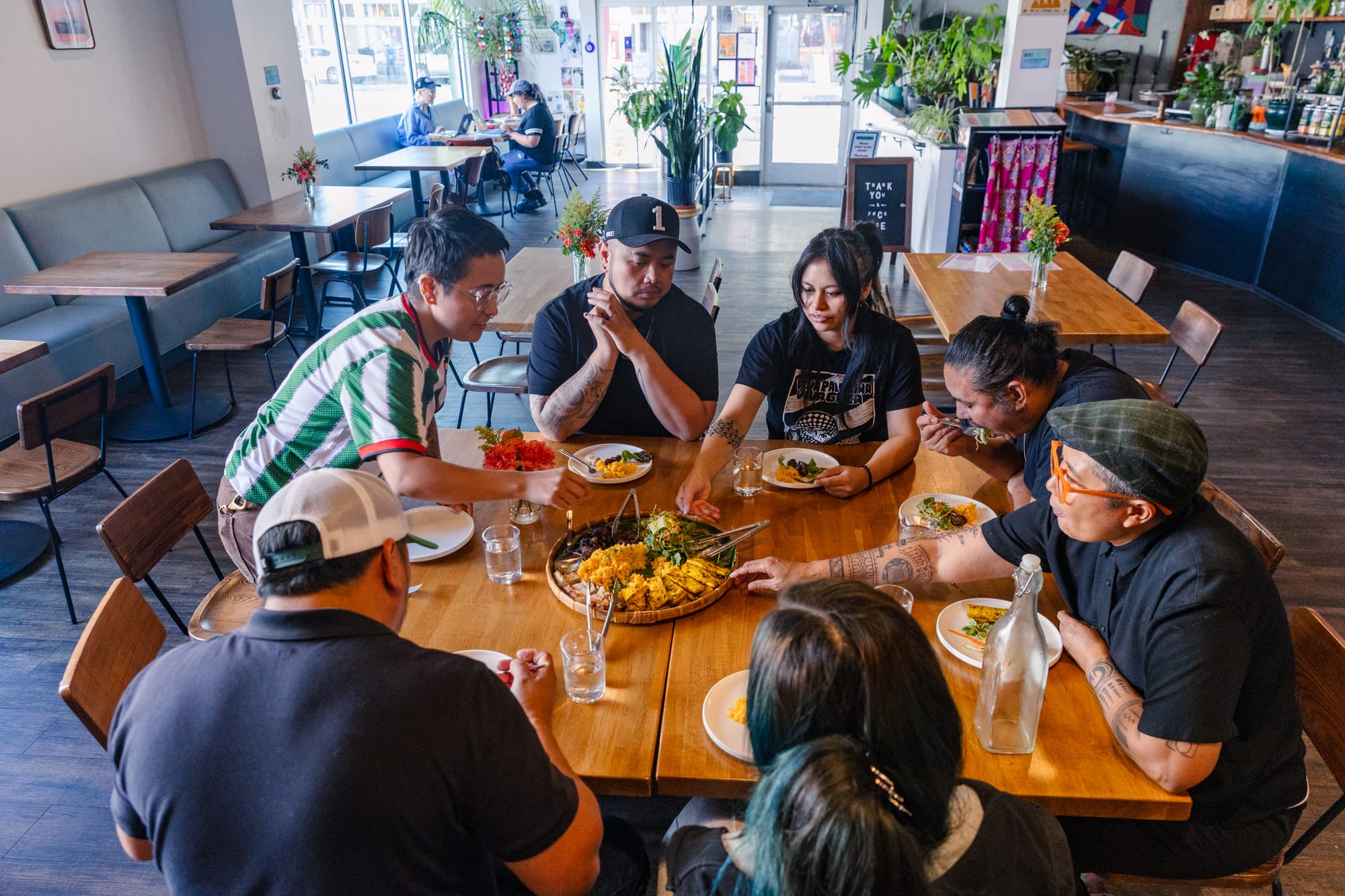
What would you say to someone working the line at another restaurant who might be thinking about trying a cooperative business model?
FE: Do it. As hard as it has been, and as much uncertainty as there’s been, there’s something that happens when you hold a dream with a group of people. You get astounded by the reach of something that started off so small. We’re living in a time that’s very divided, and there’s constant messaging about hierarchy and individualism. I think there are certain models where you can do something completely different and actually reap the rewards of that. It requires unlearning. It requires challenging why you think and believe certain things. But right now especially, organizing collectively and finding creative ways to survive together is the best remedy there is.
JP: Don’t be scared if there isn’t a manual yet. Be ready to make one. And reach out to people who are already doing it — there’s no prize for acting like you invented everything from scratch. The current political climate wants you to retreat from community. Push back on that. Sit in the discomfort, because that’s where the real solutions come from.
RB: Find your people. Think of it like a mycelium network — sometimes you just have to get out there. And if you want to start somewhere, you can always come talk to us.
Understory is at 3340 International Blvd., Oakland. Open Tuesday through Friday for cafe service, Thursday and Friday for dinner, and Saturday and Sunday for brunch.