The Olympics Has a New Sex Testing Policy. The Evidence Doesn’t Add Up
I’ve spent over 10 years obsessed with so-called “gender verification” tests. Proponents claim they have history and science on their side. They don’t.


I’ve spent over 10 years obsessed with so-called “gender verification” tests. Proponents claim they have history and science on their side. They don’t.

This week we've got kelp, cats, clowns, and several ways to celebrate Trans Day of Visibility.
I’ve spent over 10 years obsessed with so-called “gender verification” tests. Proponents claim they have history and science on their side. They don’t.

This morning, the International Olympic Committee (IOC) announced a new sex testing policy, bringing back genetic testing for all female athletes across the board. Now, every single woman who competes in the female category in every sport will have to undergo a genetic screening to look for the presence of a gene proving they are women. The policy announced today is extremely similar to the one World Athletics (the governing body of track and field) rolled out late last year.
Back in 2024, I created a podcast about sex testing called Tested. The show was the result of over 10 years of research and my personal obsession with the topic, and it traces the history of women's sports and the policing of who gets to compete in the women's category from the very first modern Olympic games up to the 2024 Olympics in Paris. I followed two athletes struggling with a terrible choice: take drugs to lower their naturally occurring testosterone and try to compete, or fight the policy in court. Neither woman was able to overcome the odds and make it to Paris. (You'll have to listen to find out why.)
Based on these brand new policies, every athlete I spoke with for Tested will be barred from competing in the women's category. Their careers are functionally over. If you listen to Tested, you'll get to meet those women and learn about this long, sordid history that is, sadly, still rearing its ugly head.
What most people likely don't realize with today's news is that sex testing is as old as the modern Olympics. As soon as women were allowed to compete in the games, there were rumors and complaints that the women on the track were simply not womanly. In the 1930s, sports organizations forced women into what are now known as the "nude parades," in which they asked every woman to get naked in front of a panel of doctors so that they could decide if they looked womanly enough.
Covering sex testing is a lot like documenting a twisted and deeply unethical game of whack-a-mole. The same bad ideas, incorrect assertions, and misguided policies pop up over and over and over again. Today, the mole that has popped up is genetic sex testing. We last saw this particular policy emerge in the 1960s, when every woman who competed in the Olympics was forced to go through an unreliable genetic test looking for Y chromosomal material — a test that about 1 in 500 women failed. (Surprise! Lots of women have Y chromosomal material in their cells.) The women who passed this test got a "femininity certificate" they had to carry with them to every single competition. Those who "failed" were told to fake an injury and leave.
We have no idea how many women that happened to. They were sent home quietly and told to give up their dreams. Researchers, doctors, ethicists, and athletes spent decades fighting these policies, and in 1999, the IOC finally dropped genetic screenings for female athletes.
Today’s test is different, but it’s not necessarily more reliable. Even the scientist who discovered the gene that the IOC is using for this new test has spoken up against this type of policy.
In the video press release announcing the new rules, IOC President Kirsty Coventry said that "the policy that we have announced is based on science." She then states, "The scientific evidence is very clear, male chromosomes give performance advantages in sports that rely on strength, power or endurance." This has been the line of the pro-sex testing side for years now — that they are simply following the science. But this isn't true.
In fact, one of the most striking things to me about the history and present of sex testing is that when you look into the evidence that props up these policies, you find that often it does not actually exist.
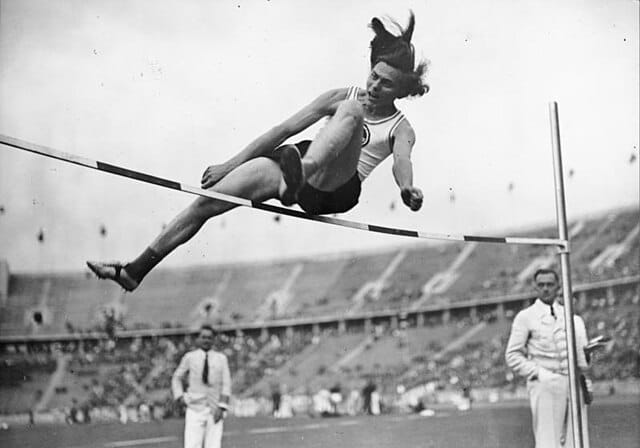
The earliest proponents of sex testing in the 1930s were convinced that many of the women who were competing in sports were secretly men. Sometimes these claims were more figurative — most western cultures had a really different conception of sex than we do now. (Remember, this was before scientists knew much about sex chromosomes in humans.) The prevailing idea of sex at the time was something called "balance theory" — this idea that every person was born with a little bit of male stuff and a little bit of female stuff inside of them, and that that balance could shift. So if a woman was always a little bit cuspy — maybe only 70 percent woman — if she did manly things, like sports, she could actually turn into a man.
Those who pushed for sex testing at the time wanted to weed out these "borderline cases" of women who were, in their eyes, not really women. But other people were concerned about something much more nefarious and direct: the idea that men would throw on a skirt and pretend to be women to win medals. And often when the concept of sex testing and gender verification come up, you'll hear people claim that this has happened in the past.
Except it hasn't. We have no documented case of a so-called "masquerading male" competing at the Olympic level. Trust me, I've looked.
The most commonly cited piece of "evidence" that you hear on this front is the story of the German high jumper, Heinrich Ratjen.
The story as told goes like this: Ratjen was a promising young Nazi high jumper. Before the 1936 Olympics he was approached by the party and told that he was going to have to take one for the team and pretend to be a girl so that Nazi Germany could win more medals. Being a good little Nazi boy, Ratjen agreed and competed in the female category. (He came in fourth.)
But when you actually look into Ratjen's story, what you find is that the version I just told you doesn't line up with the official records that exist. Instead, what you'll learn is that Ratjen was assigned female at birth, raised as a girl, and competed and trained on the women's team from the very beginning. It wasn't until three years after the 1936 Olympics that he started living as a man.
Ratjen's story is the most specific one you'll hear referenced. But there are others that people make claims about. None of them check out, and many of these claims are vague. The Soviet Press sisters, for example, are cited as evidence because when track and field started doing nude parades — a process by which women had to get naked in front of a panel of judges who would confirm that they looked womanly enough — the sisters didn't come to compete. Was that because they were secretly men? Or was it because they didn't want to get naked in front of strangers and have them judge their vulvas? We don't know, but to claim that that's evidence of a vast problem of men faking their way into women's sports feels flimsy at best.
And yet, when sex testing comes up today, you’ll still hear people claim that there is “evidence” of so-called “masquerading males” of the past. In my interviews for Tested, I heard experts repeatedly say that this had absolutely happened, and that we should be thinking about it. That evidence doesn’t exist.
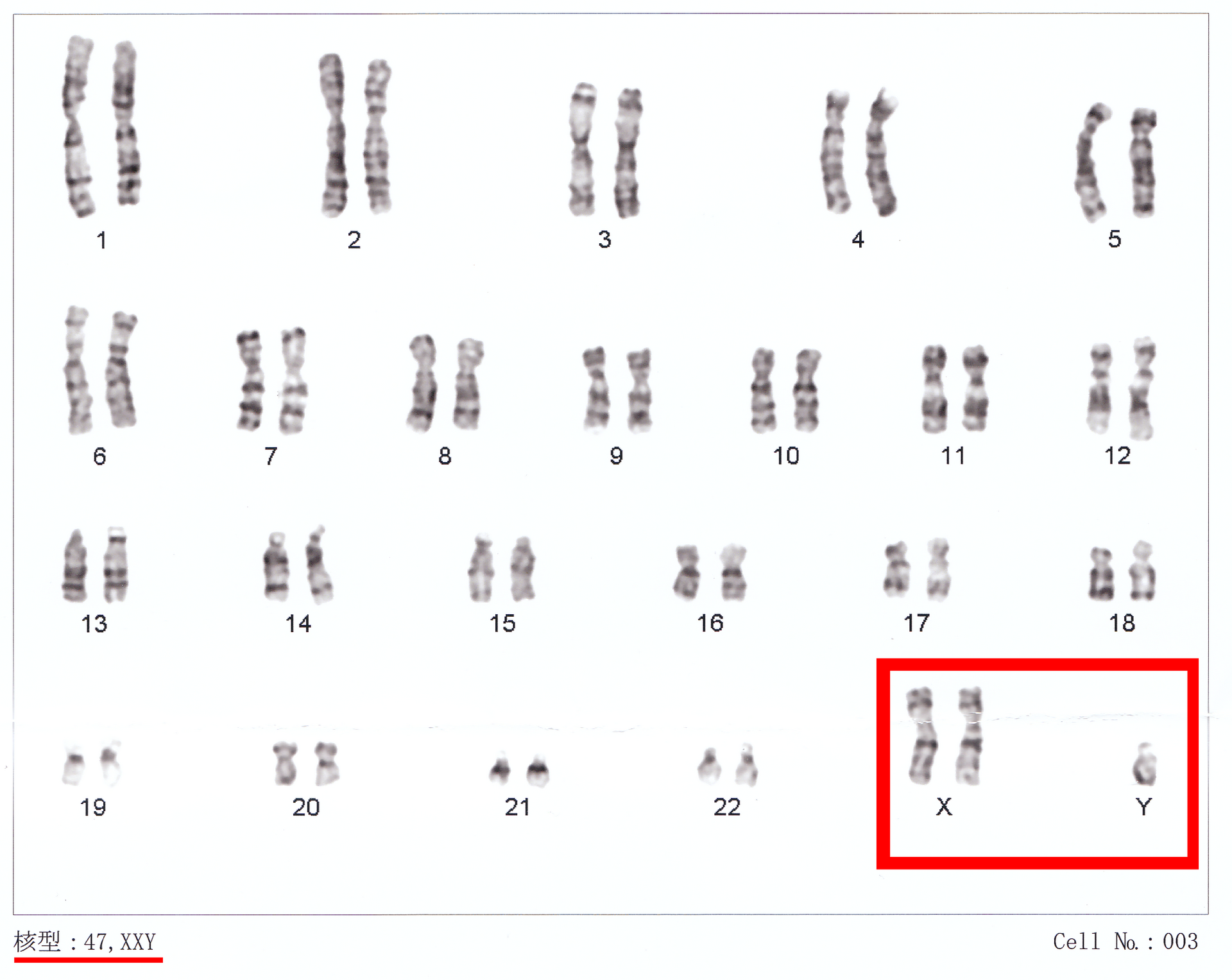
In 1999, Dr. Arne Lundqvist sent a celebratory fax to a group of doctors, athletes, and activists who had informally dubbed themselves "the fax club."
“Victory is finally ours, the genetic based test for screening for female gender at the Olympic Games has gone into the history books!”
This group had spent decades in some cases trying to convince the IOC and other sports governing bodies to drop genetic screenings, arguing that they were invasive, unethical, and unreliable. And they succeeded.
For about 10 years, sex testing was largely dormant. But then, in 2009, the mole returned. In the fall of that year, a young South African athlete named Caster Semenya burst onto the international scene — winning the 800m at the World Championships. Even before that race people were spreading rumors that she was somehow not womanly enough to be a real woman. After the race, World Athletics (the governing body for track and field) decided that they needed to investigate the 18-year-old's biology.
This time, people weren't alleging that she was a man pretending to be a woman, but they were saying something that actually sounded a lot like balance theory. It was no longer that athletes with sex differences were secretly masquerading males trying to con their way into competition. Instead, they claimed, the athletes were not 100% women, and that percent that they were maybe men gave them a leg up. Pierre Weiss, the secretary general of World Athletics at the time, told the press: "Yes she is a woman, but maybe not 100%."

Today, most sports organizations refer to athletes like Caster Semenya as "DSD athletes" — referring to athletes with "differences of sex development." There are lots of different biological configurations that fall within the DSD category, and it's a category that is ever-changing. It largely means that someone has some unusual combination of hormones, sex chromosomes, or secondary sex characteristics. There is a lot to say about this terminology, but the core argument that has animated this debate since 2009 is the idea that so-called "DSD athletes" have high testosterone levels and therefore have an unfair advantage over other women.
This is a testable claim.
And in fact, World Athletics has been asked to provide specific evidence that "DSD athletes" do have an advantage over non-DSD athletes. In 2014, an Indian runner named Dutee Chand was excluded from competition because she allegedly had too much testosterone. Chand took World Athletics to the Court of Arbitration for Sport, arguing that the governing body didn't have any evidence that the women they were excluding from competition actually had an advantage. The court agreed and instructed World Athletics that they had to actually provide evidence that this specific population of athletes had an advantage over others.
Not only that, but the judges ruled that World Athletics had to prove that this was a substantial advantage, not a sliver of a percent. Because there are all kinds of differences that can give an athlete a leg up — mutations that can give someone a much higher blood oxygen level; genetic profiles that increase fast twitch muscles. And that's not even getting into advantages around access to resources, money, facilities, and training teams.
In the ruling, World Athletics was told that if they wanted to regulate these athletes, they had to show that they had a clear and substantial advantage over their competitors.
All things considered, this is a relatively easy question to investigate. All you have to do is look at the testosterone level of DSD athletes and we could compare their results to the women they're competing against. All the data necessary already exists.
Which is why it's really strange that this study does not exist. At no point in the last 17 years, in this new testosterone-based era of sex testing, has anybody published the results of that analysis. And in fact, the only people who could do that study are World Athletics, as the only ones who have access to both performance data and biological profiles. But they haven't.
While reporting for Tested, I asked World Athletics why, and they did not answer. In fact, they declined to answer any of my questions for Tested.
In the past, when asked, they have said that they don't need to do this study. Because there are only two kinds of people in the world: males and females. According to the most recent IOC policy, “Biological sex… is divided into categories (Male and Female, based on their reproductive biology, including their sex chromosomes, gonads and hormones.)” In order to make this binary categorization work, in their minds "DSD athletes" are male. As such, they can just use all the existing evidence about the difference between cis male and cis female athletes — which shows somewhere between a 9% and 13% advantage.
But this assumption is false. Women with sex variations are not the same as cis males. If they were exactly the same as cis males they would not have a DSD diagnosis. These women have different physiology: Their bodies react differently to the hormones they make. Those who do seek treatment from doctors (which isn't always necessary) go to specialists — experts in these conditions — not just regular doctors who treat cis men.
Even if we just look at sports, at performance, the idea that they are exactly equivalent on the track doesn't hold up. In fact, only one so-called DSD athlete has ever held a world record. Francine Niyonsaba was, for a brief period of time, the world record holder in the 3,000m run. She was quickly surpassed by a non-DSD athlete. Caster Semenya, the woman who has been painted as a completely unbeatable, dominant force on the track, is only the third-fastest woman in 800m history.
And if you compare these women to cis men, their finishing times aren’t even close. These women wouldn't win spots on men’s college teams, let alone medals at the elite, Olympic level. Since 2004, when the IOC started allowing trans competitors, there has been exactly one trans woman who even qualified. She did not make it past the opening round of competition.
The idea that they are exactly equivalent to cis male athletes simply doesn't hold up.
But what it does do is create this illusion of a massive amount of evidence "proving" that these athletes have an advantage. Because when you look at the World Athletics policies, they come with a huge list of citations. Pages and pages of "evidence" that this advantage exists, citing studies that do not study the actual population in question.
This is also the case when it comes to trans athletes, though for almost the opposite reason. There are so few trans women competing at an elite level that it's nearly impossible to do any kind of meaningful study comparing their performance against their cis colleagues. The few studies that do look at strength in trans women find that in fact they take on certain disadvantages compared to women.
The evidence required to justify these policies, again, doesn’t exist. And yet, if you change the goal posts and claim that you can call an apple an orange, then suddenly, in Coventry's words, "The scientific evidence is very clear."
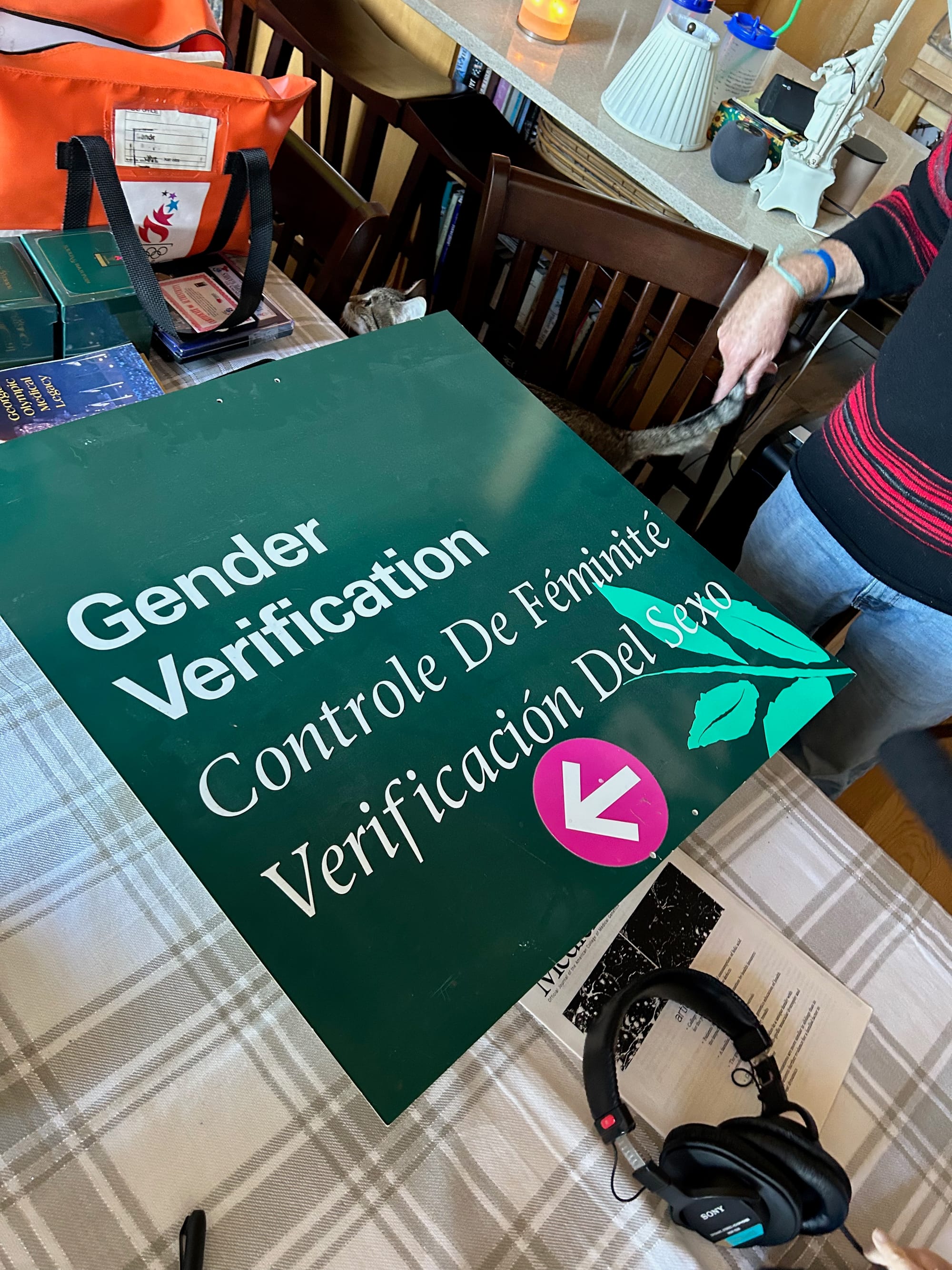
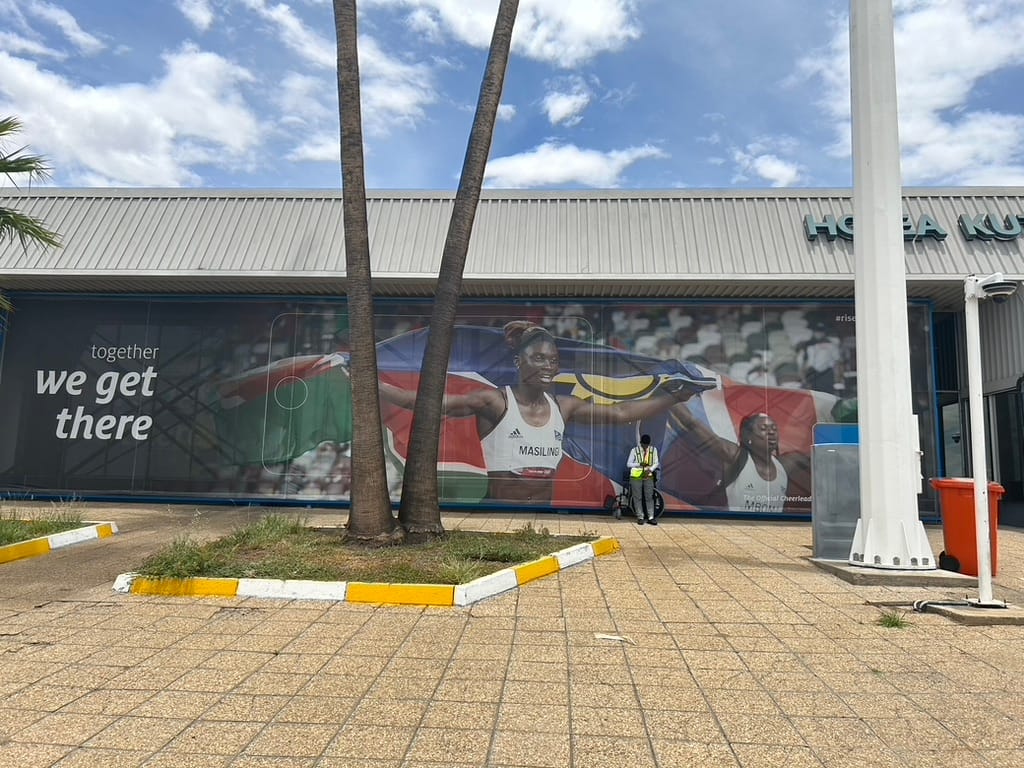
When you start looking into the modern era of sex testing, and the athletes who have been impacted, it doesn't take long to notice something. Every woman who I am aware of who has been flagged and singled out under gender verification policies since 2009 is a Black or brown woman from the Global South. Most of them are from Africa. Human rights organizations, like the UN and Human Rights Watch, have specifically highlighted this issue, arguing that this disparity suggests that there is something going on beyond simply “science.”
But advocates for sex testing policies counter that the science is on their side here, because research shows that DSDs are more common in Africa.
The first time I read this it stopped me in my tracks. Differences of sex development is a broad umbrella category that includes all kinds of diagnoses with all sorts of mechanisms. Africa is a huge continent that is incredibly genetically diverse. So while there are cases of genetic variations being more common in certain populations — the idea that DSDs, this broad category, were more common in Africa, this hugely diverse place, doesn't make sense.
So I went off to look at the evidence. Thankfully, science loves to cite its sources, so I dutifully followed the first citation, which points to a paper that cited another paper, which cited another paper, and so on and so forth. Over and over I wound up at a dead end, where this so-called fact would be asserted in a paper with no citation at all, but also with no evidence that this was true.
For a couple of months this was my white whale. I couldn't stop talking about it. I couldn't stop thinking about it. I lay awake at night trying to think of new places to look and new people to ask about where this idea originated. But things got even weirder when I did track down the source of this "fact."
The place that this claim comes from originally is a masters thesis from 1970, by a South African researcher named Hatherley James Grace titled, "Intersex in Four South African Racial Groups in Durban."
Even just those basic facts might give us pause. This was a white geneticist working in apartheid South Africa on genetic differences between white and Black Africans. And he states explicitly that his goal is to prove that what he calls intersex conditions are more prevalent in Black Africans.
This mission falls squarely within a core argument of eugenics. One of the things eugenicists believe is that the more advanced a race is, the more distinct the differences between the sexes are. In their eyes, white Europeans had extremely clear sex and gender differentiation, while Black Africans all looked the same, regardless of sex. And this made sense, they argue, because lower-level creatures, like nematodes, are all hermaphrodites. Simpler creatures have not yet evolved to have different sexes.
This is the background behind Grace's paper and why he had set out to prove this idea that Black Africans are more likely to have these intersex variations in the first place. Which means that regardless of his findings, we might be skeptical of them.
But we don't even need all that context and skepticism, because he wasn't even able to prove his thesis. The paper in fact laments the fact that he could not prove that Black Africans were more likely to have these variations in sex biology. Of course he blames Black folks for this, for not self reporting their conditions enough.
What this means is that all these papers that all claimed that it made sense that there was a disparate impact of these policies were all based on a paper by a eugenicist who did not even manage to prove his argument.
And yet... this idea persists and is used to justify the extremely biased impacts of these policies.
From as early as I can remember, I wanted to be a scientist. The idea of asking questions, exploring the world, trying to understand how things work compels me. And I confess that there was a time when I believed that science was pure and logical, unburdened by the messiness of the world. All you had to do was control your variables. When someone said, "the science is clear," I trusted it. Because science was the best way to understand the world.
Now, I know better. Science is an incredibly powerful way to understand the world. But plenty of people use the name recognition of "evidence" without actually having the right kind. Right now we're seeing the ways in which evidence is being manufactured and manipulated and misrepresented to hurt people. Vaccines don’t cause autism. Trans people aren’t a social contagion. Pumping billions into the police doesn’t make us safer. Criminalizing homelessness doesn’t make people healthier. We know this, and in fact we have actual evidence of this, and yet people with power today are claiming that they have evidence to suggest all those things are true.
For decades, people have been playing whack-a-mole, trying to constantly chase and bat down the same bad ideas over and over. We don't win by hitting the moles harder. We win by cutting the floor out of the game. We have to be able to recognize the core assumptions and misrepresentations that underpin the entire network of tunnels and dig them up.
What that means is questioning the root assumption: that the world is easily, cleanly split into two separate kinds of people, men and women. Without dismantling that idea, we will chase moles forever.


