COYOTE Calendar: May 21-May 27
This week we've got sea slugs, decay-themed dance parties, two different costume contests, and mountain lions.


This week we've got sea slugs, decay-themed dance parties, two different costume contests, and mountain lions.

As mahjong grows in popularity, can the diverging fanbases come together?

Who are your pets? What are their nicknames? We want to hear from you in the comments!


Emma and Nuala try to figure out if they’re perimenopausal, wonder if it’s anxiety or the end of the American empire, and designate Tori Amos as their menopause cult leader.


In Casey Rand’s deeply resonant McSweeney’s piece Is It Perimenopause or the Death Knell of Late-Stage Capitalism?, she asks critical questions about hormones and the state of the world: “Am I depressed because my periods are ending, or did my boss use my emails to train my AI replacement and then fire me with no severance the day before I was supposed to have spleen surgery?”
Truly, who among us, right? In this bizarre moment in history, it’s genuinely difficult to parse hormone-fueled anxiety from a legitimate fear of your neighbors being seized by masked federal agents in the middle of the night.
To make matters worse, Western medicine infrastructure — which up until 1993 excluded women from the vast majority of clinical trials — has proven almost entirely useless in our quest for diagnoses. [Editor’s note: And until now, the word "perimenopause" wasn't recognized as a word by my computer's spell check function.]
As the senior citizens of COYOTE (AKA the over-40 contingent), we have found ourselves kvetching about various symptoms and sleep issues more times than we can count. In the spirit of normalizing these experiences, here is a frank conversation in which we attempt to unpack what is happening to our bodies while capitalism beats us over the head with Instagram ads.
Emma: I think the way menopause has been talked about for so long, certainly for generations before ours, is it’s sort of this black hole — maybe it gets whispered about. And then as I started having symptoms where I was wondering if I was in perimenopause over the last year or two, I’ve been reading and there’s such basic shit I didn’t understand, like that menopause itself is just one moment, and everything else leading up to it is actually more of what we should be learning about.
I still feel frustrated at the way we have to seek this information out — at the lack of public health education. It's the same way I felt when I was pregnant and suddenly learning all this basic stuff about my body at 34. I mean, I guess it wouldn’t make sense to teach kids about menopause at the same time as sex ed, but there has to be another way, right?
Nuala: I first started wondering if I had perimenopause when I was suffering from really bad fatigue. It was not just being a little tired, being a little sleepy. It was the hard to get out of bed, hit-by-a-truck kind of fatigue. I couldn't really hold conversations. It was so bad.
So I went to my doctor and he took it really, really seriously, because fatigue can be a sign of almost anything. He ordered me a ton of labs to rule out a bunch of things — everything from cockroach allergies to lymphoma to lupus to thyroid levels. Aside from the lightheadedness I suffered from having 21 vials of blood drawn in one go, everything was normal, and it was the most disappointing thing in a weird way. I don't want lymphoma or lupus, but I wanted an answer, and I never got it. There was never a mention of any kind of hormone test.
If you are a Googler of health concerns (which is always a bad idea, and yet I think all of us do it) all sorts of things start to come up with fatigue. If I review perimenopause symptoms it's like, okay, fatigue: check. Night sweats: check. Hair loss: check, which is devastating for me, because my hair is like my whole personality. Moodiness and irritability: check. Random changes in weight: big-time check.
I look at that list and this is everything that is happening to me. And also I'm 41 years old, and everyone says this is not when it happens.
Emma: Except if you go on Reddit or talk to your friends and then you hear something to the effect of “This is exactly when it happens, and the patriarchal Western medicine system doesn't want you to know!”
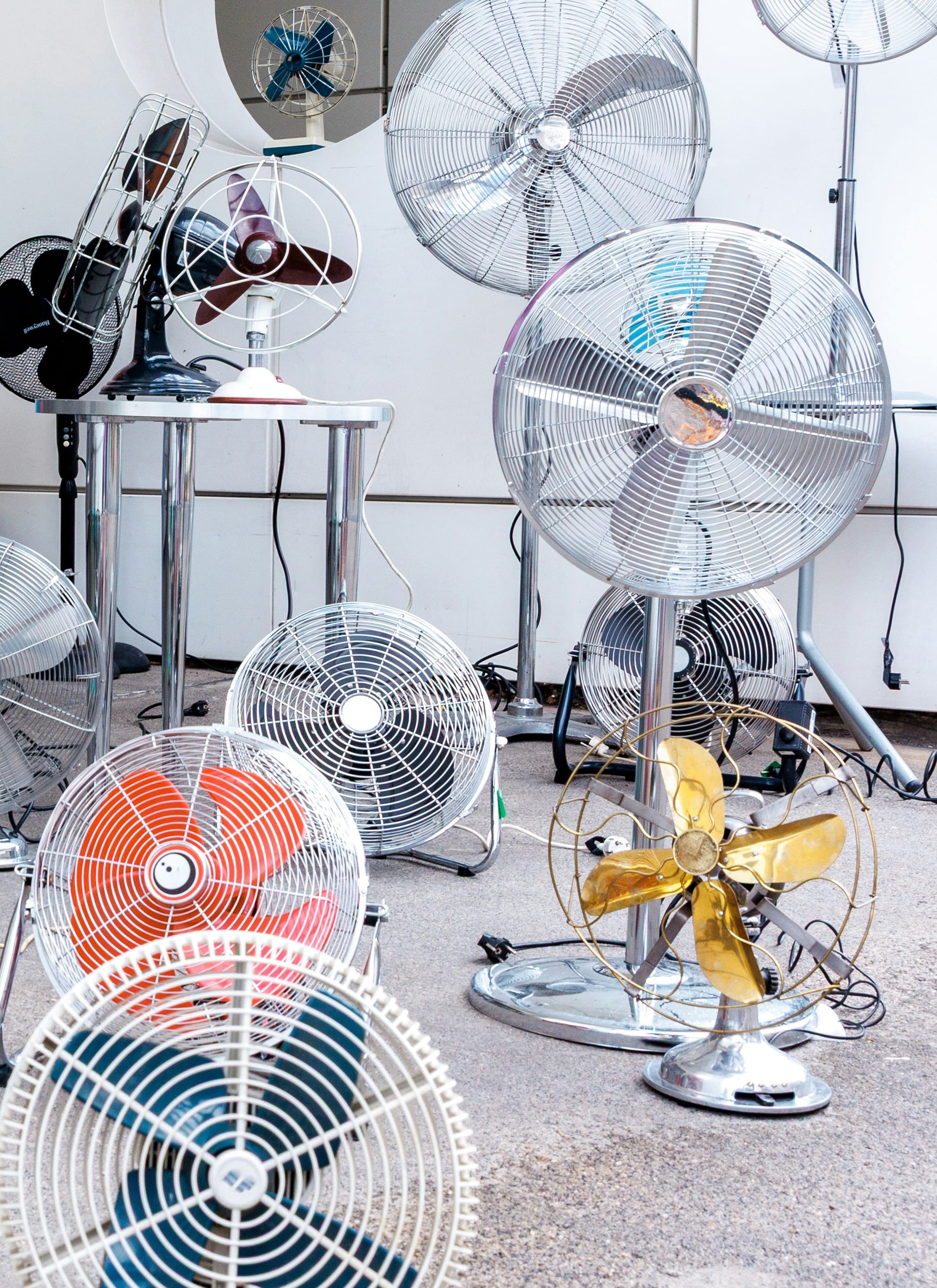
I’m also 41, and I’ve had many of the same experiences as you. I’ve started sleeping with a fan pointed directly at my face. It’s great.
Emma: The anxiety piece has been especially hard to parse for me. I’ve had anxiety to varying degrees my entire life, but it’s definitely gotten worse in the past decade. I don’t know at this point what’s postpartum anxiety that never fully went away, or if the hormones from that collided with hormonal changes from perimenopause… and then there’s like, the anxiety that I think is a perfectly reasonable response to living in the modern hellscape that is the United States of America.
I have a friend — our kids are the same age (2019 babies) — and I was saying to her that there’s stuff I experience where I still don’t know if it’s the effects of the pandemic or parenthood. And she was like, I’m gonna add a third one: perimenopause. Pandemic, parenthood, perimenopause, which is it?
Nuala: I also don’t think there is a way to totally eliminate anxiety. As someone who’s been on every single possible drug for it, it’s still always lurking there. But we have to move away from this desire to compartmentalize things so that we can define them, understand them, find their root cause, and then fix them. It’s impossible.
Emma: There’s this other thing happening, where, given the information vacuum — we don't get good medical advice, and the research isn’t there, and doctors don't believe us about a lot of things — we’re seeing this gold rush for products. All of my ads are for perimenopause things. It’s like, "Figure out your perimenopause score! Take these menopause gummies that Halle Berry is selling!" I think she’s actually been going to Congress and lobbying for more research and coverage for treatment, which is cool, but she’s also selling $3-per-pill daily supplements on Instagram. Here, I looked it up: Pendulum probiotics promise to improve digestion, metabolism, energy, and overall health.
Nuala: I mean, all of those sound nice, though, right? That’s the problem with supplements — you’re like, I want my heart to be healthy. I want my brain to function. So you just end up taking things.
Emma: Do you get ads for this company called Tia? It’s like a chain of private women’s healthcare clinics, and I understand why they’ve been successful, but it also makes me so angry that there needs to be a for-profit thing with hot-pink marketing just for half the population to get answers about their health. I also get tons of ads for Midi Health and By Winona, which I guess are virtual clinics/pharmacies targeting women in menopause? It all just reminds me of The Wing: Girlboss healthcare.
[Note: after this convo I learned Halle Berry has also started her own menopause-specific online healthcare company. For $45/month, you get, among other things, a “dedicated menopause coach of your choice.” Unclear if you can choose Halle Berry.]
Nuala: What do we do with this unknown, with this lack of answers from our Western medical system, with our sense of solidarity with one another, with our perception of our own bodies and our own experiences — what do we do with all of this shit?
Emma: I think just talking about it is really helpful. Every time I talk to you, or I have a group chat with some friends from high school… it’s kind of shocking how quickly and how often the conversation turns to perimenopause. It’s also been validating and cathartic for me to follow people online who are real about it, like Melani Sanders, this woman who started a thing on Instagram called the We Do Not Care Club, where she pokes fun at body aches and brain fog and puts the world on notice that perimenopausal and menopausal people “simply do not care much anymore.”
Nuala: One of the things I’m working on as I experience these symptoms — that are very real, regardless of their cause — is to just give myself some grace. It’s easy to get so frustrated when I wake up at 4am and I'm just like, goddamnit, I’m not going to be able to go back to sleep. It’s infuriating, and I get really angry about it, but that is not helpful. I can just be gentle with myself: "I don't know where this is coming from, but here's where you are right now." How do you take care of yourself through this?
You’d have compassion for someone else in this experience, right? How do you extend that to yourself? That’s really difficult, especially when it’s like a loss of ability to sleep — or my hair thinning a little, which makes me hyperventilate when I think about it too much. How can I just be gentler with myself? Because this is happening, whether I want it to or not.
Emma: The self-compassion part is so hard. I think by my 30s, I was like, OK, I feel so much better when I exercise regularly and I get enough sleep — just the basics, you know, but that’s my baseline of “being good.” So then when those things become difficult to do, it can feel like you’re somehow being “bad” at something that should be easy. But that’s not true. If you’re having trouble sleeping, it’s not a moral failure.
Nuala: How do we inform one another about these changes to our body without just fear-mongering and focusing on the misery of it? I’ll go to a party with a bunch of women who are in their early 50s, and it’s just nonstop menopause talk, which is great. I'm so glad that this is out in the open in a way that it wasn’t for my mom’s generation. And also, as someone who’s 41 and just starting to stare this down, it feels like everything seems bad and everything that is coming for me is terrible.
Now my friends who are in their 30s look at me with horror as I list all of my potential symptoms of perimenopause. Maybe it should just be, "This is what I am doing to take care of myself, in spite of it or because of it," instead of just a tirade on how miserable my existence is because hormones.
Emma: [Fellow COYOTE] Rahawa sent me a clip of Tori Amos performing, and it seems like she talks about menopause a lot! In this one clip she makes a joke about hot flashes, but then she’s addressing the young people in the audience, and she says something like, “You 25-year-olds out there, I love you, but I wouldn’t want to be you ever again.”
Which is also a framing that helps me: You’d have to pay me so much money to be 22 again. The flip side of all these symptoms we’re talking about are things I can honestly say I really love about getting older, like feeling more sure of myself.
Nuala: In an interview with the Guardian, Tori said, “Menopause is the hardest teacher I've met. Harder than fame.” That makes it sound terrible, right? But I like the role of the “teacher” in there, as we’re always learning and growing.
I look at women who are on the other side of this who just don't give a fuck. There’s this certain point that many, many women reach in life where they just don’t care anymore in a way that is so liberating. And I look at them and I’m just like, God, I can’t wait to be there, but I know it’s gonna take a minute longer for me. That’s not something I can achieve in this moment, but hopefully going through this humbling process of my body changing in all of these ways will get me closer to that.
Emma: I feel the same way. I’m not there yet, but I can kind of see it on the horizon.

Nuala: In one interview with Tori she talks about her daughter Tash, who said, “You survived post menopause. You’re a warrior. You need to tell that story so that my future doesn't look like defeat.” Maybe menopause is just a very loud marker of — I don’t know how to say it without it being cheesy — our passage through life. That changes are happening all the time to our bodies and our minds, and this is just one where it’s a really obvious thing that you can actually gesture at, and be like, “Hi, this thing is happening.”
I think talking to one another, it’s validating to know I’m not alone in this. And whenever possible, to see the value in it instead of just the misery of lying awake at 4am soaked in sweat with your head spinning from anxiety, which is such a common occurrence for me these days.
Emma: I’m just trying to keep things in context right now. You know, with fortune cookies, when people add “in bed” at the end of the fortune? I’ve started adding “at the end of the American empire” to everything. It’s not just hot flashes, it’s hot flashes at the end of the American empire. Which is to say, we’re doing a lot. And we're handling it pretty well, I think, all things considered.
I also like the idea that talking about it honestly can make it so the next generation has it a bit easier. I think for us, alongside the frustration about the lack of real information, there’s all this anger — that something half the population goes through could be so under-studied, minimized, ignored. Hopefully when people 30 years younger than us get here, they can feel just a little less mad.