How Did An AI-Generated Mural Wind Up in This Vallejo Alley?
Searching for the soul in "The Soul of the Bay in Vallejo.”
The United States does not recognize International Workers’ Day, which is exactly why you should.
Every month, food writer Soleil Ho recounts the best bites of the Bay Area (and elsewhere).
Searching for the soul in "The Soul of the Bay in Vallejo.”
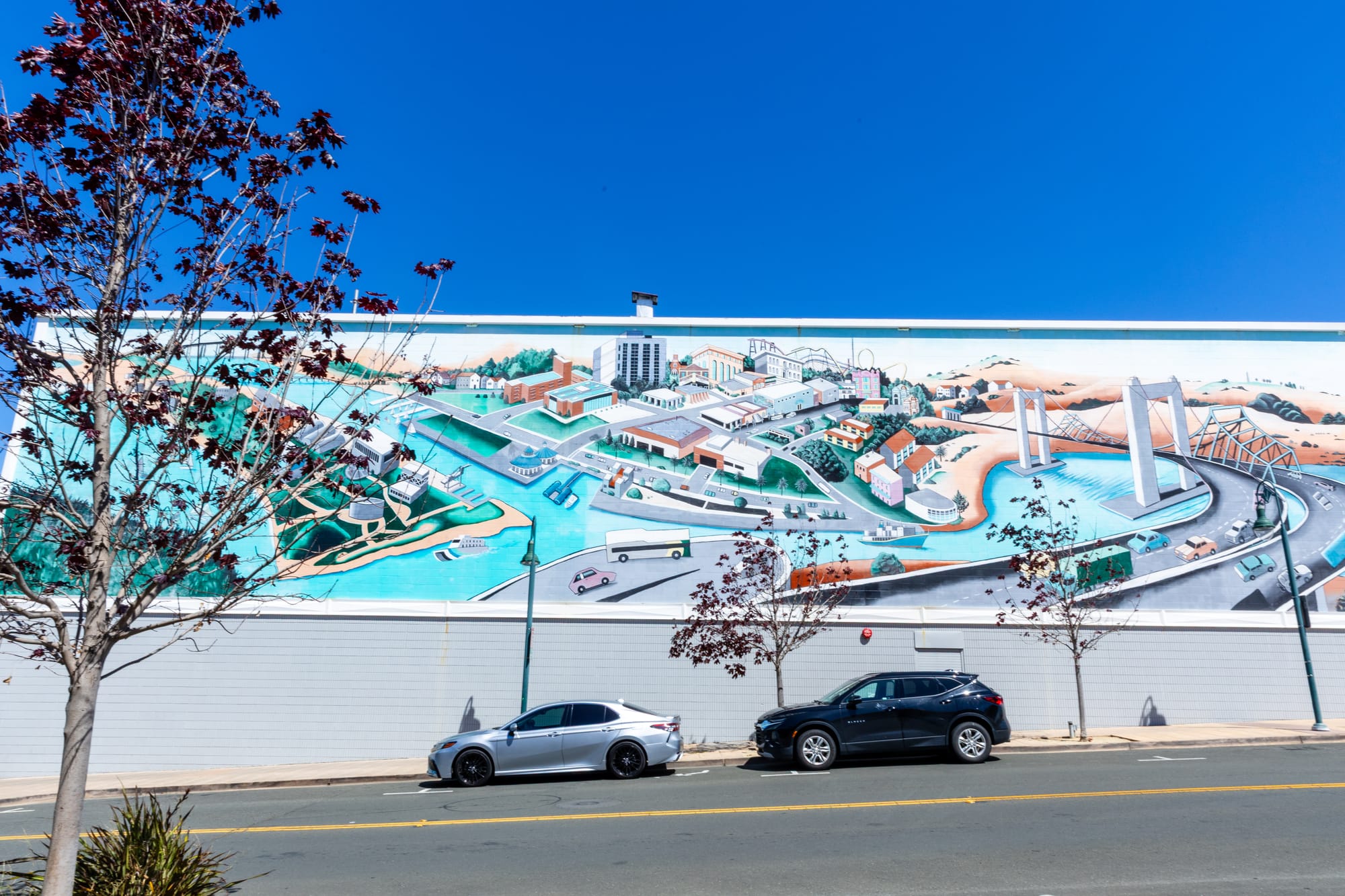
Last April, on a sunny springy day in a small alley off Vallejo's main street, there was a ribbon-cutting ceremony for a mural: a genuine ribbon, giant novelty scissors, the whole shebang. About a dozen people showed up — community members, local business owners, politicians — to celebrate a new painting meant to celebrate the art and culture of Vallejo.
But for Nicole Loufas, the moment was fraught. "I didn't want to go to the ribbon cutting," she told me. "I didn't want to take part in any of it. Honestly I was just so disheartened by it. But I had to just roll with it and keep smiling and say, 'Yeah, look what this great thing that we did.'"
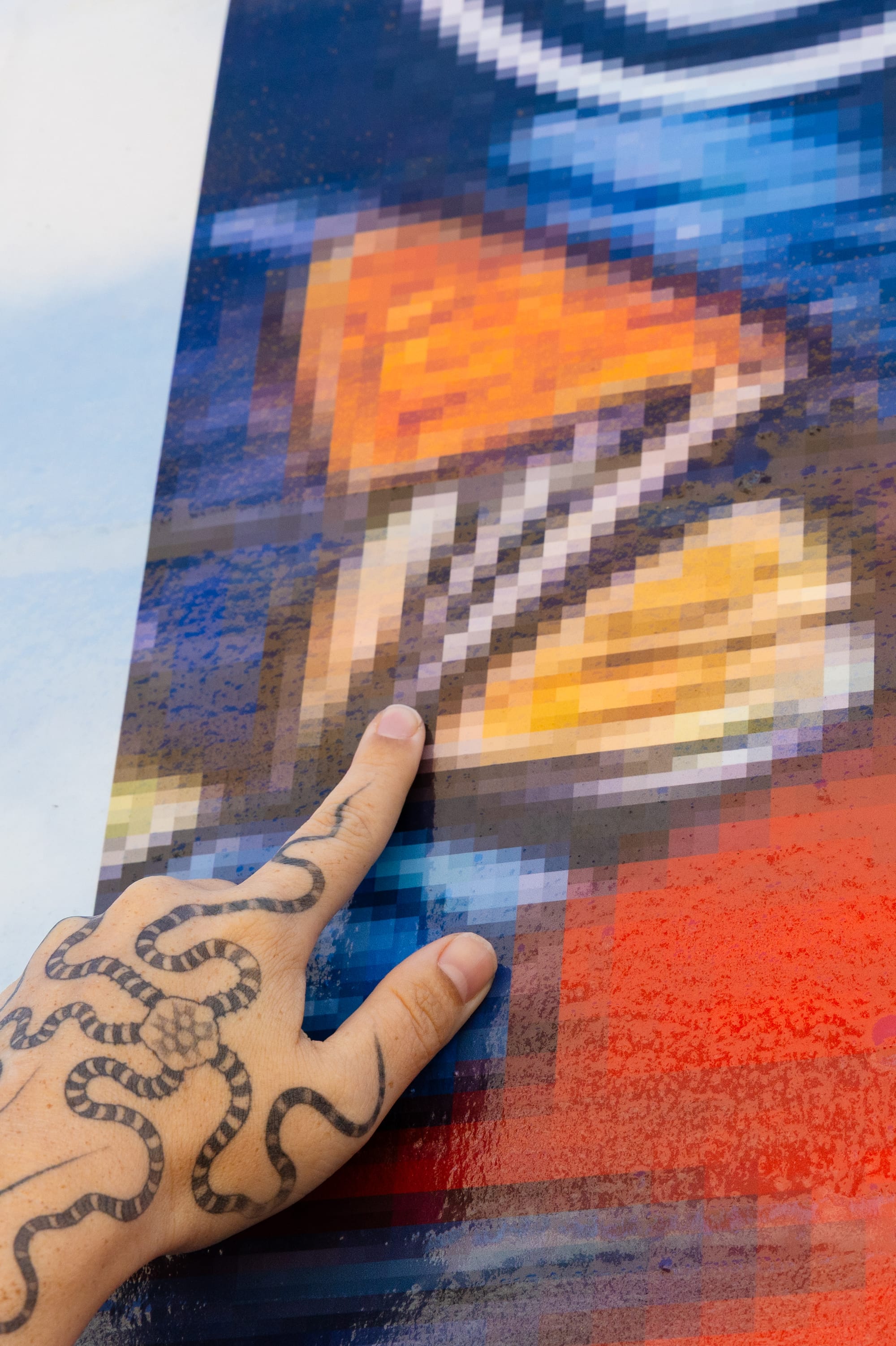
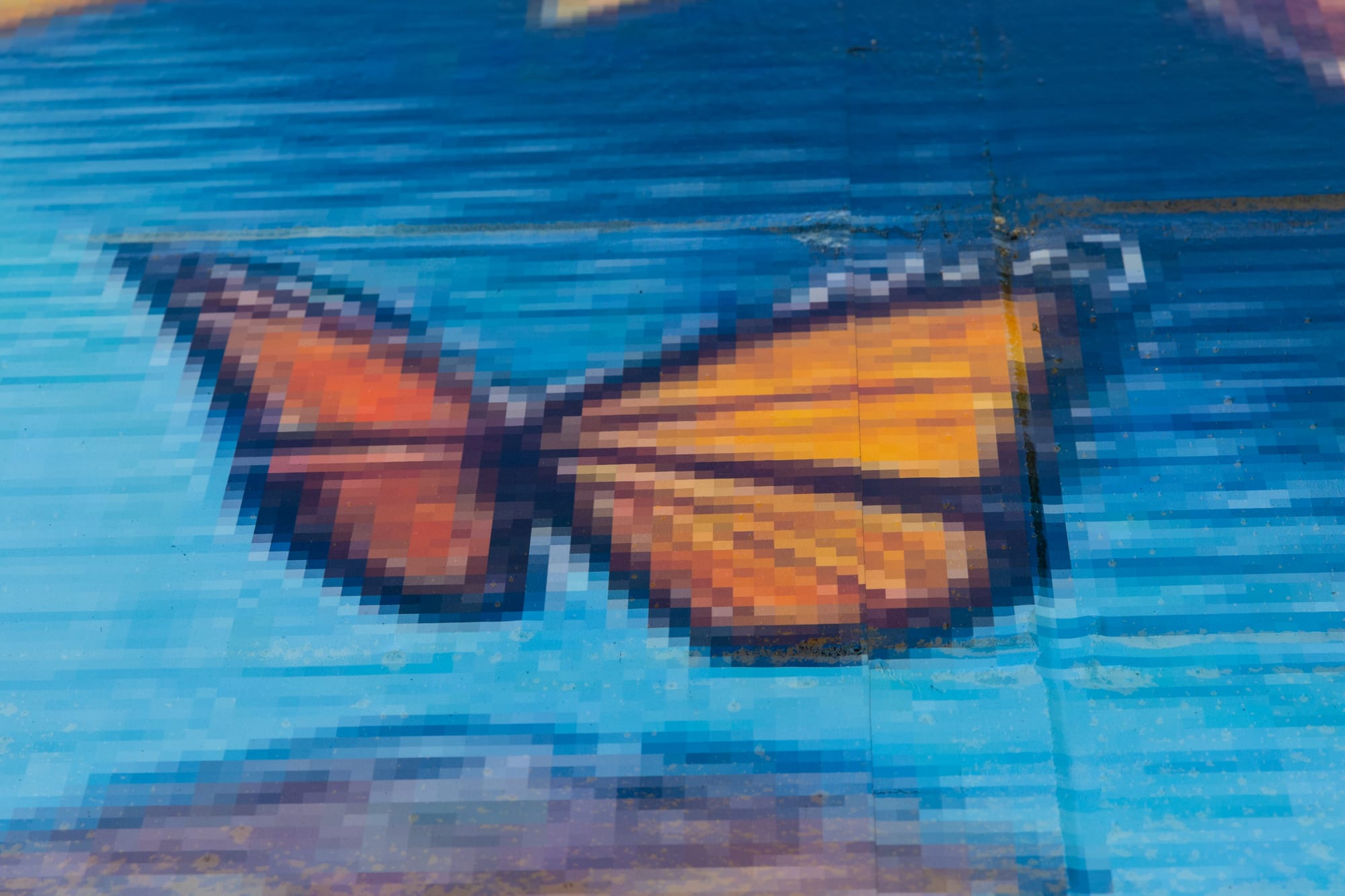
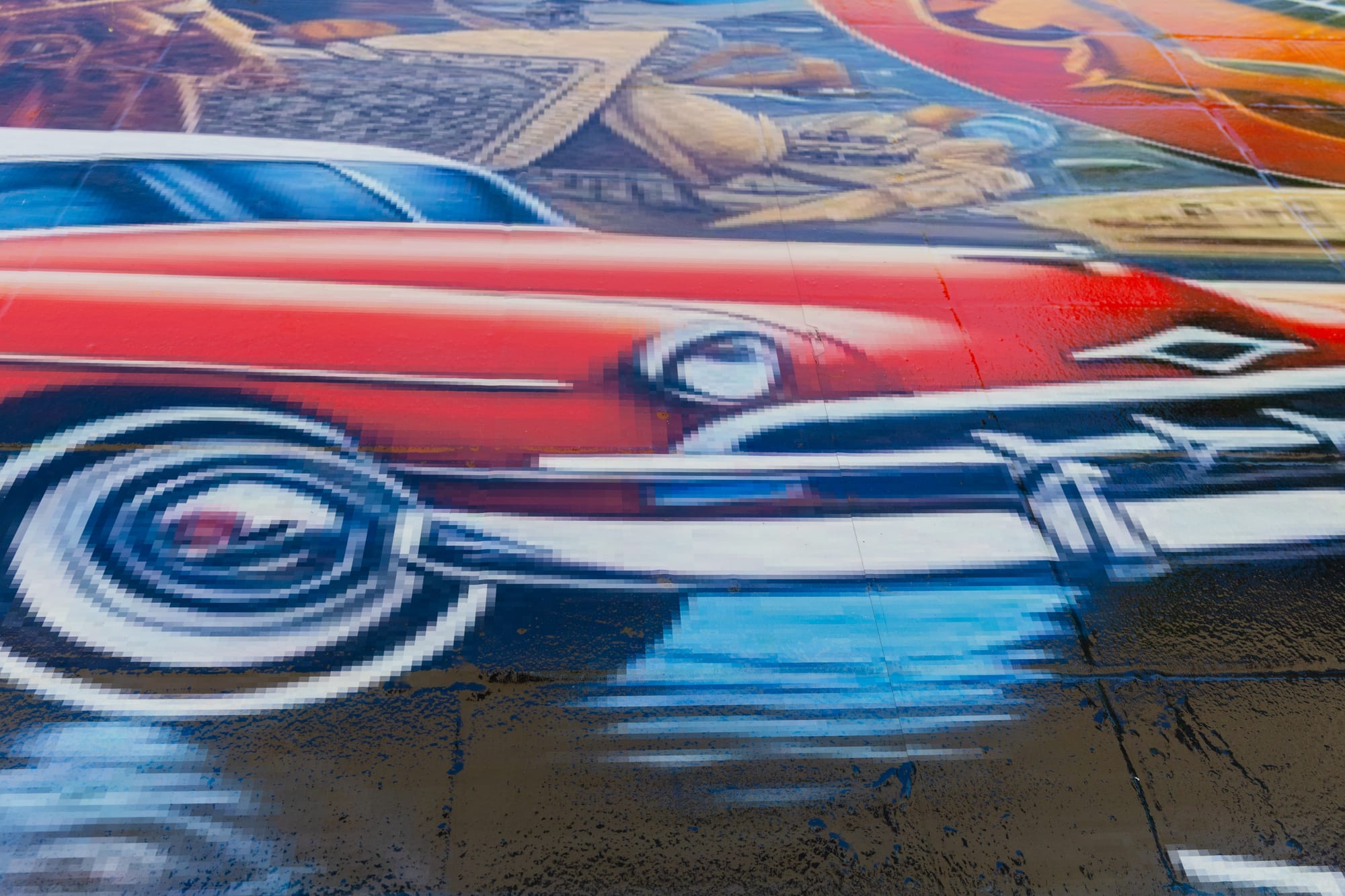
If you've seen the mural, which stretches along 30 feet of Indian Alley, you might understand why. The more you look at it, the stranger the art becomes. A man plays an instrument that doesn't make sense — some kind of cross between a trumpet and a trombone. Another person's arm comes out of a guitar. The bridge in the background is not the Carquinez Bridge nor the Mare Island one. There are odd blobs and indecipherable shapes scattered across the piece. If you've spent any time online recently, you will likely spot the telltale signs that the mural was not made by human hands — it was generated by AI.
Loufas doesn't need to look for the signs, though. She knows it’s AI, because she was the one who made the image in Adobe Illustrator.
It's not everyday that a huge piece of art goes up on a wall accidentally. But according to the folks behind "The Soul of the Bay in Vallejo," that's basically what happened. "It was never supposed to be blown up 25 feet tall. It was an 8.5x11 JPEG for Christ's sake," Loufas said.
But in a town overflowing with artists, how did an AI generated piece of art wind up on the wall in the first place?


It all started with the best of intentions. In the fall of 2024, Vallejo Main Street — a nonprofit organization committed to revitalizing the town's main thoroughfare — got a $15,000 grant from AARP's Community Challenge program "to transform a neglected two-block alleyway as part of the city’s downtown revitalization." According to the press release from AARP, the Vallejo project would include "umbrellas, garden boxes and, eventually, classes for adults and kids."
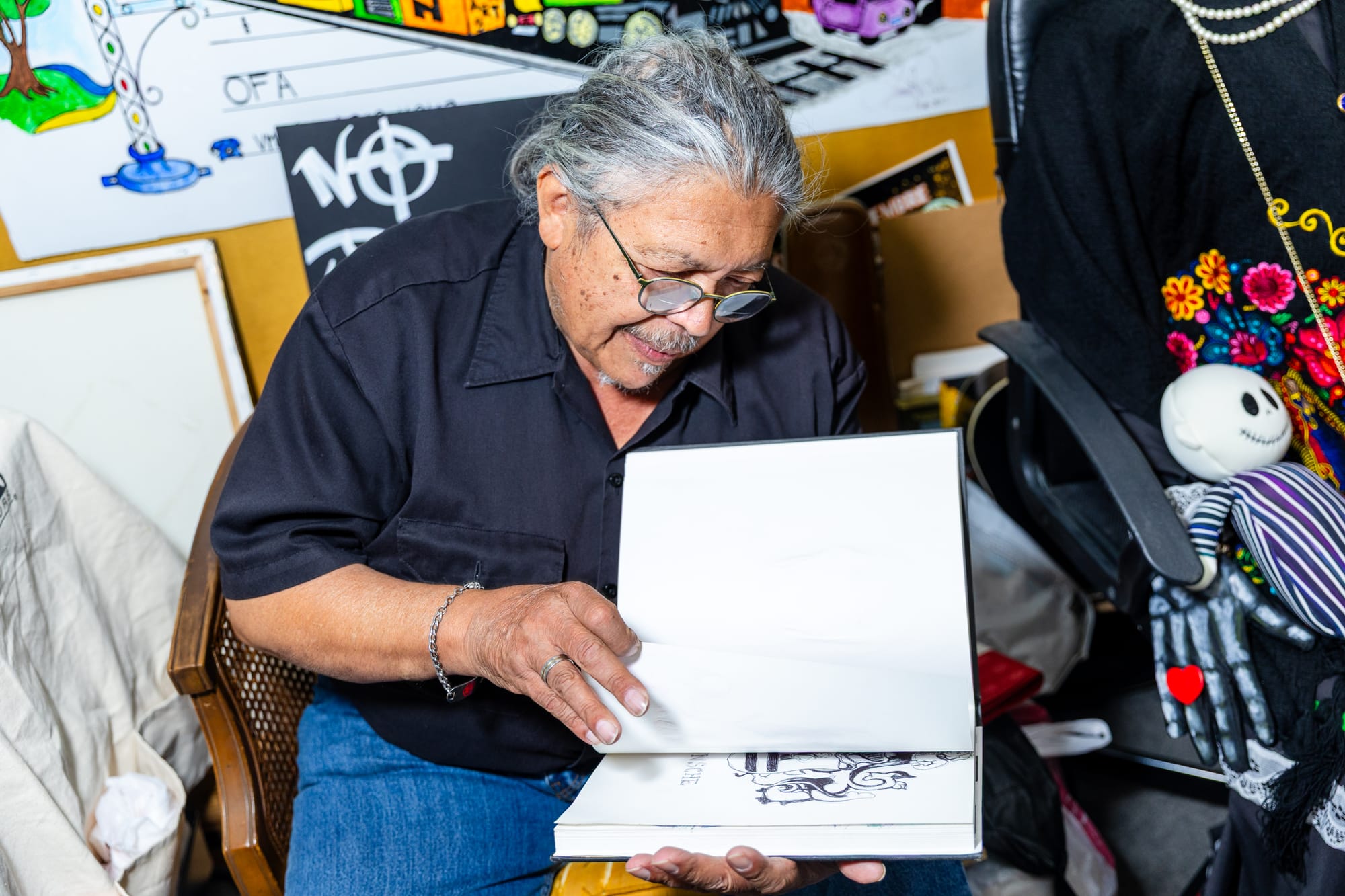
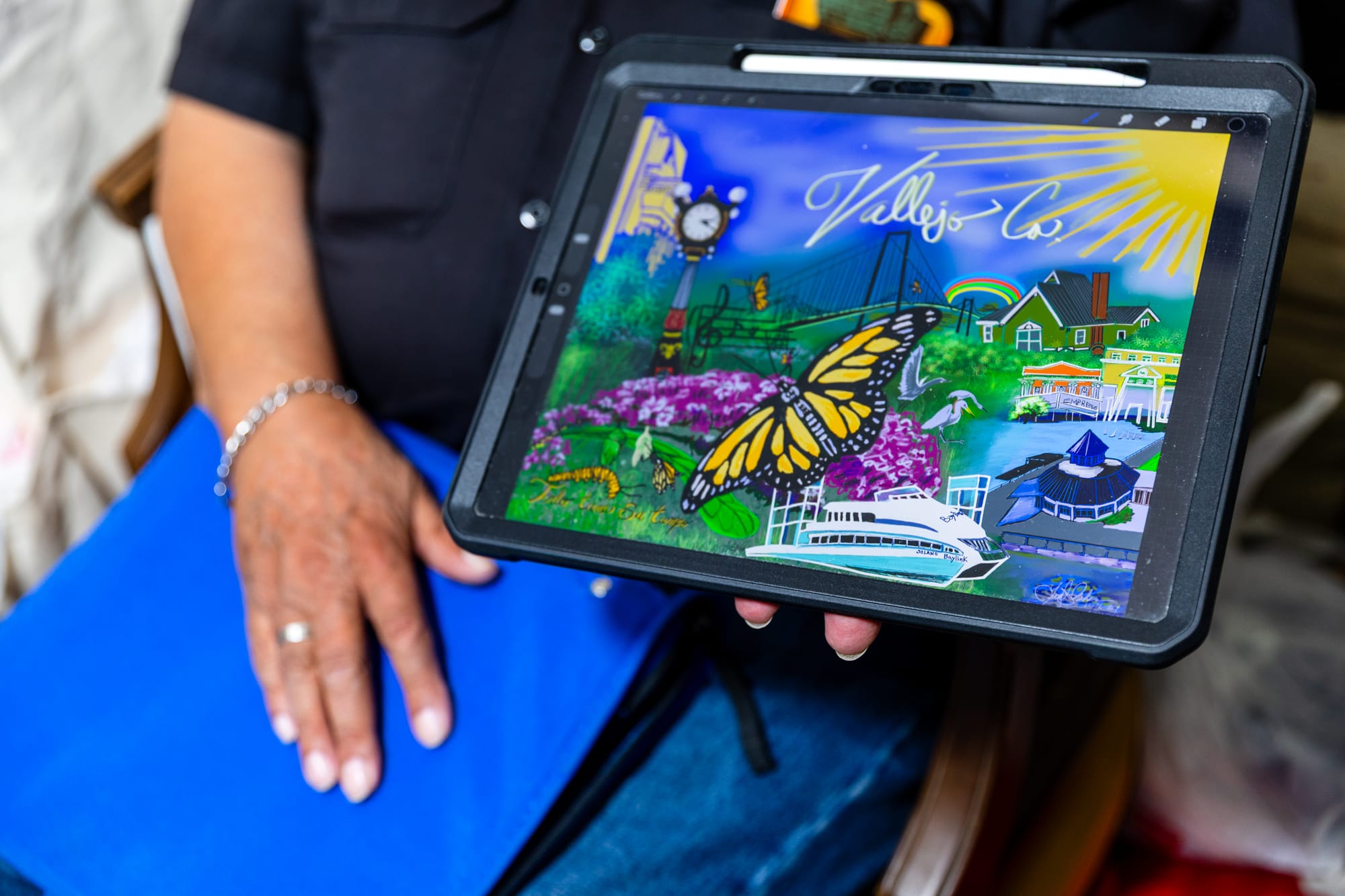
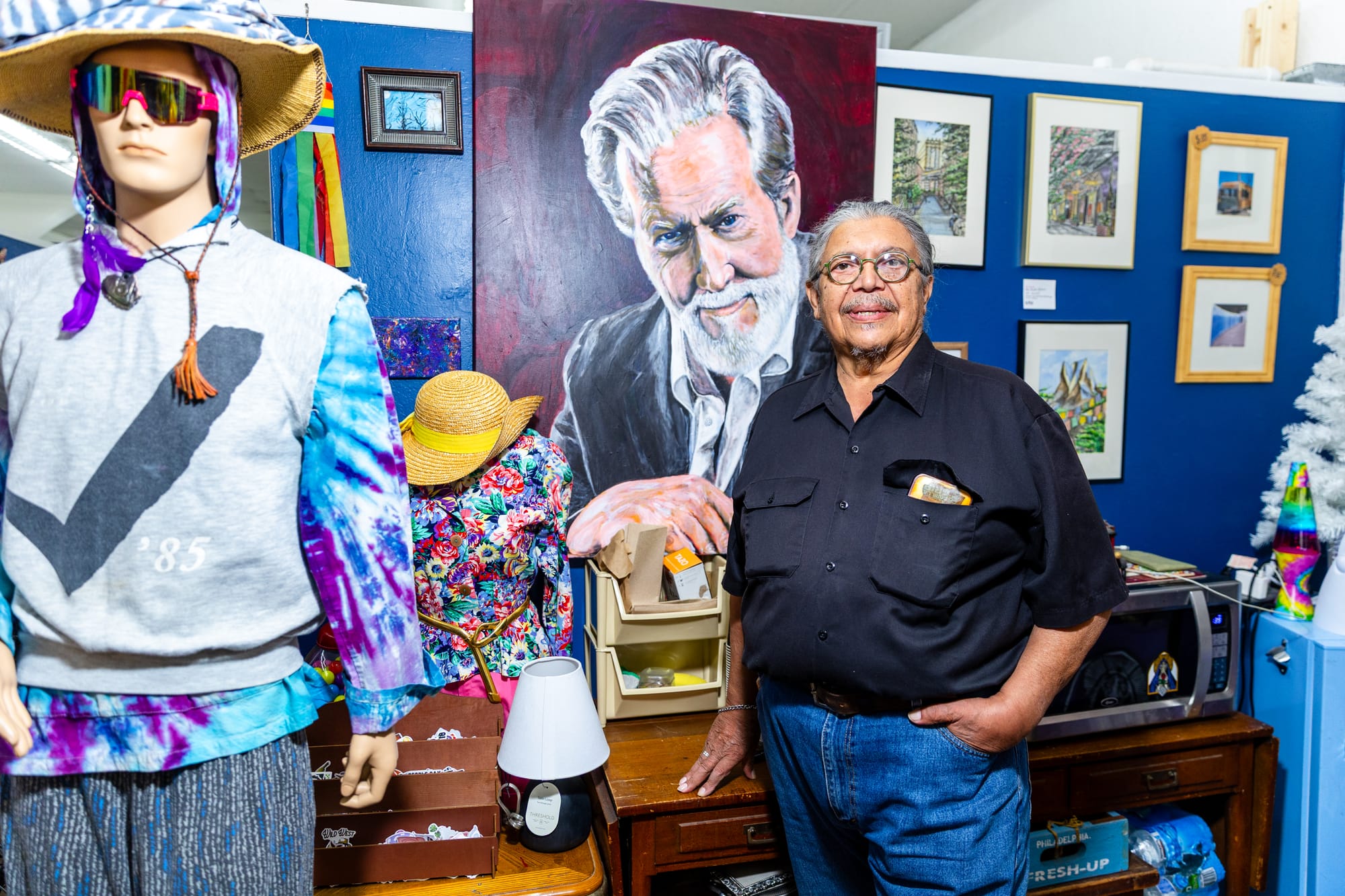
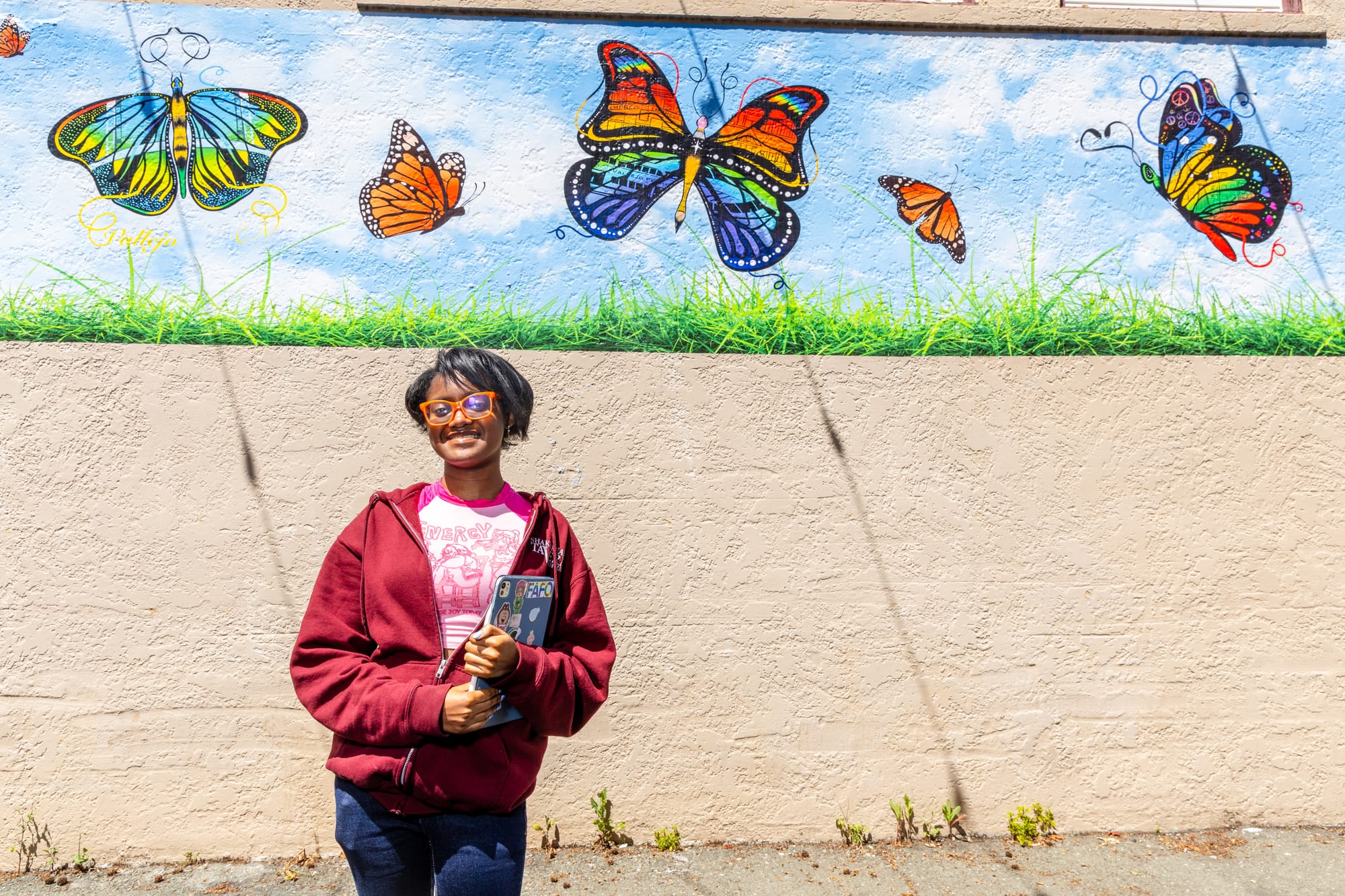
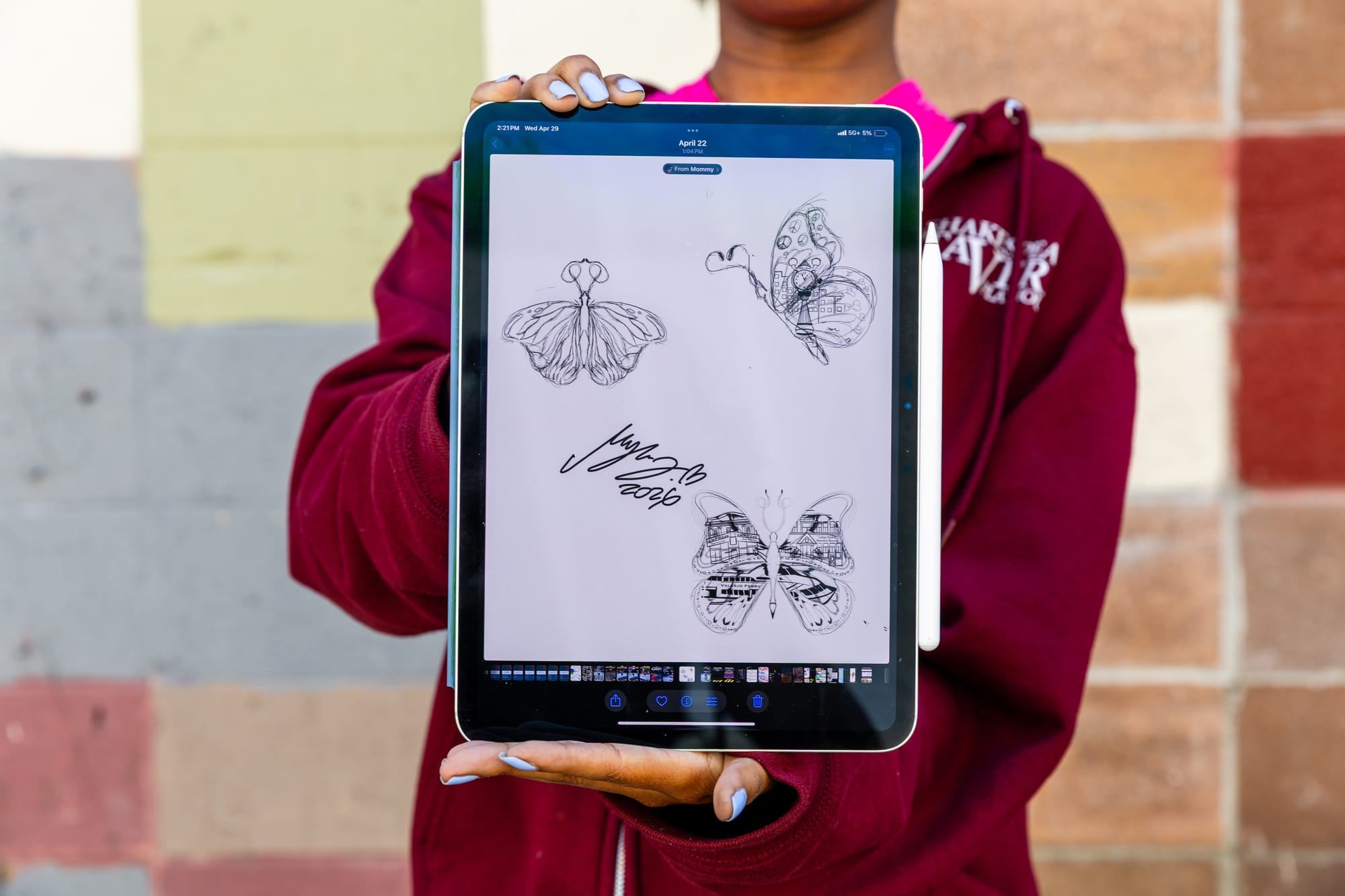
From there, the organization started approaching artists about contributing elements. Leo Rodas, a painter with a studio in downtown Vallejo, was asked to help design the mural. Myla J, a local teenager who has been making and selling her art since she was seven, was invited to contribute some of her iconic butterflies. Both were excited about it and got to work.
Myla created three detailed butterflies, each with wings representing elements of the city — the Mare Island Bridge, the Naval Museum, the ferry and more. Rodas started designing the overall mural, featuring a famous local clock, the Mare Island bridge, the Ferry Building, and a way to incorporate Myla’s butterflies into the design.
In the meantime, Loufas — who was part of the committee organizing the project — created an example mural image using Illustrator's built-in AI program and sent it to the organization's then-executive director Andrea Portillo-Knowles to use in marketing and promotion. Loufas recalls that Portillo-Knowles was pleased. "She was like, 'Amazing. We're going to use this as our placeholder. We'll use it in all of our campaign, telling everybody it's coming.'"
But as the months went on, things started to fall apart. Everything took longer than expected. Organizers ran into trouble with the fire code when they tried to put the umbrellas up, and in February of 2025 the building whose wall would serve as the canvas for the mural had a fire.
Meanwhile, the actual mural itself wasn't ready yet. "The artists did not gain sufficient understanding of what was wanted by the VMS Alleyway Project committee," Richard Abbot, now president of Vallejo Main Street, told me by email. "Thus final art was in the works, but not yet produced, by the hired and paid artists." Rodas told me that he never got any feedback at all on his design from Vallejo Main Street.
Suddenly, the project was running out of time. The AARP grant was what's known as a "quick-action grant" and came with a deadline: "The mural had to be up on the alley wall, according to the terms of the grant, by Feb 28, 2025, to be paid for by AARP," Abbot said. "In that haste, the placeholder image was transmitted and printed and installed upon the wall to get the project completed on time."


No one I spoke with could say who, exactly, made the call to print the placeholder image Loufas had generated, but she told me that it was brought to the board for final approval. Abbot was a Vallejo Main Street board member at the time, but he also runs Signworks Sign Company, which did the actual printing of the mural itself (it isn't painted on the wall, but instead basically a large vinyl sticker that can be removed). When I first got in touch with him, he told me he had no idea it was an AI-generated image. When I later asked him who, exactly, sent the email to him with the file attached and directions to print, he told me he couldn't tell me even if he wanted to.
"I wish I could,” he said. “But two months ago I listened to AI when it was instructing me on changing out my email server. It spoke to me so reassuringly, and then gave me a command that I followed, that deleted all my old emails from forever ago. Gone. All my history."
He acknowledges the irony here. "Gets the Monty Python award," he said.
In the last-minute scramble, no one told Myla or Rodas that their art wouldn't be part of the main mural. Nor were they informed that an AI image would have their names on it. They both told me that they found out along with the rest of the public, on the day of the unveiling. "I don't personally condone AI," Myla told me. "I would have preferred if they would have done what I had designed for them," Rodas said. "It is totally different than what the AI image is. I wish they would have told me."
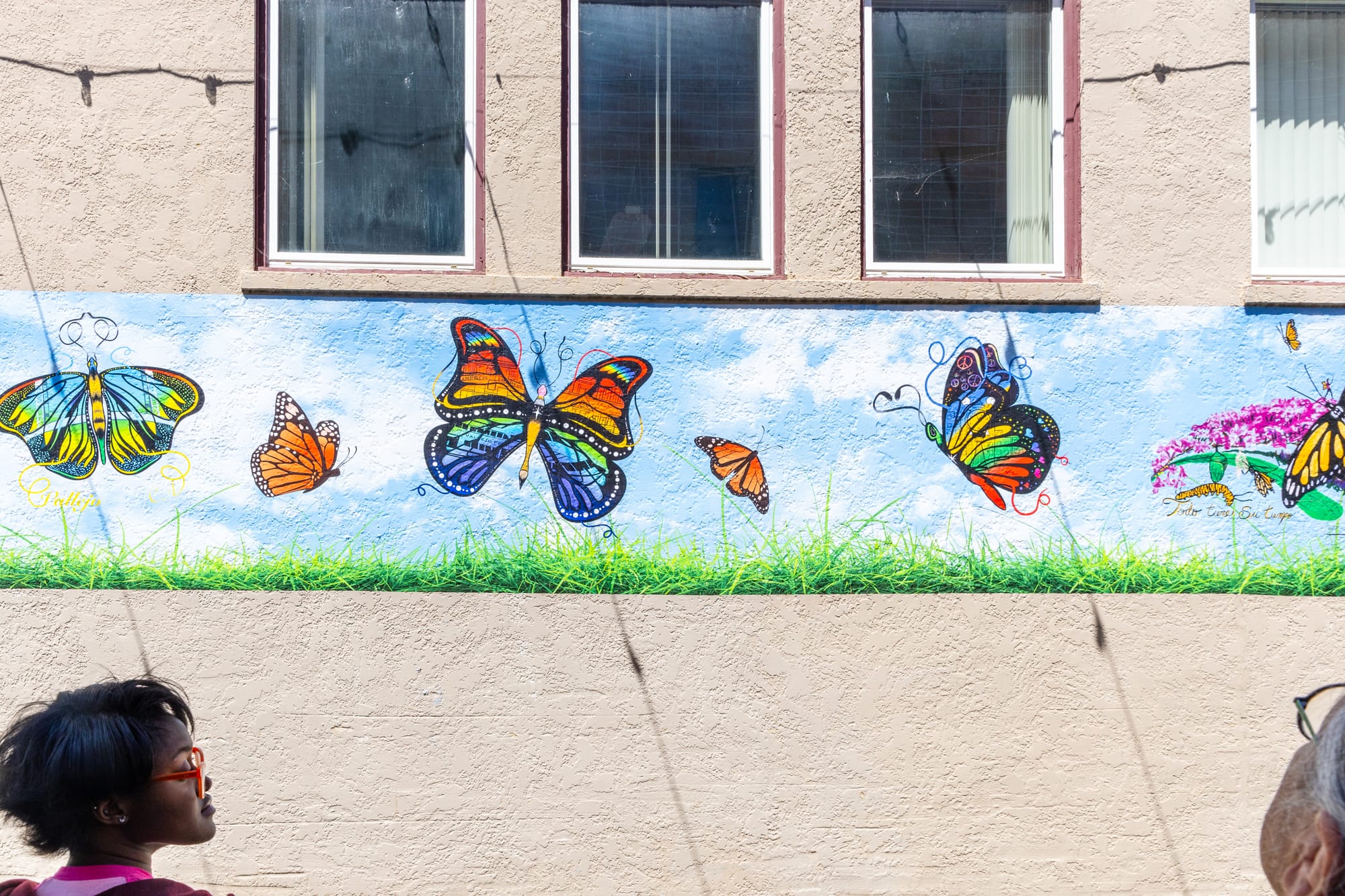
As a consolation of sorts, the group did wind up printing some of Myla and Rodas’s work for the alley. On the wall across the way from the mural, Myla's butterflies have been laid out next to one by Rodas. Between them are two clipart butterflies, and below a stock image of grass. We met up there recently, and debated whether the strange round thing on the main mural was a pirate ship, a jukebox, or a time machine. Myla told me she's happy to have her work in the alleyway — she just wishes they weren't next to an AI mural. Loufas, for her part, still feels bad about the entire thing.
"For me, when I look at it, I'm cringing because I'm like, it's AI, [and] we're in an art Mecca," says Loufas. “Why do we have this up here?”

I first heard about this mural from an artist friend in Vallejo. She took me to see it, and ranted about how frustrating it was that the city had put up something AI-generated when it is teeming with talented artists who could have created something better. As we stood there looking at the mural for a couple of minutes, two different people passed by and paused to chime in about how much they hated the thing.
On Instagram, a post showing the mural is littered with similar comments. "Yall how did this AI mural get past human eyes? Hire artists, do better," wrote Kevin Goldberg.
Javier Avina agreed: "This is downright sad to see," he commented. " …What a waste of an opportunity for something memorable and genuine to go up on that wall from real artists. Nothing in this mural reminds me of Vallejo and it’s just going to get forgotten. In the future, hire real artists to put up their own art because I’m sure there’s plenty who’d love to have an opportunity like that.”
“In the end it’s just lazy and soulless,” concluded Avina. “No flair or creativity to it at all."
Barely two blocks from the AI-generated mural is one painted in 2015 by a human, Andre Jahmora, called "Gateway to Vallejo." Jahmora is the founder and executive director of The Bay Area Mural Program (BAMP), and it was actually that very mural that prompted him to create the organization. If you've been around the Bay Area you've almost certainly seen a BAMP mural — they've done work for the YMCA, the Warriors, the Valkyries, Whole Foods, the Rosa Parks Center, and more.
Jahmora already knew all about "The Soul of the Bay in Vallejo" when I called him. As soon as it was posted on Instagram, friends shared it with him. His reaction? "In the context of it being called a mural I said 'Nah, that's not a mural.'" Jahmora actually isn't totally anti-AI. He says it's useful for mockups, or ideas, or revisions sometimes. "But once you have your mockup, you gotta put your hand on it."
Even that isn't without peril. Jahmora tells me that a BAMP muralist used AI to create an incredible mockup for a project with the Warriors a few years ago. "And this artist got up on the wall and completely froze because they could not replicate this amazing mockup that the AI did." Jahmora had to go finish the mural himself.
For him, making public art is about finding ways to celebrate the community who is going to see it every day.
"Art is like music where things that stand the test of time are things that you can find the little nuances in even after you've played it a hundred times — when that little sound or that little word catches you … and you say 'oh shoot… that is the Carquinez Bridge.' You didn't know it at first, but it felt right. And those things we don't want to lose, that human connection."

Jahmora says that being a muralist has, in a way, made him an anthropologist of the Bay Area. He has to research, he has to make sure it's right, it's detailed, it's specific. He says he once fudged a map on a mural for Whole Foods by Lake Merritt, and someone rode up on a bicycle and told him that he had gotten it wrong. "So we went and found the right map and repainted that section of the mural because that's how much it means to people."
It's ironic, in the bleak way that everything seems to be these days, that this AI mural is called "The Soul of the Bay in Vallejo." Because while it has lots of colors, and shapes, and ideas, it ultimately has no soul of its own.
In Indian Alley, all is not forever lost. Loufas says she's pushing to replace the image (and, while they're at it, the name of the alley itself — to Monarch Alley or Butterfly Lane). They're also still working on putting in boxes of local plants to attract butterflies.
Abbot says replacing the mural would be easy. "That wall image is changeable, by printing and installing new images. Funds are available to accomplish this," he told me by email. "Whatever is the outcome of discussion, getting new art up on the wall is easily done. We just want to proceed deliberately, so that what goes up on the wall can resolve any misunderstandings that may have taken place."


"That spot in my heart and in my mind belongs to Vallejo artists, like downtown artists," Loufas said. "That's what I envisioned to be there. And I'm on Vallejo Main Street still, and so I will always bring it up." She told me that she's hoping they turn the wall into an ever changing feature, where a new artist can get the spot on a rotating basis.
When I told Myla and Rodas about that idea, they both lit up. "That would be amazing," Rodas said. Myla nodded. "I love that idea." Both artists are ready to have a spot on the wall for real this time.
Reo Eveleth is an award-winning reporter and writer who has covered everything from fake tumbleweed farms to million-dollar baccarat heists. Their work has been nominated for a Peabody, an Emmy, and an Eisner Award.
View articles