I Support Women’s Rights and Wrongs, the Concussion Edition

Tackle football is one of the most lucrative, popular sports in the United States. It’s also one of the most dangerous. How do you root for women’s progress in a game maybe nobody should play?

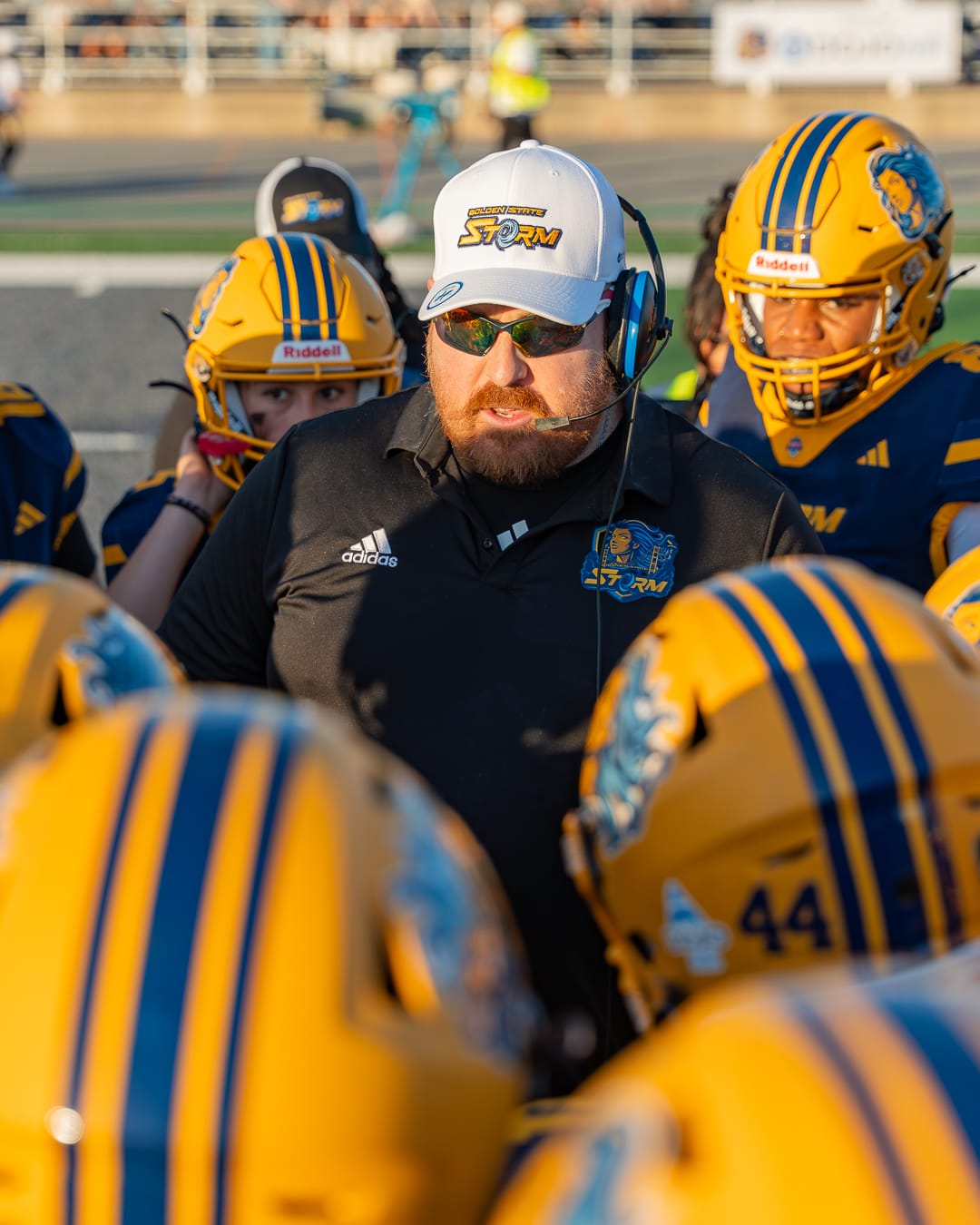
A group of football players in yellow helmets gathered around in a circle and getting excited.
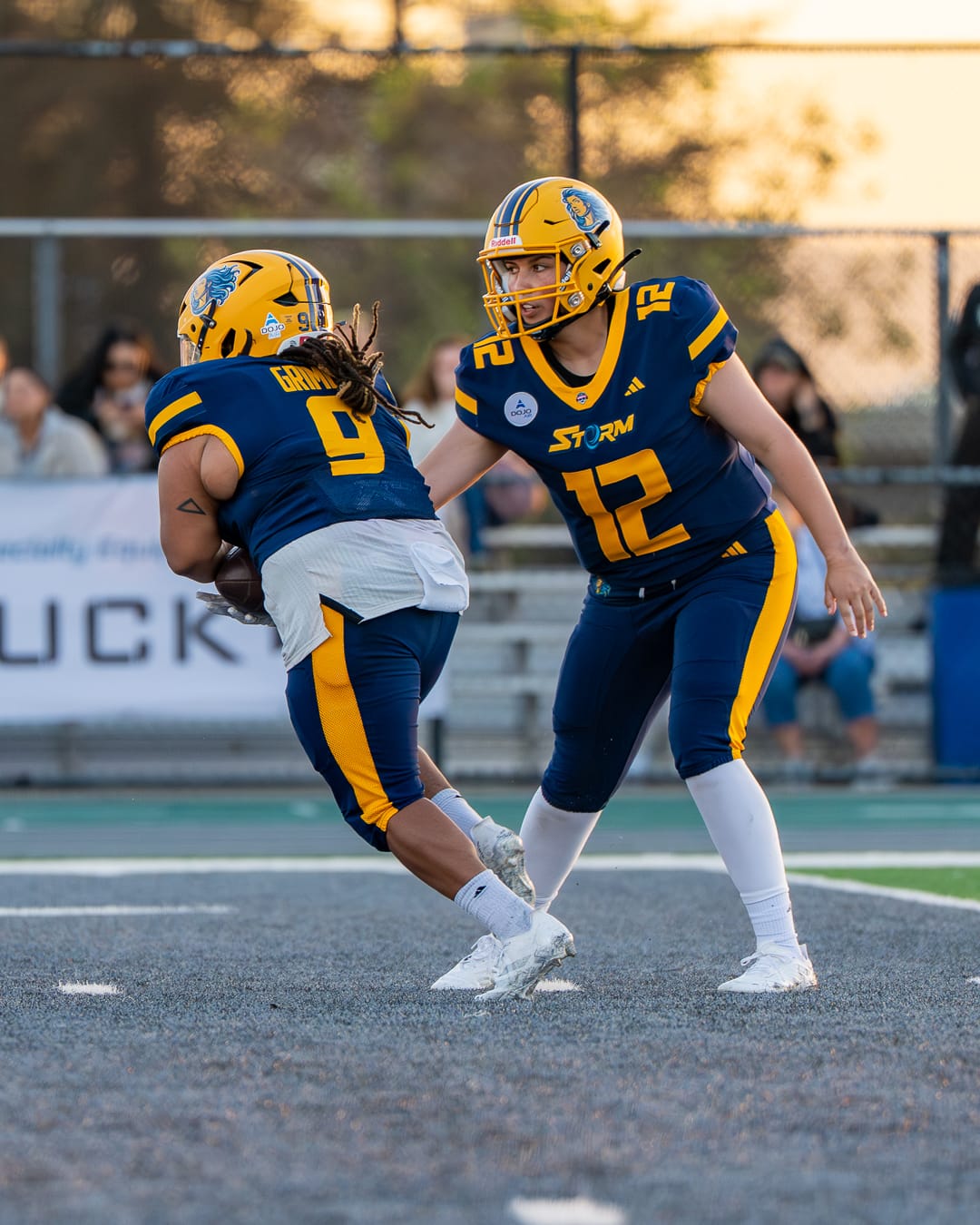
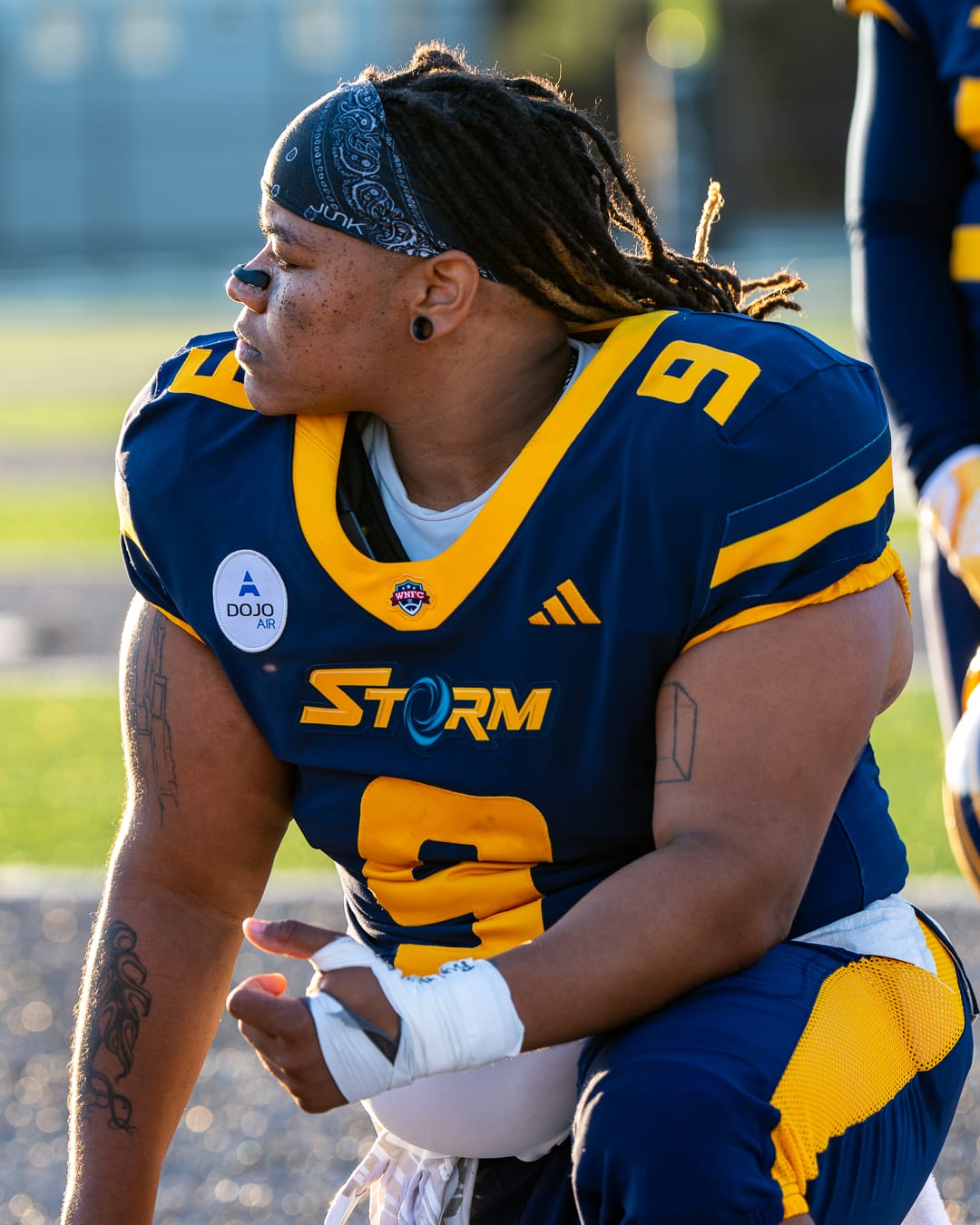
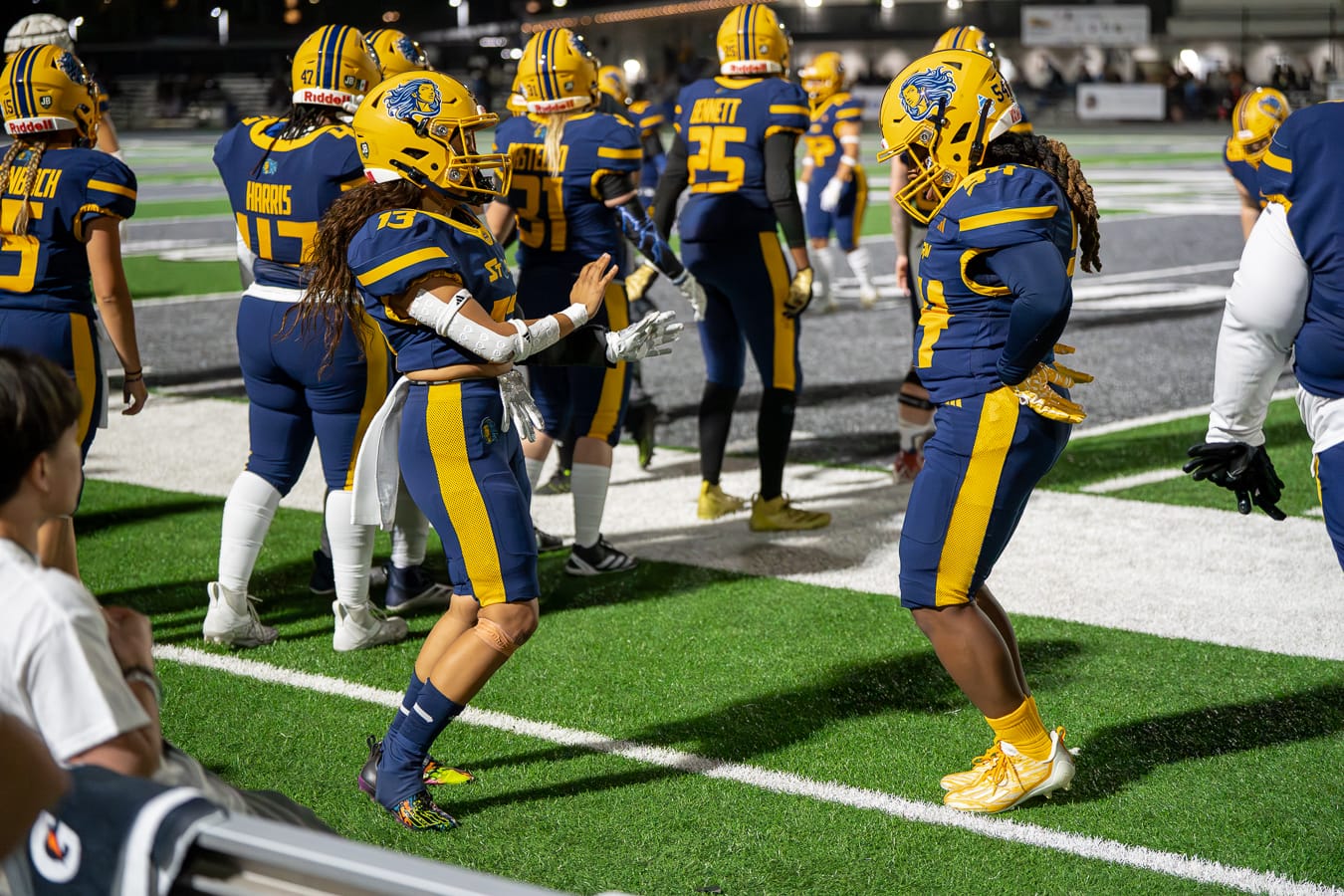
Kris Grimes hypes up the Golden Gate Stormbefore their first game ever at Laney Field on Saturday, March 28th, 2026. (Photos by Matt Ramos, courtesy of Golden Gate Storm)

Samantha Camaal did not want to let her daughter play football. Leilani was 7 when she started asking — watching her little brother play every weekend and begging to be allowed out there too. "I was scared she was going to get a concussion," Samantha remembers. "She was a girl, and there was nothing but boys." 

But Leilani wouldn't take no for an answer. When she was 9, when her brother’s team was doing signups for equipment, “she snuck in," Samantha says, laughing. "She got in line and got herself a helmet and shoulder pads." At first Samantha was confused. Then the team did a hitting drill. "She was laying them out. And then I just couldn't say no after that."

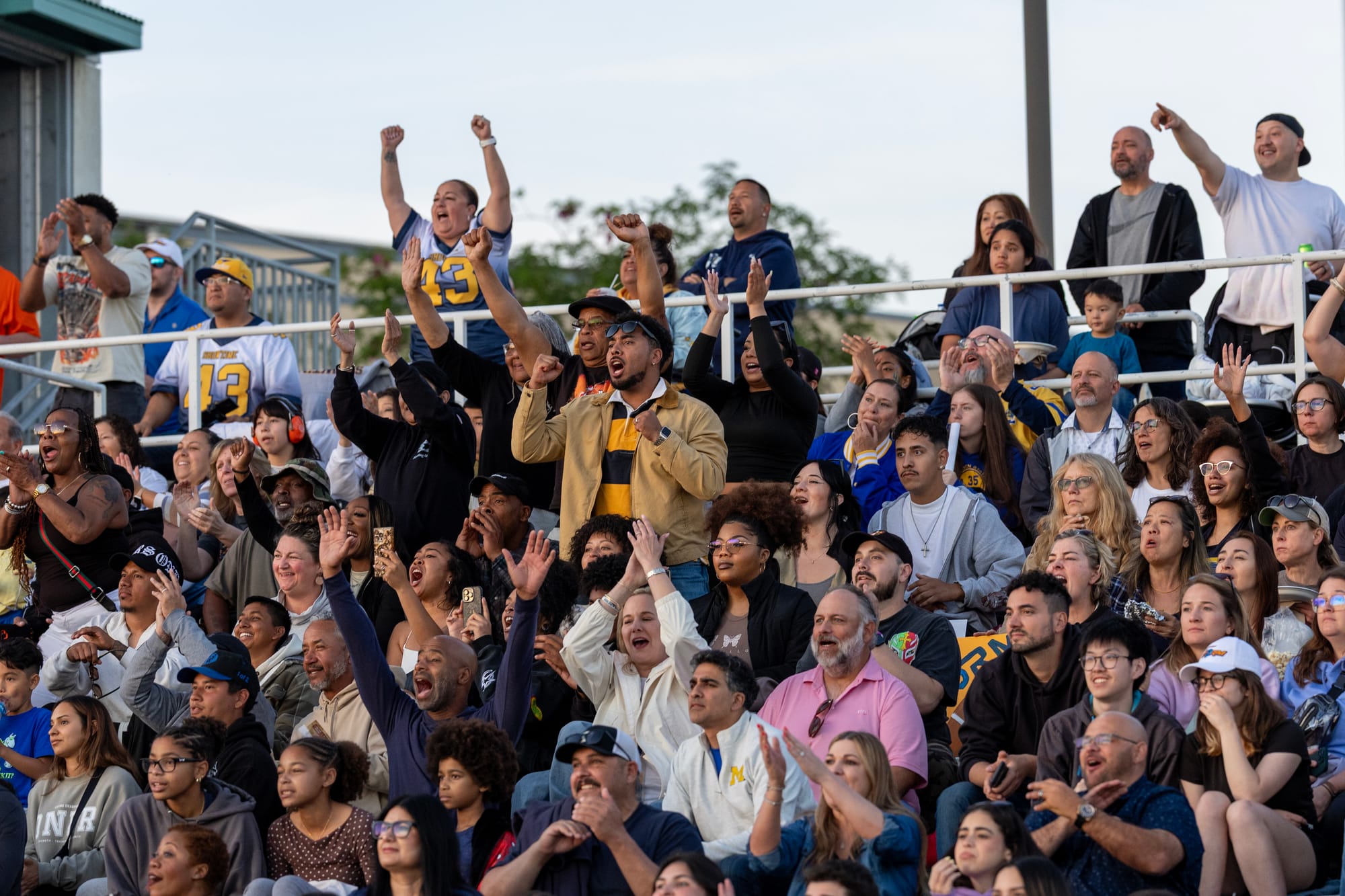
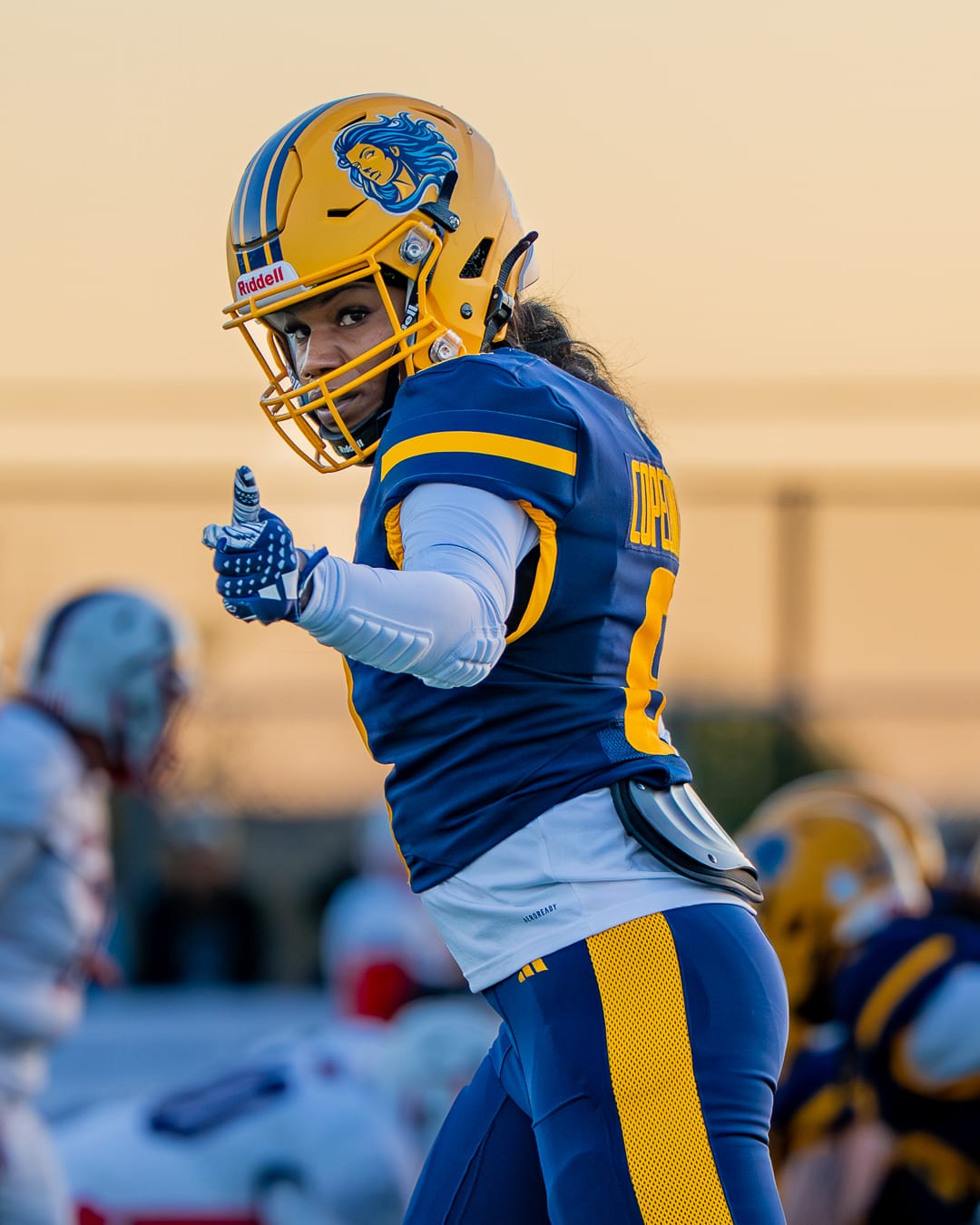
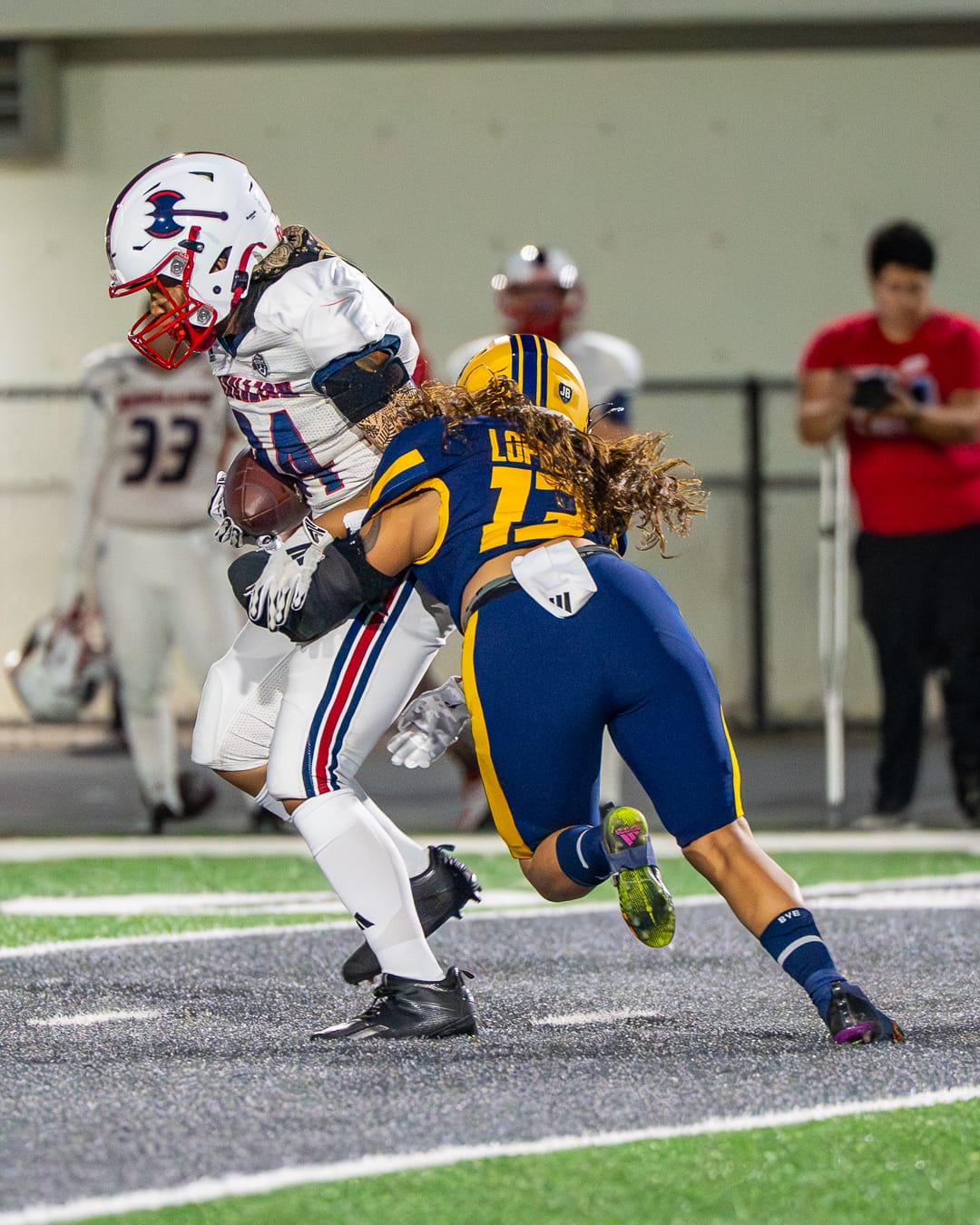
That was 11 years ago. Leilani would go on to become a five-time NAIA Flag Football National Champion. But her heart has always been in tackle. And this past weekend, Samantha sat in the stands at Laney Field in Oakland, wearing a custom jersey with Leilani's name on it, watching her 20-year-old daughter take the field as a linebacker for the Golden State Storm, the Bay Area’s new women’s tackle football team. Other members of the party had her number, #43, painted on their faces.

"Are you scared of her getting hurt now?" I ask. Samantha nods. "She's gotten a few dingers," she says. "If you get sloppy or aggressive players on the other side, they do target her sometimes. So that does make me nervous."

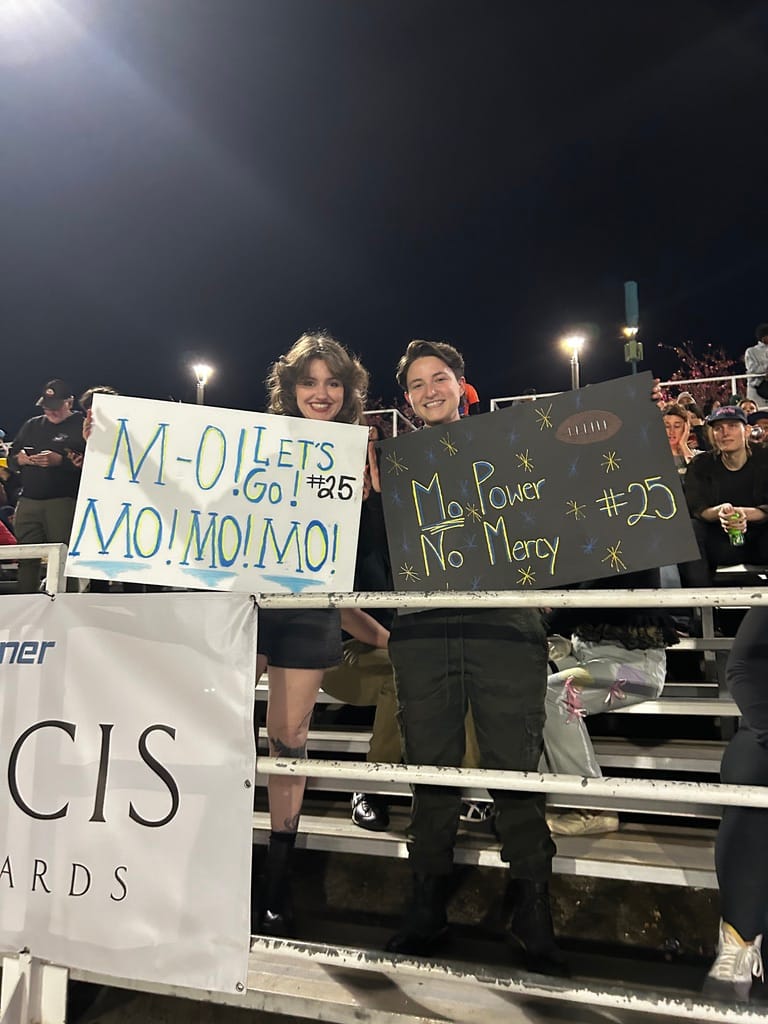
The Camaal party was not the only one in custom gear at the Storm’s first game. Scattered throughout the crowd were friends and family of the 55 players on the roster, holding handmade signs. Each play, as groups jogged on and off the field, little clusters of the crowd would erupt into cheers — even when nothing was happening.

In the end, there wasn't much to cheer for in terms of the team's first performance. While there were sparks from individual players (including Leilani) the team looked shellshocked and disjointed for most of the first half. And while they found their footing as the game went on, the league did the team no favors by starting the Storm off with the toughest opponent in the division; they lost to the San Diego Rebellion 36-0.

I spent the game roaming the stands, talking to players' friends and families for a purely selfish reason. I wanted help figuring out how to justify being here — cheering on a milestone for women in a sport that I think perhaps no one should play.

Tackle football is the most popular sport in the United States by almost any measure. A 2023 Gallup poll found that 41 percent of Americans list it as their favorite sport to watch. The second most popular sport, basketball, trailed significantly behind at only 10 percent. In 2024, NFL teams and owners made $22 billion in revenue. The highest paid football players make an absolutely absurd amount of money (Patrick Mahomes signed a 10-year $450 million contract with the Kansas City Chiefs in 2020) and the average salary is about $5 million. Even rookies are guaranteed a cool $840,000..

It's also one of the most dangerous sports you can play. Last season, the NFL had a "historic low" for concussions — just 182. The five-year average is 211.4 concussions per season. The drop (a decrease of 17 percent from the year before) was credited to upgrades in helmet quality, including the use of so-called "Guardian Caps" during training camps and regular season practices. 

I grew up in a football household. My grandfather spent his entire life rooting for the 49ers and my mother inherited the fandom, and eventually passed it along to me. As a kid, I used to sit around on game nights and watch with glee as players crushed one another. I didn't know anything about head injuries, and I would crow as they replayed the hardest hits over and over again. Now, thinking about all the times I watched a man's head snap back, his body fall, and his teammates help him stagger off the field, it makes my stomach drop.

These days we know far more about concussions and their long-term effects. A 2017 study found that 90 percent of former football players across several levels of competition show signs of degenerative brain disease. An earlier study found that retired NFL players between the ages of 30 and 49 were diagnosed with dementia, Alzheimer's or something similar at a rate 19 times higher than their peers. Concussion is also connected with a two-fold increased risk of suicide.

And while the NFL has (after many decades of burying its head in the sand) admitted the seriousness of concussions and implemented efforts to minimize head injuries, the league is running out of ways to make the sport safer. To truly minimize the risk would mean changing the sport to the point of unrecognizability. 

There is no football without concussions.

Today's fans, then, have to suffer through a choice: continue rooting for a sport that feels almost purpose built to destroy people's minds, or abandon a fandom that, in some cases, stretches back generations. There was a moment in the early 2010's, when a series of studies and articles came out about the brutal impacts of head trauma, that people really started asking "should anybody be playing this game?" Commentators compared it to dogfighting, and it felt, for a moment, that collectively walking away from football for ethical reasons was possible. Even the NFL started seriously grappling with the risks, and began developing and offering flag football as a lower-risk option for kids. (Girls, especially, are almost exclusively shuttled into flag football when they express an interest in the sport.)

But in the years since, the choice seems to have been quietly made. While kids might use flag football as an on-ramp, tackle football is more popular than ever. Fans and players both are willing to sacrifice a few minds for entertainment. In 2024, Dolphins Quarterback Tua Tagovailoa suffered the latest of a series of concussions that had many people questioning whether he should ever be allowed back on the field. In a press conference, he bristled at the implication that his career could end over something as trivial as head injury. “I love this game,” Tagovailoa said. “And I love it to the death of me.”

About 10 years ago I made my own decision: I stopped watching football. Until last Saturday, I had not watched a game in almost a decade.

The Golden Gate Storm didn't exist a year ago. While there are two professional women's tackle leagues in the U.S., neither of them had chosen to field a team in the Bay Area. (The Storm are not, however, the first professional or semi-professional women's football team in the Bay. The San Francisco Stingrays played here in the 1970's, and the Oakland Banshees repped the East Bay from 2001 to 2008.) But for the last 10 years or so, the lack of women's football has been a topic of conversation among local women's sports fans I know. It felt weird, people said, to not have a team in such a booming market for women's sports.

Jake Langner, a co-founder and co-owner of the Storm, wasn't really one of those people. Langner's entry point was simpler: he had a daughter who played flag football. "I got thinking a little bit about it, and I asked the question, what's happening for women professionally in football?" Langner, whose day job is at Google, soon learned that there were two leagues at play. He gravitated towards the Women's National Football Conferences (WNFC) and became an investor. "And part of that conversation was that in Northern California, one of the best sports markets in the country, and maybe the best for women, there's no team,” he says. 

Pretty soon after that, Langner co-founded the Storm with Brad Grovich, a fellow Google guy he had known for years. The two have brought in an advisory board and staff of coaches, trainers, coordinators, physical therapists, press advisors and more — all of whom, like the players, are volunteering their time. All told, Langner and others have put nearly a half a million dollars — and a fair amount of their own sweat — into the team. Langner himself has spent days washing hundreds of towels and water bottles.

Langner sees women's tackle football as an inevitability. He points to the popularity of the men's game, and says that it's simply a matter of time. "Women will play tackle football, and they'll play it very competitively,” he says. “I have no doubt that tackle football for women will absolutely be a sport in this country that people will be interested in and want to watch and drive sponsors and eyeballs to. It just may take a little bit of time."

And maybe he's right. A few months ago, when Langner and Grovich put out a call for athletes, women turned up in droves. Almost all the players I spoke with heard about the team via social media. Many of them had never played tackle football before in their lives. Some had played flag football, but most came from other disciplines: golf, soccer, rugby, gymnastics, hockey.

Dallas Hartwell, the Storm's head coach, is teaching many of these players to tackle and be tackled for the first time in their lives. And he has to do it right, if he wants his players to stay safe. "In the early stages, the veterans wanted more — more contact, more progression, move faster,” he tells me, sitting at the side of the field in Fairfield where the team practices (some of them drive hours each way). “But for the new players, it's one step at a time. … We can't just throw you right into this. There's a lot of skills that you have to learn. You have to learn safe tackling, safe blocking."

Dorothy Mao grew up watching football, but had never actually played before she arrived at tryouts for the Storm. She saw an ad for the team on Instagram. "I had no clue what to expect — whether I would be the most athletic, or the least athletic, I was just going to show up." Mao had experience playing rugby, so the contact element didn't scare her. Still, there was a learning curve. She thought she might play linebacker, but has wound up as a safety.

Kris Grimes is a rare veteran of the WNFC. They've played in both Portland and Seattle, and this season relocated to the Bay Area to bring their running back talents to the Storm. Grimes started out in figure skating, but as soon as they put on the football pads, they were hooked. "It allows me to use my body in ways that I wasn't able to in my other sports,” says Grimes. “And, yes, I felt very strong when I was on the ice but I didn't get to sprint at someone and unapologetically run them over. And the moment I got to do that I was like, 'Alright, this is it.'"

Everyone I spoke to for this story was very aware of the risks on the field. The league recently formed a medical advisory group. "We're doing all the same protocols and prevention training that the NCAA and the NFL do," Langner says. "So we put a lot of time and energy into making sure the women are playing the same standards and safeness as the men are." Grimes adds that the team uses the Sway Balance System — a technology to help trainers assess a potential concussion and determine whether a player should return to the game.

Langner also muses that perhaps this would be less of an issue in the women's game than in the men's, "because the hits aren't as violent as the men's game." But he admits he has no data to back that up; it’s just a hunch.

The limited evidence available suggests that women are actually less likely than men to report concussion symptoms — whether because they're not as well versed in them, or because they're trying to buck the social stigma that women are weak.

Some of the players out there already have personal experience with concussion. "We've got a few people who have been like, 'This is my third concussion.'" Grimes says. "And I'm like, 'Alright, dude, are you going to get out of tackle soon? Like what's going on here?'"

So far, no one on the Storm has gotten a concussion — as far as anyone knows. Langner gets a full report after every practice and game. "I feel good about that," he says, "but I'll sleep better at night when the season's over because it's still something that keeps me up."

But with football, concussion is really a matter of when, not if.

Thinking about this topic, I begin to feel like a dog chasing my own tail. Shouldn't women have the same opportunities as men? Shouldn't they be allowed to pursue the same activities? If football is a billion-dollar enterprise, shouldn't women have a shot at it? Am I simply projecting insidious patronizing ideas about women needing protection? Surely they can assume whatever risks they like without my moralizing? Don't I support women's rights and wrongs? Probably yes, to all of those questions. And yet, also, no.

"I don't think equal opportunity brain damage is a feminist win," says Frankie de la Cretaz, the author of Hail Mary: The Rise and Fall of the National Women’s Football League, who writes the newsletter Out of Your League. Like me, de la Cretaz has struggled with how to balance a genuine desire to cheer for the growth of women's sports with the stark realities of the risks inherent to tackle football. In fact, they've written an article just like this one. "Asking these questions can seem like concern-trolling women. And there are some people who wonder, you know, are men getting asked these same questions in the same way?"

Still, I cannot help but think about the huge material differences between an NFL player, and the 55 women on the Storm roster. These women are paid nothing. They all have other jobs. Many of them have children. They carpool for hours to and from practice to save money on gas. If an NFL player gets a concussion, his job is to rest and recuperate, aided by some of the best trainers in the world. If a Storm player gets a concussion, they have to wake up and get the kids to school and go to work.

But, of course, they can't become highly paid players if they aren't allowed to play in the first place. Athletes are always assuming risks, regardless of the money in it. Rock climbers fall to their deaths. Basketball players' knees give out. At Defector, Georgia Cloepfil recently wrote an incredible essay about what we should learn from Lindsey Vonn's most recent injury:

Women in sports have always been asked to endure danger and abuse, to prove in some way that they belong. They have been doubted when they are too fast, ridiculed when they are too slow. They have been told that they cannot survive, that they are too weak to compete. Their bodies are either too old or too young, too small or too big. For athletes, especially women, maybe there is no way out of these impossible dichotomies, this trap of doubt, except upwards.

And yet, head injuries are different. Vonn suffered greatly, but her injuries don't come with a time bomb attached. Knees and ligaments and bones can heal. Brains, in some cases, cannot.

Around and around I go.

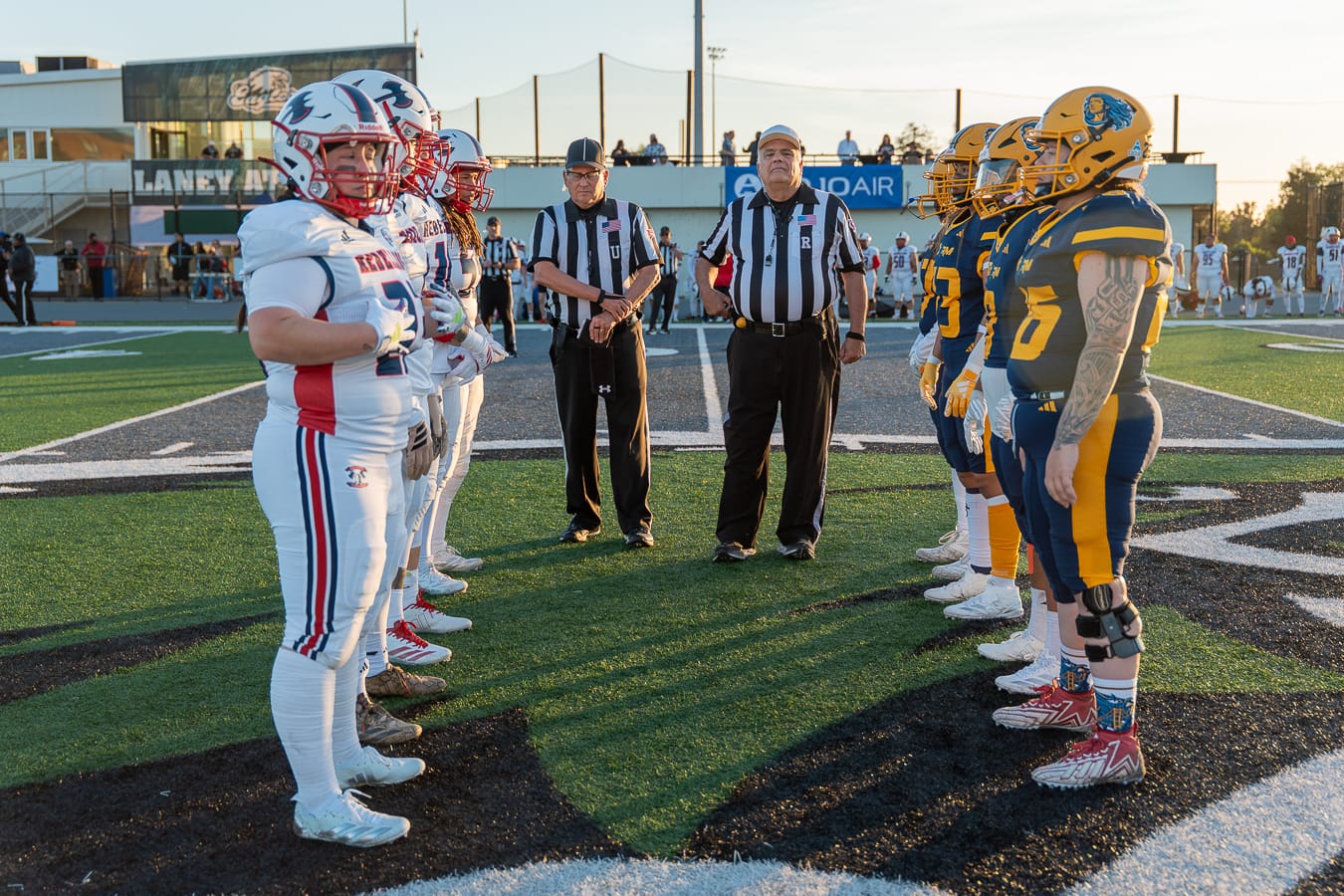
Two sets of football players line up facing one another, with referees in the middle. On the right, the team wears blue and gold. On the left, the team wears white and red.
The Storm captains lining up against the San Diego Rebellion captains before the game. (Photos by Matt Ramos, courtesy of Golden Gate Storm)

This is why I spent the game picking my way through the crowd looking for custom shirts and signs last weekend. Because I needed to understand how these people could love these players and also bear to watch them take such an incredible risk. And what I learned is that they are not ignoring concussion. They are not ignorant of the danger. But for them, the reward is worth it. Because where I see brain injury, they see opportunities  — not just for their players, but for women in the future.

"It can be very, very dangerous out there," Dani Colina says, holding a sign for Mo Bennett, a defensive lineman. Colina knows a player from another team who got a concussion. Sydney Carlson was there to support her girlfriend Kiana Gordon, a gymnast turned wide receiver. "I'm nervous for her," she says. "They haven't practiced tackling at all, so that's what I'm scared for." But both Colina and Carlson add that they’re proud of their players for pushing ahead, and making a name for themselves in a notoriously inaccessible sport.

At every stop, this is what I hear. That these women are building something special. That they're paving the way. That the risk is worth the possibilities they’re creating where there were none. "She's passionate about the game," Samantha Camaal tells me, "and if that's what it takes to make the way for younger girls and the younger generation coming in she's going to do it."

Grimes says that she wanted to come back to California to build the Storm, in part, to pay it forward. To offer up guidance and advice to a new group of players, and to be part of expanding the league.  They want to build a league that can make money, that can pay, that can set future players up so that this is their only job. That, like NFL players, they can simply go home and rest.

When I tell Grimes about my struggles, they nod. "But how do you balance it?" I ask them. "How do you go out there knowing that you could get hit and it could change your life? Totally destroy your mind, forever." Grimes has a kind of serenity that I admire, one you don't always get from running backs. They smile. "We do it because we love it," they say. "That's it."

The Storm have their second home game on Saturday, April 4 at Laney Field. More info and tickets here.

Great! You’ve successfully signed up.

Welcome back! You've successfully signed in.

You've successfully subscribed to COYOTE.

Success! Check your email for magic link to sign-in.

Success! Your billing info has been updated.

Your billing was not updated.