A Haunted Tuberculosis Sanatorium Might Be Razed For Housing. What Could Go Wrong?
On a wooded hillside in Santa Rosa, hundreds of ill and impoverished people lived out their final days. Some say their spirits stuck around.


On a wooded hillside in Santa Rosa, hundreds of ill and impoverished people lived out their final days. Some say their spirits stuck around.

The storied San Francisco club will reopen in 2027 under new ownership.

This week we've got a broth bar buffet, a backwards reading of the U.S. Constitution, rice porridge for dogs, and more.

A comic for lesbians, monsterfuckers, and everyone in-between.

To paraphrase French director Jean-Luc Godard (who was also paraphrasing yet another director), all you need to make a fairy tale is a girl and a monster; everything else is simply a matter of style. You need the girl because you need a yearner: an avatar with a wish, a libido, unfulfilled in order to propel the “why” of the story. You need the monster to grant that wish — but with conditions for the girl to wrestle with as she ponders the loss of her soul, or respectability, or her sense of normalcy, in exchange for getting the forbidden thing that she wants. Maybe the girl kills the monster in the end. Maybe the girl also wants to fuck the monster. Maybe both?
This is the tension rumbling within The Goblin Throne, an online and soon-to-be-printed horror comic by artist Mel Gillman, who is also the comics chair at California College of the Arts. Rather than another gender-swapped take on a straight story we already know or a narrative that scatters out crumbs of subtext for all of us gay pigeons, this is a fairy tale that’s got “queerness in its bones,” says Gillman. The gay stuff isn’t a bonus sprinkle; it’s not a limited-edition rainbow profile pic for Pride Month. Here, queerness is lover, specter, and monster: creeping in the edges just outside of your vision, setting your spine aflame, poking its face underneath your skirt. No matter what, you can’t escape it.
In Gillman’s fairy tale, an apple-cheeked girl makes a bargain with an old goblin queen, but dashes off with a man instead of making good on her promise to join the queen as her consort. Eventually, she and her family are hunted down by the queen, who is humanoid enough in shape but also deliciously uncanny, like a doll contorted and ripped apart by a wild toddler.
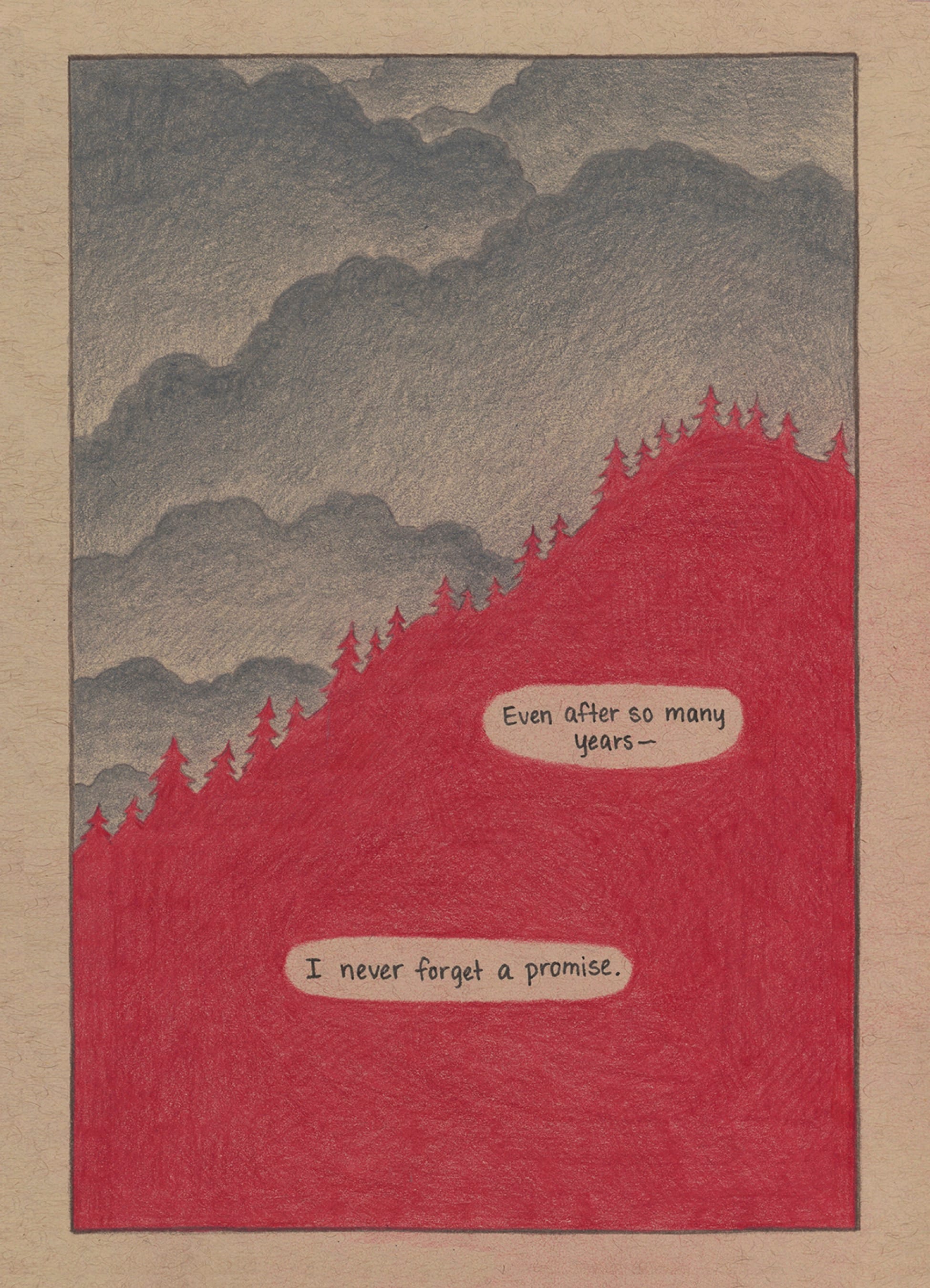
Over the decades of their relationship, it becomes less apparent which of the two women has more power over the other. “I was thinking a lot about the specific, unique textures of middle-aged lesbian loneliness and desire; the sort of longing and fear that isn’t always pretty or clean or easy to put into words,” says Gillman. So they tell this story without overexplaining. You have to fill in the gaps. Does she like me or is she just being nice? Are we just having sex as friends? Will she kill me or not? Please — just do it already!
In so much popular media, queer people have looked straight at monsters and recognized ourselves as similarly living within the realm of the unspeakable. There’s The Babadook, featuring the titular sinister, top hat-wearing apparition that became a gay meme after Netflix accidentally categorized the film as an “LGBT Movie.” Freddy Krueger embodies an unquashable and eternal queer id in A Nightmare on Elm Street 2: Freddy’s Revenge. In Ginger Snaps, a defiantly not very girlish teen finds liberation in her transformation into a supremely horny (and homicidal) werewolf.
To Gillman, the goblin, which is “not exactly human and not exactly non-human,” is “inherently queer.” Goblins, and other trickster figures like them, “don’t have to play by normal human rules, or stick perfectly inside normal human categories,” they say. “Inside a fairy tale allegory, that means the storyteller can use them to ask unexpected questions and poke holes in our usual social expectations and boundaries.”
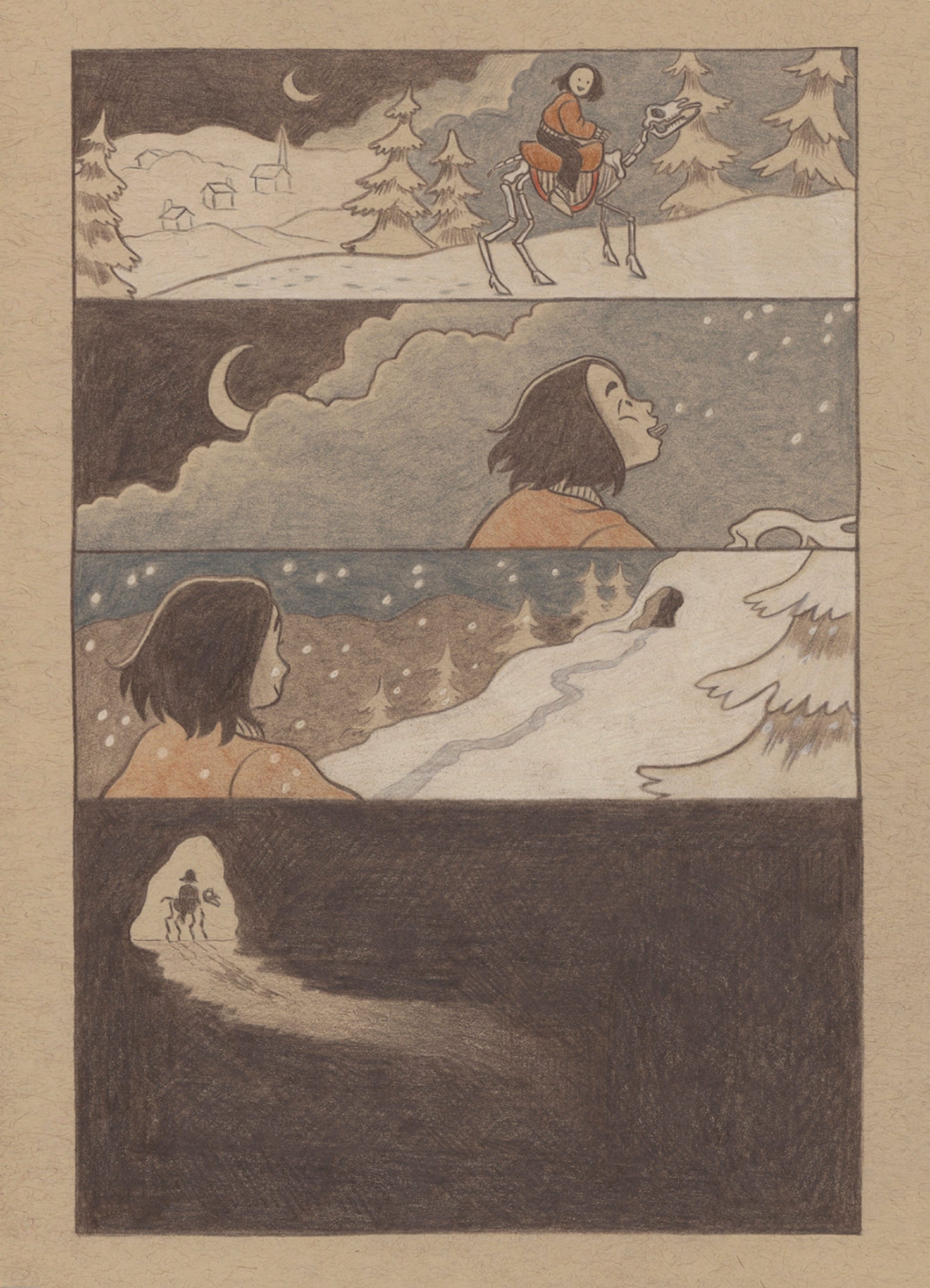
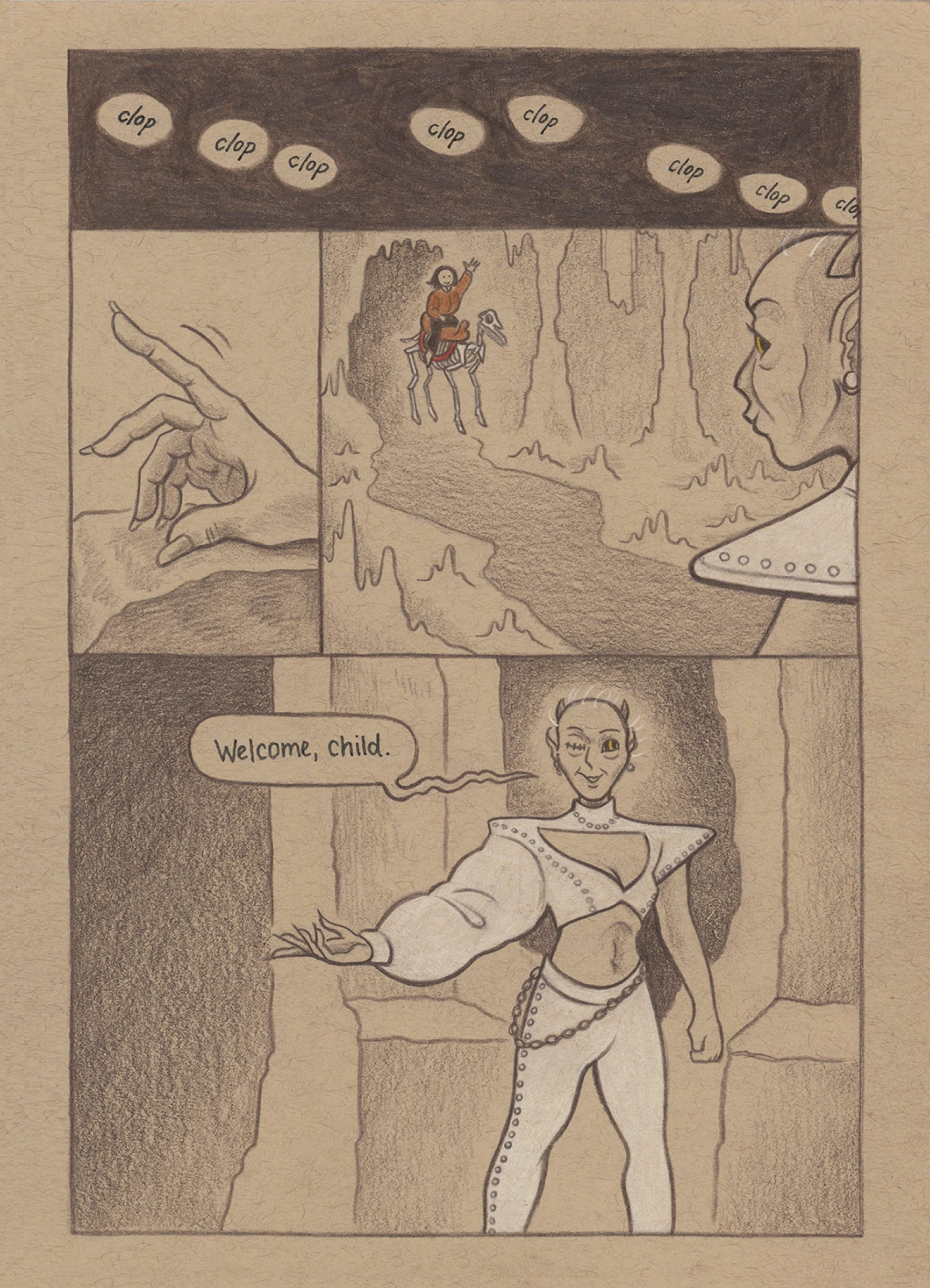
In The Goblin Throne, a boy has a run-in with his mother's old flame — the goblin queen. (Courtesy Superfan Promotion)
I appreciate the medium Gillman has chosen for The Goblin Throne, too: It’s drawn entirely in colored pencil, with a backdrop of tan recycled paper. It’s alive in so many ways, from the faint fibers of the paper in the margins of the comic to the clear laboriousness of the art itself.
“A lot of the things that frustrate other artists about colored pencil are things I find satisfying — the slow pace of building up layer upon layer of color, the sharp precision of linework and detail, the way everything has organic texture and a little imprint of the artist’s hand,” they say.
The colors are sparse and often muted. Then, once in a while, you’re hit with a glorious bloom of white: in a snowfield, in the goblin queen’s rodeo-ass B-movie fits, in the lightning bolt-like streak in the aging protagonist’s hair. Or a splash of red — an apple, a blood splatter. (According to Gillman, every two to three pages, a pencil is sharpened to its limit.) I love the liminal, back-of-the-napkin quality that colored pencil conveys here, like some in-between state between a storyboard and a fully inked print work. It fits a fairy tale.
Mel Gillman and their print publisher, Iron Circus Comics, just concluded a successful Kickstarter run for a hardcover and full-color printing of the comic. (While the campaign is over, you can still purchase the digital edition for $11.)