


Boots Riley Is Here to Recruit You
First, he’d like you to go see ‘I Love Boosters’ in theaters May 22. Then please consider joining the revolution.

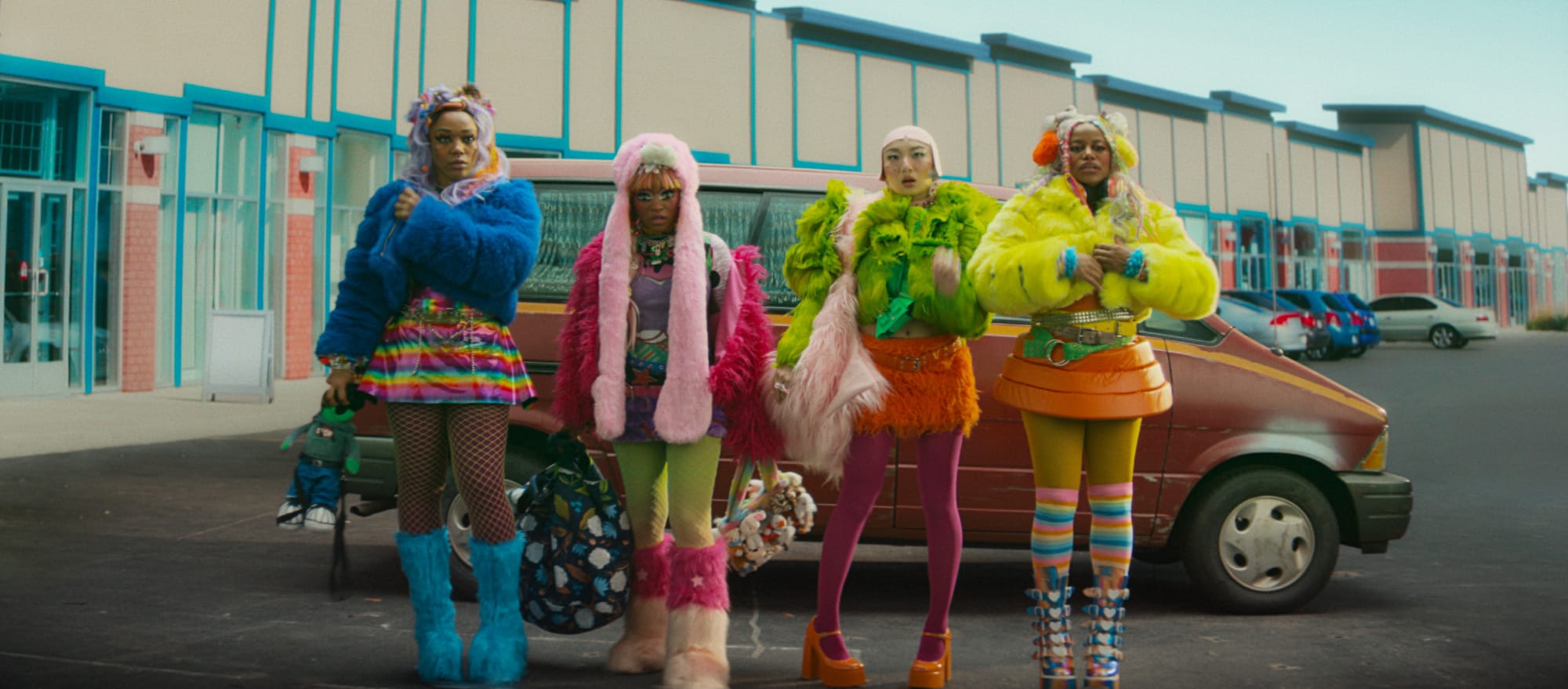
If you’ve been following Boots Riley’s work for even a couple of years, I probably don’t have to explain to you the specific ways in which I Love Boosters is bonkers. The absurdist, Technicolor-hewed, Keke Palmer-starring heist comedy — which hits theaters Friday, May 22 — offers straightforward critiques of capitalism, with visuals that heighten contradictions to cartoonish levels. (This is a compliment. Riley loves cartoons.) Set in a fantastical version of the Bay Area, the satire is clearly in conversation with Riley’s earlier work, including his debut film Sorry to Bother You, and his streaming TV series I’m A Virgo.
But if you’ve kept up with the Oakland writer, musician, filmmaker, and organizer for longer — say, maybe two decades — you might also be familiar with the Coup song from which the new film takes its name. “I Love Boosters,” off the 2006 album Pick a Bigger Weapon, is an ode to the women who steal then resell clothes at a discount price to their communities — or, as Taylour Paige’s character Mariah in Boosters wryly puts it, “Triple F: fashion-forward filanthropy.” (She knows how to spell “philanthropy,” she clarifies. “Branding, though.”)
Some 20 years after that album release, Riley has advanced the narrative from his song and then some. For one, the scale and budget of I Love Boosters are exponentially larger than anything he’s ever done. The stars, the laughs, the cinematography, and the animation are all super-sized; Tune-Yards’ score is a sprawling, mischievous opus.
But even within the world of the film, the audience is asked to think bigger. That’s because, in a more pointed way than any of his previous projects, the characters of Boosters grow through the realization that they’re part of something bigger: that their individual acts of revolt against the system are more powerful when they form alliances, when they work with other people to hit oppressive corporations where it hurts.
We caught up with Riley the day before I Love Boosters hit theaters to talk about portraying strikes on screen, and how he made the often slow-moving process of organized labor into such an eye-popping joyride.
This interview has been edited for length and clarity.
Emma Silvers: Out of everything that’s surprising about this film, it struck me as thrilling and rare to see a strike on screen. According to recent polls, almost 70% of Americans support labor unions — numbers not really seen since the 1960s. Strikes by teachers and healthcare workers impact life for so many of us regularly. Why aren’t we seeing that reflected in our entertainment?
Boots Riley: The why is hard to answer. I think a good 80% of films take place on the job in some way, and maybe 50% of those have to do with bad things happening on the job — maybe the manager is an asshole, whatever. But there’s no one organizing. There’s no class struggle in those films, not even as something happening in the background.
I think it’s kept out, even by people who know that that’s what’s happening in the world. It could have to do with the life experiences of a lot of writers — maybe they went to school for it, [or] they’re from a background where their parents were supportive of them being writers, so even if they’re progressive or radical in their life, they have a certain pedigree…. Or it has to do with the politics of the people who [fund films].
But it’s also just what people have been told is normal. I think you can teach yourself what to notice and not notice, so even though class struggle is happening, you see [a strike] as an anomaly. It also probably has to do with the Red Scare of the ‘50s and people self-censoring based on an idea of what might happen if they wrote something like this.
Did you have films or other art you looked to for inspiration in how to represent a labor movement on screen?
I didn’t really look at other films that had it, because there’s only a couple that I thought were actually inspiring. So for instance, a film that I love — that I think I thought was inspiring because I agreed with one of the characters, but when you look at it in the whole, it’s not inspiring — is this amazing film Matewan by John Sayles.
The main character is played by Chris Cooper [during the Coal Wars], and he’s a communist agitator, and he’s helping them organize the strike, and they all get shut out of their homes that are owned by the company. They’re in a campground, and Pinkerton security gets sent, and they kill a kid — who’s played by Bonnie Prince Billy when he was 12 years old — and the town lets the Pinkerton security come, and it turns into this bloody thing where everybody dies. So you could see how that’s not inspiring.
I kind of just played it by ear.

I think there’s also a storytelling problem, right? Conventional wisdom says that we — especially American audiences — want a singular hero to root for in a movie. How do you make a populist uprising the thing you’re rooting for, when there isn’t that focal point of power?
Right. What I look toward is like, we do follow a person, because whoever you’re talking to, they need to see that they can be involved with something. And they need to know that the [movement] can be different depending on whether you, yourself, are involved. A lot of people will look at organizations or movements and be like, I don’t want to join that because they are this way. But part of the reason they are this way is because you’re not in it, you know? The people in it are what make it up. How it operates has to do with the people.
What I’m trying to do is not like “one person can change the world.” It’s more that connecting with many people changes the world, and the decision you make to join can have an effect on the outcome. I think often that’s the problem with organizations that make themselves seem like they’ve got it all together, that they have all the answers — then people don’t feel like they have any way in, because they’re not going to have any effect on it.
I still try to have people connect with one of the characters, but with that character also connecting to others around them. The hero part of it is that they joined, you know?
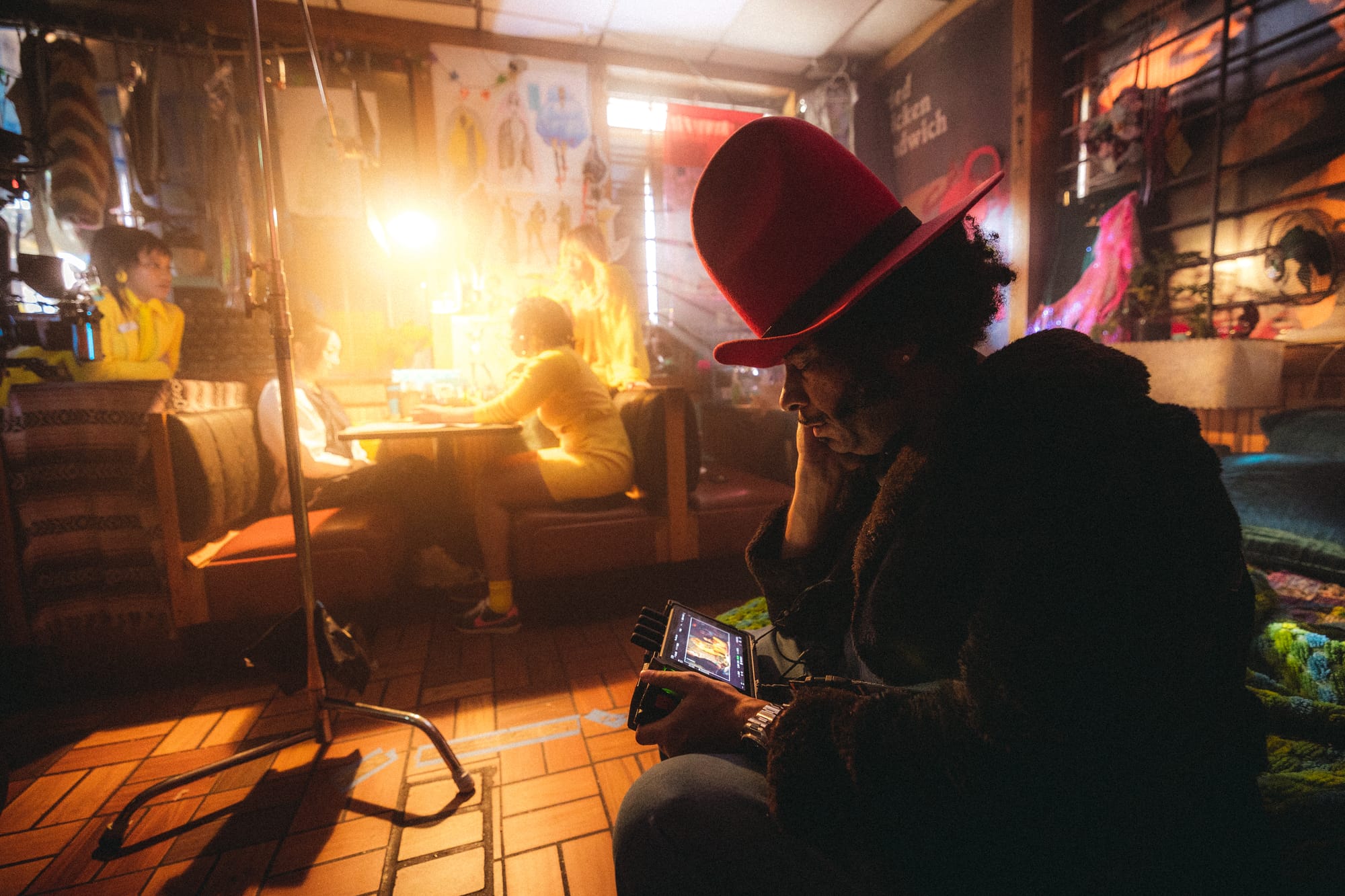
You’ve been taking this on the road to colleges for screenings and Q&As, and I’m curious what you’re hearing in those rooms from 19- and 20-year-olds about labor and their relationship to it.
It’s interesting. There was a big wave of strikes from about 2020 to 2024, with thousands of work stoppages. But it wasn’t really talked about in a broad way. The local news would report it, but it didn’t add up into any national awareness, or this idea that it’s part of a larger thing, the relationship of these actions to each other.
So some of these college students — they were 12 when that started, you know? And yes, a lot of them do have energy and are looking for how to connect to organizations and movements. But I don’t necessarily think they’re more radical than maybe even the youth of 10 years ago. I think people are in debt from their education, and thinking about ‘How do I get the best version of a job.’
But at the same time, so many more people of all ages are becoming radicalized now, and looking for ways to change things. What ends up happening, I hope, is people are inspired by optimism. So much of the art that has come out recently that does show some sort of struggle going on, usually it’s nihilistic.
What’s your antidote to that nihilism? I agree that so many people are looking for something to join to change things, but I also see so much of this sentiment like, ‘Well, that’s the end of the American empire. Nothing matters anymore, so why try?’
I don’t fault the filmmakers who are nihilists, because the movements that they’ve been witness to are usually based in spectacle — ones that are about exposing the problem, like, if we can get on this platform and do this, if we can get enough people to show their disdain for this thing, then something will change. But it doesn’t have a class analysis... and so if that’s what you’ve seen, and then you see where we are now, you’re like, “Fuck, nothing can happen, nothing can work.”
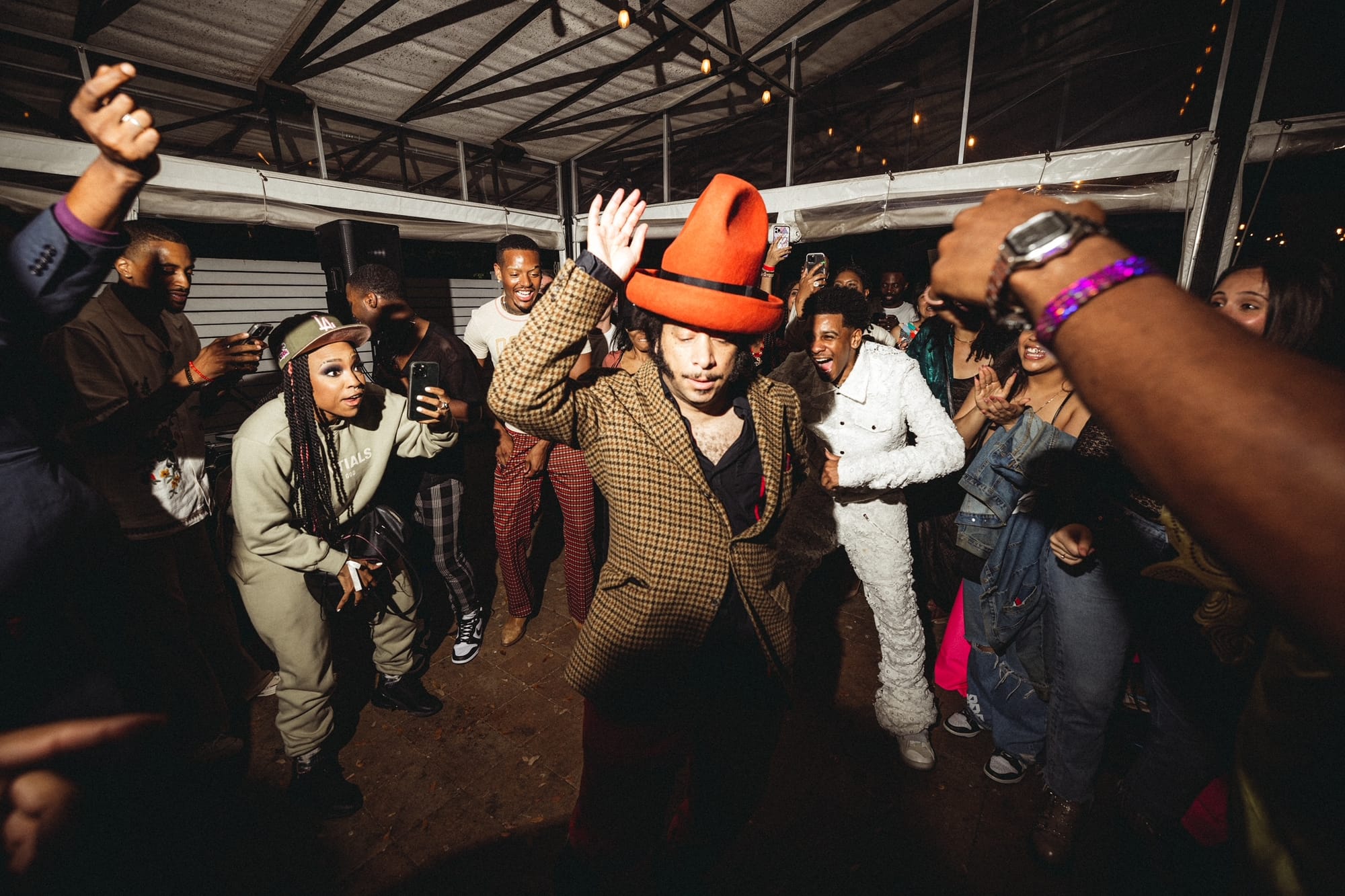
But it’s funny: we’ve played this all over the place, and people are raucous when they’re watching it, often. There’s tried and true places where people will react throughout the movie, but it changes in different places. In Philly we played it for the Philly Film Society — it’s not a radical school. It wasn’t specifically for labor organizers. And they cheered for the term “dialectical materialism.” The whole crowd! They cheered at the strike. The strike usually gets a cheer.
I think people are ready more than ever to be involved in something, and what we need are parties and organizations connecting these different radical actions that are happening, that are going toward one direction.
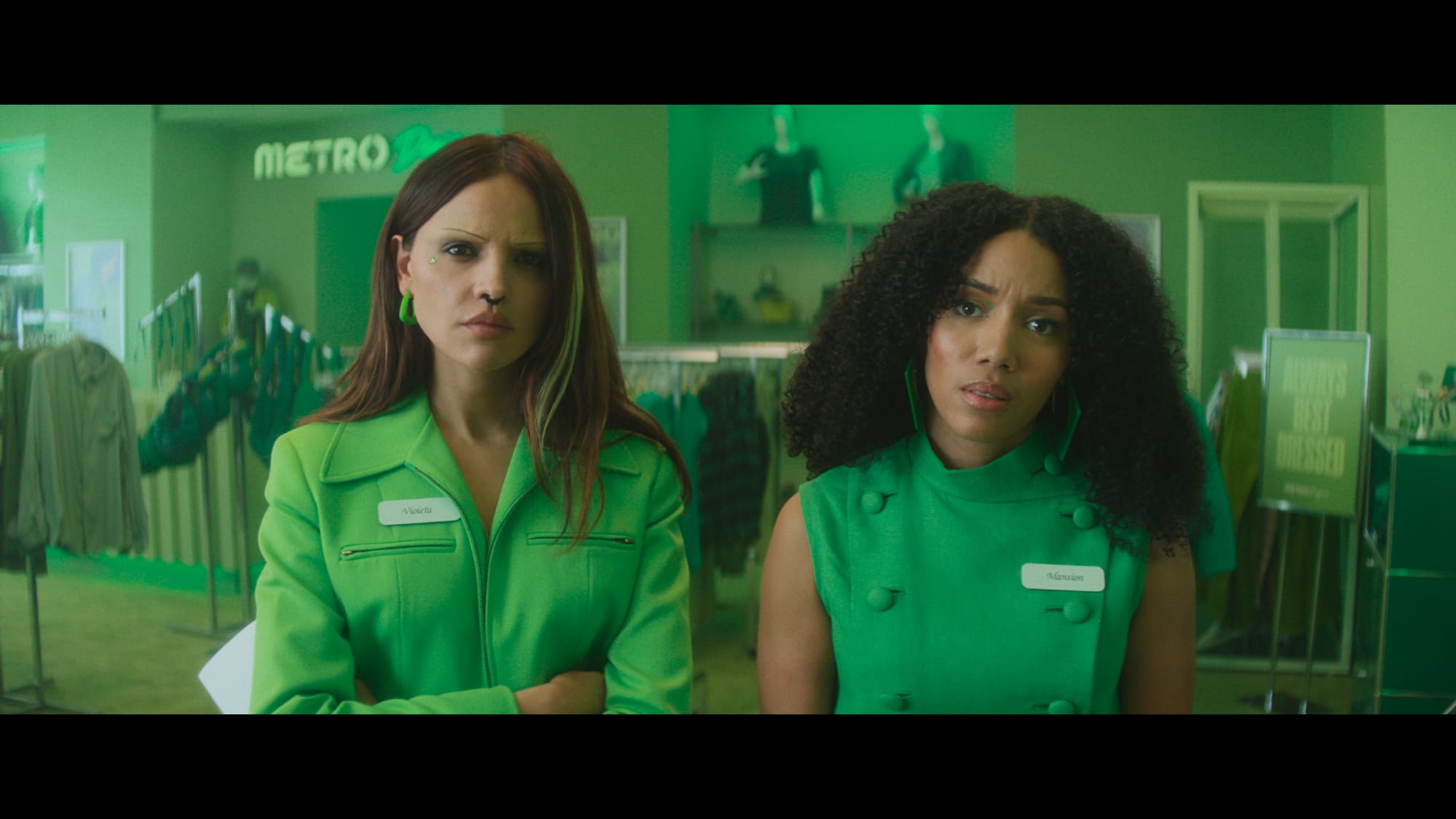
You obviously notice the role the media plays in covering a movement — or in upholding the status quo — because the chyrons on the local TV news play a very funny part in this film. What kind of role do you think journalism could or should be playing?
One that highlights these struggles that are happening on the job, and compares and connects them. If you can mix that with other aspects of culture, it would be something other publications aren’t doing. There’s so much to talk about [with labor] in the Bay Area alone… it doesn’t have to be ‘Let’s have a sobering look at this person going through this struggle.’ It could have an optimistic spin on it.
Because it is optimistic that people are fighting [to change things] — for a reason, right? It’s still better than not fighting.
‘I Love Boosters’ opens in theaters nationwide on Friday, May 22.
