


From BART to UC Berkeley, Anime Subcultures Are Thriving in the Bay
The Bay Area is quietly one of the biggest anime hubs in North America — and most people don't even realize it.

The Bay Area is a bastion of all things anime, and always has been — though it’s the kind of thing non-fans might never notice. It generally pops up in semi-obscure ways: a Berkeley wine shop featured in a cult-favorite manga, or a giant Dragonball mural in a BBQ spot.
To locate one of the earliest traces of mass anime fandom in the region, you’d have to go back to 1989, to the verdant campus of UC Berkeley. That’s where Cal Animage, a student-led group of otaku-loving youth, was founded around a shared enthusiasm for Japanese animation. This was in a time when even getting your hands on a subtitled VHS tape was a major lift in itself. As the popularity of anime has grown, the group has proliferated far beyond UC Berkeley, with Cal alumni responsible for globally influential anime entities like Crunchyroll and Anime Expo (the two biggest anime platforms in North America).
And yet, especially considered on a national or international scale, the Bay doesn’t always get its due respect for being a lively nucleus of anime, manga, cosplaying, VTubing, itasha, and all its varying expressions of fandom.
So we’re here to set the record straight.
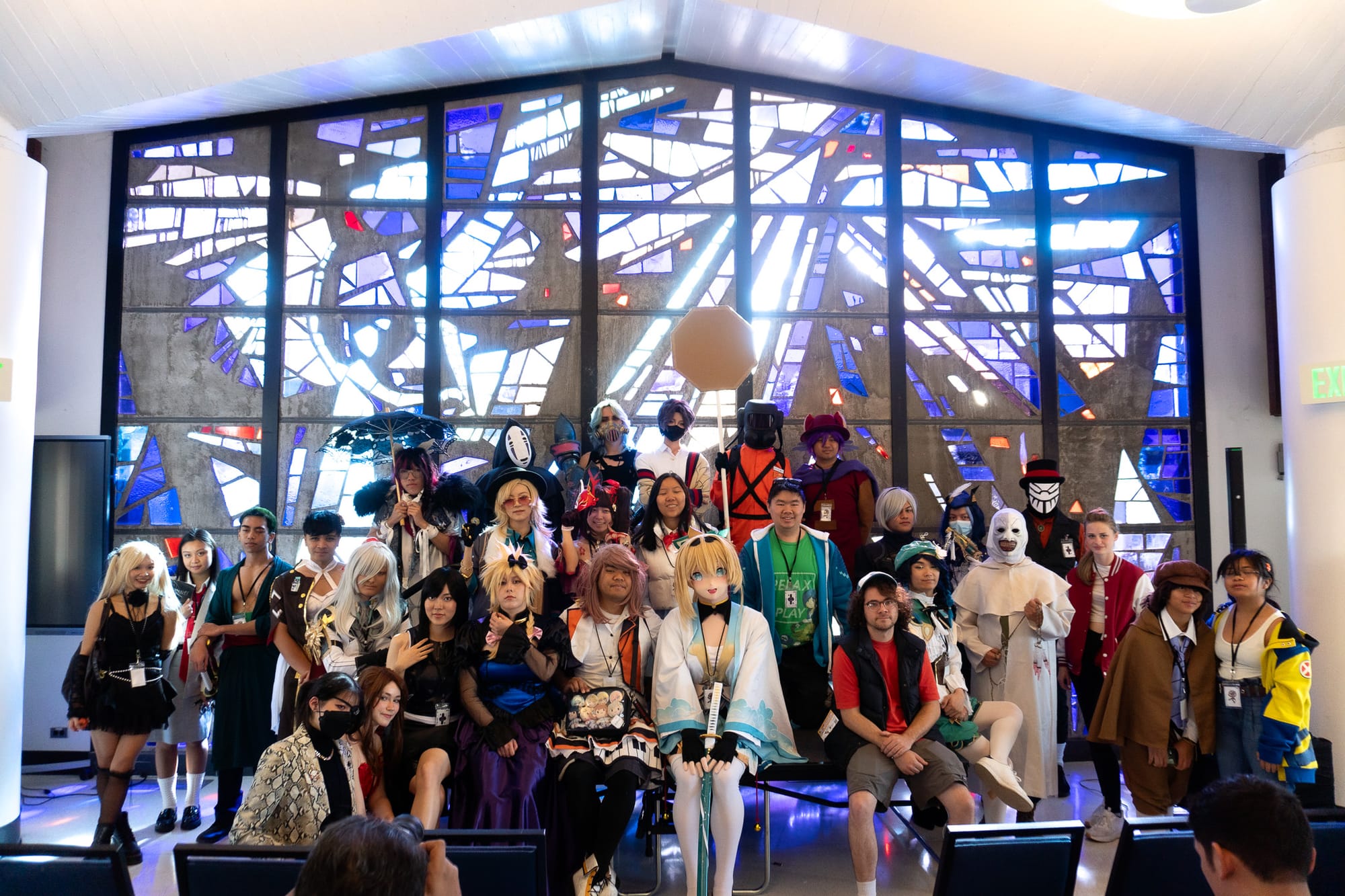
From college campuses to national recognition
Today, the Bay has become a destination for some of the country’s best anime gatherings. Crunchyroll Expo, Anime Impulse, VTuber fests, and anime-wrapped car shows have all found a home in the Bay with its diverse, engaged audience.
FanimeCon is the largest anime convention in Northern California, drawing around 30,000 fans annually. Held at the San Jose McEnery Convention Center every summer, convention-goers cosplay as their favorite anime characters, attend anime screenings and live music performances, perform karaoke, dine at Maid Cafes, game, and more. The mega-event debuted in 1994 at CSU Hayward (since renamed CSU East Bay).
At the time of its founding, a group of local anime clubs wrangled forces with a reported 100 participants, according to a 2004 post in FanimeCons’ fan forums. The event continuously grew in size and scope, migrating around the region for a few decades to larger colleges, hotel ball rooms, and convention centers until landing in downtown San Jose in the mid-aughts, where it remains.
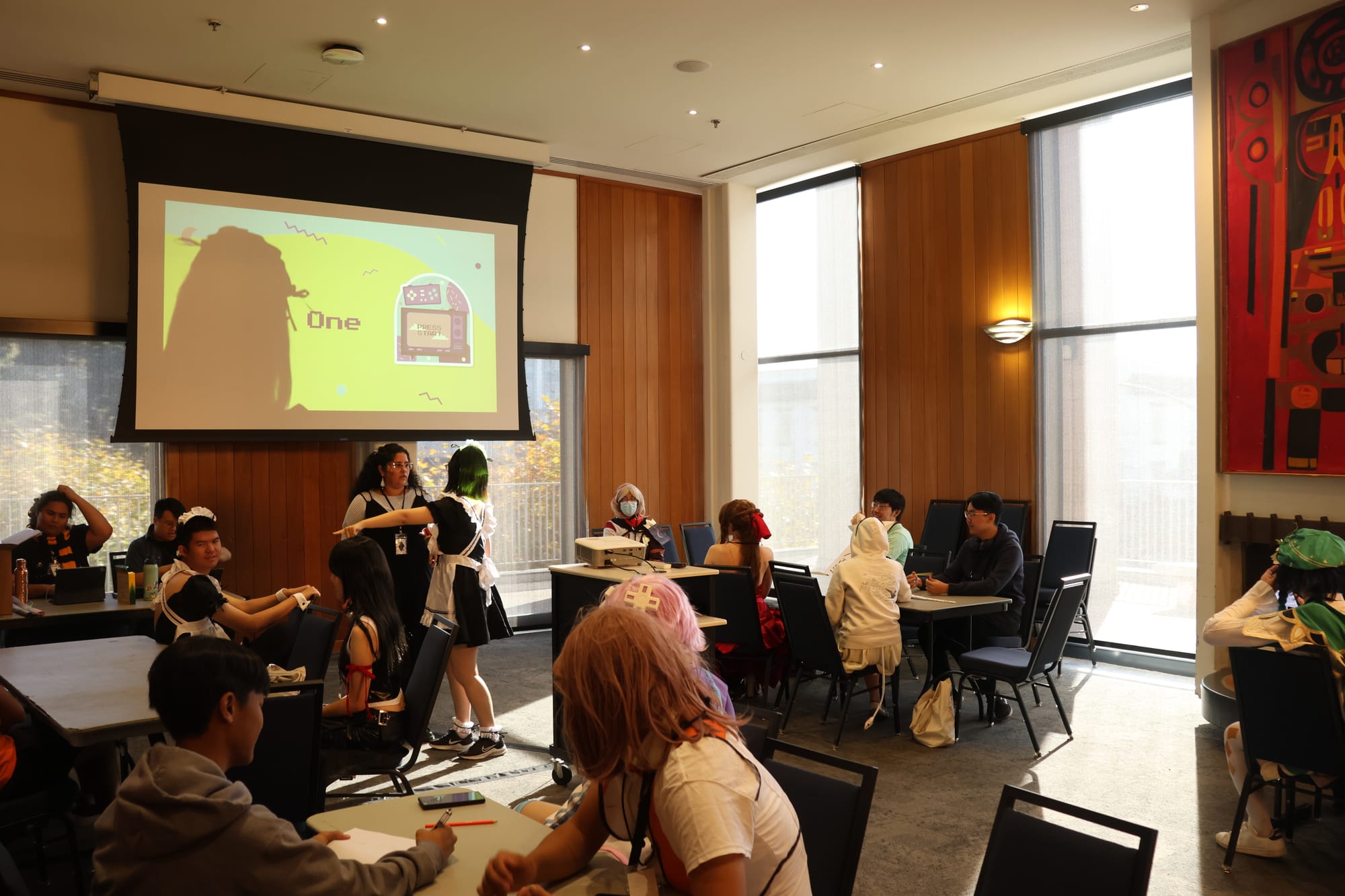
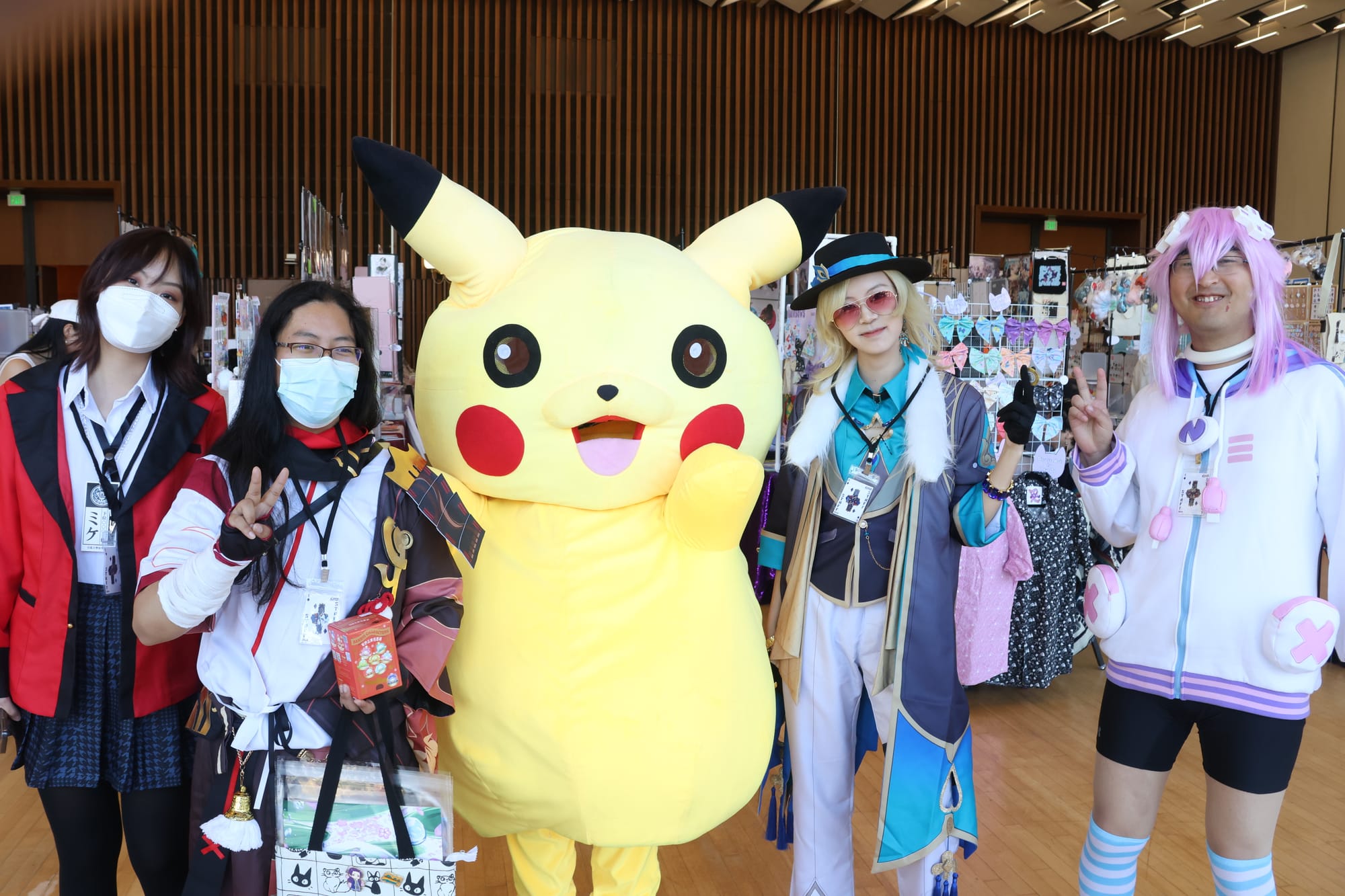
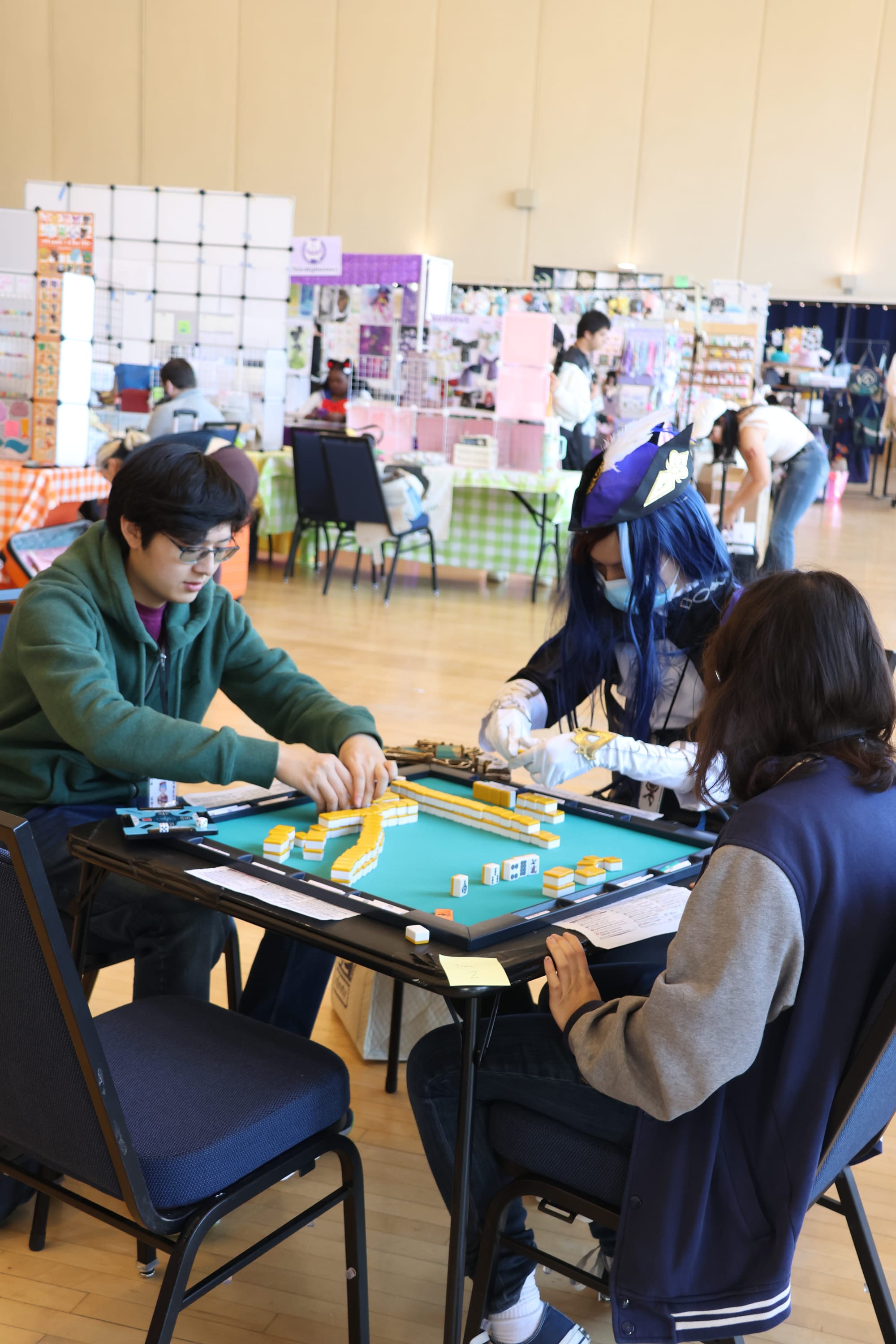
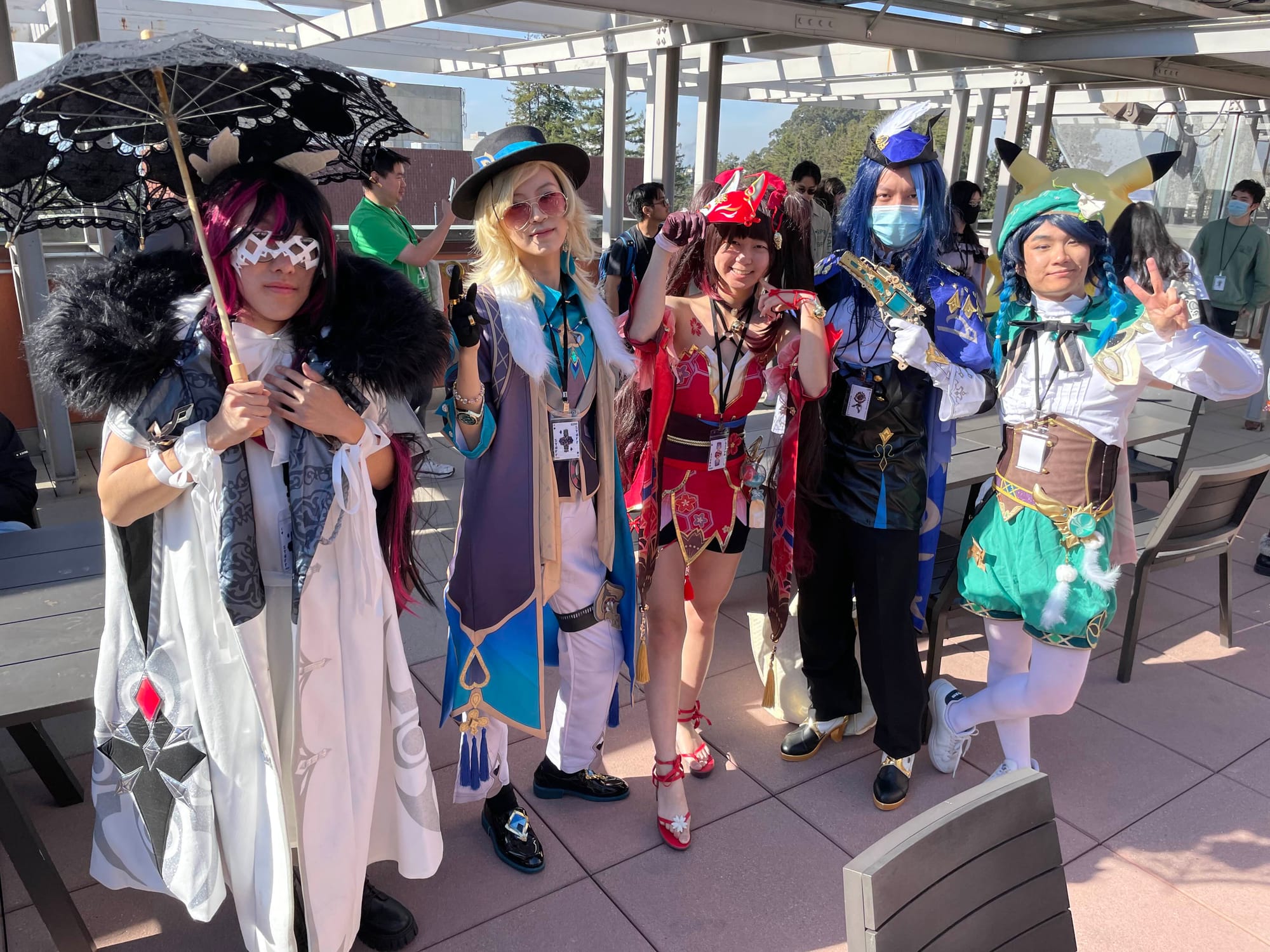
The annual Anime Destiny convention at UC Berkeley features an artist alley, gaming hall, speaker panels, performances, special guests, and cosplay. (Photo courtesy of Cal Animage)
With over three decades of celebrating anime fandom in the region, it's considered a premier venue for the genre nationwide, and is listed among the biggest and most attended anime conventions in the U.S. If you know any anime or manga fans in the Bay, ask them about it. Chances are, they’ll bust out photos of themselves dressed up as an uber-buff One Punch Man or scantily clad Sailor Moon from the prior year.
While FanimeCon gets the lion’s share of attention, there are other similar conventions throughout the year happening at varying levels: many of which are grassroots, and still driven by college students.
UC Berkeley is home to Cal Animage Alpha (a collection of current, former, and friends-of Cal students who organize anime-related events on campus). Averaging around 50 “officers” per semester — students who are responsible for managing the group’s calendar of activities — and boasting over 2,000 active members on their Discord server, the club represents just one fraction of UC Berkeley’s anime affinity within the greater Bay Area’s eclectic anime context.
Their biggest draw is Anime Destiny. The annual convention happens at the Martin Luther King Jr. Student Union and features an artist alley, gaming hall, speaker panels, performances, special guests, and cosplay. The next one takes place on Saturday, Nov. 15 and is scheduled to feature industry voice actors from various anime and video games, meet and greets with VTubers, a VTuber mini concert, and a Cosplay Contest judged by "professional master-level cosplayers.”
“Being a cosplayer [with] access to the Bay Area's numerous conventions, events, and communities is perfect for me to develop my hobby,” says Shang Wu, a UC Berkeley undergrad who serves as Cal Animage’s convention planning director. “I do art on the side and seeing all the amazing artists around the Bay Area have inspired me to draw more. Overall, the Bay just gives so many opportunities for anime fans to express their love and interest for it.”
Those opportunities include San Francisco Japantown's Mini Art Mart (a monthly market for Japanese-inspired artistry), concerts by Japanese entertainers like Ado, and associated cultural festivals like the J POP Summit in San Francisco.
In recent years, this fandom has spilled beyond convention center hallways and into various forms of evolving subcommunities.
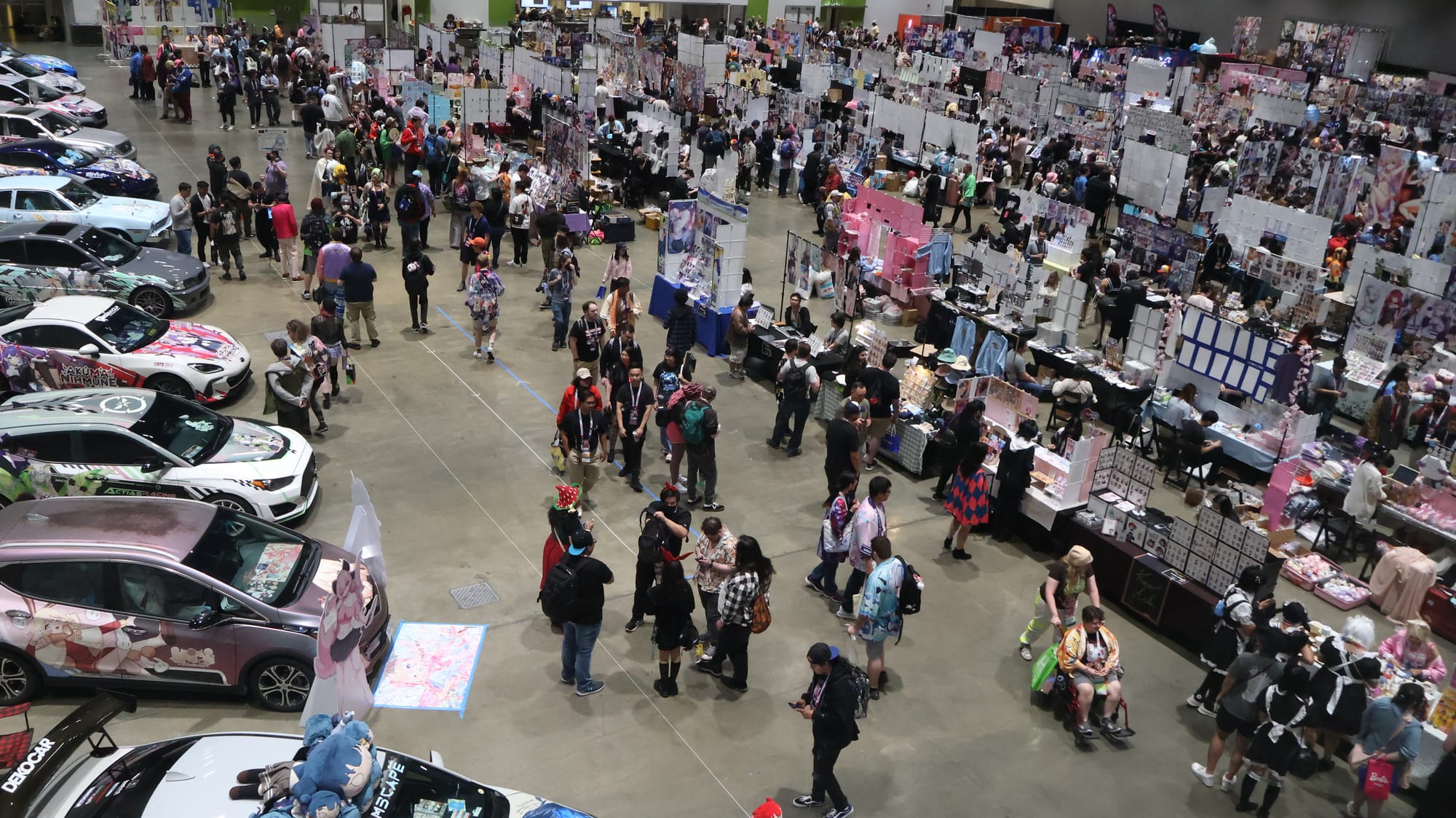
VTubing in Silicon Valley
Before writing this, I’d never heard of VTubing. But I learned it has a central presence in the Bay, and is perhaps the fastest growing segment of anime fandom worldwide.
VTubers are streamers who use animated digital avatars instead of showing their real faces. Motion capture software tracks their expressions and movements, which are then mapped onto the avatar so the character comes to life on screen. Thanks to this tech, you can be anything on the internet: a grotesque bug lady, a hooded cultist, or a tungsten cube.
“While the VTuber avatar could be in any style, the majority are anime characters,” explains Tim Leung of OffKai Expo, a San Jose VTuber convention which claims to be both the first and largest one in North America.
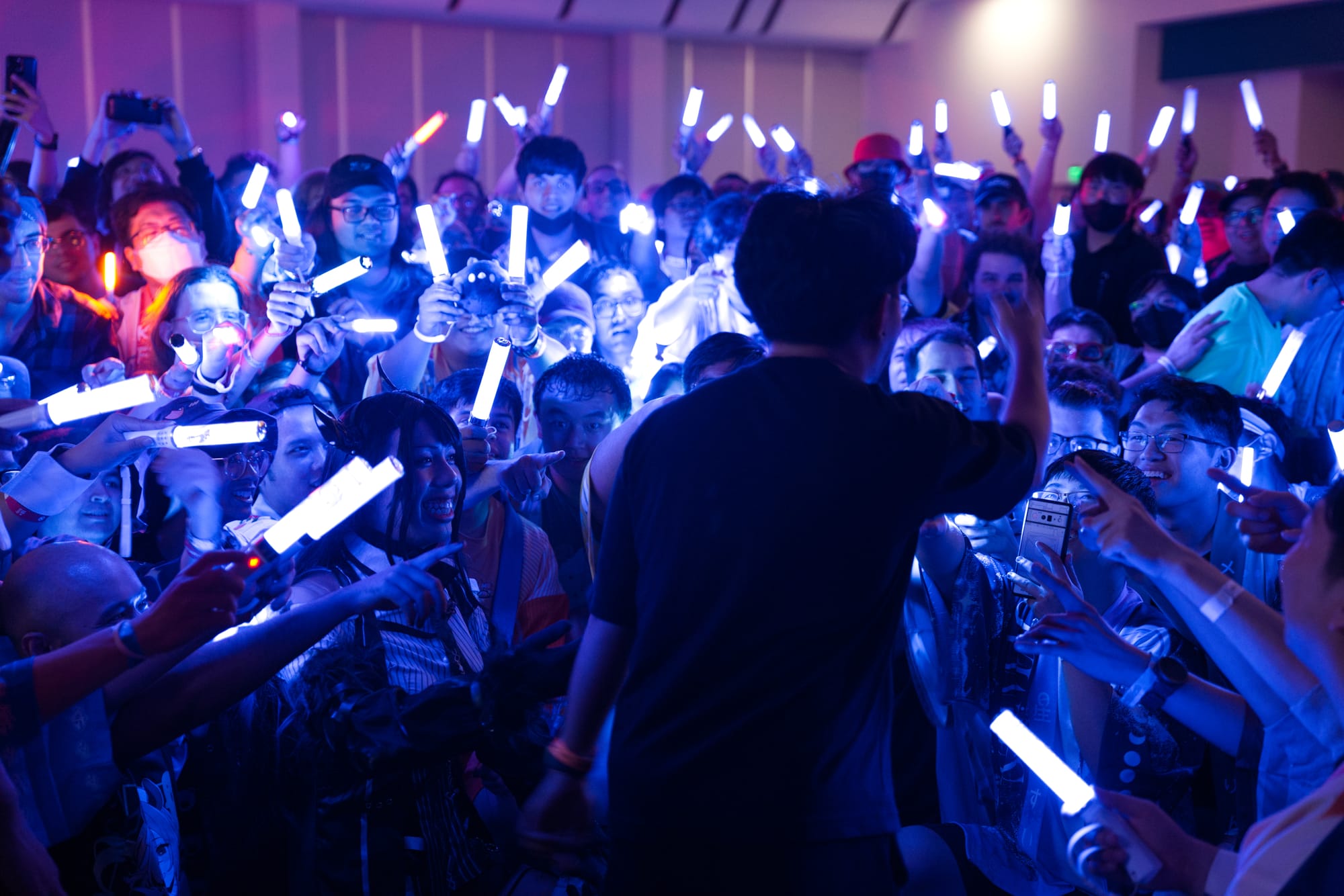
What happens at an IRL convention centered around cartoon streamers? Imagine hundreds of fans waving glow sticks and dancing with collective euphoria while watching a cartoon DJ’s performance via projector screen. They could all be doing this at home, but the convention brings it all to another level.
OffKai was founded as a nonprofit in 2021 by VTubing enthusiasts in the Bay who recognized a need for the rapidly expanding, internet-based subculture to connect IRL. Its first event saw around 700 attendees. But in the three successive iterations, overall attendance numbers Naruto-ran up to 7,000, a 10-fold jump that swayed the expo organizers to relocate from modest-size hotels to the San Jose Convention Center.
In Leung’s telling, VTubing largely began in Japan with the debut of Kizuna AI on YouTube in 2016, before exploding in 2020, when we mostly lived online. Since then, VTubing has ballooned among English-speaking fans, with the increased accessibility and affordability of streaming software, artists and riggers for hire, and motion-capture hardware allowing for more partakers. The blend of anime, technology, pop culture and streaming personalities are especially unique within the VTubing multiverse, says Leung — and he identifies Silicon Valley as the ideal nexus for these merging facets.
“VTubing is the perfect mix of tech and entertainment. It would make sense that the heart of Silicon Valley would have an active VTuber community. No matter how niche your favorite anime or VTuber might be, you can always find a community for it in the Bay Area. That is why OffKai Expo is based in San Jose. There are just so many of us here.” There are even some VTuber agencies — kind of like a record label for VTubers — based in the area, including Brave Group US in San Francisco and Stellar Verse Productions in Davis.
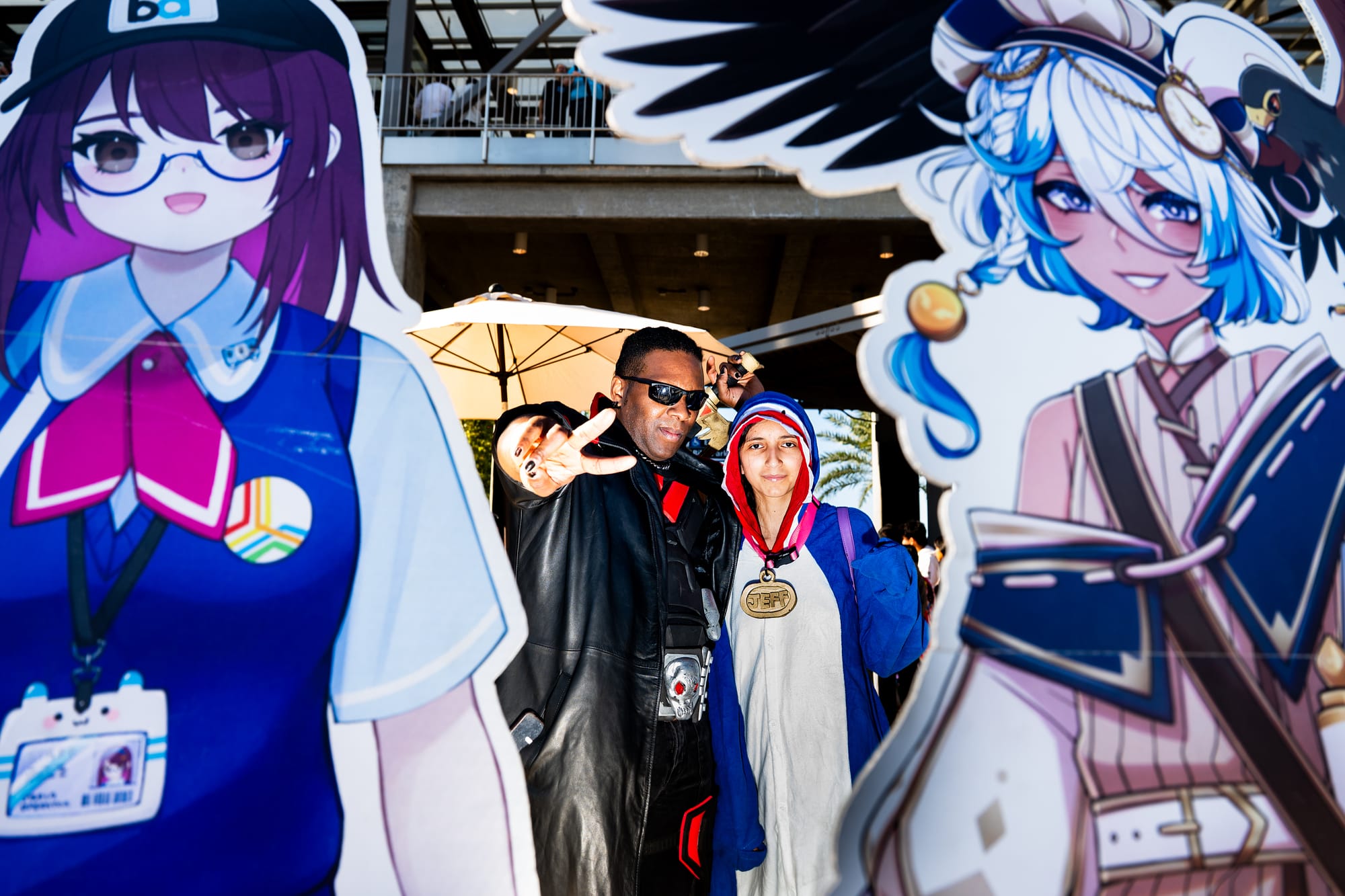
BART: Did you know the ‘A’ stands for ‘Anime’?
But maybe the most telling sign of anime’s appeal in the Bay Area is something even less expected. While we’re not at the point of having trains with full-on Hello Kitty wraps like they do in Japan, our public transit has gotten a whole lot more anime these days.
That’s thanks to Melody Starling, a Gen Z anime and manga fan. Her favorite titles are all about music: Girls Band Cry (about “a girl finding her way who starts her own rock band”), Bocchi The Rock! (which “outcast nerds can relate to”), and The Guy She Was Interested in Wasn't a Guy at All (in which two very different girls bond over their shared love for bands like the Red Hot Chili Peppers).
Starling relocated to the Bay from Philadelphia in 2021, and has since been pivotal in uniting different otaku groups around the region. That’s due, in part, to Bay Area Rapid Transit. Working as a consultant for the agency, Starling has led BART’s recent anime-themed rebranding, in which the transit system unveiled four original anime characters with unique characteristics, personalities and interests that reflect various aspects of Bay Area life and culture.
Baylee, who Starling says is the most popular, is a fictional food influencer from the East Bay who livestreams about finding the best boba tea spots (BART even created a physical boba tea map around the Bay with BART-accessible locations).
The project began in 2022, when Alicia Trost, BART’s Chief Communications Officer, brought on Starling as a youth engagement consultant as part of a larger initiative to inject BART with fresh energy. To start, Starling created BART’s TikTok account and then turned her focus towards anime. Starling drafted ideas and then opened the floor for other anime lovers and illustrators from the state to contribute to it all.
“I came up with concepts and BART riders sent in their ideas. We originally had just two [characters], but after seeing how popular it was, we pushed it to four,” she says, referring to the hundreds of submissions that were initially received. The process yielded a cast of anime-stylized BART characters, various local maps with a focus on food and sightseeing, and merch that always sells out within hours of being revealed.
“More and more artists want to collab with us,” Starling continues. “Convention season only runs during summertime, so one of our ideas is to have pop ups and artists alleys inside [BART] stations. These can be smaller events for artists to show their work and for fans to pick up BART-themed art, not always specific to anime but definitely with an anime focus.”
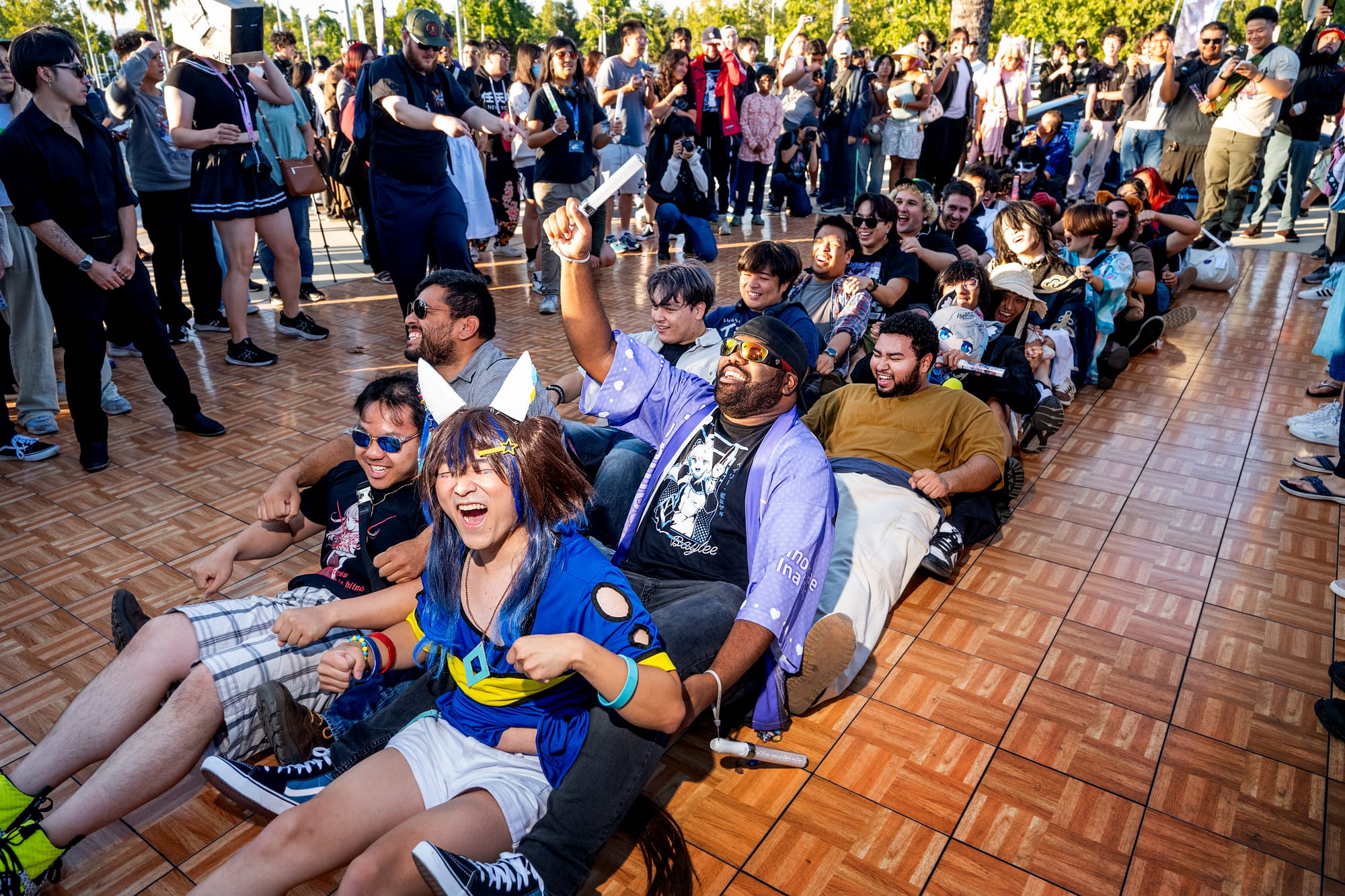
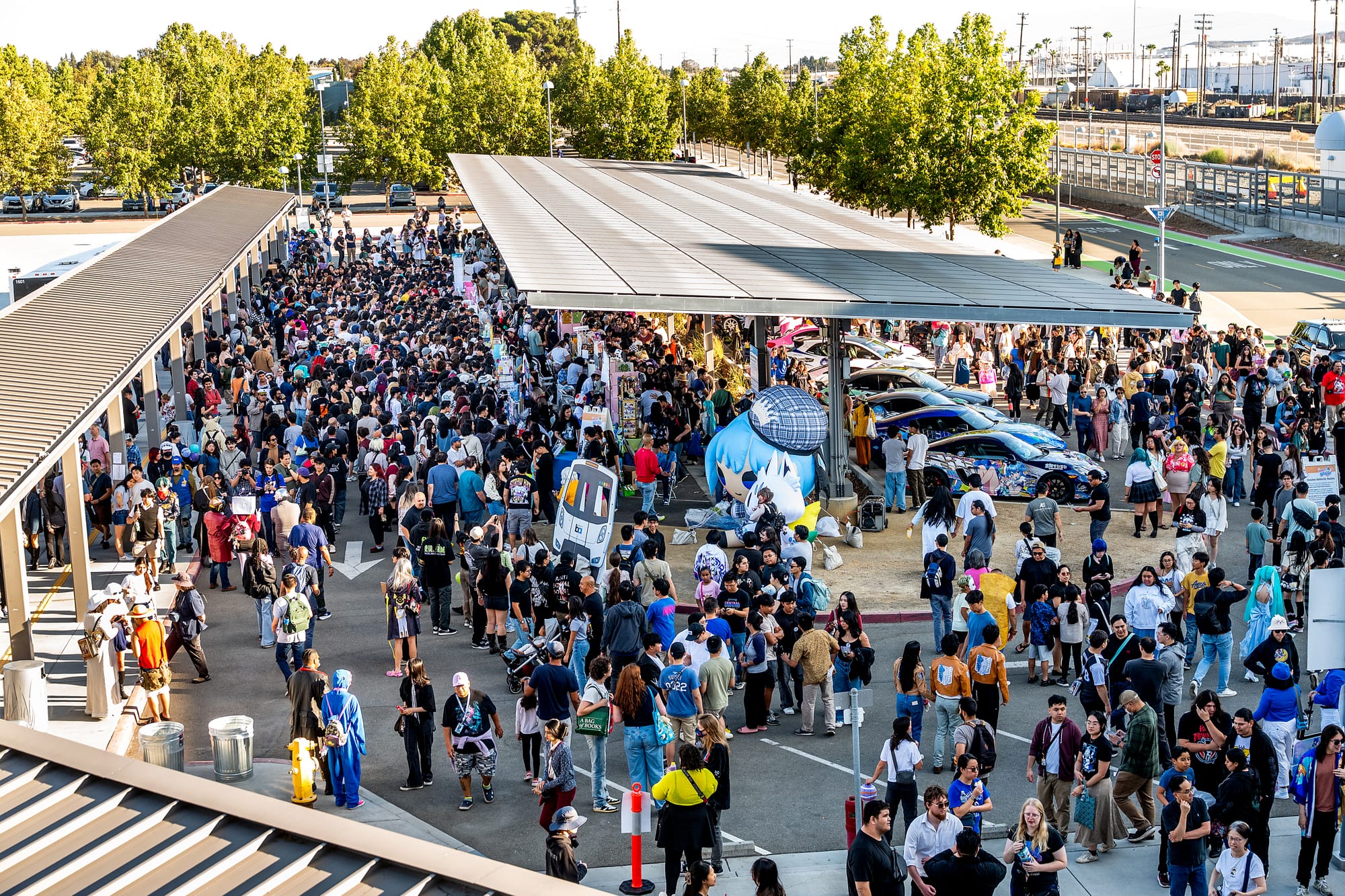
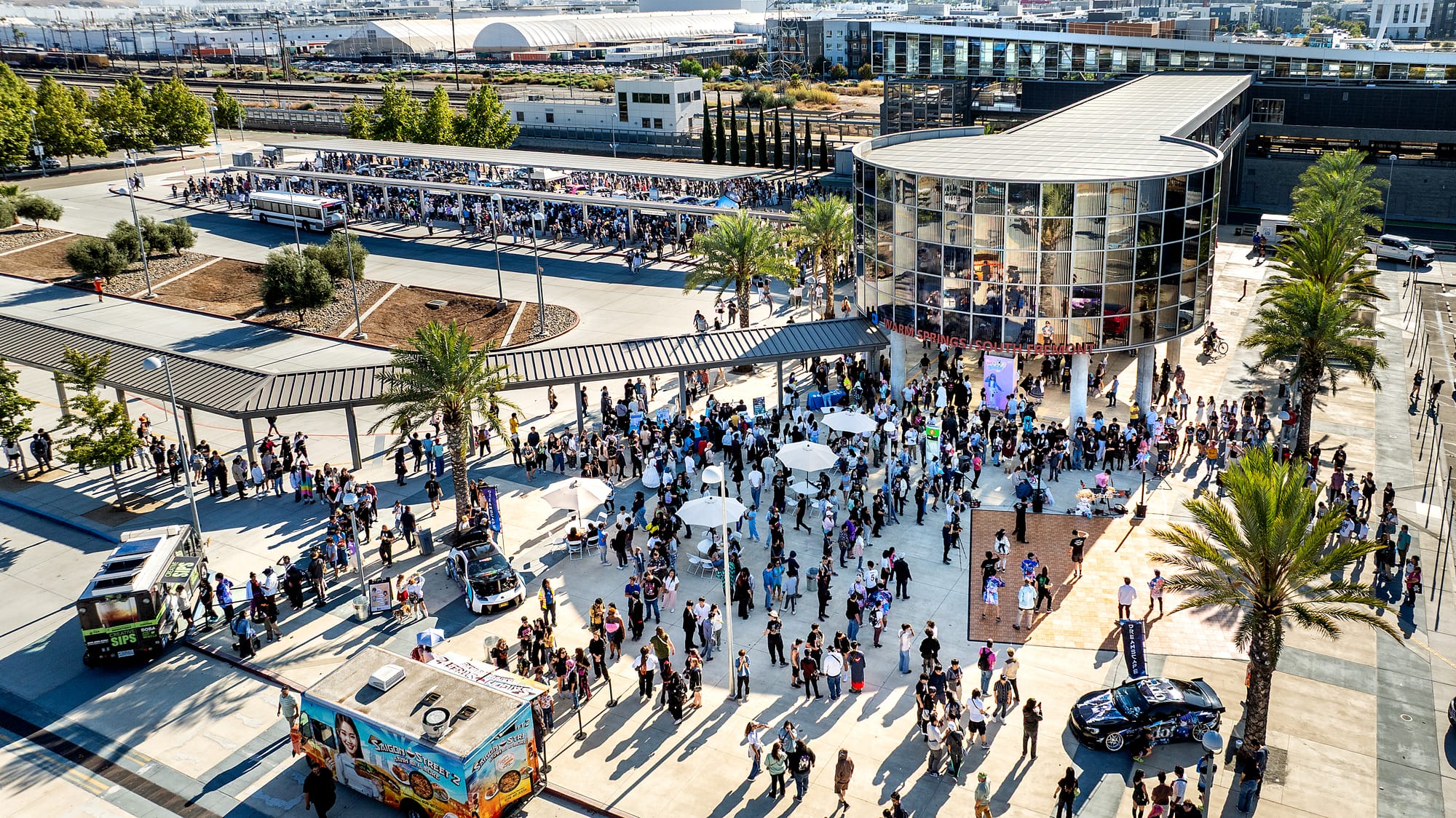
The "Let's Glow!" festival brought a sleepy Fremont parking lot to life. (Photo courtesy of Bay Area Rapid Transit/ Noah Berger)
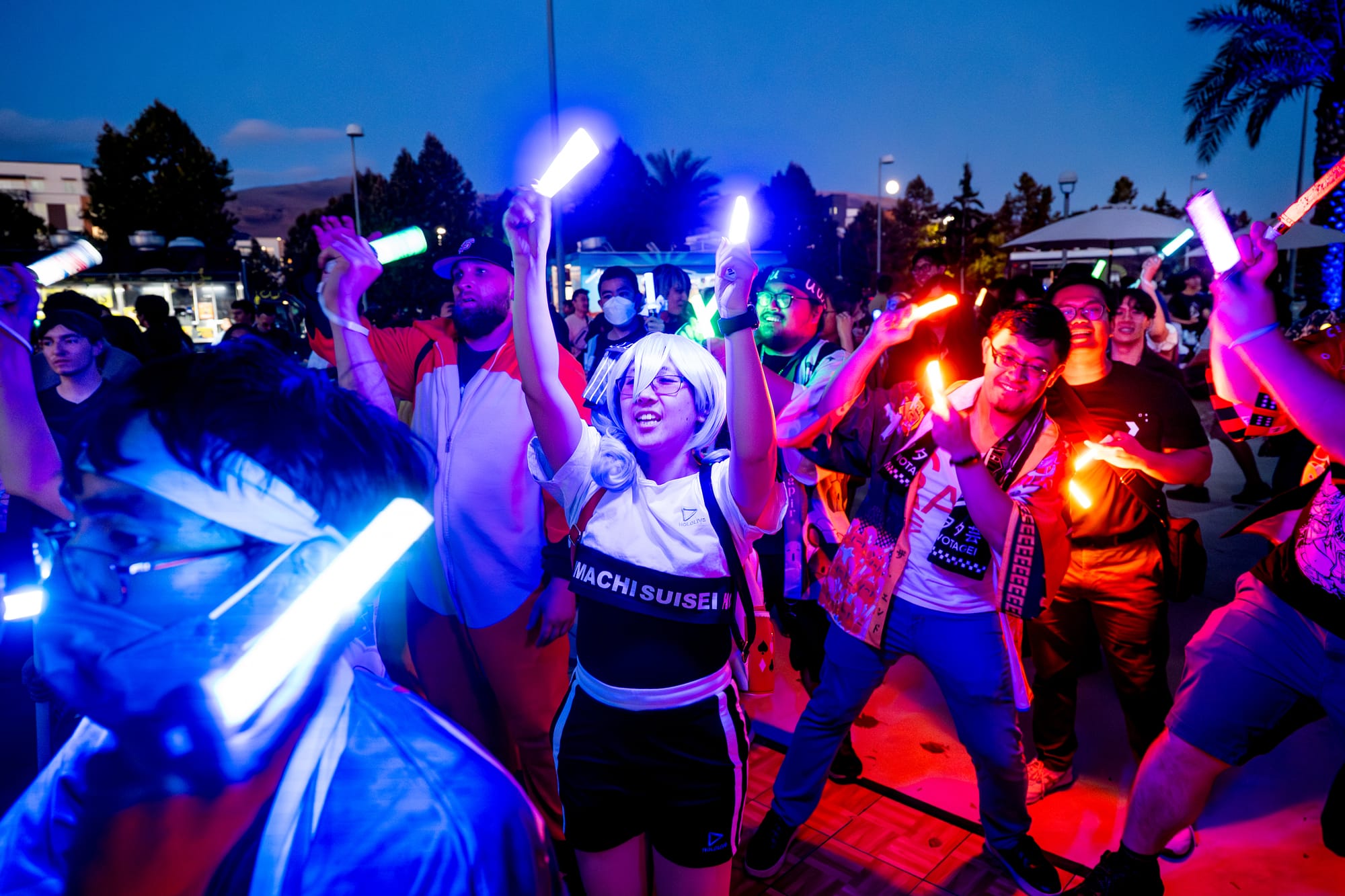
Trost says that the anime marketing campaign has yielded tangible financial success for the Bay’s largest regional transit system, citing an uptick in ridership, particularly when events like “Let’s Glow!” have been hosted at BART stations like Warm Springs in Fremont. The onetime gathering featured a glowstick dance party, live music, artists from around the region, BART-themed anime cosplay (have you ever seen an anime version of a BART car being worn between friends as cosplay?), and itasha — a sleek form of decorating vehicles with anime-themed body wraps and kits. At the event, I waded through a legion of what must have been thousands of attendees in a full-on anime market that popped up in an otherwise sleepy BART parking lot on the outskirts of Fremont.
@sfbart 🌟 BARTy had a great time at Let’s Glow! More than 4,500 people came to Warm Springs/South Fremont Station for BART’s first anime festival. BART and anime fans transformed the station into a vibrant festival full of cosplay, art, wotagei, live DJs, photo booths, lantern making, and more! BART also saw a significant increase in ridership to the station on Saturday with more than 4 times as many station exits compared to the previous Saturday. 💖BARTy feels so loved by the anime/transit community who came together to make this event happen. @anicloverclub ♬ original sound - SFBART
“The call for anime is the eighth most clicked on page of our entire website,” Trost says. “Our website includes trip planners, daily fares, parking information, important things. But our anime call for artists was among the highest, showing a desire that folks want to identify with and want to be a part of their local transit system in this way.”
Starling notes her genuine efforts to connect with anime communities are coming from the perspective of an aspiring artist and anime zealot herself. She has implemented personal ideas like setting up Japan-style stamp stations at BART stops, which have drawn tremendous lines from interested riders. Having lived in other major cities outside of California, she says the diversity of the Bay’s residents as one key factor in allowing anime to have thrived here over the decades.
“It helps that there are many Asian Americans in the Bay Area, maybe with parents who grew up watching anime, too,” she theorizes. She also notes the importance of fan cultures outside of the Bay’s largest cities, where much of her focus has been funnelled. “People tend to live in the suburbs: In Mountain View, in Marin, or out in Antioch. That’s where I’ve found many 20-somethings like myself who are into the same things I am.”
A passion for animation is already well-established throughout the Bay, with companies like Lucasfilm, Pixar, Kuku Studios, Crunchyroll, Tonko House and Baobab Studios either headquartered or present here. And with the added involvement of BART, college students, VTubers, and other otaku factions, it’s only logical to assume that anime’s presence in the region will further develop in previously unseen ways, perhaps one day reaching the immense, world-ruling stature of Eren Yeager in Attack on Titan — but with a sunnier, less sinister outcome.
Anime Destiny 2025, hosted by Cal Animage, takes place on Nov. 15 from 10am to 7pm at UC Berkeley’s Martin Luther King Jr. Student Union (2495 Bancroft Way, Berkeley). Entrance is free and open to community members of all ages.
