World Cup TikTok’s Schadenfreude Is a Thing of Anti-Imperialist Beauty

On the geopolitical thrills of soccer fandom.

National flags hanging from lines stretched across a building.
Whatever the World Cup might fail to teach US viewers about soccer is dwarfed by what it’s teaching them about the inescapability of political consequence. (Photo by Nick Fewings on Unsplash)

I’m going to be upfront with you and confess this essay isn’t about soccer the game, so much as soccer the community and soccer the malleable uniter. Two qualities that aren’t necessarily unique to the sport (which, fair), but notable in an era of algorithmic streaming because nothing—nothing—comes close to the global fandom soccer possesses nor the mirror thus held to the world’s powers.

And look, it’s been a busy few weeks for sports fans old, new, and lapsed (like me!). Between an exhilarating NBA finals and the start of the World Cup, the air feels decidedly filled with something. Camaraderie, yes, and pleasure, for sure, but also, too, a secret third thing.

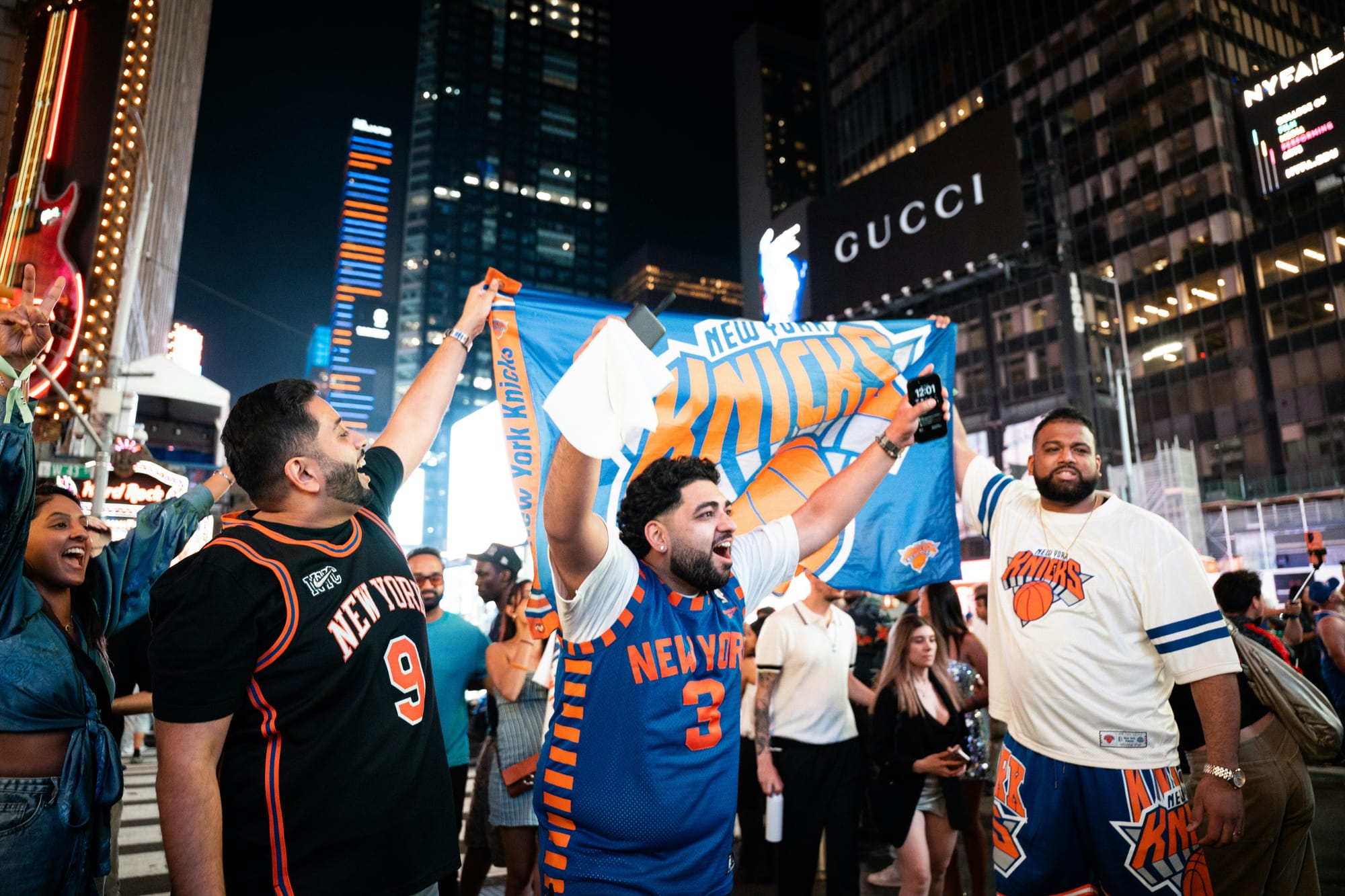
I’ve come to realize that the joy I saw on the streets of NYC, following the Knicks’ first championship win in over 50 years, couldn’t be divorced from the context of collective glee that the President, a longtime Knicks fan, attended the one game the team lost. Nor from the boos heard during the national anthem when he appeared on the jumbotron. Nor from the fact that this win was, overwhelmingly, a win for the New Yorkers who weren’t currently subjecting the country to fascism, or the world to chaos and death. This wasn’t just a victory for the city and its people; it was an exorcism (its second in less than a year!). Those bundles of sage probably didn’t hurt, either.

Three men in Knicks jerseys cheer while waving a Knicks flag in Times Square.
Knicks in five! (Photo by Maney Imagination on Unsplash)

What I and others online witnessed from afar, after game five, was in part the energy released by millions of New Yorkers successfully punching up. Here was the very proof, despite the horrors of this last decade, that it was possible to win in this country—truly! at anything!—against the odds, or nearly 30 points down, or unpaid bills and rising rents and crumbling civil rights. That maybe there were few greater gifts in this world than each other in one of the greatest cities in the world, calling and responding. I’m tearing up just thinking about it. 

And yes, this is definitely the rose-tinted glasses version of events that puts aside money, and power, and the way the worst people won, too, but it does not matter, because I am choosing to center the New Yorkers who flooded the avenues of Brooklyn with drums and sewing machines above all. 

I know I said this was an essay about soccer, and I’m getting to it, but I think for a few days, millions of people in the United States’ biggest city felt connected in a way they hadn’t since I can’t remember when. (Obama’s inauguration maybe? Who can say!)

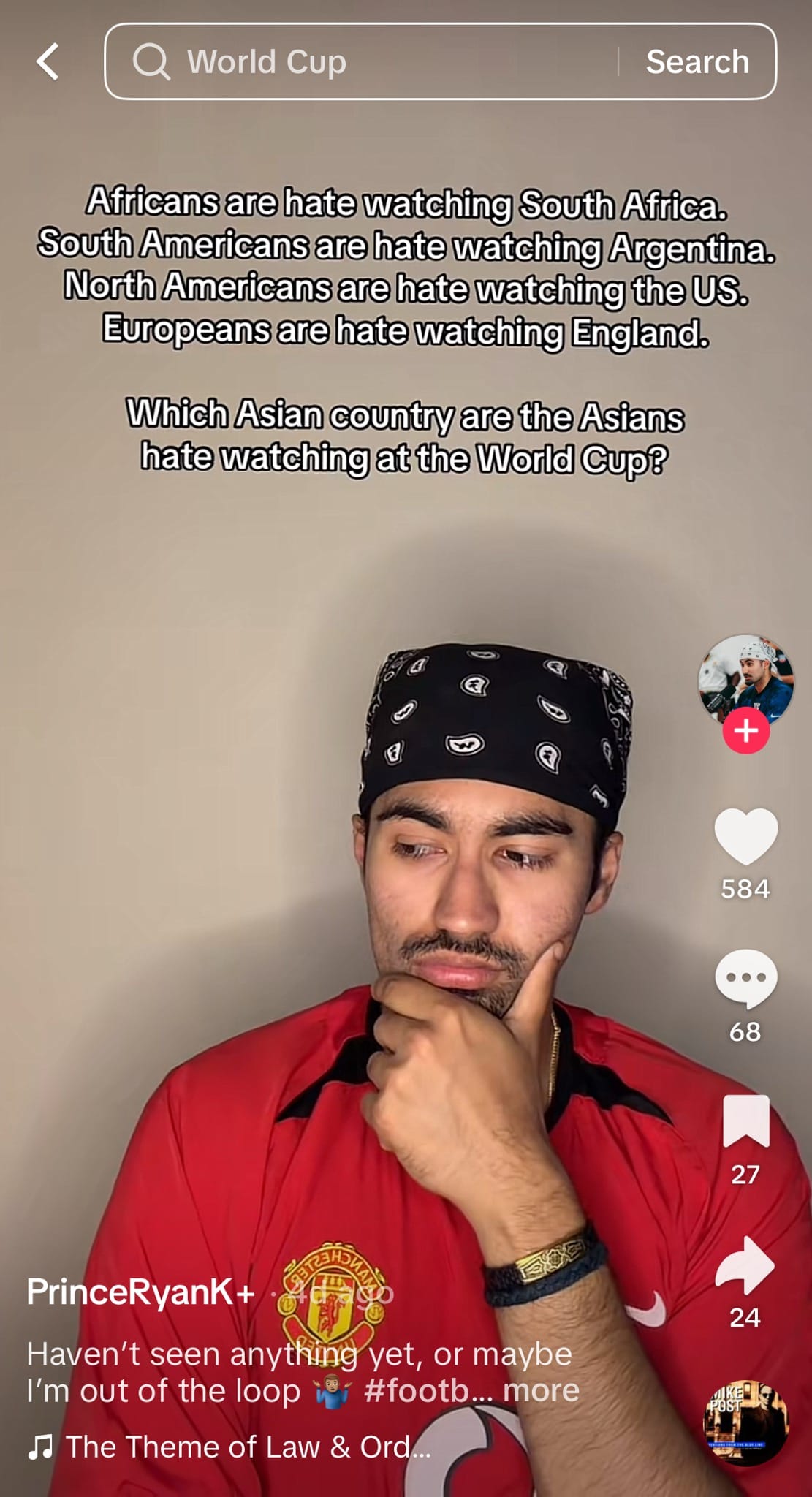
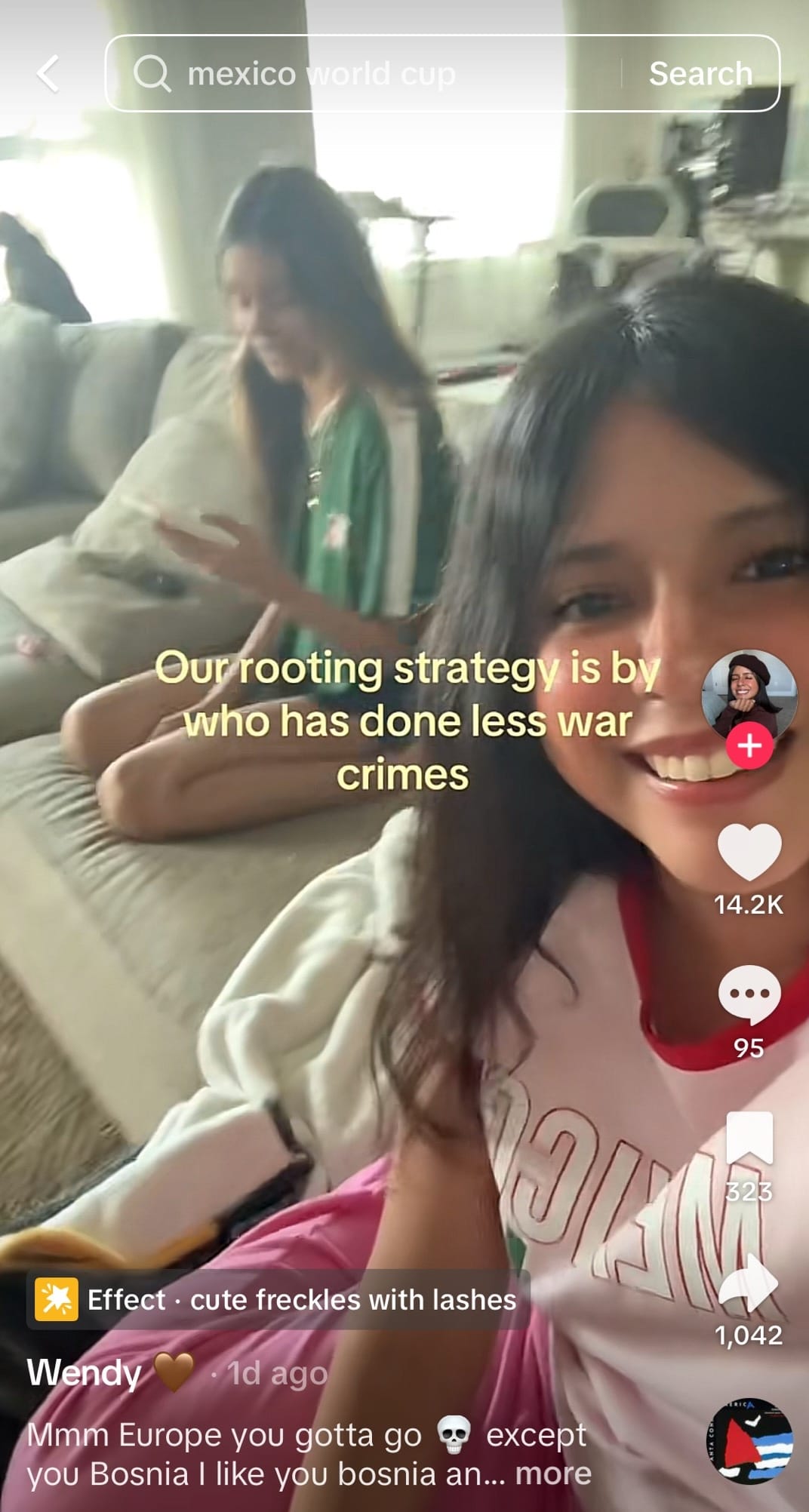
That this Knicks’ triumph should happen to overlap with the beginning of a World Cup set in a country that generally does not care about soccer, but absolutely cares about showing people a grand time, means my TikTok algorithm has been popping. What can one say about the way Lawrence, Kansas has fully embraced not just the Algerian team but Algeria and its history? Or Boston with its bagpiping Scots encountering tailgating for the first time? Or the singular saga that is the German Freddy’s road trip across the South? Even the monumental Korean-Mexican cultural exchange happening in Mexico has been a treat and a half.

From what I can tell, international tourists seem largely delighted and surprised by the people and cuisines of the Americas, and rightly so. On TikTok, it feels less like the World Cup and more like the American Soccer Slumber Party (pass the ranch dressing).

“I was just wondering if the Europeans wanted to have another sleepover again next year?” asked one TikTokker, adding, “Our mom said it was OK if your mom said it was OK.”

Still, whatever the World Cup might fail to teach US viewers about soccer is dwarfed by what it’s teaching them about history and the inescapability of political consequence. 

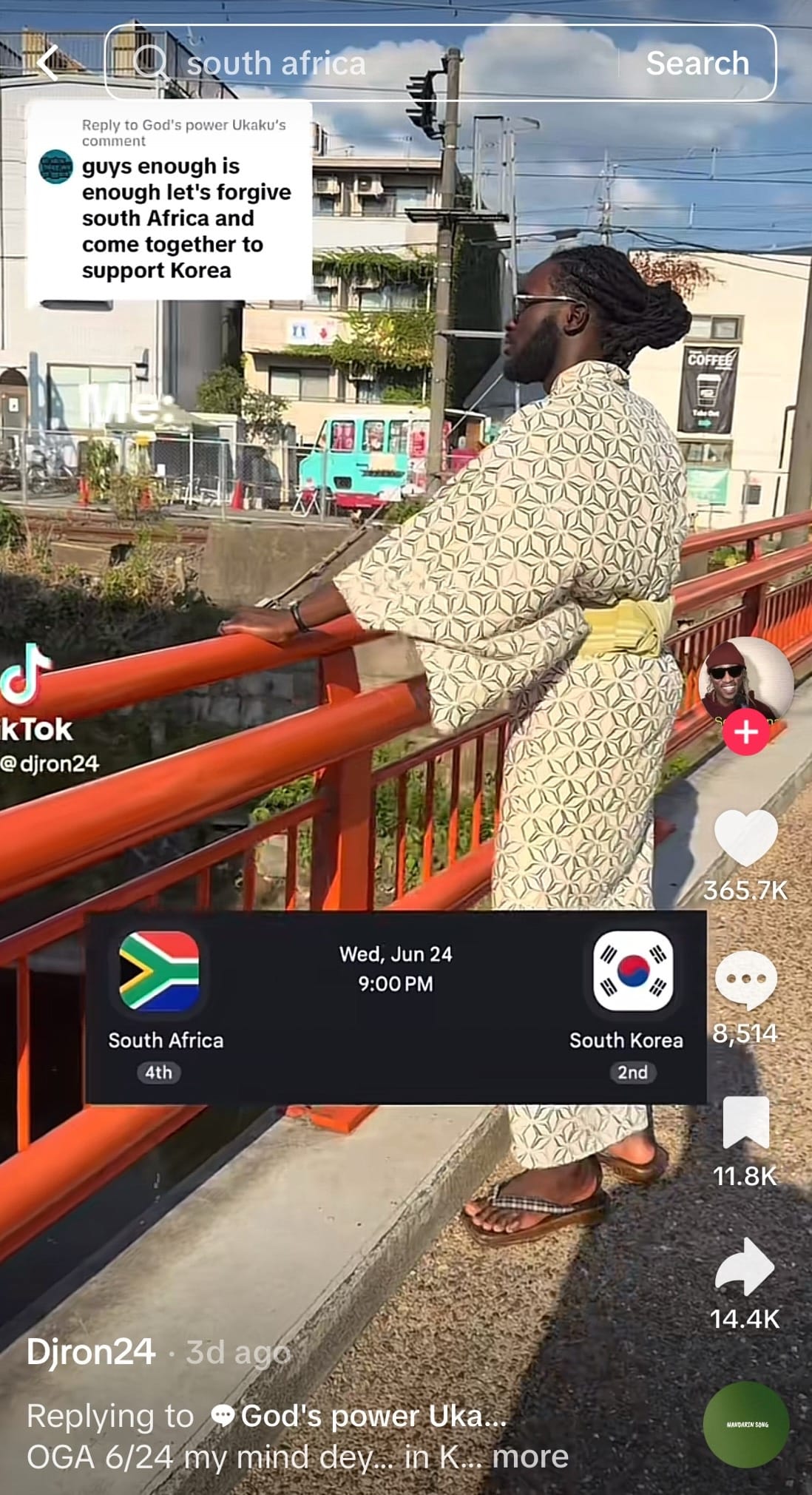
One of the first TikToks I got about the World Cup was of an African man trying to explain why the entire continent was rooting for Mexico against South Africa, before just calling it Africa’s Argentina. “A goal against South Africa is a goal for Nigeria,” joked another. I’ve seen Asians on the app torn at one point over which colonizer to root for during the Netherlands vs. Japan match. Meanwhile, there is the damning statistic that 76 of the 98 World Cup players who were born in France are representing other countries (would it surprise you to hear Algeria has the highest percentage of those players)? 

“This is the whole thing, though,” says a sportswriter friend when I tell her about the above. “That it's all about nationalism, right? But then it's impossible to truly be about nationalism, because nation-states are all BS and the teams are the proof!” And yeah, it’s hard to see matches pitting England vs. Ghana, or France vs. Senegal, or Portugal vs. DRC, and not feel a way about the ghost of colonialism face-off playing out on the pitch. 

Things aren’t so different off the field. In the US, we are witnessing all our empire’s hauntings dropped on our front door. Sped out of the country, held up from arriving, held back, held down, and on the list goes. I am not watching the games this year in protest, but I am very much eyeing all the collectivist seeds being planted across the world as a result of them, eager to see what blooms.

Great! You’ve successfully signed up.

Welcome back! You've successfully signed in.

You've successfully subscribed to COYOTE.

Success! Check your email for magic link to sign-in.

Success! Your billing info has been updated.

Your billing was not updated.