COYOTE Calendar: September 17-September 23
This week we've got piracy, several forms of trash, cake, Sappho, texting, and more.


This week we've got piracy, several forms of trash, cake, Sappho, texting, and more.

Cara Esten Hurtle’s drone-based art project shows the difference between being seen and being spotted.

What were you listening to after the September 11 attacks?

‘Lavender Lounge,’ a queer variety show that ran from 1991 to 1995, returns to the screen for the first time in 30 years in a new documentary short.


On March 9, 1991, in a Mission District production studio that rented for $10/hour, Mark Kliem looked into the camera and made a proclamation: “Welcome to ‘Lavender Lounge,’” said the host of the country’s first queer “American Bandstand”-style dance party TV show. “We’re making history today.”
Kliem had read about public-access television in an SF Weekly article and thought the format presented an opportunity: While he had a degree in broadcast and cinematic arts from Central Michigan University, Kliem, then 35, had only ever worked retail. If he hosted and produced a few episodes of a variety show, he figured, he could cut a demo reel and finally get a job in the entertainment industry.
But by the third episode of “Lavender Lounge,” he realized he was onto something much bigger. The thrill in the room was palpable, from both the ragtag team of queer crew members he’d assembled and the young people who kept responding to the newspaper ads, which invited them to don their coolest outfits and dance on TV. “Oh,” he remembers thinking. “I’ve created a monster.”
“I was blown away that people showed up, and [by] how much fun it was, and how it worked with [live-to-tape] filming,” he recalls.
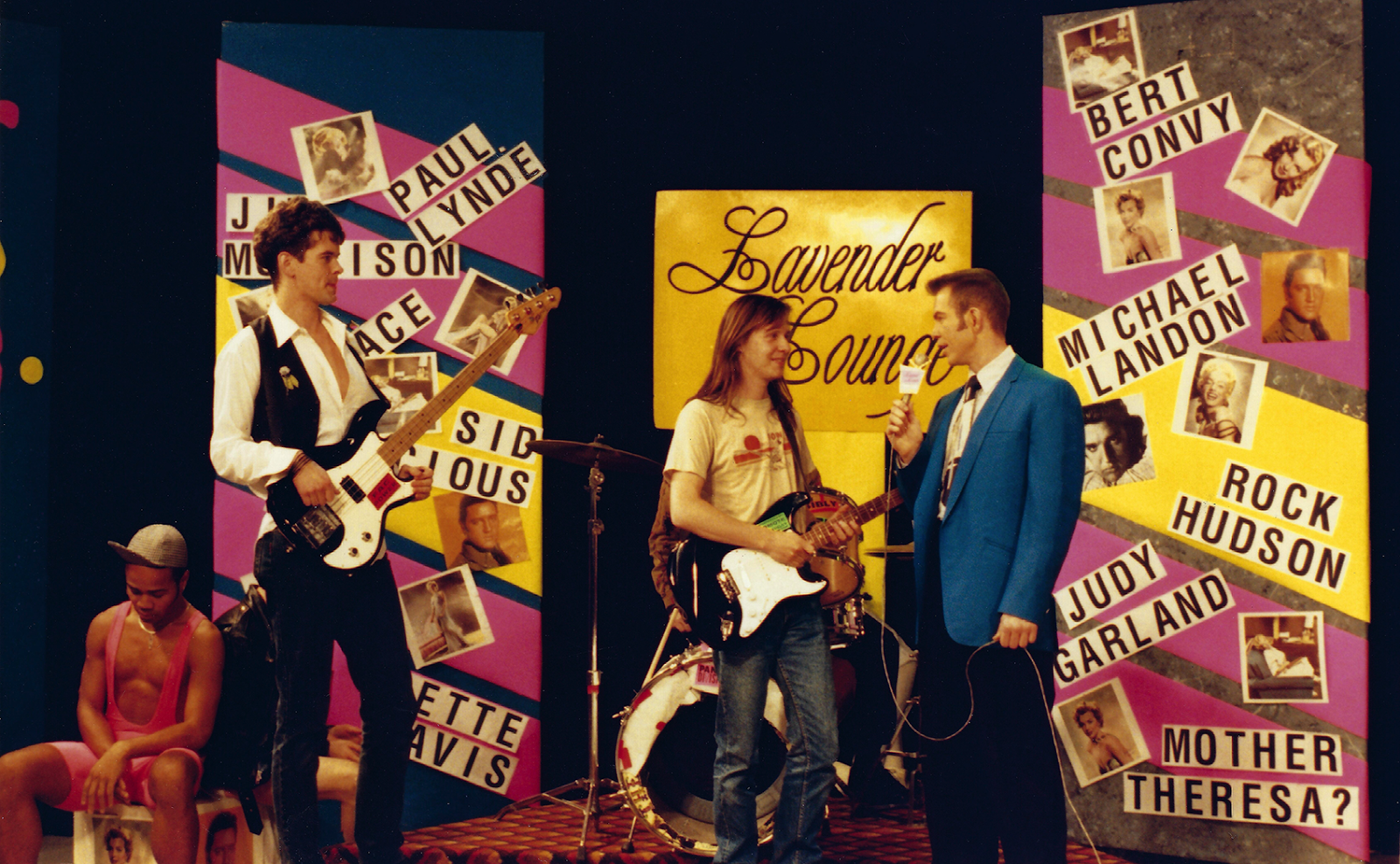
At a time when underground queer culture was nowhere to be found in mainstream entertainment, the show featured playfully subversive music, comedy, and a DIY ethos; it quickly became a local hit. But with Kliem as its ringleader, “Lavender Lounge” also evolved, over the course of four years, into a crucial source of historical footage. It remains, for example, the only broadcast of the city’s first-ever Dyke March in 1993.
Some 35 years after its debut, “Lavender Lounge” gets its due with a new documentary short that draws its title from the show’s tagline: Here, Queer, and On TV. The film premieres this Friday, June 19, at the Roxie Theater as part of Frameline50, and on Saturday, June 20, at the Haight Street Art Center, followed by (natch) a dance party.
Both events offer a glimpse of footage that has until now been relegated to boxes in Kliem’s house — as well as a snapshot of a unique moment in queer history.
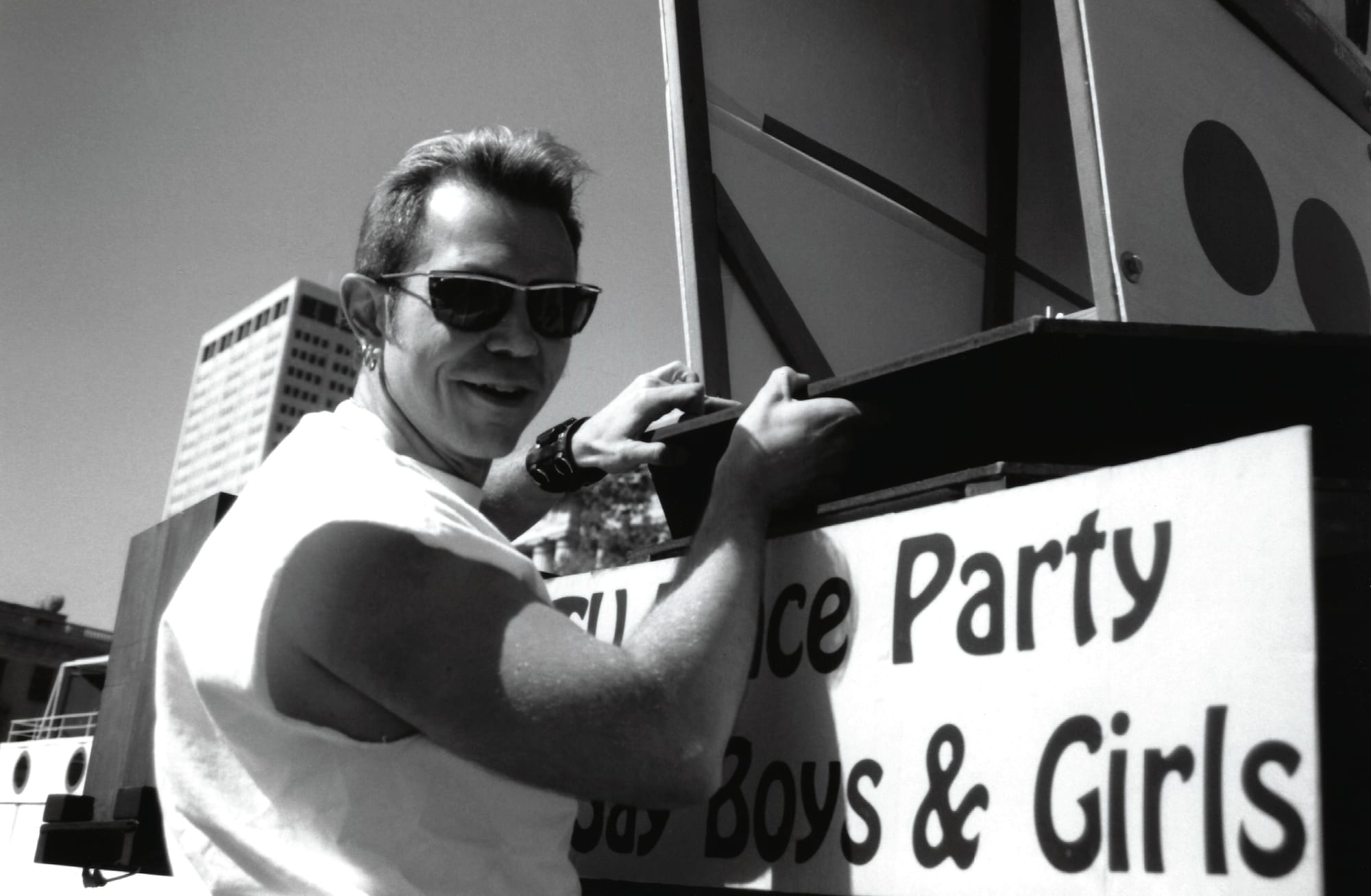
Bay Area filmmaker Cassandra Herrman, who co-directed the short alongside fellow public media veteran Kelly Whalen, notes that the sociopolitical backdrop for “Lavender Lounge” makes it all the more powerful. Emerging from the darkest days of the AIDS crisis, the LGBTQ community faced a surge of homophobic hate crimes in the early ‘90s as the U.S. headed into an era of Christian “family values”-fueled culture wars.
“We were coming out of a period where the media coverage was really, really negative, and [the portrayal of LGBTQ people] was just a portrayal of suffering ... and then this show became such a place of positive representation, of joy, of visibility,” says Herrman. It depicted “this full portrait of people’s lives, their full humanity, that wasn’t being presented [elsewhere].”
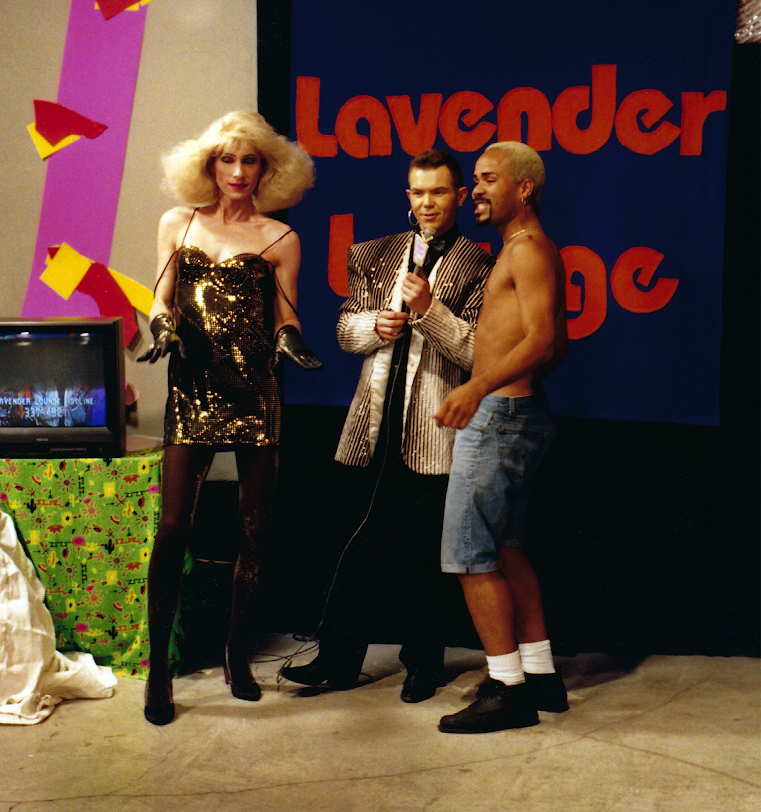
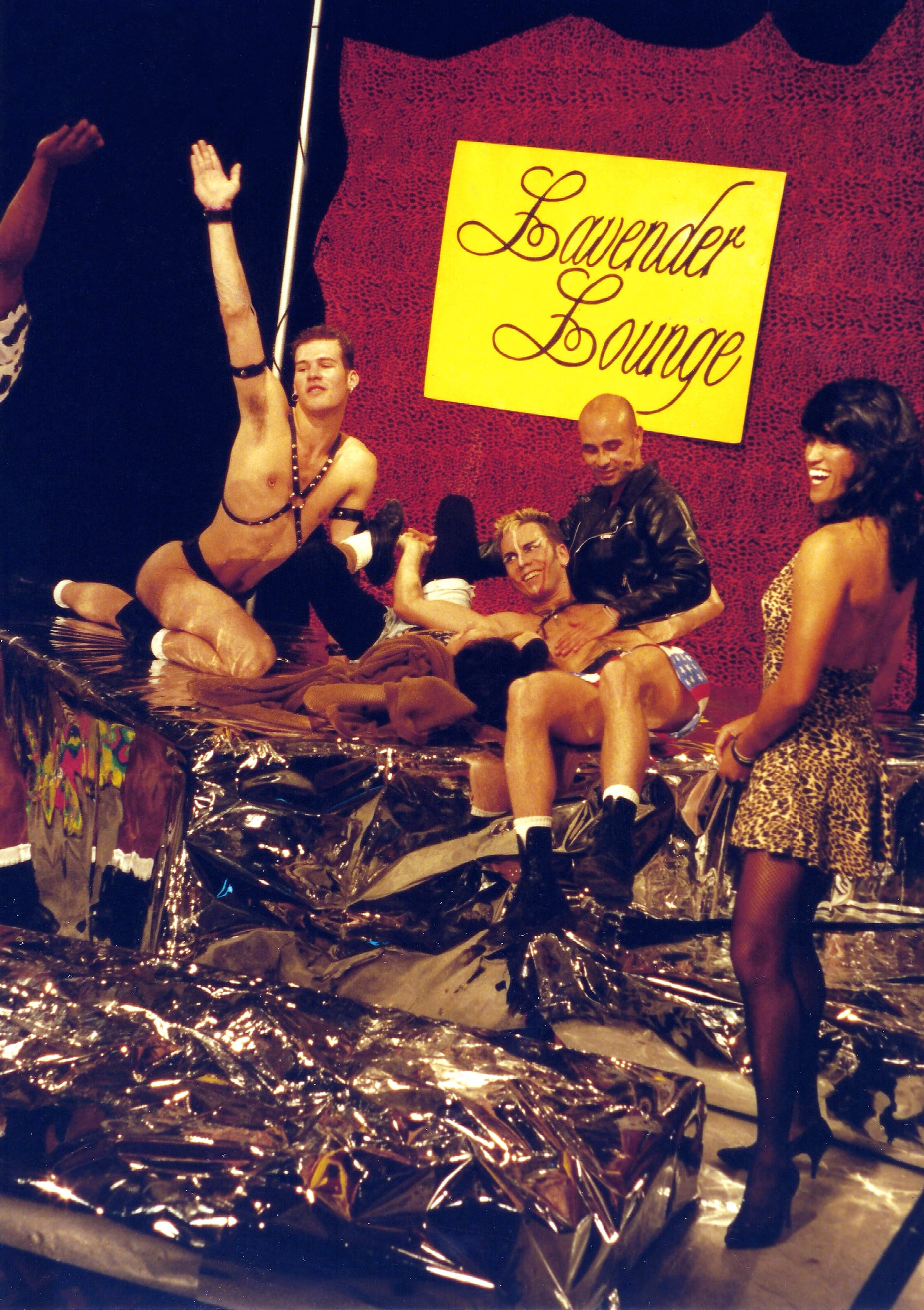
Scenes from a typical episode of 'Lavender Lounge,' featuring Donna Sachet (far left). (Courtesy of the filmmakers)
The filmmakers are seeking funding to expand the 16-minute short into a feature-length documentary, and there’s certainly enough original material. Kliem and his crew produced some 73 episodes in total, including 40 recorded in the studio and 33 on location around the city, after they spent some money on higher-quality gear.
Some performers that appeared on the show are familiar, like the Sisters of Perpetual Indulgence, comedian Marga Gomez, drag king Elvis Herselvis, and the queer punk band Pansy Division. Clips from the show’s field trip to cover the GLAAD Awards in L.A. feature shoutouts from Sandra Bernhard and Margaret Cho; Fred Willard once made a guest appearance.
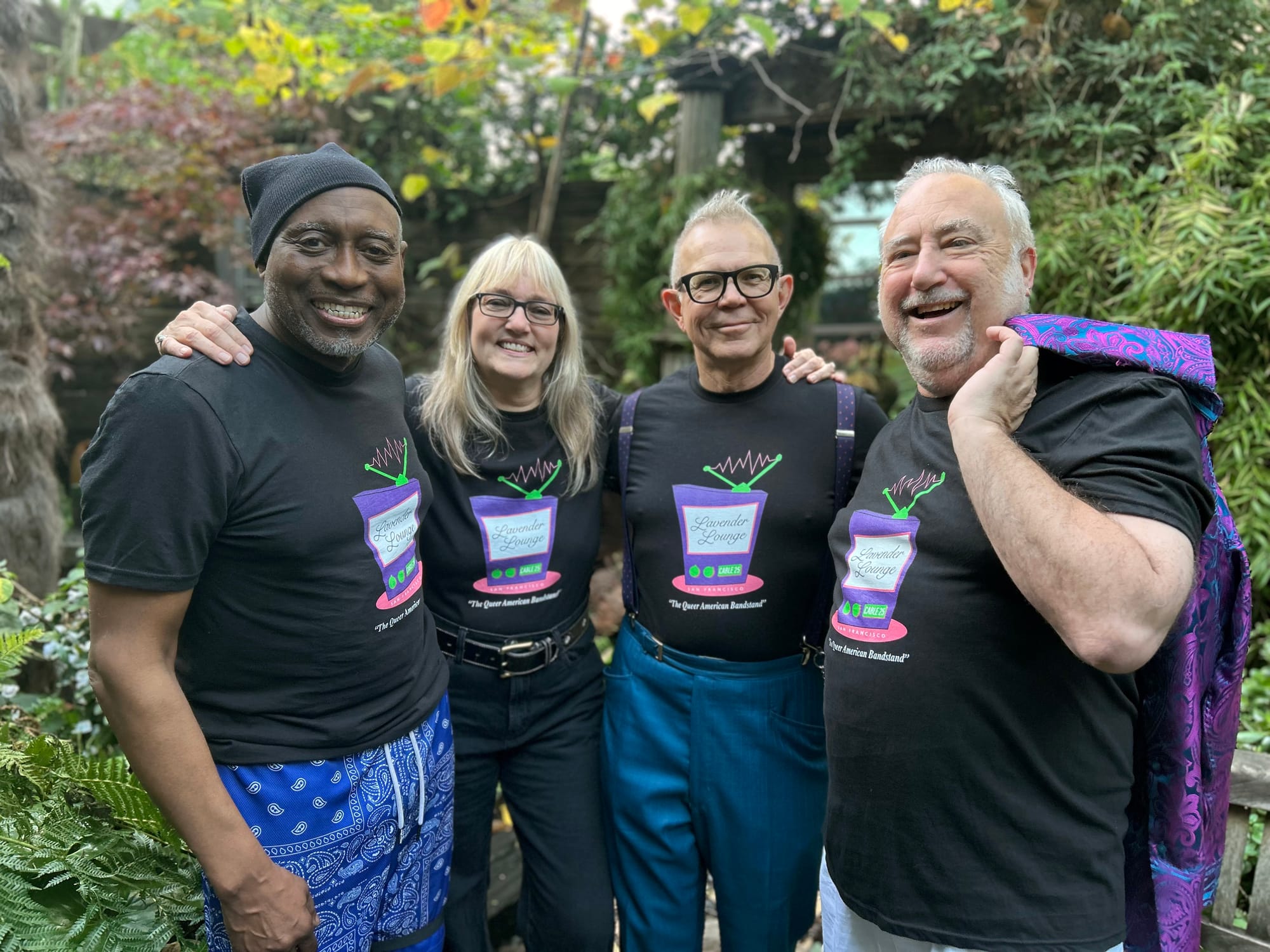
But it’s the less famous faces who drive home how the show forged community. The filmmakers posted flyers throughout the Castro last summer asking for folks to get in touch to share memories, and the doc captures tender moments as members of the production crew reunite for the first time in decades, reflecting on their “made family.”
In one scene from the short, Kliem and his crew walk through the Castro, asking people on the street if they’ve heard of “Lavender Lounge” and sharing clips. It doesn’t take long to run into an old friend of Kliem’s who was a regular on the show: a bald man now in his 50s, he’s amused to see a clip of himself dancing in a skintight white bodysuit, long hair down to his butt.
“The people that I met from that, we still talk about it,” he tells Kliem, as the men share a hug. “It’s amazing.”
The interaction is heartwarming, but it’s also reassuring just to see that any of these folks still live in the neighborhood. In the full-length film, Herrman plans to explore the socioeconomic factors that made “Lavender Lounge” possible. “It came at a time when artists could live and create in San Francisco,” she says, “and obviously the city has changed hugely in that sense.”
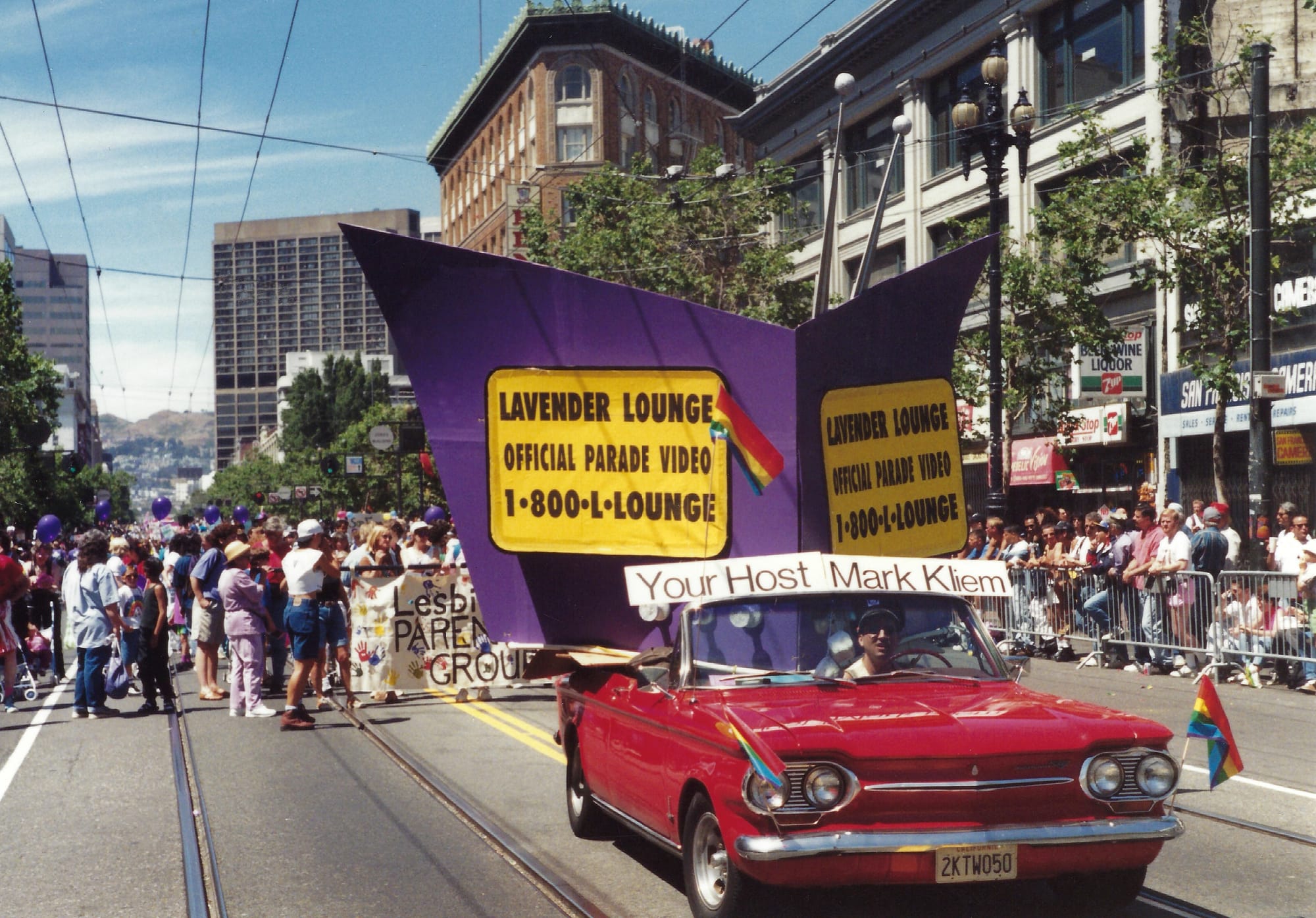
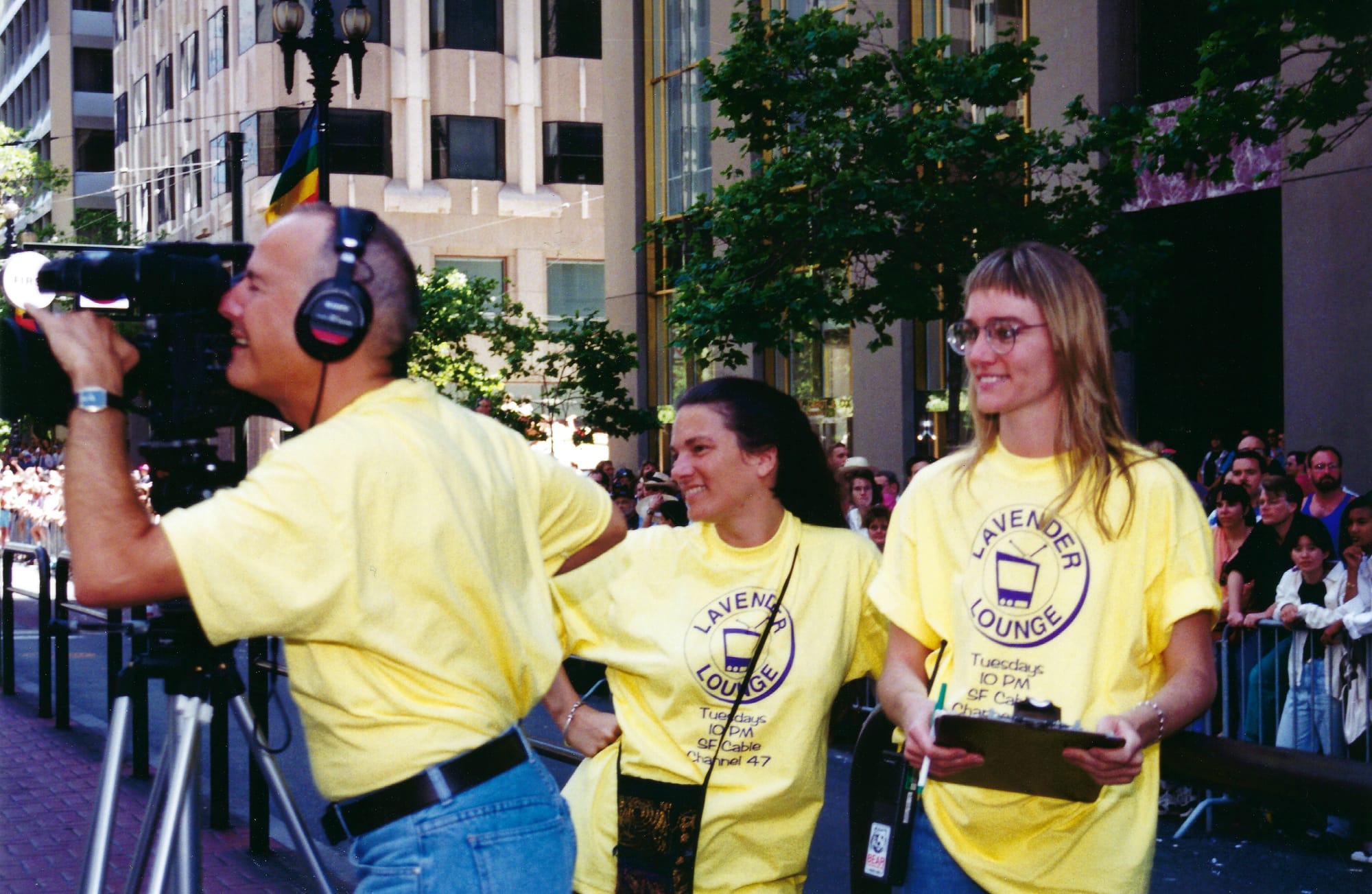
The 'Lavender Lounge' crew films the Pride parade in 1994. (Courtesy Jack Johnson)
Even with the lower cost of living, Kliem remembers the tapings as a feat of guerrilla marketing and punk-rock pacing. He and the crew rented the studio at 15th and Folsom for six hours on Saturdays, during which they’d completely transform its interior (think prom meets “Pee-wee’s Playhouse”) and tape two episodes back to back (dancers were told to bring two different outfits). Then he’d tell everyone to go home, have dinner, and meet back up at a bar like the Eagle or the 440 Club at 8pm to watch the VHS tape together.
“Of course [all the dancers] would go home and tell their roommates, ‘Oh my god, I was on television, you gotta come with me, we’re gonna watch it tonight,’” says Kliem, who’s now 70. “At the bar, we’d pop in the tape, and whoever was sitting in the bar would see, ‘Hey, all these people in the bar here are on the TV. What's this all about?’ And everybody’s excited to see themselves… it was a whole party, and that’s how people would hear about it.”
The sense of freedom in the show is unmistakable: A full six years before Ellen DeGeneres caused mayhem by uttering the words “I’m gay” on primetime, anyone flipping channels in San Francisco at 2pm on a Tuesday could stumble upon a “Lavender Lounge” segment called “Travels Through Transgender Land.”
“The station tried to discourage nudity, but they didn’t have a whole lot of power, and no one was really scrutinizing what was going out over the air,” recalls Kliem. “But also, my intention was not really to push the limits. I was always telling the kids dancing in the studio to ‘keep your clothes on!’”
Indeed, part of what’s so delightful about the tone is the quote-unquote normalcy of it all. “Travels Through Transgender Land,” at least from this short clip, appears to just be a small group of trans friends going clothes shopping at Goodwill.
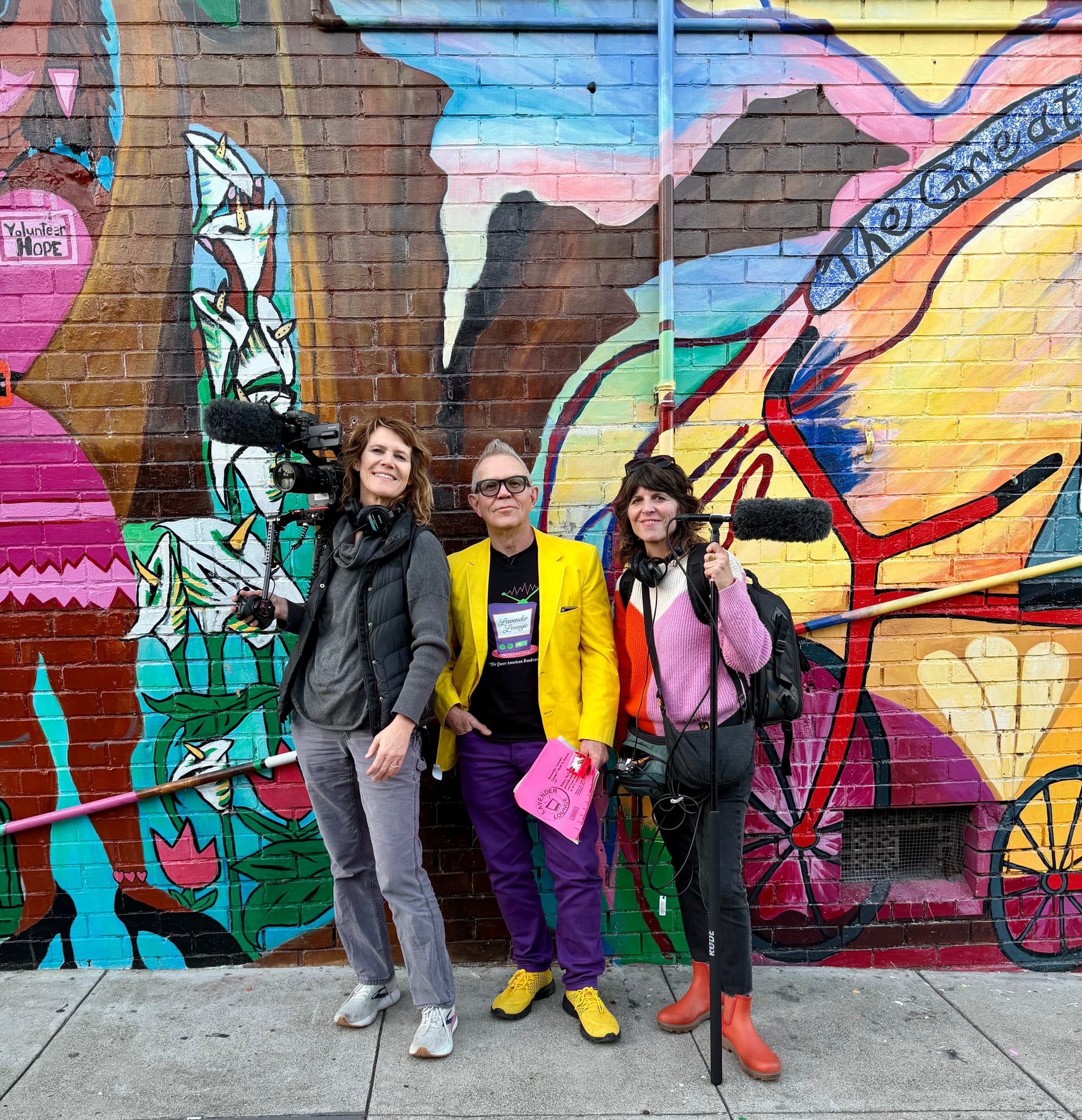
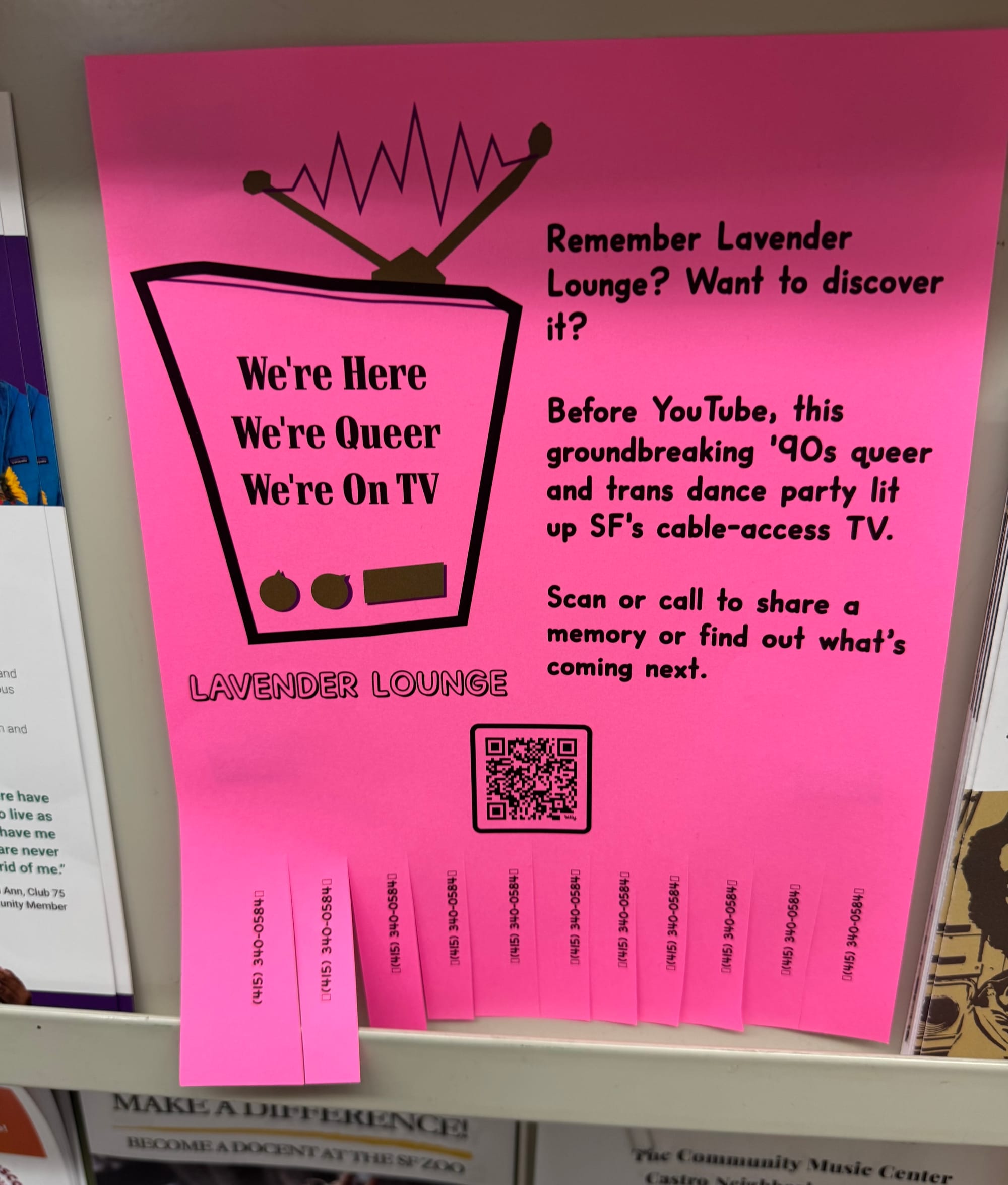
Left: Kelly Whalen, Mark Kliem, and Cassandra Herrman in the Castro. (Courtesy of the filmmakers) Right: a flyer spotted at the Eureka Valley/Harvey Milk Memorial Branch of the SF Public Library. (Emma Silvers/COYOTE Media Collective)
The show ended in 1995, mostly due to rising costs of production and increased competition for time slots. But “Lavender Lounge” had made its mark — and now has a chance to reach many more people. Over the process of making the doc, with the help of BAVC Media, Kliem finally began digitally preserving his tapes. When it’s complete, a full version of the archive will be donated to San Francisco’s GLBT Historical Society.
When the filmmakers first learned about “Lavender Lounge,” they’d simply been casting around for a story to tell about public media at a time when it’s under threat, says Herrman. What they got is something more pointed and unfortunately relevant — an illustration of how crucial it is for marginalized communities to document their own histories, particularly when their rights are under attack.
“Especially as a queer filmmaker, self-authored representation is so important,” says Herrman. “I hope ‘Lavender Lounge’ serves as a reminder of that and an inspiration for new generations.”
For Kliem, who will see the short film for the first time on Friday, this is just the beginning. Realizing how much the show still means to people has been a “shock,” and one that’s spurred him into action. He plans to write a book about the show, and he’d like to tour schools and community centers giving talks about it.
He’s also ready for more close-ups: Midway through the filming process, he told the filmmakers that “this really should be a full-length,” he says. “And so now they’ve come to their senses.”
“That’s what I’m hoping to get out of this screening,” he says. “This is just a taste.”
‘Here, Queer, and On TV’ premieres at 12:30pm Friday, June 19 as part of Frameline50’s Doc Shorts (tickets at rush), and screens again at 6pm on Saturday, June 20 at the Haight Street Art Center, followed by a conversation with the filmmakers and a dance party ($15, tickets here).