Yap Zone: The September 11 Artifacts Playlist
What were you listening to after the September 11 attacks?


What were you listening to after the September 11 attacks?

For Soleil Ho, September 11 was their political origin story.
This week we've got pruning, taxidermy, corn, cardboard, making U2 mad, and more.

There's nori, kombu, wakame, and bladderwrack in themthar tide pools!


It was a chilly, early morning on the Sonoma Coast, and two dozen of us had shown up wearing water shoes and windbreakers, scissors and knives in our pockets. Strong winds buffeted us as we made our way down a steep cliffside path to the ocean with buckets and bags in hand. Our mission: to harvest seaweed. Our guide: Ricardo Romero Gianoli, a local coastline restoration expert, connoisseur of tasty marine algae, and teacher of foraging classes with Fork in the Path.
It didn’t take long to find something edible. As soon as we dropped our packs on the rocky beach, he led us over to a boulder covered in tassels of slimy, stringy vegetation. “This is our chanterelle,” Gianoli said. It was nori, one of the choicest edibles on the shoreline.
Like chanterelles, nori is easy to spot and hard to mistake for anything else. Flat sheets of nori are sold in plastic packages in the grocery store; it envelopes onigiri; it’s the key ingredient in furikake, the seasoning you can sprinkle over rice. Small packets are now a mainstay in the lunchboxes of modern American kids (at least the ones in Whole Foods families). It’s the most familiar seaweed to people outside of East Asia — and here it was in the wild, right in front of us. Food really was everywhere.
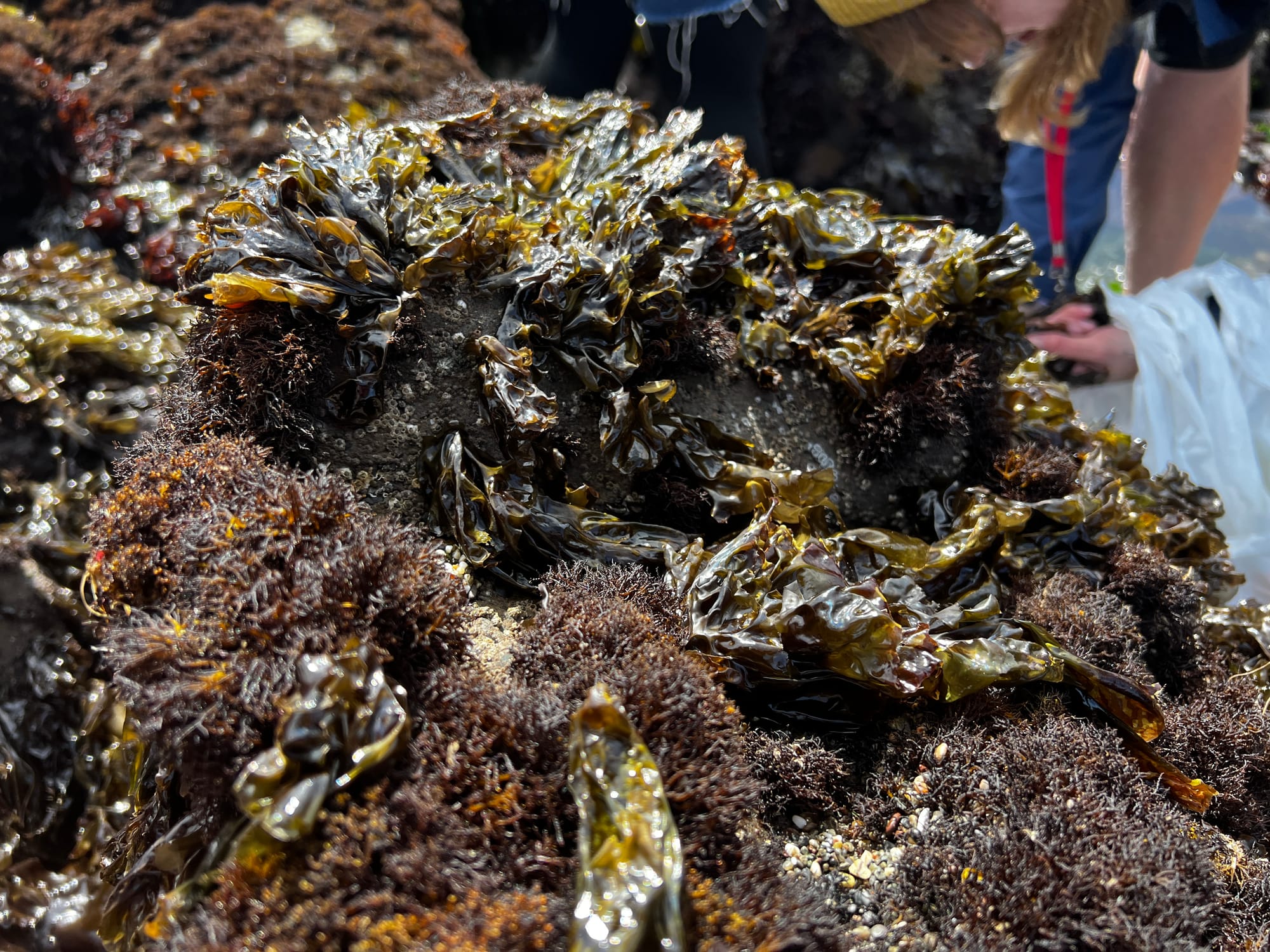
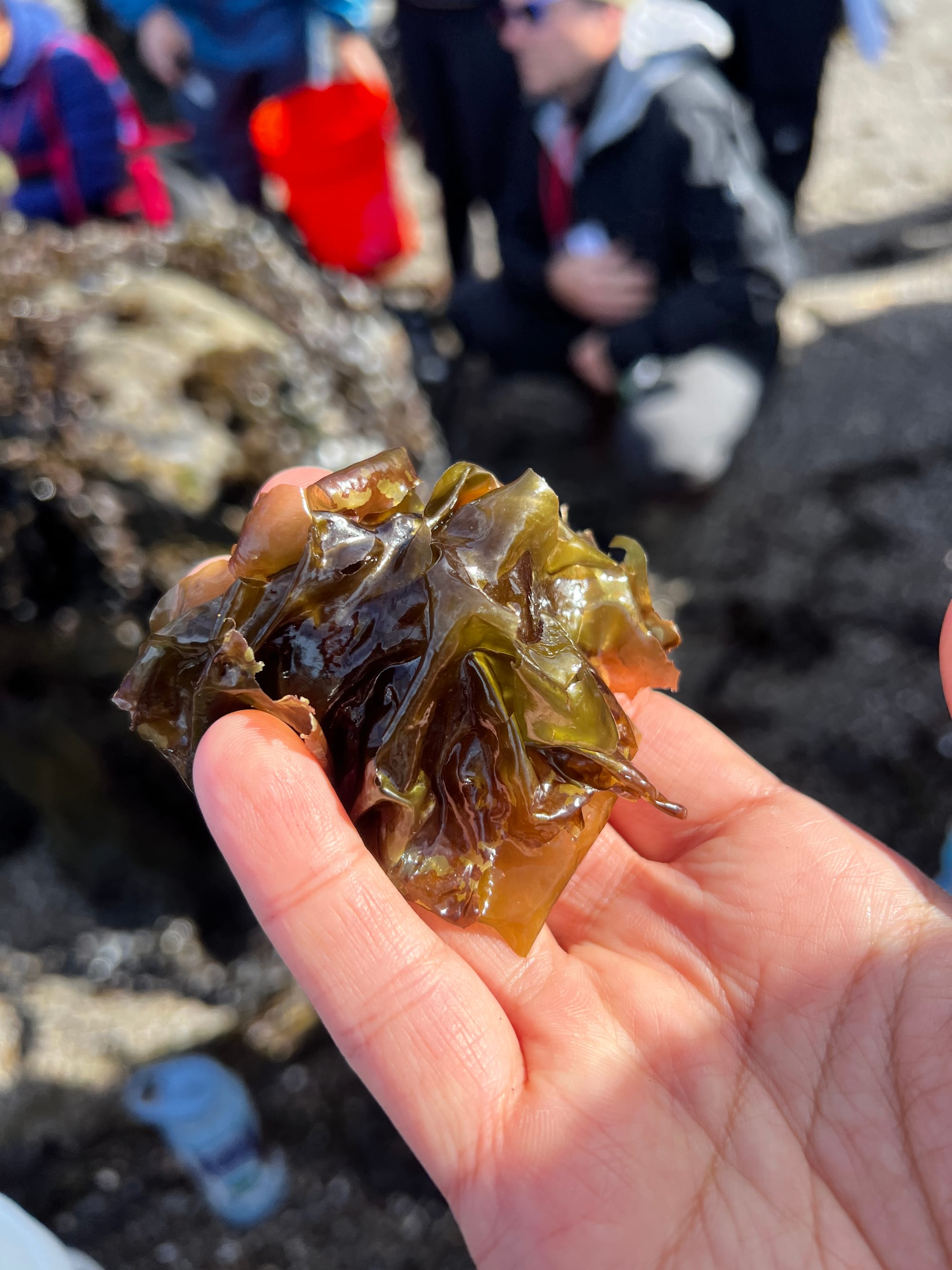
Nori, a seaweed common in Japanese cuisine, can be found on the Sonoma Coast. (Soleil Ho/COYOTE Media Collective)
On our beach, there were six types of seaweed that were plentiful. Kombu, a thick, long, edible kelp that is used for dashi stock. Bright green sea lettuce. Wakame, often used in seaweed salads. Bladderwrack, also known as bladder pod, which turns bright green when blanched. Turkish washcloth, a red algae with bumps like a cat’s tongue that’s similar to the very trendy Irish sea moss.
When foraging, sustainability is key. As Gianoli held out a long piece of nori, still attached to the rock, he showed us where to cut: only ever take two-thirds of a piece, leaving one-third behind so it can regenerate.“ You're ensuring future generations,” he says. Other suggestions include sticking within the Department of Fish and Wildlife limits, which means never gathering more than 10lbs of seaweed in a day (trust us, that’s a lot). Don’t turn your back to the ocean, and while you’re at it, try to avoid stepping on any sea anemone. With that, we are let loose to clamber over the rocks.
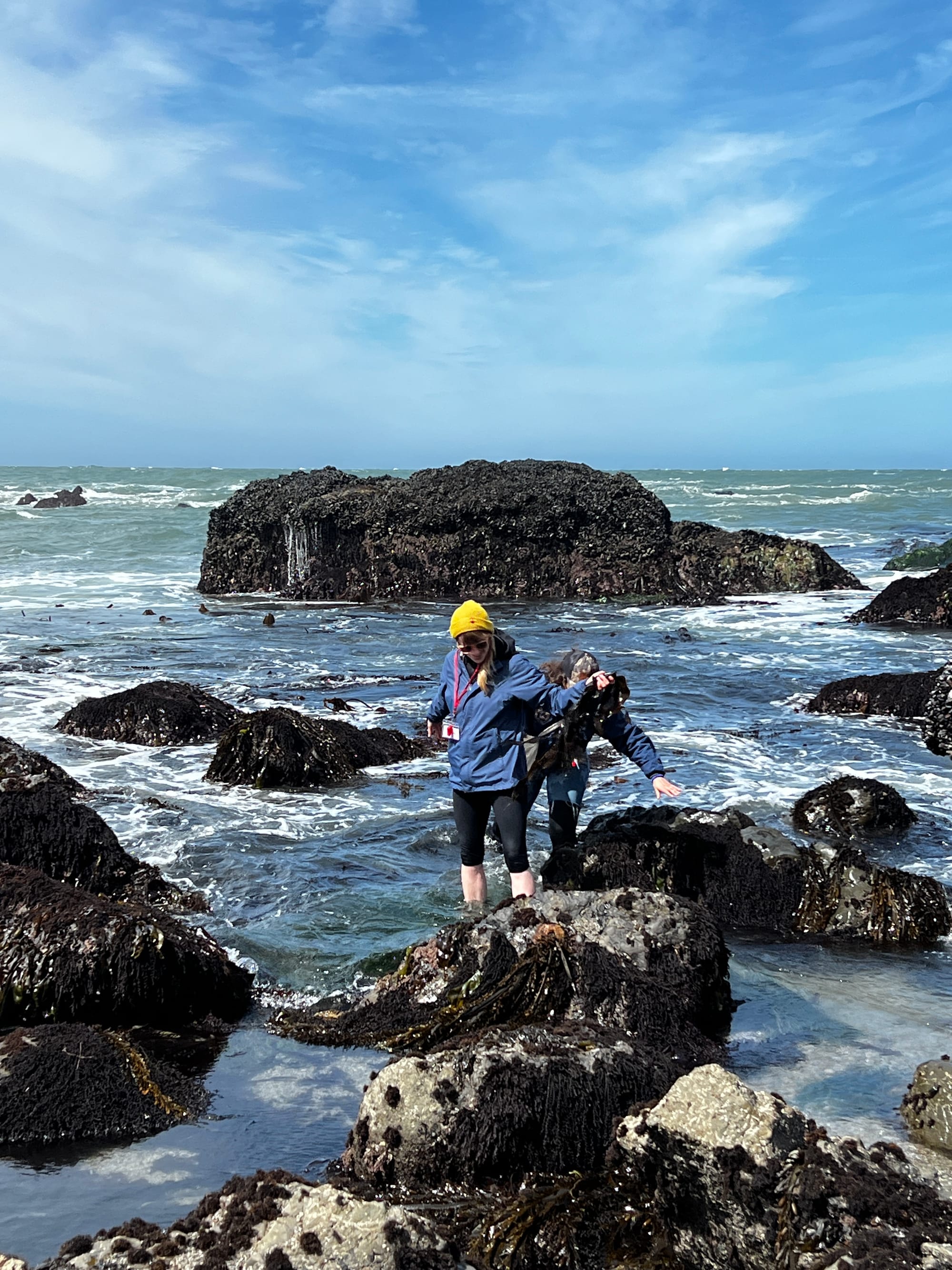
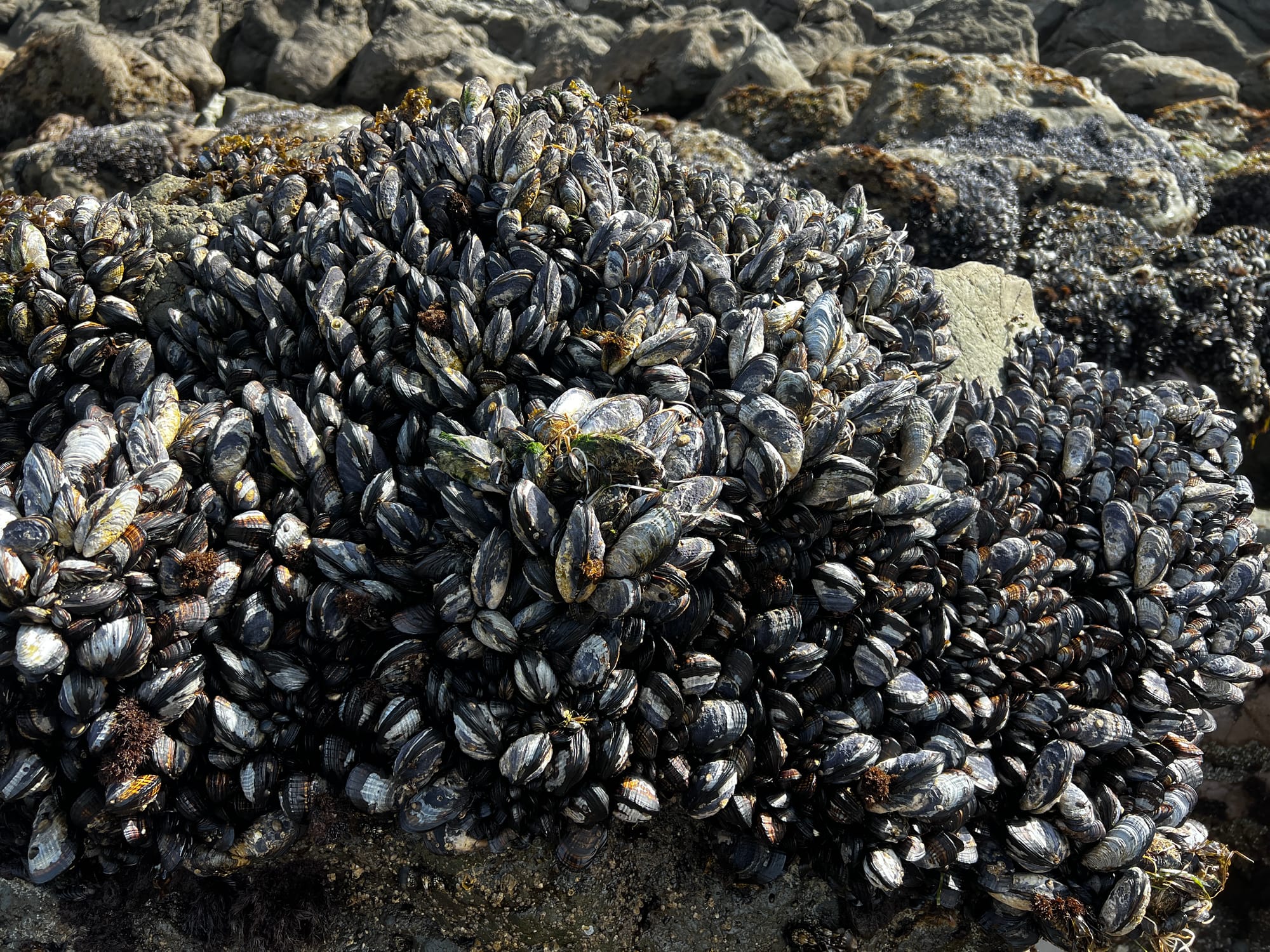
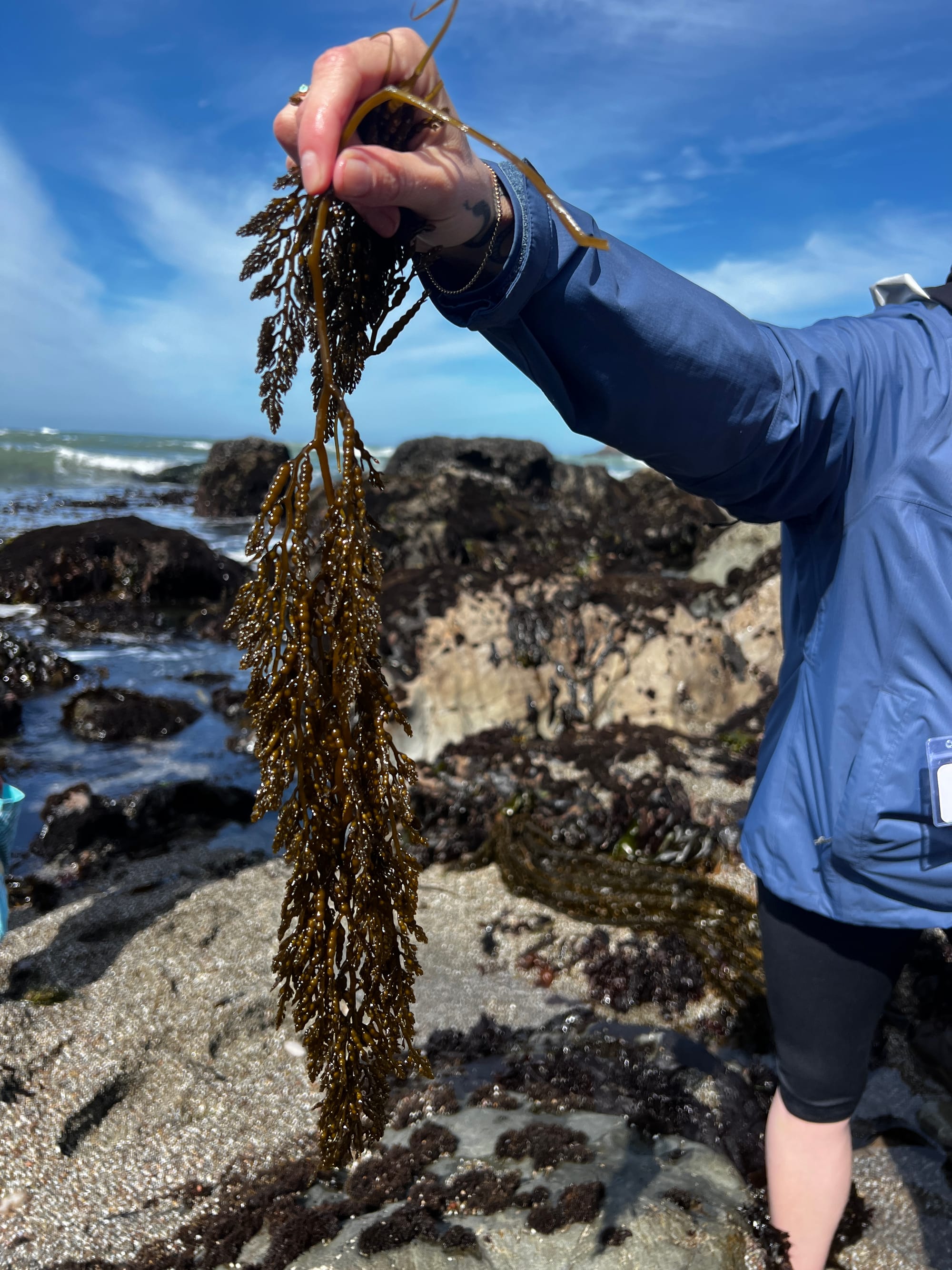
Gatherers clambered over mussel-encrusted rocks in search of edible seaweed like bladderwrack and kombu. (Soleil Ho/COYOTE Media Collective)
Nori was the easiest to gather, simply because it was everywhere. It was here we found evidence of prior foragers; much of it, even several boulders in, was short, having been cut by harvesters before us. Sea lettuce was bright green and small, often discovered underwater tucked near a sea star or anemone. Kombu, the soup-making superstar that everyone wanted, was in the waves; the easiest way to gather it was to stand in the surf up to your knees and slice pieces off when the water receded.
To cut nori, you gently tug a strand of it, pulling it out to its full length to make sure it’s grown out enough to harvest sustainably. It’s not as slimy as you’d assume — not like kombu, the slippery banana peels of the ocean. Instead, it’s more like wet cellophane. You’d think it would be easy to pull off the rocks it clings to, but its holdfasts latch on with a surprising persistence. You don’t want to tug them free anyway. Just give them a haircut and move on.
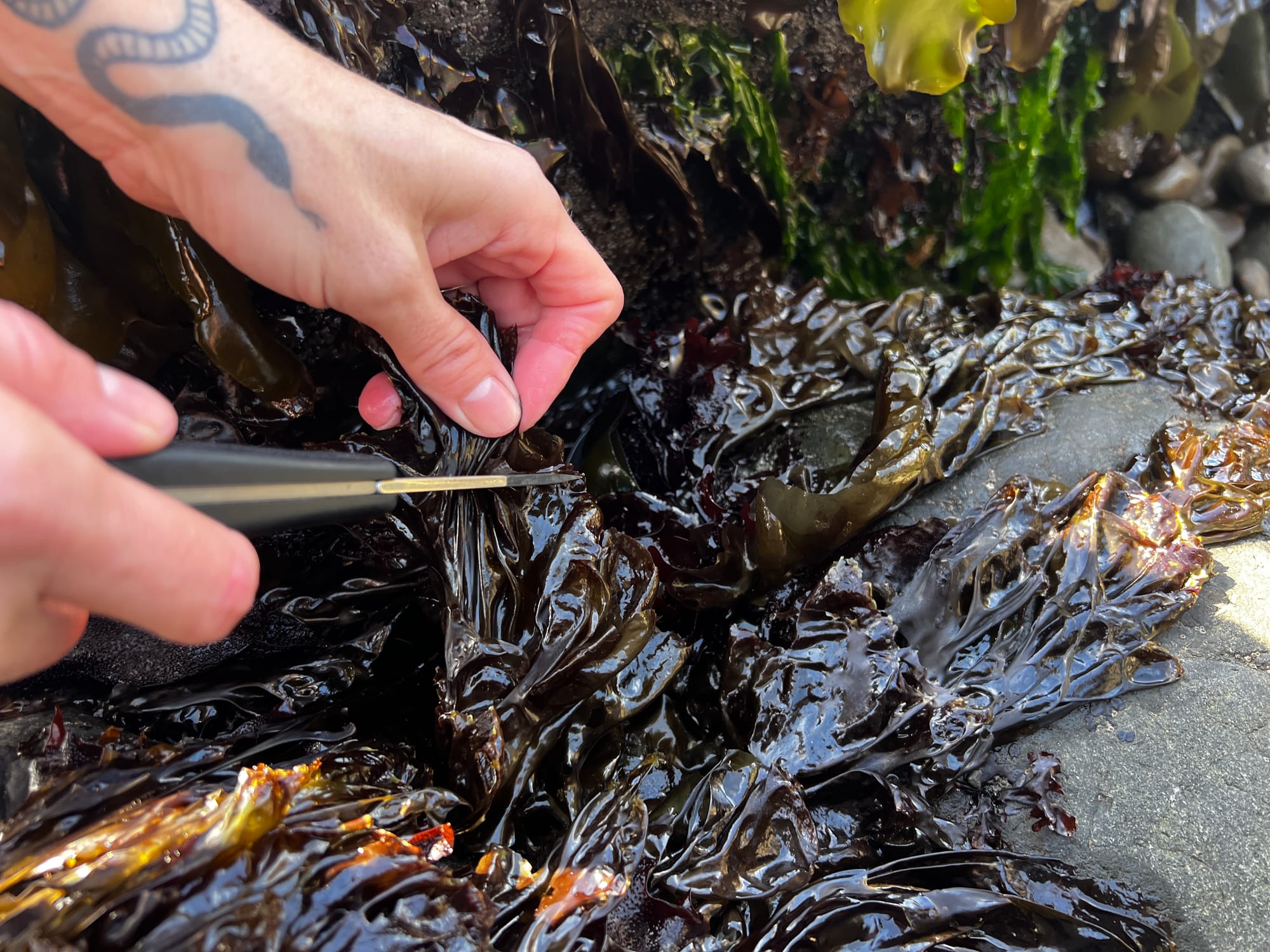
Unlike mushrooms, there are no deadly types of seaweed. Instead, your palate can guide you toward what’s edible and what’s not: “The ones that are hard to eat don’t taste good,” Gianoli says. But for those of us who are newer diners of this delicacy, there’s still a lot of trial and error. “It’s like finding 300 new vegetables and figuring out how to cook with them.”
Indigenous communities — the Kashia Band of Pomo Indians, Coastal Miwok, and the Graton Rancheria Tribe — have tended this land for thousands of years, and their knowledge of seaweed foraging and recipes runs deep. In recent history, their traditional practices were criminalized by the state and they’ve struggled to maintain access to their gathering grounds, where they’re often competing with commercial foragers. It’s why Fork in the Path is strict about what their students take home in addition to what information they put out there. (It’s why we’re not publishing the name of the beach!)
In a little over an hour, we filled a small bucket (Soleil) and a plastic bag (Nuala). (Not that it was a contest, but Soleil locked in and ended up collecting way more.) We washed our seaweed in the ocean to remove as many little rocks and crustaceans as possible, and watched a brief demonstration of seaweed preparation. Gianoli blanched bits of bladderwrack and nori, then mixed it with diced raw cucumber, rice vinegar, sesame oil, and soy sauce to make a quick salad. Afterwards, we hiked up the cliffside trail, loaded our seaweed into coolers, and headed home, making promises to one another to return again.