Exclusive: Bottom of the Hill Sold, Will Continue as Live Music Venue
The storied San Francisco club will reopen in 2027 under new ownership.


The storied San Francisco club will reopen in 2027 under new ownership.

This week we've got a broth bar buffet, a backwards reading of the U.S. Constitution, rice porridge for dogs, and more.

(It all depends on how you define the word "can.")
As AI bros, private equity, and Decent espresso machines dominate the narrative, the gays hold the line.


Every year, before June rolls around, Napa cafe owners gather at Deuces Market to plan a Pride parade. The beloved local business hosts meetings to coordinate LGBTQIA2S events each weekend that go off like little fireworks through the summer: drag story times, DJ nights. Alex Jacinto is a regular. He came up in Napa Valley in the late 90s, working first as a server, then a chef, eventually a farmer, tilling the land and roaming California wine country’s loamy, sunny hills.
But he longed for the gays, not the hays.
In 2024, Jacinto quit farming and became a barista and chef at Napa’s Naysayer Coffee Roasters, a majority queer and femme coffee company. On Instagram, flamboyant skits play out amongst Jacinto’s colleagues. Women with myriad colorful bracelets, lots of good overalls, Jacinto in a bandana and flat-billed hat. Queer Euphoria, sans Zendaya.
Still, coffee has felt straighter than usual in Northern California in 2026. At Mind Coffee in Berkeley on a sunny Saturday in May, I watched as a man stood at the front of a busy line and asked about the water used for the shop's pour-overs. He told the barista, with gauges and a curly wolf cut, how much water he'd recommend using for a second pour after bloom. Perhaps this vest-clad, spectacled fellow was the owner; maybe this was an impromptu training — but it smacked of alpha mogging a QBIPOC at their place of work.
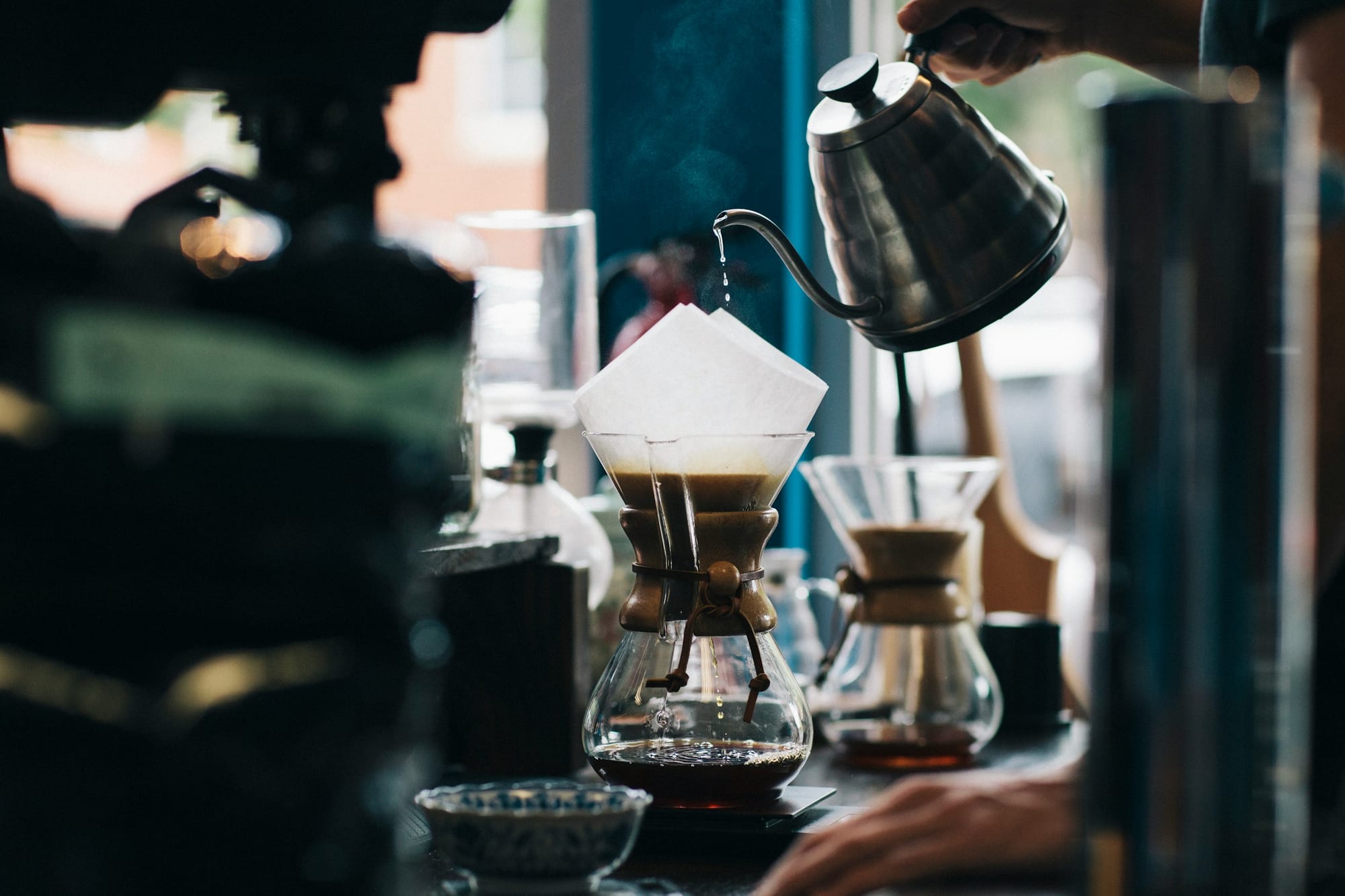
As Keke Palmer says in Oakland’s own I Love Boosters, this is not a time for nuance. Coffee in the United States has felt fraught for years. Progressives are offended by “Christmas” cups at Starbucks, even as conservatives have “Charlie Kirk” and “Trump” written on theirs. These divisive grounds (you see what I did there) even had newcomer Philz CEO Mahesh Sadarangani headfaking right, then left again, on whether or not to have Pride flags in the many Bay Area stores at all.
So what does it look and feel like to be queer and gay in the coffee game right now? Are SL9 varietals more important to nerds than baristas in 2026? Is the “other” — in the Derridean sense — even less relevant to dominant coffee than they have been for years and years?
The LGBTQIA+ community’s perceived ties to coffee culture remain sticky. Podcast leviathan and comic Caleb Hearon riffs often on the queer community’s overrepresentation in coffee. Dog whistles: femme people, short hair. Masc people, long. Little beanies, septum piercings, blue hair the shade of Mountain Dew Voltage. It’s giving comedic; it’s giving clowny. Oat milk iced lattes. Syrupy matchas. Influencers including Umeko Motoyoshi, Emilee Bryant, and Glittercat keep the Internet fed with gay coffee memes and aesthetic lattes.
That has been the case for Jacinto, too. He opened the first brick and mortar for Naysayer in 2022. He takes refuge in Napa’s queer cafe culture, and has since he was a kid. Seeing tattooed, pierced baristas living loudly let him know he could take his high school crushes to cafes including Ritual Coffee’s Oxbow outpost. He’s aware of a rise of boys-playing-with-trains coffee. But he says that in his pocket in wine country, there’s thankfully not much toxic spillage.
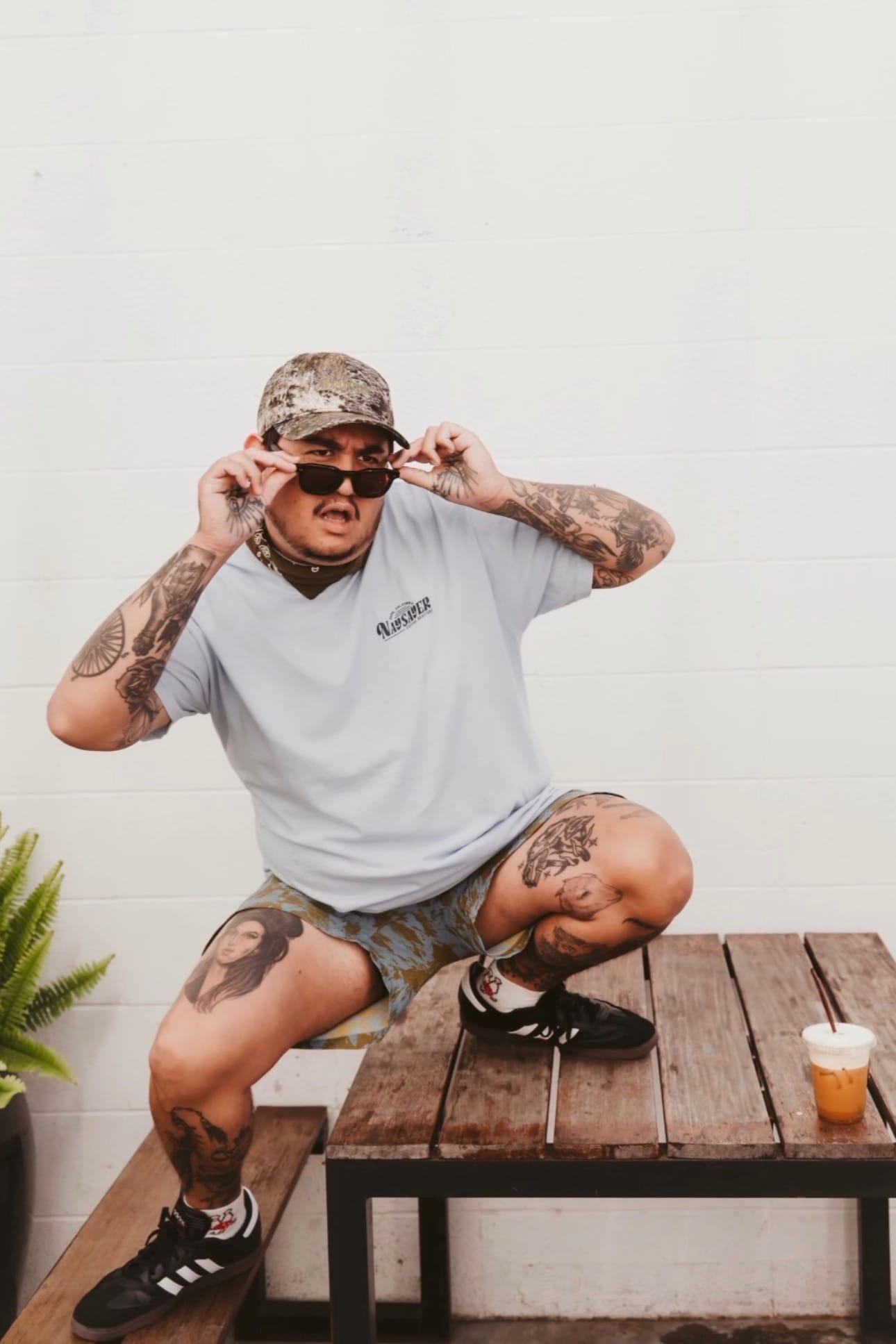
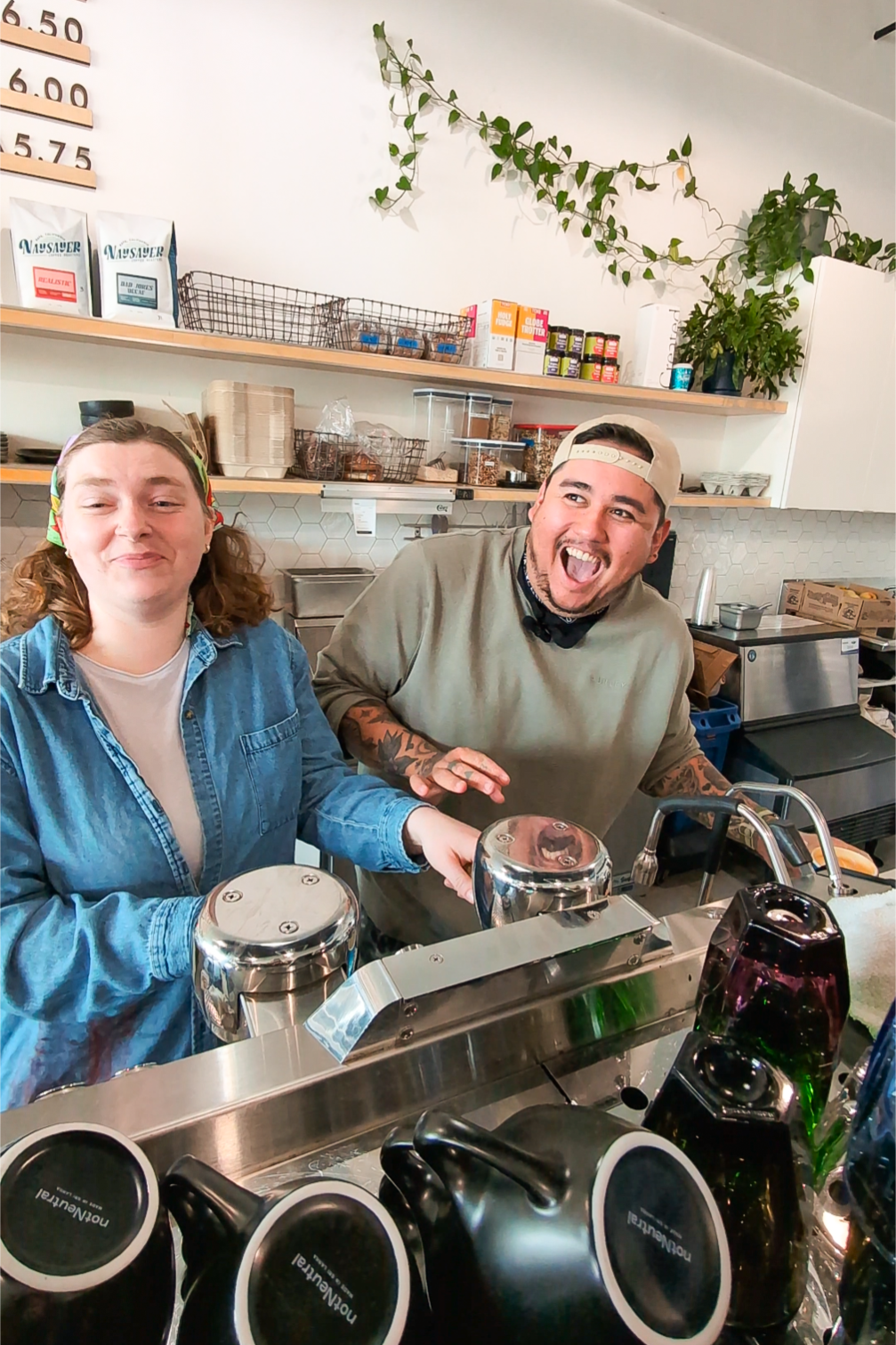
(L) Alex Jacinto of Naysayer Coffee (R) Staff at Naysayer Coffee in Napa, a proudly majority queer and femme company. (Courtesy Hemlock House and Beth Vecera)
Lesbians and queer women arguably built North American cafe culture, and Northern California alone spawned many queer coffee icons. Equator Coffees broke ground in 1995 when lesbian founders Helen Russell and Brooke McDonnell opened the state’s first woman- and gay-owned coffee company, one of the largest at their scale. In 2021, Black non-binary artist and barista Dee Derisse took over a former Four Barrel location in Portola, opening Hey Neighbor Cafe and serving marmalade-swiped Rize Up Bakery toast. Also in 2021, Fluid Cooperative Cafe opened in the Tenderloin from three Bay Area-raised trans coffee pros; in 2022 the group coordinated a Queer Coffee Conference.
But all that action and history doesn’t always ensure safe spaces for queer coffee pros throughout the Bay.
Sam Molina, who moved to the East Bay in middle school, worked at Peet’s all through college, becoming a shift lead before moving to Highwire Coffee in 2024. Over their two years working at the company, they say discriminatory issues have shown up against queer workers. “People felt uncomfortable being gay or trans around upper management.”
Three people were fired for their union activity, Molina claims, and all three were queer or trans. (Molina underscores they were not fired for being queer.) In February 2026 the union led a work slowdown wherein they read a letter which referenced a manager’s discriminatory behavior toward queer people while on the floor. Molina said this often looked like derogatory comments and attempting to pit workers against a nonbinary-presenting worker. Of the 50ish bargaining unit members, many of them identify as LGBTQIA2S. “Multiple people left one store because they felt they couldn’t be themselves around this manager,” Molina says. “The inside joke was, ‘I’m too gay for that shop.’”
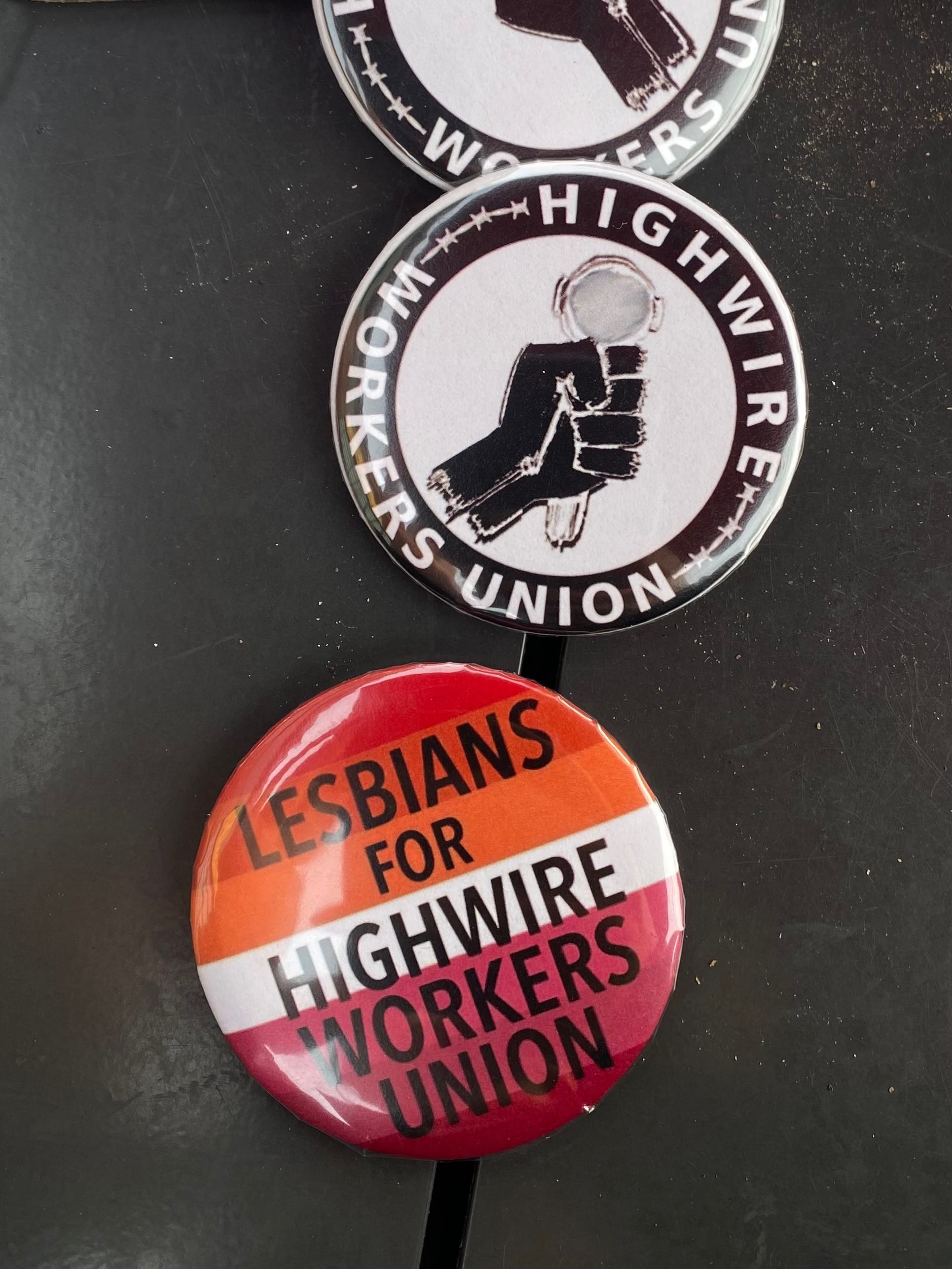
The culture at the shops, though, is pretty welcoming. Molina says much of the customer base are older retired folks and young AI bros. While misgendering happens, Molina says it’s mostly harmless and well-intentioned. Barriers still exist for queer people, as they know all too well at their own place of work, but the straight, Silicon Valley-ish customer base aren’t the main issue.
It’s the top-down hierarchy inside the cafes themselves that makes it so rough.
What should it mean for a cafe or coffee scene to be queer, anyways? It’s more than aesthetics, which can be so readily appropriated by Big Pink, then dropped for boot-licking purposes. Moving the needle for queer people’s resources — money, housing, job opportunities — in or through the coffee industry should be the goal. Visibility is itself a function of resource reallocation, allowing queer folks to be their three-dimensional selves in some of America’s most prominent third spaces.
To wit, in post-World War II America writer Langston Hughes urged Black Americans to break Jim Crow laws by eating at segregated lunch counters. “Folks, when you go South by train, be sure to eat in the diner,” he wrote in “Adventures in Dining,” published in the Chicago Diner in 1945. “Even if you are not hungry, eat anyhow — to establish that right.” It was about stepping into spaces built to keep you out.
As the U.S. winds back the clock, and civil rights with it, being gender non-conforming (one fractal of the larger queer prism) is once again unAmerican, but now with an extra flair of terrorism. For all the eye rolling that woke advocates endured in the late 2010s, that cultural explosion of visibility laid the work for the larger zeitgeist understanding safe spaces. It’s clear now why some marginalized enclaves are happy to stay private.
But cafe work falls into public life, and public life for non-hegemonic U.S. populations is increasingly under siege, often right under our noses. At San Francisco’s Shoji, where I work as a barista, a former regular reappeared. After our pleasant reintroduction, she turned around to reveal a Palantir backpack, as innocuously decorated as though it were an I Voted sticker. Except Palantir (while regrettably a gay-owned business) is the opposite of participatory democracy: It’s an openly fascist mass surveillance tool used to catalogue and constrain the very people who make this person’s coffee.
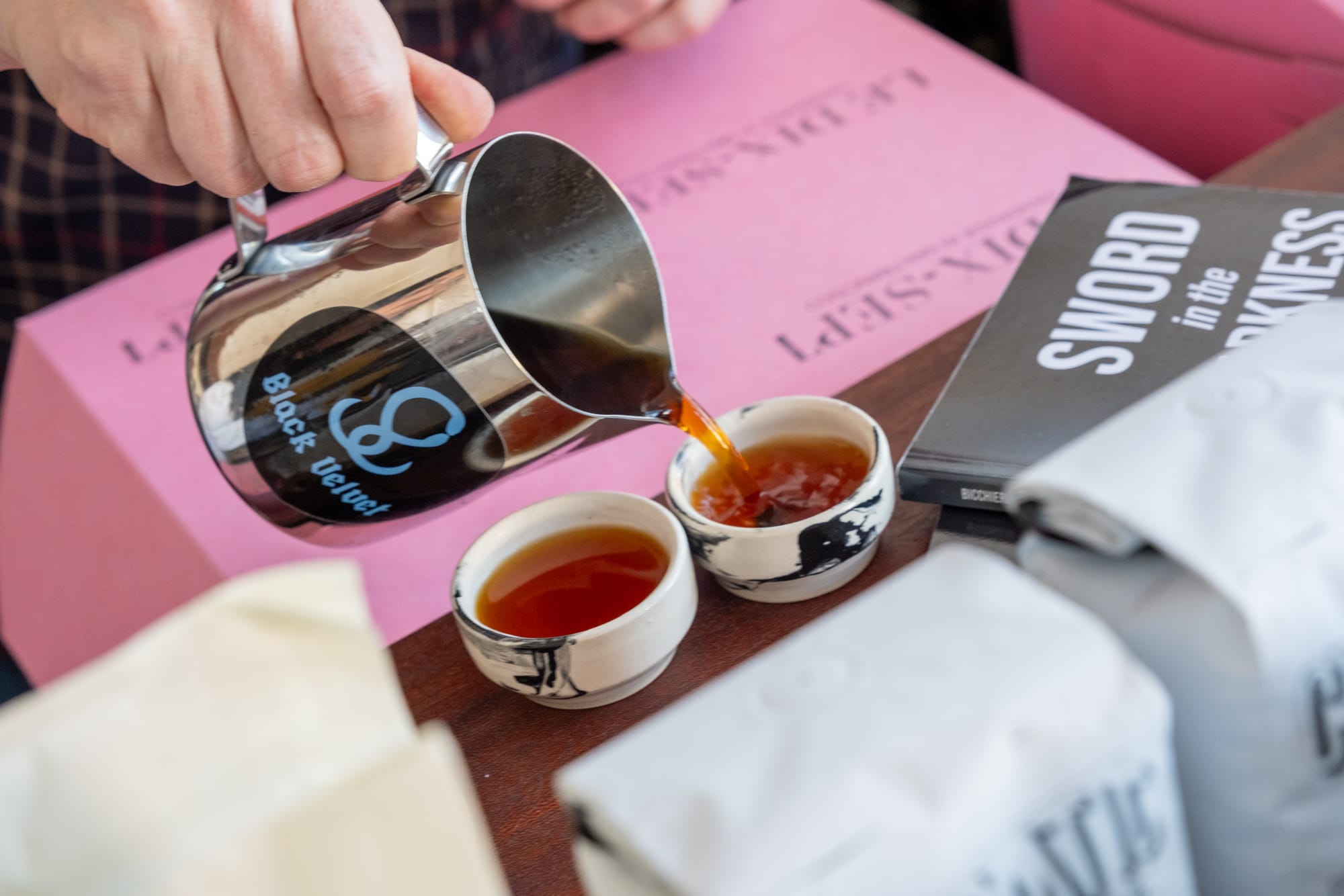
The daily, public role that coffee shops serve in the United States was built and is upheld by non-dominant, majority queer people. Ergo, an openly queer coffee community is more necessary, possibly, than ever.
“There is a queer vibe for sure,” John Birdsall says of the Bay’s coffee culture. “It’s definitely not gay. It’s not lesbian. It’s this labelless, progressive thing that comes through very strongly.”
Birdsall, a food writer who grew up in Oakland, moved to San Francisco in the 80s. He remembers the first time he visited James Freeman’s Blue Bottle “closet” in Temescal Alley, roasting beans on sheet pans in his oven. That, too, he says, was “boys playing with trains” coffee culture. The emergence of anti-Peet’s, delicate roast coffee was “wonky straight guys”: not bros per se, but clarinet-playing soft boys. Now the scene feels “post-LGBT,” boundary-less, in a way that is, generally, positive for queer communities at large. His sentiment echoes coffee innovator and owner of what Wrecking Ball Coffee Trish Rothgeb who told methat third wave is dead and the future is customized coffee, with freak flags out the wazoo.
Philz’s implosion, in Birdsall’s mind, tracks: It was always a “weird interloper” in coffee, overdoing the mint to cover the “ashtray flavor.” Before its acquisition by a private equity firm, it was considered a coffee bro progenitor. The best restaurants at that time in San Francisco touted Graffeo, while Chez Panisse across the bridge boasted Mr. Espresso. In the 90s, reflecting the American Psycho zeitgeist, big, dark coffees were Cool Guy-coded. He says removing the Pride flags was just another misstep for a clumsy company.
It was a far cry from the gay coffee world he remembers in the Castro of the 80s. Queer coffee, specifically, was not about flavor. It was “a lifestyle.” Market Street’s Cafe Flore was the epicenter of such behavior: the daytime equivalent of SoMa’s Stud. Cruising there for hours was a daily ritual. Where people sat in the cafe was important. Who they were with was key. If done discretely, you could even smoke a joint with your frothy latte. Go ahead, strike a pose. God forbid you look like a “Castro clone.”
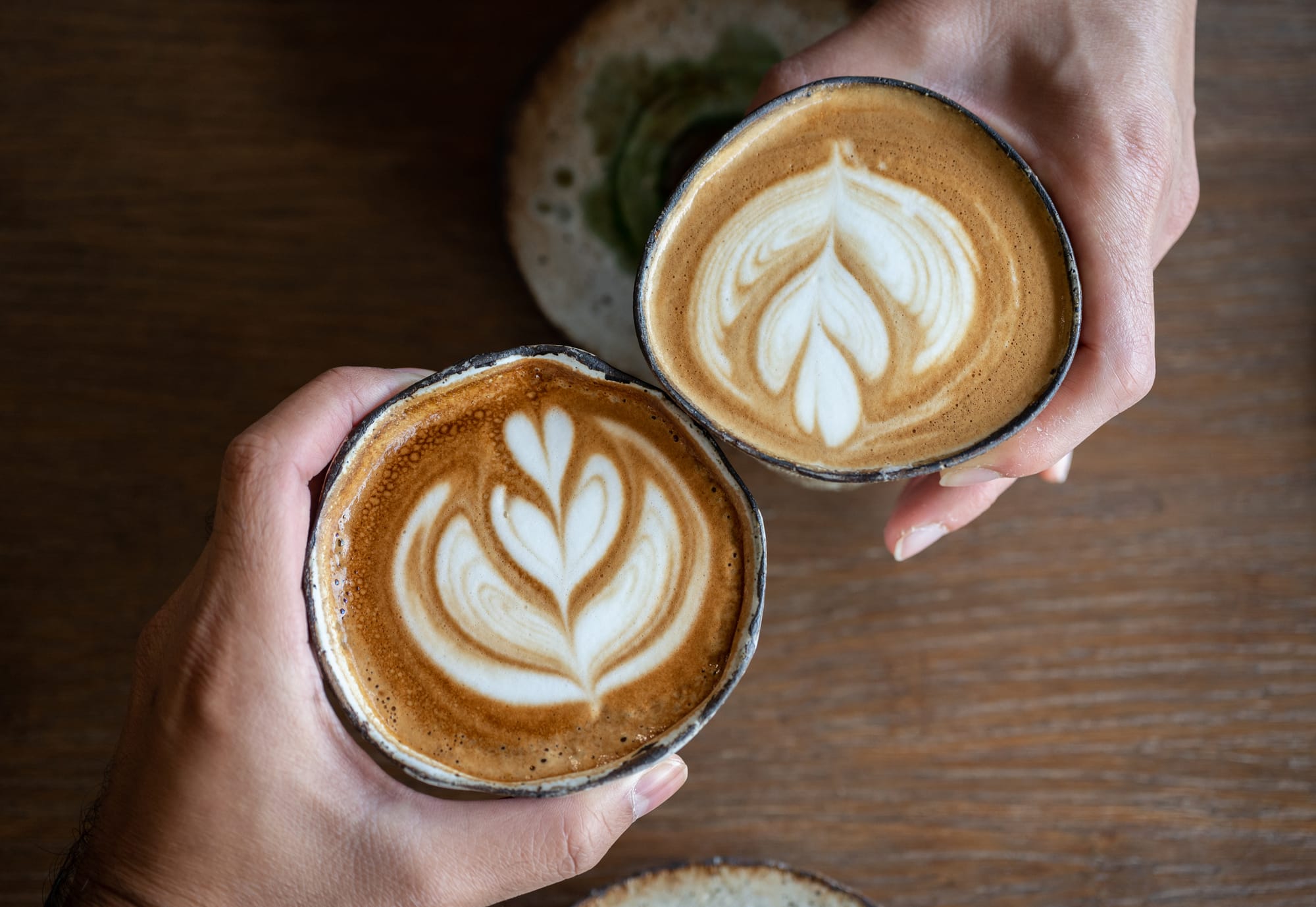
“Visibility” carried a different weight then: People in the 80s afflicted by AIDS and HIV sought out cafes, since stigmatization at bars was especially heavy. “It was sort of the best part of gay and queer culture then,” Birdsall said. “They were especially brave to come out and declare they were still a part of the community.”
Lolling on an outdoor patio all afternoon was a rejection of the capitalist, dark coffee behavior; the 80s equivalent of today’s little treat time and hot girl walks. While San Francisco was going through this banking and finance boom, Birdsall said, queer people treated cafes in the Bay like they were lounging by the Seine.
The cafes of 2026 may have super nerds, many of whom are straight men, boxing out marginalized folks. The powerful, those who run many of these private equity-funded and union-busty coffee shops, largely remain hetero, cis. But that Mother Tongue, Hasta Muerte (where there’s a drink called the Gay Agenda), Hey Neighbor, Naysayer exist here, all together: that was a far cry once upon a time. (When I put out a cursory ask of “How queer is the Bay’s coffee culture?” at the Crown in Oakland, working staff responded, “Reallllly queer!”)
For many, it’s still surreal to see all the fireworks exploding — those same customers Philz juked toward with its brief flag pull are shaking in their boots. In Tucson, Ariz., where Birdsall lives much of the year, he says he sees people experimenting with their gender at cafes, racked with anxiety. He says he has a parental urge to tell them it’ll be okay, to protect them.
In the Bay’s coffee world, despite the callow billionaires and boys with their trains, that permission to show yourself soars above all the heads in the sand.