‘Old Man in Flip Flops’: Notes from a Surprisingly Exciting Water Tasting Class
Camper English’s popular water tasting course is an exercise in attention — even for us tap-lovin’ plebes.


Camper English’s popular water tasting course is an exercise in attention — even for us tap-lovin’ plebes.

Blue Note's Black Radio Experience drew sold-out crowds to Napa Valley. Months later, some contractors were still chasing their money.
Oakland historically lacks soccer fields. But a group of local players and community advocates hopes to kick off a brand-new space — featuring soccer, coffee, retail, and more.

The late-blooming lyricist opens up about his debut solo album, ‘East Bay Times.’


About a decade ago, I used to bike all over Oakland. I’d ride from the edges of Emeryville, across uninterrupted stretches of asphalt in the North and West, along the salty marshlands towards the airport, and into the potholed trenches around the Oakland Coliseum. On other nights, I’d just mob down Telegraph or Broadway until I found my group of friends or made new ones.
Times were different. Money stretched further. People were outside. And on a pedal bike, you could really see everything up close: the incoming faces from out of state as they unloaded moving trucks, the construction of chic high-rise apartments, the city’s most glaring struggles and its flashes of euphoria. A certain kind of capitalism, and hints of its future consequences, were on full display.
It was during those years — when the Golden State Warriors were in town and bagging championships, and when the ambiance was more celebratory than somber in the East Bay — that I first met Philip Bank$.
We were sitting at the bar in Oeste (which, by the grace of the Bay Area gods, still exists). I’d struck up a chat with Philip, and at some point, he asked me if I liked hip-hop. Then the aspiring wordsmith broke out headphones and showed me a YouTube video on his phone from the rap group he was in. I went on to listen to his crew, Trey Coastal, for years.
But I still think about that track. The song he played portrayed Oakland as a 16-bit video game filled with local Easter eggs. I revisit it from time to time when I want to remember what the city felt and sounded like back then.
Philip, sans sobriquet, never asked for anything other than my opinion, and I didn’t expect to hear from him again, but we wound up loosely keeping in touch. Now, eight years after that random encounter, Philip Bank$ is releasing his debut solo album, East Bay Times. And the timing couldn’t have been fucking better.
To understand Philip Bank$, you should know he’s chameleonic: an East Bay kid who has dabbled in podcasting, regional Twitter stardom, rock climbing, and, of course, the rap booth. He’s spoken out about gentrification, made a song about BBQ Becky, and has long pointed out the housing crisis in the East Bay. He spotlights Black-owned businesses, jokes about taking island getaways to Alameda, and says that his grandma was the only Black juror in a Huey P. Newton trial in which she provided the only “not guilty” vote that allowed him to walk free.
The dude is a reflection of his multidimensional hometown. And it’s all on digital wax for his listeners to grapple with in a nine-song project, produced by HiRight from the equally slept-on Bay Area rap group Barbaydose.
“Releasing an album at age 35 is a testament to my younger self,” says Philip Bank$, who started rapping around 11 or 12 years old. He remembers idolizing Nas and wondering how the Queensbridge legend “doesn't run out of shit to rap about.”
East Bay Times feels like an answer. “The [record] allowed me to really elaborate on things like mental health, local politics, grief, social stratification, and show how all of these themes are woven together to create the community that raised us in Oakland,” says the rapper.
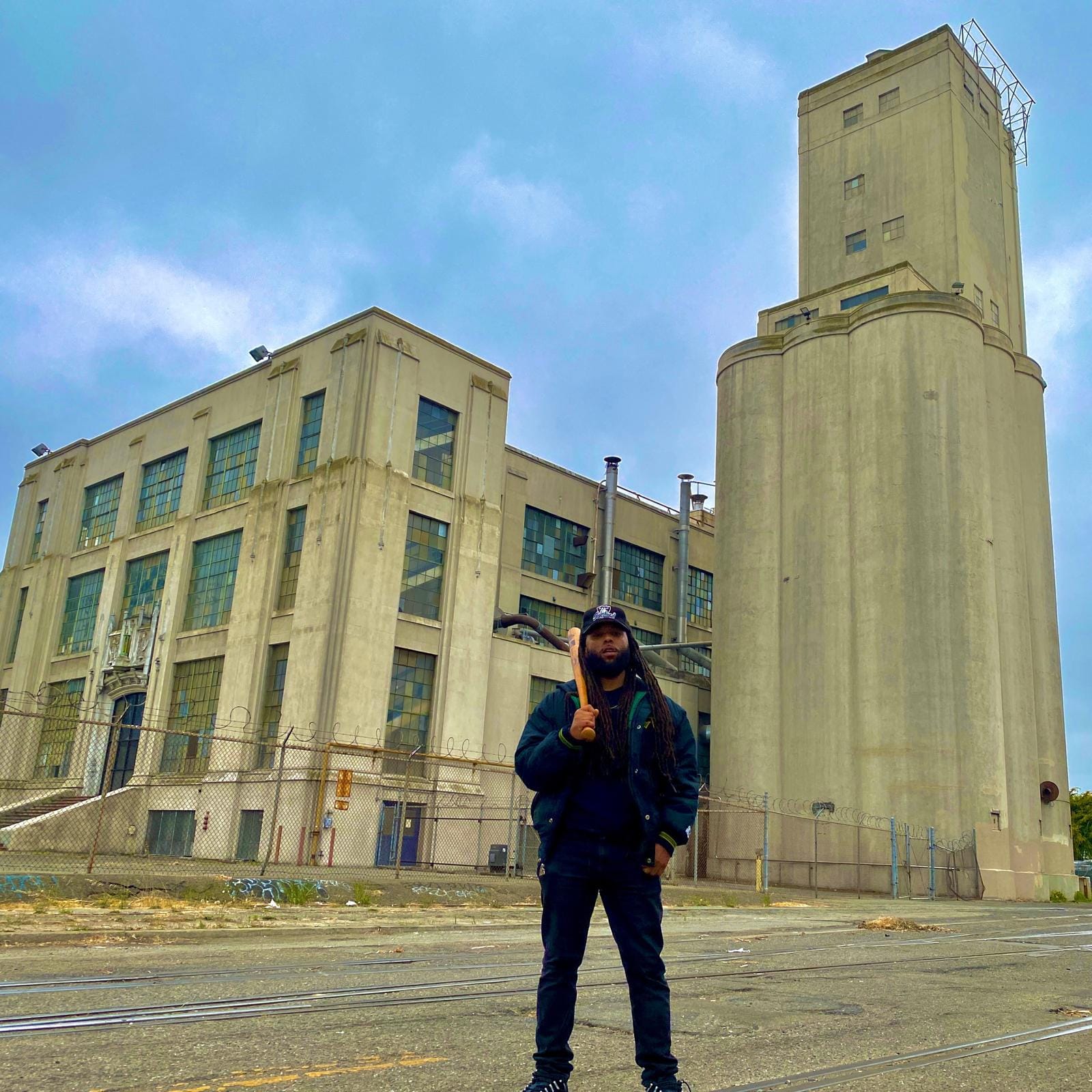
East Bay Times is as much a spiritual hymn as it is a hyphy resistance, a lyrical ode to what was and what’s been lost. It’s a boom-bap loopback filtered through millennial nostalgia, a contemplative hike through California’s redwoods with a half-smoked spliff in hand. (Actually, please smoke in your car and listen to these songs in the parking lot so you don’t risk a wildfire.)
Songs like opener “So Amazing” (which features North Oakland battle rap legend Passwurdz and is built on the backbone of a gospel choir) and “Land of the Oak” (with a cameo from the indefatigable East Oakland emcee Ian Kelly) thread together feelings of optimism despite life-altering upheavals. Ruminations on death, both literal and metaphorical, abound. But so does dreamchasing, growth, and spirituality. In every song, Oakland is presented as a setting and a character, providing the central gravity for the 27-minute album.
The project comes off as intellectual and deliberate, even — if not especially — when Bank$ veers into anger. “Oakland Unified” facetiously points to the loss of Black residents who’ve been pushed to the geographical and cultural fringes (“Oakland n***** don’t die, they move to Sacramento County”). Meanwhile, “Hyphy Kids Got Trauma” expounds on the social commentary laid out by KQED journalist Pendarvis Harshaw, whose four-part podcast series of the same title is featured as an audio snippet on the album with a simple but profound question for Baydestrians of the aughts: “Why do hyphy kids have trauma?”
“I wanted to make sure I spoke on my loved ones who’ve passed away and speak for those who aren't able to tell their own stories,” Philip Bank$ says. “Some [listeners] might expect this album to be a love letter to Oakland. But it’s more of a reflection of Oakland similar to Lake Merritt — it might stink like geese shit or have trash and murder weapons at the bottom, but you’re still staring at one of those spectacular sunsets.”
East Bay Times, at its core, is about the Oaklanders who have made the city what it is. It’s for those families and cultures — Black, Mexican, Chinese, Filipino, Samoan, Eritrean — who’ve clung around and refuse to be uprooted, whose stories shaped the city long before it was a place to spend a Saturday drinking IPAs and eating organic strawberries. It’s a soundtrack for the forgotten, and it’s also for anyone who is pushing the community forward in positive ways and living with purpose. As he declares on “Ventilation”: “I wrote my goals down… I seen it all on my vision board, everytime I hear a chord I remember ‘xactly what I’m living for.”
Listening to Philip Bank$ is a reminder that Oakland isn’t just one thing; it can’t be defined by a sole image or singular soundscape. Instead, it holds many pasts and futures — as soft and eloquent in some places as it is muscular and loud in others. It’s a cradle of vibrant life and systemic violence, a nuanced contradiction that the nightly news will never quite capture.
But that’s what the city’s blunt-fueled poets are for. And this album is one griot’s telling of it all, meant to be heard through a booming sound system on East Bay streets.
“It seems like we’re all reliving Gertrude Stein’s sentiment of feeling that there's ‘no there there’ when it comes to the Oakland we grew up knowing,” says Philip Bank$. “This city has always been the inspiration behind my music. And with all the change we’ve seen, it’s necessary to document what's happening in Oakland right now: socially, politically and culturally. This is a time capsule.”