Napa’s Biggest Black Culture Festival Didn’t Pay Several Chefs Until They Threatened to Sue
Blue Note's Black Radio Experience drew sold-out crowds to Napa Valley. Months later, some contractors were still chasing their money.


Blue Note's Black Radio Experience drew sold-out crowds to Napa Valley. Months later, some contractors were still chasing their money.

Oakland historically lacks soccer fields. But a group of local players and community advocates hopes to kick off a brand-new space — featuring soccer, coffee, retail, and more.

This week we've got a Donna Summers book club, vegan dinner and a movie, a community bake sale to fight ICE, and more.


As a kid, I was more than a little influenced by Weird Al Yankovic. I wore colored shades, combat boots, and Hawaiian shirts in high school, and I was obsessed with the idea that you can and should laugh at everything (in that particularly sociopathic teen way of thinking). Taking anything seriously was a sign of weakness — the world only existed for me to point and scoff at it. Then we were in the midst of the post-9/11 malaise, where politics and war and everything else felt like a sick joke. Why wouldn’t we want to step outside of it and protect ourselves from being bamboozled even further?
It was all a little bit stupid, but it’s easy to forget how good Weird Al is at convincing you it’s OK to get goofy with it. He’s not cool. He never was cool. He doesn’t know what cool means.
This past August, I trudged to Sonoma State University’s Green Music Center with my husband and a friend, curious what type of person shows up to this kind of concert. When I say “this,” I mean it in the way one might denote a niche event such as a James Joyce discussion group or an anonymous sex party. Ignoring the fact that you yourself are present, the anthropologist in you might still wonder, “Who even attends these things?”
But the need to shed all of that cynicism is probably why you’d want to go to a Weird Al show in the first place.
When Weird Al dances, as he did to “Tacky” during his march toward the stage from the green room, it’s with the spastic, limb-splaying movement of a cartoon spider on ice. Grimacing and cross-eyed, he throws back his elbows and shoulders with the grotesque angles of a butoh dancer. It’s very much a departure from the averted gaze and restrained dance moves of, say, Pharrell in the original music video for “Happy.” Here, the disarming and kind of creepy nature of a Weird Al performance is precisely what makes it mesmerizing.
Back in the 1990s, one tended to think of Yankovic less as a musician or comedian actively creating work and more as an inevitability. A force of nature you could track with radar. With the coldness of a cuckoo bogarting somebody else’s nest for its own young, Weird Al would follow on the heels of the biggest chart-toppers with parodies that mimicked the singers’ trills and tics so perfectly, you almost forgot about the original.
In “eBay,” his send-up of the Backstreet Boys’ “I Want It That Way,” every heart-throbbing ad-lib and vocal run makes it through the Weird Al parodizing machine — even as he’s turning a line about heartache into one about buying a “Dukes of Hazzard” ashtray online.
One week before we saw him, my husband and I had been just down the road attending the two-day Cotati Accordion Festival for the second year in a row, listening to yodeling cowboys, polka ensembles, and classical music ingenues showcase the oft-disparaged instrument. There, the accordion was practically an object of worship. A circle of players performed “Lady of Spain” as a flock of doves were released overhead! Attendees were treated to seriously educational “accordion autopsy” sessions! There were even scholarships for accordion-inclined kids.
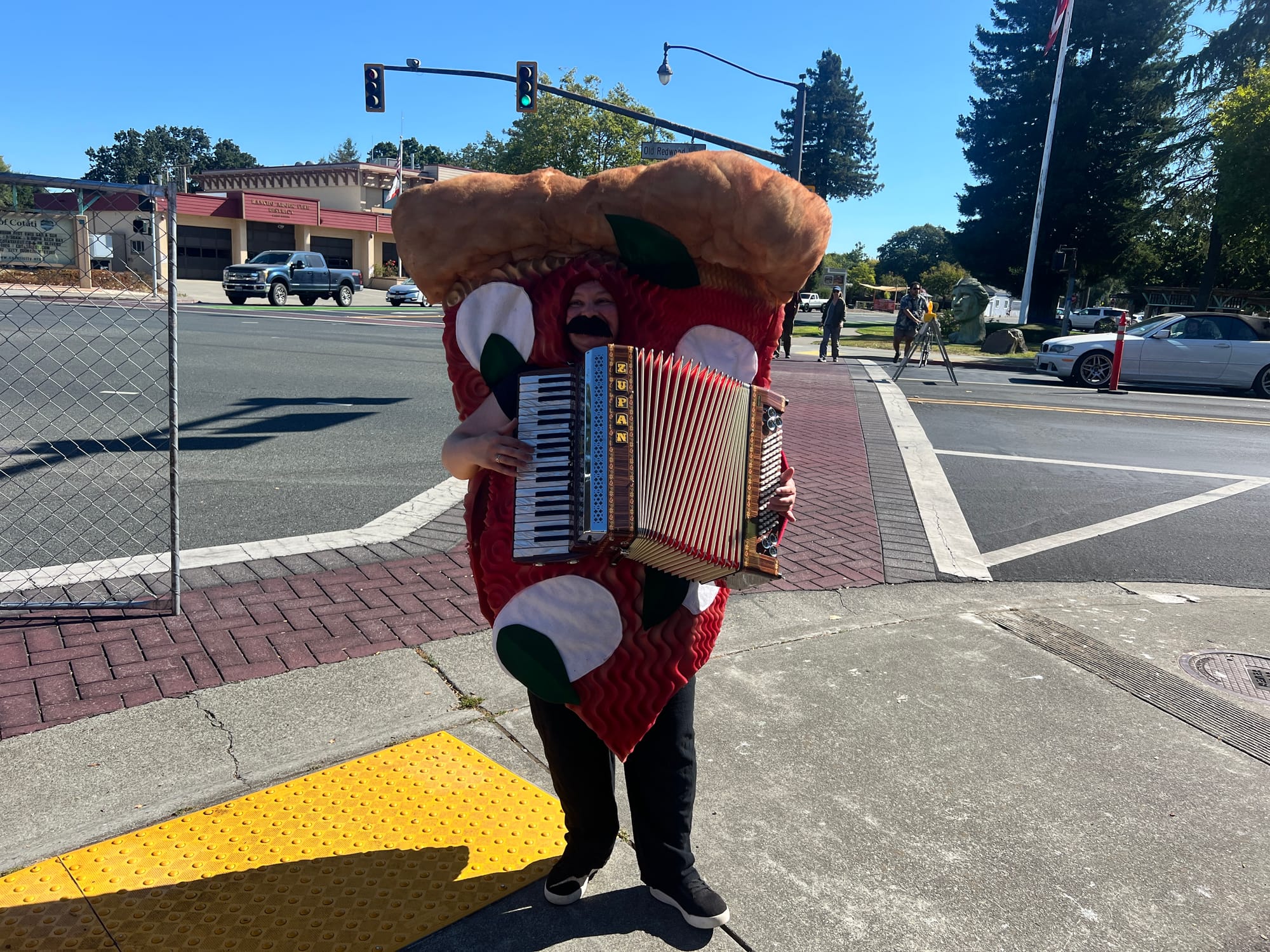
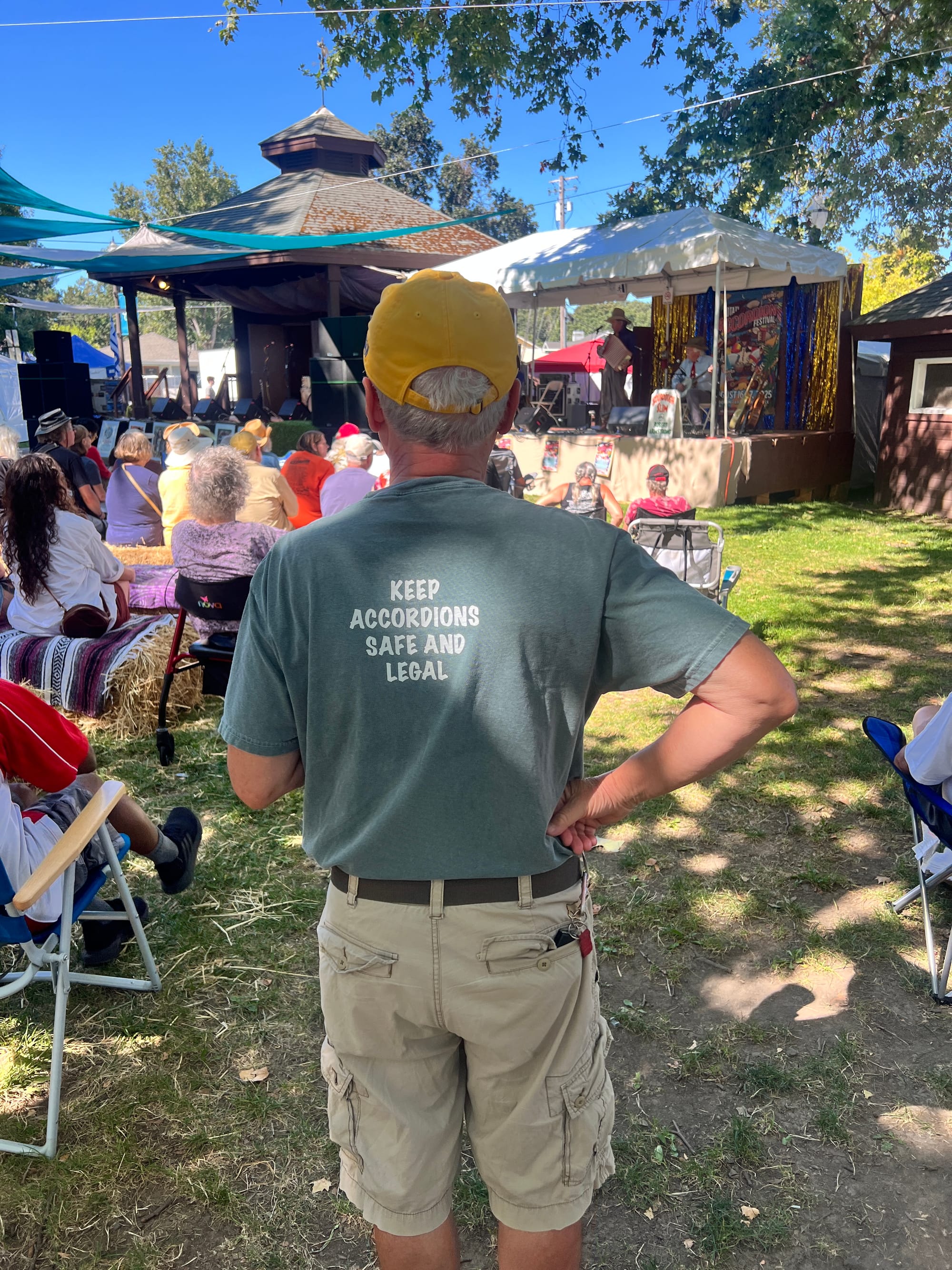
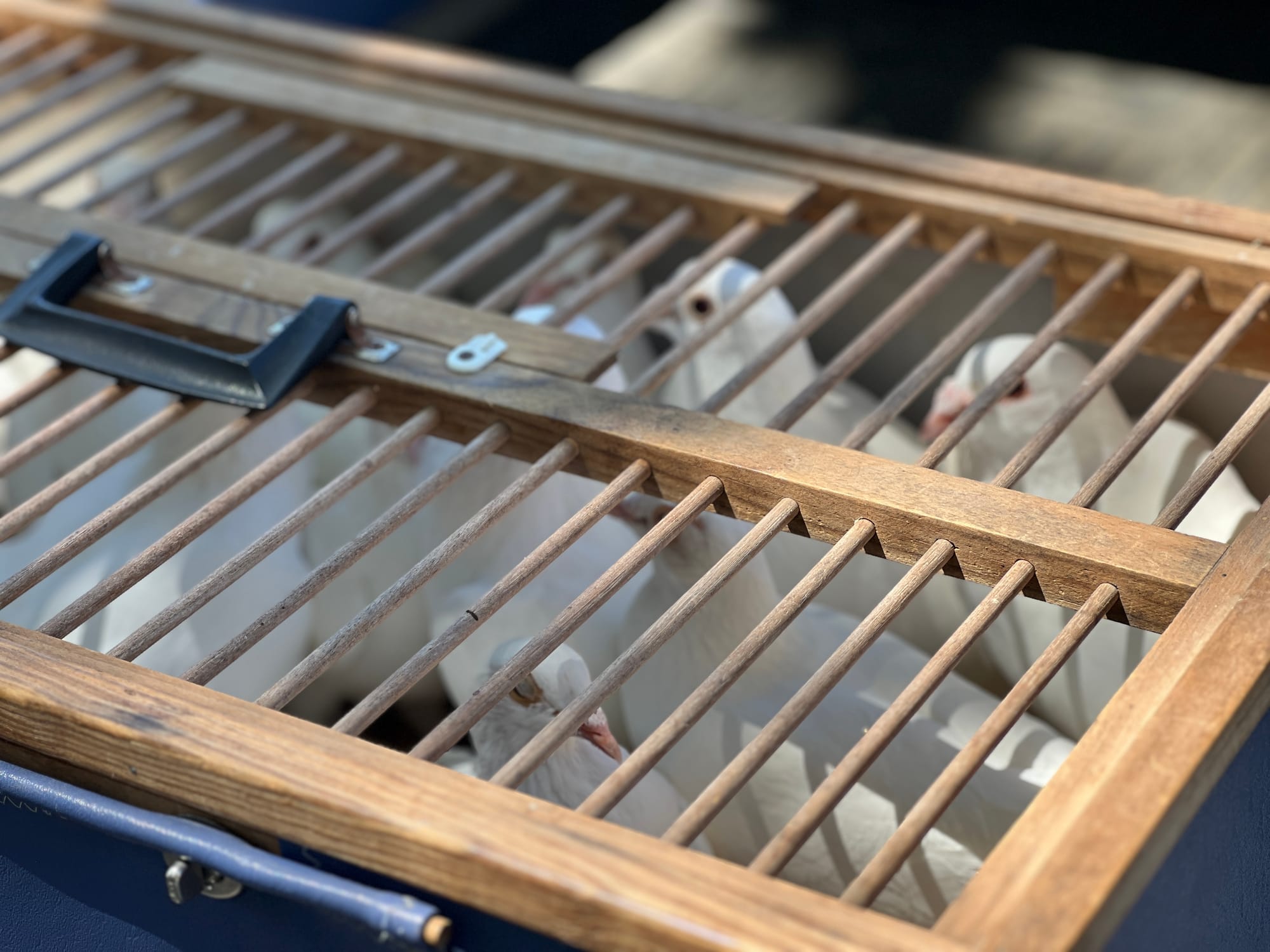
Scenes from the Cotati Accordion Festival in Cotati, Calif. on August 16, 2025. (Soleil Ho/COYOTE Media Collective)
Weird Al, the most well-known accordion player in the country, took a sillier, but no less exuberant attitude toward the instrument. For $40 a pop, we watched his performance from the lawn while sprawled out on picnic blankets, splitting a bottle of rosé between plastic wine glasses. Around us, families in matching Hawaiian shirts wrangled their squealing children while splitting grocery store cheese platters. In the interior stage, people who paid Real Money could actually sit in chairs and breathe the same air as Weird Al, while the rest of the hoi polloi viewed him through a massive screen that also showed clips from his previous appearances on cartoons and television.
Between songs, the stage would darken and we’d watch a few minutes of Weird Al pretending to interview Madonna; Weird Al sweatily playing accordion for J.K. Simmons’ brutal jazz conductor in Whiplash; Weird Al meeting the animated “Scooby-Doo” gang.
Then, he and his eight-piece backing band would reappear in fresh costumes and wigs for the next track, truly committing to the bit. There were lore-accurate stormtrooper outfits for the Phantom Menace-themed “The Saga Begins,” and full-on bonnets and plain dresses for “Amish Paradise.” Even during the fast-paced medley sections of the show, when Weird Al would perform just a few snack-sized bites of songs like “Eat It” and “Like a Surgeon,” a stagehand would run up and slam hats and jackets on him as though he were a paper doll.
If you were to believe the fictionalized biopic tale of 2022’s Weird: The Al Yankovic Story, Weird Al’s entire schtick is him thinking, Wouldn’t it be funny if X were about Y instead?
But for me, part of growing up was noticing that what makes the Weird Al thing actually work is the way he dives into the music wholeheartedly, elbows out, his grimace sparkling. It might all be a joke, but his body is in on it. During the chorus of “Yoda,” his encore song, Al and the backing band freeze and start to vocalize a cappella, seemingly randomly as though it’s some kind of improv act, until their voices shift and morph into a virtuosic display of Balinese chanting. A little reminder that they could choose to musically destroy us all if they really wanted to. Instead we’re given head-over-heels love that only looks like satire on the outside.
A video of the crowd at the Sonoma State Weird Al concert on August 27, 2025. (Soleil Ho/COYOTE Media Collective)