What Beatrice Dong Taught Us About Being Asian American
Bay Area community members remember “fierce and generous” Beatrice Dong, the co-founder of Berkeley’s Eastwind Books and lifelong activist for racial solidarity.


Bay Area community members remember “fierce and generous” Beatrice Dong, the co-founder of Berkeley’s Eastwind Books and lifelong activist for racial solidarity.

The new novel from San Francisco sci-fi writer Annalee Newitz is a thought-provoking meditation on human nature, told from the perspective of an adventurous alien amoeba.

We talk to women's sports reporter Marisa Ingemi about the Valkyries and the stories she's planning for COYOTE.

Bay Area community members remember “fierce and generous” Beatrice Dong, the co-founder of Berkeley’s Eastwind Books and lifelong activist for racial solidarity.

Recently, a prominent Chinese American community leader told me something that I just can’t stop thinking about. When I asked him how we should organize in this political moment, he said, “There's never been a better time or more difficult time to be Asian American.”
It struck me as absolutely true. In the aftermath of the viral Stop AAPI Hate movement and amid deepening racial divides that sometimes pit Asian Americans against other communities of color, the Asian American identity can feel messy and anything but cohesive.
But in the Bay Area, being Asian American has always been inherently political. The identity was forged here during the late 1960s and early 70s, when young student activists recognized the need to consolidate their political power by creating a pan-ethnic identity. They organized alongside the Black Panthers and other communities of color, and found common cause against imperialism and white supremacy.
I think about the clarity those students brought to that work and how important it is to remember the people who built those movements — and what their legacies can model for our communities now.
On August 15th, we lost one of those beloved elders: Beatrice Tam Dong, who, with her husband Harvey Dong, founded Berkeley’s Eastwind Books, one of the nation’s first Asian American bookstores. Bea dedicated her life to racial solidarity and to building political and cultural power for Asian Americans in the Bay Area and beyond. To honor her legacy, I asked community members and leaders to reflect on Bea’s work and what she leaves behind.
A celebration of Bea’s life will take place on Oct. 6 at 5pm at the Oakland Asian Cultural Center (388 9th St., Ste. 290, Oakland). People may donate to Eastwind Books Multicultural Services, J-Sei, and the Oakland Asian Cultural Center.
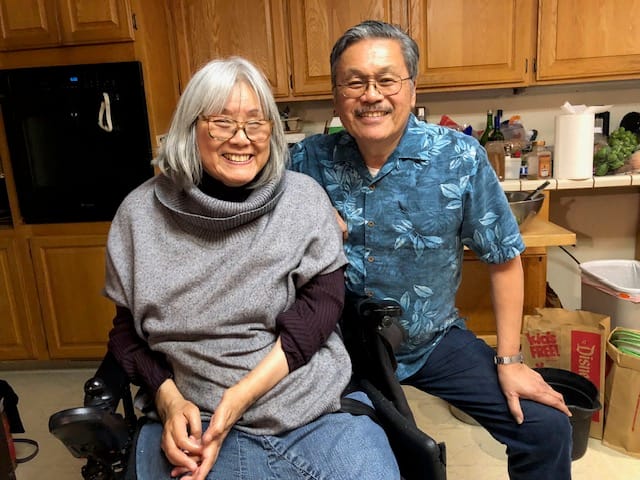
Beatrice Ann Tam was born October 6, 1951 in Providence Hospital of Oakland. She grew up in the Highland Hospital area in East Oakland. Her father Walter Tam is from Hawaii and her mother Florence Lee was raised in Oakland Chinatown. Beatrice grew up in a household with four siblings (one sister and three brothers).
In 1968, at Oakland High, she was part of the Asian Bloc that was involved in building Black-Asian solidarity. Her group came to UC Berkeley campus to support the Third World Liberation Front 1969 strike for Ethnic Studies. As a freshman, she was recruited to be on the negotiating committee for the budget for Asian American Studies at UC Berkeley.
Bea married by the end of her freshman year in 1970, had a son, and later dropped out of college to focus on family. She wrote about how her life was turned upside-down having a child at age 19. But she did find a solution through the establishment of a cooperative daycare with other young mothers and parents. Still, her marriage did not work out and in 1973, ended in divorce.
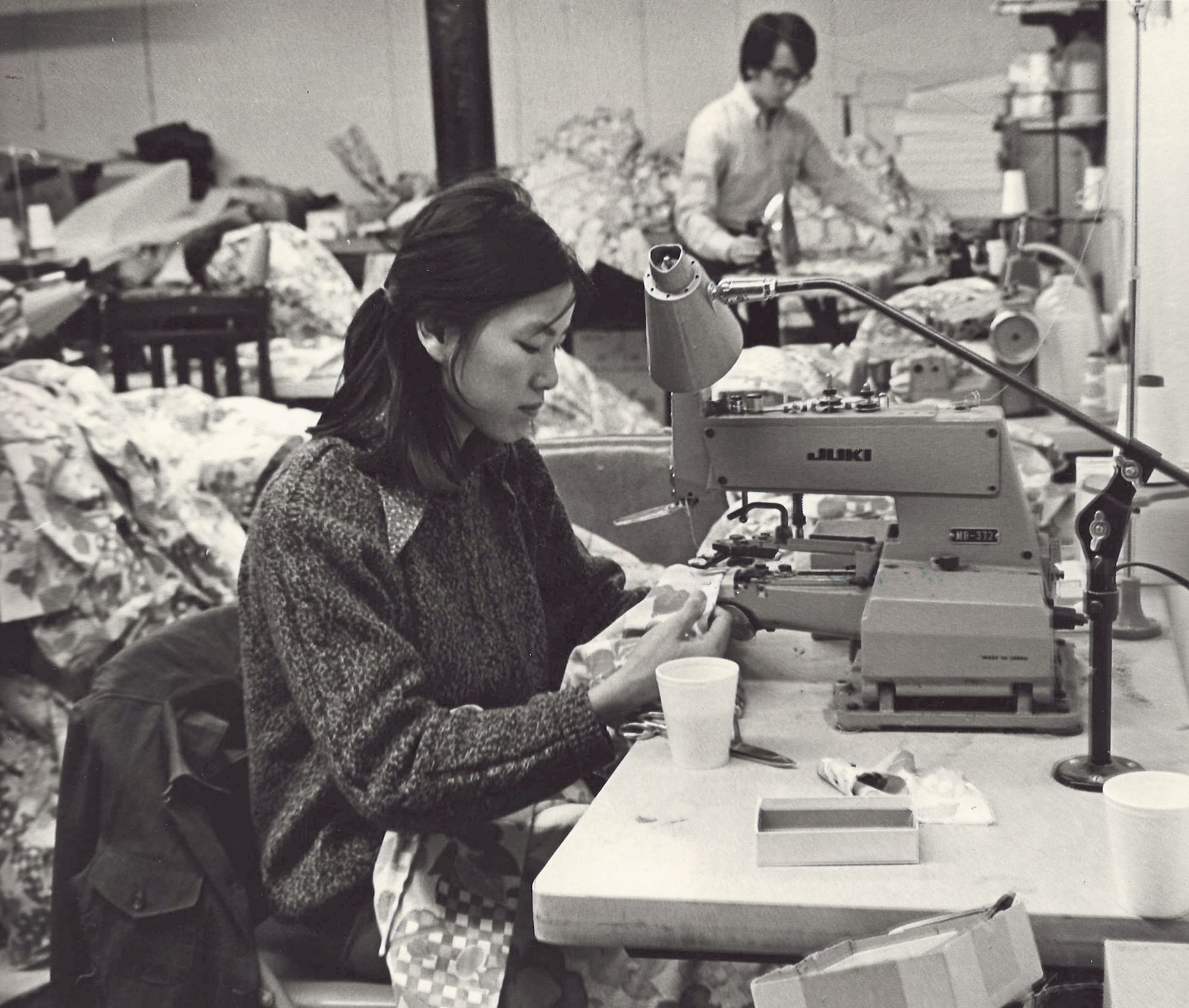
In the 1970s, she participated in the operations of the Chinatown Cooperative Garment Factory as an alternative to sweatshops, which led her to become a labor activist supporting the Jung Sai strike in 1974. She was also elected to the Executive Board of the International Ladies Garment Workers Union, representing industry workers in contract negotiations.
On October 1, 1974, she married Harvey Dong with whom they raised two sons and one daughter.
In 1981, Beatrice was injured and paralyzed by a shooter at Newark’s Penn Station. After stabilization of her injuries, the couple vowed to continue to live full lives, including travel to Vancouver, Beijing, Hawaii, and her favorite, Monterey.
She returned to UC Berkeley in the 90s to finish her degree in Ethnic Studies; and upon graduating, she became the co-owner and manager of Eastwind Books of Berkeley for 27 years.
The store became the hub for Asian American literature. While there were many Asian American writers who became recognized and established, there were many other underrepresented and marginalized Asian American groups that needed a bookstore such as Eastwind to promote their works.
She believed that “books are what makes revolution.” She saw the bookstore as the space to create unity and to bring people into the movement to change the world.
Throughout these times, she painted using watercolors and acrylic paints. She was engaged in art that depicted nature as well as art related to struggle and resistance.
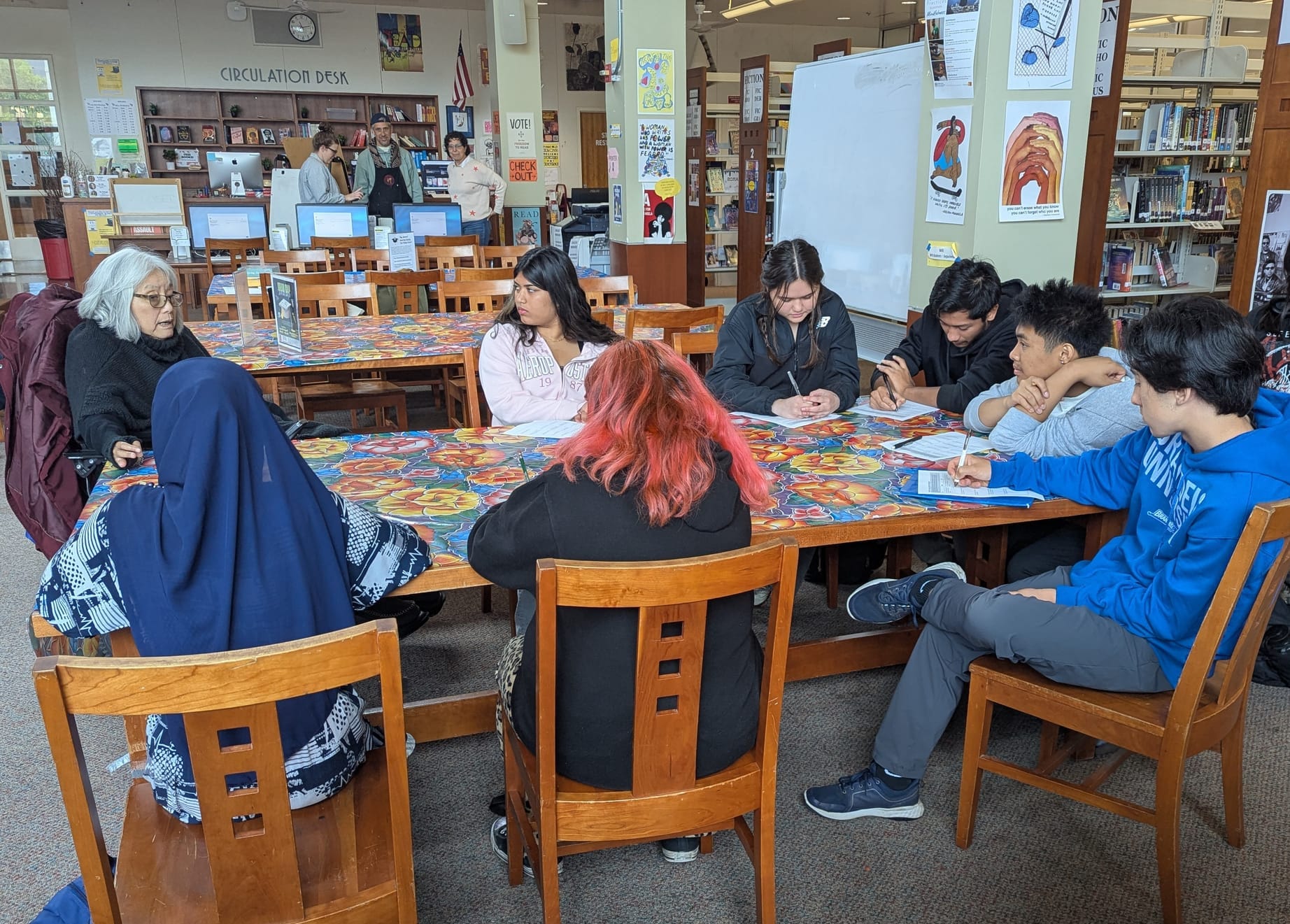
She organized public book talks and panels on the topic of Asian American history, gentrification and the future of Oakland Chinatown, immigrant and refugee rights, and support for Palestine. Her last appearance was an oral history project with Berkeley High School students on the topic of Eastwind Books of Berkeley, activism, and social change.
Bea Dong is survived by her husband, Harvey Dong, brother David Tam (Linda Tam), sister Patricia Tam, brother Lawrence Tam, brother Edward Tam; son Kevin Dong (Gloria Dong), son Henry Dong (Irene Dong), daughter Nina Dong (Michael Brandis), and three grandchildren. Her family is extended: Harvey, children, grandchildren, siblings, cousins, Eastwind staffers and “ACC” friends were her pride and joy.
Bea Dong was an inspiration for many of us. She was a student activist and Asian American movement activist from the 1960s onwards, and I was deeply inspired by their collective work. I don’t think Asian American studies and Ethnic Studies would have existed without them, and I was a beneficiary of both of those academic innovations. Bea herself studied Ethnic Studies at Berkeley and wrote on Asian American literature, which is exactly what I did at Berkeley some decades after her. She and her partner Harvey Dong helped keep Asian American literature alive by operating Eastwind Books of Berkeley, an institution that predated their ownership and a place where I had bought many Asian American-authored books when I was a student. Asian American literature has always been about not just the authors but also the readers, editors, publishers, and booksellers that have created a community of readership and support for Asian American literature, and Eastwind Books was a very important part of that. Bea was an activist but also particularly a literary activist, and I see her as a forebear whose work was crucial. — Viet Thanh Nguyen, author
I first met Bea when she was just a teenager, a new freshman at UC Berkeley. When she was still an Oakland high school student, she had already decided she wanted to be part of the movement against racism in the US and against genocidal racist wars abroad. After coming to UC, she volunteered in various cooperatives designed to challenge labor exploitation. After her first child was born, she helped establish a childcare cooperative in which I also participated. Even after a terrible injury left her paralyzed and in a wheelchair, she operated, with her husband, Eastwind Books. For many years, Eastwind was the best place in the country to find books in Asian American Studies. Kind, thoughtful, and sweet-tempered, Bea was also a principled and resolute fighter for social justice who never gave up doing whatever she could to try to make the world a better place. We will miss her very much. — Elaine Kim, professor emerita in Asian American Studies and Ethnic Studies at the University of California, Berkeley. Co-founder of Korean Community Center of East Bay and Asian Women United
I attended middle school with Bea in Oakland — our last names “Tam” and “Tamaki” meant that we would be in the same homeroom and with adjacent lockers, and that happenstance proximity, based on alphabetical order, would continue at Oakland High. Bea was a gentle soul with an interest in creative arts, and a smile that could light up a room. We probably would have been just ordinary teenagers had our generation not come of age amidst seismic events.
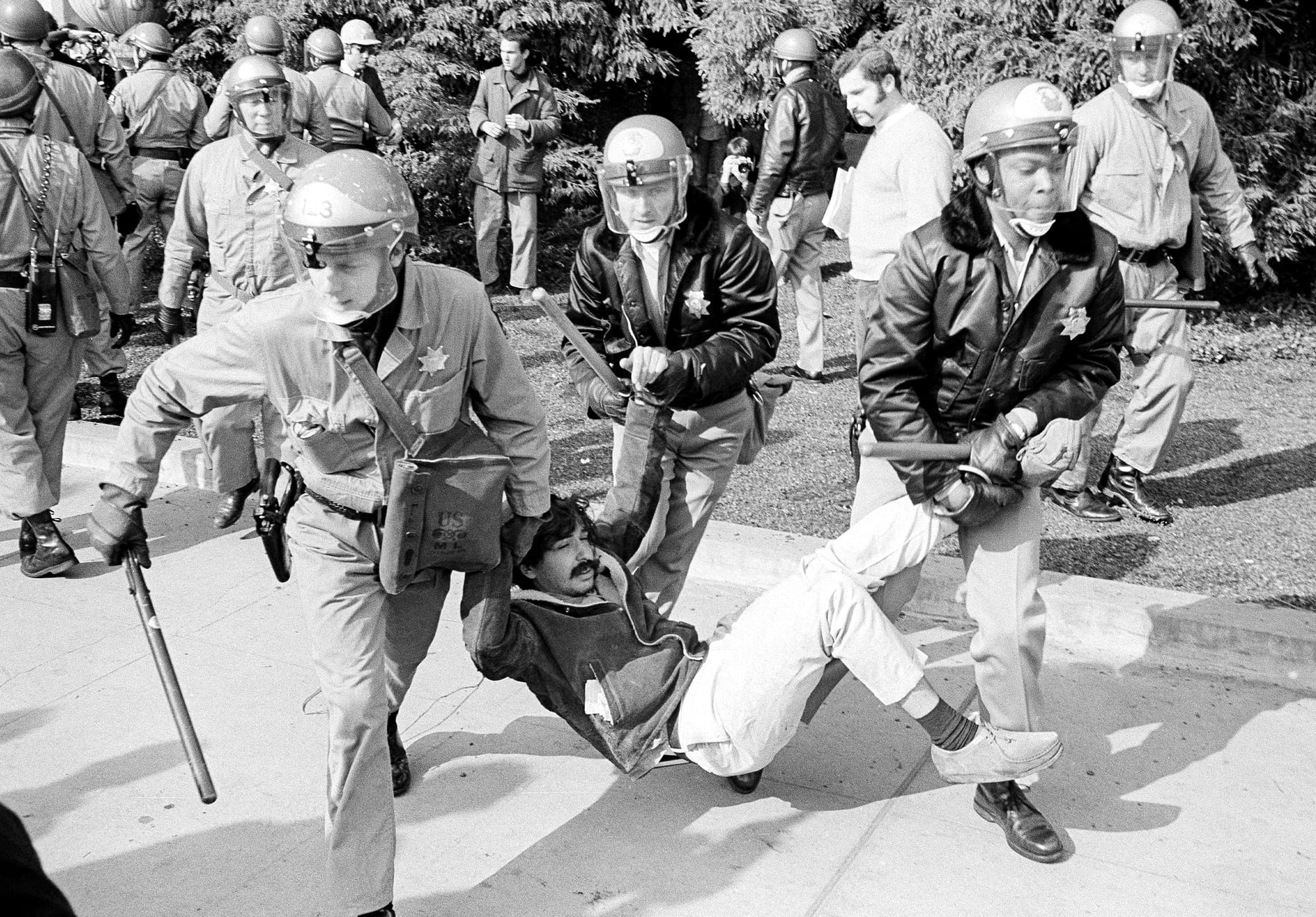
The whole nation was in turmoil and poised for change. The bloody and unpopular war in Southeast Asia was raging, Martin Luther King had led protestors who, at their peril, challenged America’s apartheid, police brutality and voter suppression were commonplace, and in more than half the states, interracial marriage was a felony.
The rise of the Black Panther Party, the 1968 assassination of MLK, the fight to establish Ethnic Studies at San Francisco State and Berkeley, the discovery of our buried history and our identity as Asian Americans — no doubt all of these converging and cascading turning points shaped Bea’s values, leading her to become an activist in high school, and forging her resolve to devote a lifetime advocating for justice.
While the trajectory of our lives took different paths, I always admired that she had the courage of her convictions — a fitting legacy for the people she impacted. — Don Tamaki, civil rights lawyer
Over thirty years ago, as a student in an undergraduate History course that I taught on Third World Social Movements in the US, Bea made an unforgettable first impression. Centering the African American, Indigenous (Native American), Asian American, and Chicano Liberation Struggles of the 1960s and beyond, we examined similarities and differences as well as moments of unity and contention across these movements. Bea was a class star, notably in our discussions. There, building out from her lived experience as a social justice warrior and long-distance freedom fighter, she enabled us to better understand the fact that “none of us are free until all of us are free.”
Bea spoke especially insightfully about her shared work — it was always about collective struggle for Bea. She wove together engaging narratives and understandings that made the hard work of freedom struggle, labor struggle, intra-group and intergroup solidarity, and Third Worldism truly come alive.
Subsequently Bea and I had innumerable conversations at Eastwind Books, where her deep knowledge of Third World writers and texts enlivened many wonderful conversations. I particularly remember her introducing me to several exciting books by and about people of color for children and young adults for my granddaughter. In addition, we often talked about the history and ongoing need for radical, progressive, democratic politics.
Bea and Harvey made Eastwind Books a very special place. In 2013, Joshua Bloom and I joined Bobby Seale, who along with Huey P. Newton founded the Black Panther Party in October 1966, in an amazing discussion on the newly published book that Josh and I had co-authored, Black Against Empire: The History and Politics of the Panther Party. I will never forget the riveting discussion of the long history of Black-Asian solidarity, which centered the life and work of the legendary Richard Aoki.
Most recently, Bea and Harvey brought joy to the celebration of my retirement from UCB in November 2026. They also gave me a treasured copy of Jeff Chang’s highly engaging Water Mirror Echo: Bruce Lee and the Making of Asian America.
Bea lived the reality that “Friends are the Family We Choose.” I am honored and feel blessed to count Bea among my true friends, my extended family. She lives on in our hearts and minds. — Waldo E. Martin, Jr, Alexander F. and May T. Morrison Professor of American History and Citizenship, Department of History, UC Berkeley
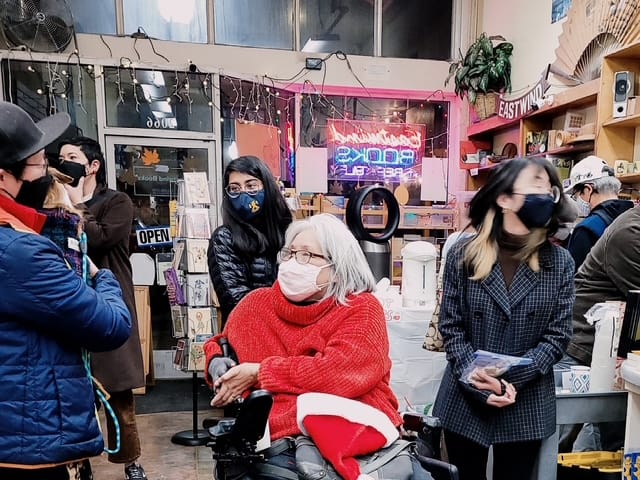
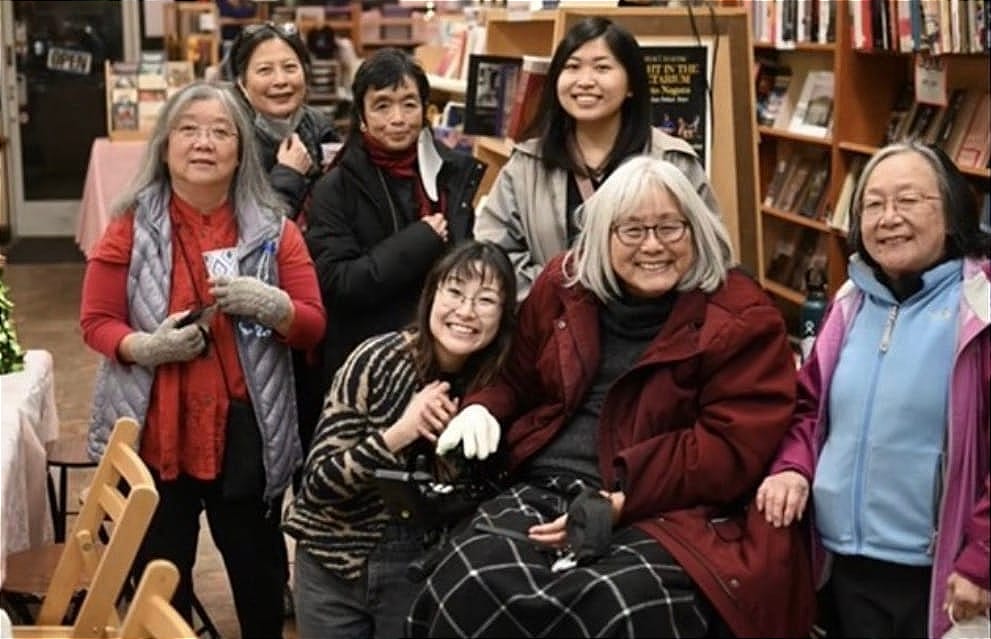
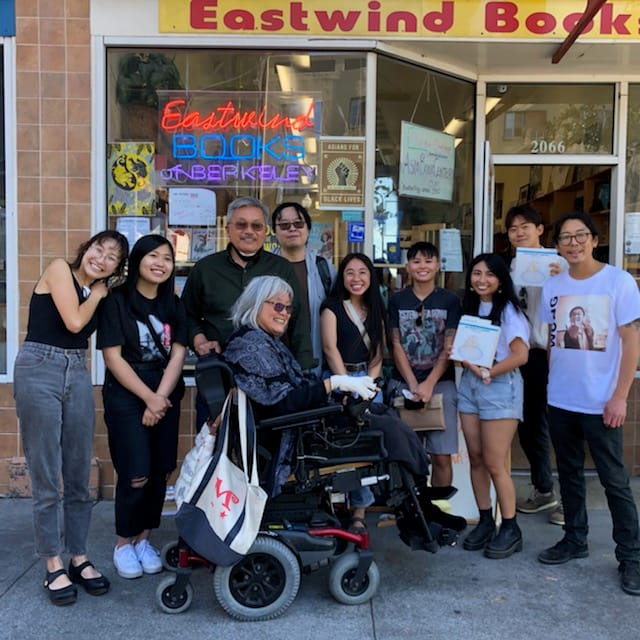
Beatrice Dong with friends at Eastwind Books. (Courtesy of Harvey Dong)
I have had the privilege of knowing Harvey and Bea for several years through Eastwind books, Asian American activism, and Harvey's work at UC Berkeley. I fondly remember Bea coming to the spring festival at Buena Vista United Methodist Church with a display of books from Eastwind. She always greeted people from her wheelchair, with a smiling face and warm heart — and was always educating while building community with new people she met.
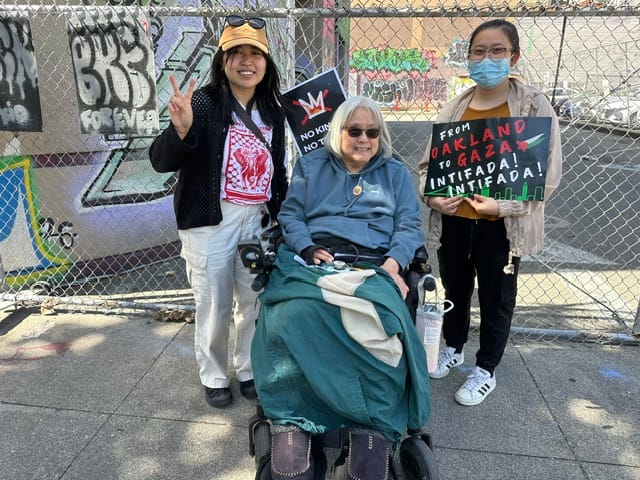
I want to especially lift up Bea's role in the efforts to create an Asian American Solidarity Statement with Palestine in 2018. The context was the Great March of Return: the non-violent protests in Gaza beginning on Land Day, March 30, 2018 leading up to the 70th anniversary of the Nakba (Catastrophe) on May 15, 2018. The Nakba commemorates the expulsion of 750,000 Palestinians from their homes and villages by Zionist militias in 1948. Many of the refugees from the Nakba fled to Gaza where their families comprise 70% of the population. The Great March of Return called for the right of return to their ancestral homes and an end to the 11 year blockade of Gaza imposed by Israel. In response to the non-violent demonstrations the Israeli military killed over 200 Palestinians and wounded over 36,000.
In the face of these atrocities, and the silence of the Asian American community, a group gathered to express solidarity with the Palestinian people. The team included academics Sunaina Maira, Roshni Rustomji, Wesley Uenten, and Harvey Dong, along with community activists Bea Dong, Grace Shimizu, and Michael Yoshii. Bea was editor and administrator for the statement and organized a launching event at Eastwind Books on November 5, 2018. Over 250 persons signed the statement.
The 2018 statement took on greater meaning as the genocide of Gaza unfolded following the events of October 7, 2023. Since October 7th over 73,000 Gazans have been killed, among them over 20,000 children. The infrastructure of Gaza has been destroyed and 1.9 million displaced. The West Bank and East Jerusalem are under siege with accelerated land takeover and plans for annexation. But the call for a Free Palestine is growing around the world. Thank you Bea, for your role in galvanizing AANHPI voices to be part of this movement. — Rev. Michael Yoshii, Co-Chair, Friends of Wadi Foquin
Bea and my father were friends at Oakland High School. In the summer of 1968, their friend group founded Asian Bloc, the school's first Asian political student organization. Inspired by the Black Panther Party and the Third World Liberation Front (TWLF) strikes at SF State and UC Berkeley, they brought TWLF speakers to campus and worked alongside the Black Student Union and Mexican-American Youth Association to fight for Ethnic Studies in OUSD.
I met Bea when her husband Harvey was my undergraduate thesis advisor. Bea was the first to share stories of my father's activist days that he wouldn’t have told me on his own. I had the sense that she saw the younger parts of him in me; I felt like I could be the best of both of us in her warmth.
Bea and Harvey gave me one of my first jobs and sold my first poetry collection for years when there was no distribution plan. That little book without a working ISBN found many readers and friends, who I am still meeting, only because it had a shelf at Eastwind.
Bea’s kindness, amazing energy, and fierce and generous movement spirit inspired so many of us. Long ago, I asked her about the famous photo of her taken by Nikki Arai at the funeral for Jonathan Jackson on Aug. 15, 1970. (Bea long thought this photo was from the day Oakland High students walked out to attend the memorial for Bobby Hutton in 1968, a formative memory that in part inspired Asian Bloc's activities later that year.) A teenaged Bea, solemn in profile, raises her fist in salute.
The photo had mostly been circulated without Bea’s name; at the time it was making the rounds on millennial Tumblr, inspiring a new generation of young Asian American activists. In an email, Bea wrote: “I wasn't aware of the photo's wide use. It captured in a moment, the resolve to fight oppression. i'm glad it is anonymous.! that's part of the movement, [sic]”
Thank you Bea for your story-keeping, your encouragement, your lifelong resolve. The struggle, and your legacy of love in it, continues on. — Jade Cho, poet and educator